Beyond the hype: Actionable AI for instant results
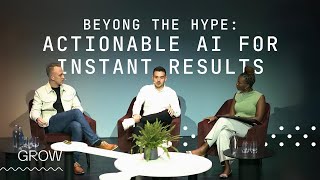
Matt Adams and Adam built Mindstream, an AI newsletter that publishes daily with two short articles each. They hit 150,000 subscribers in a year by skipping AI-written aggregation and focusing on actionable takeaways, grassroots outreach, and paid media.
Questions this video answers
June 2023
Seven days a week (daily)
Over 500 days in a row
Two articles per day
~150,000 subscribers
Chapters
I want to get a sense before we get started of who I have in the audience today. So clap. Because I can't see you. So clap. If you run a newsletter either for yourself or a business. Okay. Okay. And how many of you are familiar with Mindstream?
Clap.
Right.
Okay, great. So you're in the right place, whether you know them or you don't. Today we're going to be talking all about newsletters and AI. Very exciting. We're going to be talking about Matt Adams, mindstream, the launch of it. They're going to be sharing some newsletter best practices with us. Matt. Adam, how are you doing?
Yeah, very well, thank you.
Great to be here.
Great.
Okay, so for people who don't know what Mindstream is, give us a quick rundown.
Yeah. So mindstream is an AI newsletter. That doesn't mean it's written by AI. It means we curate what you need to know about AI. It's a business myself and Adam started about 18 months ago.
Very recent.
The reason we started was because we found the AI media space was so kind of saturated, but there was nothing that stood out. We wanted to create the kind of ultimate resource where everyone can come and learn about AI.
Yeah. And literally seven days a week, three to five minutes, one email in your inbox.
We'll get to that. I want to hear about the seven days a week, because that's a doozy. I'm curious, what was your exposure to AI before the boom? Because I think for a lot of us, it happened when ChatGPT launched. It was like, all of a sudden we're hearing about AI, it's on tv, your friends are talking about it at dinner. So what was your exposure to it before the boom? Did it happen around that time, or was AI a topic that you were interested in before?
Yeah, so I was working in sales jobs previously, and when ChatGPT came out, I spent a lot of time on LinkedIn, sort of connecting with clients on there. And I would see so much, like, chatter on LinkedIn about AI. Joined a few of the other newsletters that were already out there and just trying to sort of understand how I can use it to actually make a difference for me, my role, my job, my clients. And I'm sure, as most of you have found, it's pretty overwhelming. There's so much information out there, a lot of hype, and quite often a lot of these, like, tools that are popping up don't really do what they say on the tin. You kind of have to still have a good knowledge of AI to really Take that tool and make a difference with it. So that was what I struggled with and one of the reasons that we wanted to start Mindstream.
What about you, Matt?
Yeah, I mean, I think, like a lot of people here, when ChatGPT came out, you know, I started using it and my mind was instantly blown. The potential was just crazy. Myself and Adam kind of sat down and said, this is going to be huge. What can we do in this space? We wanted to start a business together. Adam was obsessed with the newsletter business. He kind of spread that obsession onto me. I have a background in writing. I'm a copywriter by trades. Adam's a salesman. So we kind of merged our skills together.
That's actually a match made in heaven. Marketing and sales alignment. You have that right there.
Yeah, for sure, for sure.
So what would you say sets Mindstream apart from other newsletters? Because you kind of joined the game a little bit later, Right? You launched in June 2023. There had already been so many newsletters out there. The Neuron, Ben's Bytes. I mean, I subscribed to probably 15 newsletters at this point, so I feel like the space got quite crowded really, really fast. You mentioned it being saturated. So what do you think sets Mindstream apart from other AI newsletters?
Yeah, so I think the problem with the newsletter space, you know, these newsletters that really are trying to be destination newsletters, you know, not sort of like a marketing newsletter for a company, but these destination newsletters, they all saw what, you know, happened with the Hustle and Morning Brew with their acquisitions, and then more recently, Milk Road, and everybody kind of was trying to emulate these successes. Also with the launch of Beehive, it's the ESP we use. They made it, like, so easy to create a newsletter with, like, a really dynamic editor, loads of growth tools, and so many people just flooded to this space to try and make a quick buck. And when we started Mindstream, we looked at the competition, and there was already thousands of newsletters trying to write about AI, But a lot of them are doing the same thing, just basically curating information, what's going on, and not really adding any editorial insight, any opinions, sort of actionable takeaways. People would probably just using AI to aggregate the news, do some basic copywriting, and then just churn it out.
Yeah, I mean, we. We knew it was a crowded space. You know, when the day we decided to start it, we kind of weighed it up. We said, do we do this? There's already other newsletters in the space. We thought where we can compete is on quality and editorial. We didn't feel like there was a good resource for like a good daily read. Like an email you want to open every day and you said, what sets us apart? Again, it's the seven days a week thing. Yeah. So, yeah, we started in June 23rd and mine stream has gone out every single day since then.
So that's no days off.
No days off. Over 500 days in a row.
Even on holidays?
Even on holidays, yeah.
That's rough.
Yeah. If anyone needs a holiday, it's me. I'm there editing every morning, including this morning. Sat in my hotel room making sure the mind stream's good to go. And I'll be doing the same later tonight to make sure it's out tomorrow as well.
And that's the thing. There's always something happening in AI every single day. Just when you think it's going to slow down, OpenAI has a new update. Something happened, Google launches something new. So there's always, always something happening to cover. So it's good in a sense. You always have something to add.
Yeah. Like 500 days. We've never struggled to write an edition. Wow. You know, we do two articles a day in our newsletter and, you know, we've never struggled to fill that space, which I think speaks to kind of how much noise there is in AI and the need to cut through it all.
Yeah, for sure. Like that. You know, the fact that there's so much happening in AI and there's so much news is a great thing for us because it kind of enables us to create this product. But it, but it's also part of the reason that we did create this product. When all of this stuff is happening, how do you go and find the information that you need? And we're trying to essentially be almost like your friend who's really knowledgeable about AI, who's just sending you the stuff that matters and sort of ignoring all of the other stuff.
So you mentioned editorial quality being one of your competitive advantages. So do you think that's the main thing that it takes to build a great newsletter? And if not, what are some of those other things? Because you're not just competing against other newsletters, you're competing against every other email that they're getting. You're competing against YouTube and podcasts and just so many other content mediums that are pulling, fighting for your attention. So what do you think it takes to build, like a really successful newsletter?
Yeah, it's a very important question. Like you said, we're not competing with Other emails. We're not competing with your email from Adidas saying, oh, some shoes want. We're trying to get attention from people who are scrolling on Instagram, YouTube. We're a destination, so we want people to come and read it every day.
Yeah. And with that, you can't fake it. If you want to have someone's attention and you want to have somebody's trust, you've got to give them so much good, quality content. One of the things that we balanced over the last 18 months of growing it is monetizing the newsletter. We've done through sponsorships, but we've always ensured that we have, like, such a small percentage of advertisement compared to high quality content. So if you come and read Mindstream, you take away something that might impact your day, it might impact the way you work. Maybe it's something that you can go and have a conversation with your boss about that makes you look cool and interesting, then you're going to come back tomorrow to come and get more of that. And that's really difficult because we don't need to just do it once, we need to do it every day. If our quality drops, our readers are going to be the first to notice and we'll lose them straight away, and.
We'Ll get to that in a second. Right now, I kind of want to talk about your path to growing to 150,000 subscribers in a year, which, if anybody's running, you know, I know there's a lot of people in the audience who run a newsletter that's very hard to do in such a short amount of time. So what are some key strategies that helped you get there?
Yeah. So when we started, me and Matt were both working other jobs, and, you know, our first goal was like, matt, can you go and write this thing every day? And can you build up that habit? And for me, I was thinking, how can I go out and get some audience? So, first off, we did things that really didn't scale. It was like real sort of hustling things, literally. First off, it was like texting everybody in my contact book. Can you join the newsletter? Can you check out this thing we're doing?
You have to. You have to leverage your network.
Yeah, yeah. And that got us up to maybe like 50 to 100 subscribers. And then I started posting content on LinkedIn. It was a platform that I was quite familiar with because I used it for sales outbound. And also I feel like when you're a Salesperson, scrolling through LinkedIn is like an acceptable form of procrastination. So I used to follow a few LinkedIn creators on there and just. Yeah, the day Matt started writing the newsletter, I started posting every day on LinkedIn and then following other AI creators and just reaching out to, like, hundreds of people every day saying, please, please, please subscribe to our newsletter. It's gonna be worth it. And that got us up to, like, you know, a thousand subscribers through those things. And at that point, we started to earn, like, little bits of revenue so we could start experimenting with different paid media types. I'm sure many of you are aware that co reg is very important with newsletter growth. If you don't know what that is, when you subscribe to a newsletter, you'll get a pop up saying, we recommend you join these other newsletters.
More from Patrick



A NEW BREED OF PARTNER: The Partnership Ecosystem Model Journey of Patrick Biddiscombe, Part 1








Customer Success Workspace: Never Lose Sight Of What Matters Most | HubSpot Spotlight