Bozoma Saint John Talks About Uber's Culture
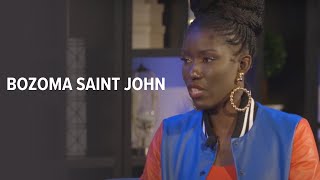
Bozoma Saint John, Uber's Chief Brand Officer, explains how she's working to humanize the company by sharing drivers' and riders' stories. She draws on her marketing background at Apple and Pepsi, and says intuition has guided her biggest career moves.
Chapters
Good, because this is my good stuff. I need to be here.
Perfect. Perfect. We're totally in sync.
Cool. All right, we're live. Thank you, everyone, for joining the Inbound studio. We're here with Bozoma St John, the Chief Brand Officer at Uber inbound 2017.
Big day today. Yes.
I think the first. It has to be. How did you enjoy this morning's keynote with Michelle Obama?
I mean, I was sitting there like this the whole time. At some point, I was like, you, face is stuck. I'm like, I know. I don't know how to stop it. You know, I just love Michelle Obama so much. It's like, a little bit obsessive.
She was amazing. Was there anything in particular, like, she said, key takeaway that was like, Yes. I mean, all.
Well, she said so many things, but I really liked her honesty about what it was like to transition out of the White House. You know, I think sometimes we don't realize, like, the personal toll, you know, when she was talking about her daughter's crying and that she was crying, but she didn't want to come outside and be crying because then people would think it was for something else. You know, it's just like thinking about what that reality is like, you know, that sometimes you're not able to just be who you are. Like, girl, you know how much I cry? I cry all the time, you know, so great work. Oh, I cry at work. Girl. I do all kinds of things at work.
Well, a lot of people.
I do cry at work. Yeah.
A lot of people who are like, you know, never cry at work. It's like.
No, I think it's important to cry at work because. Well, because it's important to show all the emotion. We're human beings. That's the way that we communicate with each other. It's like, we're not just flat. So how am I supposed to know if you're excited or if you're upset or if you're happy or angry or anything if there's no emotion? So to me, it's like, sometimes there's a really good idea, and, girl, I will fugly cry in a second. So good.
Let's talk about the human side of things and everything. And you're relatively new to Uber, a couple months on the track, and a lot's been talked about you coming on to humanize the brand and sort of bring that to the forefront. What does that mean? Like, how are you doing that? And what does that really mean?
Yeah, no, that. That means that, you know, I talk a lot about the left side and the right side of the brain. To me, the left side is like the rational side, the side that does the math, that tells you, like, one plus one equals two, and that three does not exist in that equation. The right side is the side I'm trying to lure out, you know, the empathetic side, the side that tells you that no one plus one does not equal two. It. It equals four and a half, you know, or something else that maybe you can't imagine. And that literally also means that I'm trying to attach to the emotion that I just talked about. It's like, are there people who inspire you, that make you laugh, that are. I don't know, anything that makes you feel something? Can I tell those stories so that it paints a broader picture of the platform? Because it's not just a tool that. To get you from one side of town to the other side of town. You know, there are people who are making a living, you know, in the driver's seat. There are riders who are on a really serious mission, you know, whether it's, like, to the grocery store or it's to, like, visit a girl. A date. Okay. Cause there are. I mean, the drivers are therapists as well.
From experience, I know that.
Oh, really?
Well. Just. You get into a nice conversation with. No, you get a nice conversation with drivers. Sometimes it's like, this is great.
Yeah, yeah. But they also have to, like, be psychic. You know, it's like you get in the car, and some people don't want to talk at all. You have to pick up those cues. You know, it's like, some people are cold. You got to turn on, you know, the heat. They're hot. You got to turn it back down. You know, there's just. There's so much going on. And so I want to show the human side of all of those things and then also make the product feel more human, too.
How much of that is rebranding and rehumanizing the internal culture as well?
It certainly connects. You know, I don't think it's possible to not make changes internally when you're trying to make external changes, too. You know, it's like any of us, again, like a human being, you know, it's like, if you want to make changes to your outward appearance, you gotta make changes to the internal systems.
Yep.
You know, it's like, if you're gonna. Girl, I just gotta jump rope. Because I'm trying to do some things. Okay. These hips, they do lie. And so I'm trying, you know, What I mean, but the thing is, I've gotta change some intern internal things too. Yeah. And so I apply the same thing to the company, which is that we've got to change some internal things in order to be accepted for the external changes we're going to make.
You've had a long career before this in companies.
Not that long. I'm so young. Well, you know what I'm saying, A.
Successful career before this.
I'm 40 years old. I'm fine with it. I'm totally, okay, totally mature.
But not in companies like Uber. You know, a tech Silicon Valley company. You've been at Pepsi, you've been at Apple. Really interesting brands that have done some cool things. What have you learned from those? But what about those companies sort of got you to say, yeah, let's do Uber now. Hmm.
Well, I mean, it's an interesting question. I feel like I'm a pop culture PhD.
Yeah.
You know, it's like if there was a pop culture jeopardy, I would be grand champion. Like, don't battle me, you know what I mean? Like, you will lose.
All right?
But the truth of the matter is that I have used pop culture to tell stories throughout my career, you know, so actually my first job was with Spike ddb, Spike Lee's advertising agency. We worked on Jaguar cars on the New York Knicks, of course, alongside a number of other things. And then yes to Pepsi and Apple. And I've always used pop culture to tell the story along the way, you know, and so for me, at this point, it just simply makes sense. You know, Uber is a part of pop culture. It's a verb, you know, it's like you want to Uber somewhere, you know, like it is a part of our lexicon. And so to me, it makes sense to then connect it to the things that we talk about. You open up your phone, right, and it's like it's sitting next to your music app, it's sitting next to your movies app, it's sitting next to the books, it's sitting anything. And so why not connect all those pieces together?
Absolutely. And so what you're doing is obvious. This idea of humanizing the brand branding in general is a big undertaking and Uber's got a lot going on. I think that's out in the news. So how do you give yourself short term and long term goals so that you don't get overwhelmed by the task at hand?
So here's the thing, it's like a buffet, you know what I mean? Like I'm at the good old kitchen buffet. And I want to fill up my plate with everything that is offered. Yeah, if I eat all those things at once, I probably get sick. You know, you gotta choose something first. So to me, this is about choosing the stories of the personal connections in the cars in order to just do something first. Right. Like you said, there's a lot going on, there are lots of things to do, and I just want to make sure that I'm doing things well and in order.
That's it makes sense. Fair enough.
Sure.
Still sounds easier said than done.
Oh yeah. Oh, totally, totally, totally. I mean, it's a. I mean, listen, make no small. I mean, it is hard, hard, hard, hard work. Maybe the hardest challenge I've ever faced in my career. But I'm not afraid of it. You know, for me, I was making jokes before that I'm super competitive, you know, so I want to win this. You know what I'm saying? I'm a win it.
It's a good one to want to win.
Yeah, I get it. And plus, I think from a personal standpoint, I it not just because it's like bragging rights, but because it's actually gonna change something. Absolutely. You know, so we talked a little about the internal culture. It's like, if we can change that, I mean, there are issues with diversity, inclusion, everywhere.
Yep.
Let's not pretend like any place is some utopia for black girls like me. Correct. There's no utopia. Correct. So if we can make a difference in Silicon Valley, at Uber, at a company which has been like, you know, lauded as the problem child, then we can make changes anywhere.
Absolutely, yeah. What do you think is. So if making changes at Uber is one thing, what do you think a company like Uber, or any tech company or any company, really, what is a company's responsibility towards pushing the industry forward?
Oh, yeah. I mean, I think every company has huge responsibility in that, you know, because you want to do it in a way that's responsible and well meaning to the community, you know, that you serve. Because we are evolving, you know, all of our industries, all of our jobs, they keep evolving. You know, the other day I was talking to a friend because I don't talk about anything else but marketing. I swear, I'm much more interesting. But you know, I talk a lot about this. And we were talking about the job of the milkman. Yeah. You know, and what happened to that? What does he do now? You know, is he the Amazon driver? Like, I don't know what he does right now.
Right.
You know, but I think it's a Good illustration of the fact that our jobs and our culture changes and evolves, and therefore, how are we as a company who's at the forefront of a new industry, also being responsible to the cities and the communities that we're in.
Later today here at the event, we have Billie Jean King speaking with Selena Tabakiwala, who's a tech founder in Silicon Valley, along with Jill Abramson. All women with broken glass ceilings.
Yes.
And part of the conversation there will be, you know what? You know, Billie Jean has done incredible things in the world of sports and beyond. Are there people out in the world, whether it's in business or beyond, that you take inspiration from?
Oh, girl. Yes. I mean, who? Oprah the Queen. I love her. I mean, you know. Yeah, we'll get her next year. Oh, good. Yeah. Can I be here for that? Yeah, sure. That'd be great. No, I mean, I admire. There's so many people I admire. You know, I do admire Oprah. All jokes aside, I just think that she's incredible for what she was able to do in media, in the media space. I think about when she started. I think it was 1986. There was no one else who looked like her on tv.
Yep.
You know what I mean? And then she kept that conversation going for how long was it? 20 years. For how long? I mean, it was a long time that is difficult to do.
And no one wanted her to leave.
And people were protesting.
Normally it's like, get out.
But we didn't want her to go back on air, you know, like, I love Oprah. I also love Kris Jenner. You know what I mean? I think Kris Jenner is incredible. She has turned. Well, now she's got a whole lot of babies coming. But, you know, she has been able to turn a story that could have been devastating for her family, depending on your perspective, into an empire. Yep. I mean, I think we should give her some credit. You know what I mean? Absolutely. She deserves some credit. But, yeah, there's lots and lots and lots of people that I admire.
Did they have. I mean, you know, do they have common denominators? Is there, like, what's the thing that draws you to people?
Yeah. They know how to emotionally connect in some way. Right. Whether it's like Oprah, who was super inspiring, you know, because towards the end of her show, it was always about, like, the betterment of self.
Yep.
You know, that was her mission, which is so incredible. Like, you never were able to, like, watch a show and not walk away changed.
Yep. You know, I watch it every day That's Pete.
You know. You know, I think you can't watch, like, Keeping up with the Kardashians and not, like, find some sort of guilty pleasure in that, you know? Or maybe some people can. I can't. I love it. I can't. You know what I mean? I'm just admitting. You know what I mean? This is the Honesty Hour.
I love it.
So here we are.
Or I mean, rebranding.
Yeah, exactly. The Honesty. Yes. Inbound Studio is now the Honesty Hour. But I do think that the best storytellers and the best brand marketers are those who can connect to some feeling that you have. And so, for me, those folks are connecting to any of those feelings, whether it is fear. We can talk about the current administration in that way. Right. I think there's some real strength in understanding how to connect to an audience and what you draw upon in order to make them act for good or for bad.
Absolutely. Do you have a superpower?
Yes. Everything. No, actually, you know what? I'm really intuitive. I'm very intuitive. I trust my gut implicitly. It is a superpower.
And have you always been that way, or did you have to teach yourself to listen to it?
Well, okay, so I've always been that way. I didn't always listen to it, though.
What was the turning point?
The turning point? Well, I mean, I talked myself into a job at sort of a midpoint in my career that was really bad. You know, I did the pro and con list, and I knew it wasn't right. I just knew it. I knew it. I knew it. You know, but I did the pro and con list, and it was like, okay, I get a bigger team, you get more money. It was closer to home. You know, I just did the list, and then I was like, the things.
We'Re taught we're supposed to want.
Yes, we're supposed to want. And so I circled that, and I was like, well, I guess I'm supposed to take the job. Even though my spirit told me not to go. It was like, no bows. No. And I went anyway, you know? And, girl, within, like, three months, I.
Was like, you know, she was right.
Yes. You know, I've never, ever, ever since that moment, like, disagreed or wavered from my gut ever. I won't do it. Nope. Not even when it doesn't make sense to other people. And believe me, I made lots of moves that people are like, why are you doing that?
Yep.
Yeah.
You're here today with us, with the audience here. There's people watching. You did a talk on the spotlight stage and you witnessed Michelle Obama. If you could describe inbound in one word, your experience.
Oh, my God.
What is it?
Magic.
Amazing.
Yes.
Thank you so much for being here. It's been absolutely fantastic. Thank you, everyone, for watching and thank you, everyone, for being here.
More from Patrick



A NEW BREED OF PARTNER: The Partnership Ecosystem Model Journey of Patrick Biddiscombe, Part 1








Customer Success Workspace: Never Lose Sight Of What Matters Most | HubSpot Spotlight