Brian Balfour’s Simple Strategy To Build A +$10M Business
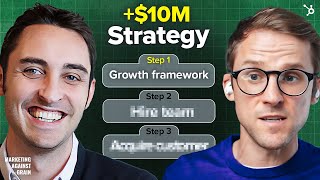
Brian Balfour on hiring marketing leaders who do demand creation, not just demand capture, and structuring teams where individual contributors earn as much as managers. He breaks growth into moonshots and iterative bets, and runs company-wide feedback rituals called HBO: hypothesis, beta, outcome.
Chapters
What's kind of wild in the future is if, when you're, when you're working with these AI assistants, it's like having like a little army of interns, right? Like, I don't know, if you play with GPTs, it's like trying to prompt a intern to build a piece of software for you.
I haven't thought about that analogy, but you're kind of right.
You're like trying. It's frustrating as hell.
It is. Yeah, it is frustrating.
I didn't mean that. I didn't mean that. No, that's not what I meant. Do the other thing. No, not like that. Like this.
On today's show, we're sharing Brian Balfour frameworks for building, scaling a modern team. And good news for everybody who doesn't want to be a manager someday. Brian actually talks to us about how he wants to pay ICs individual contributors even more than managers long term. That and so much more. All in today's episode of Marketing against the Ground.
Brian, welcome to the show. Excited to have you on. Brian Balfour. Everyone likely knows him who listens to the show. Founder of. We forge one of the, I would say, found in people of growth and how people actually use growth within companies. Brian, what we want to do for this show, we want to try to play a matchmaker between founders and marketing leaders. Not in like a Tinder esque swipe, but trying to get founders and marketing leaders on the same page because the marketing team is this like quagmire of like, what the hell is this thing and how should I think about it? You're a multiple time finder. Does that resonate with you? Like has marketing being this kind of the, the one team that you've struggled a little bit to like wrap your head around how to structure this team, we're going to get into how to hire your leader or is that maybe more come a little more naturally to you?
Well, a lot of founders, you know, they start by building for themselves, right? So even if you don't have the marketing background, you can at least ask yourself like, well, if somebody else is building this product, how would I want to discover it? What would get me interested in it? Where might I find out about it? Like all of those like, types of things that can lead you to be better, better informed. So also just, I think something that I've learned as a founder is you can hire tons of great people, but as a founder, no matter what you've thought about this the longest in like the most amount of time you go to, you Typically go to bed, you know, thinking about this thing, you have dreams about it, you wake up thinking about it. And so like just those times and those mental reps in your head does build some form of an intuition for the customer or the product or what you specifically want. And figuring out how to communicate that to somebody else in a way that they can help you go execute on it, clarify it. Like all of those, all of those types of things is important versus the I'm just going to hire an experienced leader and be like, you do the magic, right? Like, I'm going to be totally out of it. That typically leads to like a late stage blow up at some point. Yeah, yeah, yeah, totally. Yeah, yeah.
And I think what you said, Brian, I think you're saying the same thing is really important, which is taking this time upfront for the founder to really figure out like what is the most important parts of their marketing to be like world class, where does that person really need to spike? Because if you break marketing down two parts, it's like the creation of demand, the capture of demand. And the creation of the demand is like the brand, the product position, and like all the things that are much more complex to measure. Where the demand capture is like the pay, the search, the life cycle, the email. Like all the things where I think a founder feels a little bit more safe because that's really their slot machine. Like they can put in their dollar, they can see the $3 out and they kind of understand what good looks like. The thing that I've seen continually where a founder struggles is the part that is less measurable. But I think is just as important, maybe more important, because the demand capture part is actually getting saturated over time. And I think the demand creation part is like really important, but it's not really measurable. And so now it really does matter who you hire because you have no way of being able to tell if the work that that person is doing is good or bad because there's not like a clear metric right there and it's somewhat subjective. Plus they're longer term bets, right? And so you actually have to truly believe that this is the right person. And so doing your due diligence upfront and understanding, like, where does this person need to spike? Because to your point, if you're a series A, series B, you're not going to get a marketer who has spikes in all areas, like they're not working usually for those kind of companies. And so you have to like be truly care about where you, where that person spikes. And that's what I actually tell founders is like, if you want to use a marketing advisor, that is such a great time to do it. Because if you get that hire wrong, every hire they make is wrong because it's usually prioritized on the incorrect spike. Right. And then to your point, Brian, the point that you made was a great, great point. I hadn't thought about that before, but the maturity of the department versus the maturity of the company. Because then you, you hire someone that's at the same maturity of the company and, and then they hire strategic people. And all these strategic people are sitting around writing each other memos. And like, you're like, well, you know, I actually need someone to do the work.
Well, soon we'll just have the AI bots writing memos to each other, hopefully, and we'll just like sit back and read it. But yeah, no, you're a hundred percent correct.
Yeah, so I, I think I, and I. And the final part is like, be in the work. Like, be one of the things. I, I don't know how you both feel right now. There's a change, I feel like there's a change in tech where there's this like, real push to get back to the work. Like, I've seen it in companies that I advised. I've like, we. In, in. In Zapier. One of the things we really talked to about being a manager at Zapier is like, not the management, it's being in the details. I think Brian Chesky had a really great podcast recently where he talked about the new growth playbook for Airbnb and talked about how he's in the details. I used to always, like, I love being in the details. But it became a, like a thing where you would see it on your 360review. Like, you doesn't trust me too far in the weeds. Like, no, like, I like the work, I want to be in the work. I don't know if you both feel that, that there's a shift to get back to the work. And like, I think that's a really enjoyable change within, within tech.
I'm personally enjoying it as well. I think there's different ways you can get into the work. I think what some folks need to understand is that the best way to learn and grow is to essentially get. Is. Is to get like lots of reps at something and those reps are higher quality. When you have somebody there giving you feedback on those reps, that's very different than getting in the work and just essentially doing all the work. Yourself, which you also need to do sometimes as a manager and leader. And you should not feel guilty about those things. But I do think we went through a period where it was like basically any feedback you would give, there was like a guilt to it because, you know, you're not like, giving me the independence or the autonomy that I need and all those things. And, and so I, I don't know. I, I would say, I think also at reforges, we've highly separated. You know, we've published a little bit of a framework that we call captains, coaches, players. And, and what our org is now really built around are these captains. They're kind of very senior, super, like, they're super ICs essentially. And, and, and the. It's a leadership, but it's a very different type of leadership. It's a leadership by. When you're on, you're on the field. Like in soccer, it's like the captain's on the field and they're leading by being on the field. That's very different than a coach who's coaching from the sidelines. And I've found that analogy to really, they helps people understand, well, what type of feedback am I giving, when am I giving it, like, how often? What is my style of leadership? All of those types of things. But the coaches are there in surf in service of the captains and the players. Right. And I think that's also another thing that commonly can get lost.
Yeah. Like what I always thought about and I think, I don't know, Kieran, when you and I work together and Brian, you and I work together a little bit too. It's like I always try to go into a session of details with people and be like, I have to tell this person something about the craft they do not know, or I am useless here.
Right, right.
Like, it's not just enough for me to be like, oh, let me give you some feedback.
Yeah, yeah.
It's like, oh, hey, did you read this API documentation? We could do this thing now that we couldn't do two months ago. We should run an experiment to try to do that thing. And that is, to me, that's being the details. Like, people often joke that marketing is like art and science. And I believe that. And I'm not an artist or a scientist, but I can tell you that both of those things evolve people who are deeply in the details. Right. Like our artists and scientists are the two most. Two of the most detailed oriented professions in the world for good reason, because you have to be in the details to create Something remarkable. And at the end of the day like that's what a marketer is trying to do. They're trying to make something remarkable for their audience, for their customer.
100%.
Yeah. One, one of the, one of the really good things that Wade called me at some point when I had started in Zapier, I think it was like three months, three months, four months along. And I'm a quite like Kip already knows this. I'm quite direct person. You don't really need to like, it's not hard to read, but you got.
That Irish directness in you.
I just say, I just say whatever the thing is, right? Like, and so, but I was in, I was in like new company and I would be in the strategic docs or whatever the memos and like I would be like asking the question like, you know, do you think we should do this? And it was clear that I had a direct opinion on this thing. But I was trying to like come through the questions and Wade was like ping me and said you should speak facts, not questions, right? Because if you, if you say a fact, you actually have to know the work. You have to state fact, you have to state reasoning behind that fact and you have to state like why. That's your opinion, right? So you actually have to have done the work to give the context on why you actually think that way versus this thing where you look at a Memo and like 50 people have been in the memo and everyone's asked about 10 billion questions but not one single person has stated fact because they haven't done their, they haven't done the work to like state, get context, state facts. Right. And I think that that's another example of, of kind of being in the details. One thing I love to poke at a little bit because actually this is really interesting to me.
Sorry, can I ask to that? I just want to add something to that real quick. Just one tactical thing that we've done at Reforge is we've broadened our product review process which is very feedback oriented to the entire company. And we've set an expectation that the entire company are supposed to bring projects to. We call it HBO standing for hypothesis, beta outcome. And part of those is that the forcing function is that you can only bring customer facing assets to that meeting to get feedback on those things. But part of it is that marketing is expected to bring some of the things that they have created that is customer facing to get feedback from not just myself, but our CEO, other kind of relevant people to that cross functional initiative. As, as part of it. And look, we still make it very clear that the owner is the owner of that. This is a feedback session. It's for them to take the feedback and do what they want with it, except in very specific rare cases. But I think for myself as a manager, it's a way that for people to surface the work that they're doing to it and vice versa, it's a, it's an avenue. It's an avenue to collect that feedback. But these rituals, these practices have been implemented I feel like more commonly in other functions like product. And so we just took these rituals and we broadened it to the entire company and we found that to be pretty helpful.
I love it. It also teaches all teams how to take feedback because that's an. I think that's an important thing for, for everyone to be able to receive. But just coming back on the coach player, the coach captain player. So within reforged, like if you're managing the team is your expectations of that person that they excel at the work and the management is like something they should be good at, but a second reach of the work. Or how do you think about assessing someone who is like splitting their time between those two things? Like they're managing a team, but you expect them to be really great at the work, but they also have to build the team, do the career development, like get good feedback, like all those kind of things. How does that come out in terms of how you measure their success?
What we, to the extent that's possible and it's. You can't do it in all situations is that we try to very much split the IC and essentially what we would. The management, that coach responsibilities. And so the most important thing for coaches is that they are recruiting and developing other captains. Right. That is the most important thing for them to be doing. And. But, but there's some like other guidelines around that, which is like they should be positioning players on the field. As you know, everybody has strengths and weaknesses and depending on where you position them within the organization has all the. You can be a game changer instead of the results. So that's another key function of a coach and a manager. Right. And so, but as part of like developing these star players, part of it is essentially giving them, essentially giving them feedback on the work. And I've found that some people can be freaking great at the work, terrible at the coaching part. Right. And it's typically not common to find somebody who's like bad at the work, but really, you know, giving good, giving good feedback that typically still has to be present at some point in their, in their career. But once they go into that man, once they go into that coach role, it's expected that about 70 to 80% of their time are focused on those coaching types of responsibilities and Then probably other 20% they might need to pick up a key strategic project or something that their team camp Phil versus the the captains are the reverse. You know there's 70 to 80% are like the IC responsibility in certain occasions they will manage, you know, a couple folks but no more than that. Otherwise you know the ratio like they just get sucked into all of the management work. And so as part of this the coaches can help identify the key strategic problems that need to be solved in the org but they are then supposed to hand the problems off to the captains to go actually you know, lead the solutioning part of the process and that part of it. Now this structure and what we've specifically optimized for is you are limited by the number of captains you have in your organization around this. And so as a result of this, you know, we totally redid our compensation structures. The IC paths are equal comp. And at some point I'm going to make them be comped more than the same level at a manager. So a level 5 IC is comped the same as a level 5 manager where like titles are the same as well as a couple other things. And so but I eventually, I think what you need to do eventually is you have to give somebody a very specific trade off to choose the manager and the coach path. Because right now because of the way our ecosystem works, everybody feels like that's the only way to develop in their career. And as a response, as a result you have a bunch of folks entering that path who don't really enjoy that style of work and as a result like end up not being very good at it in the long run. And this is myself included by the way. I way prefer the IC work versus the manager work. Right. Unfortunately as a CEO and a founder I don't get to get from fully out of that. But if I wasn't a CEO and founder I fully would be optimizing my role in my career more around that path in those style of opportunities. So it's, it's, you know, it is still a work in progress of how we design the system and how we honestly scale it over time. I think that'll be like the, the key question right now. Right now it's totally manageable. We're only like 75 folks but you know, I do have, I struggle to see it. We'll hit some new blockades when we get to a much larger scale.
But to your point, it is a little bit of a legacy system to the fact that you used to have to overvalue management because the only way you could get work done was by scaling human time. Right. And now through major advancements in computing, artificial intelligence.
This is part of my back.
You can now scale things asymmetrically without adding humans. And so management should be less valuable 10 years from now than it is today. Right. And that's part of the bet you're making.
Right?
Right.
It is part of that, yeah.
Like, oh, the leverage you get from management is going to decrease as we get better at scaling through non human means. And like, I think that's awesome. It's also something I've kind of always believed in. I always kind of believe, like, if you know the craft, I can teach you how to manage. It's very hard for me to teach somebody great at managing the craft. You know, like, it takes way longer, takes a lot more repetition and feedback to learn the craft than it is to, to be an average manager. To be a great, great manager. Yes, it takes a lot, but you can be an average manager with not a crazy amount of like, help and support.
Yeah. And I should say, like, a lot of some people kind of misinterpret what I'm saying, being like, I hate managers, coaches, I think it's useless. I'm like, no, no, no, no, no. I'm like, not, not at all. I'm just, I actually just think that there's like the, the typical saying, like, people don't leave bad companies, they leave bad managers. I think there's some element of truth to that. And so I do think the future is like, how do you take the great managers? Because they really freaking love it. Right? And they like that style of work and it fills their bucket and you give them a lot more leverage. Because I actually think there's more people in the world that get more satisfaction out of like the creation pieces of it. And it's just that our ecosystem historically has not been wired to incentivize those paths for all sorts of, all sorts of reasons. And I don't know, I, I hope, I hope it changes. Maybe it's a big maybe, maybe it's a big hope, but I, I do hope it changes.
Well, to take, to take your metaphor one step further, the greatest teams, the captain call a lot of the place, right. Like, the coaches don't call the plays on great teams, the captains are on the field and they see the situation and in the moment they call the plays. And you're just trying to build a structure that allows more people to call plays more directly who are closer to the work. 100%, I think we can all admit is like the right way to grow and solve problems.
And in my analogy, I actually, in my internal document, I say like, we are playing the sport of soccer, we are not playing the sport of American football. In American football, you do have the coaches calling the plays. And the reason you have the coaches calling the plays is that you like, you run a play, everybody has their set things that they're supposed to do and then you get to stop and you get to reset. Work is not like that. It is much more fluid game between like shipping things, iterating, seeing the customer development, like working out on the fields. Yeah, exactly. Yeah. It's a very purposeful. Part of the analogy is that, is that we're, it's a, it's a very specific style of game. And as a result, I think. But what you're talking about that best teams, the highest performing teams are the ones that are performing in the way that you mentioned.
It's kind of like the Tony, the kind of famous Tony Robbins. Three archetypes. Like he, he kind of describes three archetypes and everyone fits into one of those, which is like the entrepreneur, the manager or the creative. And over time we forced the creatives, the people who love to be hands on, into management because that's the only way to build their career. And for the most part they hate it and they actually perform very well like you. What's actually really interesting in companies as you grow is you take your best people, force them. Not you don't force them, but it's the way like they kind of force themselves.
You incentivize them.
Yeah. You incentivize them to want this thing. Then you take them out of the thing they're really good at. Right. You have to replace them and then you actually end up with an average manager. Right. So you actually lose. You, you kind of lose in both ends. Yeah. What's kind of wild in the future is actually the man, the, the management doesn't like. The amount of managers may decrease over time, but the amount of management doesn't. It's just that the management now shifts to ICs who have to learn how to manage all of these kind of AI assistants. Because like if, when you're, when you're working with These AI assistants, it's like having a c. Like a little army of interns.
Right?
Like, I don't know if you've played with GPTs. It's like trying to prompt a intern to build a piece of software for you.
I haven't thought about that analogy, but you're kind of right.
You're, like, trying. It's frustrating as hell.
It is. Yes, it is frustrating.
I didn't mean that. I didn't mean that. No, that's not what I meant. Do the other thing. No, not like that. Like this. All right. The only cool thing is you can shout at it without being brought up in front of hr. But so they. So I think, like, it's kind of interesting, like, if you're an ic, part of your job is going to be learning to, like, have these assistants that allow you to get much more. Much more work done.
Yeah, I agree. Also, I just. I just want to make sure we don't skip over the Tony Robbins point, because I do have this picture of you at a Tony Robbins conference. I actually, at least last person in.
The world that we would expect would reference Tony Robbins everywhere.
Well, I did. I have the famous story that I've told on the podcast before that I joined the cult. The cult was nlp Neuro linguistic programming, where you learned to reprogram your brain. And I accidentally joined the cult. And I did not know this at the time. It spent $10,000.
I did not know this about you, by the way.
Yeah, I was deep in this world. I was trying to figure out my life. I was deep in this world. But your liquor program is actually a valid thing. Lots of therapists use it, so I'm not discounting.
Well, look, speaking of great marketing, Tony Robbins is a great marketer. Oh, he's a. Yeah.
Fabulous marketer. Great marketer. Yeah, Fabulous marketer. One of the things I would love to just touch on is, okay, you and Reforge have kind of defined what growth is. Like most companies, the actually do growth has been trained from Reforge. Right. And so you. You are the guru, I think, of frameworks and actually being able to, like, figure out how to define things, to figure out the upside. All these kind of different growth models. And so when I talk about marketing, the demand capture versus the demand creation, I would love to hear from you when you started, when you start marketing teams as a founder, you know, someone comes to Brian and they go, hey, Brian. Like, I want to do this brand awareness campaign. Hey, Brian. I think our product position and really matters. Hey, I actually think we need to do much better design because design truly matters. Like, all these things that are in the awareness bucket but very difficult to put any kind of meaningful metric. Do you go like, no, I don't want to do that? Like, I, I don't know how, you know, kind of, I don't know what good is. Like, how do you approach that? How do you approach that when a, when a marketing leader or the marketing team want to do things that are harder for you to quantify the upside on?
I, I fully, I fully believe that it ends up being a blend of all of these things. What specific blend you need at any specific moment in time is like, ends up being the question. And that's different on a company by company, on a company by company basis. Right. And it kind of gets back to where we even started. It sort of depends on what your, what your hypothesis is and intuition and definition is for how this company is going to grow, like now and then next in the future as well. And so brand is kind of the obvious one that typically comes up here. And so maybe it's hard to quantify or maybe these other things that you're mentioning is hard to quantify. What that doesn't mean is that you should still be able to tie or connect the dots in a very specific way of why it's important to the customer or how it ties to the customer and how that eventually ends up creating value. And so I think actually Reforge is a good example here because brand actually played an important part early in the company and we didn't measure it. It was impossible to measure. And more importantly, it didn't come from good design, which is how a lot of people think about brand as to start with, because I created our first website on Squarespace, you know, from a template, and that lasted us for seven years, right? So, like, at no point in that process did our brand come from good design. But what it did come from was other things and a very specific set of choices, which we knew that, at least in professional education and within our target market, the most common question was like, basically like, is this worth it? Is this going to be worth it or not? Because people had taken, you know, free courses online or a UDEMY course and, like, been very disappointed. And so brand was actually a way for us to short circuit that question in a number of different counterintuitive ways. One is like, at the time, we forced you into an application process which immediately communicated to the customer that, like, this isn't for everybody and not everybody Is like is going to get in second. Is that upfront in our marketing we said this is not going to be easy. It's going to be an intense at that time, like eight weeks, it's going to be incredibly hard. We do not promise like the six minute ABS type of thing. We were also really high priced. We also were very specific on the people who we that co created with and the brands that they were associated with. So these were all a very specific set of, of choices that had nothing to do with a design or a brand value statement or whatever it was but it communicated something very specific to the customer that if you get into this thing it's probably going to be goddamn valuable. Right. And it tied back to that core customer problem. And we've made a bunch of changes to involve this over time. Just like as any company needs to evolve its things over time. And so anyways the hard to measure thing I do not think is a, it's not a substitute or an excuse for making having being able to describe very clearly how it ties to a customer or a customer problem. You still need to be able to spell that out. And if you can spell that out then then you can evaluate whether it's worth the investment a lot more. But when you can't spell that out that's where I get like little bit skeptical because you either don't have a good enough hypothesis yet or, or it's just like vaporware. Right. Like it might not be worth investing in. So. Right.
I love this. I actually couldn't agree more. So you know I have teams dotted across all of the self serve business from measurable to immeasurable but everyone actually has the same sort of OKR model. And to your point, everything starts with the customer problem. What is the customer problem? What is the customer insight? What is the deliverable? And the deliverable can be a metric or an artifact. Right. Like artifacts. I think we probably take some inspiration from your, your latest site. But like and you can look at the artifact and then sit and communicate like what is the value of this artifact against that problem and the insight. Right. And it doesn't matter if something's measurable or unmeasurable. You should, you should be able to do that. And I think any founder can understand that. Right. I was talking to a founder recently and I was telling him to do this and I was saying like if they did that for you, will you understand that? Because I'm sure you're customer centric. I'm sure you understand your customer, your customer problems. He Was like, yeah, like, okay, I get it. Because he was really struggling with the unmeasurable parts that he did not how to quantify whether it was even worth doing. And I was like, we'll start with the customer problem. Like, you start all your business meetings probably through the lens of the customer and trying to solve the customer problem, and it's not on you. So one of the things I really want to like, push on and it'd be interesting to get Kip's idea is this whole thing that I hear marketers say was like, only work for a CEO understands marketer marketing. I think that's because you as a marketing leader suck, right? And you've actually decreased the number of companies. You've instantly decreased the number of company great companies that you can probably work for because you don't want to do the work to work with that founder, to be able to educate that founder or share the vision of your marketing through the lens of your customer. Because every great founder understands their customers and understands customers problems. And if you can't relay your work in a way where they understand how it solves customer problems, that's never on the founder, that's always on the market and leader. And so I actually totally agree with the. How you describe that, like make. As long as it's aligned to a customer problem, the founder can understand what the impact of doing this work is.
Look, the statement you just said is like the. That's the business equivalent to the people who say that, like, they can't control their emotions. You know, I just feel how I feel.
I'm just, I'm just.
You control your life. You control all the inputs of your life. You don't feel how you feel actually. Like you have. You actually have complete control. And like, what I would say, and the reason for that is, is because even brand marketing, product marketing, things that are inherently subjective forms of marketing are based in logic, right? They're based in logic. Like, to give everybody, like a very concrete example, we, we relaunched our sales hub product at HubSpot in September. And so everybody out there listening, this is probably going to launch a new product or relaunch a product in the next year. And one of the questions you're going to ask is, like, I don't know, like, do we do brand marketing as part of this relaunch? Well, you just follow the logic. All right, well, what's our awareness among salespeople and what is it compared to our other products? And for us, wow, our awareness among salespeople was much lower than Our awareness among marketers or customer service leaders. Wow. We clearly have a gap there. If we don't change that awareness, we're gonna have a much smaller pool of people to do the direct response, highly measurable marketing capture. So we have to then go and create some new awareness and demand in the market and invest a portion of our budget in doing that with that target audience. That's just logic. Right. And then yes, you can debate what the perfect channel is, and it's not 100% perfect science, but you can strategically understand that that is the best thing to do for the problem you're trying to solve in that moment.
Yeah, well, one of the key, going back to a little bit what you were saying, Kieran, is I do think one of the key skill sets to learn as any type of leader is how do you explain your function and the work of your function to other. To leaders of other functions that know nothing about your function, including the CEO. And to be honest, when I was at HubSpot, I was effing terrible at this. So like, like, you know, that was.
We all are.
And, but, and that actually it, that, that I think is like actually one of the toughest skills as a leader and is another thing where you've got to get a lot of different, a lot of different reps added of like just kind of like poking at it from different directions, different simplifications, different like visualizations to like help somebody. And an engineering leader is going to perceive it very different than a sales leader, like all, all of these types of things. And so it is a foundational skill set of a leader is to, is to be able to explain your function to other leaders who don't know.
Right. It's why every marketer is a storyteller, whether they are going to tell that story externally or not. Because internally they have to tell the vision of their strategy, the marketing strategy. And their audience is usually the founder, the CEO, the exec team. And I think that's where. I think that's like the cop out I was trying to get at, which is, oh, well, I'll just go work for a founder who understands marketing. Sure, they probably do understand marketing, but they probably don't understand all of it. Right. They don't understand the whole awareness and capture piece. They probably don't agree with you on most of it. They probably think some things are more important than others and you disagree. And so you still get into the place where you have to be able to communicate the value of your work. And it should always be through the lens of the customer. I don't, I don't know how many marketing leaders I've met where, if you ask them. How many customer calls have you done in the past month? Two months? None. I looked at the data. Well, you should be fired because that is the, you know, the closer you are to the customer, usually the better you can tell that story. So I think that is part and parcel of just being a good, A good marketing leader.
Yeah.
One of the things I wanted to quickly end on, Brian, is the. One of the other more common challenges is portfolio of bets. And so if you are a marketing leader, you have to, across the year, look at a portfolio of bets and you've either got your growth stocks or you've got your index funds. Right. Your growth stocks are like the things that I want to take off, like my moonship, my moonshot bets, and then my ind. My index funds are like this surefire, like, iterative improvements I can make. What, what would you like? Like if, like ideal work, you're a new marketing leader who sits down with you and hopefully they don't, they don't come in hot and say, brian, I want to like, redo the brand and redo the website because you've got some problems. It's like the instantly like, you know, your spidey senses go up. Oh my God, this is the wrong stuff. But like, they come, they come in and they're like, okay, here's the split between those two things. Here's how I think about the number of moonshots, percentage of moonshots I could get, and here's how much time I should spend on my iterative improvements. Do you have any feelings towards that or what does good look like there for you?
Well, I think the way that most people perceive the whole concept of a portfolio of bets is a bit of a luxury of later stage companies that are on a more stable growth path. In the sense that most people interpret portfolio as there's some form of diversification and, or there's some kind of rule of thumb. It's like 70% of my bets here, 20% of my bets here, 10% in moonshot. And then you basically take those moonshots and as they mature or validate, you progressively move them into the other buckets. Yes, ideally, that is the way that it works. I will tell you in the early to mid stages, that is rarely actually how it works. You typically find yourself more in situations where you've got to be on one end of the extreme or the other. And because you don't have enough resources and enough people to have that nice like, you know, visual of, of diversified bets. Sometimes you hit, you know, you, you're taking moonshots and then you hit on something and the right strategy is like, oh crap, like with my limited people in races, we gotta go all in on the incremental optimization. And as we get to a different stage, I know I'm going to have to hire backfill to start to like balance the portfolio. And sometimes you don't really have like a fire ignited. And the only thing you can do to get a fire ignited is to be taking pretty, pretty big bets. But which gets me the second part which is like I actually think most people misinterpret what a moonshot is or what perceives for them. And so I think most people perceive moonshots as things that are going to be a lot of work and have a low probability of working. But I think an interesting counter example to this that we recently talked about on unsolicited feedback is a Mid Journey and they're very explicit distribution decision to pair themselves with Discord as the channel. Right. And you look at that. So, so they're a 300 to $400 million ARR company right now, which is freaking mind blowing. They're only 18 months old.
Crazy. Yeah, 20 people.
And, and, and their early decision was like we are going to marry ourselves to Discord as a way for people to educate themselves on the product, meet other people, discover different elements of Mid Journey and the creations of Mid Journey. And you look at that and it's actually that's a decision that's not a lot of work. In fact, it was a decision to cut a lot of work. They didn't have to build a lot of different surface areas to get to the distribution. But it was a really high risk decision because it had some serious trade offs. Right. Like around those things. It, and it just so happened that those trade offs worked in their very specific scenario. And so like, I don't know, like, I think this concept of moonshots, it like tends to get. And the second part of that is I think a lot of people want to find the low effort or low risk, high reward things. And honestly like in reality those things don't tend to not really exist.
They don't ever exist.
Yeah, yeah, yes, I see. Yeah, that's right. That's right. So yeah, so I think, I think this is part of the, I think this is part of the challenge. I do think if you have like a more stable Growth channel that's on a path, your later stage environment, all these types of things. You have a little bit more room to plan your portfolio out. But I typically find in the early to mid stages it just like things grow in incongruent ways in the same way we were talking about earlier of like, you know, some functions grow much faster and mature much faster than, than others. And yeah, so it's like not this like perfectly shaped sphere that just like grows in volume. It's like this globby, spiky like thing that you gotta like mold like over time.
Well, and some. And sometimes look, you make one of those bets and it works really well and then out of nowhere it just stops working. You know, like that's the other thing is I think we as humans are like, oh, I figured this thing out. I don't have to be paranoid, I don't have to do take more risk. Now I can just kind of do this tried and true thing. And it's like, no, you always have to have some risky things as a hedge because you never know when that core thing you depend on is going to just stop working or work half as well as it is today. Yeah.
100. Or just the amount of work that it takes to get to the second and third layer of some initiative.
Yes.
To really understand whether it's working or not. Right. Like it's typically the first thing that you do. That first layer never really gives you the signal of, of whether it's truly. It's. It's not, it's not a valid signal.
Yeah, yeah. The, I think that, I think that's really great context. And moonshot. Whenever I think of moonshot, I, I actually think think of it as do I have historical context on this thing or not? And so I have zero historical context that this thing may work. I actually, it has to have some amount of upside. Maybe I can't predict that, but I guess it has to solve a customer problem of like certain order of magnitude. But I always think of it as not really a moonshot but like a non historical context bet, which is a riskier bet because I have no historical context to say that this thing will work versus the ones where you have some amount of historical context to say it probably will work. But like it's, it's, it's more kind of iterative, iterative return.
Do you think we got the same approach with even something that's I guess like more known in the ecosystem? Like I think there's a difference between no company has ever grown on Discord before and we're good. And there's that type of unknown versus we got a UGC SEO play. There's tons of companies who've grown through UGC SEO. UGC SEO. We've just never done it ourselves.
Right, so you're saying that. Do I view it differently that there's historical context in the market to say that thing worked? Like there's a. Yeah, I. So I think there's very rarely no example of it because we're in a place where there's I think examples for everything. Does it work for. Will it work for my company is still somewhat of a riskier. There's still some amount of more risk because I haven't tried it within the company. There's some like, there's a. Like we. We tried something in Zapier which seemed very logical. Like that it's kind of like the miro in these other companies where you could actually have users share their workflow. It would temp. It would automatically templatize it and then create a template for it that would. You would see through user generated search. Right?
Yeah.
And it didn't work for some nuance that I, that is actually that we could have caught upfront, if I'm being honest. But some things you wouldn't have thought about in relation to how it worked for other companies like these, these nuances to how our product works and actually some of the customer insights on why they wouldn't share their. Their workflows with others wouldn't have existed in some of these other companies that had worked for. They were very unique to Zapier. Like one of the things that was very unique to Zapier customers is that their workflows is like their. Is kind of their secret sauce. And so they actually they were incentivized not to share them because they didn't want to give away their secret sauce. Right. Where they're. Where if you're in a mural or notion or things like that, that same incentive doesn't exist. So there's just some inherent risk built up because you don't. It's hard to capture like all the things when you're starting to rule that out.
Yeah. Because that seems like a. If you would have told me that hypothesis up front, I would have been.
Like, yeah, yeah, like of course it's gonna work.
But.
But you're right, you're a hundred. You're 100% right. Is like when you. That's what I kind of mean by the second and third layer. Like that's where you really get to the nuances of these things in either direction, the nuance that invalidates something like this, or you get to the nuance, the tweak that just, like, puts the pieces into this perfectly locked puzzle and. And it ends up on unlocking something.
Exactly. Brian, we really appreciate you coming on. I want to give a quick shout out. I'm. I'm so glad you created the unsolicited feedback podcast. I've been hoping you create a podcast for some time. Reforge. I've been a lecturer. I've sat in some of the sessions. They have some of the smartest people, some of the smartest lecturers, some of the smarter people, some of the smartest conversation that I've been part. Part of. So I hope all of our listeners go to check out your podcast. It's awesome. I listen to it and we really appreciate you coming on and sharing all of the insights. I think we've, like, brought marketing and founders and CEOs just that little bit closer together. Closer.
Today they're all hugging.
If you. If founders and marketers out there, just hug it out, you know, just have a little hug session.
Just relax in the same page. All right. This is a great episode.
Until.
Until next time, everyone. We'll catch you on the flip side. I don't know what that is.
Thanks for having me.
This data is wrong every freaking time.
Have you heard of HubSpot?
HubSpot is a CRM platform where everything is fully integrated.
Whoa.
I can see the client's whole history. Calls, support tickets, emails. And here's a test from three days ago. I totally missed HubSpot grow better.
More from Patrick



A NEW BREED OF PARTNER: The Partnership Ecosystem Model Journey of Patrick Biddiscombe, Part 1








Customer Success Workspace: Never Lose Sight Of What Matters Most | HubSpot Spotlight