Brit Marling & Issa Rae Discuss the Impact of Self-Belief
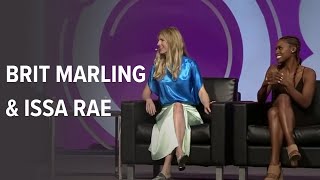
This is a transcript of a live panel/Q&A featuring Issa Rae and Brit Marling discussing their creative careers, the importance of self-belief and ownership, and how they navigated industry gatekeepers by creating work independently. They compare paths from low-budget/online beginnings (Awkward Black Girl; indie features) to running high-profile TV series (Insecure; The OA), describe collaboration and maintaining voice amid notes, and debate how audience feedback, distribution platforms, and industry diversity shape contemporary storytelling. The tone is candid, practical, and occasionally humorous.
Chapters
Sam.
Oh, no, no, no, no.
I'm going to leave. They have things to ask you. Issa and Brett, I think. I don't know. I wish they were a little enthusiastic. Right. I mean, it's a shame that this crowd isn't so into you guys.
Thanks for the love, guys. Thank you.
Welcome. Yay. First, I just want to say Issa and I both got the privilege of watching Michelle Obama this morning here. My mind was blown. I know you had some FaceTime with Michelle. How you feel?
I got FaceTime. I got hug time, I got high five time. It's just gonna last me for the rest of my life. I'm sorry. So honored to be able to have had that privilege.
It's a good day. So congratulations on your respective new recent shows and amazing careers. This is kind of the insecure OA crossover we never imagined was possible. So maybe, who knows, season three, for each of you, we could see some overlap. We'll see.
That sounds great.
We could write that afterwards. Yeah, let's do that.
We have so much time.
So talk to me a little bit about the fact that both of you kind of represent, like, an interesting kind of evolution, especially in television, of kind of the writer, producer, actor, gaffer, key grip, whatever. Are you wearing a lot of different hats in your respective shows? What do you think that's about in terms of industry wide why we're seeing more of this kind of model in television?
I mean, I think. I mean, beginning as a young woman, trying to find work as an actress and maintain your political beliefs and your moral beliefs is very complicated. So right away, I figured out that if I wanted to act, I also had to teach myself to write. And that was a really long journey. But I think being in control of creating the content and being in control of the storytelling opens up, you know, new space for everyone.
So how much curiosity do you guys have in terms of, like, how the other works? Because that's the curiosity. I know I've talked to kind of actors in particular, like producers and directors over the years that you very rarely get to see how someone else runs a show. Do you kind of have that curiosity when you guys get together in terms of, like, so how do you make it work? How do you stay sane? How do you create a show that works for your life and for your career?
Yeah, I mean, I think I observe others. We've had the chance to talk, you know, just before about our respective career paths and just found a lot in common. And I think even in taking different hats, I'm taking On different roles and wearing different hats, I found that observing is best. So even, you know, when I initially wanted to be an actress at a young age, I was in plays and I was like, oh, this is what I want to do. And then when I started directing in college and working with other more accomplished actors, I was like, oh, I was a terrible fucking actor. What was I doing? But now I'm learning about directing and I really love this. And then transitioned into producing and then watched very capable directors and talented directors and learned from them and learned from mistakes. So I love to just. I learned by doing and then I also learned by fucking up. And that's been, I fucked up a lot and that's been extremely helpful. And I attribute that to my career, honestly.
I mean, part of what's interesting in overlap in both of your careers is that you both really have charted your own very unique path. You know, there's no guidebook, obviously in terms of how you get to a certain place in the industry. But. And you guys both alluded to this, like it sounds like starting out the, the quote unquote, normal thing to do. Whether it was like submitting spec scripts or going out for auditions, you guys, fair to say, early on realized that wasn't for you or the things you were going after weren't worth your while.
Well, I think when you're a young person, you're starting out in creative work, you're really looking to be validated. And I remember going out on these auditions in the Valley. They're the kind of auditions you could look up in Backstage magazine. You didn't need an agent or a manager for. You could just show up and you get all dressed up and you're waiting in line with 250 other girls and everyone's in a mini skirt and they've got their hair blown out and all this lipstick on and high heels. And I remember waiting in one of those lines and thinking, what the fuck am I doing here? Like, even if I get this part, I'm going to be, they're going to kill me at the end of act one. Like, I'm in a dumpster in this movie. And so you have to just take a big step back and be like, maybe it's not about getting validation, maybe it's not about getting the part. Maybe it's about figuring out how to write your own. Forget even an on ramp onto the highway of what is. It's about like foraging your own path through the wilderness. And then hopefully other people are like, hey, what's she doing over there? You know, and they pick up a shovel and they come dig with you, and you. You chart a different course. So in some ways, for me, it was out of necessity, but I'm glad that I did it that way.
Was there a shift for you, Issa, where there was, like, a moment where you're like, I can keep plugging away on this path, or I can try and create something on my own?
Absolutely. There's a pivotal moment. I mean, much like initially, I started off trying to break in traditionally just by writing spec scripts and pilots and films, and was always met with either, this doesn't have an audience or this wouldn't sell, or, you know, sometimes they just didn't get it, or sometimes they just didn't think it was good. And so I got kind of tired of putting my fate in other people's hands. And that's when I started creating work online and found that I had direct access to an audience that I was building that liked my stuff as is, and I was just learning and growing. It felt like quality control and customer service of just, like, the audience is responding, and I'm honing my craft as I continue. And then there was a moment when I created my third web series, which was the Misadventures of Awkward Black Girl, where. Thank you. Where one of my producer friends was saying, look, and we're only about in our third or fourth episode. But the response was great. And my producer friend was like, look, we should take it to this particular network and just try to pitch it to television. And I had maintained that I wanted to keep this show online just because the past two web series I'd done, I tried to pitch to television. And they, again, this doesn't have an audience, or this doesn't fit a specific genre or a specific lane. And so I was like, when I made Awkward Black Girl, this is specifically for the web, it's for me and my friends. And it's just to be able to say that I created something that I wanted to see. And so that I could continue to talk shit about the fact that I'm not seeing these representations on tv. I did my part. And so when we went to this network meeting, the guy was just like, just didn't get the show at all. He was like, oh, I saw your little web show, and, you know, I love it. It's a show about this black woman and her black woman problems. Funny stuff. And I was like, that's not what it's about, but okay, cool. And then he proceeded to tell Me, like, why the show wouldn't work. He was like, you know, black people, and he's not black. He was like, black people like to see celebrities, so maybe we would cast. And he started naming prominent actresses that weren't awkward black girl types. And secondly, he was just saying that he would replace specific actors. And it just became very clear to me in that meeting that this network executive had no idea what he was talking about. And then I should keep my work online. I was like, I would rather do the show as I've been doing with the people I've been doing it with than sell it to an idiot who ended up being fired. You know, so, yeah, exactly. You're out.
Karma.
Yeah.
But I'm curious. You move past that quickly, but that takes a lot of fortitude. I mean, a lot of people would make that compromise. Everybody in this room knows how tough it is to kind of get somebody interested in material and say, yeah, I'm going to invest in you. And you could have made some big compromises to kind of make it to the next step, as it were. Where do you think that confidence or strength of character came from for you?
I was a little bit older, and I thought that this was something that was very close to me. And I was seeing the firsthand results of this does have an audience and people do like the show as is, and there is something here and something pure that I felt like didn't need to be tainted. Like we were doing something on our own. That felt so powerful that I just didn't want to let that go. And also, to be real, I still had a day job. So there was that where I was like, okay, I don't need the check that badly. I did, but it just wasn't worth it. And so, you know, I'm sure you could speak to this. There was just something about the ownership of it all and maintaining that that was worth more than just even dealing with, trying to appeal to this guy's sense of what would sell and what would be successful.
I mean, for you, Britt, you know, you alluded to this, but, like, you know, you had. You made a documentary pretty early in your career, and then there's a bit of a gap before you kind of came back to Sundance with an amazing one, two punch of two films. And I expect in those years was sort of what you were referring to. Those years where you probably went out to LA and went up for different jobs.
Those were tough years. Yeah.
So, yeah, I would think. But, I mean, what would you say to actors or Creators out there that are going up for work that they know they don't necessarily believe in, but they believe that that can get them to the place where they feel they need to be.
I mean, I think it's something very similar to what Issa was saying. It's like, if you work hard and you keep trying to learn from your mistakes, eventually the system will come and offer you something. Like, for instance, I'd been out in LA trying to audition, couldn't get any parts, was moving progressively farther east into, like, places I could afford, eating lentils mixed with, like, hot mustard sauce from Trader Joe's every night. The mustard was so hot, you couldn't really taste the lentils. You know, you're really. Your parents are like, what are you doing? You have a degree. Your friends are all buying real estate and getting graduate degrees and have real jobs, and they're getting married, they have kids. Like, what's going on? And usually it's at that point that someone will offer you something that seems like a life preserver in the rough sea. I remember, for me, it was. There was a. Someone offered me a job to come work in a writer's room on another show. And I told my parents about it, and they were like, oh, my God, take that job. Then we'll have something to tell our friends that you're legitimate and you're doing something, and it's okay. We haven't lost you to the dark side of Los Angeles. And I didn't. I didn't take the job. And it was another three years of sitting in the public library downtown, reading scripts, reading screenwriting books, learning how to write. We eventually wrote these two very small features. One's called Another Earth, another's called Sound of My Voice. And then we went and made those just because we wanted to learn to make them, and we didn't have any resources, so we moved to. Mike Cahill directed Another Earth. We moved into his mother's house in New Haven, and we lived in her house, and we shot inside her school, and we designed the costumes from things that were in her attic, and we just put it all together for a couple thousand bucks, and that film ended up being programmed at Sundance. And then I started to be able to do things the way I wanted to do them. But there was a period of a good seven years in which you just have to keep doubling down on yourself when no one else is doubling down on you, and that's hard.
You mentioned Mike Cahill. I want to talk about collaboration because collaboration is important to both of you. I mean, you're both known for unique voices that you've created. I mean, you think of Insecure, you think of Issa Rae, but you develop that with a collaborator. And I would imagine that's a transition for you, too, to figure out how to maintain that unique voice and yet integrate another voice in there in terms of the collaboration. And for you, you mentioned Mike, and Zao is obviously a huge collaborator for you on the oa. Is that a challenge in terms of creating art that feels wholly you and yet also working with a collaborator? Or do you find that that can help distill your voice in a way by working with somebody else?
For me, I think the transition from basically the Internet, where you are. You start off as the sole voice, and that kind of grows, but you're still, to a degree, very confident in what it is that you're doing because it's so small and you're wearing so many different hats and having so many different roles. Like, for me, that became a lot, to the point where I welcomed collaboration. And I think before Insecure, it was just more about, like, finding out what my voice was. And I remember getting my first television opportunity and feeling just a huge desire to please. I was just so eager to have the opportunity and felt like, oh, it's gonna be my one shot. You know, they don't give black people shots so so often, like, especially in the television space, much less black women. So I really gotta nail this or the next person's not gonna be able to do it, and I won't be able to do it again. And I just felt so much pressure that I didn't know how to navigate notes well, because that was not something that I dealt with. And I worked with a. The studio itself was just amazing. The production company was amazing just in terms of holding my hand and being great and teaching me so much. But when it came to navigating notes from the studio and the network, I was just like, oh, what do you need? Okay, yeah, the note. Yeah, I'll make it work. Yes, yes, yes, yes, yes. To the point where it just became mush. It wasn't my voice. It was just generic, a generic compilation of feedback. And when I turned in the script, it was just. It was voiceless. And for me, that was devastating because I knew that I was better than that, but I didn't know how to be better than that. And I think by the time they passed on it, I learned, like, it took me a while to realize, like, they hired me for a specific reason, because they wanted my point of view. They didn't want me to make the show through their lens. They wanted me to just use what they were inputting to make a better show and to hone my own voice. And so after they passed on that I thought I didn't have. I thought my shot was over. And then, you know, HBO called a month later to say, hey, we heard you're free. What else do you have? And so that really helped me collaborating with Larry, and he was such a. Larry Wilmore was so seasoned. He's been working in the television industry for so long. He really helped me to build confidence in my voice and say, no, this is you. Like, you are the voice of the show. So you just have to figure out how to properly kind of use the. Just funnel everything through what it is that you want to say and just be confident and have that foundation of what you want to say. And so once I found that, then it was so much easier to bring on, you know, an amazing. Another showrunner, Apprentice Penny, and an amazing director, and to be able to just fuse our points of views together to create the best show possible.
I read something that you said, and I don't know if this is something you directly said to HBO when you were developing it, but that you made the show, or perhaps still making the show for your friends and family. You're not necessarily making it for white guys like me. I mean, part of the testament to the show is it works for a broad audience, a broader audience than your friends and family, obviously. But how did HBO react to that? Because, like, in this age where we're supposed to be as broad as possible and get the largest possible audience, you're saying, no, this is. I want to make this work for a niche for. For not even a niche, but like a large segment that's been ignored, perhaps. I think that's.
I mean, I think that's where they excel. I think they welcomed it. You know, for. Whenever I create anything, I'm only thinking about the people that I know I can make laugh, and that make me laugh, and that is my friends and family. And so in fine tuning that to a specific audience, I think that's when we find the universal elements. People find what they relate to. So they welcomed it. And no, I'm not. Like, I think early on when I had the opportunity to create and pick shows, I always found myself in the room asking them, well, what are you guys looking for? And they don't want that. They want you to tell them what it is that you're bringing to the table what unique story you have to tell, what specific spin on something you have to offer them. And for me, I think that's what HBO responded to. They were just like, you have a very specific voice. This is for your people. And that's what we. That's what we want.
What about for you, Britt? Are you thinking about the audience, or are you pleasing yourself? And, Zal, if this works for us, it will work for an audience. Or are you thinking about an audience when you're in the writers room or creating something like the oa?
I mean, I think you have to think about the audience in the sense that you want to be a good storyteller and you want to make something that's entertaining. And often Zahl and I will talk about how. And I wonder how this works for you. We don't write anything down until we can pitch it to just someone in a coffee shop from beginning to end as a verbal story. And that person is held and compelled. And so you have that job as a storyteller. But I think the truth is, nobody out there has any idea what's going to work. I mean, we were talking about the oa, this sci fi series. This blind girl gets her sight back, then she's underground, then she's doing these angelic movements. I mean, people were like, what?
Yeah, I was going to say, I want to hear the pitch to that. I want to watch the pitch meeting.
It's bonkers. You know, it's insane. But I think that what's really interesting about a company like Netflix is, as a tech company, the mythology that's built into their DNA is to take risks, because that's how you succeed in tech. So they're excited to get around creative people who take risks that they believe in, and then they let you go. And you really have to trust your instincts about what you think is interesting. I mean, I think if an artist is anything or a storyteller is anything, they're just people who are opening themselves up to what's sort of in the atmosphere and acting as a conduit for that. And you gotta trust that, like, your satellite dish is open and you're receiving something interesting about what's going on culturally. What's the mood, what's the tone, what's happening politically, what are people feeling? And then you gotta distill that into a story and put it out in the world. And you can't think about, will I be loved? Will people like this? Will they think it's weird? Am I weird? Am I dark? You've just sort of let all of that go and be like, something about this feels true and honest. All I can do is get better at telling stories and then trust that it's going to meet the audience. Because like Issa was saying, the executives have no idea what's going to work. Every show, every story, every film that has transcended has always been the film and the story that has been rejected by the first round of pitches. Everyone has said no to something, and then it finally finds a home someplace, and somebody takes a risk, and then that ends up being the Sopranos or Moonlight or any number of these things. So I think it is about being a risk taker. I think you have to be able to do that in order to make a dent.
What about working in response to an audience? I mean, both your shows are very successful, and once they debuted, especially talking about social media, you see what people are saying. You see all the. There are a thousand Think pieces on each of your respective shows with people's thoughts on sort of where it should go or what they like or don't like. Is that helpful at all to your creative process as you get into seasons two and three? Or do you have to just, again, kind of have tunnel vision and do what's true to yourself?
Yeah, like Britt was saying, there's something so pure about being, you know, working with either one partner or an entire writers room in a vacuum and just creating and not having anybody, not having anybody's expectations to consider, and it's just pure. And I think after the show came out, like we were. We had a very engaged audience after the season finale. And, you know, we started the writers room the next day after the last episode premiere, and we were just all glued to our phones. Like, did you see this meme? Did you see what they said? Oh, my gosh, this is crazy. Did you see I'm on the Khalees? Like, they Photoshopped me onto Nas's face. And all of that is great, but I think, you know, even I think Awkward Black Girl, because we were creating the episodes month by month, like in real time. I think we took a lot of that feedback into consideration. And you take the constructive elements out. Like, we got things like, you know, your sound is terrible die. And we were like, well, the sound's terrible. I won't die, but I'll fix the sound. You know, and that helped. And I think in taking that constructive criticism, that really helped to prepare me and us for some of the things that we saw in Response to insecure. But as far as plot lines go, and even some character development, like, there are things that we are aware of, but we try very hard not to. To even think about those in those. Any of the comments in the writers room.
Do you think there's something specific about these two shows in particular that made them succeed where others that you had developed or brainstormed in the privacy of your home or brought out for pitch meetings didn't work? How much of it is luck and timing and the right executive responding to the right material, and how much of it is based on these particular ideas? You think.
Oh, that's really hard? I don't know. I mean, I think.
I mean, were there other projects before the OA that you felt as excited about? That just. We've never seen that just never went anywhere.
You know, it's funny because our approach has been so with a sort of entrepreneur hat on. Everything that we've written, we've made, which almost never happens in Hollywood. You know, you talk to screenwriters, and they have stacks of things that, you know, have either been in development hell or they were shelved or. And I think because we sort of took the reins of production and we're just like, well, if nobody believes in this, we're going to just try to make it. I think OA was the first thing where, when we conceived of this world and, you know, many seasons of it and plotted all of the labyrinth math in kind of detail, and then we went and pitched it. I remember sitting with Zol in Atwater Village eating pho, and we hadn't heard anything back yet. And I just started to cry into my pho because I was like, oh, shit. We just spent the last three years believing in this story. And if nobody wants to make it, this is the first thing we've written we can't go make at Mike's mom house for, like, $10. You know, like, you can't. The budget of that is just not possible. So. But then, thankfully, some people were interested and wanted to do it, and we ended up at Netflix and it worked out. But I think always you're. I think especially when you start, the key is to be creating things that you don't need anyone else's permission to make happen. Like, I think if you get stuck in that game of waiting for someone to say, oh, yes, you're good, or, yes, we believe in this show, or, yes, we think this has an audience, no one ever gets it up front. You have to prove it to them. You kind of got to be this train that's leaving the station. And because you're leaving the station, people start running to catch up to that train. So I think that's how we sort of got around it.
Are there techniques that both of you brought from your respective backgrounds? Whether it's like, making stuff, you know, I would imagine a tight budget for YouTube or tight budget for independent filmmaking that you've applied to the way you're. You've obviously got bigger budgets now for HBO and Netflix. Are there techniques that you've brought to these respective projects from those experiences when you were a little bit more scrapping around for dollars?
Nothing that anybody listened to. I remember having to shoot, like, a car scene. Like, car scenes are a big deal to shoot. And I didn't realize that because, you know, we were shooting for a tight budget, and it's just like, we'll put the camera in the car, we'll attach it, or somebody holds it in the passenger seat and we switch off. Like, it's easy. And there's something called a process trailer that apparently takes a very long time to do and could sometimes take up the entire hours in a day. And I remember just being furious. Like, y' all better like, tape a camera to this shit and let's come on, like. Cause we're losing time. But there's just certain aspects of, you know, being a union project, of considering cruise time, you can't apply low budget sensibilities to. So that's something that I've had to adjust to. But I think in writing, I naturally think I write for a lower budget, and I try to write real, and I think about the places that are near me. Just because this is where the show is set, in the environment that I grew up in. And that I know, and that is familiar to me. But for the most part, nobody cares.
Maybe by season four, they'll start to take you seriously.
If we're lucky.
What about for you, Britt? I mean, we were talking a lot backstage about sort of where independent film is at and sort of like how we both, and I'm sure all three of us, love film. And yet, as the narrative is truly accurate, so much of the best stuff is on television now, and so many great filmmakers are going to TV because that's where the money is. That's where the creative freedom is for you. Has that been an adjustment? Has that been not a bitter pill to swallow because you have more freedom and more money to make your projects than ever? But there is an adjustment. I would think it's a paradigm Shift for a lot of creators who dreamed of making films when they were kids, and now they're reorienting a bit.
Yeah, I think you have to. You have to figure out how to be flexible to the time that you're in. I remember when we'd come out of that Sundance, and then we made another film, Inside the System, and then we started to think, you know, these movies are having a really hard time finding an audience, even if they have something interesting to say. And we started talking about the benefits of long format and the benefits of reaching a wider audience. And a lot of our friends who were sort of in the same class of young independent filmmakers, like, ugh, tv, you know, oh, that's so. You know, that's not. That's not an artistic place to be in. But I think you kind of got to feel where things are moving and try to get ahead of the curve, because this space is changing, because of all the people who would have maybe gone into making feature films and instead have gone into television. And now you feel like some of the most compelling storytelling, the storytelling that's really pushing the boundaries of what. Of how we think, how we feel. You know, Transparent's another great example of that is more interesting than anything that's happening, really, in film that reaches a wide audience today. And so I think it is about, like, anticipating where things are going and trying to meet it there, rather than holding hard and fast onto the thing I felt when I was a kid, which is like, I want to make the Princess Bride. You know, there nobody's green lighting the.
Princess Bride anymore, unfortunately.
You mentioned something like Transparent. I mean, what. Who or what does inspire you nowadays in terms of television or film?
I think what Jill Soloway's doing is awesome. I mean, I was just watching some of season four, and to consistently be telling really difficult, complicated stories about gender and sex and, you know, feminine perspective is. I think she's a real trailblazer. So that's really exciting to watch. But a lot of my inspiration comes from reading, just reading a lot and taking in a lot of stories by female authors who are trying to carve out something new. Elena Ferrante is a great writer. I just finished Angela Davis's Women Race in class. I think the more female authors are taking in other female authors, we're starting to figure out something new together about what it means to write stories that are for women, rather than just borrowing from all the old models that have been written by men before.
So I recently got a chance to talk to Zoe Lister Jones She's a great writer, director, and she just directed a film with an all female crew, which may be, like, the first time that's ever happened, which is insane, because I'm sure. Yeah, I'm sure there have been a lot of all male crews over the years, and there probably will sadly continue to be until we actually do more than talk and actually implement some changes. Are you heartened by the amount of discussion in terms of creating a little bit more of a diverse atmosphere both in front of and behind the camera? Do you feel that's actually leading to change, or are we just still in the talking stage?
I think when people want to, they do it. You know, I think Ava DuVernay is a great example, just, you know, making a concentrated effort to have all female directors for her first two seasons. And, you know, even Ryan Murphy holding others to task and saying, look, we need to do our part to actually hire women and people of color behind the scenes. And, you know, it's something that's important to our crew, and there's just. I do think it's getting better, but so many people are just talking about it. And sometimes what irks me the most is when, you know, studio heads or companies will have these diversity panels and they'll invite their people of color to talk about why diversity is important. And we all know that already. And it's like to have white people talk about this.
Yeah, we got it.
Yeah, yeah. Like, talk about why you need it, you know, why you're looking for it and why it's absent and where you're looking. And for me, the education needs to start there.
Do you feel in the past, when you've gone into a pitch meeting, there have been certain expectations based on your gender or race in terms of, like, the kind of project that you're going to bring?
Yes.
I think I knew the answer, but I just wanted confirmation.
What did they think? What do you think people were expecting?
I mean, it varies, and it depends on what's on television at the time, honestly, especially when you're. When your exposure to black women is a very specific narrative or something that you haven't had access to, then you're gonna assume that that's what you're gonna be getting. I mean, I'm not trying to single out particular shows, but there's so many copycats in network television that are like, okay, we figured out the formula. You put a black woman lead, you surround her with people of color, you have a mission. Boom, let's just make more copycats. Or now this is successful. Maybe it was two. It's a black man and a black woman. And that's gonna sell, you know, and as opposed to hiring people who have very specific experiences and hearing what they have to sell, say there's an assumption and there's such a race to recreate. And you see that a lot in the film industry, you know, and trying to reach broader audiences or just trying to hit the most, make the most successful formula for a specific movie, it just doesn't work that way.
Is there a trope or stereotype in film or TV that you would be fine with never, never seeing again or something that really gets under your skin that you're still seeing?
I think the worst still is the idea of these, like, vacant women, you know, who just want a wedding and that's it. And you're just like, really? Because none of my friends are talking about that. Like, I'm not asking myself, when am I gonna get married? Like, but still, you know, it's just bridal dresses and fucking when. I would just love to see something where a girl is thinking and smart and talking with their girlfriends and they're reading and they don't necessarily need to be wearing glasses in order to do it. Like, and they don't have to pencil skirt and, like, pull up their stock, you know, I mean, they can just. The idea that, like, what is sexy or sensual about a woman being pigeonholed into these certain things and that we don't actually appreciate all the ways in which sensuality or sexuality express, expresses itself or feminine desire. Like, I think that's a place that has been really under explored. And, you know, it's up to all the women out there who are storytellers and who are writing and making stuff to help us understand what that is, what that can look like. Cause I'm bored of what I've been seeing so far.
So. Anything come to mind for you, Issa, or.
No, I guess. Race? Torture, porn? I kind of had enough of seeing our pain be exposed. And I kind of want to see more joy and more nuanced storytelling from various backgrounds. I just want to see more. There's more than that. There's more than that to us.
Britt, you were talking about sort of like not chasing, like, old paradigms, what we grew up with in terms of, like, adapting to sort of where the media landscape is. I mean, do you guys. I mean, Issa, you didn't get a chance to really talk about this. I'm curious, like, do you think about sort of like, where we're headed in terms of how content is delivered, is that something in your mind? Is your job just to create a great story or is part of the job also to think about where it lives and how it lives and how people are consuming it? What is the job of. Is the job of the artist, do you think, to think about that stuff or just to think about creating a great story?
I think this day and age the artist has evolved. Like there is an entrepreneurship, like you were saying, to thinking about your creativity. And you know, at the end of the day we are a business. There's a privilege of being able to create art, but there's also the commercial side. There's the element that has to make money at the end of the day. And so even in thinking about even the purest idea that I may have and wanting to produce that, in the back of my mind, I'm always thinking about what the best medium is for that and how that medium will evolve and how people engage with that specific medium. And there's fun in it. And that comes from just reading, you know, different publications and figuring out where transmedia is headed just as a whole. And that's partially fulfilling because there's just something so, so creative about being able to like even use YouTube at the time, to be able to create these small short episodes that eventually evolved into 10 minute episodes and 20 where people were demanding more. And then even looking at content on Snapchat that people are trying to adopt and model their storytelling to fit that specific medium. I just find that even podcast narratives, there's just so many opportunities to tell good stories. And there is fun in trying to figure out the best way to tell those stories through those mediums.
I mean, I myself sometimes worry about sort of like the pendulum swinging so far in one direction in terms of like short attention spans and Snapchat's fun. But I worry about anyone under 20 consuming anything over 90 seconds. And I think frankly, both of your shows are testament to. Attention spans are still out there and with great content, folks will sit down and watch something that's longer than a six second vine. But I mean, is that a concern? Do you think it's just sort of cyclical in terms of how we consume media, that there will always be an appetite for long form storytelling or I.
Mean, I think it's definitely a concern. I noticed it even in myself, like five years ago when I would sit down to write my attention span, I could write for four hours like unbroken and not have other things intervene. And now at the rate at which we're emailing, texting. The phone rings. It fragments your consciousness. It really does. And I noticed that, like, I have to really get myself to focus for just an hour or two straight. And that's not a great thing. And I think it's a dangerous thing for the audience. But for all of us, you know, as human beings on planet Earth, I do think that people, regardless of where technology is moving, they want to be moved. You know, they want to watch a story that makes them feel something deeply, that makes them laugh and cry at the same time, that confuses them or overwhelms them or that they want to talk with their friends about. And so I think as long as story creators keep trying to figure out what that thing is and finding ways to deliver it, I think it will move people away from the sort of fragmented, the more fragmented version and keep people interested in long format or long narratives, however they reach them. Podcasts, you know, YouTube, however, I have.
I'm just curious and I don't know if we talked about this, but I have found myself and I talk about this like where I can immerse myself in 13 hours of television. I can immerse myself in a show like yours, but not an hour and a half movie or a two hour movie. And I don't know if it's the process of actually going out into theaters, which I used to do on a weekly basis, on a monthly basis, or even just sitting down to click on Netflix to watch a, a full movie. I don't know what about my viewing habits has changed. Where I'd rather, where I say, oh no, that movie's too long, but I could watch this eight hour show, you.
Know, it also maybe is where the content is. Some of, I mean, the great stuff is now 10 hours on Netflix as opposed to 100 minutes at your local multiplex where we're sitting.
I do think if the formula doesn't.
Change.
In films, then I don't know that I would, that that will change, you know, for me, that I have a desire to view. I think there is something about films where you're like, oh, I know that this is gonna happen at the end of the second act and they're gonna fight and this is gonna be the resolution. Whereas, you know, I think television is able to take more risk and hold my attention longer. So I think honestly, the medium depends on the type of storytelling that creators are able to do. And I think that's what'll lead me to kind of tune in and off that.
I think the thing that has changed too, is the. The audience is so smart about storytelling now. Like, the average audience member has the same sort of story degree as a screenwriter that's gone to grad school. You know, like, everybody is consuming so much story at such an alarming rate that we're just numb to something that doesn't break the rules. And so I think that's the job of storytellers now, is you have to figure out, like, how do I subvert the midpoint failure, you know, or how do I make them feel like it's climaxing here. But that's a mini climax and it actually climaxes an hour. You know, you just have to change it up a bit in order to shock the audience again and then smuggle something substantive through, hopefully. Because I think you're right that like the two hour film format, we're just a little desensitized to. We can kind of predict what's coming and then. And then you're not moved as much.
You guys figured it out for me. Thank you. Now I know why.
Coming full circle, I mean, we talk, you know, I started by talking about sort of like the many hats that you guys wear. Is it too many hats at a certain point? Is it something that, like, you will always, if you had your druthers, always sort of have that degree of control and have all of those jobs? Or does part of you, as you progress, want to compartmentalize a bit?
I mean, yeah, sometimes, you know, when your, like, apartment is falling apart and you haven't done laundry in like three months and you think, like, fuck, maybe I should do a little less of this job. But at the same time, I think there was a period where I thought, oh, I'm going to teach myself to write and I'm going to write some stuff. And then if I have some, you know, currency as an actor, then I'll just act in other people's things. And then you reach that place and you realize that the world isn't going to change if we don't change it. And so all the narratives you're being offered are the same old, same old. And they're just, you know, they keep women in the box. They've always been in these, like, handful of roles you're allowed to play. And so I think when you reach that place, you're like, no, actually there's a kind of moral imperative to keep writing, to keep producing, to then start directing and to be controlling what is the gaze of that camera? Like, how do we look at women and not objectify Them all these different things. And so in that way, you just can't stop. Once you've figured out how many different angles it matters to think about, you kind of gotta stay in there. I think, though, sometimes I feel like I would, like, just step back and.
Just chill if you ever feel that all the time. But I think it is like you were saying, it's such a privilege to be able to create. And, you know, to. For such a long time I was complaining about what I was not seeing on television and the types of stories that I wanted to see and to be able to not only create that, but to be able to have a platform to, as a fan, you know, empower others. To be able to do the same thing and produce the content of others and expand the realm of storytelling and the types of stories being told feels like a privilege. But absolutely, there are those times, or I'm a big procrastinator. So I do allow myself those times, those days to succumb to my procrastination where I'm like, I know I'm not going to get shit done today, so Thursday is my day work. I'm not going to bother doing anything. And then I'm so, you know, thirsty to be productive that, you know, the next day I can flow. But I. It's really just about figuring out that balance for me of, you know, work and life.
There are probably a few thousand at least aspiring or active content creators out here today that are probably, you know, struggling with kind of many things. I mean, one being this, like, you know, we've kind of like, alluded to this. There's so much content out there. There's. We could spend now to eternity watching great stuff in the comfort of our own home. What would. Is. Is there one single piece of advice that you would give people that are worried about finding a path both to making a living, but also to kind of getting their. Their content seen and appreciated by others. Does one piece of advice jump out to you?
The thing I can think of that leaves to mind the most is the idea of tribalism. I feel like that's the thing that's effective when you're starting out. You really can't do anything alone. And unfortunately, we live in a culture that loves the mythology of the artist who springs forth fully formed and a genius from the beginning and never makes any mistakes and. And does it all on their own. And that just isn't the truth. I mean, often we bring certain people to the spotlight, but the truth is everything that's made is made Especially in the work we do by a huge tribe of people. So I think it's about finding a couple of like minded, you know, people who are interested in what you're interested in and then digging deep and figuring out what is it that I have to say that's a value add to the conversation, what hasn't been said before. And even if it feels strange or weird or provocative, letting that unusual thing out, because chances are if you're feeling it, someone else out there is feeling it too and wants to connect over it. And I think that's the way to begin anyway.
Yeah, I mean, I say that and I also talk about just. I put a lot of pressure on myself in comparing my journey to that of others. And I feel like realizing for me that everybody's path is different helped and not holding myself to the same standard. And I had these unrealistic goals. I remember being 19 and being like, when I'm 21, I'm about to have an Oscar and didn't have any type of script. Just knew that that was gonna be the case because I felt like that's what I was. That's the goals that you're supposed to have.
And.
For me, it was just about really taking my time and figuring out what it is that I wanted to say. And again, finding other people who were just as passionate and who were also better in areas where I was weak so that I could continue to learn from them. And it's just been so fruitful to work with people who are so strong in their respective fields that I can grow with in turn.
Well, sadly, we're out of time. The good news is that these two are very prolific. They're probably already. They're probably half back of their mind during this Q and A is thinking about the next seasons of their respective shows, Insecure season three and the OA season two. I know you both are hard at work. Congratulations on everything you've accomplished and thanks so much for all the wisdom today. Give it up for having us.
Thank you, guys. I mean, yeah, sometimes, you know when your like apartment is falling apart and you haven't done laundry in like three months and you think, like, fuck, maybe I should do a little less of this job. But at the same time I think there was a period where I thought, oh, I'm going to teach myself to write and I'm going to write some stuff and then when I have, if I have some currency as an actor, then I'll just act in other people's things and then you reach that place and you realize that the world isn't going to change if we don't change it. And so all the narratives you're being offered are the same old, same old. And they're just, you know, they keep women in the box. They've always been in these, like, handful of roles you're allowed to play. And so I think when you reach that place, you're like, no, actually, there's a kind of moral imperative to keep writing, to keep producing, to then start directing and to be controlling what is the gaze of that camera. Like, how do we look at women and not objectify them? You know, all these different things. And so in that way, you just can't stop once you've figured out how many different angles it matters to think about, you kind of gotta stay in there. I think, though, sometimes I feel like I would, like, just step back and.
Just chill if you ever feel that all the time. But I think it is like you were saying, it's such a privilege to be able to create. And, you know, to. For such a long time I was complaining about what I was not seeing on television and the types of stories that I wanted to see. And to be able to not only create that, but to be able to have a platform as a fan, you know, empower others to be able to do the same thing and produce the content of others and expand the realm of storytelling and the types of stories being told feels like a privilege. But absolutely, either those times or I'm a big procrastinator. So I do allow myself those times, those days, to succumb to my procrastination where I'm like, I know I'm not going to get shit done today. So Thursday is my day work. I'm not going to bother doing anything. And then I'm so thirsty to be productive that the next day I can flow. But it's really just about figuring out that balance for me of work and life.
There are probably a few thousand at least aspiring or active content creators out here today that are probably struggling with kind of many things. I mean, one being this, like, you know, we've kind of like, alluded to this. There's so much content out there. There's. We could spend now to eternity watching great stuff in the comfort of our own home. What would you. Is there one single piece of advice that you would give people that are worried about finding a path both to making a living, but also to kind of getting their. Their content seen and appreciated by others? Does one piece of advice jump out.
To You, I mean the thing I can think of that leaves to mind the most is the idea of tribalism. You know, like I feel like that's the thing that's effective when you're starting out. You really can't do anything alone. And unfortunately we live in a culture that loves the mythology of the like artist, you know, who springs forth fully formed and a genius from the beginning and never makes any mistakes and, and does it all on their own. And that just isn't the truth. I mean often we bring certain people to the spotlight but the truth is everything that's made is made especially in the work we do by a huge tribe of people. So I think it's about finding a couple of like minded, you know, people who are interested in what you're interested in and then digging deep and figuring out what is it that I have to say that's a value add to the conversation, what hasn't been said before and even if it feels strange or weird or provocative, letting that unusual thing out because chances are if you're feeling it, someone else out there is feeling it too and wants to connect over it. And I think that's the way to begin anyway.
Yeah, I mean I say that and I also talk about just. I put a lot of pressure on myself in comparing my journey to that of others and I feel like realizing for me that everybody's path is different helped and not holding myself to the same standard. And I had these unrealistic goals. I remember being 19 and being like when I'm 21, I'm about to have an Oscar and didn't have any type of script. Just knew that that was gonna be the case because I felt like that's what I was. That's the goals that you're supposed to have. And for me it was just about really taking my time and figuring out what it is that I wanted to say and again finding other people who were just as passionate and who were also better in areas where I was weak so that I could continue to learn from them. And it's just been so fruitful to work with people who are so strong in their respective fields that I can grow with in turn.
Well, sadly we're out of time. The good news is that these two are very prolific. They're probably already, they're probably half back of their mind. During this Q and A is thinking about the next seasons of their respective shows, season 3 and the OA season 2. I know you both are hard at work. Congratulations on everything you've accomplished and thanks so much for all the wisdom today. Give it up for having us.
Thank you, guys.
Sam.
More from Patrick



A NEW BREED OF PARTNER: The Partnership Ecosystem Model Journey of Patrick Biddiscombe, Part 1








Customer Success Workspace: Never Lose Sight Of What Matters Most | HubSpot Spotlight