Brit Marling on Upending Expectations
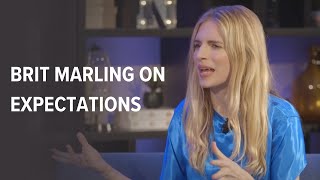
Brit Marling on making The OA for Netflix. She and her collaborators broke traditional plot structure deliberately, using variable chapter lengths and late credits to surprise viewers. They planned it as an eight-hour film with a 40+ hour multi-season architecture, building from DIY roots and college friendships rather than industry connections.
Chapters
Oh, my. What have we done? I mean, we spent the last three years dreaming up this entire universe. Hours and hours of storytelling. And if nobody buys this, it's like we've just walked on a limb and it broke.
DOA was probably part of the reason I loved it so much, personally. Was it. I've never seen a story like that, a show like that. It was just such a unique story. Was that important to you to sort of produce a show and a story that isn't the typical, you know, plot line that's out there or subject matter that's out there?
Yeah, I think. I think part of what's really complicated about storytelling right now is that we're all consuming so much story. I mean, if you think about it, I was having a conversation with my grandfather and. And he was like, when I was growing up, we went to the cinema every three months. They were consuming a few big stories a year. Now it's like we go to the cinema maybe once a week, or we certainly watch movies on our laptops while we're also texting people and typing something and then binge watching. It's like you're consuming 8 hour, 12 hour stories a couple times a week. And so I think what's happened is the average audience member has an incredibly sophisticated sense of story. Like, they know what's coming. They know all the things that screenwriters traditionally do. You know, the tear that happens in the beginning and then the first plot point and then the midpoint failure. And all these things we can predict now. We almost feel them coming in our bodies. So part of what we felt when we wanted to make this show at Netflix is we asked them from the beginning, we were like, we don't want to do chapters that are of a set length. Like, we want to tell a chapter, and we want it to end when it feels right to end. And we want to do the credit sequence 50 minutes in. You know, which when you're at a company like Netflix, they get really excited by something like that, but you're breaking a lot of the traditions. And I think that. I think that's actually important because it's the only way to sort of shock the audience into paying attention again. And I think that's when you manage to smuggle something across. You know, it's like if the story really has something to say sometimes, if it does it in a structure that's traditional, the viewer is not awake to it. But if you can have elements that kind of catch the viewer off guard and they're sort of on the back foot or they're leaning back in their chair and then, you know, you manage to smuggle something across while the guard is down. Otherwise, at least for me, I've got my guard up, you know, I've got my arms crossed. I'm like, I know what's happening. What's this person gonna show me? And they have to kind of, you know, they have to shock me in some way before I'm really gonna listen.
You mentioned Netflix earlier and working on, you know, at Netflix and the sort of opportunity that's there with the shows that you're creating. How difficult or not difficult or enjoying is it to create, you know, to be. To know that you have to create in a way that all parts of your story are coming out at one time. You know, they've sort of totally changed the model for television shows in that way. And it's a totally different way to consume that type of content. But you have to think about that as you're putting together the whole piece.
Totally. I mean, we were really thinking about that a lot in the beginning, and we wanted to create something that was an eight hour film. So we had even asked Netflix, you know, is there a way that we can sort of go right from the ending right into the chapter card of the next one? And we were kind of part of helping them think about how that might work. So you could have a cohesive eight hour experience, but also stop at any moment and be like, I've done four chapters and now I want to put this book down. The thing I think I've realized, and what we're trying to do this year in the writers room is think about. I think we thought most people would do what I do with a novel at night, which is like, I pick up the book and like, I read chapter one and chapter two, and then I'm like, okay, I got to go work tomorrow and I'll put this down. It turned out that a lot of.
People were watching what I did. Yes, Watching it, which was. Started it at 9 and then didn't get off the couch until 7pm Because I couldn't help it. That's amazing.
That's amazing. And I think we didn't anticipate that. And I think now we would try to build into the design of the story more like sort of lulls to just let you breathe and calm down for a second before it takes off again in a twist and turns. I think, I think we're all learning as the medium evolves, like, how much story can an audience Stand where do you need to take a break for them so that they can catch their breath, fix a snack, and not have to be so engaged in thinking all the time.
You mentioned the writers room and moving into the second season of the oa. And so, I mean, for you, but for anyone creating a television show, how much were you thinking about the prospect of a second season and what the continued story would be while developing the first season without knowing how it would take off?
We did a very insane and possibly stupid thing, which is we thought of everything from the get go. We really planned out the architecture, the labyrinth of a mystery that could go on for, you know, 40 plus hours. And we designed every turn in it and we thought about the thing that's going to be in the center once you arrive at the very end. And we did all that up front before we even wrote the first script, the first chapter. And we wrote that script and then we pitched it around town. And I remember this moment where Zoell and I were sitting there waiting to hear how these pitches is going, and it suddenly occurred to us, oh, my, what have we done? I mean, we've spent the last three years dreaming up this entire universe. Hours and hours of storytelling, and if nobody buys this, it's like we just walked on a limb and it broke. You know, I think sometimes you have to take risks like that. I think we felt like the long format space is a great place for a Mindbender, but usually because of how television works, you know, you make this pilot and then you get greenlit for the whole thing. You can feel that the Mindbender hasn't been taken for a real test drive because people sort of like set up a pilot and then they just sort of like write their way out of the holes, the various holes they're in, or they try to. We were really like, well, we want to solve everything up front. Which of course it's a huge risk and you don't know you could be done after one season. But thankfully, a place like Netflix at least is being like, we're green lighting this first round. And so, you know, at least you're going to get to tell a full arc of the first part of the story. And then thankfully, they decided to go for another season. Hopefully we'll get to the end that we intend.
I hope so. I'm looking forward to it. You say we. So this process for you is collaborative. What does that look like? What is. You know, how do you. How do you bring in your own creativity and your own thoughts, but also Work with others to get to the old, you know, to the final product.
Yeah, you know, I was really fortunate. In college, I met two young, very talented filmmakers, Zalbat Manglage and Mike Cahill. And I really, at the time I was an economics major. I mean, I was planning to go work at a bank. I had like a very different life set for myself. We started making these tiny films together and we really liked doing it. And then Zol got into film school out in the afi and later Mike and I had made this documentary and ended up out there. The thing that I think was really effective about our beginning is that we never thought we could do it alone. And we always had each other. And so we got to sort of make stuff and in a really handmade way based on, okay, we have the camera, we've got our laptops, we're going to put Final Cut Pro on the laptops and we're going to just make this stuff ourselves. And I think that let us sort of like leap out of, I think, the traditional thing of like, well, I'm going to go intern here, I'm going to go intern on this set and I'm going to be a PA and then I'm going to learn this, or I'm going to go audition for these really bad horror films or I'm going to try to get a space on this car commercial. I think by being collaborative and working in a group, we got to sort of take the reins of our lives back from being sort of told, like, yes, you're okay, you can do this. Instead, we just made the stuff. And we made it because we loved working together. And I think if anything, that's the thing that I, when I talk to young people about making stuff, this culture's, you know, very about the individual. And I think that sometimes works against creating new beginnings. I think if you can find people who are like minded, passionate, want to try stuff that's different, you can carry each other through that very hard period of self doubt when everyone's telling you you've lost your mind and you should go get a real job, whatever that even is now.
You know, this is a real job.
These are real jobs. Yeah. But I think you need to have a community because it's tough. I don't know what it was like for you, but there was a good stretch of seven years in which everybody around me was being like, you've lost your mind. You're a bright, talented person. You could do any number of these things. What are you doing? And in that moment. If you don't have other people around you who are also trying to do something out of the box, it'd be very hard to catch yourself. You know, it'd be very hard to keep believing if you didn't have a sort of community, I think, yeah.
More from Patrick



A NEW BREED OF PARTNER: The Partnership Ecosystem Model Journey of Patrick Biddiscombe, Part 1








Customer Success Workspace: Never Lose Sight Of What Matters Most | HubSpot Spotlight