Building Apps With 0 Coding Skills Using GPT Engineer (Live Demo)
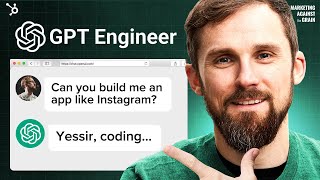
GPT Engineer lets anyone build web apps by typing what they want. The hosts demo a workout generator, a marketing dashboard, and a crypto tracker, all built without writing code. They say this will make basic coding obsolete and let marketers build their own tools.
Chapters
Hey everyone. Today we are really excited. We've been building apps and we don't know how to code. We're going to show you how to do the same thing using AI and using a brand new AI web development tool called GPT Engineering. Let's get to today's show. Kieran, I am kind of blown away with how quickly building web apps using AI tools is going. Like, you and I in like our spare time this morning built a couple of web apps that we always had ideas for. We've been thinking about doing, just playing around and it was like minutes, not hours or days. Like it's pretty incredible, right?
Right. Yeah. I think the app that I built wasn't built in a couple of minutes this morning. It was built while you were doing the intro. And that's just being honest. I had no time to prep for this show. So I'm like encoding away telling the new app that we're going to show to do things for me. And so really the thing we're going to show that I did was done in less than 30 seconds. It was like the time you took to do the intro, I was able to build that app and I. This is the episode you want to watch if you want to start to build things and if you want to learn about why we are entering the world of personalized software and really what that means for the software industry as a whole.
Yeah, I mean, look, we're going to show you today how to use GPT Engineer to build your own personal web apps. And what I love about this AI coding and web development trend, Kieran, is that the folks who listen to marketing against the grain are exceptionally creative. Whether you're a marketer or founder, what have you, you're very, very creative. Sometimes limitation is not your creativity, it's implementing and testing that creativity. And tools that make it really simple to go from an idea to a proof of concept are invaluable in that in this world. And GPT Engineer is perfect for doing that because it's not just like giving you some mock up, it's allowing you to integrate real time data on the back end by doing API integration for you. API is Application Programming interface. It's basically how one web application or database talks to another. And it can do all of this for you so that you don't have to know JSON or Python and all these coding languages. It can take your natural language and turn that into a programming language to build the right app for the problem you're solving. One of the big predictions we've been making on this show is that AI is going to democratize web apps and coding, at least basic coding is going to become a commodity skill. And I was on Twitter the other day and our friend of the pod, Alex Lieberman, was showing something kind of interesting that I wanted to talk with you about. He was showing something that he built. This is crazy. Someone built a free web app that generates a random body weight hiit workout based on time and preference and links out to how to for each exercise each even crazier. That someone was me. And he's like, I literally built this app in 10 minutes while eating lunch. I'm like, Alex, it's a little like not the best copy, but you know, it is what it is. But what's interesting is Alex is a creator. Alex started a newsletter company. He is not a web developer, but he cares about fitness and he wanted to just like build a little app to generate workouts for him. And you can see here kind of the demo video where it links out to YouTube videos if you don't know the exercise and all of the aspects there. And it gives you kind of a core basic web app that runs down, hey, do these exercises for this amount of time. And he did that in like 10 minutes. Before, like, that would have been literally impossible. You would have had to like pay somebody on Fiverr upwork some amount of money. It would have taken some amount of days or weeks to get it done and get it back. And Alex would have been like, yeah, it's just not worth it. This is just like some basic problem I'm just interested in. I don't want to go and do this. But now using AI, he's built this and he's built this with a new app that we wanted to share with everybody and kind of walk people through. That's called GPT Engineer. What was your initial reaction?
This is where things are going right? Like if you've been following along. Over the past couple of weeks, people have been raving about Cursor and Claude as being the kind of new technical co founder. I have a bunch of tutorials that I'm trying to go through there. So that's the. There's some really powerful coding tools being launched, but the GPT Engineer is the easiest way for anyone to build a prototype of an app. And the reason it's kind of cool is because we are, you know, we, Claude is. Can create you a bunch of cool things. We had an episode previously around how we. How I created an app really quickly using Claude and Claude artifacts and brought it to life and published it very, very rapidly. But the thing Claude doesn't have yet, but I do think it will come and it might actually make some of these kind of tools defun in the future is the ability to add an API. So an example would be an API allows you to bring in data to Claude and then build a prompt around that data. So an example would be I would bring in a data from, let's say, Glassdoor around a company, right? I don't know if they have an API, but I could bring in all of the user reviews from a company and then I could build a prompt to basically create the most positive and negative sentiment and topics around that company that employees think about working there. And so that would be some sort of, like, company grader and it would be pretty easy to build, right? Take API, take in user reviews about a specific company, have prompt, and then have prompt, do sentiment analysis and show you the positive and negative themes. The reason you can't do that in cloud today is because you actually cannot bring in the data using the API from Glassdoor. And you actually can't even use a single prompt in. You can't. You can't create a prompt because you actually have to use your API key to be able to send the data to Claude and Claude to send you back the output. Right? That's how an API works. And so that's kind of a limitation in building and CLAUDE today and GPT Engineer. The reason I think it's pretty cool is because you can actually use APIs and so you can build prototype apps really, really quickly using this with very little code. I'm like, when you did the intro, I am trying to literally build an app and fix a bug live on the podcast that we have more things to show. I am having an error. And that's why I'm like a little bit looking down at my screen and talking at the same time. But this is where we are today, right? Like, we're literally at the point where you and I are doing a podcast. And in between the bets, when you're talking, I'm building an app because I'm such a nutcase that I can't wait to actually try to get it working. If I, you know, the thing about me is there's. If there's an error or problem with something, I just, I have to fix it.
Yeah, I'm the same way. You can't move on. You're like, I don't care what other humans are in my way. Like, I have to deal with, I have to fix it for everybody watching. Like, I felt so bad for producer Darren. We started this podcast like 15 minutes late because we were both like, like coding away and we were like, Derek, we got, give us a minute. We gotta, we gotta work on this. But if two people who are fairly, I would say busy and have full time jobs can say, hey, I have an idea and I want to see if that idea is good and can validate that idea in minutes, like it's pretty remarkable, right? And so I want to, let's, let's start showing people stuff and we can kind of take it from here. So. Okay, so this is GPT Engineer and its whole point is to provide a text based web app experience where you can just use natural language use in our case, English, enter in your ideas and it will build a web app with you. And like this sounds silly, but it's like a page showing the top stories for hacker news, an app to help me track my crypto portfolio. A lot of like very personal apps. And when you think about these like kind of niche personal apps that wouldn't be like big subscription software products. Karen, I've had one forever that I've wanted. Like, if you're watching the show, you probably have a list or if you're a dork like Kieran and I, you probably have a list of like five to 10 apps you're like, you've always wanted. And you. And like, I bet you, Kieran, I've asked 30 people over the course of the last few years to build this app and they're like, oh yeah, that's, that's cool. And they just ignored it. And they're like, it's not, not important at all. And I'm like, but no, like, I think you would really use this. Or like I would actually really use this. And so I went into GPT Engineer this morning and I was like, screw this, I'm going to build the app myself. And this is what I did. I went into GPT Engineer and I was like, look, I want to build a web app that tracks the marketing data of companies. And what I want to figure out is what are the 10 companies that have the biggest increase in website traffic, the biggest change up or down in, in, in advertising spin, and the biggest percent increase in the number of backlinks they're getting. And the reason I want this is like, oh, I want to see who's doing the best marketing in the world, right? Because I either want to copy them, I want to hire people who are doing that. I want to just reverse engineer and understand like how are they doing this? And is this something that would apply to my business? But what's really hard is like tracking and monitoring that and seeing somebody who breaks out with a new marketing tactic early and being able to jump on that is actually not as easy as it should be. And so I was like, hey, I want to do this. And I was like, and I was like, oh, we can use similar web data. I'm on the board of Similar web, they have all this data. So I was like, oh, I just want this web app that's just like unique to me that we can go and do that. And so basically with text based commands, it built me a whole web, basically web dashboard. And this is just sample data because I'm waiting on my API key. I don't have a similar web API key yet. But basically before this was going to be impossible. Right? Like, right. How could I, how could I actually do this? And now it's going to take, once I get the API key, it'll probably take another 10 to 30 minutes of like back and forth to like actually get the app to output the data I want. But before I just been like, okay, cool. I'm just apparently just never going to have this app. And that's a pretty step function change in the world. Like what is your take on what this is going to do to marketers, to sellers, to software? Like it's pretty wild to me.
This is like, I think the core point of this show is coming back to something we talked about before. I'm just trying to get the one up that I did. I have a couple go in but I didn't get a bunch of time to do this. But the thing I would say is we kind of talked about something that is going to happen which is one to one software.
Yes.
And one to one software does start to change the dynamics of everything we know about how, you know, the software industry kind of operates. Right. Like that doesn't mean you can build all of the software you need. Alex was a really good example. Right. This is obviously not fully fledged thing. This took me a minute to build whilst you were talking in there, but I was like, okay, like, you know, in, in a world gone past, you would have a pretty good business by building like a workout planner. Again, this is like a, you know, 30 minutes. Let's put in 30 minutes. We want to do some flexibility because I'm not very flexible. And then it can build you this kind of workout plan. It Gives you the duration, gives you the different things and then basically it gives you a tutorial that it takes from YouTube. The thing, it takes me the thing, the fact that you can index content from you, it can find the right video. Like just let's pause there. It literally goes to YouTube, finds the right video for each of the exercises that it recommends. Let's just make sure we understand what it has done there.
Hey everyone, quick stat for you. AI usage has increased 53% since last year. And you know how I know that? Because I just read our brand new 2024 AI trends in marketing report. This report is packed with original data. That data not only highlights the latest in AI trends, but also shows how businesses today are using AI to grow their business. You'll learn the top five AI tools for marketers, exactly how teams are investing in AI and where they're seeing the return on their investment. And you get a data backed answer to the big question, is AI helping or hurting my marketing career? I invite you to steal and take all of our hours of research for free. Grab your copy from the link in the description below. Now back to today's show.
I would say within an hour I could build a workout planner that would be very customized to me, that I could track the workouts, you know, each and every day. And sure there's a way to start deploy, deploy this in mobile. So then I have like built myself a personalized workout plan. So my brother's a good example. My brother runs marathons. He's obsessed by running. He could build himself a pretty unique app because there's two things that would be unique for him. He has a coach that does that gives him tips on WhatsApp. So he has this personalized data source that's applicable to him. And so if he wanted to create the best workout app for him, he would create a workout app and he would ingest that data from WhatsApp. Like the coaching would be, you know, the coach, the coaching tips would be in each week. He'd be able to track his progress that week and it'll be customized to him. That is pretty possible to do with this because it has API calls. And so that is like the thing that is going to be incredibly impactful. First in this kind of first iteration of software, being able to, you being able to create it through the English languages, we can start to create apps for ourselves. And there's a whole industry of point solutions that are built that are simplistic point solutions that are one to many and for most people they're good enough. Like it's good enough. I wish I had like this feature, that feature, that feature. But what do you always hear founders do? Like, we don't want to build for individuals. We're trying to build for a broad populace. So we're not going to try to customize because that's not our business. We're working at the lower end of the market. You customize when you go to very high dollar ticket prices. Well, now people can customize for themselves. I don't need your software. I'll just build it for myself.
I need your API and data and then I can build.
You need your API and your data. And I think what you'll be able to do is send each other apps and be able to iterate on that app. So you'll have a whole economy of people being able to share apps with each other. Like we have Dharmesh coming on the show or he's already been on the show, whenever we put this out. And you can, and we talk about agents and you can share agents with each other and then you can actually iterate and build on top of that agent. So there's two industries that are really going to be disrupted very rapidly here. And one of them is software engineering, which kind of melts my mind by what happens here. Like all software engineers become product managers of sorts. And then the other one is going to be on these kind of like lightweight point solutions that have made a lot of money by being good enough for a large population of people.
Well, I think there's a third use case here, Kieran, that I would talk about that when you're talking about AI coding. And in this case we're using GPT Engineer, but you can use Claude and other, other apps. But highly recommend if you're watching, listen to this to go try GPT Engineer. Build something yourself and just kind of understand how it works. It's the disposable applications is a big use case. Like give, let me give you an example, Karen. I'm thinking about putting in a pool in my house. And you know what the biggest expense of that pool is outside of labor is concrete, right? Because you got to pour the concrete frame for the pool and the concrete around the pool. Like I could build a simple web app that tracks the prices and leading indicators of concrete. And like gives me a recommendation on a daily basis of like, when to buy, basically when to do this pool. And like, oh, we think in February concrete is going to be the cheapest. So like plan to do it then. Right like, that's not something I need more than once in my whole life. Right, right. But when I need it, it's like, cool. I did this thing and it saved me thousands of dollars. And that is like mind blowing to me that there's so many things that we do that are very point in time use cases where it's like, I need to do this once or twice ever. And before it's like, all right, I guess I'm just not going to do it. I'm just going to have to like pay the extra money or rely on somebody else who maybe I trust and don't trust to give me this information. Where now I like, I can build something and get that information very directly.
Right, exactly. You can build software to do things that was, you know, you just didn't have the unit. Economics would not have been feasible anymore, but now it's kind of free or like it's a couple of API calls. Okay. This guy is building Coin Market Cap in real time. So what you're missing if you're, if you're not watching YouTube is he's basically building an entire crypto aggregator site through this GP engineer. And you see how rapidly he's like developing here. Let me just push it on just to show you the. There's a lot more sophistication in this tool than we have shown. Like it auto debugs. Right. So it actually iterates and debugs with you. I'm trying to show the final version of this. It's built with GitHub, so you can actually just put it into GitHub and deploy that code. But you can see here like what he's built is basically I incredible crypto aggregator app where you can basically track everything, all of the prices, everything you could do in Coin Market Cap. And it took him probably like 5 minutes to build on multi pages. So again, you can, you can build entire websites here. We shouldn't undersell how much you can actually do because obviously we just did some lightweight stuff. But the other one, you know, you can build fun web pages. This is the one I was showing you Fun Web Skim HubSpot, 1970s. So I'm shown on the screen for our listeners a 1970s version of HubSpot's own page. But if I wanted to, I could start say, okay, now like, you know, build a page for the Contact Groove or the Psychedelic analytics or the Frankie Fresh Communication. And it would start to build the website because it knows to actually include the hyperlinks. Right. So you can actually Build real apps. You can build real websites pretty rapidly. And so we will be coming back with some more sophisticated versions. I know you're going to take your dashboard and integrate the similar web API. So you can again, you can say to it, hey, I want to have this kind of data. And it will actually recommend the company and the API you should use and show you how you can actually integrate it into the app. So it really does allow you to build apps pretty rapidly. So why, why would you use this over something like Claude artifacts? For the most part, it does have some unique features that. Cloud artifacts. Doesn't that allow you to build websites and apps? The hyperlinking, the auto debugging, the API calls, things like that?
Yeah. And even when you're just building the initial mocks, you know it's putting local versions on your machine. You know that your Claude is hosting everything itself. Right. So there's just like, right. Some, there's some subtle differences. And the reality is, I think when technology is early like this. Kieran, I'd love to get your take. The use case we're describing is like, hey, I want to build lightweight web apps to solve like very specific problems. I think you want to try that in a bunch of different tools to learn the best way to do that agnostic of a tool. Because some tools will be better at parts of that process than others. And then you'll figure out, then you'll then know, okay, if I'm building this type of web app, cloud artifacts is the way to go. Or if I'm building this, I'll use GPT Engineer. If I'm building this other one, I'll use this other tool. Right. Like that is. I think the best thing is like if, I think if you get too set into one tool too early on, you might like, you lose sight of like what are the strengths and weaknesses of each. Each app.
Exactly. I think the. It's just fun to play with these tools. So I think the takeaway here is this is an incredible tool. We believe the cost of code is going to zero. We believe there's going to be a whole industry of personalized apps that you can build for you. I think that is really applicable to marketers because probably a lot of the ways that we create value for customers is to create a bunch of cool point solutions instead of content. And I think if you are a marketer, I think part of your role will be able to deploy code of sorts. Like you'll be able to build apps as part of the things that you're doing.
Right.
Like the example would be the dashboard that you showed. If I integrated my CRM, I could show that data for accounts that my rep zone. Right. Like maybe changes in advertising spend or traffic, or maybe I can integrate mentions of that brand. Like you can actually start to build an app to highlight accounts that a sales rep would want to reach out to. And so again, if you're a marketer, you want to get really creative around how you can start using code to do things better.
What we're saying is that the line between marketing and sales and business building and problems that are solved by code are coming together. Right. Used to be like, cool, well, I'm not technical so I can solve this batch of problems and these other technical problems like we're just going to ignore. Right. Because I can't do anything about them. I've made a request, hopefully somebody technical will eventually do my thing and now it's like, oh well, I can go and do like a basic version of this thing and if it's helpful, then I can go show somebody who's very technical some baseline data and evidence and we can get this prioritized and do it in a much faster and better way.
Exactly.
The other thing we haven't talked about, Karen, is you kind of brushed over the fact that people are using Claude and Cursor, which are two different AI tools to do coding. Right. Like if you're a real technical web developer, this is making code accessible to non technical people, but it's also making the ability for technical software engineers and web developers to do their work much better and much faster. Right. Like that is that side of that equation too?
Yeah, yeah. I think that what you'll end up doing is seeing people use these tools and then graduate to some of the more sophisticated AI tools that allow you to do much more advanced type apps. And so we could probably do a whole separate thing on Claude and Cursor because that's another parent that I have been tracking and have some pretty cool demos of and things that people are building. But yeah, I think these are like lightweight tools that allow people to start to prototype really rapidly and then you're going to be able to upgrade to these more advanced AI tools. And again, everyone can start to code in some way if you're curious enough, if you have like good ideas. These tools allow you to monetize domain expertise. So the problem that a lot of people will have is they won't know what to build. Right. Having the compass, knowing where you want to go is more important than actually being able to plot the path to get there, because these tools can actually do that for you. They can actually build the path, they can build the functionality, they can build the tools, but you actually have to have enough domain expertise, you have to really understand the craft to be able to build the thing that you need to build that is of value to customers and people. Exactly.
So the core call to action here is go use Claude Artifacts or GPT Engineer, build a lightweight web app and then publish it and share a link in the comments. I'd love to see what people are building, especially if you got cool marketing related apps like Kieran and I. We read all the comments. So if you've got a cool idea, publish that and we'll give you feedback in the comments and all of those things. I think that'd be super interesting. We'd love to hear what you all are building as these tools get even better. I'm sure we'll be doing more episodes in the future, so stick around. Code is getting commoditized and that is a great thing for marketers because you can take your idea to reality much, much faster and that is going to be a good thing for growth and a good thing for your business. We'll see you real soon. On the next episode of Marketing against the Grain. This data is wrong every freaking time. Have you heard of HubSpot? HubSpot is a CRM platform where everything is fully integrated. Whoa. I can see the client's whole history. Calls, support tickets, emails. And here's a task from 3 days.
Ago I totally missed HubSpot grow better.
More from Patrick



A NEW BREED OF PARTNER: The Partnership Ecosystem Model Journey of Patrick Biddiscombe, Part 1








Customer Success Workspace: Never Lose Sight Of What Matters Most | HubSpot Spotlight