Building Bridges: The Power Of Partnerships With Glenda McNeal | INBOUND 2024
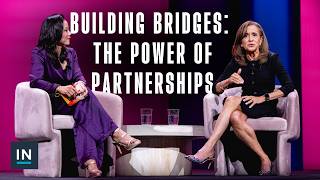
Transcript of a live INBOUND 2024 interview (host Sarah Chen Spellings) with Glenda McNeal, Chief Partner Officer at American Express. The conversation covers McNeal’s background and leadership style, the role of partnerships in growth (strategy, influence, trust, and communication), American Express’s focus on Gen Z and Millennial customer acquisition and experiential/value propositions, lessons from partnerships that failed or weren’t yet ready, and practical advice for smaller brands seeking partnerships with large firms.
Questions this video answers
1850
About 60% (host phrasing: "something like 60% of your new customer acquisitions are Gen Z and Millennials")
$695 (mentioned by host as example purchase choice by Gen Zers)
"Over a billion fans" and "77% of that fan base is under 35" (as spoken in the transcript)
Over 50% of the attendees were AMEX card members (transactions purchased on American Express card)
Chapters
Good morning, App 5. Good morning, Inbound. How's everyone feeling? Good. All right, this topic is one that is close to my heart. My name is Sarah Chen Spellings. I'm the co founder and managing partner of beyond the Billion, and also a proud podcaster with the HubSpot podcast network, Billion Dollar Moves. And today we will be talking about the power of partnerships. Something that is super, super important as you all think about growth and scaling global businesses. And without further ado, I have the most perfect guest for this. A rock star in her own right who has created her last three roles in a global organization. The chief partner officer of American Express, Glenda McNeil.
Hello, everyone.
Glenda, how are we feeling today?
I'm feeling great.
We were pumping our fists up earlier because this is a topic that you and I care about so deeply because we are driving global businesses. I want to start with getting to know you a little bit. Right. You know, with what we do at Billion Dollar Moves, it's all about the leader behind the multi billion deals. So let's start with a quick, rapid fire. Are you ready for this?
I'm ready.
All right, let's see. What's something you're obsessed with today?
I'm obsessed with sleep hygiene. I tend to burn the candle on both ends, and I am now really focused on trying to get to seven hours of sleep. So I have to do the mental math of what time I need to be in a certain place and subtract it all and get my workout in and then see how many hours I can squeeze in.
Got it. Top three people on your speed dial.
My son, my daughter, and my chief of staff.
Something someone said that has stayed with you till today.
Own your own. And that's really a message of independence and empowerment.
Love that.
And I've loved. I've lived it.
Absolutely. And of course, we will find out who said that to you. But I hear that it is part of your childhood. And we know that. You know, in many ways, as leaders, our childhood shapes us more than we know and more than we realize. So the question to you is, as a child of, I guess, eight in the family, how did that influence you?
So I am the last of eight kids. I grew up on a farm. And the notion of having the independence was very important to my mother. And so she was the person who gave me that advice.
Yeah, love that. And fast forward. Today, of course, you are the chief partner officer, the first in its history for American Express. And in fact, you created this job that you now sit in.
I did.
And You've done that for the past three roles. Tell us a little bit about the skill sets that you've had that has continued to bring you higher in your career today.
Well, you know, I take it back to how I grew up, and being the last of eight kids, I had a great opportunity to be an observer. I am a while there are eight of us, there's seven girls and one boy. And so there were lots of opportunities to learn. And the things that I learned that I think carry through to my career today and being in a role responsible for large strategic partnerships. Number one is communications. And what I mean by communications is really intentional communications. So I have a phrase, watch to see and listen to hear. That's moving from passive behaviors to active behaviors. So when you think about being in a conference room or sitting here next to you, I can know that I'm sitting next to you. I see you. But being able to really be consciously aware of what you have on, the shoes you're wearing, the red lipstick, the gold earrings, that's really focusing in and being an observer. And there's power in that because you can actually see how people are behaving, what their body language is saying, what their facial expressions are, and those are cues into some of the reactions to what you're saying. Listening to hear is about active listening, and it's really about listening to understand as opposed to just hearing. We all hear. But when you're really listening, you pick up the nuances. And in negotiations, that served me very well, because sometimes information is really in what is not being said, and there's power in being able to understand that and then really looking in at how people are responding from a behavior standpoint, as opposed to just words. And so communication was a big part of what I learned that has served me well. The other one is grit. You know, I didn't grow up with a lot of means. And so being able to live with disappointment and be resilient, I transfer that back into not every deal is going to work, not every situation is going to be favorable. And being able to pick yourself up, look beyond the disappointments, and really focus in on challenges has served me well in my roles and helped me to define roles. And the last one is values. I grew up in a family where values was very important. And so the ability to be centered in integrity, no right from wrong, have conviction in your beliefs, allows for stability, particularly in situations where there's a lot of uncertainty. And so when you're doing deals or you're meeting people for the first time or you're building on relationships. Being able to be really stable in what you believe in, I think helps in a lot of the uncertainty and the challenges.
Yeah. And talking about doing deals, you are the ultimate deal maker, brokering relationships with firms like Delta F1 Hilton. Talk to us a little bit about the power of influence. You talked a lot about communication, but how do you use your influence to be able to achieve your strategic partnership goals?
Well, influence is really about understanding what ultimately you hope to achieve. And so the ability to really focus in on an alignment of goals and understanding what's important to the other person. I think one of the most valuable traits in a leader is the ability to empathize. And empathy is about understanding. And if I'm sitting across the table from someone, it's equally important for me to understand what's important to the person I'm negotiating with or having a conversation with, as it is for me to understand what's important to me. And as the conversations evolve, being able to ask the right questions that allow the conversation to pivot, that allows the conversation, the conversation to change because of things that you say. And so the power of influence is really underlying the understanding that you tried to gain in a conversation and being able to really focus in on what is most important to the other person and finding the right places to make the appropriate consistency sessions. Influencing is really about having someone trust you and willing to listen to your point of view. And so how you talk about it, how you position things, and how you understand from others, I think is extremely important.
Yeah. And speaking about understanding about others, I was just tuning in to your CEO Steve, Scary, about your new strategy and sort of, you know, how you've grown the business over the last couple of years with a deep focus on Gen Z and Millennials as consumer targets. Right. And I think a lot of us here, I've spoken to some of you over the last couple of days at Inbound. You're thinking about the next generation and how you can stay ahead of the game to innovate and for IMAX. Not many people know this, but it's something like 60% of your new customer acquisitions are Gen Z and Millennials. How do you lean into a whole new demographic and how do you stay relevant?
If you think about American Express, many years ago it had the reputation of being for affluent people, for business folks, for people who love to travel. And we spent a lot of time thinking about our brand and the relevance of our brand across multiple segments. I think people are surprised with the number of Gen Z and Millennials, who, as their first card, are willing to get the platinum card for $695. The reason for that is really because we have a membership model that really focuses across segments. And so there's a baseline premise of always delivering relevant value to our card members. With Gen Zers, the focus has been very similar into the ethos of how we manage relationships with our card members is what's important to them. We're an experiential brand. We're not just a credit card. We are a brand that's really focused on experiences and access. And when you think about this segment of the population, they've made some very specific choices on how they want to live their lives. And so they want experiences, they want access. So when you think of Formula One, that is a huge brand, it's got over a billion fans, 77% of that fan base is under 35. And if I bring it back to the question on relevance for the inaugural Las Vegas Grand Prix in November of Last year, over 50% of the attendees were AMEX card members. So the transactions were purchased on American Express Card. Part of that is American Express being very focused on what's important to the end consumer. We try very hard to anticipate what the needs are and what the wants and desires are. And so access being an important one, we really focus in on the experiential piece of that and the lifestyle of our card members. So relevance is important. The other important part of the lifestyle of Gen Z and Millennials is dining. There's rules in people's families. One in mind sometimes is that you can't eat until we take a picture of the food. Right. I mean, that's.
I have that in my family. My brother's a celebrity chef, so that's a real thing.
Right. And so dining has become a very important vertical for us. And so what have we done? We've acquired Resi, and we've also just recently acquired tak. And so these are reservation systems that allow our card members to get access. So reaching segments of consumers is really making sure that we understand who they are, what they want, how they live their lives, and how you then, as the provider who's competing for their business, really focusing in on what's important to them. And I think American Express, through the membership model that we have, but also the partnership model is very. Allows us to be able to do that, because an organization like mine works very closely with the businesses to identify those opportunities, to identify the right partners, and then to work across our internal Business units to really make sure that we're delivering the kinds of value that meet their priorities, that deliver to the end consumer. And I think that's very important.
Yeah, and I was going to ask that. I think there was a lot of tracks in the last couple of days about understanding the consumer and the consumer voice. So it sounds like you have a great pulse on what millennials and Gen Z1. How have you been able to achieve that? Are you using AI? You know, what's the strategy that you think really works to really get the real message here?
You know, American Express has exist, existed since 1850 and we have been really being responsive to card member needs for a very long time. And so does AI help support that? AI is relatively new and it's a very powerful tool if you know how to use it. So we're testing and learning as we go, but we actually have a lot of information on our card members. Right. We are able to actually know where they shop, how much they spend, and because we have an integrated model, we are able to really understand how they live their lives. That data. Right, data is a powerful tool. Being able to actually have the data, know how to use the data, analyze the data and then use it is where the power is. And so being under, being able to segment that data and use that in a, in a way that really is responsive not only to Millennial and Gen Zers, but the Boomers and the Gen X population. Right. So our segmentation cuts across the population of the segments across the industry and you know, across consumers. And so what we try and do is really focus in on what the needs of that consumer base is. And that is really by mining data and really figuring out, keeping our, our ear to the ground, but also understanding the pulse of the industry.
Yeah. And part of the challenge of keeping the pulse in the industry is that when you cut across geos, it gets increasingly challenging. And building a global business, brokering strategic partnerships across, it's not always a bed of roses. What were some of the, I guess, lessons that you took away from partnerships that didn't go right or didn't go as planned?
Well, you know, partnerships is a tricky thing because what partnerships are opportunities to really be strategic and add value and have an impact. And there are challenges when you try and bring brands together. Oftentimes, however, that complexity is compounded by human behavior and personalities. Right. And so the bigger part is really making sure that you understand the needs of the individuals that you're working with. And sometimes you have to understand that your values are not aligned or that the timing is not right. I mean, I have a situation where I actually, I have a portfolio of accounts, and we actually bring in these accounts that we believe can really come to the table with the mindset of creating value together and going to market together. And we had an account we brought into the business, and it would have fit everything that we were looking for. It was in the travel industry, and it was one where we felt our current members, it would resonate. It was a relatively. It was relatively new business model in the marketplace. And we had it in my account for about my portfolio for about three years. And we really mined it. But what we really found is that they weren't ready for partnership. Right. They were still trying to figure out their own way of doing business, their own way of being able to achieve the things that they wanted to with their customer base. And so sometimes the timing's not right. Now we're about to re. Engage in conversations with them because perhaps now it is the right time. So not necessarily being aligned with values, timing, and then sometimes the balance of trade. Right. Sometimes the economics don't work. Sometimes it's not financially feasible. Sometimes you realize that the value that you envisioned really cannot be built around some of the key constraints that you have. And you have to know, as much as you want to get a deal done, you need to know when to walk away and when it's not going to happen. Doesn't mean you walk away forever. It means that you walk away because it's not really in the best interest of either partners to. To move forward.
Yeah. And I guess, you know, I want to make sure that this is as tangible as possible for the folks in the room here. We've got a lot of SMEs, a lot of smaller brands that are going to be as big as Canva. Right. We heard from Cameron Adams just yesterday about how they built the business out. You are, of course, working for a behemoth brand that has resources that's able to, you know, command the attention of other brands to build those partnerships. What about those that don't have your credibility? What is your advice to smaller brands that are really genuinely trying to build and play with the big guns out there?
Well, I believe that partnerships is really about growth and innovation. It really is what fuels our business in many ways. So I think the. It's less about the size of your business. It's really honing in on what is important and how a partnership can actually help. We actually grow our business in three ways. We build, we Partner or we buy. And so depending upon the scale of the business, whether it's a behemoth like American Express or it's a small business, it really is about what are your priorities and how. What are your objectives in the marketplace? And are there ways that you can do it on your own, or are there ways that you can actually find synergies with other companies that can allow you to grow? We also have an opportunity to work with small businesses. So we actually have a small venture group within American Express, and we're always looking for ways to build our business. Resi and Tech Talk that I mentioned earlier are perfect examples of that. We initially invested in them, at least in Resi, and made that acquisition over time. And it's the same thing. You know, we just acquired Talk. Then it's an opportunity to integrate that into the business. So I would not. I think fundamentally the principles are the same. Is what are the needs of the business? Who can help you create that value? Building those trusting relationships and building the credibility. Because I go back to, once you understand what it is that you're really interested in doing and where that value is, it's having a plan of really what does winning look like for you? And then filling in the space in between that and how you're able to accomplish that and create that value. So knowing that it's about growing your business, knowing there's an opportunity to innovate, it really is focusing in on where you can create that value and what kinds of partners align with the things that are important to you, that can help you with your consumer base or growing your business and beginning to build those out. Yeah.
And I guess, you know, we have a special person in the room here with us on stage to be actually giving us a little bit of the pulse of how people are thinking about partnerships. What are your thoughts here on future trends? Right. How are you seeing big companies? I mean, one trend that you talked about was acquisition and integration of smaller companies. What are the trends are you excited by?
You know, I think the idea of continuing to understand how consumers are living their lives. Right. The experiences that people are looking for, that's really what we focus on, because trends come and go, and we definitely want to stay on trend, but it doesn't really define how we do our business, Riley. It's really about anticipation around the things that we know about our consumers. We also have another group, a segment of consumers that we talk to, which is really the prospects, those that don't accept the American Express card. So understanding their lives and what's stopping them from taking an American Express card, but better said, really, is creating that access and experiences that they want to be a part of. Part of.
Right.
So things like Formula one, which we had not done and really wasn't as far on the map as we have it today until Drive to Survive came. Right. And then it became all the rage. But retail is changing. And what does that mean? Right. Direct to consumer versus being in store and how we can be more digitally advanced. So the digital first versus brick and mortar. But we also have to strike that balance because we also saw that if you go too far, like we saw during the pandemic. Right. It can cost you, because consumers are telling us they want to be able to go online and have that experience, but they also want to be able to visit the stores and have that, you know, that 3D experience like we talked about when we just met in person. So I think paying attention to what's going on in the industry and watching the trends are important.
And.
But listening to your customers and knowing who your target audience is and what's important to them is really what drives how we partner, how we think about our business, and how we prioritize. Yeah.
And you've done this. You know, you've cut deals many different ways. What has surprised you, actually, throughout your career in terms of partnerships, in terms of tactics? Is it. Is it an art? Is it a science? Is a combination of both?
Well, you know, I believe that it is a. It's. It's a. I guess it's a little bit of an art and a science. And I say, for me, I lean heavily into the art. And the reason I say that, there are some fundamental things about relationships and partnerships, and those are things that really define who you are and how you approach your business. And building trust. Right. Partnerships is really about trust. And I really think about it as building trust. One relationship. A relationship, one touch point at a time. It takes a long time to build it. It takes seconds to actually lose it. So I think fundamentally, being able to really know that my core values govern me, that's why I think it's kind of an art. I love building relationships. I love meeting new people. I'm a curious learner. I'm a problem solver at heart. And so throw me a hard problem where you say two brands, you can never get them together. You can't get this deal complete. I look for the solutions. I talked about leadership qualities like empathy. Right. Understanding and listening in an active way so that you can kind of know what's important to the other person. That's an art. I think my background and how I grew up, you know, the last of eight kids, helped me with that. But then there's also the ability to hone in your performance around things like strategic thinking. How do you do the critical thinking to really understand. Right. The right next strategic move? That might be a little bit of art and a little bit of science, because you've got to be able to understand the fundamentals of the business. You have to understand the financial and economic impact of the decisions that you make. And you have to understand holistically. Right. The overall impact of what will drive this and how important it is for the business for you to do this. And so striking that balance, I think is extremely important. Yeah.
And we've covered a lot of ground, but I guess, you know, to take us home here, we've got an audience of growth leaders, right. That are frankly, really challenged. Everybody is talking about AI that might be cutting out their jobs. Automation is top of mind. And yet competition is getting increasingly stiff as well, because the barrier to entry for a lot of companies to do inbound, the namesake of this conference, is getting tougher to. To sort of manage. And as you're thinking ahead in the next few years of building your own partnerships, what would your call to action be to these leaders? How can they continue to advance their own skill sets to be able to champion the growth that they know they can get for their companies?
You know, I think going back to the point about partnerships being an art or a science or both, the call to action or what I say centers me in being able to do the job that I do, being able to define jobs within a large behemoth company. And part of that was just really saying I'm not going to take the traditional path. Right. I'm not going to be the greatest product person. I'm not going to be the person who's going to be the greatest marketer. But how do I really hone in on my passions and what I'm most interested in and what I'm told and I believe that I'm good at, and being able to then build those organizations within a company like American Express has been truly a privilege. Being able to work with the largest companies in the world and negotiate the deals along with my colleagues have been definitely an opportunity that has proven out what I would say is at the core part of what has made me successful, and that is being centered in who I am. It's going back to my values, Being able to Create a level of stability when I'm challenged, when I'm questioned, to be able to be in. Centered in my beliefs. And so one of the ways that I do that is that I. I visually recall who I was as a little girl. I actually have a photo of myself at 4 years old that reminds me of what life was defined as for me. And so when I am sitting next to a CEO or my CEO or a group of people where I might have a different point of view or things aren't as well, or any moment where it seems as though there might be a crisis or a moment where there's an opportunity to celebrate, I go back to at the heart and at the core of who I am, I'm a person who has values. I respect others. I believe in listening and understanding. And I think I have become more of an empathetic leader because I'm allowing myself to. To recall that regardless of the success, regardless of all the things that I may have done or that may be on my resume. Right. I am still that person. And I think that keeps me grounded and allows me to continue to push through and deliver the results that's expected of me, but also to live in a way that I am comfortable. And I have a real sense of conviction around the things that I believe in. And I think it served me well in some of the most challenging moments of my life, both personally and professionally. So, yeah.
And so I want to end it in true billion dollar moves fashion. I know you've talked about centered leadership, maybe phrase it in our one takeaway line for the audience here. What is $1 billion move that a marketer, a salesperson, anyone, a CEO that's tuning in today can make today.
I think it's understanding who your customers are and understanding what the needs of that customer is, and then being very clear about your company and what service you can define and deliver in a differentiated way? American Express is a. Is a company that provides credit cards, and we compete in a very specific landscape and financial industry. But the reality is when you think of American Express, you think of more access, you think of experiences and you think of lifestyle. So how can you differentiate your business? How can you really reach customers in a way that's very different so that consumers want to do business with you and partners find value in partnering with you in order to make an impact in the marketplace?
Love that. And with that, Glenda McNeil, a round of applause for her Billion Dollar Moves. Thank you. Thank you. High it.
More from Patrick



A NEW BREED OF PARTNER: The Partnership Ecosystem Model Journey of Patrick Biddiscombe, Part 1








Customer Success Workspace: Never Lose Sight Of What Matters Most | HubSpot Spotlight