Co-Founder of Wayfair on the Significance of Company Culture
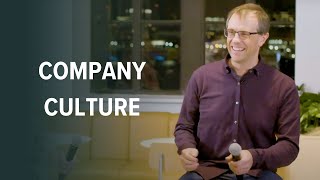
Steve Conine, co-founder and CTO of Wayfair, talks about building the company from 2002 in Boston, consolidating dozens of niche sites into one brand in 2012, and scaling to 11,000 employees. He discusses why the co-founders stayed in Boston, how culture changes as you grow, and where Wayfair invests: logistics, AR/VR, and customer service.
Chapters
Hi everyone, my name is Laura Moran. I am from the Inbound Studio. Thank you so much for being here. As everybody has said, the Inbound Studio has been around for about two years now, but this is actually one of our first live in person outside of Inbound events that we're doing. So, so excited to have you all here with us and so excited to have Steve Conine joining us for the first time. Steve is the co founder and chief technology officer at Wayfair and we're going to talk a bit about Wayfair, E Commerce being in Boston and all those fantastic things.
Sounds good. Awesome.
Let's just start briefly with how did Wayfair come to be? Can you give us a little quick history of how the company got started?
Sure. So we started Wayfair in my house actually in Boston back in 2002. We as Nirud Shah, who's the other co founder myself, we both went to Cornell. We met at Cornell. We've been entrepreneurs our entire careers. Wayfair was actually the third company that we started and it started as a series of niche websites that basically all offered different types of products for the home. Those sites grew and we got to where we had a portfolio of about 250 microsites. In 2011, we basically announced we were going to collapse all the microsites into a single brand. And over the course of 11 into 12, we did that. And in 2012, we launched the Wayfair brand that you all would recognize today. And we've been building brand awareness and goodness and the experience for the Wayfair brand ever since.
What was the deciding factor in terms of collapsing all the brands and creating one brand name that they lived under?
Sure. So, you know, you can imagine. Well, first of all, in 2002 when we got started, I would say, you know, E commerce was definitely an area that people weren't investing in. It had gone through this kind of boom bust cycle in the version one of the Internet bubble. And a lot of investors had sort of seen the potential of E commerce in the 90s, thought it was going to happen faster. And by 2002 they were kind of saying, jeez, this is going to take a lot longer to build these things out. And there's a lot more complexity behind the scenes. And so the investment had sort of dried up. Where you saw opportunity, though, was in very niche categories. And so when we started the business, we basically were launching all these little websites and they worked phenomenally well. And they were actually an amazing sort of petri dish sort of experiments that we could run where we'd have all these different sites. And in the early years and even today e commerce is 80% of e commerce is really back end. And it's the operational, it's the durability of the operational experience that you guys all have when you shop at retail that makes you continue to come back. If you think about why you go back and shop at the same region starts again and again and again, it's because they deliver a great experience time and again. And so it takes a long time to get that great actually. And so all these microstates were a great sort of fertile ground for us to experiment in lots of different things. Learn about transportation, learn about shipping, big stuff, learn about inventory fees, all kinds of stuff. We got to the point where we had a very consistent experience across all these different properties. And you know, on the Internet there's definitely, there's a dynamic where we all will spend time researching if we need to. And once you've done a number of cycles research using Google, there's some great tools you can do research on. You start to form an opinion about the quicker way to get your job done. And so you see this in travel today, you see it in media, you see there's destinations online that people tend to go to and they associate with great solutions to the tasks they have at hand. And they don't bother doing the research, they just go and go there straight instead. So we became very acutely aware that there was an opportunity and there's some green field in the home decor space and home furnishings and that we had this amazing portfolio of properties that basically had gotten to where we were delivering a great experience. And so the opportunity was to basically say let's become a well known brand around shopping for the home and let's really try to educate consumers that we are a great destination when you want to shop for the home. And so the initial play as entrepreneurs is to say, well, can you kind of do it both ways and keep your microsites and launch a big macro site and kind of like use the microsites for acquisition and then drive people into the macro site for awareness. We tried that for a year or two. Basically proved to ourselves that the real way to do it was to simplify the story and just collapse it into one brand and you know, go after what the, what the opportunity was before.
We like dive into all things Wayfair. Can we talk a little bit about your relationship with Niraj because you've known him for quite some time, went to college together Met in high school. A co founder relationship is a unique and a special relationship. So what has made yours work?
Yeah, I was sort of half jokingly say that I've spent more waking hours with him than anyone else in my life. And I'm married, I have three kids. Right. So the trouble is my wife has a very hard time closing the gap because I go to work 10 hours a day or whatever, I'm sitting next to this guy. And so I think the thing, our relationship, I guess on the one side I would make it, you know, good relationships are very similar. Like any kind of marriage where you basically have a commitment that you believe you trust, you have similar ethics and structures that you live by. And then I think a lot of it in businesses you need to be different and you need to then appreciate the differences in each other. And I think as young entrepreneurs, where you notice that is the other person will naturally tend to do stuff that you're like, oh man, I really don't want to do that. And they're the one who says I really want to go do that. And when you start to see that dynamic, that's I guess early on when you're young entrepreneur, you're like, wow, that's. When I look back on it today, that's sort of the dynamic that has then made the partnership work very well. And so that we both have very different areas of interest and we tend to gravitate toward the things the other person doesn't like doing. And, and that's the interest areas that we have.
Are there things that one or the other have you pushed each other into an area that you like? Not only didn't you not want to do it, didn't even see the value in it or something to that effect. That has become a really successful aspect of the business.
Well, as an entrepreneur, you're a bit of a jack of all trades. And so I think we're both quite good at doing most jobs 80% effectively. And we're also very good at recognizing that we're only doing it 80% effectively. And we're also quite good at figuring out when is the right time to hand it off and find someone who's actually great at a particular thing that you might not be as great at. I think we're both very good at calling out the other on when that's happening. And so general management is a particular area that I think I don't have a natural inclination to want to run a massive organization and really just focus my hand. General management sort of issues new York happens to love that stuff and, but I'm naturally forced into situations where, you know, I'm running teams and I'm having to do a lot of general manager stuff and, and it has worked very well by, you know, we will call, he will call me out on that. Be like, Conor, you kind of suck at that. Like, you know, you got to put, you got to, you know, you got, you got to either find someone who's going to do it well for you or, you know, you got to be real about kind of what you're doing here. In the same way, you know, there's tactical engineering build stuff where he's very much like, he'll give the big idea and he doesn't want to think through all the details of like the messiness of how to actually make that happen. And there'll be times where I catch them on that. I'm like, all right, look, this is the reality of what you just asked for. It's got a lot of grit under it.
Wayfair is nearly 11,000 employees at this point, which is huge. It definitely makes you guys one of Boston's biggest tech companies and sort of standouts strategically. I have to imagine there have been conversations along the way that have kept you in Boston. Can you talk a little bit about why Boston, why you've stayed in Boston, and why you're continuing to grow in Boston?
Yeah, yeah, no, Boston has definitely been often a point of conversation, quite frequently. I mean, you can imagine you're growing very quickly, you're running out of space all the time. You have numerous opportunities. We could say, hey, let's move this setup out, out to a different location. Whether that's somewhere else in Mass or you know, nearby or anywhere in the country by that matter. We really love Boston. And you know, when I look at it, I'm almost like loathe to talk about it because it is an ecosystem that even over the, you know, whatever, 16 years we've been doing this. Now let me put it this way. When I got out of school in 95, when I went to school, I was in mechanical engineering undergraduate Cambridge and the Cambridge sort of Boston ecosystem tech area had the same like, I don't know, reputation that Silicon Valley does today. So it's got a history that's steeped in just engineering excellence and technology innovation and creativity. It's also a little less self promoting than I think a lot of areas in the country, but it punches way above its weight in talent. And so I think we identified that early on when we moved out here and you start hiring. I mean, the lifeblood of any great company is the team you have. And if you're trying to find great people who are looking for a certain quality of life, they're looking for whatever easy commutes and other great people to work with. Boston just hits so many checkboxes on those axes. And it's been fun to see, as you said, we've evolved to where we're starting to be quite a large anchor company here. It's really neat today to see the number of people we actually relocate into the region. And I think as we've started to have other vibrant companies, you know, HubSpot being one of them. There's a number in the city now, that ecosystem, I would have underestimated that earlier and said, oh, you know, it's a little bit. It's not as exciting because it's harder to recruit because now I'm competing with HubSpot or competing with whoever else is here. The reality of it is great candidates, though, see that as an opportunity. They say, hey, we'd rather come to the region if there's other options, because, you know, I love Wayfair today, but five, ten years from now, who knows what I'll be interested in my career? And so the ecosystem has really, I think, evolved over the last 15, 16 years here to where it's starting to have some really cool options. And it still has a lot of the. I don't, you know, just the background and the education of it area, of it is amazing in this area.
I know you guys have a lot of data scientists in the company and amongst many of your other employees, as you've seen the tech scene sort of evolve and the company grow and, you know, other companies come in. Have you seen an evolution in people who have gone to school here, staying here and working here? Because, you know, there's a lot of stories and talk about people exodus out of Boston after they're done with their degree.
Yeah, yeah, yeah. So, yeah, so today we have over 2100 data scientists and engineers that work here in Boston. We have about 5,000 people in the city. We're in the Copley Mall here. In terms of people staying in the schools, you know, we get a lot of people out of the schools in the Boston ecosystem, as you can imagine. We've actually found that we get a lot of relocates who have gone to school here, they've left, they've done stints of their career elsewhere. And our recruiting team's savvy. They'll look for that pattern, say, gee, and we've actually had a lot of success bringing people back to the region who've gone to school in this area. If you looked at our overall employee base, it definitely skews very heavy New England, and it would skew the heaviest in Boston and Boston proper schools.
Culture is a buzzword in general. It's definitely a buzzword in the tech industry. How do you think about, you know, your employee happiness and the culture of the company in terms of retaining people, making people happy, and maintaining that sort of anchor company status within the city?
Yeah, it's critical. I mean, it's, you know, it goes back to the one thing, the one asset you have as a company that can differentiate yourself is really is the people and team you have. I do the new hiring orientation every Monday. So I just, you know, this whatever two days ago where we, you know, every Monday where you can imagine we have a lot of new people start and I go in and, you know, talk to them about kind of joining Wayfair and, you know, whatever, thank them for being part of the team. And I always make the point that, you know, the culture of a company, if it's done right, we've hired, we put a lot of effort into trying to find and hire great people and then retain great people. And we're trying to create a culture where they can all work to their full potential. And so every day we think a lot about that, worry a lot about that. And the thing, it's interesting, with a good culture, it's not just giving people everything they want. It's not just making it comfortable, it's not just making it cozy. It's making sure you have that right blend of it is challenging, but it's also, it feels reasonably safe, or at least people can understand that risk is rewarded and errors are not a problem. And things are going to go wrong. And if things aren't going wrong, it means you're not trying hard enough. And so getting that right blend is critical. And I think it's one of those things that we worried about it when we were five people, we worried about it with 50 people worried about. When we're 500 people, we worry about it, 5,000 people, we worry about it a lot today. And if you stop worrying about it and you stop focusing on it, you stop caring about it, and your leadership team decides, like, oh, we're just going to rest on the laurels, it will degrade and culture is naturally degraded. You look around it, great big corporations who, you know, in their, heyday, people regarded as unbelievable places and they look at like, okay, what did they do at the time to make themselves that way? And there's a lot of. It just comes down to they had great people and they empowered them to do great, to, you know, to be creative and do great things. They didn't burden them with a lot of overhead and process and kind of heavy corporate stuff. And, you know, that stuff. You just have to keep fighting. I think, you know, we're lucky in some ways to be founder led, where we have a leadership team that truly has a very long view on how you create value. And I think when you see companies that can get that dynamic or can get a leadership team that really thinks long and really thinks about how they create value for their shareholders and it creates value for them, all their employees, who are all shareholders as well, that's a very healthy dynamic to create a very healthy culture.
At 10,000 people, that's. There are a lot. There are like markers along the way, right? Landmarks that you. Milestones that you. I'm sure you feel a difference at 500 employees and feel a difference at 1500 employees and 3000. Are there sort of really specific things that you've sort of noticed along the way? In retrospect, probably didn't see them coming, but now looking back are like, oh, right, when we hit 5,000, we had to do this different or say this different.
It's less, I would say at certain numbers of people, there's a natural like, like cycle I've seen, right? So the other thing I always tell the team join is like, look, I'm very cognizant of when it was just me and Neeraj in a room together. The efficiency that felt like, right, because it's like straight out of my brain, keyboard, boom. You know, like very efficient. I don't have to. There's no communication gap. There's no like, anything, right? It's just like, great. So we're always trying to fight to make sure we have our team working as close as we can to that efficiency. And I think what you see happen as you scale is it is if you're doing that well, it naturally causes things to kind of get bloated, meaning you take advantage of this sort of ability to run quickly. And so you build, you build, you build and you're building. You know, you're being very creative. And when you started the thing off, you had this like evolution path and you're like, okay, well, I think it's going to evolve in this direction. And so your Team's all kind of working and plugging stuff in and they're building the building. And, you know, three years later, the evolution path changed. And you sort of look at what you built and you're like, oh, man, parts of this are really good, but parts of this are ugly. And then you have to go through cycles of tearing that apart and reorgang things and getting things back down to where they are small teams and they are discrete groups who are focused on things where they can understand the blast radius of the problems they might create if they're pushing hard. And you go through these cycles of that. And as you get, you know, as you get bigger, you go through different points of that. And there's always an area in the company where you're sort of focusing on breaking it back down again. And there's always an area you've just broken down and you're feeling like this is nice and polished and it is like an awesome shape. And five years from now, you know, okay, that's gonna be the one. That's gonna be the one we're gonna look at. But, you know, that's just part of the natural cycle. And I think as you get the leadership, team, management team, people running companies, start to see that. The hardest thing is, I think, when you have, you know, the workforce, you have a whole blend of people who've seen that a number of times in the career, and they're like, okay, I get we're going through that, and then other people who just get frustrated with it. And, you know, it always frustrates me if you lose people because you're kind of in one of those periods and you're like, I wish I could make this move faster. Because I get that it's like the output you're doing today does not feel right. And you're right that it should be faster and we'll get there, but it's like, it's going to take another little bit of time here. But that's. Yeah, that's the thing I've seen.
Yeah, makes. I mean, I would think a lot of these same principles in some ways ring true externally as well. Like thinking about customers and their experience and their happiness. From my perspective, I think, you know, there are a lot of traditional retail companies that have not survived, like, the tech evolution. And I think as a consumer, one of my opinion is that some of that is their online experience has been pretty awful and, like, they haven't kept up with what it might mean to live in both worlds. They've just focused on the brick and mortar, can you talk about how you think about customer experience, how important it is to Wayfarers survival and success and how you measure, keep track of and measure trends and keep up with what's going to be next?
That's a lot of questions. Yes.
Well, yeah, piece by piece, but you know. Yeah, yeah, all wrapped into one.
So, you know. Okay, look, I guess to your first point, when you look at traditional retail and I started off our career as consultants, we basically ran a consulting business. We sold technology development services to companies. And you would see there's a lot of companies, I think a lot of historic retailers like this, they're purchasers of technology. And really what they're doing is they're off laying the technology execution risk that you always have in anything you're doing onto someone else. They're saying, hey, look, I'm going to buy a point of sale system, you're going to build my website for me, I'm going to buy that from you. If it goes badly, you're taking on a fair amount of the risk as the person I'm hiring to do it. And I really kind of want to be sheltered from that. As a result, you're forced to suboptimize. We've always thought very much about this business as a technology company and we are, I feel very adept at knowing how to manage technology execution risk. Meaning we can play, we can play it much more aggressively than you would play it if you were running a consultancy. I saw this firsthand. You run a consultancy, you basically have to hedge the project. So you know, you can, you're kind of under promising over delivering. When you're running your own business, you can basically just go as hard as you can and that compounds dramatically over the course of a number of years. And you're able to innovate quicker. You're able to get solutions done that others will not have gotten to. And so I think there's a shift and there's a lot of great companies today I think, have figured out how to harness that, have figured out how to use technology to really innovate and push very aggressively in terms of our customer. I mean it literally one of the. Every day we talk a human about the customer and it's, you know, it's always about, you know, it's all about the customer. What are you doing to improve the customer's experience? What are you doing to make their, you know, make their lives easier and better? How do you make sure shopping for their home is fun, not a source of anxiety. And there's just enough. There's a lot of ways we talk about the customers or think about our customers. You know, I always tell our team too, it's, we're lucky to be in a business where we can all understand the customer service side of it. We can all, you know, we all shop through E commerce and so we all kind of, so if you set up some kind of general, you know, core principles for the business, core visions, you can basically rely on teams and their own intuition to make smart decisions. Now I guess I'm straying off your core tech question. When you get to the core tech of it, I guess, you know, it goes back to a comment I made earlier. A lot of E commerce I always tell our team, look, it is very easy to throw up a sexy looking website, right? And you guys could go publish one pretty quickly I imagine. Go copy the best in class person, you know, whatever, make it look great. Very easy to promise, everything's in stock, it all ships within 24 hours. You know, it's going to get, it's very hard to durably make that happen. And so when you really dig into the customer experience we're creating with technology, you know, there's some fun sexy tech we're doing. We're doing some really cool things with AR&VR and like real future looking things. We're using a lot of that to do photography, rendering and it's really fun stuff and it's open greenfield stuff where it hasn't been tarnished by the sort of like, oh, now we gotta look into the complexity of how do I actually get this thing really tight. Most of the tech we work on, it's getting the experience really tight on sort of the very detailed stuff that really you don't think of when you first think of what the experience should be. But you need it and you require it. I was thinking about Apple a little bit recently. Cause like in a lot of ways they're considered a very strong tech company. The minutia a lot of their team has to deal with to get stuff very tight so that the swipe is just responsive enough so you don't notice. It's that type of engineering that we tend to do a lot of and we're lucky that we're in this problem domain space which is home, which historically it has a lot of complexity to it and it has a lot of room for improvement. And that is really our greenfield opportunity is to say, hey, every day we're going to come in and work on trying to make that better and better, make the customer experience better and better. So that when you shop for your home, you're just like, wow, Wayfair is an unbelievable platform.
When you do think about things like AR and VR, how much of that is. I'm going to give this to our customers because I think they are going to want it and going to need it and how much of it is in response to feedback or something that you're hearing directly.
So the AR VR is, I would say, is driven by, we think that's something they will want. It is in its infancy and it's a technology space where spatial computing in general is at a point where we feel like we need to just be part of the pack that's running with that and experimenting with it. And the neat thing there is a lot of the device companies. So we just recently been talking a bit about a partnership we have with Magic Leap. They get very excited about our use case as well. Right. So gaming and entertainment are obviously things that they sort of jump to first. When you think about E commerce, we have an amazing use case for helping people visualize products in their home. And again, I think it's very easy to envision. How would it be great if I could pull up my iPhone, take a quick scan of this room, click, style this room and get back a bunch of ideas? Right now the tech to make that happen is extremely difficult because you got to clean up the room first. While I understand the space, there's a whole litany of problems I can take you through. It's going to take a while to actually get that to where it performs the way you would expect, but you can envision it very quickly. So that's the type of thing where we love to put that in front of our customers, show it to them, get them to dream, get them to be excited about our platform on balance, try to create things we think today will be functional for them. So we have a view in room tool you can actually use to visualize the scale of things. I think that's probably one of the stronger use cases today. And then a lot of the tech though, it's how do you make sure that our fill rates are running at, you know, high 90, 90%. And how do you make sure that our lead times continue to go down? We're offering a tremendous amount of stuff for two day and we're offering tremendous amount of stuff for one day. And how do you continue to chip away at that E commerce strategy? I mean, if you think about long term, it's Kind of like, well, people are going to want better pricing, faster delivery, and better selection. So you're kind of working at those, you know, all the time. And, you know, customers want those. And so you can measure it firsthand. You know, you do tests and stuff to measure. But. But it's. Whatever. It's. We're all customers as well. It's pretty intuitive.
You guys have announced recently a new call center in Pittsfield.
Yeah.
And space that will accommodate 10,000 employees in back Bay. Correct. I have that.
Right.
Is there anything that you can share about what Wayfair's got coming on, like, coming up that's. That's going to take all of that extra manpower you've got in store?
Well, you know, I mean, so Q3, we grew at 43% year over year. We had a $1.7 billion run rate. You know, that puts us just at our $7 billion annual run rate, if that. You know, if we continue to grow at any, you know, reasonable pace, you just. You need a lot of people. We are also seeing. We continue to see really good opportunities to invest in areas that we can improve the customer experience around that. Like, I'll give you a great example, like transportation. Right now, we have a major build going on where we've rolled out a lot of new. We're revamping the way large parcel freight is basically done. This is an area of the business. You know, 16 years ago, I could have told you, you work the phones for two hours, you'd be like, okay, every customer that has a large partial order is having problems. Transportation, large partial, afraid. It's very difficult. But as a small operator, you can't do anything about it. You're just beholden to whoever you can kind of buy off the spot market. We can now take control of that. And so we're at a scale where you can see, wow, the economy of this is at a. At a state where we can take control of it. We can make the experience dramatically better, and we can do it for less cost. So, you know, there's investments we're now able to make like that. And so, you know, when you look at where all the people who are going to join us over the next several years are going, they tend to be joining, you know, small, small teams working on discrete efforts focused on specific things that are going to improve the customer experience a lot. You know, some of them are augmenting stuff we're already investing into. Some are going to augment things that, you know, we have on the roadmap to invest into. And then things like our Pittsfield call center, which you know, it's exciting to have a, whatever one of our call centers in Mass that tends to scale more with revenue. Right. So as you, as your revenue scales, basically we kind of know, well, number this number of people call in on the phones and so you want to make sure you're continuing to service them well. So we've started to have a pretty significant call center footprint. We have two in Maine, we have one in Texas, we have two in Utah, we have one in Massachusetts. We actually opened one in Horseheads in New York here just this summer. And so you know, we're starting to have those distributed around the country.
Too cool to close us out. Do you have a piece of advice as somebody who has built a large, large company here in Boston that you would give to startups or small business owners or even mid sized business employees in the city or in Massachusetts about growing your business here?
About growing it here, huh? Geez. I mean the simple stuff, right? It's all about the team. I mean hire great people. You're lucky to be in an ecosystem where there's amazing people, talent and there's, you know, whatever sharp, motivated, exciting people to work with. Be picky, make sure you find the people that are the right fit for you. You're doing no one any favors by having people you're just humoring on your team if you don't believe they're the right fit. So you know, maintain a lot of rig around. You're in an ecosystem that's people are going to find other great opportunities if they're not a great fit for you and you know, do that. The other thing I would just say is like growing big companies takes time, right? Like I think you look at bigger companies like us today and say, wow, it's amazing these guys have grown this thing to be so big. Well, 16 years and I can tell you like the first thousand dollars we did was pretty dramatic. The first $10,000 day we did was pretty dramatic. And it just, it compounds slower than you'd think. And you know, don't let, I mean don't get, don't, don't try to go, you know, too big too quick. I think there's a natural cadence that you can keep yourself honest too. You'll do well over the long term.
Excellent advice. Thank you for coming and joining us for the studio. Thank you all for being here. If you want to check out any more from Inbound or the Inbound studio, Definitely go to inbound.com we're on Instagram and Twitter, nbound, and you can find us on YouTube. Steve, thank you again. Thank you. And feel free to stay and mix and mingle for a little bit longer. It's been fantastic. Thanks, everybody. Thank you.
More from Patrick



A NEW BREED OF PARTNER: The Partnership Ecosystem Model Journey of Patrick Biddiscombe, Part 1








Customer Success Workspace: Never Lose Sight Of What Matters Most | HubSpot Spotlight