Did Ai Kill Lead Gen Campaigns? (+5 More Questions Answered)
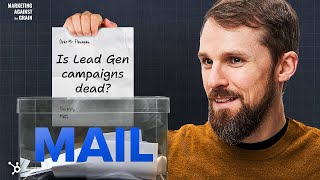
Kip and Kieran answer whether AI killed lead generation and tackle five other marketing questions. AI can now auto-create lead magnets, shifting what counts as free. Small businesses should use offline for key touchpoints and anecdotes, online for scale. For personality-driven businesses, pick one platform, be distinct, and bridge content to product.
Chapters
We got a hot topic. We're debating. Is lead generation actually dead, or has it really just been transformed by the AI era? We're going to break that and a lot of other things down on today's episode and some other big questions in the marketing world today. Let's get into today's show. All right. We're doing a slightly different show today. We're doing a mailbag where we've got questions from folks in the community. And if you are watching on YouTube or if you're listening to us, wherever you get your podcast, you may not know that we have a community over on connect.com we've got a great group of communities. When we started the podcast, Karen, one of the things that we had the hardest time with was feedback. We were like, are we talking to ourselves? And is anybody listening? And so we wanted to get a community together so we can get real feedback from people listening to the show so we could make the show better.
Yeah, I think that is always the hardest part of doing a podcast. As you're here in your room talking about things and you don't know, you know, people are listening because we can see it in the stats, but it's hard to, like, you know, really communicate with them. I think one of the cool things that we did is we spoke at the main stage of Inbound this year, and that's when we got to meet some listeners. But it's kind of cool. The connect.com community allows us to interact the them. I was in there over the weekend putting in some cool prompts. So I appreciate all of the people who give us such great feedback. We have a stellar episode of cool marketing questions that we can actually start to go through.
All right, cool. I'm going to kick us off with, with question one. Karen comes into us from listener Evelyn Costa, and it says, in an increasingly digital AI world, how can a small business strike the balance between online and offline marketing strategies to create a cohesive brand experience for their customers?
What, what's your take? Why would, what would a small business do offline?
No, but that's the point. Make, make the point. Make the point.
Like, I, I, I could potentially see. One of the things I potentially could see you do as a small business is small community meetups, something like that, to, like, actually interact with customers. Or there was a startup I spoke to once. You know, I do precede and seed. I always ask, how do you, how did you, how did, did you get. If they're like seed, like, how did you get your first Thousand customers, whatever number of customers and pre seed, how do you expect to get that number? And there was this company and they were horizontal SaaS product and they were like very small pre seed, I think maybe 10, 15 people. But I actually thought they could be a real product at some point. Like they had some of the right things in place. And I was like, how are you getting customers today and how do you expect to get your first X number of customers to get you to your seed round? And they were doing, they were going to like offices and actually doing like pizza meetups. So they were going into the office to these kind of companies and just buying people pizza, hanging out, demoing the product, showing how it can make their lives better and it was really working for them. Like people loved the fact that they came around, visited them. It's obviously not a very scale up tactic but really good for a small startup. And there. So there are some viable ways that you can use offline to accelerate your business, to grow your business. Because I think so many people don't do it because we just veer towards digital. We start in digital. I have a hard time thinking about when you're a really small business, do I give, do I really care that there's a cohesive brand experience? No, I really just care that I can like have one or two things, one or two metrics that I truly care about and do anything I can to move those metrics. I don't really care about cohesion of the brand. I only care that I can move the needle on like whatever metric is the most important metric to me at that time. And if there's something offline that can do that, then I double down on that. If there's something online to do that I double down on that. I don't really think too much. Like are those things cohesive in terms of like the way people experience my brand? I don't think that's the thing you should care about.
Yeah, a couple things I've jumped in there with Karen. One, it's like brand cohesion is directly correlated to brand equity. If you have a lot of brand equity, you should care about brand cohesion. If you don't have a lot of brand equity, you're just getting started, you shouldn't. Your job is to build that equity by accomplishing great results, delivering a ton of great value for your customers. Right. And I think that's super important. The other side of this is what you're basically saying is online is about scale and if you're a small business you need to spend 80, 90% of your time on scale. You're going to be doing content creation of some sort. You're going to be doing some type of automated marketing, doing some type of online LED sales motion. That's what you're going to be focused on. And that offline motion I think is just like you're saying, Kieran, it's to get good feedback or if there are key points in the customer journey that you know are outsized, important and you can have some offline component to really place emphasis there. Like, you know, if you serve a given region and you can actually visit customers like a month into them being a customer for like an hour, like that's very interesting. And that might be the only offline thing you would consider doing. Right?
Before we go back to today's show.
Here'S a quick word from HubSpot. If you're a marketer, one thing I know for sure is you love data. And boy do we have data for you. The 2024 State of Marketing port is chock full of data and insights around the current trends that are shaping the marketing industry today. Things like artificial intelligence, you know, I love AI tools, personalization, influencer marketing, all of the topics that are key to getting a competitive advantage this year. It's going to make sure you're not stuck in old strategies and old tactics. So click that link in the description and go get your free copy of the 2024 State of Marketing report today. Now let's get back to today's show.
Let's yeah, if you can hang out with anytime you can do things that you can hang out with customers is worth doing. Like spending time with customers is number one on your list. Just as a small business, it's hard to do all the things. It's definitely hard to like go do offline things because they take up so much time. I'll tell you, like when we first launched HubSpot in EMEA, like Europe, when HubSpot, we're still like relatively small, like 300 people. Obviously at this person that's going to be a large business for most people. But we, we did do a bunch of events in that first 12 to 18 months to go meet customers, to go actually interact in all these different regions because it was the best way to go in and figure out like how these regions were different from each other, how they experienced HubSpot, how they thought of HubSpot. I think I did about like 30 events within the first year. Not something I ever want to repeat again. But Was like fun at the time. And so, but, but the reason we did that is because we were brand new to Europe and we just wanted to like meet customers or I talk to customers. And so I think that is like the number one thing I is a good use of time offline.
In the absence of a lot of data, anecdotes are really important. Right. And anecdotes are easier to get in person.
Exactly right. And people tell you that realness, you.
Were the story you just told Kieran. You were able to get a bunch of anecdotes on those events that could inform decisions in the absence of a lot of data.
Right. People tell you the real, the real real when you're in person. Over dinner, over lunch, Evelyn had a second question that we should answer because I want to answer it maybe in a different way, but like it's is Legion campaigns dead? And this is somewhat broad, so it could mean a bunch of different things. But let me talk a little bit about something that I do think is happening, which is, you know, you and I have had this first principle of marketing really is just a game of value creation. And if you can create 10x of value of competitors and create things and put them in market that people would pay for, then you likely will win. What's. What I think is happening and maybe is related to this question is the line of what's free is moving, constantly moving.
Right?
The things that are free are constantly, that line is constantly moving. And so people's expectations around what they get for free is constantly moving. So there's a, you know, all my time spent in AI, so obviously the entire Easter weekend spent on AI, right? So one of the places I was looking at in AI, I think I, you and I are WhatsApp and I about it is I sent you this person had basically scraped the entirety of Fiverr and then used Claude 3 to categorize all the services into like categories. Like what are, what are the top categories of services that Fiverr offer? Right. And there was another site I went to which is just a bunch of AI age again, very much like a Fiverr, but a bunch of AI agents you could just click on and they'll replicate, they'll do a task for you. And one of those tasks was created lead gen magnets, right. It just, you can put in any topic and it would create a legion magnet. It would create a legion magnet for people listening or is the thing the person wants to give your details for and download. The reason you call them magnets is because that that's how you create demand for your business, right? Someone will fill out a form to get that lead magnet. And, you know, HubSpot really, you know, started the trend in B2B of offering lead magnets to create demand for their business, whether that's an E book, a templ template course. And over time, we would continue to increase the value of those things because again, the free line keeps moving. So now we're at a state where it's. It's like a click of a button to create these things, right? Like, we had incredible writers and we put a lot of time into figuring out how to create valuable lead magnets back then. Today, as a small business, like any solopreneur or small business or business of any size can click on an AI agent. And because it's informational content, the template, the course, the ebook, and I'm gonna give our listeners a free course very soon, completely created by AI to show how it works. Boy, the free line has moved a lot, right? Like, you know, the crazy.
I don't know where the free line is, my friend.
Let me tell you this crazy thing. Just people realize how crazy this is gonna get. I wanted to fine tune a model. I wanted to teach myself how to fine tune Llama. And I went into Google and I was googling things like I had a very specific set of tasks, right? Fine tune the model, do this, do this, do this. I wanted to learn how to do that. And I went into YouTube and I went onto Google and I was searching for the exact course of the things that I wanted to do and learn. And I was like, geez, I can't find the ideal thing. And I would pay for this, right? I was looking to pay for it. So I basically created the outline and had Claude 3 create the course for me. And it's awesome. It's personalized to me. I'm at chapter two, I'm going through it. I fine tune some stuff on Llama. It's running on my laptop. Shit. What do you do to create Legion campaigns when my.
You can't something because people don't know what to do what you do.
But I can create some as when users know how to do this, I can create a course for me better that you can create it for me. So I would ever download your course, right? Like, I went on a huge tangent there. I'll let you jump in, but I've been thinking about this a lot. So the second question I would love to spend some time on again comes from Evelyn. And it's Is lead gen campaigns dead?
Kieran, we've got a question coming up from, from Claire Bouvier, who is a founder. I'm gonna ask you in a second.
But first, Kip, just one quick. I don't think we rounded out that question. We didn't actually say you, you. You ended with the free line is moving all the time. And that's where we ended it. But we should probably talk about what we mean by that. Like your argument is of course that your business is dead if you can't promote programmatically generate leads. But how do you programmatically generate leads if like what will be valuable in a world where you can create your own personal league magnets?
Yeah. So even though that the free line is moving, the thing that has always worked here and I think for you and I is we go out there and we look and see what our prospects are paying money for.
Right.
We list out everything they're paying money for today and then we say, is there a way we could give that to them for free and have the economics of that work? And that exercise is incredible about you. And I jammed a little bit this weekend on some ideas around that because it's like always a very valuable thing to do. And normally what you say is like, oh, these people are paying for this course, so I'm going to create this course for them. Or these people are paying for this type of tool so I'm going to give this tool to them. Those are the things that while the free line is going to move, people are always going to be paying for something. You just have to continue to stay agile every quarter, every year around what you can give them that is of real value. Do you agree with that?
Yeah, I agree. I think people will always pay for. Like, no, not everyone is going to do the thing that I would be able to do, go create a custom course for me. So people pay for the ease of access and it's why like a udemy is so successful. Right? Like no one actually takes any of those courses but they, they, you know, they don't want to go and do the work to get that knowledge themselves. And so I agree. I think there's always going to be things that people pay for, but you're going to have to be a really creative and very good marketer to be able to generate lead gen campaigns that stand out from the crowd. When you have AI able to do kind of like the bottom 80% of things that we used to do.
Totally great.
All right.
Before we get to my next Question. Kieran, I got two quotes for you that blew my mind over the weekend that I wanted to just share with you. Get your reflection. You ready for quote number one?
Yes.
This one's a real mind bender. You sure you're ready?
Hit me.
Okay. The magic that you've been seeking is in the work that you've been avoiding.
The magic that you've been seeking is in the work that you have been avoiding. Yeah. Tell me what you take from that. Because if I think about the things that I avoid, I don't know, there's magic in there.
Well, I think there are two interpretations of this. One that is interpersonal, which is like, oh, I'm avoiding like some type of emotion, some type of trauma, some type of something negative. And I want a different life. And I can't get to that different life until I deal with that. And then I also think there's like a work interpretation of it, which is like, well, I want this promotion, I want this thing, I want to start this business, but I can't do it until I do this hard thing to get the skills.
Yeah.
And wisdom to do it. And both of those things work. And I think it's. To me, it is like everybody spends too much time in the comfort of what they know.
Right.
Was like my interpretation of it.
There's a great. I'm not a believer in like large, complex productivity lessons. Like, I think actually there's only small thing, number of things you need to do and you can be much more productive. I think one of the ones that really is really simplistic and does work really well is like, do have one thing that you truly try to do per day rather than having a big to do list and make it the hardest thing, like whatever is the. Like, make it the most, not even the hardest thing. The most significant thing. Right.
Yes.
So I look at. I look across my list for the Monday and I say, you know, I'm only going to like, have one thing in my to do list. And if I get that done, everything else is a bonus. What's the most significant thing? And that, that to me is like one of the best productivity.
Yeah. Doing something significant every day and starting with it, it's, I think.
Is it. Yeah. Not starting with your email or something like that.
Make some of that magic happen. Okay. The second I was listening episode of the Founders podcast that I keep re listening to over and over again. I don't know why, but this particular one is called the Lessons in History and it's a about a book that talks about like, what has always been true throughout history. And it's a book written like 40 years ago, but it is like super prescient. And there was a quote in there that this ties back to the episode we did about the regional marketing approach to Starbucks, which is why I want to call this back, because you're going to feel excited about it. And the quote is essentially the significant of regional nuance diminishes as technology increases.
Yes, A hundred percent.
And it was like this was written like 60 years ago. Right. Like, and what it means is like, he's talking about it in the sense of like, if you read Napoleon's biography. Right. You read that recently. Right. Like, how much time did Napoleon spend, like figuring out operations of moving people and things like that was like the majority of his time. Right. Technology comes in and solves all of that. And so like the borders get much bigger, the applicability of how you solve problems get much bigger. Which is why we're moving to kind of like a global by default. And we've said that a few times. I thought that was a cool quote. That kind of leads us into that.
Technology makes the world smaller and smaller. Like I, I, you know, we've seen AI with the translation tools. There was a guy I follow on Twitter, I know you know him, Nathan, who is in the AI space. Not to put his business out there. He did tweet about it, that he was getting married, I think, to a Japanese woman. And they don't. He, he speaks English and she speaks Japanese and they don't speak each other's language. And they are communicating through AI. Right. That is, that is incredible. Like, AI is going to continue to make the world smaller, as in much more the same and less nuance for all of these different regions. And I think we're only going to see this continue to happen with AI and we'll probably talk about it separately. OpenAI have not released. I don't. They've released the voice. They have a voice cloning tool. Have you seen this? Which is like, very dangerous. I actually think this is one of the things where I'm a very pro. Like, let's. Technology will, you know, find, find a home.
We don't need a lot of regulation. Then you're like, wait a second, maybe I was wrong.
This is a. But, but again, it talk like you can basically talk in any language, talk like any person, you know. So I think the world becomes much more of a technology.
I completely agree. Okay, now getting to Claire's question for today's. Mailbag, which is. I'd love an episode or response around how you can scale a one person personality driven business versus a larger operation. She's like, I think it'd be fascinating to see what Kip and Kieran think would be the differences in tackling the two. So like if you were like, hey, I'm a founder, it's just me. I want to start scaling and building a personality led business. How do I do it? What would you tell them?
Pick one platform, one point of differentiation, one topic that's related to the thing you sell and try to excel at that. I've told this story.
Wow, that was, that was so good and so clear.
I've told this story before but Gary Vee, who's coming on where you know him, and I had a debate about like he thinks you should do all the things from day one and I just don't see how you can do all the things from day one. And I think about it like through myself and I have, I'm pretty time perfect at the moment, but I love content, I love playing with AI. I try to do all these different things along with any kind of work I do. And I'm trying to master LinkedIn right like that that allows me to just get the. I have to write content. Like I just have to, I've had to write content my entire career. Like I, I have to write something so I have to put it somewhere. And I have not tried to, I don't know what, what, what you're trying to do right now, but with social. But I haven't tried to get back on and figure out X again. Like it's completely changed. And yeah, that's fine. I'm. This is nothing against X, but the kind of content it rewards is very different than it used to. And I can see that because I've cross posted stuff that would have done well in X when it was Twitter and on LinkedIn and performance much better on LinkedIn than X. So they're kind of differentiated now and that means I have to, I have to learn how to create content on X that would actually start to perform really well again. It's a pretty time consuming thing to do. And so because these platforms are quite different in what works across those platforms, I think like pick the one near to your nearest to your core audience. You have to pick something that you can differentiate on, have a clear perspective on, be different, you know, get, get it a lot of engagement on and then have it make, you know, the thing that most people make the mistake on is, okay, well, I can create content around this and that's working really well. But there, there's no real bridge to your product. Like, there's no relevance to your product. And so those three things I think are the most important.
Well, first of all, I think that's great advice. Second of all, basically what you said is personality driven business. You have to have a personality.
You have to have a personality.
And it turns out that that's actually very important.
And it's a hard thing you can't fake. You actually have to have some perspective on things.
Yeah. You have to have real deep conviction. And that deep conviction can be loosely held. You could be open to changing your mind, but you have to have deep conviction to take this personality different approach. My favorite James Dyson quote is different in everything. Different for the sake of it. Right? Like when you were telling somebody to be different, Kieran, like you were telling them to be capital D different. Like not a little different. Like as different as possible. And if you feel grossly uncomfortable, you are then probably different enough.
Yeah, I've talked about it before, right. Content is a great. I don't try to relate content creation to being an entrepreneur. Like, being an entrepreneur is a really tough life to lead. But there's like one thing that actually you have to experience in both of those things, like content. You have to be okay with continually feeling like you're failing. Right. Because you put something up and oh, no one actually likes it. No one reads it. And that's a real public humiliation because I put it out there and people are like looking at my stuff and no one's even. And then you have to pick yourself up and go, okay, the next one, the next one, the next one, the next one. There's people I've met who are really successful now, multi millionaires from their own personality led businesses. It took them like four or five years of grinding to really start to like get traction on that content. And so there's like a real. You have to really kind of show up each and every time to get better. Just that little bit better. Like tiny little bit better. Tiny little better. I don't think I've met any, I've met very few people, maybe a couple who are just like out of the gate. They have, they have something and it hits out of the gate and they're just like popping.
You got to be, be different. And you're saying you got to be ready for the grind. You got to do it.
It is a grind.
Pick. I would pick YouTube and I'd use a tool like Opus to cut shorts for.
I don't think OPUS and shorts.
Cut it.
If you want to. If you want to.
No, I'm saying you focus all your time on YouTube. And then I would. And I would distribute some shorts on YouTube and TikTok and reels using Opus. So you. Because you don't have a ton of money, this is a solo operation to help promote my YouTube channel. Kieran, you want to hear something twisted, though? Like, you were just saying all this and I was just thinking. I was like, I was like, you know what? Like, I'm glad we're doing. We do the show and like, I'm glad we committed to doing it. And I was like, you know, worst case, if it doesn't. If it. If it doesn't ever get huge, huge, like, at least there'll be enough content of me that like, when I die, my son can build, build like a good model and like interact with me. And I'm like, what is wrong with me?
This is where we are. We want to put enough stuff out there so we can be. We can be model.
I think we have enough content now where like, you could make a nice, like, video AI model and like have conversations with me even if I wasn't here. And like, that's. I think that's kind of nice.
We. Well, we have a marketing against the green bot that we are also going to give to listeners. I just wanted to. Yeah, we're working on with it and fine tune a little bit. Talking to personality. I want to, like, shoehorn this in here because I don't think we've talked about it on the show and it is.
Kieran brings just a pet rock. It's like. So I know this isn't really related, but I'm going to talk about it.
We have to talk about. I'm obsessed with this. I was obsessed with the first series. I'm obsessed with the second series. Have you, have you ever watched the physical 100?
No. What is it?
So it's like this Korean show about the. They take the hundredth fittest people. And I, I don't want to get it wrong. Like South Korea, I think the. And they basically, you know, have these competitions. But the thing I want to call out is, you should watch that and just see when we talk about personality, like their personalities. If the entire world acted like these people acted, the world would be a better place. They are the politics.
I did see you tweet this.
They're so polite. They are so like, Encouraging to competitors. When they get put out by a competitor, they're like, you did so well. They always feel like they should have done better. They're like, oh, I failed. I could have done more. I could have supported my team more. It is like, unbeliev how different it is from, like, the west and how that show would good. They should really create it for the west. Because what happened in the west is. I don't know if you watch Squid Games, where they replicated Squid Games on Netflix and did, like, the competition, like, like the first episode, everyone had formed clicks and we're trying to kill the other ones.
Right?
And then you watch this show in a. In Korea and like, everyone is, like, encouraging each other, complimenting each other. I just thought it was like an. It's an incredible show to, like. It's just. It was such a breath of fresh air in terms of personalities. Like, so people want to see the positive side of the world a little bit more. That's, I think, a good reflection of it.
First of all, I love. I love that you just found a way to just shoehorn in your favorite show right now. I love it. There's no real transition from that. But I do want to go on to question four. This is great. Going on to question four. Question four comes to us from Usman Yusof. And he was like, how can you keep yourself motivated in starting as. I know it takes time for anything to get noticed, whether it's X or Instagram or YouTube or TikTok. Everything. Everything takes time. But during the first, like, six months, I feel like giving up. How can I stay motivated?
Enjoy the process. I think that is the number one thing you have to do.
Like, yeah, if you're. If you're even thinking about the first six months, you've already lost the game.
You just, like, you have to. You have to. I think. I think with these things, you have to like doing it.
You do.
You have to be kind of obsessed by it. Right? I just don't think you can have a career in this space. It's really hard to have a. You can career in this space. Like, I've met people in this space who are, like, in digital and do things, and they're fine. They're like, you know, average, and average is fine. Like, you. You'll make an okay living being average, but they're average because they don't. They're not obsessed. Right? And that's fine. They have other. They're probably prioritizing other things. And I would never say that like, that's not the life for them. But if you want to be truly great, you have to have like a weird obsession. You have to like, just have care, like, be so curious about every detail of how these things work.
But.
And you have to enjoy the.
Not just obsession, right? Like, I know a lot of people who are obsessed with consumption, right? Like they love movies, they love playing games, whatever. You have to be obsessed with making.
Stuff make, but how things work, how it all works. Like, oh, like, I did this thing and this got better. I did this thing and this didn't get better. Like, the curiosity of, like, why some.
Things work and other, well, how it works. And you have to, you have to be to a point where you're like, I have an idea and I can't wait to get it out. Right, Right. It's like, oh, I just thought of this. It's like, you know, like, there are times I'll just like slack Kieran and producer Darren and be like, we got to record, right? Like, we have to talk about this thing. Like, I have so much I want to talk about.
Right?
And you feel like yourself vibrating because, like, you have to get it out. And if that's not how you feel, you're not going to be good.
You're going to be average. You have to find the thing that. This is why I decided not to be a software developer anymore. Because I knew I was going to be an average software developer. Like, I spent a couple of years, I read books, I coded, I built some things and I was like, boy, my life is going to be.
This is going to be a long, boring life.
Long, average. Like just showing up and being average. Because it just didn't click on me, it wasn't resonating, didn't get me fired up. Like, if what fired me up is like the idea and then the thing was built and then like, oh, how can I actually get people to use this? But the actual building of it just didn't get me fired up. So I think you have to, in that first six months, if you're to your point thinking, how do I get through this for six months? That's the wrong. That, that's the wrong thing. Now if you're, if you're, if your question is, how do I convince my manager or boss or founder to continue to go keep going, like, the first six months, you're not going to see much traction. That's just your ability to build conviction around your ideas. Like it's your, you know, everybody has their own personal brand and A lot, a lot of times when we talk about that we think about the external brand. A lot of your success is dependent upon your personal brand internally within a company and how people, how much like trust people give you in the conviction, ideas you have.
And by the way, in six months you should have some growth. Like you will start at zero. You won't be very big in six months, but you'll have something more than zero. Right, Right.
And if you place it like tick tock, you'll have.
Yeah. And if you don't have any real audience in six months, then you're just bad at it.
I tell you a fun story actually over the weekend we had visitors come over a couple of friends and I.
Oh yeah, you're in that stage of life where everybody wants to come see the baby. The baby's just now getting old enough. Wherever they, everybody can come visit.
Everyone's come and bring a guest. Been very kind and I brought, I, I. So I don't know much about. I should actually look into this because I know it's meant to be a great marketing story. The Stanley cup. Right.
How you don't understand this market. It's going to blow your mind.
I need to look into it. I saw Elena posting about it at the weekend, so I'm going to actually dig into it.
Do you know who, do you know the guy who's the CEO of a Stanton Lee who made it take off? Do you know what?
I don't know anything about it. I have, I have to admit, I haven't even looked into the story.
All right, so I'm going to give you the. This will make you want to go look it up. The guy who's the CEO of Stanley who took this like old Thermos brand and made it this amazing consumer goods company was previously the chief marketing officer at Crocs. So he is 242 on taking things that have no business of being hugely popular.
What a legend.
And making them hugely popular. He is probably he is for sure in the marketing hall of fame. He may be getting closer to the marketing Mount Rushmore. If we are going to update our marketing Mount Rushmore. Like he's at least in the conversation of. You're like oh we gotta at least talk about him a little bit to be be up there.
So I will go with my AI.
Weapons and do the deep dive and then you're gonna message me and then we're end up doing a whole show and it'll be great.
Do you. So basically they said hey, like I didn't know you were a 14 year old girl. Like is that the. Has he managed to make this like really the dipo. I think the.
I think the primary demographic is 14 to 24 year old women.
Awesome. Great. I feel young. Cool.
Just. Just to let you know, on the Stanley side of things, at least in the US I'd say.
All right, where do we want to go next? Because we cannot probably only let's do one more question. Can I just. Let's. We'll do two because I can answer one of them very fast.
Go.
This is like prime from Evil Matos who basically want. Wants to know. I really do like this. Oh, this isn't a question for us but I want to actually answer it. So they were actually put in a prompt and the reason they put in the prompt, there's two I'll quickly answer actually because I can get through them in like one minute. So they put in a prompt and the reason they put in the prompt because they were like can anyone test this? Because it's given. I want to see if it gives different results. Right. So here's the thing. One of the things that I'm working on for our listeners because you all are going to be in the 5%, not the 95% that gets automated away with marketing is I'm going to, I've talked about it, have a free email course. It's like pretty, it's. It's not Accept the world alight but it's a free email course with a custom GPT to help you do homework assignments and it's all done through AI and then I'll talk through how I did it at the end of the seven day course. And so I built the custom GPT. It's the longest one I've built. So like it's 8,000 characters and then it's like a couple lots of documentation. And the reason I'll just talk about it is because it is not consistent. Right? So like I have like a menu of options and you can click one and do your homework assignment and each time you click it sometimes it will give you like these kind of dramatically different responses for some reason. And so you have to continue to refine the prompt to make it really strict and let it know that it shouldn't deviate away from what you've asked. So for video you probably will find for this prompt because I looked at your prompt, it's really broad. Like there's no restrictions around what the ChatGPT can give you back. It will give you different answers if Me and Kip did it. It would give different answers and then the only other one I'll quickly answer for someone is, there's one here from someone who works at a freight company or something. Let me see. All right, so Sarah Hankapi, who has, who basically is asking, hey, I work under freight forwarder, highly competitive marketed marketer and she wants to basically know what subject line she should choose from. Email. So obviously we don't know what email it is. Here's the thing, use AI. Like this is like the entire reason that marketers need to start to, if you are Sarah, continue competing with someone who's using AI. That person could have a hundred. I would basically go to the cloud and I would say, hey, here's the email campaign, here's the buyer, here's the purpose of the email. Create me 50 different variations of a subject line and then I would go and do the same thing in Gemini and ChatGPT and I would pick the best headlines. Right? This is the whole, this is it. Like these are, these are the use cases. If you are a marketer and you are doing this yourself, you are like ripe for disruption between marketers who are doing this with AI. And I would say, Sarah, the free, the free email course is coming. Teaches people some of the timeless principles from the past hundred years. And three of them are around call actions from people like David Ogilvy, Garrett Hilbert, like some of the incredible copywriters of our time. So make sure you sign up for the course when it comes out.
Look at Kieran. Are you plugging a course he's working on? I'm so excited and proud of that. Soon there's just going to be an episode that's just going to be a 20 minute loop of Kieran saying, Use AI. You say, I use AI.
I can't stress enough how deep I am into AI and how much better I am as a worker launcher.
Hold on, let's, let's, let's. We have, we have like a couple minutes before we close out here. How much better are you? Because I mean, I'm in it too. What's your estimation?
I would say that I'm like 30, 40% more productive.
I was going to say, I was going to say 20 to 30%. So yeah, that seems right.
I don't do better than me. I rarely do anything without use an AI in some way. I, I don't, I don't use search anymore. I don't, I do, I do AI for most.
First, when's the last time you googled Something.
Did I Google something recently? I don't know. I. I Google. So I. What I do, actually, which is really interesting because it does speak to what we talked about 18 months ago. You know, when I use Google is to check what the AI is giving me back.
So I do do.
So I do do extra validation. And that's fine because I. I'm like, oh, I wouldn't have thought of these things. And I can just Google to make sure if they're right or wrong.
So using it as a verification tool, not a description discovery tool.
Yeah, like, one of the things. I did some really cool prep work for Sophia, who's coming on from Nasty Gal, because we're excited to have her on the show. And I realized that, like, she's. I was getting some really cool quotes from her because she said a lot of great things about building the brand. She built one of the best fashion brands on E Comm. And she had a great quote. And I was like, okay, you. You know, the. No, I think the average person would just take the quote and say, hey, Sophia, this quote was great. Did you say this thing? She probably won't remember because, you know, she's given a lot of interviews. But I, I double checked and she didn't say those words. And so, like, you have to, like, really check. You know, the. You know, I think you want to have an extra air of caution because the thing people don't realize is ChatGPT isn't a search engine. It's meant to be creative, and so it will creatively answer things. Right. Like, this is the entire reason I was saying the prompt will deliver different results each and every time because there's creativity in the answer it's giving you. And that's why you have to put some real restrictions around it. So the way you could restrict it on quotes is say, only give me the ones where there's a site, a source cited. Right. So you have to, like, start to figure out how to build on these restrictions.
Okay. We didn't have time to get to the entire mailbag of questions today, but we got to a bunch and I think we covered some great ground. We gave some advice, especially for the small team, solo teams out there. We've been hearing a bunch of feedback that we wanted some there, so I feel good that we got there. Kieran, we've talked about quotes, we talked about how to use AI. More. Kieran, plug the upcoming email course. We have covered a ton of ground today, and we covered a ton of ground. Leave us a comment, send us a message on connect.com if you like the Q and A show format. If so, we'll do more of them. We're going to test this out. We'll see you real soon. On market, against the grain. This data is wrong. Every freaking time. Have you heard of HubSpot? HubSpot is a CRM platform where everything is fully integrated. Whoa.
I can see the client's whole history.
Calls, support, tickets, even males. And here's a task from three days.
Ago I totally missed HubSpot Grow better.
More from Patrick



A NEW BREED OF PARTNER: The Partnership Ecosystem Model Journey of Patrick Biddiscombe, Part 1








Customer Success Workspace: Never Lose Sight Of What Matters Most | HubSpot Spotlight