Did Google Just Kill Email Marketing? (#184)
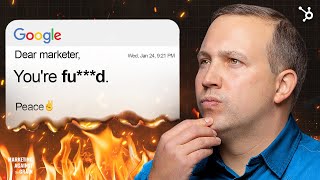
Kip Bodnar and Kieran Flanagan break down Google and Yahoo's new rule: emails get blocked if spam complaints hit 0.3%. They discuss what this means for mass outreach, why authentication matters, and whether personalization or spam detection wins the arms race.
Chapters
On today's show, we're gonna break down a massive change from Google that's gonna impact you if you send a lot of email. We're gonna tell you what's happening, why it's happening, and what you should do about it. I'm your host, Kip Bodnar, CMO at HubSpot. I'm joined by my co host, Kieran Flanagan, the CMO over at Zapier. This is marketing against the grain. Let's get into today's show. Kieran. We're here with our favorite, slash, least favorite type of show. A big, big company is doing something that's gonna have real impact on marketers. And we're here to kind of break that down and help lead and guide the way around what you need to do. Google. And in addition to Google, Yahoo, for those people who still use Yahoo Mail. You know, I'm not gonna make any jokes about you because you already feel bad about yourself enough if you use Yahoo Mail. Those two companies in February are changing their rules on inboxes and the mail that gets delivered to Gmail and Yahoo inboxes. So what's Happening? As of February 2024, Google will block all messages from any sender domain. We'll talk about what these, these things mean if any email send has a greater than a 0.3% spam rate. Now we got to break down what that means. Okay, so when you as a marketer or you as a sales team send a bunch of emails, you send it from a domain and you know, we send it from our HubSpot.com domain, you know, you might send it from email service provider domain, or you might have your own hosted email, you're sending it from your domain. If you have a bad send and that send gets more than 0.3% of the people that receive that spin, marking it as spam, basically thinking it's low quality, really low engagement. Google will then ban all of your future emails from being delivered to Gmail users, as well as Yahoo will ban you from accessing Yahoo inboxes. This is a pretty, pretty significant change to how email works on the Internet today.
I think you could be a listener tuning in, and they're going to talk about email and instantly tune out. But it's a pretty seismic change, which is the reason we're covering it. One of the things I was trying to look into, I don't know if you caught it in the, in the docs that we went through. If you get categorized by one of your sends in the kind of Spam category, can you get back out of it?
You're kind of set to email jail.
And you can't get out again.
It's not clear what the protocol would be to get out. You know, this hasn't launched yet. I think it's still early. I imagine you would have to have some type of appeal process. But like my history is that that's not like their forte. Right. And so this is like, it's basically like a line to cross. And the reason we're talking about this is I don't care how cool and modern your business is, you probably still rely on email for a newsletter, for some direct response, marketing, all of those things. And if you do it poorly, it's not like that channel is going to like get a little worse. It is going to get dramatically worse because a big part of your recipients will no longer be to get your email. And that is a big freaking deal.
Many companies in the B2B space do outreach at scale. Let's say you did the best outreach email of all time, like really personalized it, very high quality, really thought through it, but you still did it at scale. There's still a potential that you could hit a 0.3% of people marking it as spam just because they didn't ask to get the email. Right. It's an unasked for thing. And so it's not always indicative of the quality. It's indicative of the permission to send that email to that person in the first place.
Well, I think this is a really good point. On today's show we are going to break down what is happening, how it happened and what you need to do about it. But you're kind of bringing up the point of like it is a function of, not of quality, not just of your message but, but of the people you are sending that message to. Right. And if those people are unaware of your company, they didn't subscribe, they didn't opt in, they're probably going to be more likely to think it's spam. Even if what you're sending them is really good. Right, Right.
Any kind of average.
This is especially a big problem for salespeople.
Exactly.
Who are doing outbound prospecting. Kind of one to many emailing for outbound prospecting. This is going to kill some sales prospecting email efforts. It's not going to be great. And before we get into kind of what to do about how the heck does this happen. Well, there's a group that Kieran, that a lot of people don't know about that are kind of like, I don't know, the email Illuminati, for lack of a better term, secret group rule.
An email that in the dark shadows.
Well, there's a group called MOG and they're the messaging, malware, mobile, Harry Potter Anti Abuse Working group. No, it's mog. And so it's all these people who basically run inboxes for these large companies. Google, Yahoo, Microsoft, et cetera, as well as a lot of the people who send emails of the HubSpot. We send, we're big email service providers, so we're, we're part of it. There's this group mog and basically MOG basically made an announcement that two of their member companies, Google and Yahoo, have signaled that they're going to make a new era. And what they're calling this is the no auth, no entry. That's how they're branding this. No auth, no entry will be the rule for bulk senders who wish to send mail to those mailbox providers, which basically means those mailbox providers are going to authorize that you are a quality sender. Because it used to be if you had an email address, you could get to that email address. And what Google and Yahoo are now saying is you now need to be an authorized sender to reach our email customers, our email users. But the good thing is they're saying everybody's going to be authorized by default. But if your spam rate goes above 0.3% for a given send, then you're no longer going to be authorized. That is the stance, which is a very different way than the way email has worked before with all of these companies kind of taking a more passive role of like, hey, we're here to help our email users have a better experience. But if you have their email address, you can, you can email them and it's up to them to kind of mark spam and unsubscribe and do everything.
There's three core things it seems like they're really leaning towards for this. Authenticate before you can get access. So you have to authenticate your email, which means you have to authenticate your domain. Your domain. A lot of email tools will do this for you, but it allows, it means that hackers can't spoof a domain and send mass amounts of emails. You have to authenticate that it's a real domain, a real business. You have to provide easy on options, which means you have to allow that person to unsubscribe really easily. And then you have to make sure that your spam is below that rate. So it does really force you to think about the quality of the, the email program you have. But I still come back to, I don't know if there's any quality bar you can reach if you're doing like mass amounts of outreach. One of the interesting things is like, what's one of the most kind of popular use cases for AI right now? It's like these mass outreach tools. And even if that AI gets to the point where it creates the best email for a single individual, the problem with outreach is if you haven't asked for that email, you don't know that brand, you don't know that person. And so sometimes it works, sometimes it doesn't. But a lot of it is just marked as spam. I mark most things in my inbox as spam if I have not asked to receive it. And so I don't know, like, I think that that is the biggest problem for people, as you know, as part of this change is if you're doing mass amounts of outreach to people with Gmail addresses. I don't know how you actually keep your spam levels to Google's new guardrails.
I don't know how you do either. We're going to talk about how you should, we think you should manage this from a marketing perspective. I think from a sales outreach, which is what you're saying is my takeaway, Kieran, is that investing in brand awareness and investing in inbound now becomes even more important because the outbound motion is getting more friction. And this is like, this is a little bit of the market regulating itself where we've been doing a lot, a lot of outbound, especially over the last couple years, outbound, from all the data I've seen has really been on the rise. That outbound sales motion, and it's going to get a little harder to do that. What I will say and what we've confirmed is that Google Workplace accounts, so that means like companies using Gmail as their corporate email are not included on this. This is just the free consumer Gmail. So if you are, you know, reaching, you know, doing outreach to a company who's hosted on Google Workplace but has their email company name.com, this, this does not apply to them. They're core like spam. And it rules are still going to kind of rule the day there. But if you're a salesperson, sometimes personal emails are easier to find. If you are sending email newsletters, other things, personal emails are often what people use to subscribe to those and so it's going to have, if you're an E Commerce, this is going to have very big implications for a lot of marketers, a lot of sellers out there.
Yeah. And who knows if it's like step one to actually integrate this into Google Workplace.
And so it's my concern, I think you want to get this comply and understand how to do this well now so that if it expands either to Google Workplace or to other members of mog, a lot of the like, what if Microsoft jumps in? Like, what if this keeps snowballing and this just becomes the de facto of how this is going to work? Apple, Microsoft, a few others jump in and the world's a very different place. Right, right.
And so why is this happening? Because I, I, it's because we can't have nice things.
We've got to quote my friend Taylor Swift.
Yeah, that Taylor, nice Taylor Swift quote in maybe is it a reaction to the fact that we're going to just see this explosion of like outreach tools in particular because of AI I've actually seen a massive increase in the amount of spam emails I get. Outreach emails I get.
Well and I think what's interesting here and the thing I would also add to this is if you go back to what MOG like stands for, it's Messaging Malware Mobile Group for anti or excuse me, Messaging Malware Mobile Anti Abuse Working Group. It's not email, it's messaging. You know what I'm getting, I'm getting so much SMS spam and iMessage. Spam.
Yes. Yep.
Tons of. And so if you, if you think this is going to be limited to just email, I think you're also wrong. I think you're gonna see this apply to imessage and text, which is another thing, especially on the sales side that is becoming highly, highly used and dependent on. Right.
Yeah. I wanna give a shout out to some. I'm actually looking at them here because I've got so much outreach. Some of my favorite new outreach, they're all, you know, they're all using some of the templates.
Totally.
I really love. Are you getting the one where you know, the person's saying, hey, I'm just coming back on this thing, like, let me, let me know, let me know, let me know. First of all, I have never had a conversation, so I'm just following up on the conversation we had and then let me know if you want me to close out your file or not. Right. So close up my file. Why have you got to follow me for the like first of all, what are you doing that you actually have a file on me? There's just like some real classics in the, in the outreach.
Like I think we can just that outreach playbook game.
Yeah, we should actually go through them at some point. I'm trying to look at some others, but the clothes that you're filed is.
Maybe we'll do another. Maybe another. Do another show of like the worst emails of all time.
Oh, you know, the other one is like Kieran, just like you. The way you said blah blah blah on LinkedIn. I also believe blah blah blah blah. And because of that, this is.
I get that one the most because of this podcast. I get that one all the time.
You said this thing about AI tools. I also believe this thing about AI tools. Do you want to buy my product? And LinkedIn's a little bit more.
It is awesome.
LinkedIn's more like, Kieran, like, you're a human, let's connect. Also want to book a meeting, hear about my product. Like that's more just like you. I'm not going to do any like the introduction, nicey 90s nicey nice thing at the start. I'm just going to be like here, here I am. Buy my product.
I'm just getting down to, getting down to the nitty gritty of buy this thing. It's totally true.
But yeah, I've seen explosion of like WhatsApp is really starting to. I'm struggling with. Because I'm getting explosion there. SMS explosion, LinkedIn. I actually stopped accepting requests on LinkedIn.
I'm now terrified to accept somebody's LinkedIn request.
I don't accept anyone. It's like you hear, you accept and then you hear that ding. It's a message. Hey, thanks for accepting. Do you want to jump on a book, like a meeting to book this thing?
You know what I, you know what I do now? If I accept them, I accept them on like Friday night. Yeah, I know, I'm pretty cool. I accept them on a Friday night and then I just don't look at my LinkedIn messages or emails all weekend because it's like all automated. It's like all the crappy sales stuff comes on Saturday. I ignore it and then like I can kind of get back to the regular biz on Monday, which is.
Isn't this all an example of doesn't AI make personalization so much better to the point that it just kills it.
That that's my hope. Well, so what's interesting about what's happening with these email changes, right? Is like you can make the argument that they're precipitated by AI making these playbooks way easier to scale and everything. And I think that's totally true. The flip side is this. Google is using that same AI technology to basically recognize Cinder quality, right?
It's genius, right? So we're going to go to point where AIs are sitting there crafting the perfect email, sending it en masse. And on the other side, the AI is like finding the email and marking it all as spam and then marking that a. No more AI can send that email to that domain anymore. So like, it's just the. This is like the evolution of humanity where AI is doing all the things here and then AI is trying to stop AI doing those things over here. Like email is the perfect example, right? There's going to. There's this explosion of outreach tools. I think there's some really good ones. I've actually invested in some of those. And so maybe I should actually go.
Back in his bag.
No, I'm just like, I'm wondering is this. But as long as it doesn't go to business domains, I'm fine. But when I saw those tools, I said, well, this is just a much better way to do outreach, right? It actually can Capture data from LinkedIn, it can capture data from other places and it can craft something really good. I actually had it craft an email for you. I think I put it on LinkedIn at some point. And what's interesting is this email change. So because of those tools, we actually will see, I think, an exploit we already are an explosion in outreach, an explosion in an email that we didn't ask for as a recipient. And this change from Google is no, like, we don't accept that that is the future we want to live in. We think that people's email boxes should be more sacred, which I actually do agree with overall. And so we'll use AI to figure out how to find, you know, to mark all of that as spam and so you don't have to receive it. And so it is this interesting, like, paradox where you have AI on one side, you producing more of the things and AI on the other side, actually figuring out how to clean it all up.
Yeah, I think that is completely true. I think we need to move on. Like, if you are a marketer, you're a salesperson, what have you. If you're somebody sending a lot of email, what the heck do you do about it? Kieran, you know those like, moments in life that you have that for some Reason just like stick with you forever. We had a game in elementary school called cone ball where. Which is just like this made up ball game that I thought was amazing. And so you're gonna describe the game?
Are you gonna describe the game?
No, you have to. Well, okay, now I got.
Okay, so you have to describe.
Cone ball is like you have a gymnasium with a basketball court, right? And you have a handheld like bouncy ball, mini basketball thing. And there's four cones set up like a baseball basis. And you pick up the ball and you throw it and if you get it in the basketball hoop, it's 10 points. You can throw it anywhere over the gym. If it gets caught, you're out. And if it lands, you just run as fast as you can and you get a point for every cone you tip over. Nobody catches it. If nobody catches it, they have to throw it in and set it on the cone and you're out. It's a fun game. I'm sorry, It's a fun game, but there's this kid Patrick in my gym class and, and he was being a real jerk. And because of that, our entire class didn't get to play combo that day. And that's basically what's happening here with these rules, right? Because some people were doing some crappy Patricks. There's a bunch of Patricks out there. And now the average marketer has to go and do a lot more work because of this, right? To ensure that they're okay. And the prevailing school of thought here, just to kind of break it down for everybody, the initial approach to addressing this is going to be what are called sending email from subdomains. So right now what happens is you might have 10 different lists of people you send emails to. And all of those 10 different types of email sends come from one domain, you know, yourcompany.com or mail. Yourcompany.com, whatever. Now you're going to have a subdomain for each of those types of sins. So you might have newsletter.yourcompany domain.com you may have, you know, marketingpromos.your company.com you might have customer emails.yourcompany.com and so you're so that way, if you have a bad send, it's just that subdomain that is banned from versus all of your email gets blocked, right? And then you're like, okay, well clearly I messed up my newsletter send. My newsletter's gotten blocked. I need to now create a new subdomain, redo that strategy. So that I don't get blocked again. But if you just send email from your regular domain and that whole domain gets blocked, then you can't send email from that anymore. And that is the problem. So what people are doing is they're setting up a whole bunch of marketing, basically tech and operations infrastructure to abide by these. So because of the Patrick's of the world, we are having to do a lot more marketing operations work to send the same emails that we were sending before.
Anything that adds more ops is a crime in my eyes. I wonder if, I wonder if Google, I wonder if Google wanted this to be the solution because it doesn't seem like.
I don't think they do. I don't think they do.
What do you think they do? There was actually similarities to search where you could actually get your subdomain blocked or de index but not your core domain. And then I think I, I don't, someone will correct me in the comments, but I'm not sure if they actually think of the subdomain as part of the core domain and the subdomain gets DMX and the core domain is also impacted. But I wonder if they'll do something similar where like they'll look at the subdomains and the subdomains are hidden spam thresholds, they'll associate that with the core domain and they'll still ladder up the stack spam problem or the penalty to the core domain because it seems like if you're a Google side, I suspect that they don't want the solution to be people just setting up a different type of infrastructure but doing the same thing.
And so they want you to send better emails to people who know about it.
Right. And I, so I do, I do wonder if that's a solution for a certain period of time.
I think it is. Right. This is the solution a lot of companies are adopting in the early days. It's not a validated solution. It's not one that Google has said you should do. It's not one that we know for sure is going to work. It's not one that we know might only be temporary. To your point, right. It might work for six or 12 months and then Google might change how they look at this and you might have to do something else. But this is still the steps you should consider taking in the very early days of these changes. Right. Until we learn more, get more data and once we have a fuller picture on this, we can do a follow up show around kind of what we learn and what's happening and Everything there. But this is a very big change. And this is basically the, the email marketing world's best guess at how to mitigate the risk of this big change from your marketing results.
Yeah, one of my early career lessons that might be useful here for people who are thinking, how do I figure out unvalidated things like the things that are not being validated by Google? They haven't said this is what you should do as part of this, like these subdomains or whatever else may be and why you should definitely do your due diligence and research. I remember like really early in my career, I started my marketing career post being an engineer in search. And I, because I was a software engineer, I actually spent a lot of my first year or two like doing really deep technical kind of search work. Right. Because I could actually understand code and all of these, that these type of things I remember I ended up on this, like, I'm not going to say the company, but it's a really, it's a global brand. In a meeting for some reason with their CTO. And consider I was only two years, maybe I was like 12, 14 months into my career as a, as a search person. And this CTO is like their background was from Yahoo. So they hated everything about Google and they instantly hated me. Because they hated search. Right. They hated SEO because they associated that that was a Google thing. I didn't realize, but they were like, that's a Google byproduct of how Google wants to enter to work. Not Yahoo. Yahoo's the one.
I love how you say Yahoo. It's. It makes me happy every time.
What do you, how do you say it? Am I saying it wrong?
Yahoo. And you.
Okay. Yahoo.
Yahoo.
Yahoo.
You say the who part like really happily and it makes, it makes me happy.
It's to be nice and happy.
Per.
Yahoo have never really gotten stuff sorted out, so they still wanted just a big directory because they didn't have the technology to compete with Google. And so I actually, back in that day, I was reading everything from Moz and Mozart, talked about this thing that I didn't realize at the time was like unvalidated, called Page rank Sculpton and PageRank Sculpton. Basically I'm going to go like a little nerdy, but it basically means you.
Can talk SEO nerd to us.
Yeah. So like all, all. Every page has like, you know, page authority. Right? And so every time you link out to external sites, you spend a little bit of that page authority. And there was this like theory that you could no follow link. So Google introduced a no follow link to say like don't follow this tag. Don't, don't put any of my pages. Don't, don't flow any of my authority through this link. And you could sculpt where the authority went. Right. So you can consolidate it on pages. Now I'm a X engineer. This is an entirely a dorky, geeky thing to do. So I loved it. I thought this was the best thing ever. I'm going to go out there and pay sculpt. So I went back and forth with this CTO of Yahoo and like they were like, you're black magic. You're doing this like really evil thing. We're not going to do this. And I was like no, you should do this. Like you're, you're going to be able to out compete all your competitors and, and their CEO basically sided with me and so they went on this like three to six month project of re sculpting their entire site. And then like Moss came out with this post and said oh no, we were wrong. We were wrong about that. It's not even a thing. And I was like oh my God. HIDE ARTICLE DO NOT SEND TO CUSTOMER luckily then I had, I went off and joined another company. So you should definitely like be very careful about the amount of work you do take on with things that are still yet to be validated.
Yeah, these are the best guesses, but they're going to take a couple months to like actually validate them, right?
Yeah, yeah, yeah, it'll take a while.
And that's where so these are, these are massive changes. So to recap, in February 2024, if you're sending email to Gmail or Yahoo users and you have a spam rate of higher than 0.3%, you're going to get banned as a sender from the domain that you're sending that email from. We think sending email from subdomains is a good first step to try to mitigate that risk. The best thing that you can do is to have a high quality opt in audience that's very engaged because you're sending them highly relevant content and information and products that they want. So build inbound email lists versus buying data and spam email lists and obsess about the value and the personalization you're providing for that audience. Like that is what you should be doing long term to really de risk. And by the way, if something like this has a massive effect on you, you probably also over concentrated in email. Email is important but it's not the only thing. It's not the only channel. And so if you are sitting there and you're sweating, there's sweat dripping down thinking about this change, then you've got to diversify to other marketing channels. Because you are too revenue reliant on email doesn't mean you should stop doing email. It means that you need to invest in social search other channels that will help you diversify how you grow and monetize your business.
Agreed. We need to get rid of the Patrick's from the industry so we can continue to have nice things and so.
You can play some we would like to keep our nice things play cone ball all of so you can play.
Your overly complicated game of all that.
The realistic post gonna go to the gym play combo and you're gonna like it. Karen, tell me if you're in or out on combal in the YouTube comments. If you like the show hit subscribe. If you have follow up questions about this change, things you want to see from us in the follow up show that we'll do probably after these changes are live and we've learned more things probably in the kind of March April time frame, drop those in the comments too. We read every comment. We appreciate you. Hit that subscribe subscribe button on YouTube and we're back with you real soon on market against the green. This data is wrong every freaking time.
Have you heard of HubSpot?
HubSpot is a CRM platform where everything is fully integrated.
Whoa. I can see the client's whole history. Calls, support tickets, emails. And here's a task from three days ago I totally missed HubSpot Grow better.
More from Patrick



A NEW BREED OF PARTNER: The Partnership Ecosystem Model Journey of Patrick Biddiscombe, Part 1








Customer Success Workspace: Never Lose Sight Of What Matters Most | HubSpot Spotlight