Do You Even NEED A Website?
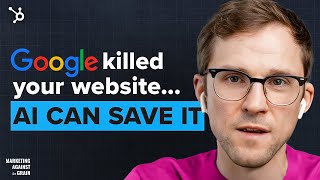
Kieran and a co-host argue websites aren't going away, but AI will transform them into personalized, multimodal experiences with chat agents and generated video. They break down why companies still need sites: traffic, brand positioning, support, hiring. Key moves: add AI chat, experiment with personalized video and audio, use AI for localization.
Chapters
On today's show, we're talking about, do you even need a website? Are websites going away? We're going to break down why you use websites, how you can make your website better today, and we're going to offer some very practical tips to integrate AI onto your website. On today's show, do you even need a website anymore? That is what we're going to talk about. We're going to debate the future of websites, what you should be doing, what you shouldn't be doing, that and much more. All ahead on Marketing against the Grain. Kieran. We're here to talk about websites today because we did a show like a week ago on SEO and SEO being dead that has blown up. People have lost their mind about that. We had a great question in the YouTube comments. Hit like, subscribe, comment on YouTube. Thank you. That was all about, like, hey, if SEO is changing and AI is really disrupting marketing, like, what's the role of the website and do you even need a website? And so we thought we would spend some time breaking down the current state of websites and what marketers should be doing today.
I think this is a great question. We kind of broke down how AI disrupts search. People love that. I think there's a wider question which is just what is the role of a lot of these traditional things that we've done to market our companies? And website is a pretty big one. Website has been like, core of our, you know, the central part of our marketing strategy since the intent became a thing where we could start this episode is. And this seems really like basic, really rudimentary, really, like foundational conversation to have. But, like, why, why do we create websites? And predominantly, like in A, in B2B, like, what are, like the core reasons we would create a website? And I think I've come up with like four. I'm sure there's more. And people can, like, argue with us in the, in the YouTube comments. There's traffic on Legion, right? We want to create traffic through all of these different marketing channels. We want to turn that into leads. And within there is things like, you know, capturing user information, search, content, marketing, thought leadership. Then there is really like brand building and product positioning. Like, we have to position the company, we have to build the brand of the company. The website is a fundamental place that we do that. Customer support, really, that's a big way that we offer customer support through knowledge base, through chat, through these different things and then recruitment, right? We want to attract and recruit talent, right? There are four key foundational reasons that we would actually want to create a website? I don't know. Do you think I've missed anything?
I don't think you're really missing anything. I would just add that you could tell exactly what the CEO or the CMO of a business really cares about by their website. Right. But you know, if you're like, oh, this is just like product information for days. It's like, oh, this is must be a really heavy product CEO background. Or like, wait a second, like I can't even talk to sales on this website. It's all like this fluffy brand messaging. It's like, oh, it's a brand. See about. Right. And I think the best websites that I've ever seen do a good job trying to balance all of those competing interests, competing factors that you just outlined for people.
They're basically incredibly good at copy. Right. They talk to customers in language that they actually understand, not in language that is used by the C suite or the people who work there because they generally use a bunch of jargon. Yeah. Interesting enough. AI can really help you with that. So I thought we could go through, I thought the fun thing we could do for our audience is go through each of those four things and talk about how AI potentially disrupts them or you need to have them on the website or maybe changes your approach to how you build your website because of them. And we can kind of end with what our take is on the future of websites in this kind of AI.
World before we get into those four categories. Because I think those four categories are incredible. I was hoping we could take like a 60 second detour to the topic of microsites. I've always hated micro sites. Brand marketers love micro sites. Agencies love micro sites. I've done some micro sites before. We get into websites, microsites, which are traditionally like a very small mini 1 to 10 page website, often for a campaign or a product launch, something of that ilk. Like what's your take on them, Kieran? And do we need them anymore?
I've never liked doing any other website. That's not the way even, even when you have M and A deals, like companies have bought other companies and they leave that website to be a third party tool or that tool exists on a different website or they break apart all of their tooling on different websites. Microsites to me are just a leaflet and I don't get the upside in, I've never really gotten the upside in doing them. They're a lot of work for a small amount of gains and they're Never going to. I've heard like the argument, well, you know, they'll get recurring traffic. How? Like a 10 page website is not going to get any recurring traffic from search. It's not its own brand, it's not going to get any direct traffic. I think there's more creative things that we can do today with all of the tools that we have available to us than actual microsites. They would be like last thing on my list. And for the most part, anytime any teams that I've managed have come to me with microsites, they've got nixed and axed pretty quickly.
Well, and the reason we're talking about this is because I'm sure a lot of people watching have done microsites or if you had questions about microsites. And I think what you and I are saying is our prevailing point of view is yes, you might need some focused web pages for a product or a campaign, but they should just be part of the core dot com. They should just be an extension of your website because you want to reduce the friction from people going to that kind of focused content to the broader breadth of your product, your platform, whatever the business you're running might be. And there's just way too much friction when you have a microsite. Right, right.
You know who wants to do the microsite?
People who don't know how to do marketing?
No, it's the creative director who works in B2B, secretly wants to be in B2C, does not like the B2B brand and wants to do something completely off and something more creative to add to their portfolio. That's generally who wants to really do the microseconds.
Yes. And Kieran, somebody who wants just complete control. It's like, oh, I don't wanna mess with those teams over there. I just wanna make my own thing. And people who wanna make their own thing are normally not very additive to the overall mission of actually building a brand, actually going to market in a really effective way.
If you want to do a microsite, if you're like, I have to do this, it's being given to me, whenever the campaign has stopped, run into the core pages because it's probably acquired a bunch of links and you want to get all those links into your big website, which is the reason you should never do microsites, is because you want to have all the PR and links and all that good stuff going to the core website to lift that up versus kind of, you know, distributing it across a bunch of different sites.
I Once had a college professor, this is, we're going to get right into the websites here. But I once had a college professor that said, hey, I want you to do a review of every paper that you send me. And one of those reviews is I want you to cross, I want you to look for every, every time you use the word very or every time you use the word just. He's like, those are useless words. Cross them out and delete them. And I was like, oh, that's really good advice. Your writing does get a lot better if you do that. If somebody hands you a proposal to do a microsite, just, just cross it off, just delete it just like that. We're just not going to do it. It's just not, it's not going to be a thing.
I'm going to go to the important work, do the actual.
Exactly. We're going to go do real marketing, not microsite marketing. Okay, right now that we've, we've, we've hit the controversial topic of microsites. Let's go into websites, those four areas that you outlined here and like, let's walk there. Before we go back to today's show, here's a quick word from HubSpot. If you're a marketer, one thing I know for sure is you love data and boy do we have data for you. The 2024 State of Marketing port is chock full of data and insights around the current trends that are shaping the marketing industry today. Things like artificial intelligence, you know, I love AI tools, personalization, influen influencer marketing, all of the topics that are key to getting a competitive advantage this year. It's going to make sure you're not stuck in old strategies and old tactics. So click that link in the description and go get your free copy of the 2024 State of Marketing report today. Now let's get back to today's show.
All right, traffic on Legion. I think we can probably gloss over a little bit on the search side of things because we've done a bunch of search, we did a video that really goes through the future of search and AI agents and how they're self contained platforms and probably will not send you as much traffic. We have Ethan Smith coming on the show to talk a lot about this, which that episode will be out in a couple of weeks. So we all agree, right? There is real potential for search to be disrupted. So you actually might build your website in a way where you're not having to think about traditional search engines as much. That seems Like a point that most of us agree on.
Yeah, I think that's not very controversial at all, actually.
Yeah, it's not controversial. All right, let's get into one that I think is like, good to ref on. So the other reason you have a website is to create content marketing, right? You want to drive inbound marketing, you want to do white papers, case studies, blog posts. I've always, like, I don't know when I was really deciding to go into marketing and I ended up in B2B. I was always depressed when people talked about, hey, we need to do some white papers. It really made me feel like shitty. It's like the word, like the most, like boring thing sounding thing that you can actually do as part of your job.
Hold on. Before we keep going, can we just. Whoever came up with the term ebook, like, that's one of the best rebrands ever, right? We went from white papers to ebooks. Like somehow, like that was one of the best perception. Rebrands for essentially the same thing that we've ever had.
Feel a lot better doing ebooks than white papers. Feel like white papers.
So much cooler, man.
And a science lab just drafting out born mundane things.
Kieran, before we get into kind of the four website use cases, how they're changing, I want to bring up to you something that you and I always go back forth around. Like, what are things that keep us up tonight at night? What are the things that we worry about or contemplate because we just don't know the answer to when it comes to websites? The thing I don't know the answer to is, are websites going to get disintermediated? And what I mean by that is that a website, like the use case for website is predicated on using a laptop or a smartphone, right? Like, the reason that we need a website is because we use these, these specific devices. What if we use very different types of devices and you see some of those coming out right now. The humane pin that just got crushed by Marquis on YouTube crushed one of the most.
The Twitter stuff. Brutal product review finder.
You've got the rabbit R1, which I think I get mine in like a couple weeks. It's like. And it's. I know it's on its way from China, so I, I'll be getting that.
Which I think it's going to suck, dude. I'm afraid.
I think it's going to suck too. But I, you know, this is a learning cost. But what I'm saying is all these kind of early hardware devices there's the rumored OpenAI phone, et cetera. They're not things that we're likely going to use long term, but they are precursors for what could be new devices that completely disintermediate websites and make websites way less important. Like, do you buy that? Like, what is your thought on, like, just the overall importance of websites? We're gonna. We're gonna talk about how websites are being disrupted in this current, like, schema of smartphones and laptops. But what if we didn't have smartphones and laptops? Would they still be important?
I think if you don't have smartphones and laptops, that we are saying there's a future where we are basically moving towards much more of an experience. Right. Because these new tools, like humane Rabbit, they are, for the most part audio versus visual. You know, humane in particular, is just a pin and is able to, like, do commands through voice. And actually, that's where I think the OpenAI iPhone is probably going to go to. Because Jony Ives has said time and time again that he. One of his regrets is he's created a device. Johnny Ives created the design for the original iPhone, has created a device, and has a whole species, our whole species is glued to that device. The question is, would humans be okay with a predominantly audio experience?
I don't think they would because most. I. I would love it. I'm very auditory. I would love it. But I think most people are visual creatures.
I was actually on Claude when you were asking that question to see if there's any data to see how. If there's any data to show. Are people primarily audio, visual? I think most people are highly visual. Actually. The reason I talk with my hands so much on the show and my original hey Jin video wasn't very good because my hands were moving so much is because I'm a very visual person. I think you. What I do believe is you could have a far smaller screen. Like, I think you could have much more audio and probably have a much smaller screen. You do. You don't need things like apps. But I don't think I want to control all devices through voice, and I don't think I want to interact with all devices through voice. So I still think there's some sort of visual component that I would need, and a website would fulfill that purpose.
Right.
I'm interested when you get the rabbit to see how you feel. Like, the reviews I read of the Humane pin, a lot of people said it's just a worse. Far worse version. It's far worse version of their phone. Why would I ever use this over my phone? Like people are addicted to the phone.
I want to put it something actually very hilarious though, right? What is the. If we polled 100 random marketers, hundred random consumers today, what do you think they would say would is like the most annoying thing a website could do? Like, what would be like Family Feud style? What do you think is the number one result that would come back? If we did a survey of what was terrible about a. If a website does this. I hate it.
Slow to load.
No, I think that's in the top five. This was especially popular in websites in the 2000s. Flash autoplay audio play. Yeah, right. How many times like you and I alone have talked about like how, oh gosh, we hate that, like this website. You just go to this website and it's autoplaying audio. I think that's going to be commonplace in a few years. Isn't it wild that I actually think that these devices might not completely disintermediate websites, but they're going to change what websites need to be and websites are going to be much more multimodal than they are now, which means beyond just text and visuals, they're going to have more video and more audio. I know you have an example here that you want to kind of walk through as it relates to one of our pillars. So we can get into that. I just wanted to take that like, interesting detour that it's funny that right now we would say that like autoplaying audio on website, it's terrible. And in a couple years from now I think we're gonna think it's awesome, which is wild.
All right. Content marketing. I think this is like the most. One of the more interesting points to dive into because we are. We said this some, some months back, maybe even over a year back, which is what happens when you own your own media. And what, what I mean by that is the media you consume has been created just for you. And so I want to. Let's. Let's give some examples and what we mean by this. All right. This is one of my favorite current examples.
Oh, I love AI. What's it called?
It's pretty. It's called Udo.
Udo. Okay. Udo AI.
I know. How would you pronounce that actually? Udo AI. I don't know what they've done with the brand in here.
Udioai AI. That's just a bad domain name.
They should.
They raise some money and maybe make a better get by a better domain name.
Well, these are Ex Google DeepMind. So I suspect they have a lot of money.
They should buy a better domain name.
But here's some examples, right?
Yeah.
You can basically ask it. You can give it lyrics, you can give style of music and you can give it a title. But you watch. Did you. Okay, you probably have not watched this. I keep forgetting you don't watch cool movies. Have you watched Dune?
I have not watched Dune. I have not watched either Dune.
I knew you would.
Let's. Let's continue to reiterate for our viewers that sci fi fantasy is not a genre that I love. Feel free to call me an unfun loser, but I hate dressing up for Halloween. I don't like sci fi, don't like fantasy. I am. I'm stuck in realism, unfortunately.
Okay. Okay. You need. If you ever.
I've heard they're great. I've heard they're great. And if you ask me to watch them, I will watch them for you. But I have not watched them.
You should watch dinner. Dune is epic. All right. This is basically Dune, but as a Broadway musical, right? So they have said, like, do. Do that movie as a Broadway musical. All right, so this is doing pretty great. I can see myself, popcorn in hand.
You'd be an opening day of this musical.
So, like, it did all lyrics. Did old music. Here's another one that someone's done as they want a hustle music song to get them do it. Cranking through their to do list every single day. So again, this person has asked for this song to be created for them. It's created the entire thing.
That's wild.
Lyrics.
Doesn't it show you how formulaic our life is? Isn't it kind of maddening that I can. That our life is so formulaic that you can just, like, build technology to create basically music on demand.
Yeah. How simplistic we are as creatures. Machines can just replicate this for us. There's a ton of stuff. I think this is like the. This is a pretty good trailer where it's showing you. You can see me. There's one here with Irish music I.
Want to get to.
You can do a birthday song.
I like that. This show is a sort of you thing.
Here we go. Coming. Oh, look at me.
All right. Oh, this. You feel like you're feeling your homeland.
Right now I'm in a bar in Ireland.
It does feel very like Irish pub.
It is pretty incredible. I have to upgrade to pro to be able to do some stuff. I was going to create a song for the show. I'll do that next time I actually had Claude write some lyrics out. I went to Udo AI, but I have to upgrade to. I have to upgrade to pro. So there's that. Right? So like that's an example of pretty incredible personalized media.
We have to do a show where you just write jingles for like five really popular brands. And that should be the show. You should, you and Claude should write jingles for like five popular brands. Or like you can do three and I could do three and then we'll, we'll do them. But we should have a marketing jingle show which, which would be awesome.
I think where we're going towards. Right. Is a more personalized experience. And the thing to really play around with is like how personal that experience gets. Do we actually have websites that are a one on one experience? Because what we're moving towards is a land when you can actually create media. The media you can, you consume can be created by you, for you, by AI. Right. So it means the thing that you consume is much different than the thing I consume. And here's like, there's some really good examples right now. Like, here's a really great example that I saw recently in music. But I think we can think about how this is. Exists for music and how it can be applied to a website. Like how we can create a similar sort of experience for a website. The other part of that you said. So that's, that's the audio part, right? The other, the other part you said is multimodal. Now we've already done Sora from OpenAI. Yeah, there's like a ton of these tools there. There's another tool here called Infinity AI and they are a startup so you know, they're pretty scrappy. Website is still only, I think half baked. But again, I just, it's. There's so many versions of how easy it is to create video. And I will say one thing about video. Let me play one of these. Where I played Zuckerberg is such a goat. Can I just say, like, he is my CEO. You just.
You like that he loves ufc. You think he's living the life you.
Would live, except you wouldn't, you wouldn't.
Raise a bunch of cows to eat. That's the only thing.
No, I wouldn't, I wouldn't do that. I wouldn't do that. I don't like that. I obviously I'm. I don't eat red meat. Try not to eat much animal at all. But anyway, that's, that's it. That's his thing. But he's hanging out at, like, UFC 300. He's got a gold chain. He's looking swagged out. He's, like, wearing cool watches. He's swearing. Like, he's just being cool, right? He's this. Ever since he. This, ever since he was like, dude, I can actually beat you up. He is a different person, I'm telling you.
That.
That feeling of knowing that he could beat people up has given him different, different feeling. But here's a video of, you know, done through this infinity AI. That's Facebook.
I'm the goat. You threw data.
I throw touchdowns without Facebook.
No post game highlights without me. No highlights enough. Snoop Dogg is the real goat.
So I will say what I've noticed from these video tools is they're not very good, a lot of them. But we. We are like, you had a really great quote. Maybe you can give it. Because I think it's perfectly related to video right now, because we made a big call that this is the year of video. We're seeing that influx of video tools soar from opening. I was really, really cool. Even Heygen is really cool. But you can definitely tell it's AI. But you had a good quote from Sam Altman on the 20 VC podcast with Harry about building for today's model versus building for the future model that I think perfectly fits how you should think about video.
Yeah. So there's a couple things. If you're watching the show again, like the SEO show, you're probably like, what do I need to do about my website? The rest of the show for the next, like, 15, 20 minutes is going to be all about that. And the lead into that is you should go listen to Harry Stebbings, friend of the pod. I've been on Harry's pod. Kieran, I think you've been on Harry's pod. Over at 20VC, he interviewed Brad Lightfoot and Sam Altman from OpenAI. And Sam had a great quote, and he was basically like, look, there are companies today that are building for what the models can do today. And there are companies today that are building for the model being exponentially better and are assuming that as the models have continued to. To improve up to this point, they're going to continue to improve in the future. And he's like, the first categories of companies are the ones that are going to get disrupted by model innovation, and the second are the ones that are going to take advantage of that innovation and be successful. And so what we're seeing here is that, like, a lot of these AI video tools aren't great yet. But if you drag the spreadsheet out, it's very likely that six to 12 to 18 months from now, many websites are going to have AI videos on them. Right. Like if we're talking about websites, one of the things is the cost to have video on your website is coming down dramatically and taking advantage of both having more video content as well as having personalized video content. The thing that AI does is like if you know about this visitor coming to your website, you can render a custom video just for them. Exactly right.
Which is exactly.
Which is the game changer. And so in the short term, like if you were thinking about what is the number one thing you can do for your website? Kieran, this is my suggestion. I want to see if you agree or disagree. It's how you can make your website more personal. And if you're making your website more personal, it is using video and audio, making it more multimodal. It is having that video and audio use as much of the data you have about that visitor to create an experience unique to them. Again, the biggest change in marketing with AI is that we're going from these big segments and guessing that these thousand people all care about the same thing to saying, hey, I know what you as an individual person care about and I'm going to do my best job to deliver that right. And the website right now has been a very blunt, broad instrument up to this point and it's going to get more focused.
I think, I think the way to think about this, if I was the listener, is like traditionally we've had to somewhat optimize our website for search engines and kind of adhere to these search engine practices to get our website pages to rank really highly on search engines. I think over time, as the importance of search engines, traditional search engines erodes, we're going to build a website predominantly for the person who visits the website, like the customer. And I think what you're, what you're kind of telling our listeners is that experience is going to be much more personalized. Like we talked about the fact that you'll be able to create media for a one to one experience and so you'll be able to ingest data about that person and then create videos and create audio and create content just for them. And we see some of this, hey gen has like the ability to upload a contact list and you can create a video for individuals and use their name. But I think that's going to get much better. Like we can actually ingest data pretty rapidly and Then create that video on the fly. The next part, I think is your website is going to be like, do you ever go into a real high end fashion shop? And I don't know what you, how you feel about the experience when you go in there. You know, it just occurs to you.
That I've never gone to a nice clothing store with you. Kieran, we're going to have to do.
So you go, you go into the nice one, right? And then as soon as you go in there, you have the person who comes over to you and says, like, I actually find that a little annoying because I can look for clothes myself, but you know, that's their job. They come over and they're like, hey, like, what can I do for you? Like, let me show you around here. Like, what size are you? Like, you look good in this. You look good in that. That is what I think the website experience is going to be with AI. And this is the most transformational thing that I think we're going to show on this episode because this blows me away. Right, let's go. This is a company called Hum AI.
Yeah. Matt Wolf, you and I talked a little bit about it on the show a couple weeks ago, but give people. We didn't do a full demo walkthrough. So let's do it.
Okay, let's talk. Let's start. So Hume starts a conversation. It's just like any other. If you're on YouTube, you can see me doing it. If you're on the rss, I'm opening a chat panel in the same way that chat has become ubiquitous across all websites. So I'm going to start a conversation. Hey, Hume, can you show me the product that would be most applicable for marketers? Absolutely. Okay, let's take a look at our sentiment. Sorry, Hume. Great, I'm glad that's helpful. I'm keep interrupting you. So the one thing I'm going to. Hume, we're doing a live demo with our audience and I have to just make sure they know that I can't keep interrupting you because I want to show you. I want to show you off and what you're doing. So Hume is basically showing us around the website. Hume, can you show me the latest research you have on how Hume can help companies grow faster? Got it. No problem at all. Let me show you our latest research. Sorry, Hume, I interrupted you again.
Why do you keep interrupting it? Mute yourself.
No need to apologize. All right, show me the research. I'm excited about this research. Awesome. Let's dive right in our Latest research highlights how Hume's emotion AI can help companies grow faster by improving customer experience, internal collaboration and more. Sure, sure, sure, that sounds really interesting. I'm bored of that now. Please show me what you can do for sales teams.
Got it.
Let's switch gears. Our sentiment Analysis API could be really helpful for sales teams. It provides granular insights into customer sentiment across voice, text and more. Okay, let's close this. So if you're on the RSS feed, the thing you're not seeing is the fact that Hume is actually showing me around the website. That Hume does not get annoyed when I am really rude to it. A lot of people are rude, unfortunately to salespeople. And so when I said sure, sure, I'm bored of that, show me something else, it doesn't care, it shows me something else. To me. What is your website? It is. In the future you could potentially think of it as nothing more than an online demo delivered by an AI agent. And that would actually change the way you construct your website to be much more like a sales deck versus a traditional website.
Which means that instead of just as you train sales reps, you're going to have to train the AI. Just as you roll out positioning, the AI is going to have to be the best at articulating your positioning. But what's interesting to me is this is a very mind blowing demo. There's one problem, Kieran, and the problem is not going to be the AI, it's going to be the humans. There are a lot of people who are going to be too polite to say they're bored and move on, right? Like the etiquette and internal nature of people is going to be very interesting in this future world, right? Where right now websites are like very matter of fact and very anonymous. So it's like, hey, I come, I read your page, it sucks, I leave and move on, right? And like maybe you see that you have a high bounce rate on that page or something and that's, and that's what you can do. But when you have an AI who's logging all of this and you know, basically says, oh, this page people are completely bored on and they hate these things, like that's very different. And one that's great feedback for a marketer and marketers will be able to get much better. I wonder if people are going to be less interested in going to websites though. I wonder if people are going to be like, oh, that raises the bar of commitment for me to like actually visit and go to a website site.
I, I think it Changes. Look, I think all technology makes humans more lazy.
Yes, right. That, that's kind of its job.
Think about what. Yeah, think about what. The steps you had to go through to research websites or anything like that before Google. And then you got used to just click using Google, right? I, I don't have to go and traverse the website, I can just use Google. It just continues to erode the work that we need to do. I can't imagine a world where every single, no one, like people go to websites but like not a single person bothers clicking through any of the pages. Why would I ever click through the pages where I can just start this anonymous conversation with someone and have it do all the work for me and I can just talk to it? Right. I think that is fundamental, that is a fundamental break. A huge change in how user experience for websites is going to be with AI versus without AI. I actually think the opposite. I think all, every experience will be something much more. Like human goes to website, human asks AI to do things for it on website, human leaves website human never clicks around pages, human never spends any time. Think about this, right? You've probably seen this HubSpot. I've seen it in every company. I've done advisory work all the time. About 10% of people go below the fold. That's how lazy your users are. They go, ooh, above the fold. Click button. Right?
They, well, what above the fold is what you're saying is the most important. And I think people are like, oh, if you think this is the most important, then I should think this is the most important. Right?
Because I don't want to do the research. Yeah, everyone wants to do less amount of work, take less amount of steps and just get the thing they need to get right. Why are they above the fold? You put all the important stuff now above the fold. Click above the fold. I'm used to, I, I've, we've trained a whole generation of buyers that the above the fold is the only thing that really matters. And that's why we put all the click call actions and the things up there. We're going to train buyers that the only way to, the only thing that really matters is like talk to the AI and the AI will get you what you need.
Yeah, 100%.
And that means the role of the website is really just as a way for the AI to like navigate you around to the thing you need to go on. So even like website metrics, you can imagine a world where the website metrics are like, here's the collection of conversations I had. Here's the collection of conversations that led to something happening. Here's a collection of conversations that led to nothing happened. And here's the commonalities between the things that led to something happen. Here's the commonalities and why these things didn't happen. And so you don't even need to look at things like traditional bounce rate, depth of visits, like how many pages that person visited.
Like you.
All of your web metrics actually fundamentally change. The other quick point I'll just make to see if you, you buy this is why does most customer experiences suck, right? Especially handoffs.
They suck because of handoffs.
Handoffs. We go from you know, the, the AI chat person to the BDR to.
The, to the AE to the onboarding rep, to the CS rep, to the support rep. Why do you need to.
Do any of that in an AI world? Let the marketers have their tools and then just build the automation so there's no handoff. And have the AI agent and AI support, you know, the AI like a Hume style rep or agent do the entire thing. Right. So there's a continuation of experience. Right. Like the experience is consistent across the entirety of that journey. And that is a fundamental difference as well.
Right.
Like that, that is a huge difference in like website as a way to like serve your potential customers and your customers through a singular experience.
100%. Okay, we're coming up to the last like five, 10 minutes of the show here. We got to leave people with the things they should be doing today about their website. I think we've set the stage for websites are going to change a lot and in the short term websites are going to need to be more personal. In the long term, websites could potentially become intermediated or at minimum are going to have to become more auditory and even more visual. Right.
I think we, we. Yeah, I think you would want, you have to pay attention. I think you want to be one of the, you want to be in the first movers to adopt these tools. We believe the more personal you can make your website, the more multimodal you can make your website and the more you can create an experience that allows someone to have an always on concierge to like navigate them through the pre buy in and the post buy in. That to me is a step function change in the success you're going to have across your website if you do those things.
I'm going to pitch you Kieran, on the summary of today's episode, which I think is in the running for what would potentially Be a marketing against the grain T shirt. And basically everything we're saying, especially like you had your rant on. Like, people are lazy. People want to be above the fold. It's like a marketer's job is to enable lazy. Like, enable lazy. Like, imagine the least amount of work somebody can do to get the thing. And if you can do that for them, they will pick you over somebody else because you made it so much easier than everybody else did. Right.
You know, it turns out the Don't Make Me Think by Steve Krog is still one of the seminar, like, the most important books to read as a marketer. Like that. That is the job. Totally true.
Right?
Don't make me think. Just give me what I need. Just give me what I need. All right.
Harder to do then tactical website things. Kieran, what should people tactically go and do today on their website that's different from what they're probably doing today?
I think if you have not integrated AI chat in a meaningful way, that is.
That's job number one. Like, I could not agree.
You and I live in a little bit of a bubble where we kind of probably think that's a thing that doesn't need to be said. No, but I've realized from talking to people recently that, you know, we're in our bubble. And so the AI chat is number one thing that I would do. The number two thing that I would do is I would start to figure out if I can play with some of these video tools.
Hey, Jin is probably the most ready to do, especially, like, the personalized video stuff.
I think you can create miniature demos of your product features and products in like, a really creative way and see if people want that or not. I have seen, like, in different results when you put video on because people, again, are really trying to get into your website and get off again. So it takes a. What you normally see is a small number of people will consume the video, but they will convert at a higher rate. And so you just have to see if it's worth doing it. And because video becomes so much cheaper if you do it through AI tools, I think that is a test worth having.
As bonus points, there are probably a lot of people watching Today show who have a global website, a website in more than one language. If you lean more into AI video, it's much easier to translate and localize those through dubbing and through that application than it is even text at this point. So another opportunity is to use AI video to aid in kind of fast localization of your Website content, then the last.
Yes, I think translation one is a huge one actually. I actually think that's probably number one that you can get your website translated.
No, I think chat's still number one. If you're not doing AI chat, stop listening to the show now and go do it.
The last fun one I'll talk to is we Talked about characters AI for B2B forever.
We have remind people what that is. Remind people what Characters AI is and give everybody the background if this is.
Their first show Watching Characters AI is basically incredibly successful company that all of us still kind of wonder why. I seen so many tweets to people saying what do these people do? But it's like incredibly successful. It's a unicorn and it's basically an app that allows people to create characters using AI Any character you want. So you can go and talk to Elon Musk, you can go and talk to cartoon characters. You can create any character you want and interact with it. Now, apparently the core use base right now is teenagers and they're using it to create like characters that they love and they have interactions and they just love it. And actually children, you know, creating cartoon characters, creating characters that they interact with every day as an AI and they can play around with them. You. And I said, hey, like that should exist for B2B. And then we just never did it. We told everyone else they should do it. So this company Delphi AI has kind of done it for business. And it really got me thinking that the best person to sell a product is the founder, but the founder is much too busy to sell the product. And so I do think Delphi AI, which allows you to create a chat agent trained on a particular, like, Well, a particular B2B celebrity or VC or founder or whatever it may be, you can basically go create one for yourself.
Oh, that's pretty cool.
It would be kind of cool in the future if you could go and create a version of the founder and the founder could be on the website as a chat agent and give their perspective on why they built the tool, give their pitch on like why they feel that tool is important. Because the best salesperson is always going to be the founder. And that's a way to get that always message and sales narrative on your website. So that's the. That's the, you know, the kind of weird, funky, cool thing that I would go try because I'm going to go and create a version of myself. Why not?
That's what we the world needs more you, Kieran. So you should definitely do anyway. What you're basically saying is, hey, start with the AI chatbot. That is like table stakes now. A lot of companies are doing that and you need to go and do that. The second thing is lean into AI video both either for translation or personalization. Then there's going to be a world where you're trying to integrate more audio and more personality into that AI experience. That's where something like the chat, like the founder led chat bot and like actual avatar that you just showed comes in. And those are all things that are going to help people better learn about your products and services when they come to your website. Right? And that's. And that's the job and that's what you're trying to do. That being said, you can also use all these large language models to role play your customers, make your product positioning way better. I would definitely do that. I would do edits of all of your product marketing product detail pages with AI as an editor and playing the role of your customer to get rid of jargon to make that clear, to just make the content resonate much, much more with your target Persona. I would use AI to make sure I was clear on my target Persona and who I was actually focused on for the website. Those would be a couple other things that I would add in there.
Agreed. That is a pretty good playback. So we so playback. So the TLDR website still exists, but it's function. But the purpose of the website. Website still exists in the ag, but the purpose of the website changes quite substantially because of, you know, because of AI. And so that's the thing you really want to be cognizant of and be building towards.
Perfect. I'm sure we'll be talking about websites a lot more on future show. Thanks so much to listener who gave us the question and the prompt to start this episode. We'll see you all real soon on marketing at the screen. This data is wrong every freaking time. Have you heard of HubSpot? HubSpot is a CRM platform where everything is fully integrated.
Whoa. I can see the client's whole history. Calls, support tickets, emails, and here's a task from three days ago. I totally missed HubSpot Grow better.
More from Patrick



A NEW BREED OF PARTNER: The Partnership Ecosystem Model Journey of Patrick Biddiscombe, Part 1








Customer Success Workspace: Never Lose Sight Of What Matters Most | HubSpot Spotlight