Dream To Reality How A Disney Story Comes To Life With Josh D’Amaro | INBOUND 2024
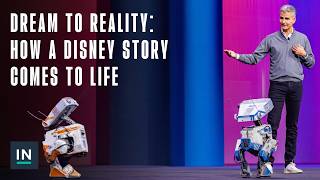
Keynote by Josh D’Amaro (Disney Experiences) describing Disney’s storytelling philosophy and how it drives expansion. D’Amaro reflects on Disney fan culture (D23), large investments ($60 billion) in parks/cruises/digital, personal anecdotes about family and career, and four core storytelling principles: emotional connection, innovation (curiosity-driven), relatability, and attention to detail—illustrated with examples (Frozen land, Inside Out 2, Peter Pan’s Flight, Soarin, Shanghai Pirates, Iron Man experience, Star Wars: Galaxy’s Edge).
Chapters
Well, hello, everyone. It is so great to be here with all of you. I'll start off by saying that I'm having a little bit of deja vu up here because just last month I was on a stage just like this in front of a big group of people at a Disney fan event in California. We call the event D23. Tens of thousands of fans gather to share their love for all of our Disney stories, to hear updates on new projects and experiences that are underway. It's something that I don't think many other companies could pull off like Disney does. There's tons of panels and there's meetups. There's a massive convention floor where people can shop for anything and everything Disney that you could possibly imagine. Fans come dressed as their favorite characters. It's a ton of fun. And this year's show, it was particularly exciting because Disney experiences, that's the division of the company that I have a chance to lead. We're beginning an unprecedented period of growth and expansion all around the world. We're investing $60 billion in new experiences. We're going to do this on land. We're going to do it on sea. And we're actually going to create an entirely new online universe. And I had the privilege of standing up on the stage and telling our fans all about it. It was amazing. And I want you all to have a sense for what that was like. So take a look at this quick video. It is time. Hello, Disney family. Hello, D23. This is a magical day. The ultimate Disney fan event. Welcome to the new Disney Experience Showcase. I've got a lot to share. D23 a new nighttime par. The first Coco ride to a Disney park. There's a famous house you may all recognize. A major new Lion King attraction. A whole new location on Pandora. So excited to bring an Indiana Jones attraction to Disney's Animal Kingdom.
Will there be any snakes?
Two new cars? Attractions? Let's get her done. For the first time, an audio animatronic figure of Walt. It's Millie Crystal. The first Monsters Inc. Land. First suspended coaster ever in a Disney Park. This isn't Blue Sky. We are going to do all of this. We are doubling the size of Avengers Campus. We are adding four more cruise ships to our fleet. We are building a Villains Land at the Magic Kingdom. Do you guys mind singing something with us? Plain white tees, everyone. Jabuzi. Susan Egan. Rita Ora. Are there any gamers in the house tonight? Coming to Fortnite is Dr. Do. This is just the beginning. It's a lot. Right. I don't have Deadpool. I don't have Deadpool with me tonight. But it's pretty amazing. All the things that we announced and what really shines through in those clips, for me, it's the passion, the unbridled passion that our fans have for this company. I think it's something that only Disney can inspire. These fans, they travel from all over the world to attend D23 because they are incredibly loyal and they follow every single move that we make. They're looking for every bit of news that we have to share, and we gave them an almost overwhelming amount of that news just last month. We're giving them more of what they love about Disney experiences. We're going to give them more attractions. We've got more themed lands coming, more cruise ships, more shows, more characters, more Disney stories coming their way. So all of that, that's the what we're doing. But how then, how exactly are we going to do all of this? Well, these experiences are an investment in new ways of telling stories for brand new generations of Disney fans. And we absolutely have to get this right. And so that means how we tell these stories, and it is incredibly important. And that's what I want to talk to you all about today. The how to get us started. Let me tell you a story from my own life. My son, he just graduated from college this past spring for one of those projects. He had to give a presentation in front of his whole class. Now, my son Alex, he's seen me present to big groups before. And so one night he asked me, he said, pop calls me Pop. When I'm standing up there presenting in front of a big group, I get so nervous. I don't feel like I'm able to tell the story the way that I want to tell the story. What should I do about that? Well, I said to him, do you believe it? Do you actually believe in the story that you're telling the audience? And of course, he said to me, what do you mean? I said, the best storytellers are the storytellers that truly believe in their story. They believe in it with their whole body. They believe in it with their whole being. And this belief, it influences how they tell their story. It influences the words that they decide to use, the little details that they include, maybe the images that they conjure for the audience, even the way that they use their hands in a presentation. And I think an audience, they can then sense this and the audience will jump on board. They can feel the. The story come to life. So I asked My son, when you're standing in front of your class, do you believe what you're saying? Do you believe in the story that you're telling? Now, to be fair to Alex, he was presenting to his economics class, so it's a tall order. But listen, the same approach applies to any story that you're trying to tell. I've had a chance to be with the Walt Disney Company now for over 25 years, and I believe in the stories that we tell, and I believe in the power that they have all around the world. For the past century now, we've taken fans to worlds of fantasy and imagination in ways that no one had ever dreamed of before. We've thrilled our fans. We've astonished them. We've made them wonder, one of my favorite things. How the heck did you guys do that? When we tell our best stories and when we fully believe in them, our audience then responds. And that's why our parks around the globe, they have drawn more than 4 billion in attendance over the past 70 years. 4 billion in attendance. That's why seven of the top 10 box office hits of all time, Those are Disney movies. That's why when I ask you, what's your favorite Disney memory, I'm guessing that something pops instantly into your mind. And this happens because of what we call the Disney magic. I know maybe some of you in the audience are thinking, well, that sounds kind of hokey, but let me tell you, it's real, and it's what makes us different, and it sets the Disney Company apart. Today, I want to tell you a story about how we make that magic. I want to take you backstage, as we like to say at our parks, to give you some insights into how we make great storytelling the foundation of everything that we do. My introduction to the fundamentals of great storytelling. It started during my first week at Disney. I was invited into a meeting to discuss a construction project that was being planned for Main street at Disneyland. And I can remember sitting, walking into that conference room and sitting down at the conference room table. Everybody was there. There was somebody from operations there. The marketing team was there. We had finance there. The creative community was sitting in that conference room. I was just excited to walk into the conference room and be at the table. I just received my. You all know, the Disney nametags. I just got my Disney name tag. And all I'm thinking is, I can't believe I'm here working at Disney. And then the team started talking, and they started talking about trash cans. My first meeting at Disney, trash cans. They were Talking about the fact that we would have to reposition the trash cans to accommodate this construction that was taking place on Main Street. And I remember sitting in that room thinking, who the heck cares about trash cans? Well, as it turns out, we do. I'm sure many of you have been to one of our theme parks before. I hope you have. When you walk in, you're taken right out of the real world and we put you inside a story. And that story is meticulously crafted. Everything from the colors to the forced perspectives that we create, to the smells, to the, to the sounds that you hear. And yes, even the placement of trash cans. After all, trash cans affect how our guests move their way through our parks. They also impact the cleanliness of Main Street. Something that we are, it's very, very important to us at Disney. Now these things, they may seem small, but they are very important to the story that we're telling. I was amazed right there to see the attention to detail that this team had such commitment to delivering the best story possible. And I will tell you right then, right at that moment in that conference room, I knew Disney was the place for me. At Disney, we believe in the power of great stories. And this comes straight from our founder. I think you know who he is, Walt Disney. Walt arrived in California in the summer of 1923. He had these huge hopes and dreams. He didn't have much else. That fall in 1923, he sold his first series of short films. They were called the Alice comedies and it blended live action and animation together. And this marked the beginning of what we all now know as the Walt Disney Company. Over the next 30 years plus, Walt continued to broaden his horizons. After a series of successful animated cartoons, he launched the company's first licensing deals. He did this in 1930. Seven years later, he released the first animated feature film, I think you all know it, Snow White and the Seven Dwarfs. Which became the highest grossing movie of all time. In 1950, he produced his first live action feature film. It's called Treasure Island. In 54, he debuted his first TV series. And then in 1955, he unveiled perhaps the greatest embodiment of all of his life's work. It was his first theme park, Disneyland. Any one of these ventures, any one of them would have been more than enough for anybody. But as we all know, Walt was not just anyone. He believed in the power of his stories to actually change the world. And he envisioned a company that would allow those stories to become part of of his fans lives. He crystallized that vision in 1958. This is an image I love because, in essence, we're still following this model that Walt created today. Stories are at the center of everything that we do. They're the creative engine for our entire company. Walt's brother Roy, he co founded the company with him. And Roy was the financial genius. He was the perfect complement to Walt's unbridled creativity. And Roy described our stories as practically eternal. When someone loves a Disney movie, they want to spend as much time with those characters as possible. Frozen is a great example of this. Now. At its core, this is a story about the love between two sisters. We have two incredible Frozen films. There's another one in the works. And there are so many ways that you can connect with this story. And this makes the story stick. It makes it even more powerful. You could watch animated shorts if you go to Disney. You could shop for Anna and Elsa princess dresses if you wanted to in our stores. You could play a Frozen video game. You could read Frozen books. You could listen to classic songs on your favorite streaming service if you wanted to. And you could walk right into the story. When you visit one of our theme parks at Disney experiences, we bring these stories and characters right off the screen into the real world. This is kind of cool. Last year, we opened a new world of frozen land. And we did this in our park in Hong Kong. And I got to walk through it with the creator of Frozen, Jennifer Lee, when she visited that land for the first time. This is a pretty cool experience. So here I am with the writer and the director of Frozen, walking into the story that came right out of her head. And I will never forget her reaction. Standing right by my side. I looked it over at her, and I could see her eyes tear up as she put her hands over her mouth, looking at this new land incredulously. What a moment this was. There are millions of Frozen fans out there now at Hong Kong, Disneyland. They have a chance to have that same experience that Jen Lee had. When it comes to great storytelling like this, unfortunately, there's not a simple recipe that we can all follow. You could, all right, now go online and you could type in what makes a great story, and you'll come up with hundreds, probably thousands of different answers. I'm here to tell you what I believe sets Disney apart from everything else. These are things like being courageous innovators, bringing relatable characters to life, paying attention to those very little details, and so much more. And while I'm obviously focused on Disney, I hope that something in our approach can help one of you out there today in the way that you're telling your stories, whether you're standing in front of your classmates like my son was, or you're pitching a new idea, maybe just trying to connect with a new friend. Speaking of connection, that's the first principle of great Disney storytelling that I want to talk to you about. This is all about emotional connection. Walt has this quote that I absolutely love. Actually, there are hundreds of these quotes that I love, but this one specifically speaks to his philosophy as a storyteller. Take a listen.
So in planning a new picture, we don't think of grownups and we don't think of children, but just of that fine, clean, unspoiled spot down deep in every one of us that maybe the world has made us forget and that maybe our pictures can help recall.
So just this summer we saw a great example of what he's getting here in this. In this quote, getting at. In this quote. Has anybody seen Pixar's Inside Out 2? Okay, good. I figured a few of you had. What an incredible movie this is. It's a story. For those of you that haven't seen it, it's a story of a 13 year old girl named Riley and she's dealing with all these tangled emotions of adolescence. I've got to say, when I had a chance to see this film, it actually moved me. It tells a story that I think everyone can connect to. It's an honest and sometimes harrowing examination of the role that anxiety plays in all of our lives. Well, I went to see this film with my wife. And the scene where anxiety is frozen at the control panel, paralyzed by fear, that empty look staring into space, that completely stuck with us. Now, it's not uncommon these days to know someone who suffers from anxiety. We all, I guess, suffer from this in some way. And it's a difficult thing to watch someone experience, particularly because it's so personal and it's so deep inside. When we hit that scene, I glanced over at my wife, she looked at me and something hit us. We could see ourselves up there, we could see our kids up there. In some way. There was something so simple, something so clear and so relatable in that scene. Clearly our audience believes in Riley's story. Inside out two is now the highest grossing animated film of all time. And all of us at Disney are so proud of that movie. And we're so proud of all of our friends at Pixar. And for nearly 30 years now, they've invited us to make emotional connections through bold and unconventional ideas. They've done this with toys that can talk. They've done it with rats that somehow know how to cook. They've done it with houses that float. And so many more great stories, their movies. They speak to that fine, unspoiled spot down deep in every one of us, just as Walt said. And when we get the honor of bringing these stories into our parks to extend that connection, it is amazing. Often these emotional connections are as much about who you're with, like family. I grew up right outside of Boston in Medfield. Anybody from Medfield in here? One, Two. Maybe two. All right, we'll talk a little bit later. Well, listen, when I was about 10 years old, my parents took us across the country, went to California for our first trip to Disneyland. And my father's favorite ride at the time, it was Peter Pan's Flight. Now on this attraction, you get on a pirate ship that's attached to a rail above your head. And when you leave the station, you swing back and forth as you fly through the story. And I still remember. I'm not sure if he does, but I remember my pop saying before we arrived at Disneyland, josh, it really feels like you're flying when you're on this attraction. You're not going to believe it. And you know what? He was right. As our ship sailed through the air, he glanced over at me as if to say, see, Josh, I told you so. Of course, I smiled back at him and that told him everything that he needed to know. Peter Pan's Flight was an opening day attraction. It was there in 1955. So when you think that nearly 70 years later that maybe it's faded a bit. Nope, actually, just. Just the opposite. It is still one of the most popular attractions in the whole entire park. How could this be? Well, it's because our guests have emotional connections to these experiences. When I sit in that pirate ship Today, I'm immediately 10 years old again. And I'm feeling like I'm sitting there with my parents flying over London. And looking back, I can see that that impact had on me in that moment. There's a good chance that I wouldn't even be talking to you today if I didn't have some of those emotional connections that I made with my family at Disneyland as a 10 year old kid. So that's why I invited my folks here today. They're sitting right down here. I'm not going to make you stand up, but they're right here in the front row. And that's just to tell them how much that moment meant to Me and how it changed my life in some way. By the way, do you all know how intimidating this is? I'm 53 years old. I feel like I'm 10 years old standing up here in front of mom and Pop. And I guarantee you that tonight I'm going to get a full review. Mom, particularly. Go easy on me tonight. All right, well, listen, my parents, they passed their stories about Disney, and now my wife and I share that connection through our son and through my daughter. And hopefully someday they'll share that with their children as well. But you all know this. My story is not unique. I'm guessing that many of you have a favorite Disney memory as well. Maybe it's a movie that you saw as a family or a game that you all played sitting around the kitchen, a table. Maybe it's a stuffed animal that you tuck under your child's arm and at night. Or maybe it's the week that you all spent together at Walt Disney World. Whatever it is, people return to Disney because this is a brand that they know. It's a brand that they love and that they trust. And that all starts with emotional connection. Those connections, they have been happening every single day. They happen all around the world. They're building and building generation after generation now for the past 100 years. So just think about how powerful that is. Now. With all due respect to my father's excitement about his favorite attraction 40 years ago, we have come a long way since Peter Pan's flight. Many years after that ride with my parents, I was with my own family and I was taking them on Soarin. I hope some of you have been on Soarin before. This is the first time it was opening in Disney California Adventure. And this is one of my all time favorite attractions. And you sit in a hang glider that lifts you in the air in front of this massive movie screen. And we fill that screen with beautiful images of landmarks from all around the world, just like you're flying right over them. It's basically like a modern version of Peter Pan, but on a much, much grander scale. Now, before I took my family on it, can you guess what I told them? Yep. I said, it's going to really feel like you're flying. Kids, you're not going to believe it. Now, going from Peter Pan to Soren, that didn't happen overnight. Those two attractions debuted about a half century apart. But they're connected through another one of Disney's core storytelling principles, and that's innovation. Now, I know this. I know I'm in a Room full of innovators here today. So I think you'll appreciate this quote from Walt.
There's really no secret about our approach. We keep moving forward, opening up new doors, doing new things, because we're curious. And curiosity keeps leading us down new paths. We're always exploring and experimenting.
So I bet everybody knows this. But do you know what innovation is driven by? It's curiosity. And you can trace this thread through Disney's entire history. In 1928, Walt released the first animated short with synchronized sound. And that meant his audience could better connect with his new characters as a little lovable guy that we call Mickey Mouse later than a decade later. Then Walt invented a new way to make films. Using the multiplane camera, so that when you move through a scene, it felt more real than animation ever had before. And to deliver his dream of Disneyland, Walt gathered a team of artists and architects and engineers and producers and master planners and writers and even more. And he brought them together under one roof. And he shared his vision for what Disneyland was going to be. And he coined a new term for them. He called them imagineers. Now, this is a very, very special group of people. They blend creative imagination with technical expertise. These are folks that dream and design and build our stories into actual places. Why? Because they're curious. Walt said Disneyland would never be complete as long as there's imagination left in the world. And we've been fulfilling that promise ever since. One of the last attractions that Walt had a chance to work on was Pirates of the Caribbean. I assume people have been on Pirates. Yeah. Yes. Okay, good, good. Well, that debuted in 1967, and it was a massive leap forward in our experiential storytelling. In this attraction, you're surrounded by action all the time. Everywhere you look, something's going on. Now, if you Fast forward nearly 50 years later to when we started working on our new park in Shanghai, it had been a while since we had created a pirates attraction. At that time, the film franchise had become wildly successful. In fact, people in China, they knew the movie better than the ride that it was even based on in the first place. So we decided to reimagine a classic for this new audience. We wrote a story, and it featured Jack Sparrow and Davy Jones. And we designed an all new ride on a scale that we had never achieved anywhere before. The attraction became an immediate fan favorite when the park opened in the summer of 2016. And the Imagineers who lived and breathed this attraction for six years, they will tell you that there were some days that they weren't sure, how the heck this was all going to work, but we were committed to doing something truly special for this new park. We wanted to make sure that the park felt like a Disney experience that everybody knows and loves, but that it had specific touches for our Chinese guests so that we could bring a new generation of Disney fans. Our CEO Bob Iger put it this way. When we were building that park, we want to build something that is authentically Disney but distinctly Chinese. And I can tell you that all of this has worked incredibly well for us. Following Shanghai Disneyland, we created hundreds of new experiences around the world. And one of my favorites is the Iron man experience at Hong Kong Disneyland. This ride makes you feel like you're saving Hong Kong from disaster, right alongside Tony Stark. And we all love Iron man in some way. But think back to the first Iron man movie. When we meet Tony Stark. He's selfish. He's. He's. He's arrogant. He doesn't really know what his purpose is. And as the movie goes along, we see him grow and change as he discovers the meaning in his own life. And for all his money and genius and all of his talent, he's still, deep down, he's just like all the rest of us. And you know what happens that draws us into him. Then we invest emotionally in his story. So then when he starts flying around in a suit of armor, whether that's on a movie screen or in one of our attractions, we all care so much more. We relate to the character inside the armor because we see he's flawed and that he's just trying to be better. That's relatability. And it's the third critical aspect of Disney storytelling that I want to talk about for a moment. Our audience, they need to see themselves in our stories, or they need to see who they aspire to be. Relatability is critical for our experience as business, too. In our parks, you all probably know what we call our employees. We call them cast members. And it reminds us that we're putting on a show for our guests every minute of the day. And every single person on our team, there's 180,000 of us. 180,000 cast members. Every single one has a role to play. Whether they're in the parks, if they're on a ship, or even if they're in an office building, they have a story to share. Everything that we do impacts our guests. We invest in amazing experiences, and then it's our cast member who bring these experiences to life. They are literally the face of our brand, and they make that relatable connection with our guests. So I want to show you one of my favorite examples here, if I could. What you're about to see is a video of a family that was visiting the Disneyland park with her young daughter. And her young daughter, she's just so excited to meet her favorite character, and that's Stitch. She. She can't contain herself. She starts running toward him. She's got a little bit of a stumble. And the magic comes in a way that st. The magic comes about in the way that Stitch actually re reacts. So take a look at this.
Oh, no.
So simple, right? So Stitch falling down like that. As you could probably imagine, that was in no script that Stitch had. He turned what could have been an upsetting moment for that young girl and her family into a memory that they will never forget. The character became real by relating to the child on her level. And in a split second, he created a story for this family that they will be telling now for the. The rest of their lives. Here I am on stage talking about it, and now, thanks to social media, it's been seen by millions and millions of people around the globe, and it went viral because people could relate to that story. So we empower and we encourage our cast members to extend and to amplify and even create new stories for our fans. And when they do this, our storytelling, it's literally alive with poignant and powerful connections taking place every minute for anyone and everyone. And every year, tens of millions of people, they walk through our gates. They're from different backgrounds, they're from different walks of life, and they all come together at this beautiful connection point. In essence, our parks become a crossroads for the world. Just last week, literally last week, I received a note from a guest who spent a couple days at Disneyland with her daughter, and she sent me a note, and she described the experience this way. The only feeling I can compare it to is experiencing the Olympics. Everyone together, laughing and smiling and just enjoying and honoring the moment. I thought this was pretty cool. That's how we build a bond with our audience through a story. Now, as we bring these experiences to life, you start to believe these magical places are real. Earning that belief. This is the trick. There can't be any contradictions. And if you spot something that doesn't ring true, well, then the spell breaks and we've lost you. So we pay close attention to the smallest details when we're building these worlds. This brings me to a fourth important principle in Disney storytelling. You have got to sweat the details. You have to Sweat the details. That is the North Star. For imagineers, this is what they follow whenever they're creating a new experience. Our Star wars lands at Disneyland and Walt Disney World. These are great examples. Star Wars Galaxy's Edge takes you to a new planet never seen before in the Star wars universe. But it feels like Star wars in big gigantic ways and very small ways as well. When you walk through the land, you'll see the Millennium Falcon. You'll see X Wing fighters, you'll see TIE fighters. Stormtroopers will walk around interacting with guests. Everything that is in this land is authentic to Star Wars. Now, one of the best examples is a set of tracks on the ground that you're seeing up on the screen here. It looks like a droid rode through there before the concrete dried. I don't know if you know this or not, but those just aren't any tracks. Those tracks are made from the original R2D2, the original R2D2. So can you imagine the discussions that we had on this one? So the imagineers are extolling the virtues that are deep storytelling. And the finance team's over here saying, what are you? Are you nuts? You're going to get the real R2D2 to roll through this and make these tracks? The answer is yes. The Imagineers, they won that one. Now, not everyone who visits Galaxy's Edge is going to pick up on that level of detail, but the Die Hard fans, they will. And. And again, here I am up on stage talking about it, and those fans, they appreciate how the Imagineers care as much about the integrity of the story as they do. I was president of the Disneyland Resort when we opened the land a little over five years ago now. And it meant a lot to me because I've been a Star wars fan my whole life. Star wars is actually pop. I don't know if you remember this or not, but it was the first movie that you ever took me to. And as a kid, and I've never forgotten what it was like to sit in that theater. And I'll never forget the opening day of Star Wars Galaxy's Edge either. Just like my experience with Jen Lee that I described walking into frozen land, here I got to see Star wars fans die hard. Star wars fans walk up to the Millennium Falcon and just start crying. It was an amazing thing here. It was the story that they loved since they were kids. Suddenly, they were inside of it. They were actually living Star Wars. All those details create such an authentic experience. Our guests believe it. They believe it with their whole being, and we help them recapture that feeling that they had the first time that they watched Star wars, just like I did. And we keep moving forward. We're adding new stories to the land all the time, like these little guys coming out to join me here. I want everybody to say hello to our BDX droids here. I think you can see them at least up on screen. So Imagineers created these as experiments.
More from Patrick



A NEW BREED OF PARTNER: The Partnership Ecosystem Model Journey of Patrick Biddiscombe, Part 1








Customer Success Workspace: Never Lose Sight Of What Matters Most | HubSpot Spotlight