Emily Chang on the Importance of Gender Equality
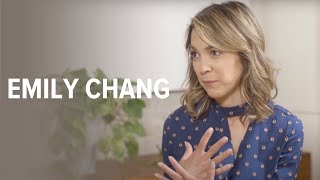
This is a studio interview (recorded Aug 9, 2018) between Laura Moran and Emily Chang about Chang’s book Brotopia and gender equality in technology. Chang explains she began writing the book ~2.5 years earlier, argues the industry’s male-dominated culture grew from stacked historical accidents (tests, stereotypes, founder networks like the PayPal ‘‘mafia’’), cites specific degree trends (women earned ~37% of CS degrees in 1984, falling to ~18%), and discusses concrete fixes: change hiring/promotion practices, diversify VC firms, standardize interviews, adopt Rooney-Rule–style search requirements, and prioritize retention and culture. She also warns that AI/facial-recognition systems can encode existing gender and racial biases if diversity isn’t improved.
Questions this video answers
August 9, 2018.
About two and a half years.
Women earned about 37% of computer science degrees in 1984; that share fell to about 18% (and remained flat for the following decade).
Chapters
Hi, everyone. Welcome to the Inbound Studio. I'm Laura Moran, here today with Emily Chang, Bloomberg TV host and author of Brotopia. Thank you so much for joining us.
Thank you for having me. It's great to be here.
Thanks. I want to just jump right in about the book. This has obviously been a big year for gender topics, you know, abuse topics, things like that. The MeToo movement. And your book kind of came out in the midst of. Of all of that. So I guess I wanted to ask first, how long had you been working on the book, and why was now the right time for you to tell this story?
So I actually started writing the book two and a half years ago. So it was before MeToo, before President Trump, before so many of these stories that we've seen exploding in the media. I also benefited from the sort of collective courage that women have summoned over the last year to tell these stories. And the book wasn't supposed to come out until this year, later this year. And my editor called me and said, we need it now. So we rushed it out. And I'm really glad that we were able to sort of strike while the iron is hot. And I didn't have any idea the cultural moment that we would find ourselves in. And I'm so glad that a, you know, we've seen women speaking up and speaking up for themselves for the first time in a very long time, but also that the world and the country is receptive to what I had to say.
Yeah, absolutely. You know, we can get into some of the topics of the book specifically and some of the, you know, the stories that you pulled out, but we're talking about it as a society now. So how do we. From your perspective and from what you've learned and the people you've talked to, talking is great. Talking is a good first step. But how do we, like, actually change some of the situation that, you know, technology has found itself in, entertainment has found itself in, and really business at large is dealing with.
Right. There's a lot of talk, and we need action. Right. But I do think that the talk is important, and there's been a lot of stuff bottled up for so long that, you know, I think we need some time to work through these issues. And we're. We're in the middle of this sort of transition period, and a lot of people right now are thinking about how, how can we make real change? So when it comes to hiring, that's one thing. When it comes to sort of promotion and retention and workplace culture, that's another thing. And there are a lot of things that sort of need to work in tandem. I mean, the book has a lot of concrete solutions. It talks about particular success stories, it talks about places where things haven't worked out so well. And so I think we need to actually take a moment to sort of take a look at what's not worked and learn from that in order to move forward. You know, everywhere I go, people want to know, what can we do to change this? What can we do differently? And you know, my first answer is, well, let's figure out what we're doing wrong first. You know, the book is really how and why we got here and what we can do differently. But I think we really need to reckon with how we got here and the mistakes that we've made in order to move forward.
Can you talk a little bit about that? Because what actually really struck me personally reading the book was probably the first, first 15 pages and the background of really the PayPal mafia and how PayPal was started and then what went from there in terms of networks and connections and starting new businesses out of that and the almost unintentional choices that were made that created some of the effects that we're still seeing the results of today in terms of a male dominated culture and a white dominated culture and a sort of bro, certain idea of a stereotypical tech nerd, if you will, person that fits this mold that happened to be, and then that became like the norm.
The history of how we got here was actually to me like the smoking gun. You know, I cover modern day Silicon Valley, the modern tech industry. And so I was sort of more familiar with the issues of today. But what I didn't understand is how many accidents really stacked up on top of each other to create this world that is so unbalanced in the technology industry in particular. And so, you know, one of the most interesting things to me is that if you go Back to the 1940s and the 1950s, women played a huge role in the early computing industry. They were very well represented among software programmers and they were programming computers for the military and programming computers for NASA. And it really was like Hidden Figures, the movie, but industry wide. And then in the 60s and 70s, as the industry started to explode, they were so desperate for new talent that they started doing these personality tests and aptitude tests to identify good programmers. And they decided that good programmers, quote, don't like people, right? Which makes no sense, but it really perpetuated this idea of the antisocial, mostly white male nerd stereotype that persists to this day. And that stereotype was repeated in TV and movie shows. And these tests were used by tech companies for decades. And fast forward 50 years to Google in 2017. You have a young male engineer named James Damore who writes a memo that goes viral and says that men are biologically more suited to this job than women. There's no evidence to support that. There has never been any evidence to support that. But it is based on this very mistaken assumption that men are somehow better at this job. In fact, women were actually profiled out of this industry in 1984. They were earning 37% of computer science degrees. That has plummeted to 18% where it's been completely flat for the last decade. You mentioned the PayPal mafia. Organizations like the PayPal mafia haven't helped things. In fact, they've moved things in the wrong direction. This is a group of extremely smart, extremely powerful men who hired their friends and called it a meritocracy. They created, you know, a multi billion dollar company. They all did very well for themselves, but they ended up going on to fund and join each other's companies and perpetuated this, you know, all male network that women could not break into.
Yeah, absolutely.
Well, all right.
What got you into tech? Like, what got you into being a journalist and in this industry? Digging into the inner workings of these companies as a woman.
So I've been a journalist my entire career. This is, you know, from college, this is always what I wanted to do. And, you know, I've covered lots of things. I lived in London, I lived in China, I worked for cnn. And then I had an opportunity to launch a technology show at Bloomberg. And this was eight years ago. And you know, in the beginning, I was really focused on just building the reputation of the show, trying to convince Mark Zuckerberg and Sheryl Sandberg to join us. And in the back of my mind, I always sort of saw this lack of diversity in the industry, but it was kind of a taboo topic. It was impolite to say, well, what are you doing about hiring women, African Americans and Latinx? Over time, as the show's reputation was built, I became more courageous about asking those questions of the CEOs and investors and founders who were in the chair. And I would say, what are you doing about this? What are you doing about hiring, funding and promoting women? And you'd get the standard politically correct answers. And then at the end of 2015, there was one particular very prominent investor. They had no women in their US firm at the time. And I Said, what's up with that? And he said to me, well, we're looking very hard. Not enough women are studying computer science. And really what we're not prepared to do is to lower our standards.
Right.
He said this on international television. For a moment, I actually think someone had told me the truth. You know, part of the problem is that people believe they have to lower their standards, which is completely unfounded. But, you know, it certainly doesn't help. And if you put aside sort of that stupid remark and you look at just their actions, this is a firm that hasn't in 44 years hired a single woman. You can't tell me they're not there. You cannot tell me you couldn't find just one who met your very high standards.
Absolutely. I think that comes up time and time again in the book in very blatant ways and then more subtle ways. And I think if you look at interviews, media, the stories that, you know, that you revealed, there's a lot of what seems like lip service going on of people saying they're doing things, or people, you know, CEOs and founders and VCs out there supporting the cause, but then still not practicing what they preach or the, the actual reality of the data of the companies they lead just does not live up to what they're saying. So you've had a lot of, you know, face time and conversations with some of these people. What do you think is like, why is that the case? Why are they concerned enough about it to like, put on the PR front of saying, yeah, we're doing something, but still not actually living up to it?
So I think there are a lot of people who do care, but they don't care enough. And they don't care about building a diverse team as much as they care about moving fast and breaking things and making a lot of money. Google is a perfect example. This is place where the founders in the early days actually made concerted efforts to hire incredibly talented women like Cheryl Sandberg and Susan Wojcicki and Marissa Meyer, who all made huge contributions to the founding and building of Google into one of the most unassailable businesses on the planet. They don't get enough credit for it, but over time, they really lost focus and it became about growing fast, you know, making a lot of ad dollars and, you know, you know, becoming one of the biggest tech businesses on the planet. And if you look at the numbers, their numbers are simply average. And so the title of that chapter is When Good Intentions Aren't Enough, Good Intentions Aren't Enough, you have to be followed through with actions.
Do you think with the sort of sea change in the way that things are being talked about and the, you know, the moment that we're living in, really, in 2018, like, will that be able to continue? Will the bottom line and just doing it and just figuring it out and just being a successful startup, will that continue to be enough? Or will women and people of color and other underrepresented groups just flat out not allow it to be that way going forward?
So I hope so.
Yeah.
My biggest fear is that this is a moment, as you say. My biggest hope is that this is truly a movement. But we need founders and CEOs and the leaders of these companies to care and to make it a top priority and an explicit priority. You know, it also matters what employees think. And I think employees have more power than they've ever had before, and companies are listening in a way. They have no choice but to listen. So, for example, we recently saw with Amazon, shareholders demanded that they use the Rooney Rule when interviewing new board directors. Amazon said no. Employees sort of revolted. Amazon came back three days later and said, okay, we'll do it. And that's an example where employees have a lot of power. And so I do think that we, all, women and men, need to use our voices and to speak up for this. But ultimately, I do think if Jeff Bezos cared, you know, things at Amazon might look different. If Larry Page really cared, things at Google would look very different. You know, this is a company that has spent, to be fair, tens of millions of dollars on the pipeline problem, on getting more young girls into STEM education. But they spent $30 billion building their cloud business.
Right.
So the money is there. The will needs to be there. Do you think?
I mean, there's obviously a lot of different moving parts here. And you, I know, have talked a lot about this being being something that CEOs really need to take a stand on and make a priority. Where do you see, especially in the tech industry, VCs coming into that? You talk a lot about them in the book, and they are such a huge part of the beginnings of all of these organizations. And there's a huge underrepresentation there as well. And they hold so many of those purse strings. If it's a CEO problem, what, what, you know, what. What role do VCs play in that?
VCs are the king and hopefully queen makers of Silicon Valley, and they have a lot of money and they have a lot of sway over who gets a chance to start the next Facebook or the next Google or the next Apple. And so I agree that top investors need to make this a priority as well. We've seen traditional venture capital firms not move fast enough, and some of them are just hiring their first female partner or they still have none, which in 2018 is unacceptable. I think the change in venture capital is going to come from female investors. And so we've seen several women break off of traditional male funds. They are having a lot of traction. We just saw a new organization called All Raise, founded by some 30 female venture partners in Silicon Valley. And their goal is to get more women into venture, get more women funded, and get the women who are getting funded make sure they're getting bigger checks. And they were recently on the COVID of Forbes magazine. And I think that's really important. You know, some of these women, I've followed their careers for years and I've interviewed them several times over the last few years, and I've seen them transform in terms of their willingness to step up and be the face of these issues. You know, two or three years ago, most of them would say, you know, I don't want to be the woman investor, I want to be a great investor. They might still say the same thing, but now I think they're really owning it and they realize that they can be the key to making a difference.
I want to talk about another thing that makes its way throughout the book being just like the overarching idea of work life balance and having a family and doing this and tech traditionally. I think we talked about the stereotype of young sort of solo nerd guy, doesn't want to talk to people. And that's very conducive also to not having to go home and take care of children, not having to go home.
And deal with anything else.
And you can be at the office until all hours of the evening and sort of pour your heart and soul into this and that. That is not a reality for many people for many different reasons. And so, you know, through your research in the book, what role, I guess, do you see shifts in work life balance playing in the evolution of this moving forward?
So hiring is one thing, and creating a diverse pipeline and finding diverse talent is a really important part of changing the face of the tech industry. But retention and progression and promoting people from within is another part altogether. The tech industry doesn't do a good job of keeping the women that it already has in the workforce. So women are twice as likely to quit a job in technology as men. And there's this Perception that they're leaving to take care of families, but actually they're leaving because they don't feel valued, that they're in hostile environments and that they feel lonely and they're actually going to jobs in other fields. They're not leaving the workforce altogether. That was really surprising to me. And you know, women actually leave jobs for the same reason men leave jobs. You know, they kind of want the same thing. They want a place where they feel like they can be included, where they feel like they're being valued, where they feel like they have upward mobility. And you know, it's important for employers to create that, not just to retain women, but to retain everyone. And I do think there is this feeling in tech about moving as fast as possible and sacrificing in the short term for a long term benefit. But really it actually makes more sense to create places where employees can have sustainable long term careers. Because if your goal is to have a company that lasts a lifetime, you, you want people to work there for a long time. And this is a place where the war for talent is bloody. It is super competitive. So it actually makes a lot of sense to create a place where people want to stay for the long haul and it doesn't necessarily mean they're going home to take care of kids. Maybe they have a plant, of course, of course. Maybe they want to run a marathon, maybe they want to hang out with their friends. This is about creating environments where people not only feel like they can be themselves, where they can bring their whole selves to work, but also where they're not necessarily burning out after nine months a little bit.
To your point of the talent war being bloody, you've talked about the tech industry being a bit of a copycat industry. Like somebody does something that works and everyone's sort of like, we're gonna do that from, you know, offering free food, hey, that works like, great, now everybody gets a free lunch or, you know, aspects of their product, what have you. Who should people be copying on this front, on this issue of, you know, gender representation, inequality and just general, like, good behavior?
In the last chapter of my book, I focus on a company called Slack, which is trying to revolutionize collaboration in the workforce. And this is a place where a, the CEO has made hiring and promoting women and minorities an explicit priority.
Who is a white man. He fits the stereotype, but he's still doing good things.
He, he says at the outset, look, I've had every proof you could possibly imagine. I know it's a lot easier for me than it is for other people, and I want to change that. And he has not only made it a priority, but everybody at the company knows. Every time he tweets about it, they get a spike in inbound interest. They've done a lot of very specific things when it comes to hiring. Diversifying their recruiting team, standardizing their interview questions and the actual interview process. Sourcing from underrepresented schools, looking for people from a variety of age groups, not just these young kids straight out of college. And when it comes to the retention aspect or the cultural aspect, their motto is, work hard and go home. You're not serving dinner. They don't have ping pong tables. There's no cots under your desk. This is a place where they want grownups who have a life outside of work. And they actually think that makes for a better workplace environment, but it also will lead to better products and better decisions being made.
When people are thinking about interviewing, this idea of culture fit comes up a lot. And, you know, there's some differences in opinions and what that really means.
I guess I hate the term culture fit.
Great.
I hate it. I think it's an excuse to reject people who don't look like you, who don't fit in to whatever you have established. I love the term culture addition. And so, you know that to me, it's like, you know, maybe you like your culture, you want to honor your culture, but you're looking for ways to expand your culture. And it's not like a sort of blank check to reject someone who sort of doesn't seem like they belong. And I do think it's incumbent upon people who are hiring and interviewing to make sure you're giving people a fair shot. You know, part of the reason you want to standardize an interview process is if someone walks in and they look the part, you're going to ask them completely different questions than someone who walks in and doesn't look the part, and you're gonna be tougher on them. That's not fair. That is bias. That is how bias creeps into the system. And so these are things, these are actually tools that companies can give their employees. If you just focus on unconscious bias training or raising awareness about bias, it's not necessarily gonna have a huge impact. It's really hard to say to someone, hey, just change how you think about women. Okay? You watch the video check go on, you're a different person, Right? But if you give employees the tool to combat their own bias and you say, you can't even start an interview process until you have two qualified female candidates and two candidates of color.
Right.
That can have an impact you give your employees, hey, These are the 10 questions you need to ask. Walk through them. No more, no less. These are things that actually can make a difference and actually take bias out of the system.
It seems too like also there's this opportunity to, like, call out things when they need to be. I found it very interesting reading, particularly about the VCs, that there was this idea that you had to have a tech background and that many women weren't being considered for a role at a fund because they didn't have that technical background yet. When you actually look at men who had been incredibly successful as VCs, they had like liberal arts degrees from whatever university, and that's all well and good, and they had been able to, you know, have been given an opportunity to be successful in that way for whatever reason. So, like, calling that out and making that known that this long list of people have been able to do it without what we think is the background needed. You don't have to go to an Ivy League school. You don't have to be, you know, a technical background to 100% succeed in this seems highly necessary.
There's a double standard. And so. And it's been that way for a long time. So if you look at the Forbes Midas List, far more of the men don't have a technical background than the women. And there you have it, a double standard. You know, I interviewed a young woman named Sarah Tavel, who's a new partner at Benchmark Capital, their first female partner. She has a philosophy degree and she actually thinks she's a better investor for it. And she asks different kinds of questions than other investors may. I do think it's about having a diversity of backgrounds. You don't want only one kind of person making decisions about who gets to invent the future. You want all different kinds of people to have input in those decisions. I think it is such a tragedy to think about who got left out, who got left behind, the women who never got a chance to start Facebook or Google or Apple. Let's not be wondering in 30 years, let's not do that again. We have an opportunity now to make a difference and to dole out opportunity more equally. And we're all going to be better for it. We're going to have better products, better companies, better lives. And, you know, I think a better universe, like it makes. To me, it makes complete sense to me, it makes complete sense.
I completely agree as well. But I mean, to that point, I know you've talked about this idea that like, what could the Internet have looked like if more women had been involved in the outset? And you know, to your point just now, what could some of these, how the companies might have looked different moving forward with something as big as, you know, the potential impact of AI and the evolution of that or some of these other larger spaces that are really still just being developed and figured out and coming to, you know, whatever impact they're going to have on all of our lives, you know, expanding on, I guess what you just said, what is the need really to make sure that we don't fall into the same trap of missed opinions and missed experiences in being, making sure that those technologies and those platforms are actually representative of all people that will be using them.
If you look at AI, for example, and facial recognition technology, it's already a little bit sexist and a little bit racist and it doesn't recognize women and people of color the same same way. This is a technology that's only going to become more powerful. And we are at risk of the bias that already exists in the system getting rewritten into the algorithms of the future. That can't happen. That would be another tragedy. I interviewed Ev Williams, who's the co founder of Twitter, and he told me that he thinks if there had been women on the early Twitter team, that maybe online harassment and trolling wouldn't be such a problem. That maybe they would have designed the product differently. They were thinking about wonderful and amazing things that could be done with Twitter, not awful and horrific and mean things that could be done with Twitter. And so what if the Internet was a friendlier place? What if there were better parental controls? What if video games were less violent or porn weren't so ubiquitous? Like we could be living in a completely different world. And so, you know, let's take this moment to start making changes. And I, you know, people say this is such a hard problem, I don't know how to solve it. It's going to take years, years. This is an industry that never shied away from hard problems. You know. You know, people here are turning deadlines to Mars, they are connecting the world, they are organizing the world's information, building self driving cars. They can hire more women and pay them fairly and fund their ideas. I don't think that's too hard for Silicon Valley to do.
Okay, so let's put a timeline on it. Let's call it five years. You're a reporter. What story do you hope you're telling in five years, I hope that I'm.
Telling the story of a woman who runs a $10 billion company. And we're seeing the beginnings of that, you know, stitch fix just went public. The CEO, Katrina Lake, I think she's fantastic. I'm really excited for her. I should say that there are, you know, companies run by women. They are smaller, but if you look at their workforces, they are gender balanced. And so just having women in executive roles attracts more women. People who care about this are attracted to people who care about this. And I would love to see more women, you know, running enormous companies, starting them from scratch, building them, and, you know, turning them into these. These huge unicorns. I mean, we have seen some women crack the silicon ceiling to a certain extent. You know, you look at Ginny Rometty, the CEO of IBM, Susan Wojcicki, who's running YouTube, which, if you took it out of Google, would be like almost $100 billion business, you know, but, you know, I want to see a woman start one of those businesses herself and take it from start to finish. And I do think once we have more examples of that, it'll be easier for the next generation to see. You know, I argue in the book, the tech industry created the pipeline problem, and today the tech industry is reinforcing the pipeline problem. There is a problem there. There's a problem in the education system, and there's so much there that can be fixed. But also, the tech industry can't sit here and say, well, we're not responsible. You know, just look at who's graduating from college. You know, those people graduating from college can't be what they can't see, right? So at the end of the book, I interview these seven teenage girls who've all learned how to code, and they're so excited about doing their part to change the world, but they.
More from Patrick



A NEW BREED OF PARTNER: The Partnership Ecosystem Model Journey of Patrick Biddiscombe, Part 1








Customer Success Workspace: Never Lose Sight Of What Matters Most | HubSpot Spotlight