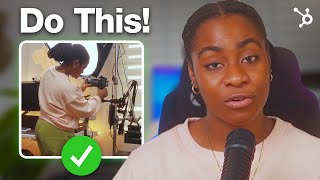
Oge, a product designer, shares four lessons from six years of freelancing: use time-blocking, expect inconsistent income and build passive streams like YouTube and courses, drive traffic through your own website and social platforms, and say no to projects that don't align with your goals.
Chapters
This was the most important decision I made in my career because you see, in 2018, I decided to start freelancing as a product designer full time. And it's been quite an interesting journey. But no journey is without its ups and downs, which teach you loads of lessons along the way. Hey, I'm Oge, a designer and content creator, and here are four lessons I've learned from entrepreneurship in the past four years. Lesson 1. You need a routine, not just a to do list. If you work remotely, especially from home, then this might sound familiar. You get to your desk with a cup of coffee, jot down your to do list, super pumped to start work. But then you've got a ton of emails and messages to get to that takes a little longer than expected and before you know it, it's meetings. You're exhausted. Looking back at that to do list, wondering how you lost track of everything. Creating a routine and sticking to it is the first step because you are 100% responsible for your time and how you spend it. Time blocking is a time management technique which is so important because if you struggle with unfocused execution when it comes to your daily tasks, using time blocking, which is simply dividing your day into smaller blocks for specific tasks, using a calendar will help you focus your energy and achieve more. Now this is something that I learned from a book called Deep Work by Carl Newport, and I have been practicing this for years. Lesson 2. Your income will not be consistent. You see, before I decided to start freelancing, I drew up this chart where all the green boxes represented the months that I would earn an income. But then, this is actually what that chart looked like. While I went from making this to this in my first six months of freelancing, I wasn't expecting what I call the dry months. Every freelancer and entrepreneur knows this all too well. It's literally the period before your next project or sale and and could even last a couple of months. But here's my basic strategy for surviving this. Learn to create a realistic monthly budget to manage your expenses. And do not increase your expenses every single time your income increases because you need to start building some sort of savings, kind of like a safety net for when the bad times come. Because let's face it, it will come next. Try to diversify your income streams. Now, I don't mean getting more jobs or clients. I mean try to pursue other passive income streams that are not dependent on client work. This could be selling prints on etsy, starting a YouTube channel, or creating a course to teach people to do what you do? In my case, I started making tech related videos on social media, building my brand, and Even started a YouTube channel as well. Learning to film and edit my videos opened new doors for me personally. Basically. All I'm saying is don't put all your eggs in one basket. Now, if you're trying to wrap your head around managing your own finances, I've got you. I recommend checking out these financial planning templates from HubSpot. It'll not only help you manage your own finances, but also your business finances all in one spot. And I know, I get it. Managing your own finances, especially by yourself, can be really daunting. So these templates are designed to help you take control of all of that. So if you're interested, I've left a link in the Description below. Lesson 3 Create your top of Funnel if you want to find clients, they need to find you and see your work first. Right? That's where having a really good website comes in. But then it's 2024 and websites or landing pages aren't just enough anymore. You need to drive traffic to them. Now you have a little more time to build and expand your community online, stay connected to more people, tell your story and share more about your business and products to to drive more traffic to your services. If I'm being honest, none of this is easy. But sharing valuable information through your favorite social platforms is a great way to establish your knowledge within a specific industry. When I first learned about the Top of the Funnel strategy, this is what mine looked like. You see, I wanted to get people all the way from here to here because this is where I'd actually start making some cash. But before anyone can trust you enough to work with you, they've got to see that you actually know what you're doing.
Hey everyone, it's Jake. I'm the supervising producer on this channel and I'm glad you made it to this part of the video. That was Oge, she's one of our new contributors and I'm incredibly excited for you to meet everyone else as well. As you can see, things are starting to change on the channel and with some help from our good friends at LinkedIn, we're incredibly excited to share Masters in Marketing, a new vision for HubSpot marketing that you'll see unfold here over the next couple of weeks. Now, I've got something a little special for you. If you're a B2B marketer, you know how difficult it is to measure the impact of your campaigns. From real time analytics to attribution reporting. LinkedIn and its trusted partners like HubSpot are transforming how you measure and optimize marketing efforts throughout the entire funnel. One thing that stood out to me is the power of the Revenue Attribution Report. You can now sync your CRM data to see the direct influence of your LinkedIn campaigns on sales. This this level of insight helps you identify high impact campaigns to enhance all of your marketing efforts. Check the link in the description for their most recent ebook to see how marketers at businesses of all sizes are measuring the ROI from their campaigns. Now let's get back to the video.
Your website, YouTube channel, podcast, newsletter or social profiles are multiple channels to reach potential clients and you don't need to start all of them. All I'm saying is leverage your favorite social platforms, or at least the ones that you're comfortable creating on your next client. Could be watching or reading. You Never know. Lesson 4 Learn to say no I know this might sound crazy considering that it is pretty much the opposite of everything that we think we should be doing, but let me explain. Turning down projects that do not serve your goals are so important to helping you save your time and energy for that one project that will pay more and is super exciting as well. Imagine you are working on all those not so great projects, then you wouldn't have the time to work on that one project that is interesting, rewarding and has the potential to help you build a meaningful and long lasting relationship with your new clients. I'll be linking some things that I mentioned in the description below so that you can get started on the right track to your freelance journey. Alright, that's it for this video and I'll catch you in the next one. Pa.