Esther Perel on the Art of Relationship Expectations
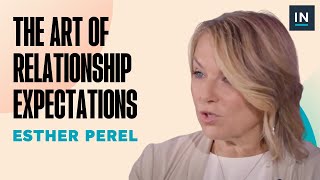
This is a verbatim transcript of a studio interview between Laura Moran and Esther Perel about relationship expectations. Perel describes her podcast Where Should We Begin?, its public-health framing, and notes season three is releasing October 5th. She argues the same tensions (security vs. freedom; stability vs. change) that shape romantic relationships increasingly shape workplaces, where employees expect self-actualization and emotional authenticity. Key advice includes learning an emotional vocabulary, mapping team relational styles (hierarchy vs. closeness; structure vs. chaos), practicing relational self-awareness (recognizing confirmation bias and mood-based attribution), and treating relationships as a core organizational priority rather than a side issue. The transcript also covers cultural/generational differences and parallels between cofounder and marital dynamics.
Questions this video answers
October 5th (season three)
Chapters
All right, we are good.
Hi, everyone.
Welcome to the Inbound Studio. I'm Laura Moran, your host, joined by Esther Perel, an author and therapist notable for exploring the tension between the need for security and the need for freedom in human relationships.
Correct. Fair. Fair enough.
Thank you so much for being here with us.
My pleasure.
I wanted to start with the podcast that you host called Where Should We Begin? And just if you could explain to people a little bit about what that is and why podcast as a medium works for you and why you've chosen that.
So may I ask, how many of you know of where should we Begin? Quite a bunch. So it's the first time that one is invited into a therapist's office to listen in on live, anonymous, unscripted, raw couples therapy sessions. And while you are listening in to the nitty gritty details of other people's lives, what begins to happen is that you realize that you're in fact, standing in front of your own mirror. And the reason I wanted to do it is because I have been a couples therapist for 35 years, and I am witnessing the rapid changes of relationships every day. I mean, there has nothing in common with the relationship of today, with the one that that was when I started. But couples are more isolated than ever and have unprecedented expectations of each other more than ever. And if in the village, you used to hear everybody's fights and everybody's lovemaking sessions, these days your friends can pretty much separate, and you didn't even see it coming. So it was also a way of tackling the subject of isolation, of fake news, which social media is when it comes to personal life and the fact that more and more we have an Olympus we can't reach, with a reality that feels very, very far from it and of which we have no real sense of. How is this happening with others? Am I alone? Are other people going through this? And it kind of unfolded into a public health campaign of relationships, which is now coming out season three on October 5th.
Exciting. You know, you were talking a lot with couples, but do you think that expectation, in terms of expectation in relationships is true outside of romantic relationships as well?
Absolutely. I mean, that's my whole talk here today. There is a phenomenal crossing of parallel tracks that is happening currently. On the one hand, a matching set of expectations. You know, when you come to personal life, romantic life, the expectations that you would have with one person, what once an entire community used to provide the same person, is going to give us security and stability and dependability and reliability and predictability, and the Same person is going to give us awe and mystery and passion and novelty and excitement and danger and fill in the bucket this dual set of needs like that that you know, for most of history marriage was for survival. Then we brought in the companionship romantic element and now we want relationships for self actualization. Well, the same thing is happening at work. You know, you don't just end, you know, you go to work and you don't plan to spend 20 years there and work your way up step by step. You know, the Wall Street Journal had an article I just read yesterday. It was called Quitters are winners. It's like the more you leave, the faster you grow kind of thing and the more you're going to get better jobs. And this notion that after two years something has to happen. And if you, you know, used to say that you left marriages if you were very unhappy and today you leave them if you think you could be happier. But the same thing happens with a job. You don't leave the job, you know, because they close the factory. You leave the job because you don't feel that you have been promoted properly and fast enough. And that rising on the maslow ladder of needs, you know, that notion that it's about self actualization, about identity formation, about belonging, the fact that we bring to love market economy and we talk about having a good deal in our relationships, but we bring to relations to work a language and a vocabulary of relationships. We talk about authenticity, belonging, empathy, trust. When was that the bottom line language of business?
Yeah, it hasn't been so because of that there's like, it's. I think there's like a dual thing happening. People are bringing that. But sometimes workplaces aren't really like built for it or the organization structure isn't built for it. So how do you think that in the office people can better talk about emotions as part of all of this?
Right. I think first of all you learn a language, it's a vocabulary. The same way that you learn the language of productivity, of efficiency, of performance, of KPIs. It's a language. And you learn a language when you practice it at first, first you're clunky, you repeat. It doesn't really sound. Well, it's kind of, but not really. And gradually like all learning, first you imitate, then you identify and then you internalize. And gradually it starts to become part of the relationship culture. But for that I also think that it's important to have a sense of how do we map relationships. I think sometimes the word is kind of mystifying and in fact, relationships are quite structured systems, you know, in which you straddle two main structure, hierarchy, power, discipline, all the way down to chaos and relatedness. From very close to very far, distant and disengaged. Pretty much most relationships can be tracked there. But now you take your team and you look, how are we working here? Is this a very hierarchical, very set system? Nothing can happen. You have to go to 10 different people, change is impossible, et cetera, et cetera. But it's very warm because we have a lot of closeness and it's camaraderie, but very inefficient. Or is it very distant, rather cold, but actually very structured and very efficient, but not very loving? You can map that. And then you begin to see what are the attributes that we have ample of and what are the ones that need to be reinforced and who can do that? Who can bring the pieces that the other people may not necessarily have so that you create a real diversity that isn't only about gender and race and background, but it is actually about relational capacity. Mm.
As you've worked with all different people through these relationships, is there a sort of like common mark or common marks of successful relationships that come up time and time again?
Yeah, yeah, yeah. You know, I'm a couples therapist, and I don't know if you know, but in couples therapy, rarely do people come to tell you what they have done wrong. They don't really come to tell you what's the point matter with them. They come to a drop off center and they come to tell me, this is my partner, you know, I will be the expert on what's wrong with that person and fix it. I think by definition, relationships that do well are relationships where people take responsibility for their share without being mired in shame for it. And so it's safe to take responsibility, safe to own your stuff. And people have a sense that if you want to change the other, you change yourself. I would say, number one. Number two, relationships that work well are relationships that really straddle the two fundamental sets of human needs. It's the need for connection and the need for freedom. It's that relatedness thing. You need to be able to have a base, but you also need and you need to be able to have belonging, but you also need a space for becoming. So that's the place where you can express yourself, where you can change, where you can grow. If you can straddle the anchor and the waves, you have a very good system. Same thing on the vertical. You need stability, but you Also need change. You need hierarchy, order, discipline. Any parent knows that you manage discipline and love. You need a structure, you need organization. But if you have too much of it, not in case can move and you get rigid and you fossilize, and if you have too little of it, you go into dysregulation and you go chaotic. It is that dance between these polarities where people find their bliss.
Can we talk or can you just give some of your thoughts on differences in relationships and how people interact with each other as it goes by generations and cultures and. And we might be very used to something at a certain age here in the United States, but somebody older or younger or on the other side of the world in China might have a completely different experience with that.
So there's actually really two very interesting ways to answer this. First, if you go China and the west, if you go collectivist societies versus individualistic societies, this is where the biggest change that occurred. The realm of relationships for all of history was actually very clear. Everybody knew in the little town who they were, what was expected of them, how they needed to behave. Parents knew how to talk to their children. Husbands knew what to say to their wives. Wives knew what not to say to their husbands. Everybody knew. It was clear, lots of certainty, zero freedom. We in the west have replaced rules and obligations and duties with choice and options. And at the heart of relationships today is negotiation. Everything is a freaking negotiation. You know, you start with a two year old and you ask them what they want to eat, what they want to wear, you know, and then you worry that those very same people later on are hard to manage. You know, they're our children, for God's sakes. You know, we raise them. You know, so that's the first thing I would say that is really fundamentally shifted in terms of people of different cultures and different eras. But I think what you can all ask yourself is this, and this is a question that also goes with collectivist and individualistic. What were some of the main messages that you grew up with around relationships? At home, in school, in your community, where you told relationships are central, they matter, they nurture you. People are trustworthy, they want to help you. If you have a problem, reach out. Where you raised for loyalty? Or were you raised with the messages that say you have only yourself to rely on, don't go to other people, people will never help you. People will take advantage of you, you count on yourself. And you were raised for autonomy. And if you were raised for loyalty or for autonomy, and that still is your primary code, you will Have a different way of dealing with collaboration versus competition. You will have a different experience versus letting people know when you have a difficulty or hiding from other people that you're struggling with a project. You know all these things our emotional dowry we bring to work. We don't become different people when we enter the door of our office building. And to have a clear sense of the map we grew up with gives you. And if you look at your teams and you start to ask those kinds of you get a good sense. Who are the people who are leaders, who are the people who follow, who are the people who are good at seeing how everybody else is doing versus those who are very good at checking with themselves, etc. Etc.
I was going to ask you, does that make sense? Yes, it does.
Hey, super quiet group here. I just see a few like this.
I was going to ask you what we can all do to better understand each other. But then having hearing you say that, I'm almost wondering if the question is really first, like how can we best understand ourselves first to then figure out.
How to understand somebody else? That's absolutely correct. I would say relational intelligence starts with relational self awareness. If you don't have it vis a vu, it's very hard to suddenly start to look listen to others. If you are self critical, it's going to be hard to listen to other people say things without hearing them criticizing you. I mean it's an extension. So that doesn't mean. It's just, you know, this concept of you should love yourself first and. No, we learn to love ourselves because we are loved by others. This doesn't happen out of context. It's a both and. But there is something about a certain kind of awareness. One of the great levels of awareness has to do with two major distortions. I'm sure some of you have never done this, but I have. So one of them is this confirmation bias. I have a view, right? I could be here and say this woman is here to have a great conversation with me and I am in there with her and I'm going to enjoy this. Or I can have this notion, this woman and all the people who interview you, they're always out to get you. They just want to make you look stupid. And I am going to interpret every one of your questions with my confirmation bias. I'm going to look for evidence that reinforces how I see myself and how I see the world relating to me. That is a major trap. And the second one is if I'm in a bad mood, I will think that it's because there was traffic and the circumstances of my day made me in a bad mood. But if you, you are in a bad mood is because you're a nasty person. You know, mine is circumstantial, yours is characterological. You know, the world is clear. Have you never done this?
You're here with us right now. You're going to be on the main stage giving what I'm sure after. This is going to be an incredible talk. What is the one thing that you're really hoping to leave the inbound audience at large with after your time here today?
I think inbound is about innovation and about the future of the workplace. Right. I would not have been here 10 years ago. There would not have been a keynote on relationships at a professional conference, at a business conference. It would have been about KPI's performance, efficiency, bottom line, you name it. It wouldn't have been about what is considered some. And the soft skills are now the bottom line. And those soft skills for a long time were considered feminine skills, which, you know, what happens to those. They're idealized in principle and discarded in reality. So this importance of saying, you know, relationships at this point are really a. Undergoing a change, but they're also threatened. They've become more and more polarized and people are less and less able to actually manage the complexities of relationships and pay attention to that. The quality of your relationships determines the quality of your life. Pay attention to it in work. Don't think it's a side product. Don't just do it when there is a crisis. And recognize the importance of relationships in your life. It's an interesting thing how, because everybody seems to live it, it's never actually treated like a proper topic of, of inquiry rather than just kind of, you know, we're all doing it, you know, it's not true. And that would be the first message, including here, talk to strangers. Leave your phone on the table when you go to the bathroom, when you're at lunch with somebody, you know, call home and thank the people who actually made it possible for you to be here. Put this notion of my relationships and my accountability into my relationships with really front and center. It will make a huge difference in your life, in your teams, and in your workplace altogether.
Are there people out in the, in the world or that you've worked with directly that you particularly admire in terms of how they approach relationships or life or the work that they do or the teams that they work with?
I'll tell you the first thing that comes to mind when you say this is. There is no function called the CRO, Chief Relationship Officer. And somebody named this who did a startup and they're doing deep web. And the person who, the two people running it somehow from the beginning understood that talking to people is not their skills. They can talk to computers. And from the beginning they brought me on as the person who sits in on meetings, who helps them deal with conflict, who helps them have difficult conversations that they've never had to have before. And for some reason, I think the fact that this person knew what she didn't know makes her more of an expert than the people who are there telling you everything they know. It's a different way of looking at expertise, right?
It is. Okay, I have one final question. You may have given it a little bit of an answer. Oh yeah, we can talk about that. Let's do that. So co founders have a unique relationship with each other. And I know you've talked in the past about how there are like similarities to marriages within a co founder relationship. So can you talk a little bit about how you've worked with co founders and how, you know, helps them hone what they need in their relationships?
And I will say, you know, I think the research says basically it's 65, 85% of startups don't succeed because of the fallout between the co founders. This is in case anybody cares if relationship actually matters. And you know, it can be three people. They sell. They still have to be five years. Two of them don't talk anymore. The third one is watching this debacle. How do they handle this? 5 years is a long time to sit in such a rut. Or it can be two people who have started together. One is constantly looking for expansion, the other one is kind of, you know, slow, slow, you know, we don't have to. And some of them are partners in life and some of them are just partners in business. But what you have in a co founder thing is this at the beginning for sure. It is passion for the project. It is a love affair in which two people lose sense of time, lose sense of boundaries. Everything is possible. I mean, it actually matches a little bit the story of nascent love and nascent passion. And then you begin to hit reality and then you have to deal with the cycles of relationships, harmony, disharmony, repair or passion, disillusion, reconnection, however you want to name it. The same thing happens. You're dealing with issues of complementarity instead of polarizing. Why do you do it this way? You realize that you actually need that person to do it this way because it's what gives you the opportunity to do your thing. And that notion of working. The complementarity is the juice of a mature relationship, and it's all of that that we work with.
All right, my final question was. So I'll get to that now. And we ask everybody. And you answered it a little bit already, but I'd love you to answer in full. What does inbound mean to you?
What inbound means on a personal level? To me, this whole parallel track that, you know, that of looking at the changes in personal life and how they are now being mirrored in professional and public space. I began to think from the moment I got this invitation, it's actually ideas that are just percolating in my head now. And I thought, this is the world that I actually have never worked in. But I think I'm sensing something, which is part of why I'm here. And I am very excited about this dialogue.
Excellent.
Including the one we just had.
Excellent. Well, we're incredibly excited to have you here. Thank you so much for stopping by the studio on your way to the main stage. I can't wait to see this spotlight now. Thank you so much for joining us.
Thank you. Thank you very much.
Thanks, everybody.
More from Patrick



A NEW BREED OF PARTNER: The Partnership Ecosystem Model Journey of Patrick Biddiscombe, Part 1








Customer Success Workspace: Never Lose Sight Of What Matters Most | HubSpot Spotlight