Everything I Learned From 3 Years Of Working For Seth Godin - Wes Kao
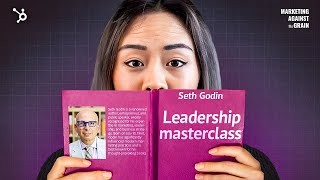
Wes Kao, co-founder of Maven, spent three years working for Seth Godin and learned how strategic thinking and craft matter more than most people think. She talks about what shaped her approach to leadership and marketing.
Chapters
On today's show, we are sitting down with Wes Kao. She is the co founder of Maven. She worked with Seth Godin on the Alt mba and we are breaking down a masterclass in leadership management and how to be a true marketing craftsperson. You are going to be taking tons of notes today. Is it a tremendous show? Let's get to today's episode.
Well, you have built many incredible businesses, whereas we appreciate you coming on. Where we really wanted to start was on the out and mba. Actually, could you maybe start us off with how did you get partnered with Seth? Right. That feels like it was a pretty big break in your career. How did you end up partner partnering with him in this course?
Yeah. So this was 2014. I was in San Francisco working at a Sequoia backed startup and I'd been there for three years and was kind of done and ready for something new. And on a whim, a friend had, you know, randomly sent me a blog post of Seth's saying that he was looking to hire a special projects lead for six months in New York. And you know, like many people from sf, I was like, oh, I kind of want to move to New York. So it felt really perfect. And so I applied, threw my name in the ring and I really didn't expect much from it because I knew how competitive a role like this would be. And you know, two days later I see Seth in my inbox, which was shocking. And he said, hey, I liked your application, I liked your video. Let's, let's hop on a call for an interview. So we did a couple rounds of interviews. We met up in person for another interview as well. And so, and then I was hired.
What was the video sounds like you had. How did you differentiate your application? Application if you are one of many people trying to get into Seth's orbit?
It's so funny because I did my video in one take. I thought I was not going to get this anyway. And you know, all of us have spent too much time laboring over an application, just never hearing back. And I just didn't want to invest that emotional labor. And so I think the video was something like, you know, take three minutes to share what you want to build, what you'll contribute and what you want to learn. Something like that. And yeah, so I did, in one take, sent it over. Yeah, I guess something about my, my background stood out. I was doing a lot of side projects, I think all along the way up until then. Um, and so talking about some of the things I was doing outside of Work. I'd been writing my blog for a couple years since 2010 and I've continued that, you know, all the way to today. So talking about some of the other ways that I think beyond, you know, showing up at work and clocking, clocking out the ways I was excited about marketing and, and really obsessed about it. I think that that stood out.
Well. This is great. Crafts people do side quests. If you are a marketer and you are trying to get any type of role, then the beauty of marketing in the digital era is that you don't have to wait for someone to give you a job to build an incredible portfolio of work. And I've always found the same thing, that the best people at this craft are people who do side quests, which. The same thing as side hustles. I just don't like the word hustles.
Yep.
And so you have like, you actually, you have a huge audience as well. You're a prolific writer. But whatever it may be for that person, that's why when I fell into digital, like from a software eng engineering background, I just love that I could just go do it myself. Right. I didn't have to you back then. You could go and be like the best person at SlideShare. You could go have an incredible blog follower. You can go optimize a website and do black hat SEO. You shouldn't have done that. But I did that and rank really highly in Google. Like all of these things were open to you. I remember even when I first applied to HubSpot back in the day, that's how me and Kip actually met. And like one of the things they called out was I had like this weird fashion brand. Do you remember Kip? And it was like me and two of my brothers who had dropped out of college and we had like this fashion set for. For men's fashion. And then we were really early on like YouTube and trying on shoes and these videos would get like a quarter of a million views. Like just us trying on new trainers. And then we managed to get ourselves sent all of the latest sneakers, which is really cool. But when I actually, when someone talked about like, why did you hire Kieran? Years later, they're like, oh, we just loved. He was like really weird and did this like really weird fashion thing. Right. These side quests are super important.
Yeah. I think now more than ever before, it's. It's so much easier to create proof points of your expertise online and there's really no one stopping you. I think that's the best Part, you know, it's. It's kind of. It's tough if there are other gatekeepers and whatnot. But, you know, back then I did ad campaign teardowns. So, you know, Kieran and I were talking about Airbnb right before we started recording. And I don't know if you remember back in sf, this was. I don't know when this was now, but Airbnb had these issues with different cities. And so they did bus campaigns and ad campaigns all over the city, basically, kind of these snarky campaigns because the city was trying to block them. And I did this teardown, rewriting the copy of these ads to make them, I thought, more productive and more effective. Instead of antagonizing the people that you were trying to convince to be on your side, what if you appeal to them instead? Right. That was something I did. I had a salon series for women in leadership, sharing five minute lightning talks about learnings, you know, hard earned lessons that, you know, are harder to share in a public forum, but within a group of 30, some women, you know, felt more comfortable to share. You know, so I, I pitched a bunch of publications to try to get published. You know, failed a lot, but eventually got published by Fast Company. So, you know, just like, caring about the work and actively thinking and then just trying to do stuff, I think that is just such an important attitude.
Well, and what you did, and, you know, what, Kieran, you did in your shoe example is like, there are a lot of people who use excuses to not just go and do something right, like, oh, I want it to be perfect, or where is this going to publish it? You were just like, oh, I actually just feel really passionate that this campaign could be better. So I'm just going to like, publish on the Internet what I think a better version of this would be. And literally anybody can do that and do it pretty quickly. Most people just choose not to do it.
I think there's also a big difference between writing online and trying to grow your audience. I think a lot of people conflate the two. For the first 10 years of writing online, no one read my shit, you know, like, and I was still doing it because it was an amazing way to sharpen my own thinking, to clarify my thoughts, to explore things that I thought were intellectually stimulating and interesting, you know, share my observations. So I think a lot of people get discouraged with, with doing anything because they think that, well, if, if I only get 5 likes on it, you know, then, then that's going to be embarrassing, but who cares? Just do it, Kip.
This is actually reminds me of the conversation Kip and I had this week. We were talking about something and Kip made a really good point, which is, look, no one wants to do the hard work to be great at something. And so that's your moat, right? So like you spent 10 years perfecting your craft and then your audience starts to like catch up to like where your expertise are, where your abilities are. It's at some point because we live in a world where you expect to get success in such a short period of time online. Like and, and to your point, the people that I meet who really want to get better at craft and write in creating videos, they just have a fear of failure or. And their failure to them is like no one liked the first couple. No one is going to like the first a lot, right? Like you have it sound like it's not too different. Like it's different, it's different scale, but it's like what an entrepreneur goes through, right? You have to just put out there iterate, get better over time and then customers will eventually use your product. But you can't scared to go out with an inferior version of your product, right? You know, you're gonna test, polish, test, polish, test, polish. Content is kind of similar, right? You have to embrace the grind. You have to embrace falling flat on your face. Like one of the places I think you've experienced that more than anywhere else is when people are trying to get good at conference speaking. And I always talk to people when they're asking me like, how do I get better at content? And I try to explain, you know, you have to just embrace the test and polish, like put things out, learn test, polish, test, polish. Conference speaking is a really good example of that because you're falling flat on your face in front of like a bunch of different. And everyone goes through the same cycle. They start off with the bad deck and then they can learn, they learn how to craft a story in a deck, but then they present in a monotone way and then they get better to actually bring some sort of excitement and differentiation of voice. And then they can move from like an educational talk to a big thinking thought talk and like change the way people think. But that's like a ten year process, right? It's not like you start there in day one. And so I think it's a good reminder for people that you have to start at the start and try to enjoy the process.
Yeah, I think that's also a great reminder of how important craft is. I think A lot of people think that enthusiasm and confidence are enough to get to where you want to go and there's a lot of skill involved often in the thing that you want to do well.
So I think there's a couple of things Wes, that I would push on is I think there's a three legged stool of marketing failure. It's enthusiasm, confidence, and then it's also strategy. People think strategy solves everything and it doesn't like you. Like, not that strategy isn't important, but like if you don't have the core craft skills, the best strategy in the world isn't going to save you. Right. Like you have to have the fundamental skills of the craft and strategy doesn't. Strategy isn't how you build skills. Strategy is how you utilize the skills once you've built them. Hey guys, real quick. We've gotten a ton of requests in the comments and they're all about prompts. You all want the prompts we're talking about on that show. We see you, we hear you, and now we are ready to share the goods. Click the link in the description below to access our new AI prompt library. This resource features real AI prompts that Kieran and I have covered on this show. We broke them down by category and templatized them so you can fill in the blanks and make them your own. Now you have the frameworks you need to use AI, analyze ads, create brand campaigns, develop product stories, just to name a few of our favorites. Keep telling us what you need in the comments and we'll see what we can do to whip up more for you in the future. Now back to the show.
Yeah, I have this whole thing about strategy. I'm still trying to hack a clean way of explaining it, but for a long time now. Okay, all right. It's gonna be a little messy, but now I feel like when people think of strategy, they think of strategy with a big S. Like the company strategy, the quarterly strategy, the marketing strategy, whatever else. Right. So you're getting a bit more function specific but like still like very much like high level. But I actually feel like there's a lot of strategic thinking in the day to day execution. Once you've decided that macro strategy, when you are executing that thing, whether it's a project, an initiative, a task, every level of detail and congr concreteness, there's strategy involved. And I wonder if useful to separate out strategy versus strategic thinking because not everyone is responsible for crafting a high level strategy, but I would say that everyone is responsible for strategic thinking. No matter how well scoped something is, by the time it arrives on your desk. Like, you know, I was working the client the other day and they said that they had asked their direct report to brainstorm a list of clients to do a case study on, right? So like, that's like a fairly defined task already, but there are still, there's still a spectrum of how strategic you can be when you're doing that. Because that person came back and gave a really quick list of customers off the top of their head that they had a good relationship with, right? So like, that's one dimension of many variables that you should consider, you know. And so that person, you know, my client had to coach their direct report on. Well, you know, the reason, the goal of what we're, why we're doing case studies is to attract more customers of the kind that we want, right? To like, celebrate the kind of customer we want to attract more of. We want to drive revenue with these, we want to use them as sales collateral. Thinking about making sure there's representation of your case studies with the clients you work with within different industries, right. We have clients in beauty and entertainment, in finance and tech, like not having all the case study brands be from one industry because you happen to have good relationships with the person there, right. So I think that's just such a good example of needing to think strategically and how there is judgment involved really in every aspect of what you're doing when you're executing that. I think we do ourselves a disservice when we don't acknowledge that, you know, when we only celebrate people who do strategy with a big S and consider everything else execution.
Well. So I want to try something on both of you. The capital S strategy is really just an exercise in focus. It is, hey, I could do all of these things. I'm going to pick a very small subset of these things to do. Strategic thinking is all right. Of the things I've picked, how am I going to get the best outcome in the fastest way possible? By being very strategic in the craft and execution that I'm doing along the way in this thing that we picked and said like, hey, this is important. This is what we're going to do and we're going to go chase after it. It turns out that capital S strategy is like monthly, quarterly, annually. It's not that frequently, but strategic thinking is all day, every day. Really.
I actually think that this is a pretty good segment for marketers in general. Because what I see is a marketer has done something for six months and then. And they're review, they're like, hey, now I'm ready to move to strategy. Oh, I like, I've done six months of marketing. I just want to go do strategy. And I think people think, well, strategy is like the. I can like, figure out how to move the pieces around and get people to do the thing that I believe in. But the strategic thinking is where you actually make yourself invaluable. Right. That's actually the people who make the most money or the people actually can, who understand enough about the craft, have deep expertise in the craft that they can do enough strategic thinking to do that execution, like, quote unquote, execution better than anyone else. And to Kip's point, the strategy with a big S is pretty infrequent, right? It's not. And I do agree, actually, I think that's a good way of framing it. It actually really is just, I could do 10 things. We should do three things because we've strategically understood that these three things are the best thing for the business in this moment in time. But the real value then is in the strategic thinking that helps you to out execute anyone else.
Yeah. And, you know, this reminds me of the Lord of the Rings meme, where I think Boromir says, you know, one does not simply, like, do strategy. You know, like, I feel like, especially at startups, people think they, you know, to your point of like six months of executing and then move. Moving into strategy, that very few people at a startup just sit around and think all day. Like, that just doesn't happen.
Like, you know, people think strategies, philosophy, and you're like, nobody philosophy.
Like, even very senior people are often either doing some IC work or very close to the work, you know, by. By editing and monitoring and, you know, being deep with their direct reports on. On, you know, getting closer to the primary data and like figuring out what's going on. Like, there's. There's craft and, and doing at all levels, you know. So I like the term strategic doer because there's a strategic part, but it's also like the doer is a noun. The noun is important, and it's a doer.
Well, we, we got here because we were talking about Seth, and Seth clearly picked you because you're a doer and you, You. You're some. You're a craftsperson who ships things. I want to go back to that for a second, though, because I have some friends who've worked with Seth and have written some books, you know, with Seth as the. As their editor. And I'VE heard that Seth is just, like, the most amazing editor and provider of feedback to, like, drive clarity. Like, what did you learn in that time with him?
On that front, this is hard to answer because working with Seth was so incredibly transformational in every way that, like, it's hard to kind of pinpoint what are some lessons. But, yeah, I have to echo, you know, what those folks said in terms of feedback. Seth gave incredibly direct feedback, and he had incredibly high standards. I think one of the biggest things that I took away from working with Seth was drastically increasing my standards for myself and my expectations of other people. When I started working with him, I just come from this startup that I thought was pretty fancy. And we talked about shipping fast and breaking things and sprinting and whatnot. And within the first couple of weeks of working with Seth, I realized that the speed at which we were shipping before that I was shipping at this previous company was extremely slow. And it's just fascinating because at the time, I thought it was fast, you know, so it was kind of like seeing in black and white and then seeing in technicolor.
Oh, my God.
Dimension of, like, speed or something. Right. And so really raising my standards is a huge one. And that's something that I think, how.
Did that tactically show up just for people watching Wes, who are like, yeah, you know, I'm not good at that. I want to raise my standards. Like, how did you actually do it?
So here's a fun story. When we were figuring out the book list that we wanted Alten B. Students to read, we were going to ship everyone a box of books, and I came up with 20 some books. We narrowed it down to, like, seven, seven or eight. And, you know, they arrived on Amazon. Slams, this the stack of books on my desk. And it's like, okay, like, go through these. Let me know which ones, you know, we should recommend we should include in our book box. And I was like, okay, great. Like, maybe I'll read, you know, one every three weeks or something. And, like, you know, figure it out. And he was like, you should read all of these books by the end of day tomorrow.
What?
Like, you know, my. So my first thought was, that's impossible. And then my second thought was, okay, like, if I had to do it in two days, I could figure out a way to do it in two days.
How would I do it?
Right. Exactly. And so, like, that's just an example of, like, breaking the frame. Like, whatever frame you have, Seth will break that frame in the best way possible. You know, And I Think, I think as leaders that is part of our job is to break people's frames, you know, especially, you know, I remember I at Maven had a team member who came from Google, you know, and she was used to working in a certain way. It's a much bigger organization. I think Maven was like five people at that time, you know, and so it was a lot of frame breaking and resetting the frame. And I think if you are able to reset frames for people, they're able to then see through that new lens. And then every decision thereafter about the tactics and details becomes a lot more intuitive than if you were to try to correct like every tiny little thing.
How does a. I think that is a really great piece of advice. Like how do I increase standards within my team? What's your thoughts on that's Seth asking you to do that, right? If I'm a manager, what do I need to have where my team will react in a positive way versus, you know, my reaction just being, oh, I can't do that. Like my manager is just asking me to do things that are just completely unreasonable. Like is there, is there something, is it just the ask? Like I, you know, or do I have to demonstrate it, you think? In some way I'm trying to figure out like if I just go to, if I'm a typical manager, manager, and I'm like, ah, I really want to increase standards, so I'll just go and shrink the time, the delivery, the delivery time on some of these things, I think the team could be delivering on much faster. Is there some amount of trust you have to have earned beforehand or do you have to demonstrate that you are also hidden standards throughout your work? Like what, what do you think is the way a manager can bring that into their team?
Yeah, great question. I think the wrong way and I think the way that most people do it, most managers is announcing that we are now raising our standards. We now have a higher bar. And then just like, all right, great, like everyone, Godspeed, right? Like that isn't going to give your team the support that they need to rise to the occasion. And so, you know, if you think about a two by two matrix where it's low standards, high standards and then low coaching, high coaching, you really want to be in the category of high standards and high coaching, in my opinion, I think that's where you really set the bar. But also on a day to day basis are giving the structure that people need to hit the standards that you want. There are organizations where it's high standards, they're in the quadrant of high standards, low coaching or low feedback. And so that's kind of sink or swim. So that's GE, Jack Welch, McKinsey, like, freaking get with the program and do it or buy, you know, so, like. But people who choose to work at those companies are aware of that. So I think you just have to be transparent. If that is your culture and your expectation, you just have to be upfront about it. But if you're doing an organizational leveling up, you know, with people who already are used to working with you in a certain way, it's super jarring to all of a sudden say that, you know, what you used to do doesn't cut it. You know, it worked yesterday, but it doesn't work today without being more detailed with feedback and offering more coaching in a. In a tactical, specific way.
What's interesting is spent some time with Frances Fry, who teaches at HBS and has written some great books. Her new book, how to Move Fast and Fix Things, is very good. And she had a separate version of that, two by two, because, like, what your two by two was is what you, as the manager, were supposed to do. Her two by two is like, basically the emotional component around it, which is like, you either want to. People either hold people to extremely high standards, or they have, like, unwavering devotion for their success. They rarely have both. Right. Like, when you have. When you really want somebody to be successful, sometimes you don't feel like you can be direct. You don't want to hold them to high standards because you are like, oh, I want to support that person. I want that person to feel good about the work they're doing. It turns out for somebody to feel great about the work they're doing, they need your support and your coaching, to your point, Wes. But they also need the very high standards so that they are, like, learning and growing and developing. I think both of those frameworks work really well. If you're out there in, like, a leadership position trying to say, like, oh, I want my team to be better.
Yeah, definitely. I think also another thing that that makes it easier for your team to want to do better is if you yourself are great at the craft.
Yeah, exactly.
Yes.
I think that that really does matter. You know, I think there's this whole debate of, do managers and leaders need to be craftspeople themselves? Can you be a, you know, professional manager? And I think there's a certain amount of respect that you engender with your team when you show that you've still got it.
Yes, Right.
Like, you don't usually write copy. Okay, the boss is not usually copy. But when they come in and before and after on something, you're like, holy shit, that was really good. And so knowing, you know, as a direct report, knowing that your manager holds themselves to a high standard and is not expecting something of you that they do not expect of themselves as well, and they are constantly pushing to be better themselves, I think that that, that adds that oomph that helps your team want to do better.
Can we touch on this? I cannot. You've done two things that I think make you already our number one guest. First of all, you dropped a two by two. If you know anything about this podcast, Kip and I are all about the two by twos. And then this is like my most favorite leadership topic. So I put up a two by two on LinkedIn recently, which was the knowledge of craft versus seniority and role. Right? So like, if knowledge of craft is low or high and seniority of role is lower, high that the higher. The higher you get in your seniority for the average leader within marketing, the worse you get at the craft. Right. And I basically made the point that if you're an aspiring leader, don't do it this way, right? Because you should not just become a glorified people manager. You should stay in touch with the craft. And I think a lot of it is don't just do the strategy, do the strategic thinking and show your team you can actually get into the work. I have never had the amount of like the. The comments that I've had around that. It's up to like 3, 400 comments, and they're so mixed. Now. A lot of people, A lot of people misconstrued seniority with age and thought I was being ageist, which, which I get. Like, I maybe should have labeled it quicker, but if I was being age, I'm not in my 20s, so if I was being ageist, I was being ageist against myself. I meant the level that you were at. Right. I would love to hear your take on that. Like, do you, if you were advising aspiring marketing leaders, CMOs, like, do you believe that as that the more you go, the higher you get up in seniority, not age level, that you should really stay ingrained in the craft? And how would you think about ways that they can do that?
Yeah, absolutely. I think it's so important as a leader to be close to primary data, as close as possible. Because as a leader, you presumably have better judgment than many of the folks you work with. Judgment is a spectrum. So I think as you become more senior, skills, background, years of experience become less important, right? Because at a certain point there's a lot of people with 20 years, 25 years of experience, but not all of them become CMO or not all of them continue to rise. And so I think it's really important to not get too far away from primary data because often you are able to see things that your direct reports don't see. You're able to notice things that they don't notice. And so one of the first things I do when someone, when a direct report says, oh, so and so wasn't interested in expanding their contract or so and so is at risk of churning, they sent this note and I'll say, can you send me the thread or show me the email? And this happened a couple years ago where one of my direct boards said that this big instructor on Maven was not interested in running a cohort later this year. And when I looked at the email, I got the opposite conclusion, that actually I think she was really interested. She just didn't say yes. I'd love to, like, sign me up. Like, it wasn't as explicit. But first of all, she didn't say no. So, like, if someone doesn't say no when you're in a kind of a sales biz dev situation, like, take that as a yes and like, push, right? So, like, so, like, that was a good lesson. That was a good opportunity to calibrate on, like, how do we read between the lines on this and what should we do when clients respond in this way or customers respond in this way. So I just think that leaders, if you were able to notice more than your team members might, it's important for you to stay as close as possible to that primary data. The other aspect is, I think it's very hard to find senior tacticians because the more senior you get, the more people want to lean into big, big, big S strategy and managing other people and not necessarily doing the work. And if you are someone who stays close to doing the work, you automatically have a leg up in doing both strategic thinking and big S strategy because you actually understand the culture and nuance of a platform, right? Like, there are nuances when you're posting on TikTok and creating versus creating content on LinkedIn versus Twitter versus YouTube. And if you're like very removed from all of that and you think it's all the same, you're not ever gonna really win on any one channel or in any one approach, you know, like, you have to be deep enough that you understand the culture and vibe of a place. And I know so many senior marketers who like, like, don't know the vibe of a place because you see their posts and you're like, this is not. Like, this is not the way people post around here, right? Like.
More from Patrick



A NEW BREED OF PARTNER: The Partnership Ecosystem Model Journey of Patrick Biddiscombe, Part 1








Customer Success Workspace: Never Lose Sight Of What Matters Most | HubSpot Spotlight