Everything You Need To Know About Flux.1 (MidJourney On Steroids!)
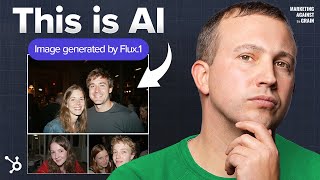
Patrick Biddiscombe and Kieran break down Flux, Black Forest Labs' open-source image generator that creates photorealistic pictures and video clips. They show how to spot AI fakes by boosting saturation to reveal artifacts, explain why companies are slow to adopt the tech despite its potential, and highlight the highest-ROI uses: generating ad variations and personalized email images.
Chapters
On today's show we have some hot off the presses tech. A new AI image generator that is creating the realest images yet. We're going to tell you what it is, how you can spot fake AI images, why people aren't using AI technology, and the best way to use AI images in your marketing and for your business today. That and much more. All into today's show, Kiran, you and I been whatsapping this weekend and your reply to one of my whatsapps was we're all screwed. That was the censored reply that you gave me. But you basically came in, we're like, geez, this is crazy to show everybody what we're talking about. Here is an example of some images that are all completely AI. And the caption for this is these are all AI. I just don't know anymore. It feels like these are candid photos from a real life event or real life party. And instead these are all just contrived and constructed by artificial intelligence. And what's crazier to me, Kieran, the details in some of them are mind blowing. So I want to show you these are all people who look like they're speaking at events. It's crazy but, but what's crazy about it is like look at the level of detail like the detailing on the lanyard and the Google writing on the name badge. Historically, one of the biggest problems with AI image generation has been those types of things, text and images, patterns, details, real, like real deep intricacy, like the TEDX background and stuff that's happening right now. Those would normally be like telltale signs of like, oh, like this is good, but it's clearly a fake image. I've looked at this image a lot and I cannot find anything that would point me.
No, the hands are fine as well. All those events. Now I can actually have the most amazing last year event photos because they can just literally make them up. There's like hundreds of people here and thousands of people there and everyone is interacting with each other and having a good time. And I would be like, oh, I'll definitely go speak at this event. And you turn up, it's like in a little room and none of that is actually happening. It's just incredible how lifelike they are and they, they just look like normal people out enjoying themselves. Can I just show you the one that I couldn't believe?
Hold on, I got to show you one more first because you're talking about speakers. Did you see this? Somebody flux together with Runway to animate the images.
An actual Speaker.
Yeah, look at this, look at this.
Yeah. Hands doing pretty good. Keep an eye on the hands. Like they're not morphing into.
There's a couple little spots where they're kind of like moving a little weird and everything. But man, it's, it's close.
It's. Because I will say this looks pretty cool in the 3 second segment I have actually, because I'm deep, deep into like the AI stuff, space and in particular sales. So I've talked to tons of companies and demoed their tools and I've talked to a bunch of AI avatars because AI avatars, really, if you kind of extrapolate things that your digital buying experience, you could imagine it all getting collapsed into like a singular AI avatar type experience. AI avatar in chat, AI avatar joins the zoom. AI avatar reaches out via email. Right. It's all the kind of same person and they're still, I wouldn't say they're that clunky, but it still doesn't feel like you're one to one interacting with a person. Like you're still clearly interacting with a avatar that takes some time to come back to you, that responds in some ways clunky. But when you actually see it in this kind of 3 second segment where Runway has kind of just created a small video from that image, it's super impressive. And I suspect.
Look at this. We were just looking at a second ago, though. Look at this is a 10 second image and it looks really good because they've cropped the hands out and it's a really tight image. Right. Like if it was a much wider shot image, it'd be really hard. But nothing this good existed three to six months ago, I guess is my point. Right. Like we are moving at a very, very fast pace here.
Rapid space. Yeah, yeah. We thought the pace of AI, like the pace of AI progression has definitely slowed last quarter. But we are, I, I think I've started to see some releases, especially an image and video that would suggest that there's still some pretty big leaps to be made.
So Flux was created by Black Forest Labs, which is an AI company that created all of this model, created these models and then basically put the whole thing, the whole repo, on GitHub so that you can now, now run everything yourself. So there's a whole repo by Black Forest Labs that is just Flux and it's. Everything is public and it was, most of it was published like two weeks ago. So this is very, very new. Right. And what's tricky is that you can't just go and run it yourself, right? Like you can run it in other applications or you can run it on your own code base. But if you're not a developer, there's not a web app where you just like write a prompt in and get this out. And that is because it is so early. Right? And eventually you will have a full web app and everything as they keep making the model better. But you got to think about this. This is a breakthrough that has only happened within the past couple of weeks where it's like out and released and people are building on it. Hey everyone, quick stat for you. AI usage has increased 53% since last year. And you know how I know that? Because I just read our brand new 2024 AI trends in marketing report. This report is packed with original data. That data not only highlights the latest in AI trends, but also shows how businesses today are using AI to grow their business. You'll learn the top five AI tools for marketers, exactly how teams are investing in AI and where they're seeing the return on their investment. And you get a data backed answer to the big question, is AI helping or hurting my marketing career? I invite you to steal and take all of our hours of research from for free. Grab your copy from the link in the description below. Now back to today's show.
One of the things that you showed me that I thought was pretty interesting. So when I looked at this I was like, wow, there are so many use cases that I can think. There are way more use cases that I can think are troublesome than actually beneficial. And we can probably talk about maybe that.
I want to talk about that in a minute.
The good applications. But you had a pretty interesting tweet from a guy who or someone who had built a detector app which I thought was super cool.
Yeah, I wanted to show that. So one of the things I think we all believe is there will be whole companies around just like identifying and detecting what's real versus AI imagery. Right. And this Mr. Das posted a way that you could do this. He basically if you bump up the saturation and look at certain parts of the picture, especially like teeth and bone structures or like inanimate objects. You can kind of see here in this example that I'm showing for folks who are listening on audio, what you're seeing is a image that's half normal and half high saturation and you can see that the microphone is hollow, that her teeth really don't look real. Right. That there are the background text is all thrown off and that is A really good way to detect a fake image. The problem, and this is awesome, he built the code to do this in Claude. The problem with this is, is Kieran, where are you most likely going to want to look and see if an image is real or not? Like on your computer, on your phone? No, on social media. Right?
Yeah. This is what my. Do you think the social media apps would build an Internet?
They eventually will. But the issue is if you wanted to do what he did right now just on social media apps, it wouldn't work as our, as our friends and community notes on X posted because the images get too compressed when they're uploaded to social media sites. So that you're not going to be able to do this if you just. Somebody sends you something or if this is a high quality presentation or high quality image and you're like skeptical, you could go and run this. But if you're like, hey, is this thing I'm seeing on Instagram or Twitter or what have you, is this real? This won't work in that use case.
Yeah. Did the community. First of all, I thought you think the one feature of X that is a really great feature is Community Notes. It's probably their best feature. Did they. Does it say anything about how they would do it? Like that's the part I'm mostly interested in is I feel like social networks. If I was going to advocate for any kind of regulation or an AI, and I'm not a huge fan of regulation in the most part, I think the thing I would, the thing I would set policy around if I was a government, is that something social networks, all of them have to have a way to detect AI generated videos and imagery for users and they would flag them, they would have a little flag on them and say this is AI generated. If you were. If the government were in any way smart, and unfortunately most governments are not, but that. Isn't that the one policy that actually everyone would somewhat be in agreement with? I don't see how you would be in disagreement of that.
So what happens is like right now when you upload an image to a social site, they're compressing it for size, for speed, performance of the site and everything. What they would have to do, Kieran, is have an application that when you're uploading it before the file is compressed, checks it and based on that then gives a flag. I think I kind of agree with you. And one of the reasons I agree with you is because I saw something over the weekend or even maybe it was even this morning that I thought was really interesting. Our friend Ben Tossel over at Ben's Byte has been doing a bunch of research, Ben Speitz's great AI newsletter. And he did a bunch of research around why people aren't using AI. Like just why aren't humans using AI? There's too many new tools and some of them are hard to use. Like Flux for example. Right. It's super powerful.
Yeah.
But you got to be kind of a dork to use Flux, right. Even mid, even mid journey. Like you gotta have to get used. Discord.
Yes. Such a weird interface.
Employees are afraid that I will replace them if they use it. That is a real, real concern. Concerns about privacy, security, reliability. Employees reluctant. He had a. Probably lazy to use AI. They have a hard time keeping up with the changes. Bias and fear against AI and job replacement. So some of these are repetitive. Staying on the cutting edge is tough chat GPT not good enough. And then there's data privacy issues, security worries and misunderstanding of AI capabilities and policymaker accountability issues. So there's a big chunk of this is like security and regulation. Right. Which is pretty wild. And you're going to have to do some broader regulation to I think ultimately get a wider adoption of AI tools.
I, I think that's all great research. I would still distill everything down into the number one thing being the, the use cases that make companies money. Because once a company, if a company could find a use case that made them a bunch of money, they would figure out ways to get their employees to do AI and use AI in a way that would for that use case.
Right.
Now I still think that.
But hold on, hold on before you move on, like, I do think one of the points Ben's trying to make, which he's right about, is some employees who should be in charge of finding those use cases.
That's what I'm back to. This is what I'm going back to. Yeah. So like I think that's number one at the company level, but I think there's a people level and I think one of the people levels is there's just still an early group of adopters who are really trying to figure out where to apply that AI to. I think some of them are applying it to their own work and they're much better. I use AI every single day. It has 100% made me much more productive. People I have talked to who actually are using the AI to day to day, it's making them better, but it's not quantifiable. It's Also not teachable. Right. That's the other thing is it's not teachable because it's such a diverse range of ways that people are using AI. They figure something out that works for them and they just keep using it that way. So it's harder to get a mass adoption of that stuff because it's such a broad array of things. That's why I started with a company which is once a company finds a use case that works, that will get industry adoption, like customer support, AI is a known thing. It's for the most part got an industry wide adoption. People in customer support are using AI tools probably more than any other functions because we know that's a profitable place to use AI. So companies will instruct those employees to use AI in some way. They'll mandate it in some way. On the people side, I think there's two. There's another point in there which is the models. The models not living up to expectation is a pretty interesting one. I think that happens again because there's no like onboarding for these tools for people. And so part of why they think it's not good enough is because they use it for use cases where it is actually not good enough.
Yeah, right.
They want to use it for something and it's actually not good enough there and they just go and leave. One of the things you'll find on AI adoption and I found this time and again, and research that I've done on research that's out there in the industry is the kind of how you feel about errors in AI. I'm trying to come up with the right word, but basically, you know, your tolerance for errors in AI is really low because you think it's a magic box and you think when you ask the Magic box to do something, it should do it. Because you've heard all of the chatter about AI being transformative. You've heard people on these podcasts like me say it's like incredible, right? But I'm saying it's incredible for things that I'm using it for. But you only hear that and then you go to the Magic box and you say, magic box, do this piece of work for me and the Magic Box gives you back something and it's not that good and you're like trash, all hype. I'm going to go back to the way I used to do things and not try to test iterate and figure out how to make use of it. That's what I think is going on. And I do agree in a lot of cases Then within the company there is a lot of data privacy for the company to roll it out. But on the individual level, I think it's much more around like the person's expectations of AI are higher than what they can produce. In a lot of cases, people are not doing a great job of testing and iterating on finding where AI works for them. And then we're still at the place where the early adopters, the people who are really curious, who are into the tech, who are trying to find ways to use it for them, are way ahead of the people who are waiting for, waiting to be told how to use AI in their day to day job.
One of my kind of nerdy takes here is this is the problem with text based user interfaces. You think it can do everything. Like when you see a graphical user interface and there are specific options and things you can click on, you're like, oh, I know what this is supposed to do. And I can kind of think of one stick standard deviation away from those things of like, oh, I bet it could do this thing or I bet I could request the feature to have it do this thing. That's related. When it looks like a thing can do everything, you expect it to do everything.
Do everything. Yeah.
And it doesn't just say like, hey, these are the things I'm the best at. And if you do these things, you're gonna be really successful. If you do these other things, you're gonna be unsuccessful. There's actually no guidance in, to quote you, like the magic box. And that's part of what makes it a challenge.
Yeah, I, I look, I had firsthand experience of this at Zapier. We attempted to replace a bunch of the onboarding or the bunch of the ways that you would use Zapier as a new user with natural language interface. Because we can see, we could see a bunch of non technical users were coming in to use Zapier and the GUI interface still was kind of a, a technical thing to get set up on. Like it was still like you had to have some technical know how to figure out how to automate your work. And we were like, well if you could just ask a chatbot how to do it and then that's going to be a lot easier. And what happened is people just didn't know how to prompt, like people didn't know how to communicate with a chat agent to figure out how to do their work because it's your, There was no like guardrails or restrictions or like how do I use this thing? So it was a whole other user experience for someone to actually get to know. And so yeah, it doesn't, didn't work as near as well as we had expected. And I think it's just a new type of user interface for someone to learn. That's why when I talk to a lot of people who are trying to build things in go to markets, especially if they want agents or even just chatbots to be part of how they help the sales or get the support or the customer success or is have a singular agent that does one thing and use a guided prompt. So basically they go to it. The prompt says, hey, give me this information now give me that information. And here's the thing you need rather than allow it to be a broad based agent where you can do all kinds of different things and the person kind of gets lost.
I love that. I think that is perfect advice. I think that for the last segment of today's show, Kieran, we do need to talk about the best use cases now for AI images because look, we got people here trying to be better. If you're listening to this show, you are trying to adopt AI, you're trying to grow your business differently and I think we should give you some hints and advice because clearly these tools are getting a lot better. And whether you're using Recraft, midjourney, Flux, Dall E3, whatever it may be, there are some things you can do. The first and I think the most proven marketing and business use case of AI images is creating AI images for your ad variations for your online ads. Because that way you can have a custom image that really maps to your ad copy and to the platform that you're advertising on. And in the tests we've run and tests other people, I've seen that leads to a pretty significant increase in conversion rates. Right? I think that is, I think far and away the, the most common effective use case of AI images in marketing today.
I think that's my number one. I don't know if I would have others because the only other place I would say you can use these image tools like a flux to have real life pictures in your marketing is if you want to go down the path of making your website like it's a known thing that add in real pictures of your customers and things like that might improve conversion rate. But I don't, I don't think you should do that with AI. I think you should have real pictures of your customers. I think that's a pretty horrible way to do that. So if I was like, what's the thing I would do with images. It's like test them via paid. I think that's by far the biggest upside. You might have others, but that's the one that I would spend my time working with these tools on.
One of the things we've talked about is that AI is great for conversion rate increases right now because it can help deliver a more personal experience. I think the other place where you could do this, Kieran, is there's two other places. If you're using AI to generate email campaigns like we're doing that you could also have AI generate custom images per email. Right. If you're using something like OpenAI or Claude to generate custom text for every email that you set out, you could then also generate custom images to go with that custom email. That I think is not a stretch. Very, very possible. The other thing that you could do is use AI to edit your images. Right. So let's say you're a technology company and you've got some very specific product screenshots that you want to use but that you want to put a potential customer's logo next to it or you want to highlight different use cases by that image depending on what the customer needs. And you need to like have AI help you figure that out and create a custom image for like an email for landing pages dynamically, things like that. I think that is another use case. But these are all very much conversion rate focused use cases today.
Exactly. I think that's the right place to think about the use of these tools, which again goes back to like, they're really cool, but in terms of like business applications, there's not a ton and they still need a ton of editing like to be really good. Like I don't think you will. I think if you're a tiny business, maybe you get some of these images and you just use them, but I think for the most part you'll want to edit them in some way. Like bring them to Canva and then edit them in some way.
Well, this is, this is again goes back to your conversation company of like, oh, we think AI can do everything and do everything well. When it does it, we're disappointed. If you need an image to be perfect and precise, do not use AI. Right. But if you need a image to be personal and kind of close to right, then AI image generation is going to give you and you need a lot of those images and you need to do 10,000 different iterations of that image.
Exactly.
Then AI is perfect for that problem. If you need one perfect image, then don't use AI. Right.
Exactly. Exactly. Okay, that's, that's, that's the right way to think about it.
All right. This, this has been another deep dive. We wanted to do a check in on the state of AI images. With this flux breakthrough and the quality getting much, much better, we needed to do a check in on it. We talked about the technology itself, how you could maybe potentially start to determine what images are fake or AI versus real, what platform should do for that. We talked about why people are struggling to adopt AI and we showed you some. We talked about some early use cases of how to use AI images in your marketing. I think that's a wrap. We'll see everybody. On the next episode of Marketing against the Grain. This data is wrong every frequency in time.
Have you heard of HubSpot?
HubSpot is a CRM platform where everything is fully integrated.
Whoa.
I can see the client's whole history. Calls, support, tickets, emails. And here's a task from three days.
Ago I totally missed.
HubSpot Grow better.
More from Patrick



A NEW BREED OF PARTNER: The Partnership Ecosystem Model Journey of Patrick Biddiscombe, Part 1








Customer Success Workspace: Never Lose Sight Of What Matters Most | HubSpot Spotlight