"Founder Mode” - A Summary Of Paul Graham’s Viral Essay
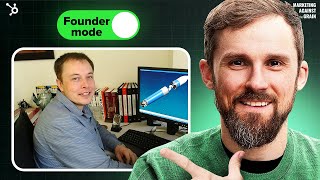
Paul Graham argues founders should stay hands-on, managing the work itself rather than delegating to managers. The hosts break down tactics like skip-level meetings, direct feedback, and coaching people in their craft, plus how to hire for growth instead of experience.
Chapters
Farnham Mode is the biggest trend on the business Internet right now and it's going to completely change the way you manage and lead people. And better yet, it is probably going to transform the way your company works.
And we're going to show you the breakdown of Paul Graham's famous Founder Mode essay that over 20 million people read in the first couple of days. And then we've got a great counterpoint from our friend Andrew Chen, friend of the pod, shows us what Bureaucrat Mode is, which is what we all want to avoid. We're going to break both of those and how to run a great business in 2024. Let's get to today's show. It was Labor Day weekend in the United States, long weekend, last weekend of summer. Everybody's chilling, having a good time. The Internet, especially X, blew up because Paul Graham, who is the founder of Y Combinator and I think what many people consider to be one of our best modern business writers, published a new essay. And it was a very brief essay but very powerful and took off. And the essay was called Founder Mode. I'll pull it up for everybody here. He just tweeted out Founder Mode and he basically provided a overall summary of a talk Brian Chesky gave at a Y Combinator event last week. And this talk wasn't recorded intentionally, wanted to be super intimate. And basically the whole premise of Founder Mode is that conventional wisdom around building companies where you get further and farther from the work, you have tons of layers of managers and you don't micromanage and all of these things like that is fundamentally wrong. And that actually Steve Jobs, Cesky Elon, a lot of folks that's founder, what they're going to call Founder Mode or Paul's calling Founder Mode. And it's actually a better way to run a business. And I think one of the most interesting parts of this very kind of brief essay, because most of Paul's essays are like pages and pages long, is whatever Founder Mode consists of, it's pretty clear that it's going to break the principle that a CEO should engage with company only via his or her direct reports. Skip level meetings will become the norm instead of a practice so unusual that there's a name for it. And once you abandon that constraint, there are a huge number of permutations to choose from. For example, Steve Jobs used to run an annual retreat for what he considered the most 100 important people at Apple. And these were not the hundred people highest in the org chart.
This entire thing could just be summarized with, isn't it A good idea. If founders know and are in the weeds and the work. Right. There's kind of two modes they describe founders mode and managerial mode. I think I have somewhat talked about this a lot for a long time about even just leadership and management in general. Manager mode is basically, I have people and I'm a glorified people manager. And I move them around and then I tell them to go do work. And I think that is a lot of C suite leaders. I think that is a lot of leaders in general. I think that is leaders who have been in tech and become leaders during the COVID spike. I think that they are very much glorified people managers. I think that they hire smart people and tell smart people to solve problems and then they wait for problems to be solved. I think that's the least interesting form of leadership as well. I think I would be the least interested in all types of roles in doing that job. I would never want to do that job. I think the most fun you can have is being in the work. And I think one of the things that Paul Graham describes is these founders, and it was kind of originated from Brian at Airbnb where he talked a lot about the fact Airbnb, again, everyone has a Covid hangover. They had a hangover. And he got back into the work and he started to look at everything that was coming out of teams and being much more involved in how you actually craft that work. And it's been an evolution since then. And so I think there's the lesson here for all of us, right? Inclusive of if you are the manager of a small team to if you're the leader of a large team that I think over the last maybe three to four years, when times have been really good, people have felt, people have felt that it's okay to become disconnected from the craft, disconnected from the work. And to me, that's when you actually build the least effective organizations, least effective teams, and the least effective businesses. And I certainly prefer working with people who are in founder mode than people who are in managerial mode because they push you, they force you to be better, they drive accountability, they have great ideas, they can debate ideas with you. And that's the people we should all aspire to work with.
We just talked about Brian a little bit. I want to give you a couple things to react to. Somebody posted three points, three summaries from Brian's talk. From their notes. Leadership is presence, not absence. Don't manage the team, manage the work. Power is not zero sum. Everyone can feel empowered. I Think don't manage the team. Manage the work is the most important of those three. Do you agree?
I agree. I agree. I think this comes back to what does that mean?
Tell people how to actually manage the work. Manage team. You and I are working together. We are, we are. We're trying to do these things right now. Like tell people how specifically you approach doing that. How we're trying to approach doing that.
Yeah. And there's examples like I think Jensen Hoyoung from Nvidia is another example. Like he's famous. He famously has 20 plus direct reports. Reports and he's like hey, if I'm managing a bunch of C suite and VPs then I don't expect that I need to be in doing people management. I shouldn't have to do the, the admin of managing people, career development, all of those things. You should be really self sufficient in those things. So what should you be spending time on? You should be spending time on the work, right? I do wonder if you, if you hire a good bench of leaders and you spend all your time having to manage those leaders, are they good leaders in the first place?
No, they're not going to be.
They're not. They should be self sufficient. Meaning that I think we have gravitate, we have got ourselves into a situation where we believe managing teams is managing the individuals and the people and the leaders on our team. And it shouldn't be that way. That should be a tiny part of it. It should actually be managing the work with those people. Solving problems with those people. Doing work with those people. One of the things that I have always done throughout my career in terms of managing teams of you know, 3, 400 people, you manage even larger teams is this push and pull technique. So what I tell my team is here are the things that I am going to push on this month, right? I have a doc. It's a OKR result OKR dog with key results and I'm like here are the things that I'm going to push you on this week and or push you on this month. I'm going to get involved in all these things. Just like I'm a ic. I'm going to show up and participate in the work and everything else I expect you to pull me into, right?
Correct.
That means if you're not on the list I'm not going to come and actually proactively get involved in your stuff. I'm not going to proactively go solve these problems for you. Expect you're being self sufficient and are doing that on Your own. But if you need me, I'm here. But if it's the end of the month and you tell me you failed because you didn't tell me you needed my help, you fail, not me. Right? And I think that is one of the ways where you start to grow your org and have far bigger teams. That kind of push pull technique can keep you in the work, in the craft. And that's what I love. I do love that. I think that's the, the one thing that resonates with me is like we didn't become managers and leaders to manage the people. It was so you could manage work at a greater scale and work with really smart people to solve problems. And so I love that line.
Well, I think, I think there's a couple things, right? I think if you go back to like the birth of modern day management, it came like out of the industrial revolution, right? And the military complex. And the military and the, in the industrial management process is very, very top down. But it's really just like, hey, I didn't have that much technology and automation outside of physical manufacturing equipment. I need humans to act as my automation. I need a large group of humans to basically do the same thing over and over and over again in their specific area of solving this problem. In that case, managing those people, ensuring they're doing the same five things every day and doing it correctly and doing it faster and doing it better becomes very important. The point that I think you and I are trying to make is that work has changed a bunch and work is now much faster, has a much higher rate of evolution and that old way of managing just doesn't work anymore. Right? Like I tell everybody, I'm not a very good manager. Like I'm, I'm a mediocre manager. I'm much better marketer and leader than I am manager because I don't like the admin of managing. It's not like, show me somebody who likes the admin of managing and I'll show you somebody who doesn't like real work.
I think there's a lot, I think there's a lot of people who are incredible managers and are not great at craft and it shows up. And you know, one of the things I, I posted, I'm sure it's getting tons of negative reactions. Let me just check.
Oh, you gotta come, you gotta show the viewers.
Yeah, so like, well I, well, so here. So I posted this on LinkedIn. Cause I truly believe this, right? Like what, what has happened in management a little bit is you have These things that you do. 360 reviews and 360 reviews are really useful because it's really useful to hear from your team how you are performing.
Right?
And actually some of my best inflection points at being a good manager because I agree with you. Like, I want to be a good manager, but I actually want to be a world class marketer. Right? That is where I draw the line. And so I will always make decisions to make sure that I am a world class marketer versus a world class people manager. So for example, last night I was doing things on Vercel. That's a whole other episode that we should.
You're in the Vercel rabbit hole right now, dude.
Dude, I'm so. I'm back in my AI rabbit hole. So be prepped for some pretty good episodes coming up.
Dude, you were using cursor, weren't you?
I'm in Vercel, Cursor replied.
And claw. Oh, here we go.
Giddy up. And so. And so like that's what I'm doing to be a better marketer, right? Versus trying to figure out how to. How to have great managerial frameworks. Not that I don't have those. And so these 360 reviews are really good for getting feedback from your team to give you incredible ways to improve in terms of people manager, but also improving the craft. But I do think that we have potentially as an industry pivoted very heavily to are you like, Are you liked? Does your team vibe with you? Do they want to go out and hang with you? Right. And that is. And in a lot of my. I actually believe that maybe some of the least effective managers are the most popular managers. And I'll give you five reasons why. I think if you are an incredible manager, you are doing things that might not always make you the most liked to that team, right? Depending if you've actually hired a good team or not. Let's say you have not hired particularly well in all areas. Like a good manager or a great manager for me, prioritizes results over popularity, right? That is really important. I think there's a lot of people who think that popularity is how you win the management game because you just. I just need to be liked, right? Hey, I don't want to push you too hard because you're going to give me a negative review. Hey, I'm trying to try to get you the promotion, even though you don't deserve it. Hey, I'll try to get you more weight, more salary, because that's how you're going to you're going to like, you're going to like me, even though you probably don't deserve it. I think they provide honest feedback. You, you, you know, this, this, this does not happen much at all in the industry. Right. Over, over the last couple of years. And I think they, they don't sugarcoat things, and people don't like that.
Right.
But growth really requires truth. Right.
Requires friction. It requires friction. And truth is an input to friction. You have to, you have to have a conflict to move forward and come up with a new path. Right, right, right.
I think that there's a great. When I was back, I've told this story multiple times, and I was back in, accidentally joining that cult. There were some things in the cult that were actually really useful. And I was like, showed up my last ten grand. Showed up to one of the seminars. I was totally broke. My mom was like, in distress. What are you doing with your life? And I was like, I'm showing up to a cult. And so I show up to the seminar and like, one of the things they actually did have was this, like, really cool thing, which before every great inflection point in your life, you feel deeply uncomfortable.
Yes.
And like, that actually is true to this. Right. Like, someone giving you uncomfortable feedback is probably the period of time that you're going to take a huge leap up in your career. The third thing is they push you, and that feels uncomfortable. Right. They actually push you to do more than you feel you can do. Or they push you to drive results that you do not believe yourself that you can drive. And that, that, again, has been a great manager. And then they drive accountability. They don't give you free pass. And they value debate. And that's another thing that I think we've gotten away from is the ability to debate things. Right. People get so personal.
The merit of the idea.
Yeah. And so, like, if you're looking at your manager, I'll just end with this. I think that a lot of the ways people look at their manager is, do I want to hang with this person? And that's cool. Like, you should at least like spending time with your manager. But I would look at my manager and I would say, are they effective? Are they improving me as an, as an individual and are we as a team winning? Because you could be vibing with your manager, and if all of those things are not happening, they're probably not a very effective manager for your career. They make you feel happy and you like where you work, but you're probably not becoming a better version of yourself.
Hey everyone, quick stat for you. AI usage has increased 53% since last year. And you know how I know that? Because I just read our brand new 2024 AI trends in marketing report. This report is packed with original data. That data not only highlights the latest in AI trends, but also shows how businesses today are using AI to grow their business. You'll learn the top five AI tools for marketers, exactly how teams are investing in AI and where they're seeing the return on their investment. And you get a data backed answer to the big question, is AI helping or hurting my marketing career? I invite you to steal and take all of our hours of research for free. Grab your copy from the link in the description below. Now back to today's show. Okay, I don't know if you saw my tweet. This is my definition of founder mode because it dovetails with everything you just said. You ready? Founder mode is simply great leadership by people who care more about the customer than the opinions of their peers. Win the customer popularity contest, they're the ones that actually pay you. Right? Like I agree, most. Most people who are not as successful as they want in life make emotional decisions based on the opinions of mediocre people.
Oh, this is another thing. Yeah, I agree.
Show me that I'm wrong. You show me somebody who is unhappy. Show me somebody who's not accomplishing what they want in their life. They are making emotional decisions based on the opinions of mediocre people who are pulling them down.
Bottoms up. Decision making is usually death by committee and death by average decisions.
Kieran, I'm about to send you off the rocker. You ready?
Hit me up.
I don't think you've seen this tweet yet. It's from friend of the pod, Andrew Chen and he describes the opposite of founder mode, bureaucrat mode. Create committees for every decision. Make sure every meeting has pre meetings to build the papers and the deck for the meeting. End every meeting by expanding the scope of the project. No one ever owns a decision, so make sure there's complete consensus. Create more meetings if needed. Punish anyone showing initiative. Discipline anyone who moves quickly without complete consensus. Require detailed stats. Excuse me? Require detailed status reports before any progress. Create a complex approval workflows for trivial tasks. Celebrate vanity metrics and milestones. Reward people based on impact. Excuse me? Reward people based on impact based on how many people are working on your projects. Ask legal brand compliance to approve everything no matter how small. Talk endlessly about downside risk.
That happens. Another part to that is like building consensus through Influence like you actually have these people whose ideas make it to the top just because they're better at getting on with everyone. Right. So they just build through influence because it's decision by committee. You know the interesting thing about this post, as you said, it was like pretty clear, concise and succinct. It wasn't a long essay in terms of things that Paul Graham has wrote, but if you recall, like going back to the episode we released in Dharmesh and I was talking about how I trained the model for three core pieces of content that work really well and one of the ones I described was head nod. And head nod is this thing where you can articulate something that everyone believes but they just have not articulated it in that way. And I believe there's a whole group of people who have not been happy working in the environment as it is in tech or has become in tech. And everyone believes this is the way they work and they just have not articulated it. And I think Paul Graham did a great job of this is the way a bunch of high performing people actually feel about the work but no one has actually put it down on paper. And it's a great example of that ability to articulate what the mass group of people believe. And if you articulate it in the right way, that is the number one topic on the business Internet right now. So there's a great content tip in there as well.
Yeah, I always call it speaking the truths. Everybody knows the truth that nobody tells themselves. Everybody kind of knows that they feel this way, but they just don't. Nobody's ever told it to them to be like, oh, it's cause it's not just the way they're saying. It's sometimes Kieran, there's validation in hearing what you believe from somebody else and being like, oh, I'm not just the only person in the world who thinks about this. And then like you have somebody. I'll look right now. Paul Graham's. Paul Graham's tweet with the founder founder mode link. How many people have seen that? Karen, do you know the tweet?
I'm not sure.
A million? 20.1 million people.
There you go. There's a lot of people out there.
20 pointer mood million people.
It's funny. When did he.
That is that.
That's like.
That is like 20% of the x active user base. Because there is a bunch of people who felt this way and needed somebody.
To tell them or give them permission. How many people woke up on Tuesday and went into the office and Their manager is like all over their work. Like, totally. Let's dive into the weeds here. Let's start to actually get into the details because they've been inspired and they've read that essay and, and I think there's going to be a bunch of people who do not like working that way, but that is the way to work.
Well, I think what's interesting, right, is that in the world of business, Kieran. Right. I think there are, there are two words that people commonly use for leading teams. Leadership and management.
Right.
In the world of sports, there's a third one, it's called coaching. And coaching is leadership and management plus deep, deep skill development towards an outcome. Right? It's like, hey, you got to shoot better, better in basketball, you have to rebound better. These are the specific things that you need to try to have a faster shot release to get more space to get your shot off, to do all of these things. Right. And I think what, what some people are going to do is they're going to construe Graham's essay as a way to get in the weeds and tell everybody their shit. And that would be a mistake. The thing that they should do is go in and be a coach and say, oh, I'm deeply in the details. I see what work is going really well. I see what work isn't based on the work that isn't. I can figure out the skills and the thinking that is missing here to get that work to a good place. And I'm gonna help you develop that so that we can actually get there.
I think that is true. Unless it truly is shit and you got the wrong people. Maybe what's gonna happen is gonna be an awakening of like, it, like some of these people suck.
Well, hold on, okay, hold on. I gotta go on my soapbox. This is my number one thing in the whole world. You ready? Most people who hire anybody, we hire an individual contributor. They hire a manager, they hire a director, vp, cmo, does not frickin matter. What they do is they're like, oh well, I need somebody to lead my marketing team and I'm in this industry and I'm gonna go find somebody who's led a marketing team at companies like mine at sizes like size companies like mine or bigger. And I'm just gonna hire that person, right? Or I need somebody who is gonna be a blog writer and I wanna find somebody who's been a blog writer at good companies. And if you follow that process, you will fail every time you're trying to make a safe Choice. Without actually any clarity of the choice you're making, the people who do a really good job say, hey, I have this specific work I need to do. Based on the work I need to do, I need a human being that has a very specific set of skills. Normally three to five bullet points worth. It's not like some big job wreck. It's like I actually just need them to be really good at these like three to five things. And I'm gonna go find one of the best people I possibly can who's good at those three to five things. And I don't care where they've worked, what they've done, how old they are, where they live, whatever. I just need somebody to be really great at those things. When you make that decision, the game completely changed.
So I'm going to steel man two different things this here argument. And then just like founder mode in general because it'd be good for our listener. Like, what is the opposite take on this but for this one I agree to a point. Right? Like, I. I think that there is valid reasons you would want people to have certain have seen some of the playbook before. And I'll give you like the most common one that I have seen nearly every portfolio company of mine, whether it is a. As an investor or an advisor. The trouble that they have in marketing at some point is they have a marketing leader who is stuck because they have not done the scale journey that they need to go on next. Right? Like that they have gone on a certain growth trajectory and then they're ready for the next phase of scale. And that person is stuck because the thinking there is a different type of thinking. You need to go from one version of scale to the next version of scale. And regardless of the problems you have to solve. I agree with that. Like you might not have had to solve the exact functional parts of marketing problems before that this company to solve. But there's like a valid reason to take to hire someone who has seen that version of scale before.
I don't agree with that at all.
Like, but then why would their marketing be stuck?
Because that person does not have the aptitude and growth mindset to grow. That's it. Like that is actually the answer. It's not fancier than that. And I find that people who go then and hire somebody who's worked at a higher scale and it often fails because that person only ever worked at that scale, didn't know how to connect the business from where it is now to where it's trying to be. And that Play typically fails. You've been able to go from being an IC to leading huge teams and accomplishing massive work in PLG and other really important parts of marketing because you have a growth mindset and you're smart. That's it.
So both fail then. For the same reason actually. So that is my point. They failed. They failed for the growth mindset. I, I can take, I can take, I can accept that. I do. I think there, I think there's certain experience that I just put.
I want to be proven wrong.
Tell me what you mean. I think that actually going from a 50 person team to F and I like I have firsthand experience this like a over 300 person team. I guess you're saying that like sure, it's the same thing. It's like you can either do it or you can't and the person who maybe has done it cannot repeat it again. So like I think there is, I think there's merit in what you're saying and that someone who has not done that if they have a growth mindset, can do that.
What I am saying is I'm going to hire the person who's really smart, has a really, really good growth mindset, has exhibited the ability to do the work at the scale I need regardless of how big of a team they manage.
Like if you, if you're managing a team of. Managing the team of 500, it denotes that like you have not solved complex. Let's just say brand. Like, say brand is one of the problems that that company did to solve. You would not have solved the complexity of problem that that company needs because they're just at a different scale.
Not true. What if. What have you most brand. Brand work in your example is outsourced, right? You have an agency, you got a media buying company. Like you could have nobody or one person and be making really good brand.
Yeah, I'll give you a concrete example here. This is a great debate actually.
I'll give you fantastic.
I love when let's say 500 is a lot of marketers, but let's say like at about $250 million in ARR. We don't need to debate this point. You can disagree or disagree, but let's just, let's say I'm somewhat right. A SaaS company needs to find a second S curve, right? Like it has a product, it's doing really well, it needs to figure out a second S curve, it's around that range. And let's say that they need a marketing leader to help them find that second S curve. And then there's a, there's two candidates. There's one that went from 250 to a billion and there's one that is at currently a business that's around 30 to 50 million in AR. Both very smart candidates. The one that is trying to find the next S curve has to solve a brand problem that is quite differentiated for than a single point solution company. They actually have to then start to figure out how do I rebrand myself away from this kind of point solution towards something different. Right. How do I actually change perception in my customers minds to actually think of me differently. Like the most simplistic example is some sort of point solution, the platform. And so the person who's at the smaller company just would never have had to solve that problem before they could have solved interesting problems to brand. But you know what I mean, that that scale denotes that the problem is much more complex.
In this example that you're giving me, in this fictional example, is brand the number one problem that this person would solve?
Yes, brand perception is the number one problem.
You're like oh, this is like 60 to 80% of the job. There's other stuff but like this is what I would do is first of all, I think both hiring either one of those people would be a mistake.
Okay, great, that's great.
I would not hire either one of those people. What I would say is oh, the problem, the work I have to do is I have to reposition a company from a single product company to a multi product company. I have to figure out new, basically new brand identity, tagline, brand campaign work, web architecture, the whole thing.
Right.
I would just, I would get super, super clear on that and I would go hire somebody from a consumer background probably and I would say, I would say hey, I'm going to hire somebody who's really great at doing this at mass, mass scale. Because I want to be a multi billion dollar company and I want to do that and I'm going to hire this person from consumer company. Their one weakness is going to be how they take that brand and story to put it through a sales team. And I'm going to make sure I have the perfect number two that works with that person who can manage the enablement, product marketing rollout of that work through a sales team which is the work that they will have not yet done. And that's how I would solve that problem.
Okay, do you agree? I think I somewhat disagree, but I actually like your, I think we've got like a good perspective on how you think about that problem. And whether I agree or disagree, I actually think it's a good way to think about solving the problem. My disagreement is actually. I think my disagreement is a whole other episode. It's just like the. The skills that are translatable from B2C to B2B. And if we get into that, then that. I just don't think I'll make my next meeting. But I actually want to come back to the founders move because let's Steel man. Steel man is like the. Take the opposite side, right?
Oh, okay.
And I'm gonna just give this. Because this ha. This is the entirety of my career. And you know, this will be people. Kieran. Kieran mistrusts us because he's so in our work. Why is he. Why is he all up in our work? Why is he, like, care so much about all of these, like, tiny details? And so they all. What actually happens a lot is people do want to do this and then they get this feedback that you don't trust me. Like, you don't trust me. You hired me, but now you're all up in my work. And I actually think you need to set your stall out as the leader and say, this is how I work. This is not how I think about do I trust you or do I not trust you? But I am an. I'm a IC leader, and that means I get in and do work with you. And so when I'm hiring someone or when anyone who wants to act in this way is hiring someone, I would actually put that out. That I would actually put that out there in the way that you work. So there's no surprises, right? Hey, I'm going to hire you. You're doing this really important thing for me. The way to think about me as a partner, a teammate, and IC and I will be in the weeds doing the work with you. That is not how I tell you if I trust or do not trust your ability to do that work. That's just how I operate. And so that's just one like, tip I will give someone if they are hesitant to work in this way because they believe their team are going to think that's a sign of mistrust.
Well, I think it goes back to the Brian Chesky point of manage the work and not the team.
Right.
And I think you and I are similar, but we're different in a lot of the things that we do. And like, how I've always done this is I go to somebody and I say it is vitally important that this work goes very well, and this is why, right? Because if we accomplish this, then this, and then we hit our quarterly goal or we hit our annual plan or whatever that is, Right? And it's critically, critically important. And you are the owner of that work, and I trust you implicitly. But myself and others are going to be deeply involved with you to make that work happen. Both to help you get unstuck, but also to try to accelerate the work. And it's not just. I'm not just going to be in your business, I'm going to be in anybody's business who tries to get in your way. Like, if you tell me you need something like here, how often over the time we've worked together have you told me you need something? And then I'll come back like an hour later and be like, yeah, got it. It's done. Right? Like, that's my job. And once you do that, people are like, oh, okay, he's not in my business. All he cares about is that this goes really well.
Right.
Like, he will do anything possible to have this go really well. And once you get people understanding that, like, the whole game changes.
Agreed? Yeah. You want people to feel that they're supported. But also, I do think that the. Again, like, at the root of this is your ability to do the craft because you're not a useful. There's no point being in the weeds and being really bad at what you do, because that is not a good experience for anyone. Right? You actually have to earn you as a leader. It's a different form of trust. You have to earn. You have to earn trust in your domain, expertise. You have to earn trust in your craft. You have to earn trust in your ability to actually do that work. And the people you hire should be better than you, right? Like they. Their expertise, their domain of expertise. But you as a leader should be able to push and pull on that work. And I think that is. That's what's important.
You know what would be to kind of close this out. You know what we should do, and I should figure out how to do this. And I could probably do this with Claude. So we take the S&P 500. We categorize every CEO in the S&P 500 as either a founder, a craftsperson, or a professional manager and base. And then we basically say, if you're a founder or craftsperson, you're over here. If you're a professional manager, you're over here. And we look at the performance of those two companies, those two subsets of companies, Companies. I will tell you, I will tell you that the founder and when I say craftsperson, I say like a CEO who spent a long time in sales or marketing or product and was like, deep, deep expert. They weren't just like, at McKinsey for 30 years and then got hired to be a CMO or whatever. Right? Like, that's what I'm talking about. If you separate those people out, you will see very different performance in those businesses.
Yeah, yeah, yeah.
Okay. That's founder mode. That's our distillation in founder mode. That was also a little bit of an argument Kieran and I had around how you should actually find people to help help scale with you and be in the founder mode journey with you and how you should take people on that journey without, like, alienating them and while you're still in the weeds. I hope that was super helpful. This was. This is one for us. We really. We've been debating that. We've been whatsapping a bunch about it over the last few days. We wanted to talk it all out, so. So wanted to share that with you all. We'll see you real soon. On markings. This data is wrong every freaking time. Have you heard of HubSpot? HubSpot is a CRM platform where everything is fully integrated.
Whoa.
I can see the client's whole history. Calls, support tickets, emails. And here's a task from three days.
Ago I totally missed.
HubSpot Grow better.
More from Patrick



A NEW BREED OF PARTNER: The Partnership Ecosystem Model Journey of Patrick Biddiscombe, Part 1








Customer Success Workspace: Never Lose Sight Of What Matters Most | HubSpot Spotlight