Good Isn’t Good Enough: CMO Secrets To Leveling up Your Team | INBOUND 2024
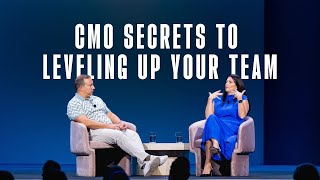
Two CMOs discuss why good marketing isn't enough. They cover emotion and storytelling, how busywork wastes talent, and how Asana uses AI to surface project problems and suggest fixes instead of relying on red-yellow-green status reports.
Chapters
Hey, everybody. The various.
Maybe we should all get these cards and be using them before meetings would recommend. I'm gonna at least get them and do. Anytime I have a meeting with you in the future, I'm gonna use them.
Yes.
Okay. So I think. I think that was pretty fun. My movie, I think, would definitely be Ocean's Eleven, because I feel like I stole, like, the best job and best career in the whole world. I feel like I'm, like, so incredibly lucky, and I love a good heist movie. Yeah. Okay. If you could swap marketing superpowers with any fictional character, who would it be and how would you use that superpower at Asana?
So I think for me, it would be Katniss Everdeen. Do you guys know who she is?
Oh, games.
I love the Hunger Games because I feel like she was able to galvanize and create kind of grassroots marketing campaigns and in a way that gets people to really feel with their whole heart, their soul, and their bodies wanting to drive change and do something. And if I could capture that as a marketer and add that to whatever I'm marketing, that would be a pretty cool superpower to have.
Yeah. You're basically like, obviously in the Hunger Games, the stakes are high. They're trying not to die. But the hardest thing about marketing is apathy is having nobody care about what you're trying to do at all. And you're like, hey, I could have the ability to have everybody care about the problem I'm trying to solve out in the universe. It would just be so much easier.
To solve that problem and to feel right. I feel, as marketers, we want people to feel something like that. Whatever it is that we're marketing, you need to feel away about the product, the service, the thing. And she was able to get people to feel and care so deeply.
I think that's one of the hardest things about being a marketer, is that you're working with a CEO, a cfo, head of sales, and a lot of those conversations. Very logical.
Yes.
And not very emotional. And you think that people make decisions based on logic, and they don't. They make decisions based on emotion. And if all of your work is very logical, you will not be as successful as if you also have a lens of emotion. And that's kind of what you're.
Absolutely. And that's why we all have jobs. Right. Like, that is our job, to change the emotions of our customers.
Yeah. We heard from Josh tomorrow, from Disney, at the end of the day yesterday, and he was talking all about storytelling and how you drive that emotion. And Disney is like an incredible company at doing that. Okay. Both HubSpot and Asana are in the business of making work better. Yes. Like, we're helping companies grow better. You're helping companies work better. What's the most surprising thing you've learned about how people actually work? Asana does project management. So you have a front row seat.
Into how people work, that people waste time on silly things. Right. Like, I love this. We were all hired because we have an innate gift or a skill. And so much of that skill is wasted on busy work and things that don't matter. And so being able to do less of the busy work and more of our innate genius not only makes us happier, but makes our companies more productive.
What are some examples of things that you think that you see just across the board, writ large that people are doing that they should be spending less.
Time on searching for information, asking who is doing what by when and why? Like not knowing the basics of why things are happening, if a project is moving, moving, and if it's not moving, why it stopped. I think waiting for information to come to you when you can find it or have it automatically pushed you through AI be AI knowing what you're working on and what you're trying to do. Like, there's really an endless list.
One of the things I'd like to talk about with other marketers is the challenges they have. And when I think about what you're trying to solve, it is you are trying to help people embrace and understand that they can be way more productive. Yes. That's also kind of a tough sell because it's like, what does productivity mean? It's a little abstract and it's like, oh, so you just want me to work all the time? Like, what does that actually look like? So how do you actually get people to care about productivity without the kind of ambiguity, the negative connotations to that?
I love this question because again, I don't. To me, productivity is not about working more or working harder, it's about working smarter. Right. So how can you do actually the same amount or more if you in less time? And that again goes back to how are you using tools not to be a distraction, not to be another, you know, a slack or a ping or an email or an mentioned in a Google Doc? Like, how are you using a tool that actually is pushing information to you in a way that is meaningful, that is intuitive, and that you can make the most of it to go faster?
Love that. I know you just got in Yesterday at the end of the day. So you missed day one, which was, I think the word AI was used a ton of times, even by me, I think like a million times. How are you all actually using AI at Asana? Anytime I'm talking to a successful leader, I want to get kind of the details around what's actually working. What could anybody out here think about going and doing in their business?
Yes. And so I think. And I think we're going to talk about this in a minute. Like those of us that have been in marketing for a while, there's been a lot of fads. There's been a lot of things. AI is not a fad. And if you think of, like, what AI will disrupt, it is really around knowledge workers. Right? Like, that is who the disruption is going to come from. And so my perspective as a marketer and the perspective of my team is we need to embrace this. We need not to be scared of this. We need not to fear it. We need not to think it's going to take our jobs. We need to embrace it. So the good news about Asana, which we use every day at Asana, because we have to, but it's great. We love it. It is deeply entrenched into everything we do. And so things like, how do I know what projects need my attention and not that I know a project needs attention, how do I get the actual insights for how I can actually fix it? Like, think of that in the old world of having to look through emails and slacks, that can actually take a long time. And it's even multiplied when you're at a business that maybe has different geographic locations or different time zones or different languages. Right. Using AI to not just like kind of be this thing that kind of sits on the side, but we look at it as an actual teammate for us, that it's someone. It is helping us be more productive again. Going back to that innate genius, why we were hired to do our jobs, unleashing that, in a way, the busy work falls to the side and we're able to actually work on the things that matter.
That really resonates with me because I don't know about everybody out there, but I see project trackers and I see whatever red, yellow, green, or thumbs up, thumbs down, like you have all the different ways and you just. Like when you have a long list of those, you glaze over it. And what you're really talking about is I can look at the details of the work.
If you're.
If you're documenting your work in Asana or something else and actually uncover opportunities to say, like, you actually need to dive in here because this project is not going as you designed or intended it to go.
Absolutely. What if. What if you could talk to your project like it was a teammate and you could ask your project, what is going well? What is a blocker? Right. So no more of the hunting and having to find or even just looking at a list. Red, yellow, green. Like, what does that mean? You're, like, bad? Kind of. Not bad. Good.
Like, and everybody thinks everything's green. So it's also normally not an accurate, like, representation. I find that nobody wants to tell you the bad stuff, but AI doesn't care. Tell you the bad stuff.
Right? Doesn't care. No, it'll tell you.
And I want to know the bad stuff because I want to fix the bad stuff, because that's actually how you. How you get much better.
That's how you get better.
Exactly.
Yeah.
All right. I'm not one to pick favorites, but if I were going to pick a favorite question from today, this would be my favorite question, which is, at Asana, you're all about improving team collaboration. But if you were going to make a marketing team, it's like a fantasy marketing team, and you could pick characters throughout history to be on your marketing team, who would you pick?
Okay, this is.
And what would they do?
This is, like, my favorite question I've ever been asked in my life, so thank you so much. So I would pick Eleanor Roosevelt to run my comms because she's amazing and she.
I mean, she got it done.
She got it done, and she knew she was ahead of her time. You kind of want your comms person or your PR person to be ahead of their time. I would pick Walt Disney for customer experiences, because.
Obvious.
Again. Okay, this one's gonna sound weird, but go with me. I would pick Dolly Parton to run my marketing analytics.
We are. We are all ears on why Dolly Parton marketing. That sentence has never been said before in the history of humanity.
Okay, here's why I say this, because I think she is a lot smarter than people give her credit for. And she leans into it, and I could see her walking into a room dropping some amazing marketing analytics knowledge and people being so shocked, but they're so impressed with her marketing analytic knowledge that you can get whatever budget or approve whatever campaign you're approving.
That's true.
Right? Awesome. I would pick Coco Chanel for brand, because again.
Come on. That's a good one. That's a good one.
And then I would have Picasso as my creative director.
Bold.
Changing styles.
Yeah. Very unique. Style differentiated. Who's the man? Gin. Before we move on.
Oh, my God. Manin, that is amazing. A Kardashian pick one. I don't care.
A Kardashian pick one. I don't.
And that would be a great dinner party too. Like you'd want to come to that dinner party.
That team outing is the most fun teen outing that's probably ever very fun. Okay. I love that. Okay. Both of our, both of our platforms, HubSpot and Asana, help streamline workflows. There's a lot of automation in those. Like, if you had to explain using only emojis, what Asana actually does and the workflows you help people with, like, what emojis would you use?
I would use a laptop.
A laptop.
Because like, work from anywhere. Like work. I would use a check mark. Get stuff done.
Check it off. Love it.
I would use up into the right. Because it's going to make everything better. And the dancing lady, because you're so happy.
That's a good. If you texted me that, I'd be like, oh, yeah, I'm going to text you that tomorrow. Yeah, you definitely should. Okay. You've seen a lot of marketing. You've had an amazing marketing career. What's one trend that you initially thought was stupid, ridiculous, crazy, insert word, but ended up like, you ended up embracing it and completely changing your mind.
So I thought Twitter was dumb. I was like, oh, no one's gonna use this. That didn't work out very well for me, guys. Not gonna lie. So, yeah, I was like, oh, we don't need another social media platform. And I remember like having an argument, like, again, we talk about make mistakes, like why at the company I was working at at the time, like, we didn't need a Twitter account. We all make mistakes, guys all make mistakes. But since then, clearly the power of social, the power of having that one to one relationship with your customers and your prospects has been a huge thing that I've cultivated throughout my career and especially to Sana. When we think of sort of how we make our brand more accessible, humanize, and really can connect directly with our customers.
Love that. There are folks out in the audience today from all size companies, very small companies, very large companies.
More from Patrick



A NEW BREED OF PARTNER: The Partnership Ecosystem Model Journey of Patrick Biddiscombe, Part 1








Customer Success Workspace: Never Lose Sight Of What Matters Most | HubSpot Spotlight