Google’s New AI Tool Is Mindblowing!! The Future of Search is HERE
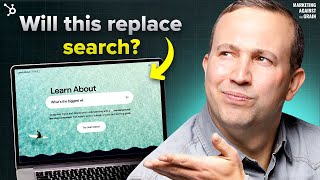
Kieran reviews Google's experimental "Learn About" tool, which lets users navigate topics dynamically with images and links instead of scrolling through search results. The hosts demo it on CRM, compare it to SearchGPT and Perplexity, and advise marketers to focus on original research and unique content as AI search reshapes how people find information.
Chapters
Hey everyone.
I just came across a new AI tool that I don't think you're using and you're going to love it and show you some of the really cool research. Use cases and learning. Use cases. That leads right into an awesome discussion Kieran and I have about the future of search engines, how LLMs actually like prioritize information, what marketers or business owners can do to prepare for this search disruption happening right now. Thanks to AI it is an action packed show. Let's get into today's episode. Kieran, I want to tell you about one of my favorite AI tools and it's one that nobody is really talking about. I would say of all the tools, it's kind of flying under the radar and it's from potentially an unlikely source. Google just released a new learning experiment and it is called Learn About. You can sign in to your Google account and you can just type in whatever you want to learn about. Sounds weird, right? What I think Google is doing really well is with Learn about and Google's NotebookLM, they're creating these very, very focus specific AI experiences where like you're going to use it for very specific things like notebook lm, it's like, oh, you can upload those documents, ask questions about them and generate a podcast. Like, that's very simple and straightforward. This is even more simple and straightforward which is like, hey, just type in something you want to learn about. Which reminds me a lot of search, right? Kind of weird. Sounds like search what I will say right now, Google Learn about is only in the United States and it has not been released outside of the United States. So you have not gotten to use Learn about yet and you have not seen the experience yet. Is that right?
Yeah, yeah, I know I have no access.
And that's why we wanted to do today's show so that we could get Kieran's live reaction and get his feedback. So I want to start with showing you the Learn about page here. So obviously, Kieran, this is what I'm showing you now is I typed in CRM to learn about. Just that, those three letters, CRM. And I've like, I wonder if, you know, HubSpot's obviously in the CRM business. I wonder if we just like give it the most basic query in the world, what would it tell us about CRM? So all I did was type in CRM and right away it gives me the definition of what CRM is. It gives me an interactive diagram where I can basically like it highlighted sales for me and when I click sales it brought me down to this whole interactive list of why, why CRM helps sales. And what is fascinating about this, that I was kind of blown away with is that it's creating these kind of real time navs and kind of a composable web experience. And so let's say I want to drill down and I want to understand how it helps with sales automation. It then moves this nav to the left so it gives me like kind of the different artifacts. Right. I can go back to the diagram right here. It has this static list of why CRMs help sales. And then it's going to answer my question and it's going to prompt me with another interactive list. And so let's say I want to learn about task scheduling. That interactive list moves over here to the left hand side and it's going to dynamically generate a table all about why task scheduling in CRM is really important. And so it's no more missed follow ups, time save, better organization and prioritization, improve consistency, enhanced accountability. And what I love is it's got these Chiclets here where it's like, oh, I need a more simpler version of this, a deeper version or I want images. Which one do you think we should do?
Let's do images.
Images. All right, so we go get images. Here are some images. Showcase casing CRM task scheduling in action. So it's actually finding screenshots on the web and showing you task scheduling. And if I, I open one of them and what's interesting, Kieran, I open one of them, what's it take? Me, it takes me to an actual CRM website, HubSpot unfortunately. But this is actually a referral traffic from this tool.
So it's kind of just like a different search experience. Like they're creating a different user UX to navigate you around a topic. Correct.
But I find it way, way, way better than search. I find it much more interactive. And then what's interesting too Kieran, is that it's it know it has a lot of context and so it's knows knowing that I'm looking at like features of a CRM product. So now it's like how can I choose the right CRM system for my business? And it's actually going me from like I don't even know what CRM is to explain me what CRM is to now like, oh you, if you wanted to buy a CRM this is how you would think about choosing it. And it's giving me this interactive list and it's got features, ease of Use integration, all of these things. And then can you recommend some popular CRM systems? Let's see if HubSpot comes up. Karen, you ready for this? Popular CRM systems for small business HubSpot, we're number one, baby.
There you go. It knows what it's talking about. It is kind of a more, just more curated search experience.
It's kind of wild, right?
They talked about this when they were originally talking about how they would integrate AI across their search engine and that they would have these dynamically built interfaces, which is, is what this really is, is that's dynamically built in an interface to navigate you around a specific topic. So I do wonder if what they're doing is using this as a separate, separate app, or they're just trying to learn some things and integrate it into the search experience. I suspect this will be integrated into search because really what it's doing is just like collating all the information and then present it to you in more like a course structure.
Yeah, look, I love this. Better than search GPT, better than perplexity. For me, this is like my most used form of AI search right now because I love the composability of it. And by the way, Kieran, it's super, super personalized because remember, this is all getting generated per query, Right? And what's interesting is Asia on our team, she and I were going back and forth about this and like, for example, I was getting way more videos and a lot of the things I was looking up than she and others were. And I'm like, oh, I wonder if it's like, knows that I'm a big YouTube user and like, knowing that I'm a bigger video consumer and showing me those videos more. Right. So what's interesting is we've done enough back channeling to know that these are very much like unique to the individual. So it's almost like a custom generated search engine results page for everybody.
Yeah.
And what's interesting, Kieran, is I decided to do the reverse of what I just did. And this is, this is pretty fascinating. And I haven't looked at this yet because I wanted to see what it would do and I wanted to look at it live with you. So I uploaded an image of the HubSpot Workflows product. I found a screenshot on the Internet and all I said was, can you explain to me what's going on? Is this a good way to use HubSpot workflows? What other tips or advice could you share? And it's literally just a screenshot of The Workflows product. It creates all of these suggested topics around HubSpot workflows. Workflow triggers workflow actions workflow branches linear versus nonlinear potential inefficiencies Best practices. It's pretty wild what it got from that one image. And it's like this image shows HubSpot workflows that uses a go to action feature. This feature allows you to jump to a specific action within the workflow rather than having to follow a linear path. In this case, the workflow is checking the value of a multiple checkbox property.
I think that's pretty cool. Use case like it can reverse engineering.
That's pretty amazing, right?
And teach you about reverse engineer subjects and teach you about them like it is a pretty good tutor. And so maybe that's another use case that they're trying to look into, which is can you have a tutorial companion and have people, you know, learn through this, which I think AI is really good for.
Yeah, I mean one of the things we've talked about on the show before is that like AI, especially in the short term is going to be great at helping us get unstuck and like you could imagine just being in HubSpot or any product, right? And just not quite know how to do something and just take a screenshot and use AI in this case learn about to basically tell you like, oh, this is what I'm doing. What am I doing wrong? This is what I'm trying to accomplish. And it will give you the context and the information and tell you what to do, but also give you kind of the next steps of drill downs of the things you might want to learn. The other thing, Kieran that I have found it to be really good at, I had a separate tab on email marketing and you start to see I'm getting those YouTube videos, right? So it's integrating these YouTube videos straight in. So one of my explainer explainers here is sends me off to YouTube. But one of the things that I think it's good at is like, can you give me some data and studies about the effectiveness of email marketing? Please give me the text and source links. If so, let's say you do all this research, you're interested in something, but you need to like understand what the data in the world is saying about this Or I need to go build a presentation to explain to other people why we should do email marketing. It's very good at going out and getting you stats, attributing those stats, especially if you like I was doing some stuff where it was looking at like scientific and academic papers and pulling, pulling out the relevant quotes, linking me out to them so I could go read the full paper if I needed to, like, in a much smoother way than traditional search.
Yeah, it's still, it's just a more comprehensive, deep dive into a topic.
The thing that I see here, Kieran, one of the big differences between this and Search GPT and perplexity, everything. There's a lot more links. There's a lot more links. And like in each of these sections it's providing resources. Like, part of me wonders if this is an experiment to say, hey, can AI actually, can AI search be a better, you know, curator of information and still send people to other destinations a la for AdWords or for traffic referrals versus just like giving you the answer on the page. Right. Because I find myself really actually going off the search engine much more with this experiment than I do in like something like Search GPT, for example.
I think in the ChatGPT search engine they do have a lot of citations. They have citations and the answer it gives back to you embedded in the answer. And then they have the button at the bottom that you can click on and gives you all of the sources that they use. Comes up in the right hand panel.
Yeah. I think because of the UX here, they're more front and center.
Yeah.
And it's sometimes it's prioritized, like it's giving me the YouTube thumbnail and I'm like, oh cool, I do want to go watch that video about email marketing. Right. Like, it's like the actual user experience of it is different for some reason I just find myself clicking through.
Yeah. Which is what they want. Right. Like that. That's what I think this is an experiment on, is user experience patterns. Like, I think that they are trying to figure out what is the right conversational user experience pattern for users long term to get them to search more, to get them to use the product more. If you actually think about Claude chatgpt, all these other AI assistants, they have not really evolved the user experience on that conversational pattern. Like it's really just like back and forth in the way you would talk to a human. There's some like, interesting things in the way search ChatGPT search engine gives you the results that you can click out on citations. They obviously have both now have like the artifacts, which is a different type of UX experience. But I don't think any of them have really figured out like, well, what is the conversational experience that more people do through Chat, I don't think it's just going to be this one all back and forth conversation, like that's how you're going to interact with information. I suspect what Google is trying to figure out here is like what is the right user experience for people to get them to click around and to engage with this stuff much, much more. And to me the benefit of doing search through AI has always been speed of iteration and you even mentioned it. And what you really enjoy here is like the way it dynamically builds different navigation for you to navigate around the topics, the way it pulls in multimedia, the way it actually reaches links back out to research. That to me is what I think they're likely experimenting with, which is like how do I get more users to click on more stuff and enjoy the experience more and to use our tool.
More well and to be able to navigate a topic much better.
Right.
Like I think one of the flaws with just doing chat based search and research is that you just have a long chat thread and it's really hard to go back and navigate that topic. Right. And what they've done is they've said, oh well, maybe the future is, let's experiment and say the future is both this kind of chat interface with this like dynamic navigation that lets you kind of go back and forth throughout that topic in a much easier way. It is way better. Like I do like it much more. Yeah, yeah, that's what I want to get into kind of for the last segment of the show. Here is where we're at in the war of search engines and kind of where let's give people a pulse and update of like where we think things are going. You know, I would set the table that we are in November of 2024 and we, and in the last couple weeks We've had SearchGPT released by OpenAI. We have had Perplexity trying to do more and more partnerships, trying to scale their user base. We've had NotebookLM come out from Google, we've had learn about come out from Google. It seems like we're actually getting real tangible innovation in search right now in a way that we kind of talked about over the last year, but it seems like it's here. And the one other thing I would share is we're starting to get some real traffic from perplexity and search GPT and some of these AI search engines to like to HubSpot.com, so it's starting to show me that like search adoption is certainly shifting.
Yeah, I think it's, I Think it's shifting within, you know, smaller groups. It's not really impacting Google's overall numbers. It is for some companies like we, you and I know there's companies who are really seeing some drop in traffic. I think we are still at the starting point. You know, you have Chat GPT only launching their search engine a couple of weeks ago. They got 3.1 billion visitors in September. So there's a lot of people that search can now be AI. Search can be a front door for, for them AI search is actually the best way for them to increase user adoption as a whole. Like it's a front door to the Internet. It's gonna, it's a really common use case. It's, it allows you to get all manner of users using AI without them even thinking about using AI. So I think we are like really at the starting point of a ton of innovation here. Like you see Google roll out AI overviews to a hundred countries, you're going to start to see it a lot more in your search results. I think their AI overview experience is really hit or miss. I still don't think it's like incredibly good compared to Perplexity and compared to ChatGPT's engine. And I think what we do not know is like what is the user experience? Because I'm not, I, I, there's no part of me thinks that the historical blue links disappears completely. I think it gets interwoven into AI. What AI is, is really a layer on top of those links to be able to clearly and concisely give you information. But you probably in some cases still want to click around and do some of that yourself. But I think the interesting part is like we don't know what the right user experience there is. We don't know how multimedia gets integrated into that. I think there's room, much more room for video, there's much more room for and how you can integrate this stuff. So where we are today, I think next year is going to be a real year of continual disruption. I think Perplexity will get better. I think ChatGPT search engine will get better. I think Claude will try to get much better. I think Google will continue to roll out AI overviews very aggressively and try to improve. I think they'll have experiments like this where they try to figure out, well, what is the actual new experience for search? Like, how do we actually integrate new user experience patterns to get people to use both the historical engine we have and the search? The AI engine we have. And I don't think Anyone really? Like, we kind of call that this would be incredibly disruptive for Google and I think that's what we're seeing, right? I think that we are starting to see Google can really feel the pressure they're being put on.
Look, we all love ChatGPT. You've probably used it before and if you haven't, stick around because you're going to want to listen to this. You know, I've used AI a ton. I use ChatGPT for research, for writing. I use Claude to put guides together for whether I'm taking a trip or I'm working on a project at work. It's awesome. Well, I've got something that will make ChatGPT an even better experience for you. We've got this killer chatgpt bundle that will take your prompting to the next level. It has over 100 prompts and a step by step guide to integrate it across your workflow. It is a total game changer if you want it. I'll drop a link in the description below. Now let's get back to today's show. My question for you, if you were a lowly marketer out there like we are, and you see all this change in search happening, what would you recommend that people do today to say like, hey, we don't know where everything's going, but we kind of know that you should be doing these types of activities to properly prepare. What's your advice to everyone?
Yeah, I don't think there's great advice around this. Right. Because you can do what we did, which is categorize your content into these different categories to assess your risk. So what we did was put it into like most at risk, which is just these basic posts that you have, which is giving you informational content around a query. It's like really easy for an AI to just cannibalize. Then you have this really big bucket which is, well, there's some real effort went into creating this content. There's some like unique customer insights, there's some unique research, there's some unique expert quotes and so like that's, that's in the, maybe cannibalized but harder for AI to cannibalize because there's some things that are actually differentiated and actually you have real uniqueness to that content. That's not just easy for AI just to say, well here's the exact thing, but better and then you have your stuff that is still for the most part fine today, but I don't think it's fine long term, which is just transactional. You're searching for a product, if you're searching how to plead an action, we don't see any cannibalization of transactional traffic. It's all an informational. So if you're looking at this wisely, you would say, well, you can't do anything about the most at risk bucket, right? AI is going to be AI, it's going to be better. And it's really your at risk bucket. There isn't like anything you can do, it's just user adoption at the moment. We're still in the very much early adopter phase and so you might not be feeling much pressure there, but as user adoption increases and people realize AI is a much better experience, your at most risk bucket disappears and there's nothing you can do. So now you on to the middle bucket, which is the bigger bucket, and you're like, well, what can I do to make this much, much better? If I interweave AI into how content gets created and I reduce the amount of time that all of my people need to spend on these other tasks, well, now they can spend 10 extra time on trying to figure out what actually makes content special, differentiated, something that AI cannot just replace. And one of the examples I've used recently that seems to resonate with people is like we had, we've obviously had Lenny on, we're big fans of Lenny and if you actually think about what, what did Lenny even do now he's gone on to do lots of things, but where he started was he really just differentiated his content by doing this example based content which really he was a expert journalist for his industry, right? That's the way I would think about him is like he had a, he had deep expertise in his craft and he became a journalist for people who wanted to learn more about that craft. And the way he separated his content from everyone else is he integrated examples from his network to make his content unique and to make his content differentiated. So when he writes a content piece about here's how you self churn as a SaaS company that if it's just an informational piece of content on how to do that, AI can replace that. But his was, well, here's how you solve churn and here's benchmarks for my network and here's experiments and the upside benchmarks from those experiments and here's where they actually experimented and here were some of the experiments they actually run. AI can't replicate that because it did not have that information. Now if Lenny has allowed them to crawl his content, it has that information in future iterations since you have to stay one step ahead. But that's the thing I would figure out is like the middle bucket. What is the thing that we are going to invest in that is going to differentiate our content from the AI just being able to replace this and from all of our competitors. And I actually think that is like just a wise thing to do anyway because you always want to be trip fighting, trying to figure out what your leverage is.
I agree with all that. I would also just say our friend and co founder at HubSpot, Brian Halligan, he always had this cartoon that he liked which was of a dog on the computer and all it said was like, on the Internet nobody knows I'm a dog. I actually think that that really relates to AI search, which is AI search is trying to take a proxy of the information about you or your company that's on the Internet and give people answers and kind of estimate priority. Hey everybody, before we continue with the show today, I'm really asking for your help. We want to know what is keeping you away from your goals as we continue to make shows for marketers like you. We want to make sure that we're hitting the mark. We're putting together our next round of episodes and we want to make sure that we're addressing all the challenges that you're facing. So we've put together a quick survey to understand your biggest challenges and, and we'd love to hear from you. There is going to be a period of time where companies that might be smaller can have an outsized footprint on the Internet. You know, like if you're really, really aggressive in content, product documentation, YouTube videos, community forums, you might not be the biggest company, but you are going to show up in all of these AI search experiments in the future of AI search. So where I think it used to be for traditional Google search, it's like, hey, I need to create these text based contents around this certain topics. Now it's like I need to. For my brand to appear larger online, both from like a product and information perspective, I need to mobilize the people who do know about my brand from a community perspective so that on sites like Reddit and everything, I'm represented and if so I'm going to show up probably more favorable in the models than I would otherwise.
Okay, well, do you agree with that or not? I don't disagree with the premise actually. So. But let. No, I actually I think there's a couple of interesting ways we should actually we should try to find someone who is Actually building the large language models. Like we have the product leader for Claude coming on. But what we really want to know is, well, why do large language models pick one thing over another? Which is the thing that you are, you know, asking. And for what I know at the moment and what we've talked to some folks on, and even we had Ethan Smith on this podcast is there's a couple of ways to think about it and the one that makes most sense to me is the large language models are trained on the Internet and they are going to look at what are the most common words cited with a thing. Like what is word co citation. So in your, in that case you would say, well it would say, hey, every time I see CRM small business HubSpot is like the next word or the word before, right? And I'm sure someone who is much more scientific at this would say that's completely wrong. Or there's a different variation of that. But like word co citation makes a lot of sense. And what is what Ethan said, which is hey, the more times you're co sided with the words that someone asks LLM, the more likely it is you're going to appear in an answer. That means the opportunity right now is, which is the thing you're making the point on is hey, if you're a small company and you can get a bunch of material on the Internet that basically co cites you with these other words, then you're more likely to appear in some of these answers today. The thing is I still think that's like a text only thing, right? Like I don't think the LLMs are training on like the core engines are training on YouTube and audio as much as I know, like I know they're changed their OpenAI's train, they've all kind of trained their video models on scraping YouTube which is a whole problem that they're trying to figure out. But I think that on the text based Internet if you are mentioned a bunch of times with words that are related to your product or services, more likely you are going to appear in the search engine. So what actually you see search happening is if more people gravitate towards AI search and these AI assistants, the way you appear in those engines is just through good marketing and how to get more awareness of your brand and all of the optimization stuff and the stuff that used to do as a search engine optimization person disappears, none of that is actually that relevant for how you need to appear in these other AI search engines.
I think there will be a period of kind of New school SEO where maybe even something as simple as like, hey, I've got this software product and I'm going to post screenshots with annotations of how to best use this product so that LLMs will take advantage of it and cite me and include me.
When they first came out, really the thing I just did was like, really try to figure out how it was recommended one thing over the other, because that's really the thing that you really care about as a marketer. And so I spent a ton of time trying to figure that out. We had people on the podcast trying to help us figure that out. And if it is just as simple as that, which is like, hey, the, the amount of mentions you get in relation to words or services related to a product, you're going to get appear in those answers, obviously I went straight to like, well, what's the hacked version of this? And the way you could hack this is to inject a bunch of content onto the Internet, use an AI itself to publish like mass amounts of content to poison the training model to make sure that you are going to appear. And so that would seem too easy. But I don't know, like, historically Google had like. Why did Google win? Well, they had Page Authority and Page Authority used backlinks to try to assess like, quality over quantity.
Yeah.
And I don't know what the version of Page Authority is for the LLMs, but they must have something or they're going to have something because I don't think they're going to want an Internet where you can just mass inject billions of pages of rubbish to sway the model to actually have your service or product appear. Because you just have so many more mentions than anyone else. But, but all those mentions are on like one single page sites that you've just set up to actually get more content in the, in the LLMs training model. Yeah.
So I think we're talking about a couple of things here to kind of frame it up for everybody. One, I think we're saying, Kieran, you don't want to slow down on whatever content strategy you have, because having a good content strategy and online presence is just going to get you included in the LLMs, you know, at the most basic level. Right. And as search evolves, you're going to have a better shot. You then brought up this issue of like, how does it pick you versus something else? And that's where there's a lot of uncertainty. Right. And so it's like, if you have a good content playbook, you're going to be in the game and then it's like, how do I win the game? We don't know the answer to that yet. But what I can tell you for certain in the history of marketing, there's when new platforms come out, there's always ways to game the system and opportunities, especially in the first few years.
Right? Yeah.
And that's what cheat code. But yeah, there's. Yeah, we're going to learn those together and share those together here. So hit that subscribe button if, if you haven't already. And that's what we're focused on. And then I think the last part of it is, is what is the kind of how does, how fast does the user behavior switch to these new search engines and what is kind of the old Google market share look like relative to the new search engine market share? And I think we're going to learn a lot more about that over the next six months. And one of the things that we're going to do is track data from some of these new search experiments and search engines and share that on upcoming episodes so that we can share that with all of you. All right, so that was Google learn about that was a little bit about the future of search and how we as marketers might be able to take advantage of it and kind of how we should lay the right foundation right now. Kieran, anything else before we close out today?
I think what people really want to know is how do these LLMs actually choose something over another? And I think that's like we can go find the person who naturally builds LLMs and knows how that works.
It sounds like a good follow up show.
We can do it for our audience.
Yeah, we will be back with that. We'll kind of try to do a series over the next six months of AI search and the different components of it and kind of LLM prioritization is a good next episode to follow up with that. Thank you so much for watching or listening to today's show. We'll see you real soon on the next episode of marketing. It's the thanks for watching grain. This data is wrong every freaking time. Have you heard of HubSpot? HubSpot is a CRM platform where everything is fully integrated.
Whoa.
I can see the client's whole history. Calls, support, tickets, emails. And here's a task from 3 days.
Ago I totally missed HubSpot grow better.
More from Patrick



A NEW BREED OF PARTNER: The Partnership Ecosystem Model Journey of Patrick Biddiscombe, Part 1








Customer Success Workspace: Never Lose Sight Of What Matters Most | HubSpot Spotlight