He Automated His Sales Job With Ai… So His Boss Promoted Him
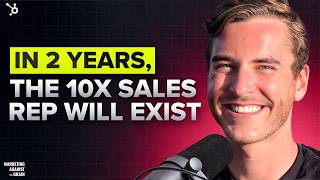
This is a podcast-style YouTube interview (uploaded Aug 22, 2024) where host Patrick Biddiscombe interviews Ethan de Waal (formerly an SDR at Asana) about using AI to automate and scale sales work. Ethan describes his "aha" moment moving from ChatGPT-3.5 (which failed for hyper-personalized outbound) to GPT-4 (which succeeded), the four initial use cases he built (hyper-personalized outbound emails, call prep, call follow-up, and an internal product Q&A assistant), and a practical low-cost rollout approach: start with guided chat prompts, then add retrieval (RAG/vector DB), then automation/workflows, and finally an integrated Copilot. He emphasizes education, pilot launches, rapid low-cost experimentation, and measured scale; claims to have educated 500+ people at Asana and expects AI copilots to raise selling-time from ~30% toward 70–80% within ~2 years. The interview closes with discussion about whether AI avatars could someday replace human sellers for some use cases but remains agnostic pending model improvements.
Questions this video answers
August 22, 2024.
Patrick Biddiscombe.
Ethan de Waal (Asana, former SDR).
Moving from ChatGPT 3.5 (failed for hyper-personalized outbound) to GPT-4 (worked well).
Hyper-personalized outbound emails, call prep, call follow-up, and an internal product Q&A assistant.
Chapters
All right, so we just got off the podcast. We talked to Ethan de Waal. Ethan is a pretty interesting person. He started his career at Asana as a sales development rep. He figured out he could use AI to just automate himself out of a role. Asana basically said to him, hey, you are one of our most productive reps. Can you use AI to help all of our sales team be way more efficient? We're going to talk to an actual AI optimist who's doing cool things in go to market and helping sales teams integrate AI into their go to market work practices. Ethan, you've been doing this at Asana. You and I caught up actually to swap notes on AI and I was so impressed. I wanted to get you on the podcast to talk about your experiences. Let's start to start. Actually, let's start at like, you taken a sales role for Asana and then, you know, you talk about AI so passionately. Maybe just talk about when you realized AI could be really impactful for your own job and what you started to do.
It all began with when I was in SDR myself. I started with two other friends. They kind of were the two other experts at outbounding at Asana. And we got together and we tried to use ChatGPT 3.5 for outbounding and we could not get it to work. We tried for a very long time and it just could not write messaging at a consistency that we were looking for in a hyper personalized way. But then Chad GPT4 came out and that day I took the prompt that I had failed with on 3.5 and I injected it into 4 and I said, write me an email. And it was awesome. And my ego died a little bit. Personally, I was like, okay, this whole outbounding specialist expert, I'm like this thing pretty awesome here. And I understood that day the laws of scaling. And I went home, I talked to my girlfriend, I said, AI is kind of all that matters in my mind right now. And I've been thinking about it nonstop ever since that day.
So was your aha moment then? Just that I could write better copy than maybe some of you. All of you, like, nearly as good as copy. Like, was that the eye opener or you were able to like construct an email that was just better than what anyone else was writing?
There was kind of two paths you could take. You could write one to one messaging and it literally took 30 minutes per person. I mean, like, and that's if you were efficient, like doing the research, crafting the messaging, like, all of sales, messaging, marketing. Messaging is about understanding your person, understanding your product, finding the intersection, and then like building messaging for that intersection and for all of time. You could either do that one to one and it would take way too long and you can message 10 people a day and like they probably still wouldn't respond. Or you could build sequences and send, you know, 30 into one message based off Persona or something like that. Like there were only those two pathways. And that day I saw the third pathway, which is you could do Persona based hyper personalized messaging one to one very efficiently. You just had to figure out the system to get it to work for you. I saw that future headed, headed our way.
Kind of my follow up to that is, you know, I've had the good privilege to work with a lot of salespeople, a lot of marketing people. A lot of them are still very AI skeptic. And a lot of them are unwilling to give up the control. Right? Like, oh like yeah, I know in theory this example you showed me, like it's really good and maybe you can show me a couple others. But like, I don't know if it can really do it hundreds of times to my most important like potential accounts this month. And like how do you get people past like the control freak kind of skepticism side of it?
It's such a great question and one you can educate. You can really teach people that it's really easy to build custom stuff for yourself with AI. Like here is an example of a tool based around outbound messaging. Maybe this is like the tool I think's best, but with a few small tweaks you can turn it into your tool and you kind of like give people that ownership and that's the power or the promise of AI is kind of like these tools could be one to one. You can have a chief of staff for each person. So I think that's one, one pathway. The other pathway is you take an expert, maybe an outbound specialist at your company who really understands like the strategy and the icp, and you basically work with them to develop a tool that's so powerful that like it would be crazy not to use. And you basically kind of work off to the side and develop with a specialist something and then you kind of like make it one click to add people. Like you have to both develop the power there and the user experience. In that second pathway, I think the easier path is to just educate people on how these are built. Once kind of our team understood that this isn't a magic black box, like this is how we built it, this is what it can do for you, and this is what it can't do for you. A lot of that hesitation kind of went away. And the last thing I'll say is you always want to build around pain. So like, I tried to identify the aspects of my job when I was a seller. That took a lot of time. I didn't really enjoy doing and I had to do it high frequency. And those were my use cases. And once I have built things for those use cases, everyone sitting to my left and right was like, oh, I also had this problem and this is just a better way to do it. So I think it's a really complicated question. I default to education, but I think there's a few different pathways you could take there.
It definitely speaks to the best people to interweave AI into the roles are the people who do those roles themselves because they understand those pay points. But like in your journey, you were start, you started as this kind of sdr, a development rep, and then you integrated AI and you were the most productive rep, I think, because you were using AI to scale your outreach. Then can you just talk about the next things? Then you went on to actually start to like the company were like, oh, like how's this person being so productive as a sales rep? And then you kind of went in to start developing AI tools for the sales team themselves. And I would love to hear a little bit about what were the next couple of use cases you built for. Because outbound is really the place that AI saturated first. And a little bit about how you built them because you did a really cool thing where you just built these simplistic AI agents with simple guided prompts that allowed companies and allowed like a sales team to start using these things really quickly versus trying to over engineer something. And so maybe just talk a little bit about like, okay, you, you're doing the outbound thing, your eyes are open. AI is incredible. What did you start to do next as you started to shift more into like, how do I interweave AI across sales? And just how did you start to stand up these tools?
Once I really experimented with learning how to build for that outbound use case, I had already had that thought exercise internally of what are those other really painful things that also fall into that similar criteria. High volume, very manual. A lot of people are doing this, so I knew it would have big impact. I thought about like, hey, we have a lot of calls, we all need to prep for calls. And prepping for a call looks a lot very Similar to writing a great outbound email, hyper personalized email. So call, prep, call, follow up. And then the last one I thought of was we had all of these Slack channels around, answering, answering product questions. You know, Asana is a pretty complex product. So we had a lot of people just monitoring Slack channels, manually answering these because we had documentation, but we had too much documentation. Our product guide's a thousand pages, like no one's going to read through that thing. So I started thinking about kind of answering product questions automatically again. This all started with me in a chatbot, in an LLM with just a prompt and experimenting with that really simplistic model and just trying to get that one chat to be as consistent and powerful as possible. And that's basically what prompt engineering is. You're just trying to give instructions in a really clear way to one of these systems so that it'll perform in a really consistent way for the thing you're trying to get it to perform for. So when we thought about those four first use cases, one we didn't want to like try to over build or like overinvest in something we weren't sure if people were going to use. These were the first AI things we ever were going to deploy at Asana. So we literally started with just these like chats, these specialized chats. And we taught people that you could go to this chat, it doesn't have all of this information. It's not integrated with, with your CRM, it's not integrated, you know, with, with social or anything. But you could put information in it and it could process that information and generate this email or generate a call prep strategy or something like that. So we built those, we deployed those, and then we educated people on how we built them and how they could build them themselves. So that really got people excited, got them understanding like how this thing worked and what they could use it for. And then that started our four part roadmap. And the roadmap was all about more advanced AI architectures, the simplest architectures. Chat with a prompt, a little more complex chat with a prompt and a vector database below. That's rag as a lot of people talk about it. And that's again just dealing with higher volume of data. And that data has to be consistent. And then third, you add automation to this, which is an AI workflow. And then ultimately maybe you take a couple workflows together, bring them into like a really great user experience and that's a Copilot. There's been Copilot's marketed, I'm not trusting the co pilots quite yet to fly the plane. For me I think maybe going this more bottoms up route might be the right route to take with that more complex job. But one of my like biggest piece of advice for anyone building at a company right now is like try to avoid the million dollar backroom project. Try to kind of build out front. I like the building's a little different than traditional technology in my opinion. So you can kind of experiment at really low cost.
Right.
If you're not getting product market fit at that low cost thing, you probably should like shape that thing before you keep building up on top of it.
Everyone, quick stat for you. AI usage has increased 53% since last year. And you know how I know that? Because I just read our brand new 2024 AI trends in marketing report. This report is packed with original data. That data not only highlights the latest in AI trends, but also shows how businesses today are using AI to grow their business. You'll learn the top five AI tools for marketers, exactly how teams are investing in AI and where they're seeing the return on their investment. And you get a data backed answer to the big question, is AI helping or hurting my marketing career? I invite you to steal and take all of our hours of research for free. Grab your copy from the link in the description below.
Now back to today's show.
I think the reason the million dollar backroom projects exist a lot of the time is that people don't know what they're doing. Like they really like they don't know where to start. They don't know the core factors and principles that actually make this stuff successful. And so like cool, well we'll just committee it and spend some money and hire some consultants and take a bunch of time instead of admitting like we don't know where to start and like just picking a place to start and iterating on it. I guess my question for you is you have started, you have learned a lot of things. I imagine if I'm somebody watching or listening today they're like cool. Ethan, I appreciate that, but can you tell me like what were the core components of your prompts? Like what's the data that mattered? Like what are some things that might be universal? Right. That yes, there are some things that are specific to the problems you're trying to solve in your audience, but what are the universal things that if I'm trying to get started, I might be a good starting part point for me.
Yeah. Thinking about today's date in time, I think the number One piece of advice I can give is prompt engineering is not engineering and it's not that hard. Even like when I was prompting in April of last year, in 2023, when Chad GPT4 first came out, you had to do some like wonky little tricks in there to get it to perform. Like, I'd be like, I'm going to get mad at you if you do a bad job or something. Like you had to play some tricks and kind of be in the prompt engineering like Twitter threads to like really understand what's going on. Honestly, the models right now, like the top frontier models today, you can literally type in the sentence, your job is to generate me a call preparation document. Here is an example of what a great call preparation document looks like for me. Then you basically like put in the raw information. This is how you do it at like extremely low cost. And then you manually copy and paste the information in and see if it does a good job generating you that call prep document. It's not that hard. Like the low cost thing, you don't need to worry about it too much or like overthink really is that simple with AI. I was on the bus to the office today thinking through like the top three things I want people to take away today. And the third thing I thought of was it really is that simple with AI. Like, I see this again and again. People like are staring at the simple answer and that is the right answer. And then they like, are like, it can't be that simple. And they like, don't do it. And they like invest in the big crazy thing that won't work. And I'm like, okay. Like that is the thing. It is that simple. So I think like prompting, we all have this like, framework in our heads and it's a little frazzled. I've dealt with like educating over 500 people at Asana now on prompt education or prompt engineering. It's honestly gotten like simpler. Like in the last few months, prompting has gotten easier and the outputs have gotten better. So like this is the best time to jump in, get access to one of the frontier models and just like, don't overthink it. Just, just send messages in, get messages out and see what's useful for you.
So just to go back, because I think there's a couple of important things to like step through here, which is number one, the thing that four step framework is really good for our listeners to internalize, which is the number one point is the one you're making. You started the kind of initiatives within Asana with basically a OpenAI custom assistant with a guided prompt. So that assistant did one clear thing, but it was a guided prompt. So it actually basically had some onboarding to tell you what to do. And it solved one core use case. So a couple of the use cases that you solved, I think are as applicable for any sales Org, which is Call Prep. Call Prep is something again, your model model what takes a ton of time I don't really like doing and takes me away from selling. Call prep is like one of those things where you can have a single assistant to call prep. The other one that I'd really liked, which is for companies that have complexity in their product and their sales team is trying to do a call and also recall all of the information they have to recall about a product to do a great sell. You can have a singular customer assistant to answer questions about the product. So as the rep is on the call, they can basically query that with the product or with the assistant. Right. And get all the information they need. And then you said like, you want to make sure that people use those things before you decide to do the kind of bigger version of that, whether you integrate it into an app of some sort, an internal tool, whatever it may be. But your users are actually your internal teams, so you want to make sure that they actually use this stuff right before you actually commit to doing something bigger. And then on the prompts, really the format you're describing there, and I think it's the right format, is basically make sure that you give a clear goal, like a singular goal for that prompt. Make sure you provide context, which is basically show what good looks like, and then have the right data for that prompt to be able to do that thing right. And the, the, the interesting thing about prompted now I'm sure you've tried, I'm sure you're doing this right, Claw. If you ask Claude to improve your prompt, it actually does a better job than you anyway. So like I used to think, I used to think I was amazing or prompting. And then I just say to pro, here's my prompt, Claude, can you make this better? And it makes it 10 times better. So, and then I look really smart.
My, my actual. One of my cheat codes of why I've been so productive with AI is the time I was working on the prompt for Call Prep. So I was basically writing my second prompt. I had the thought of, wait, if it can write me a really great hyper personalized email, why could it not write me a prompt? So I've been, I've Been doing meta prompting since like May of last year.
Yeah.
And it's like so awesome. Yeah, yeah, that's.
That's actually my. If I'm saying what's my one secret thing, why I've been pretty successful lately with AI is because. And I show off my prompts. It's for the most part, Claudette is doing the final version of the prompt Women for me, like, but people just don't seem to know that. Right? Like, they don't because they're not curious, they're not experimenting. And so like coming back to, you know, that, you know, we've kind of talked about for our listeners, that first frame part of the framework, like you should just build something pretty low touch, make sure people actually use it and find some value. What is the next. You mentioned Asana are starting to get into the more sophisticated scale phase. What is an example of something you're doing there to start to scale AI across the sales team?
Yeah, it's a really great question. So what I described so far with the tools we had launched was all really putting a little bit of the effort on the user, which is like, hey, user, here's the limitations of this tool. You're going to need to kind of manually go get the data, bring the data over here, put the data in and then once you get the AI response, like, bring the data back to where you need it. And like, that's not great technology, like just core principles. So right now we're in a phase of adding automation to, to those chatbots that we have product market fit for. We know people are finding them useful. This can really look as simple as like, oh, I have a meeting coming up. So every time I have a meeting, trigger that call prep document to be created in an automated way. A really simple example of how you can take what you have built and what you have tested and what you have spent effort and time kind of developing and automate it. There's a lot of like really hyped up AI companies out there right now that like, are kind of just prompts and automation.
Yeah, yeah.
So like you're kind of building custom AI software for yourself as soon as you hit this automation phase. The last phase I talked about, we're not here quite yet, but this is what I'm really excited to head towards, is building like what I call the first useful copilot for Asana's like, team. And this is all about again, once you have product market fit on the chats around those capabilities, then you add automation to them and Then you bring that automation together, you end up with kind of like an app of sorts. But I think of this as, you know, an account executive at Asana being able to like kick off any of the workflows that we've built in the background or you know, access any of those chats. And maybe they don't even need to know, you know, what chats are available. They can just say, hey, I need to prep for this call, can you help me? And we're triaging it to the right area, the right workflow in the background and stuff like that. So that is like the ultimate vision. It's, it's just like things we're used to and it's all again based around pain reducing, simple tools that we add some automation to and then we're thinking about the user experience. How should people operate these workflows like in the most effective way. We have some hypothesis like right now, but ultimately we're in the first inning of like a technological revolution. So we're going to be continuously figuring that out and experimenting and like trying stuff. I don't think anyone has the right answer quite yet for phase four, but we're excited to head that way from a very like first principles guided platform isn't the part.
So part of the problem with actually doing this AI enablement of teams, like there are certain things where the AI can, you can just build the AI and it can do it without needing the humans. So prospecting, for example, an AI agent today could actually do the thing that you realized AI was really good for. It can just do the outbound email, it can do like company identification, write the email and it can try to book the meeting and do the follow ups. Right. It doesn't actually need the human. Then there's like examples. What you're really trying to do is enable the sales team to be more effective. And there's like a problem with that, right? Because to your point, AI is a technology where you have to run it more like a growth team where you're iterate and experiment and. But you need actually users to use the thing to see if it's useful. So you're also having to do change management. What's the hardest team to do change management with in the entire world? Sales likely followed by engineering. Because sales are on the hook for a number. They develop their own special sauce of workflow. Right? Here's my workflow. Do not come near and disrupt my workflow ever. They never want to use a new tool. And you kind of mentioned that you're doing this through education. Like for me the best way to change sales behavior is always to run in a pilot and show they can make more money. And I think that's. That should be the way it should be, right? It helps you make more money. That's what you need to do. If you're a salesperson, how have you been managing that? Right? Like you're a very growth orientated, experimental, iterative person. You're from a sales background. How have you been managing the combination of I need people to use this to see if it's even useful.
So I just had a launch on Friday and this is, you know, I've had some launches now. So I've learned some lessons this year of how to launch to sales teams and customer success teams and marketing teams. What I did this week was I said it was three bullet points. I said account point of view generation, fill out this form to trigger it. And I screenshotted like generated templated account point of view that was hyper personalized. And I just said like this is what you'll get if you fill out this form. Like we're starting to get it. So simple to use these tools and then these reps gain so much value back. It's crazy not to use like you're what?
What value, Ethan? Like, because that's the thing I would love to understand like what is the value and how do they like what's the time to that value? Because in my that's really the key for the sales team is like if they experience the value pretty quickly, if it's pretty apparent and it's not and it's like easy to do, then they'll do it. But other than that it's going to be really hard to get them to do it.
The best way I can describe this is probably a simple math equation which is as you know a sales development rep. Everyone has an expectation of like a certain activity metrics and those metrics. Each activity requires a certain amount of time. And basically what tools I'm trying to develop for my team are tools that like if they did that activity at the highest quality, that's what I want to produce for them in seconds. The issue is and, and every sales team faces this is there's only so many hours in the day to do those activities at a really high quality. So this is kind of what you were talking about earlier. Kieran around like everyone has their, their workflows or their shortcuts like to create that high quality output and hit those metrics. But like in a Realistic way they understand the time in the day. All of these tools I think of as like if, if I spent an hour manually grooming through all of our systems and all of this data and you know, I'm, I've been at ASANA now for almost three years. So taking my three years of like ASANA knowledge and like drilling that in all together, this is the output. But it literally took 10 seconds of effort. You like dropped a URL in and it did everything else for you or something. So like that's what I mean when it's like we're, we want to basically create something where rep goes, oh my gosh, that would take me an hour and a half. I could never, I could never create stuff at that quality. Like, but I does it in a minute.
What you're basically saying, Ethan, is like, if you can't make the like 20 to 30 second, like TikTok influencer style clip of what this is and the value and why, you should do it with like a very clear hook. It shouldn't roll, you shouldn't roll it out. It has to be very obvious, very, very quick. And if, if that, if you can't lead with a hook of like, hey, this is going, you're going to be able to do your research in half the time. Like people aren't going to adopt it. It's just not going to happen.
Right.
And I imagine what you've seen fail and succeed is largely on how clear you could demonstrate and communicate the value very quickly.
The value prop with AI is easier. It's just bigger than like, you know, traditional value props. It's it and it's, it's visual like and it's honestly for me personally, when you see really a really good AI use case, it's a little emotional. I'm like, that is literally an hour of effort that humanity has never been able to like automate. And like now we can, and that means we can all go do cooler stuff. We can take away some of that like back room pushing papers around and data around manually like we all do at, you know, at parts of our day.
Yeah, I think like there's an industry stat that the average salesperson spends 30% of their time selling. Like how the fuck did we get here? Right? Like we like, we used to have salespeople who could sell and then we just like loaded everyone up with the admin of having to do work. Right. And now you, now no one actually does the thing they were hired for. They just do admin. Right. And I think the you know, the first version of AI Optimist is like, holy shit, like we can actually get back to doing the thing we love. Now the next version, because I have to do the optimist and pessimist is, well, AI can do that part as well. Oh, well, shit, then I don't, I don't know what we're going to do but, but let's have fun until like that part comes because I don't know how to solve that part. What? One of the things I would love to end with is, you know, if I break AI, let's let me like break sales into a category of tasks, much to the delightment of sales as I just described their job and these kind of like binary tasks, like, not a big deal that AI can just do. But if you think about like a sales department or sales job, right? What, what do they do basically, right? They, they like, they filter and qualify like, is this actually a good fit company or not? Can I sell to this? Does it look like my other companies then they basically do some form of like connection, like can I actually get this person to talk to me? Then they actually do a discovery call to see is this a real deal that I can like make some money off. And then they do multi threaded sales, which is basically who are all the people I have to talk to all the way through to get this into a close one space. And what's interesting is when you think of cross AI across that spectrum, you would think that AI would start from the most easiest part of that job, which is the filter qualification, all the way to the most complex parts and close one. If you were like, okay, taking that framework and you can adjust it if you want because you were actually a salesperson so you could do a better job, you know, framing that. But let's say like Ethan, in two years time and you're making the biggest bet and that Asana has made on sales. And the one question I would love to incorporate into this, because we didn't ask it, is sure, sales are saving time, but are Asana holding the sales department to an increase in ppr? Like they want more from them, they want more revenue. Like what are Asana holding sales accountable to? To see if sales are making money back of this investment. And if you had to put a bet on two years of where Asana will get the biggest investment, where are you, where are you placing the bet? Like what part of the sales role or you know, that framework are you putting the bet?
I love it. Great question. So on the first part around kind of like how is Asana thinking about impact of these AI investments? In this AI experimentation In the first half of this year we prioritized learning and like first principles. This is a new technology and like if we over commit on metrics and we just start reporting on metrics all the time, we're not actually going to like spend the time learning like what we need to learn in the, in this first inning. Metrics are coming kind of now as we start hitting the scale phase and what's really nice though is we have some data points going in to set more realistic metrics. Right now I feel like AI metrics are throwing spaghetti against a wall. Who is hitting the AI metrics? They're either really easy targets, you know, it's, it's really hard to judge.
Yeah.
So I highly, highly recommend. I understand this is like not the traditional way of doing projects, but again it's a fundamentally new technology. I think there's some investment in learning and, and bringing some of that expert to your company versus always having to rely on like external vendors or consultants, etc. The second part which is across the whole sales funnel, stage zero to stage seven closed one. I think the biggest impact is going to be felt with AI over the next two years or. Yeah, two years, absolutely the entire thing. So I think in two years the 10x sales rep will exist. You'll think about this as like really efficient data processing. So no rep with 300 accounts can truly understand within their CRM like everything that's going on with AI. You could, you could understand those changes. You could have this always on engine that's bringing the right things to your people's attention and this is absolutely within a two year time frame. So I think I'm really excited about the flow full sales cycle. I think there's really manual like really inefficient things across the entire cycle from stage zero to stage to closed one. I think every rep would tell you this and if you just give them a stage in your sales cycle and say what's the most painful thing? I think they'll have a quick answer for you within, within that stage. Again, once you set up this like quick experimentation, you can start checking off use cases quickly and you develop a framework of how to bring those use cases together. That's where I'm seeing this full cycle kind of co pilot where you can get the 10x rep and hopefully instead of 30% of their time being done selling, we can get back to 70 or 80% within that two year time. Frame pretty easily here from what I'm seeing on the ground.
So your big bet is like that every sales rep will have a copilot. That copilot will basically be a colleague that will help you do things at scale that you were not able to do before. The final question I would have is one of the things I'm fascinated by is do we think AI can actually sell? And so do you ever believe that an avatar could do a non complex sale and that a customer would be happy purchasing from an avatar if the avatar provided a better experience? Because the avatar could actually probably answer questions better. Probably be none. Like because it has like zero. I don't like non personality. Like so it's not going to be, it's not going to be rude or not have a bad day. Right. It can just like give you all the information but you know you sold. Do you think customers would ever buy from an avatar?
It's a really interesting question that I honestly don't think I can answer until I see the next level of model. We've been sitting on this like GPT 4 GPT 4.5 quad, 3.5 like level now since about April of last year when, when it first came out. They've definitely gotten better and easier to use and all of that stuff. But like we haven't seen the jump until I see that next jump. I'm not placing a lot of long term bets of what I think AI could or could not do. I think today I understand the laws of scaling somewhat but like I'm still pretty young. This is, you know, I'm new to San Francisco and the tech industry at the same time. So like I'm, I'm grasping for those historical reference points right now and trying to read as much as possible. But at the end of the day like humans rock. We I actually hilarious story here. We have a Waymo parking lot right behind us. For anyone who doesn't know, Waymo is this autonomous vehicle owned by Google. Waymo's awesome. If you get a Waymo across the city, it's smooth. There are these nice Jaguar SUVs, leather seats, like super, super nice ride experience in the parking lot behind our office. They like the last week there was like a big traffic jam of like eight of them. They couldn't figure out how to like turn past this little thing. They couldn't figure out who should back up first, who should go forward first. We as humans parking in a parking lot. No, no problem. It's slow speed. We can make these quick decisions. Yes, it's complex. Yes. There's eight, nine things that could go, you know, a kid's running from behind you, etc. We handle that just so effortlessly. AI literally could not think to handle that complexity. So it's today I don't see that. I think human to human grabbing dinner experience just is never going to go away. But I think hopefully some of that data processing and pushing data around behind the scenes, I'm hoping that's what will be eliminated. That being said, until the next wave of models come out and I can feel them like with AI you really have to feel it. You can't look at, you have to go send messages in and see what it can do. I'm not ready to make a bet on that.
Yeah, you have to experience it.
AI is not consistent at the depth yet. Like it's very inconsistent, needs a ton of human intervention. But if you have a broad based kind of breadth sales challenge, that which normally comes with like kind of a lower ticket price product, which means those customers are normally just like have a chat bot or some knowledge base articles, then like an AI avatar is probably a much better experience and probably could sell those things. Right? Because that actually seems like an upgrade over the non human experience. And Kieran, what you were asking for is like, do we think an avatar can someday be an upgrade over the human experience? And that's what we're saying is like maybe in some cases, but the jury is still very much out in the industry. I'm on that.
I think the thing I'm curious about is what, like if the AI avatar is a better salesperson, does that matter? Like will the, will the person still gravitate towards the human? Right. Even if the human is an infant inferior experience, which you can imagine that is going to be true because as an AI avatar for a company that has a breadth of of products and has a lot of knowledge for a sales rep to learn, the AI avatar can learn all of that. Right. It's the same thing as like talking to ChatGPT. It can just provide everything you need in a really clearance and concise way. And if that was much better than the experience that you had with a human, would you care about buying from the avatar or not? Or is the pull to the human still going to be like, I don't care, I just don't like dealing with this thing. Right. And I think it's just an unknown problem until you actually run a pilot and have an avatar try to sell to some of your users and look to see what happens. But I think that's one thing I'm really curious about, because it is going to happen, right? As in avatars are going to happen, because models will progress, and I think it's going to be really interesting to see how humans interact with them. All right, cool. Ethan, I really appreciate you coming on. I think this was great for people and companies who are trying to get started with how do I intuit AI into the sales process. Great frameworks, great use case to get started, lots of knowledge. So I appreciate you coming on and sharing that with our listeners.
Absolutely, we appreciate you. This data is wrong every freaking time.
Have you heard of HubSpot?
HubSpot is a CRM platform where everything is fully integrated.
Whoa.
I can see the client's whole history. Calls, support tickets, emails. And here's a task from three days ago I totally missed HubSpot Grow better.
More from Patrick



A NEW BREED OF PARTNER: The Partnership Ecosystem Model Journey of Patrick Biddiscombe, Part 1








Customer Success Workspace: Never Lose Sight Of What Matters Most | HubSpot Spotlight