How Ai Is Changing A $28.6B Company’s Marketing Strategy (2024)
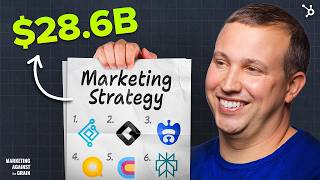
Kieran and Kip map out how a $28.6B company is rebuilding its marketing playbook for AI. Inbound needs AI to survive declining web traffic, social shifts to video-first creator strategies, and AI enables one-to-one personalization at scale. Measurement gets harder, requiring new signals beyond traditional metrics.
Chapters
This is the four step marketing playbook that is going to allow you to beat all of your competition. Kip and I have talked forever about how marketing is changing. On this episode, we are going to give you the four ways how you can be an incredible marketer in the AI era. And we're going to take you behind the scenes as Kip and I try to figure out, do we need a new methodology to describe this marketing? Do we need a new name to describe this marketing? How do we brand this style of marketing? We're going to bring you behind the scenes. You're going to get all of the debates, all of the discussion on today's episode of Marketing against the Grain. Okay, Kip, we are going to do something incredible for our listeners. It's given me a bunch of clarity on where we are in this kind of new era that we are calling it. In terms of AI marketing playbook, we're going to try to give you the new marketing playbook where. Where we are today, where we're going to be tomorrow. And then we've been slacking back and forth like, do we need to call this something different? Is this inbound V2? Is this a different type of marketing playbook? And inbound's a part of that? And we are really going to workshop this. This is something we are literally trying to figure out internally. And so I thought it would be fun to go behind the scenes. So I think there's four core changes that we have talked about over the past 12 months, and we have not really kind of articulated the kind of them in sequence or what. What's one thing transition into the other thing. Yeah. So I think we should start with what people really think about when they think about inbound, which is inbound with such a moment in time, from the outside in. I've been outside of HubSpot and I still think about that methodology and how you can actually create a transformational story. Let's describe the eras of marketing. Right. So we had outbound marketing. Now, at the time, it was not called outbound marketing. Outbo was the collection of tactics you would do to get in front of your customers. And it would tend to be, you know, email blasts and all of these kind of different ways that you could interrupt that person.
Brand advertising, billboards, direct mail, all those things. Right.
Display advertising. Right.
Display advertising. Things that were inherently interruptive. I was going about my day and wham, here's your. Here's your ad. Right, right.
And why were the HubSpot folks clever and I was not part of the company when they came up with this methodology. So I take no credit, but they were clever because that was not called out by marketing, which is marketing, right? And then what HubSpot saw was the. As the popularity of the Internet grew, there was new channels opening up that allow you to do marketing in a different way. That was Google and social, primarily. Google and social were like two of the core ways you could now reach customers and create value and have them attract them to your company. And so the methodology that HubSpot described was like, hey, you used to be a shitty marketer and this collection of tactics all are horrible. And this is like outbound marketing. There's a better way to create value for your customers. And this is inbound marketing. And I think the reason it works so well is because it give a name to something that was just starting to happen, right? People were just starting to see the value of creating content on Google. People were just starting to see the value of creating social media to attract customers. But it was like at the early innings, and there was no real methodology around how you did it for B2B companies, and there was no real name. That's kind of my moment in time. Because the moment in time is there was these new channels that opened up new ways to market that made that term, like inbound, like, I attract people towards me, such a perfect articulation of.
It, what has happened and what is happening. So Brian Halligan coined this term called inbound marketing, and to your point, did a very good job branding an enemy, which is outbound, which is the enemy is normally the old way and the hero is normally the new way, right? Like that's your cheat sheet. Quick marketing lesson for everybody watching the show. And what happened is life and innovation normally happens in what's called an S curve, right? Where you get a little hype, it kind of goes down, then you eventually have a long, long, long uptick, uptick, uptick until it gets really mature and then eventually kind of comes down. And as it comes down the second time, a new curve kind of starts and a new innovation happens, right? And so what happened is the Internet came out and that was a new curve and there was a lot of hype. You had the dot com bubble, that bubble burst in, you know, the late 90s, early 2000s. And then you started the slow buildup through the 2000s of a revolution of the Internet, right? Where the Internet was able to democratize publishing. We had social media platforms, we had mass information distribution and discovery in a way that had never existed. We got the iPhone, we got fast broadband Internet. Normally, to have a big S curve like that, you have a whole stack of technology innovations that pile on top of each other to make new things possible. And so we branded that inbound marketing. And like, the best thing ever happened is, like, we worked on it for years and years and years, and finally it became common vernacular. So I think one of the things we're talking about, Kieran, is like, what do you do when. It's kind of like the old joke. It's like, what do you do when you've gotten everything you wanted? You know, like, you got everything you wanted. Like, oh, people know what this thing is. It's very commonly understood. Like, I heard Shane Parrish talking about it on his POD recently. Like, it's just like, you just hear it in the.
It's just best practice. It's just best practice. It's part of the marketing playbook. And no one really thinks about it in any kind of emotional way anymore. It's just like, I do inbound. I do these different things. Right?
Yeah. So, in essence, this podcast, the show today, is about a lot of things. It's about AI. It's about this new S curve. It's also about what happens when the new hero that disrupts the status quo becomes the status quo. Right. Like, that's fundamentally the essence of what we're talking about today. We're saying, like, oh, wow, we went through this whole curve of innovation. And on that curve of innovation, we went from this disruptor David versus Goliath kind of story to, wow, a very established story that people know that resonates. It just becomes commonplace. And so now what's happened is we are at kind of the bottom of the trough, starting to come off up of the second S curve. And that S curve is going to be the third generation of the Internet, and that is going to be the AI generation of the Internet. And the AI generation is going to make lots of new things possible. The one thing, Kieran, that I want to try to frame for everybody, because I think this is just. This is going to be an episode that you're going to want to go back and watch a couple times, because it's going to anchor you into what is really happening in the world. Other thing that happened on that first S curve, when the Internet kind of started through the second generation of the Internet, through Google, Facebook, everything is that everything became aggregated together over time. You started out as, oh, everybody just has websites and there's no way to discover them. Then you had 15 different search engines trying to help you discover them. And we ended up with one search engine, Google. Right. And in every major technology innovation, we ended up at close to a winner take all situation where you had somebody come in and own the vast majority of the market with maybe one or two other companies owning a much smaller portion of and. But that disrupt, that kind of consolidation took 15 years. And the challenge is we're in this new S curve and there's all these cool hardware startups and software startups and different AI models. Closed source, open source. It feels super overwhelming. And it does because it is, because it's all fragmented, it's all unbundled. And over the next decade all that stuff's going to bundle back together. But what we're really talking about is how do you market in a world where there's a lot of disruption, there's a lot of new technology and things are going to be very unbundled and very fragmented for at least a few years. Right. And that's how I would set the scene. Kieran, I'm going to pass it to you. Hey guys, real quick. We've gotten a ton of requests in the comments and they're all about prompts. You all want the prompts we're talking about on that show. We see you, we hear you, and now we are ready to share the goods. Click the link in the description below to access our new AI prompt library. This resource features real AI prompts that Kieran and I have covered on this show. We broke them down by category and templatize them so you can fill in the blanks and make them your own. Now you have the frameworks you need to use AI, analyze ads, create brand campaigns, develop product stories, just to name a few of our favorites. Keep telling us what you need in the comments and we'll see what we can do to whip up more for you in the future. Now back to the show.
Okay, so let's get number one. Number one is inbound. So what is the. We're going to articulate the disruption and then we're going to articulate what we think is going to happen. So inbound still has a lot of value. Inbound is the ability to create content, distribute that content and then attract people to your website, convert them into customers. What has happened? Well, we have seen social media move much more towards closed walled gardens. You can't put your links. You see me on LinkedIn, I'm trying to like sneak in a link here and there by, you know, masking the dot but they their data tells you that the LinkedIn posts that have links are five to six times less effect effective. I can see that myself. X doesn't even want you to like things anymore, right? Like they just want you private, like maybe and private likes what you know what is going to happen there. So all of these social media platforms had moved closed wall gardens. Don't want you distributing your things, want you to stay there. Google, the last bastion of like the open web. 63% of all referral traffic comes from Google. Then they introduced, they were blue links, blue links were get traffic from Google, give it to publisher. Then they put feature snippets in. And that was hey, we'll answer some of the questions for you. Don't worry about publishers. We're only going to take a little bit of your traffic. And then we had AI overviews and Google are like oh okay, we'll just follow everyone else, become a close wall garden, try to keep you on our site. So that means we have a declining amount of traffic for all of us to try to grab. Right. With that kind of educational, valuable content, that distribution play. And I think what we believe is going to happen is that inbound marketing will still be a core part of how you grow your business or inbound will be a core part of how you grow your business. But you will have to compete much more aggressively for a slice of the pie. And that is where AI comes in. Because I think what AI allows marketeers to do is it does a bunch of the work for them if you enable it correctly. So you can work on the 10 to 15% that is really going to separate you from everyone else. So an example would be instead of just creating standard educational content, I can have AI build all of the research for me, figure out commonalities of things that are currently ranking on Google. Tell me what are things that I could add to my content that would make it much better and then work really hard to make my content differentiated. Differentiated perspective, differentiated data, different ways, like more answering, more complex queries, whatever it may be like ways that you can differentiate yourself from the pack. And I think that's like number one is I want to set the scene that inbound is not going away. The ability to create value and have people come to your website through that value is not going away. But I think you are going to have to use AI to compete much more aggressively for your slice of the pie.
Yes. And so I think that sets up part of the challenge here is that once you get something like Inbound marketing, it becomes the status quo, becomes an accepted thing. Then there's just almost always going to be a flavor of it, unless the underpinnings of what makes it true go away. And I don't see that happening anytime soon. You're saying Kieran is like, oh, there's going to be a lot of new and different stuff, right? And new and different tactics. The one thing I would raise to everybody, and one of the reasons we're doing the show today, is that there's going to be two types of people in the marketing world over the next few years. They're going to be the type of people who are like, oh, gosh, this is all changing. Less people are reading my email, less people are coming to my website. I hate AI. I hate this world. This is horrible.
I hate life.
That's one type. The other type of person is going to say, oh, yeah, you know, it's not great. It's hard that all of these things are getting harder. But all this change is going to open up new opportunities. And if I keep my eyes open for those new opportunities, I can actually go grow faster than I was because these new opportunities are going to have way less competition. Part of what's happened in marketing over the last decade is everybody's done the same things because the technology platforms have been really mature. It's like, cool. We all run ads on Google and Facebook and YouTube. Great. There's not much leverage in that, right? Like search engine results pages, really, really competitive. Everybody's pretty good at SEO now. It's really hard to, like, get any type of 100%, 200%, 300% edge over your competition. You only get those big edges in times of change. And so what we want to do is we want to give you a map today so that you can understand what is changing so that you can see those opportunities.
Right. So I think our. I think our feedback here is you will need to integrate AI well into. In the way you do inbound anyway to be able to have enough time to really gain leverage in the things that differentiate you. And I think you're going to have to really understand we shared way back when we did the AI reviews. It was a really good template from Alita. I think I might have shared it in a solo episode, but it was like a really simplistic template that segmented your content into different bug categories. Like, what kind of content do you think is going to be most impacted by AI reviews? What content do you think is most defensible? And you're going to have to figure out why is this content defensible and how do I create more of it. So marketing channels, like, marketing channels have always become saturated. They've always become more competitive. You've always seen diminishing returns over time. But that doesn't mean there's not like real winners within those spots. But it just becomes you have to, like, elevate your work. And I think AI is a way to elevate that work. I think the thing it can do for you is do research en masse. It can actually really figure out the commonalities of what good looks like. It can really provide you with pretty incredible templates to follow so you can do more good and great content. And then it can actually get better over time because you connect your internal analytics to it and actually knows, like, what's working, what's not working. So I think that's step one, right? If you're a marketer, listen to this. You're like, okay, well, this is maybe not as bad as I thought, right? We're not telling you that the ability to create things, distribute things and attract people to your site, convert them into customers, is going away. We are telling you that it is becoming a more competitive landscape with a smaller pie to go after. And you have to like, integrate AI to like, go after it. I don't know why I'm using pie so much. And I also. I don't know, like, no. And also, like, you know what I've noticed this is like a little podcast thing. Depending upon how I sit, I will either be in podcast mode or in presentation mode. So the first part of the podcast, you see, I was like in presentation mode. And I actually don't want to be in presentation mode in a podcast. It's weird. Like I. Because I'm so used to doing like virtual speaking things, I'm like. But anyway, there's like inside, inside little podcast.
All right, Kieran, you're like so pre programmed that, like, I know how I.
Sit, how I sit.
Actually, I will tell you, are a robot.
I truly believe that everyone should, at least for different points in their life, have like a therapist, right? Just talk through things to try to figure out how they work. And that was the thing when we were going through Covid, obviously everything was to resume. And that was like the number one thing he saw straight away. He's like, depending upon how you sit, you act very differently. And I was like, oh, God, am I a robot? Like, am I? This is not good. Like, maybe I. Maybe everything I do Is like not nothing of my own decision. This is like whatever way I sit is like how I act. All right, so second is actually going back to a really great episode. I think it was one of our best. It was the episode around Fishkin and he kind of, he kind of painted that out. But I want to put it into the number two. In terms of the second step, we believe is going to change. So social is going to be an ever present part of how we market our companies. Right. Actually if you look at some of the data, the younger generation who are, who this, this is for B2C and B2B marketers. But just as a call out for B2B, a lot of the gen Z, gen X, they are becoming buyers of software. They become decision makers within companies. And if you look at the data, it would tell you the number one way they like to learn about things is actually through social and through human to human connections.
Right.
And so the change here I think is for the most part I, and maybe this is a primarily a B2B thing. We've used social as a way to distribute content and we will use it as a way to get people, you know, back to our website. I think the change we are going to see is we are going to have to get much better at content. We've talked about the creator led type marketing to really grow audiences within those channels. And I guess the thing that if I was a listener I would be like, okay, well like that's cool. But A, how do I do it? B, do you do that through individuals or brands?
Right.
Like we're moving from a, oh, just get the content, put it on social. A certain percentage will come back to our website to know like you need to be a meaningful part of the echo, the ecosystem.
Right.
You need to grow real audience on these social channels, which means you have to be really good. And I guess the question even I have is like if I'm a brand, do I do that through my brand channel? Do I do that through employee channels and make them creators? Like what, what do I do if I'm a company? Listen to this. Yeah.
So let's break down step two. Here is all about the world of social, which is really a proxy for the hardest parts of the Internet for AI content to be successful, right. Like it's really hard for AI content to be successful on Instagram, on YouTube and everything today. Like in the future that's probably not going to be as true, but today it's still hard. You can have maybe a good AI generated website, page or email. But it's hard. It's still pretty hard to do a really great AI generated video and do it at scale and do it over and over again.
And I've been playing with.
No, I was. See, I was looking at the Lumia update yesterday.
Yeah, that's the one. Luma Dream. That's the one. I've been playing around with it. And the things you see on Twitter with a lot of these video AI video apps are like heavily edited, very professionally done.
Totally.
I try to do a little cool video because one of the worst things ever has happened. Kip. Conor McGregor was coming back the end of June, even though he. And he was gonna fight. And now he's injured. And so I tried to make a little video to send. My. Me. My bros are big UFC fans, Conor McGregor fans of, like him fighting the person he was gonna fight. And it did not even look like two humans, just like two weird squiggly lines. So anyway, I agree, the video, like AI video, we are still some way off.
And so what's happening here is you've got this whole couple generations of people who want to really participate there. You've got companies who are largely pretty terrible at social media and content still outside of written content. And like, if you want the really simple version of step two, it is, you gotta do video, people. Your bad text content isn't gonna cut it anymore. And that video needs to come from people. Right? One of the reasons companies have a hard time with video is cause they're like, well, who's going to be on the video? You know, like, they're like, what's actually gonna happen? And you know, it used to be that people trusted brands, and now people have become the trusted brands. Right? Creators are the most trusted brands in our society. And that's where we're at today. And the tactical ways of how you do that is you have some people within your company become creators. We've talked to a bunch of great customers at HubSpot who are doing that, where they've got. The great thing about B2B is that you have experts in your company that have like, real deep industry expertise. And it's about how do you get them in front of the camera and doing things and having the right outlining and editing process to come out with like a good end product. That's one thing. Two, you need to partner with influencers and creators in your market so that you can, you can build credibility from them. I think those are like the two biggest steps that you have to take today to build relevancy longer term.
Yeah. Like if you're a company listening to this, I would just hire incredible individual creators for each channel and just allow them to do. Don't let them get bogged down with all of the internal things that happen working at a large company. Like actually allow them to work like a creator, allow them to experiment at scale, allow them to really learn what works, what doesn't work for your company, your brand, your topics. And I think that's like a new operating model that you need to have within your team is like how do I hire these people who just want to do creator work, right. That actually want to be creative on these channels. How do I create the environment to allow them to do that, be happy and actually learn and test a bunch of things. So the 2, 2 we're 2 down, that is AI enabled inbound creator led marketing. The third is when we've talked about forever shout out to Emmy actually who, who's on the team and had a really good articulation of the before because I was trying to figure that out, which is we've done kind of segmented personalization. That's how we've kind of done things in B2B forever, like build segments, try to personalize based on build a list.
Guess that these people in this list have the same thing in common and.
Try to send them a message and then send them a message.
Right.
AI transformed that. Right. We go from segmentation, segment personalization to one to one personalization. Right. AI allows you to really figure out who that person is through external data, internal data, if you're capturing that and allows you to provide these really personalized experience across chat, across email even at some point it will be within voice. Right? We will have voice enabled agents that you will be able to call up and they can have a talk, they can have a conversation with you. Like they truly know you. Right. They have the data about you. Whether people are going to find this creepy or not, it is common and they're going to be able to like build experiences in a kind of one to one way. Right. And I think that to me, if I go through the three AI enabled inbound, you're really going after a similar amount of traffic but you want to compete more aggressively, aggressively for it. Creator led marketing, I think that's a really important thing. But it's going to be indirect and so there's going to be some indirect. We're going to get into that in the fourth. But the, the leverage that we're going to have in the next 24 months to really make meaningful impact on your business is going to be this layer. Right. It's going to be the AI one to one personalization. And I think the quicker you can integrate this and roll this out in your business, the more of the initial gains you can capture before it becomes table stakes.
Yeah. And give people some quick options of how to do that. Obviously, we're working to help you do that in HubSpot and there's some good features that we've released recently as well as lots of stuff coming over the next few months. But like, what are the ways that people can tactically do this? One of the things we get, Karen, is like, what tool should I use? Or how do I actually do that?
Okay, so there's you, number one. You want to actually go into tools kit, name names.
You should, you should name names. You could also name that thread, that thread that guy made. Remember the thread from earlier, where earlier this week where he was using Zapier and HubSpot and everything to automate outreach and everything.
Oh, yeah, yeah. I'll go through some because I said I have tools in my mind, but like I was going to mention six Sense, Common Room. Yeah, yeah, okay. All right. So some things you really want to do is first of all, you need the data, right? You need external and internal data to actually build a profile of your, of your prospects, customers. And so there's tools like six Sense and Common Room and these other tools that can build intent, can build fit. Like, how do I really understand who is my ideal customer profile? Then there's tools you can use. Like there's a tool called TryScout AI that allows you to ingest data, build campaigns around that data. Very personalized. There's a tool that one of our customers talked about in a customer call that was an awesome customer call. Humantic AI, which is very similar. It allows you to have buyer intelligence, use AI to like figure out your ideal customer profile and then really personalize your messaging for them. Clay is another tool. Clay allows you to sit on top of. Clay basically sits on top of sources like ZoomInfo and Apollo. Basically allows you to build your ideal customer profile and then use AI tools to reach out to them. So there's a bunch of these tools which is like, how do I identify who's good fit and then how do I craft these personalized messaging on the chat side of things, I HubSpot chat. I don't know. Like, I think we use HubSpot chat. We've customized that we use AI through that chat. There's a bunch of other chat tools. I don't actually have a really good recommendation there. I think they're all quite similar. There is a chat tool for. If you're just getting started. Was it chat based.com and Kieran.
I would. Another one that's really simple is. I don't know. Did you see the new superhuman and HubSpot updated integration is sick. Where you can just as you're doing outreach in Superhuman or responding in Superhuman, integrate all of your HubSpot data and everything in there. So it's like you could easily then take that through an AI through something like ChatGPT and really have a deeply personalized message.
You can get very far if you're using HubSpot and some tools like, you know, you could use Workada or Zapier to like move your data around to build prompts against it and then to actually send things out.
The reality is you have to have a database and CRM like HubSpot. You have to have some type of AI model like OpenAI. Right. And then you need any other data enrichment that you can have. And you6 sense and some of the others that you mentioned are great examples of.
Yeah, yeah. We're building everything on HubSpot and so you need. Again, the advantage we have is the people who will build the best experiences have the best data, the best data record, best contact record, the most amount of data about their users and customers. And so that's why we are using HubSpot where we have the benefit of doing that. The other cool thing you can do to get external data is I've started to look at Perplexity has an API that you can pull in data from a company and a person and so you can really personalize your. If you automate your sales rep sequences. So you can imagine I write a sales rep sequence for someone and then it talks about the company, talks about the person. But in the meantime that company has a funding update or that company has something else happen. It could basically pull complexity and update the sequence in real time based upon these triggers. Right. So there's a bunch of things you can do there. To be honest with you, this is where I most enjoy hanging out and spending time. We have so many AI initiatives in HubSpot right now and the amount of things that I'm seeing, like the amount of exciting initiatives to actually really transform everything that happens after you capture a context is like exciting. Like that's where I see a ton of innovation happen. In the next 12 months. A ton of upside happen in the next 12 months. So if you're a marketer, you're like, oh, the AI enabled playbook. I can start to do a little bit of that. The creator one. I need to like figure out one channel, hire one incredible creator, let them go at that channel. Oh, wow. Like I am probably behind here. It sounds like Kieran and Kip are telling me there is a ton of impact available in the personalization, the one to one AI experience and you won't miss a lot of the developments. We will share some of the things that we're learning in HubSpot because I think we're one of the companies that are really pushing on this. I would probably suggest you get started. Perfect.
What's number four, Kieran, what's our fourth step on today's show?
Number number four? We can skip over and get into the debate because this is one. I think it's just really self explanatory. We are fortunate. In the past 15 years since the Internet grew, we started doing inbound marketing. What I love about inbound is it actually directly attributes the marketing efforts to revenue. So you can basically see, hey, marketing are actually generating X amount of traffic, X amount of conversions and X amount converts into customers. And then where we're moving to is a much more indirect kind of world. I think you will still be able to see directly some direct attribution, like what is my marketing team doing for me?
Right.
Let's say today it's 70, 30, 70%. I can actually see how much of my marketing spend is translated into dollars. I spend $1, I get $5 from the marketing team. Then there's 30% where you're like, you have to squint. Your marketing leader has to do a good job of telling you this is the right thing to do. But you can kind of correlate that to something happening. You can't directly see it happening. I think in the next two to three years it will be the inverse. We will be able to say 30% of our budget has brought in X amount of dollars and 70% is out there in the ether and we hope it's doing good, but we might just sack our CMO because we don't really know.
Well, no, look, over the last 10 years, marketing was a lot more linear than it's going to be the next 10 years. And we had a lot more data access, less data privacy and we could measure things really well. And what we're really saying is the fourth step is you need to get both alignment within your company as well as playbooks for measuring. And that means you're going to maybe query LLMs to get qualitative data, do more surveys, do different things to get more data so that you can correlate. Because that data's not gonna come from the core platforms. You're not. You know, we were talking with a marketer recently, Kieran, and she was like, look, 80% of my leads come from sources I can't measure directly.
Exactly.
And directly attribute. And that is like a big, big change that is happening. What we're not gonna do is go really deep here because we already really went deep on this topic with Rand Fishkin in the second part of that episode. So if you're like, oh, I really want to dive deep on this measurement thing, go a few episodes back to our episode with Rand Fishkin, and the entire second half of that episode is all about this topic. And you can. We will dive deep in with you that way.
Okay, five minute debate. Do we need a new methodology, a new term to describe this? We had inbound. I think it was the perfect term at the perfect time. It is still a great term. And inbound should be part of any marketing playbook. Do we believe that this is just all an extension of inbound, or do we believe there's a new point in time where you have to like, have the new methodology and you time a new playbook, a new term? I'm on the side, Kip of Yes, you do. And I can tell you why. I think it's really. I think people really think of you. To your point, we got everything we wanted. And because of that, people really understand inbound in a certain way. Right? They understand it. It became popular. Inbound helped launch many marketers careers, helped made many marketers very successful. Right. The marketers who adopted it. And for those marketers, and I'm one of them, I understand it in a certain way. Right. I understand in band. And for me to. I think it's harder to like reframe something that people have already internalized. And I'm trying to think of a good example than it is to like rename something new and make that part of it. That is where I am in the debate.
Okay. So, yeah, so for people sticking around with us today, it's basically like, hey, do we at HubSpot, do we think about coming up with a new point of view, a new term around the changing landscape of marketing? With AI and Kieran, you're making the argument that like, look, it's easier to establish something new than to reframe something old. I could not disagree with you more on like every single vector of that.
I know you do. Can you just. When you disagree with me, can you also. I'm actually just. Can you think of an example? I'm trying to think of an example as well. Yeah, so, but disagree with me and then we can think of an example.
I'm going to go through the principles of why I disagree and then I will try to provide example. Does that sound good?
Yeah.
So the principles here of why I just. I actually think we might be wrong. Both of us might be wrong. And the answer is actually whatever has the best. Whichever option has the best story is actually the one you can get into everybody's heads, which I think is true. But let's say that, let's say that both of these stories would be on parody for the type of story you could tell. It's very hard to go from just complete non aware awareness within hundreds of thousands, millions of people to awareness. It took over a decade with inbound marketing.
That's true.
And if you have somebody who has awareness and you just need to tell to retell them why this thing is different. Wow. Like that and how that thing has changed. Yeah, that's not an easy thing to do. But it is easier than starting completely from zero. Like starting from zero is very, very hard unless you have a very viral story. And even if you have a very compelling and viral story, still takes a lot of time. You know, like as somebody who did a lot of the work on the inbound story side of things, that was a grind of years and years and years of work. And so if you're going to commit, I firmly believe, and I've told everybody this, if you're in a market, you're trying to get somebody to believe something new, to like really adopt a new way of thinking, you need to commit five to seven years of just like relentless, consistent pursuit of that education. And so my biggest challenge with this topic, Kieran, is that I believe in five to seven years the most popular thing in marketing is going to be in bell marketing. Because I believe we will be deep enough into the AI revolution that the methods of attracting people with non interruptive means through content, through education, through personality, through all the things we talked about today will be easier. There'll be new ways to do it. They'll be very in vogue and culturally relevant. And so then you're like, okay, well do I need something for this transitionary period of the next Two, three to five years is kind of the debate that I would have. And I don't know that if you do or not.
Well, the things that we described, right. It's like that's the thing you're trying to turn into. Trying to like, I guess we can tease this part, right? There's the name, methodology and story. And so I think what you're saying is you can tell the new story. Like we could, we just kind of told it. We can tell the new story and we can tell how that reshapes marketing. But it's not a, it's a new, it's not a new name and a new methodology because those things are brands. And it takes like five to seven years to really get that brand entrenched in someone's mind. And you believe that that brand is as applicable as relevant and probably just gets adjusted over the next three to five years. Right. That there's not a net new way you would Termino methodology or name you would have for it.
Here's kind of the second part of my argument that I would love your feedback on. Blogger started in 1999. Google really became a dominant search player in the early 2000s. Right. Facebook started in the early 2000s, kind of became. Started becoming dominant in the mid, like 2006, 2007. Right. Twitter started, launched in 2006. All this, right. Inbound marketing really was like, started being coined and everything in like 2008. So the challenge is you also like, if you're going to have a clarity of a methodology and a clarity of a brand, you're going to take all the change needs to have happened and settled so that you know what is in the brand and the story that you're telling and that there's deep resonance. And I think part of my issue of what's happening now is like, wow, we're nowhere close to the change settling. We're probably arguably three to seven years from the change starting to settle. And so if I was going to do something new, totally, I'm totally with you. It's hard to do it now because it's like, it's like, cool, well, we're going to do this thing now and then like a year from now, a bunch of things change. So we're like, oh, jk, we're going to tell you that this thing's a little different now. And then you're going to do that every few years and you're going to have just spent five years not really making any progress because the thing kept having to change.
I actually think this is the best point you've made. Actually, I agree with that. Because inbound put a name to something that was happening and was only going up and to the right. We already had seen the early innings. We could put a name to it. We could actually build a methodology around it. The challenge we have with a lot of the things that we've discussed and we can just recap them for the audience. The AI enabled inbound, the creator led marketing, the AI personalization, one to one, the direct to the mix of indirect and direct, they are not even at the early innings, they are at the experimentation stage.
Correct.
And so your argument is like, well, how can you build a methodology and help teach marketers that this is the methodology to follow, where the methodology is still in the experimental phase and we're still not sure what are the things that will truly make meaningful impact for those marketers. Right. We believe those things are the right directions, but within there, there's a ton of nuance that you can't really tease out until we've done the work, done the experimentation.
Yeah. To give everybody a trip in the time machine. When we were, even when inbound marketing was a thing and we were starting to take it, we were talking about stumble upon and delicious and dig and all these things that just like stopped existing and stopped being relevant in the early cycle of that and that was even like fairly late in the cycle. Right. And it's like, what's funny is I don't know very many things in this world. What I can tell you is the vast majority, 90 plus percent of all the companies that we're gonna mention on this podcast over the last year and the next year are, will not exist in five years. And that is a heavy, heavy, heavy amount of change. And you have to get rooted and have some footing in that change to give clarity to millions of people.
Yeah, I like this. So I think we can paint the picture of where marketing is going. We can tell the story of why it's going there and we can tell you the places that you should start to experiment with and we can guarantee you that we will be back to like tell you definitively when the things are working for us because we usually we are good enough to be at the kind of tip of that sphere. So we can actually tell everyone on this podcast, okay, we've actually seen, we have seen signal in the one to one and the creator led, but they're harder to get stood up. We can come back with the exact like, okay, here are the areas. Here are the hot things that worked. So I think it's not just.
I think, remember, it's also just not about knowing what things that work because that's important. It's about the technology being ready that you can build tools that enable millions of people to be able to do those things. And both of those things are actually hard right now.
Yeah. Yeah. I think you've convinced me. I still there. I want to. I really want to use that. You know, the one that I love the.
Yeah, I do know. We can. We. Maybe we'll talk about it on an upcoming show. This is a little tease.
Okay, cool. I think this was a great workshop. We workshopped this out. It was better than our Slack conversation. So let's go.
I was.
I wasn't.
I wasn't at peak performance at the Slack conversation. I'll tell you that right now.
Kim is like, Kieran, shut the up. When he says something like, maybe I need to think. Think it through. Kim literally never tells me, like, he needs it. He already has. Like he has a thought on it. He's like, just shut the fuck up.
That Slack should have been. Guys, you're. You're trying to come in at like 90 miles an hour on a 7am on a Thursday morning where like I'm barely. I'm barely moving. I'm barely making it here.
I was 9pm by the time riffing on this last night, so we were full of energy to.
You guys are killing it, man. I admire it. I'm apparently getting old. But no, this was a fun show. I liked today's episode. But the things for everybody to take away. You've got four aspects of your marketing that we think are going to change dramatically. We went through those with you. We tried to give you some tangible ways to start that in the here and now. But as you think about evolving your strategy as you go through the next year, the things we talked about, especially I think Kieran, the AI personalization and the creator strategy are going to need to be a big component of the work.
Huge. Huge. Yeah. And we should end with a shout out to Emmy in Asia who helped to influence the structure of the show. And so I think that is like a good articulation of marketing on the future. If you believe that we should have a different name than. You listen to the conversation. You think differently. Put it in the comments.
Yeah, I would love for every. Everybody would tell me I'm wrong. That's cool.
If you just want to troll us, put it in the LinkedIn. Com YouTube comments. Feel free to like, keep.
We're starting to get some YouTube comment trolls, and I love it, so I love those. Go and hit subscribe. We'll see you real soon on marking. It's the crane.
This data is wrong.
Every freaking time. Have you heard of Hubs? HubSpot? HubSpot is a CRM platform where everything is fully integrated.
Whoa. I can see the client's whole history. Calls, support tickets, emails. And here's a task from three days ago. I totally missed HubSpot Grow better.
More from Patrick



A NEW BREED OF PARTNER: The Partnership Ecosystem Model Journey of Patrick Biddiscombe, Part 1








Customer Success Workspace: Never Lose Sight Of What Matters Most | HubSpot Spotlight