How does a LinkedIn manager help build a selling strategy?
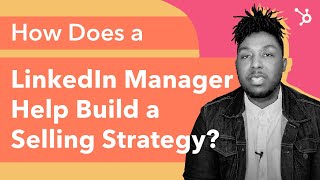
Kwesi Graves, a LinkedIn sales leader, argues that B2B teams waste time on volume. He pushes a buyer-first approach: research your prospect, keep your pitch simple, and measure success by high-impact conversations, not emails sent. He cites data showing 25-40% of buyers distrust salespeople, and says managers must model the shift themselves.
Questions this video answers
Almost seven years; "it'll be seven years this March."
Seven sales reps (leads a team of seven).
Between 25% and 40% of buyers don't view salespeople as trustworthy.
$0.99 (ninety-nine cents).
Chapters
We have to lead from a perspective of empathy. We have to do the research, we have to pay attention to what people care about and stop feeding these stereotypes about salespeople only being interested in their quota, not caring about their buyer, being hyper aggressive, having lack of self awareness. Like these are all things that are in our control. But it's going to take a real paradigm shift that starts with leaders who care about this and help shape that narrative down to their field teams. Hey, I'm Kwesi Graves, LinkedIn sales leader based in San Francisco. Super excited to talk to you today. I've been at LinkedIn for almost seven years. In fact, it'll be seven years this March. I lead a team of seven sales reps out of our San Francisco office for LinkedIn Sales Solutions. Our core product is Sales Navigator and we're all about helping, connecting buyers and sellers and helping the buyer process be much more efficient and pleasant for our buyers in our world. I've been selling for 15 years and love what I do and I'm super excited to engage with everyone today. When I think about what's changed in terms of prospecting for us is that, you know, we. I've always believed in a quality first approach, but that's not always been what I've been taught elsewhere in my career and what I've seen a lot of other reps be taught in terms of quality. It's usually quantity and we've had to really redefine what good looks like, period. Like, clear the table. That's old news. Like, what are we going to do to set the table today so that everyone can eat? Now, for us, it's all about the quality. And I have been spending a lot of time with my team in particular and then also talking to other leaders around how they have a real strong quality control approach in the way that their reps prospect and engage with people. When you sit down and coach a rep on his or her messaging, you can really quickly uncover some gaps that we might need to fill. You may not necessarily also have gaps, but sometimes we just have areas of improvement. Right. So a lot of what we're doing is refining our core messaging and taking an approach that's buyer centric, such that people feel us coming at them in a way that makes sense to them. So Buyers first is really all about flipping the selling paradigm on its head. Too often for us as sales leaders and sales professionals, we're focused on our own goals. We're focused on what's going to move the needle from my quota. What's going to get me to club what's going to make me shine in my own organization. And I'm going to use the tactics necessary to drive that result. So Buyers first is all about forgetting about how we want to sell to people and focusing on how they actually want to buy. Taking them through a process that's tailored to their result and an outcome that they hope to seek versus an outcome we hope to seek. That's what Buyers first is. When we think about buyers first at that level and shaping the way that sales teams think and act, it's all about mindset and really scrapping out, wiping the hard drive from that old mindset, especially in the way we're selling now in this market within a pandemic and shaping our lens towards what problem we're trying to solve for for the buyer. I always encourage my team to take off your hat and put on their hat until you understand them and until you really understand them, we shouldn't be selling to them in the first place. So it starts at the top and really redefining what that Persona that we sell to cares about, how he or she is going about their day, what challenges they're trying to overcome every single day and master that world. So if I sell to marketing, I want to know everything about what marketing people are tackling with right now. I want to know what they care about in terms of conversion rates or sales. Qualified leads, Marketing qualified leads, how that's changed in the pandemic, how everything about their world is reshaped before I get started. That's a buyer first mindset. Impersonal B2B sales looks like a blanket approach. It looks like when I reached out, if I'm playing the role of a rep or a leader who's encouraging reps to act in this way, it looks like we're not paying attention. It looks like we didn't put the effort we needed to forward to understand anything about the person that I'm reaching out to. And what's troubling about that environment or that behavior is that we know from studies that somewhere between 25 and 40% of buyers don't view salespeople as trustworthy to begin with. Right? So now we're telling our reps to get more active. It's harder to reach people in a pandemic, but we think we're handing them tools. In reality, we're handing them a shovel and they're just digging a deeper hole for themselves. So one of the ways we really hone our efforts around our messaging from a Buyer first perspective, and not only in how we prospect, but how we engage is through practice. And that practice is done quite often at our team meetings in an activity that I coined, Pitchbox. So I downloaded this app called randomizer. It was 99 cents, the best 99 cents I've ever spent. And within that app, you get to put in topics. And so I put in the top 10 or 12 topics that I think are most impactful to what we do within LinkedIn sales solutions and our product sales navigator. And then I put in the same amount of reps that I have. So right now I have seven reps. So at team meeting, we'll carve out about a half an hour often of pitch time, right? So when it's pitch time, they all know, they never know what the topic is going to be. And I'll pull out the Randomizer app, I'll select someone's name, and then I'll select a topic and they'll have five minutes max to speak to us on that topic. And the criteria for success within that is really three main things. One, how concise was their messaging? Five minute timeframe feels unreasonable, but it's done by design because it forces you to hone in on the key elements of that message. Two, how simple was that message? Right. We call it grandma language. We have a grandma score. Like, can your grandma understand this? If you talk to her, she knew nothing about this topic. And the last piece is inspiration. Like, were you clear, concise and simple? And did the recipients of that message leave feeling inspired to learn more about what you talked about? You know, when I think about struggling reps or struggling leaders, you know, for me it's all about the fundamentals. So I think of sales very much like basketball. Like, do you have a good free throw? Do you take the time to practice and understand what goes into shooting that good shot consistently? And for us, that's KPIs, right? We have some key performance indicators that help shape our trajectory for success. And they're actually pretty simple. We measure the amount of quality conversations our reps have every week. We call them high impact calls or high impact meetings. We measure who they're talking to. But when I think about a rep or a leader that's struggling, I go back to the basics. I figure out what they're doing in their world at the simplest level and then build up from there. And nowadays when I see reps struggling, I think that the pandemic is really putting a lot of pressure on the way people go after their buyers and their Prospects and people are getting their head and it's not that hard to do. You see a bigger number, you see people responding to you less, you get really tactical and start sort of like shooting all over the map on how to get to people and. And forget about the basics. And the basics are, one, do I know what problem I'm trying to solve for this person? Right. Two, why does it matter to them why I want to talk to them now? Like, why me? Why now? And three, am I shaping a simple message to them that's timely, tailored, and easy for them to understand and engaging? So I check the foundation before we build up from there. That's what we always do. And when you do that through a coaching process that's focused on the simple things and the fundamentals, making sure that the form on the free throw is clean, you usually uncover a small crack. And once you uncover that crack, we fill it and go from there. So when I think about balancing empathy and the reality of our nature of our work as salespeople, I think the bigger question is, who do we want to be? I think right now, when we look at the perception of the way people see us as buyers, I don't want people to run from me. I don't want people to run from my teams when they come calling. I want people to be welcoming us in the door. So if they're going to welcome us in the door, what does that mean? Like, why? What do we need to change to get people inspired to talk to us? And this is not just me, my team, sales team at LinkedIn. This is like our profession. So I think right now, salespeople and sales leaders have a real ethical obligation to really redefine how we are going to make this thing work and what the experience is like for our buyers. Right. Again, it bums me out hearing that 25 to 40% of our buyers don't think that people in our profession are trustworthy. That's terrible. Right? We're sending our reps out into the field to wolves who don't trust them, you know, and most of it's our fault, to be honest. And so I'm glad we've had this shift to approach our buyers in a way that matters to them. And so when I think about empathy versus, you know, the realistic nature of our profession is that it's all about empathy. Right? Like, if we want our profession to survive, we want the numbers to shift in terms of trustworthiness and credibility. If we want to be welcomed into people's now, their homes, we have to lead from a perspective of empathy. We have to do the research, we have to pay attention to what people care about and stop feeding these age old stereotypes about salespeople only being interested in their quota, not caring about their buyer, being hyper aggressive, having lack of self awareness. Like these are all things that are in our control. But it's going to take a real paradigm shift that starts with leaders who care about this and help shape that narrative down to their field teams. My final message for our buyers in our world and my peers is I think now more than ever it's time to become obsessed with your buyer and become them, right? Take your hat off, put it away, put their hat on and figure out how you can help them and move the needle. Right now there are abundance of resources that we can leverage to understand more about the people we're trying to sell to in a way that one, helps us sell better. Right. And produce, but two, and most importantly helps them have a better buying experience. I'm really passionate about curbing these statistics and shifting this narrative around our profession and what we do. And I think that this is really ultimately as a profession, a skill sport. And so it's time in 2021 or the rest of 2020, can't wait for it to be over to invest in skills and be passionate about that because we can make a change in how people buy, we can make a change in how they perceive us, but we also can do that while hitting tremendous results and adding value to our own organization and beyond. Once again, thank you for spending so much time with me today. I'm Kwesi Graves, LinkedIn sales leader out of San Francisco. If you want to learn more about the topics we've touched on today, please look below for links to the Latest research from LinkedIn and HubSpot. Spot on. Valuable resources on us closing the gap and making the buyer first.
More from Patrick



A NEW BREED OF PARTNER: The Partnership Ecosystem Model Journey of Patrick Biddiscombe, Part 1








Customer Success Workspace: Never Lose Sight Of What Matters Most | HubSpot Spotlight