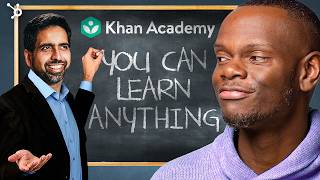
This YouTube case-study (Patrick Biddiscombe, Dec 13, 2023) narrates how Salman Khan started tutoring in 2004, began posting lessons to YouTube, and grew Khan Academy into a nonprofit aiming to provide a free world-class education. Key milestones: by 2009 Khan Academy had ~100,000 monthly users and Sal quit his day job; a 2014 "You Can Learn Anything" campaign boosted visibility; personalization features and classroom-flipping adoption expanded educational impact; during the COVID-19 pandemic daily usage jumped from ~30 million to ~90 million minutes. A partnership with Adobe (including a $1M donation and 100+ teaching resources) supported creativity education and reportedly reached over 3 million students and 40,000 teachers. The transcript also cites a study linking doubled platform usage (5→10 hours from 2021 to 2022) to an average +1 point MAP growth.
Questions this video answers
2004.
About 100,000 users per month.
The "You Can Learn Anything" campaign.
From about 30 million minutes per day to about 90 million minutes per day.
A reported $1 million donation and over 100 teaching resources.
Chapters
How did one phone call, a dinner party, and a YouTube video spark a global education revolution? Alright, let's rewind the clock and go back to 2004. Salman Khan, or Sal as we'll know him, is trying to help his youngest cousin out with some math homework. They're struggling with the catch. She's in New Orleans, Sal's in Boston. So he tutors her over the phone. And guess what? It works. Her grades shoot up, word spreads, and suddenly Sal's tutoring half of his family. With so many students, scheduling became difficult. That's when at a dinner party, someone suggests something that changes the course of Sal's life forever.
Why don't you record them as videos and upload them onto YouTube for your family?
After initially calling it a horrible idea.
YouTube is for cats playing piano for dogs on skateboards. It is not for serious mathematics.
He warms up to it and soon his lessons are in YouTube for his entire family. The feedback overwhelming.
They told me that they preferred me on YouTube than in person.
But Sal, why?
Now they can pause and repeat their cousin. Now they can without feeling like they're wasting my time.
Even though he made it for friends and family, people from around the world were watching Khan Academy content and sharing results. With one comment saying, first time I.
Smiled doing a derivative.
By 2009, there were 100,000 people using Khan Academy every month. So Sal quit his day job and decided to go all in. He turned Khan Academy into a non profit and officially adopted the mission of providing a free world class education to anyone, anywhere. I know it's wild to believe, but try to imagine a world where money is a barrier to education. Crazy, right? Through the creation of its entirely free website, Khan Academy smashed those barriers. But wait, it it's not just about offering free lessons. It's about the value of those lessons. We're talking about engaging videos, insightful articles and interactive exercises. It worked so well that educators started using Khan Academy to flip the classroom.
Some teachers start saying, hey, you already gave the lecture on X, Y or Z. I don't need to give the lecture anymore. So instead of me giving the lecture and the homework happening at home, I flipped the classroom. Where the lecture now happens at home and homework is now happening in the classroom.
This allowed educators to spend class time interacting with students rather than lecturing. In 2014, Khan Academy debuted their you can learn anything campaign. They put a short film on a new website that they promoted on social media with the hashtag youcanlearn anything. It was mentioned 500 times on Twitter on The first day alone. Currently, studies found that students who doubled their con usage from 5 hours in 2021 to 10 hours in 2022 saw an average 1 point rise in map growth scores. But they didn't stop there. While most platforms might be content with just casting a wide net, Khan Academy decided to get up close and personal. They recognized something fundamental. Every student is unique, not just another face. So they rolled out a genius personalization feature where students can share what subjects they're studying. And boom. The platform would customize their dashboard with specific lessons to help them all year long. It's like having a personal tutor who knows exactly where you're at and where you need to end up. By doing this, students weren't just passively absorbing information. They were actively participating in their own education. Fast forward and Khan Academy would soon be called into action to face one of the greatest educational challenges in human history. The pandemic. Schools are shutting down left and right. Parents are scrambling, students are stuck at home, and the demand for reliable online learning platforms is surging. And guess who's right there already at the forefront? Yep. Khan Academy. During this time, their platform skyrocketed from a daily usage of 30 million minutes to a whopping 90 million minutes. But even though they're winning, they're still thinking, how can we make this even better? Interstage left Adobe. Yeah. You know that tech giant known for its creative tools? Together they dropped this bombshell. Teach creativity with Adobe. And Khan Academy wasn't just any collaboration through a $1 million donation. It's a fusion of Adobe's cutting edge creative tools and Khan Academy's top tier educational content. We're talking over 100 teaching resources. The goal, to not just feed information, but to nurture both creative and critical thinking skills. This strategic collaboration benefited more than 3 million students and 40,000 teachers. The story of Khan Academy isn't just about education. It's about vision, adaptability, and the power of collaboration. Remember, sometimes all it takes is a phone call and a little belief to start a global movement. What are your thoughts on Khan Academy and the strategies they use? Drop a comment below, share your thoughts. And don't forget, as always, to subscribe for more interesting case studies. Sam.