How Lead Nurturing Works (Automate!)
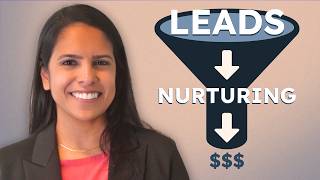
Adrithi walks through lead nurturing in HubSpot: set goals, build buyer personas, map content to awareness/consideration/decision stages, then automate emails and track engagement with workflows and templates.
Chapters
Hi there, It's Adrithi from HubSpot. Some leads need more time than others. This might be because they don't have the necessary information they need to make the purchase, or they might just be in an earlier stage in the buyer's journey. Regardless of what the reason is, the answer is lead Nurturing. Lead nurturing helps keep your potential customers engaged and guide them down the sales funnel until they're ready to convert. And with HubSpot, you're able to automate a lot of your lead nurturing strategies. So if you're ready to automate, click the link in the description and start using automation. Now, like every strategy you implement, you want to make sure that you're setting goals so you know how you are performing. With HubSpot you can set both sales and marketing goals. Let's start with marketing. For this example, let's say that I'm a greeting card company and I want to make sure that my ads are performing the way I want. So I'm going to set goals to see how my ads are performing in sending traffic to my website. I'm going to give my goal a name, select the ad account I want to track, which is my Facebook account, as well as the campaign, and then here I want to set my goal duration. So I want it to be monthly for the next year. As you'll see, I'll be able to add in the goal for every month this year. For this example, I'm going to put the same for each month except for July because I have a couple other campaigns that I think are going to work really well. So I'm going to keep it like this and click Next. Here I'll be able to set notifications so I can be notified when I exceed my goals, if they're being achieved or if I miss them. I'm then taken to the Analyze page where I'm able to track my goal progress. Now sales folks, don't feel left out. We can set goals for you too in your HubSpot account. Go over to Reporting and Data and click Goals. Now if you're new to this feature, I'd highly recommend creating a goal from Template. Here you can see the common goals a lot of our users choose to implement. One of the most common ones is revenue. So let's go ahead and set our revenue goal. And our goal is to increase our revenue by 20% in 2025. I can assign it to specific people and then again choose the duration of the goal. You'll see this is very similar to how we Set our marketing goals. I have the same notification options that I did with my marketing goals. Now that you've set your goals, the next step is to identify the audience you want to nurture. And you know what that means. Buyer Personas. A buyer Persona is a semi fictional representation of your ideal customer. This is a really great place to start when thinking about who you want to nurture. If you don't have a buyer Persona, no worries. HubSpot has a free tool, a Make My Persona generator that you can use to answer a few questions. And it'll actually give you who your buyer Persona is. We'll make sure to link this in our description below. Once you've created your buyer Persona, the next step is to add that Persona into HubSpot. You add it as a property, and once you have it in HubSpot, you can use this to further segment down your contact list so that you are sending targeted messages to the right people. Under data management, select Properties, search for Persona and click Edit. Here you'll be able to add a number of different Personas. Once you've added your appropriate Personas, you can go into a contact record and edit them and assign them the right Persona. Now that you've added your Personas as a property and HubSpot, you're able to mark certain contacts in your CRM as certain Personas. So this is going to be a great way for you to segment down your contacts and make sure you're talking to the right people. All right, so now that you've created your buyer Persona, the next step is to create content, right? Not so fast. Before you can create content, you can. You need to understand that the steps your prospect takes before becoming a customer with you, otherwise known as the buyer's journey. The buyer's journey has three stages in it. Awareness, consideration and decision. In the awareness phase of the buyer's journey, your prospect becomes aware that they have a problem. So let's take our greeting card company from before. This is when they'd realize that they're not keeping in touch with their long distance friends or family and they'd like to change that. They're aware that they have a problem. In the consideration phase, your prospect is clear that they have a problem and they're determined to help solve it. So in this stage, they're looking at all of the available approaches that they can take to solve this problem. So for our example, it could be greeting cards, it could be a long distance phone calls. There are really a lot of options here. And then finally, in the decision Stage, the prospect has decided on a solution strategy and, and now they're researching vendors. So let's say they go with, yep, I want to start sending greeting cards. Well, there are a lot of vendors out there, so they're going to be doing their research on determining which one is right for them. The goal of the decision stage is to make a purchase. Now that you understand the buyer's journey, let's start making content for our prospect. At every stage of the way. If your contact has consumed your content, it's a fair assumption that you have their email address. And it's important that we use that email address to continue nurturing them. One way to automate some of this lead nurturing is by enrolling them in an asset workflow. An asset workflow is a workflow that'll send them emails that are helpful and relevant to them. We know what's helpful and relevant to them because we already know what type of information they're consuming. So this is really powerful information and a really great way to send them information that they're actually going to enjoy. Now, in my HubSpot account, I'm going to create a workflow. And if workflows are intimidating to you by any means, start with templates. We have a really great library of templates that'll help you nurture your leads. So let's say I want to create a workflow that sends a welcome email to new blog subscribers. So here I have a workflow. When anyone fills out the form to subscribe to my blog, I'm automatically going to set their lifecycle stage to subscriber and and send them a welcome email with some other helpful information that I know they're going to enjoy because I know what content they're looking for. Another workflow I really like is a re engagement workflow. So let's say someone has subscribed to your blog, but they're not clicking into the links. They haven't visited your website URL in a really long time. What you can do is send them an email asking them if they're still interested or give them some other valuable content to get them back in. With workflows, you can also understand how folks are engaging with your emails to see if you're on track to meeting your lead nurturing goals. To do so, click into your workflow and select View Details. Here you'll be able to see metrics such as contacts enrolled, if there are any issues or actions needed from you for this workflow, and even enrollment history. So this is a great place to start if you need some more data behind the emails you're sending. When you're ready to start creating content, make sure your content is aligned with the buyer's journey. So for awareness content, you could do things like videos or blog posts, maybe even fun quizzes so folks can understand their problem a little bit better. For consideration stage content, consider writing newsletters, ebooks, or maybe even hosting a webinar. And then finally for decision stage content, think of this as pricing pages or or free trials or demos. Whatever content you're trying to make, HubSpot has got you covered with our content library in your HubSpot account, you have so many options to creating really great content for your prospects. So if you go into content here, you'll just see a sampling of everything that's available to you. But you have blog posts, website pages, podcasts. Really take some time to understand what's in your HubSpot account so that you can create the best offers for your prospects. And there you have it. HubSpot's guide in helping you automate your lead strategy. HubSpot has been deemed leaders in the small business mid market in enterprise spaces by G2. So if you are ready to get started nurturing your own leads, make sure you Sign up for HubSpot's free CRM today. If you're enjoying this content, make sure to subscribe to this YouTube channel.
More from Patrick



A NEW BREED OF PARTNER: The Partnership Ecosystem Model Journey of Patrick Biddiscombe, Part 1








Customer Success Workspace: Never Lose Sight Of What Matters Most | HubSpot Spotlight