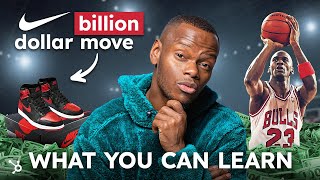
Nike signed Michael Jordan for $2.5M in 1984, released the Air Jordan 1, and the NBA banned it for violating the 51% white rule. Nike paid the fines and marketed it as rebellion. The shoe made $70M by 1985 and turned into a multibillion-dollar franchise.
Questions this video answers
29%
Five years for $2.5 million
The NBA's "51% rule" requiring shoes to be at least 51% white and match team colors
$5,000 per game
Over $70 million
Chapters
How did Nike turn a shoe ban by the NBA into a billion dollar business? I'm Tory and as always in this video, I'm going to break down the strategies that big brands use into actionable universal lessons that your brand can learn from, no matter the size. In the 1980s, Nike was a struggling company. Their earnings declined 29% in 1984, the first drop in 10 years. That same year, they found an answer to their problem in the form of a young player named Michael Jordan. MJ His Airness the goat. While he wasn't a global superstar in 1984, he had just finished a highlight college basketball career and was selected third overall in the NBA draft by the Chicago Bulls. Sponsors wanted him bad. While he originally wanted to sign with Adidas, management issues at the time prevented them from offering Jordan an attractive endorsement deal. Nike saw an opportunity in made an aggressive pitch. They signed him for a five year $2.5 million deal. At the time, it was one of the largest endorsement deals in sports history. And a bold investment by Nike in a young, popular but unproven rookie. This brings us to strategy number one. Nike's partnership with Michael Jordan created a strong emotional bond between the audience and the brand. As fans were drawn to the sneakers that represented Jordan's unique on court style, they became loyal advocates for the Air Jordan brand. This relationship with an influen influential figure helped Nike reach a much wider audience and amplified the impact of their marketing efforts. In 1985, the first Air Jordan model, the Air Jordan one was unveiled. They're beautiful. The shoe was a big departure from the norm. Wrapped in bold black and red colors, these classics were a work of art. This leads us to strategy number two. Nike made sure that the Air Jordan one was, was not only visually striking, but also offered superior performance and comfort. By combining innovative design with a functional purpose, they created a shoe that was highly desirable to both athletes and fashion conscious consumers. But this quality product was also in complete violation of the NBA. Why? Well, well, it didn't have any white in it. See, the NBA had strict uniform regulations and the Air Jordan one violated the league's 51% rule which demanded that that a player's shoes must be at least 51% white and must match the team's uniform colors. The league took immediate action banning the sneakers and allegedly threatening to fine Michael Jordan $5,000 each time he wore the shoes during a game. Game over, right? Nope. Just like a game winning shot, Nike made a save with the company telling the star Michael, if you wear the shoes will pay The Fines Nike had an idea for an edgy strategy. Their marketing team launched a campaign called Band in the NBA and every kid wanted to shoot. They positioned the Air Jordan one as the ultimate symbol of individuality, style and defiance. The NBA threw them out of the game. Fortunately, the NBA can't stop you from wearing them. This was a pure representation of strategy 3. Nike's band campaign expertly tapped into emotions of defiance, individuality and the desire to be part of a transformative moment. By positioning the air Jordan 1 as a symbol of rebellion against the establishment and attaching it to a charismatic personality like Michael Jordan, Nike was able to connect with their audience on an emotional level, making the shoes more than just a fashion statement or sports accessory. With an emotion inducing genius commercial and a print ad campaign that included showing the actual letter NBA Commissioner David Stern sent to Nike letting them know the shoes were banned, Nike was officially turning a negative into a positive. Demand skyrocketed. Nike sold over $70 million worth of Air Jordans by the end of the 1985 basketball season, and by 1986, the line generated over $100 million in revenue. As of 2022, the Air Jordan brand was estimated to have generated more than 5 billion in annual revenue for Nike, making it one of the most successful and influential sneaker lines in history. When asked about the ban, Jordan says it would have cost millions of dollars to come up with a promotion that produced as much publicity as the league's band did. While your business or product may not be at the level of his airness, these universal strategies are. Here's how to use them to booster brand Create a high quality product A high quality product is essential for success. Ensure that your product meets or exceeds the expectations of your target market and continuously strive to improve and innovate. You can start by conducting thorough market research to understand your target audience's needs and preferences. Emotional Connection Establishing an emotional connection with your audience is crucial. Identify the emotions and values that resonate with your target market and craft your marketing message to create a meaningful bond between your brand and and your customers. Collaborate with influencers to boost your reach. Research and identify influencers within your niche who align with your brand values and have a strong connection with your target audience. If you're on the smaller side, think about getting involved with a micro influencer. Partner with them on things like content creation, product reviews, or giveaways. By doing so, you can significantly boost your marketing reach, create a lasting impact on your audience, and promote credibility. If you like what you heard, make sure to subscribe and give us a thumbs up. Drop a comment down below to let me know what other business strategies you'd like for me to break down. Until next time. Bye Bye. I can find this client info. Have you heard of HubSpot? HubSpot is a CRM platform so it shares its data across every application. Every team can stay aligned. No out of sync spreadsheets or dueling databases. HubSpot grow better.