How Technology Connects With Emotion | Bozoma Saint John
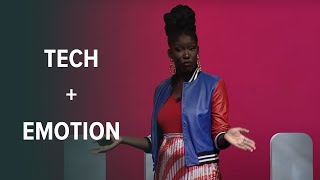
Bozoma Saint John, Uber's Chief Brand Officer, argues that brands need emotional connection, not just product features. She shares stories from her immigrant family background and career, including a chance encounter with an Uber driver and a dinner with Iggy Pop, to show why authentic storytelling matters in tech.
Questions this video answers
Chief Brand Officer at Uber.
January 1977.
October 1989.
16,000 people.
She says she has been a widow for three years, nine months, and 16 days.
Chapters
Thank you. Hi, guys. Well, my name is Bozeman St. John, and as introduced, I'm the Chief Brand Officer at Uber. I wrote on Twitter a few weeks ago that my story is complicated. You know, I bet yours is, too. And in that way, I know that we are more alike than different. We each have a story to tell which has shaped who we are today. The experiences we've had, the heartbreaks we've suffered. I've suffered a few. The joys we've celebrated, they all add up to the person that we are. I believe brands are people. You know, they have personalities, they have perspective, they have dreams, failures, regrets, hopes for a bright future. I even believe Uber has a bright future. I do. And it's my job to tell it. So I'm going to tell that story in a number of ways, through the traditional means of brand marketing, like campaigns built in, tv, broadcast radio, out of home, social, digital, print. You know, all that. I'm also going to tell it in the partnerships that we elevate and the pop culture experiences that we integrate into. There are many subjects to base the story on. The drivers, the writers, the product features. But like any good storyteller, I'm really biased. Yeah, I'm biased. I mean, I'm biased and unapologetic in my bias. Okay, you better tell them. I'm going to tell the story through my lens, because without the storyteller's unique perspective, the story falls flat. Right. Think of the best storytellers that you know. Your mom, maybe a naughty cousin who told you a story shouldn't have told. You remember those type of stories? Yep. Maybe a favorite authority or professor in college. In one way or another, the storyteller injected their own excitement, their fear, or their purpose in the story they told you. So to give you a better sense of the stories I will tell about Uber, I first want to tell you about myself. Is that okay? Oh, come on. Is that okay? Okay, so my story started long before I was born, like all of you. But I'm going to start with my paternal grandmother. I am named after her. She was the fourth wife of my grandfather, who was the chief in the village of Inzima. Now, I mean, right? Does that just make you want to move? Come on, come on, come on. We're all African. Come on. We know that. All right. It's a coastal town on the very western border of Ghana, near Lakot d'. Ivoire. I wish I could tell you more about my grandmother, but unfortunately, she passed away when my father was just two years old. And in an effort to protect him from the sorrow of being a motherless child, the other wives and my grandmother's sisters bathed them in love and refused to speak about her. I wish they had though, so that I would now know much more of the history of the name that I carry. My father, he calls me Mamichi. Mamichi means small mother. It's meant as a term of endearment, but also respect. Because he wouldn't dream of calling his mother by her first name, even though he doesn't remember her face. He grew up in that village, a beloved child. But in his early teens, his father also passed away and he became an orphan. Now, his story could have taken a tragic turn, but instead it's one of triumph. I will spare you the longer story, but instead give you the top points. He joined the Ghana armed forces at 18 in the Navy and found himself as a self taught first chair in the naval band, playing the clarinet. I love the clarinet now. He eventually earned a Fulbright scholarship to the U.S. and earned Ph.D. degrees at Wesley University in Ethnomusicology and anthropology. During that time, he proposed marriage to an elegant, beautiful woman. My mother asked me to describe her that way. Sure. And they moved to. And she moved to Milltown, Connecticut to be with him. I was born in January of 1977. I know I look young and spry, but I'm not. I'm 40 years old, y'. All, okay? And that was six months before my father received his degree. And my parents decided to move back to Ghana. Now, after their return, they immediately settled back into the community. My father was teaching at the university in the capital and eventually became a member of parliament in the Gila Leman government. That government was overthrown in 1982. My dad has not had an easy life, y'. All. And the governmental officials threw all of them into political detention while their families fled into political asylum. Now, by that time, I was six years old, I had a younger sister, two younger sisters actually. And my mother was pregnant with my youngest sister. We took asylum in Washington D.C. my dad joined us a few months later and after being freed, he was present to witness the birth of his fourth daughter. He's a very blessed man. That's what I tell him, okay. In many, many ways. And over the next six years we lived in Orange County, California, Nairobi, Kenya, and eventually returned back to Accra, Ghana after democracy again had been restored. But the biggest move for my family came in October of 1989 when we moved to Colorado Springs, Colorado. Now that's where I transitioned from telling the story about my father and my grandmother to telling the story about myself. See, we moved to Colorado when I was 12, almost 13. And the last thing on the planet that I wanted to be was different, right? But there I was different. Five feet, almost 10 inches tall. At that age, I weighed maybe 100 pounds soaking wet. I had long braids similar to what I have now. They were almost down past my waist. I had a really strong Ghanaian accent, and my father's worldly political trivia quickly answered in rote memory. And then I was longing to belong. I looked at my new classmates and knew for sure that I didn't belong. I mean, can any of y' all guess why I didn't belong there? Just all this right here, all of that. That. No, none of it was working. But for the weird differences, my classmates were also intrigued by me. They asked innocent but benignly ignorant questions, right? Things like, did we sleep in huts in Ghana? Were monkeys our friends? What, like bubbles? I don't know what you mean. Had I ever seen white people before? Really? I guess they didn't know that there was a burgeoning Afropolitanness that I was proudly carrying. I stared blankly at those questions, and sometimes my poker face did not hold. I've learned since not to hide my poker face. But I give a better side eye like that. And I roll my eyes too, sometimes. But what I quickly learned was that it wasn't the answers to the questions that I needed to have ready, but rather the answers to the questions they asked each other about their own shared experiences. Who was the better dancer, Paula Abdul or Madonna? What? I mean, clearly the black girl, right? For me, right? Who was the better singer? Taylor Dane or Lisa Stansfield? Aren't they both white girls? I'm not quite sure. Okay, who were we going to root for on Sunday? Duh, the Broncos, right? These were all things that I had to learn. Did I want to walk around aimlessly at the Chapel Hills Mall window shopping and daring each other to go talk to the group of guys standing by the footlocker? Yeah, of course I did. But what would I say? You know, it's the question that has haunted me ever since. What will I say? It is the question that keeps me up at night right now. You know, I want to say so many things. I want to say things that make me equal. I want to say things that make my story relevant. I want to say things that make people sit up, pay attention, and give me a chance, you know? That's what I want. And like the precocious, too tall, dark skinned, lip smacking, pepper soup, slurping, cute shoes loving, pop culture studying girl that I was then. I am right now. Yep, I am right now. Right now I sit in a chief seat in Silicon Valley. I wish I had my braids to flip. Maybe I'll just roll up my sleeves then. But I do wonder what my grandmother would think. You know, she was married to a chief and now I am a chief. You know, what a long way the name Bozma has come. What a long way. And I pray to God that I make her proud. Now I know I made her proud the day I walked into the White House last December. And no, I have no plans to visit anytime soon. Steph Curry and I will be at home. Okay? But last December, when Mrs. Obama, who we love, and our hubby, the President of the United States, former President of the United States Barack Obama, were in the White House, my name rang out in introduction during their last musical event which was appropriately titled Love and Happiness. Right? And with that call of my name, the spirit of my grandmother rose proudly too. I said then that those who have walked this walk before us are so proud to see us standing in this space. Because the call to action is not just to boldly proclaim, yes we can, but it proves that yes we are and yes I am, and therefore she is. Our ancestors legacy will forever leave a mark where we've been. And I want to leave a mark here in this time and in this space. I want this place to never be the same once I have sashayed through it. Yeah, that's right, that's sashay. I share that desire with so many people, you know. Okay, maybe not the sashaying part, that's not always everybody's thing, but you know, we can praise the people who like to sashay. Is anybody in here who likes to sashay? Yeah. Okay, there are just a few of you. I'm gonna need you all to do better. But if you don't want to sashay, I think most importantly we can all agree that there's someone in our lives or something in our lives that we want to make proud. What is it for you? You know, what motivates you? I believe we can be motivated by so many inputs. Sometimes it's people, sometimes it's events, sometimes it's injustice. Takeanee. Okay, sometimes it's even brands. But some brands make us feel something like empowerment or inspired or light hearted or like we're doing something good just because we chose to interact with them. If we went around the room right now, I bet we could all probably name a brand that holds hold some meaning to us. It can often be irrational when you get right down to it. But we believe, we believe it is the belief that makes us choose that sneaker over that one, right? Or that soda over that one. Or that purse over that one. Or that disruptive ride sharing, gig economy making, industry leading brand over that one. I want to inspire that choice. And I realize, as many of you do, that it's not always a rationale that drives the choice. Oftentimes, as in the case of Uber, we have relied on rationale to make the choice. I would say that it was a strong sentiment before the start of this year. The brain, the brand has relied on the left side of the brain, right? The side that makes calculated decisions. The side that does the math, chooses the best step forward based on a practical outcome. But then things changed. Dirty laundry was aired. People wanted to delete Uber, and all of a sudden the left side of the brain couldn't rationalize what was going on. Now, if you thought for a second that I was going to be up here about to go into some dirty laundry, I'm sorry to. Weren't you? Okay, this isn't an episode of Jerry Springer or anything like that. No one has come on stage left. But I do want to talk about the right side of the brain. The right side of the brain is full of emotion, right? It's the side that is sorry. It is the side that knows its wrongs and wants to make it right. It's the side that is empathetic. The side that cares more for the human reaction than the mechanical. Now, it really has been there all along, I assure you, but with a focus on expedient growth. It has been silenced, quieted. And now this diva walks in stage left and wants to get loud, right? Yeah, I said loud. I want to get loud. If you haven't guessed it by now, I'm not the silent type. I don't know if y' all noticed that. Not in dress, not in speak, not in anything. So no, I'm not sitting in the corner waiting for my turn. I'm up, I'm out, I'm talking, I'm showing. And I want to bring along the story of so many people. You know, there are 16,000 people who work at Uber. 16,000 people, individuals. They're dedicated to a glorious future of technology which will continue to make our daily lives better. Whether you're a driver who's choosing this platform to make a living or this is a side hustle. Maybe you're a rider who's trying to hustle to the other side of town. Maybe you want to go out with your girlfriends and risk it all. Well, Uber will be the dependable one to take you home. The interesting thing about the ride is that it's such an intimate space. I often think about this. And you think about it when you get into the car, you're a few feet away from a complete stranger or multiple strangers. If you're in pool or something, you could choose to ride silently. There's lots of things on Twitter about that. Or engage in conversation that could lead anywhere. Often I've heard drivers say that they feel like therapists. You know, someone gets in the car, they're angry or sad or excited or anxious, and sometimes they will talk out their feelings with this complete stranger because that feels safer than sharing it with a friend, right? Sometimes magic happens there. Serendipity that we can't explain. That happened to me once, by the way. So I'm going to tell you a little story about that. So I was in Austin, Texas. Oh, all right. Hey, Austin, let's get weird. It was during south by Southwest last year. I was working for Apple at the time, and we had launched our first version of Apple Music, and we had a hospitality space where we were hosting influencers and musicians. Now, that evening, I had to attend a dinner, and like most times when I have somewhere to go, I was running hella late. Okay, you can insert the stereotypical African joke there. It's fine. But in any case, I was called. I called it my Uber Black waited under the lobby valet because I'm a diva. And when it appeared, I was terrified. Okay? Terrified. The car looked like it had been really nice at one point, but had been through disaster. Okay? The paint had been keyed. I'm not being dramatic. The paint had been keyed, the side mirrors were smashed, the interior fabric was torn. And being the sensitive empath I am, I got into the car and I immediately made a joke, right? I said, listen here, okay? I'm a mother of a young child. You're not going to. Nothing's going to happen to me in this car. Right? Well, I don't want to tell you that he didn't laugh like some of you all laughed, because he didn't like my brand of humor at that moment. And he was actually quite embarrassed. And, of course, I subsequently was equally embarrassed for embarrassing him. You know how that happens? So I asked, of course. Hey, so when in the hell happened to your car, trying to make conversation, trying to make it less awkward. And then he looked more embarrassed before he told me his story. He had been at the airport right before picking me up, and he went to get a rider, and he parked his car in the lot to help her with her bags. When he returned, his car had been vandalized by a group of taxi drivers who were also parked in the lot. At this, of course, yes. Like some of you, I gasped. Like, what? You know, obviously feeling his distress. And he immediately started apologizing because he said he was really in a predicament. You know, he'd been driving Uber during South by to make extra money. It was a busy time of year. He knew he could make a lot of money, and he wanted to save up money to get tickets to a concert. And he was torn because he knew he shouldn't drive with his car that way, but he needed to make the money. And the reason why, well, his brother had just recently passed away. I mean, I know this guy was, like, traumatized, and he wanted to honor his brother by going to see their favorite artist while that artist was at South By. And that artist was Iggy Pop. Now, I immediately gasped again. Like, I clutched my pearls. I don't wear pearls, but pretend I did. It was. By the way, it was not a good idea for me to gasp again because his nerves were shot. Yo. And I was super dramatic. But the reason I gasped now, this is the part because I still get the reason I gasped and got goosebumps was because I was on my way to dinner with Iggy Pop. Like, for real. I know, right? I said what? I said Iggy Pop. It wasn't Drake or, like, Justin Timberlake or something, you know, it was Iggy Pop. What is the probability of that? You know what I mean? You can imagine what happened next, because I don't believe in coincidences. And I don't believe that I accidentally got in his car either. You know, we were destined to meet. I believe that. When I told him I was on my way to go have dinner with Iggy Pop, first of all, I will never forget this. He looked in the rear view mirror and he was like, stop effing with me. He didn't actually say effing. He said something else. I want to keep it clean, you know? Now I know that he thought I was crazy, because, really, what are the chances? They're so slim, you know, in fact, I think they're actually impossible. There's no math that gets us to that moment. No math. There's only magic. There's only magic. Or maybe his brother's doing, or maybe divine intervention, which I believe. So of course, we both started crying because I'm dramatic. I mean, like, snot. Like, real crying. I'm tearing up now. And so here's the thing. I immediately knew that I should take him to dinner with me, right? So when I asked him to join me, there was, like, more fugly crying. You know what I mean? Fresh tears. And when we walked in, Iggy was like, is that your man? And I was like, no, that's my Uber driver. And when he told Iggy Pop his story, you know, I sat in wonder at our fortune, right? The fortune of meeting this total stranger in a city that is not home to me and being able to make a powerful connection that we'll both remember for the rest of our lives. I will never forget that. You know, it was pure magic. I think we have a photo of him. Yeah, there he is. I mean, that's my homie. Now, there are loads of other stories like that, you know, and now that I'm working at Uber, people feel inclined to continue telling me their stories. By the way, it's like everywhere I go, they're like, I have a story about Uber. So I guess it's not a big leap for me to put those stories on a bigger stage like this one. You know, so much has changed with storytelling and technology. When we think back to the 80s or early 90s, you know, the way that technology was advertised, it was fantastical. You know, it was like Star Trek the Next Generation. Because I'm teen Jean Luc Picard, not Team James T. Kirk. Sorry, y', all, but I don't want to start any kind of Trekkie war, so we'll just move on from that. Technology was either fantastical or it was educational, right? Advertising, the products was full of information, while brands like Levi's were selling, like, a good time. You know, technology felt out of reach, and in some cases it was. You know, it wasn't that long ago that we talk of the great digital divide between races and classes in America. And now, because of increased technology, the ease of access, that divided really doesn't exist. But the products and platforms have advanced, and we also need to change the storytelling. It can no longer be cold. Not cold. It needs to feel warm like us, right? It needs to be intimate. We have technology to help us shop, to deliver food, to connect us with strangers who will watch our pets and our children in our own homes. That's intimate. Okay, so what are we Connecting to. We're connecting to other human beings, and tech connects us to those other human beings. But what connects us to each other. Emotion. It is human emotion that drives all of our decision making. It's what drives us to be our best selves. It's what drives us to stress out about our Uber ratings, too. By the way, a few weeks ago, Dale Earnhardt Jr. Was so stressed out about his writer rating that he took his displeasure to Twitter. This is real. This is real life. I wish I could have mocked this up, but no. Yeah, just let that sink in. Okay? I mean, homeboy's anxiety level was a hella high. I mean, I'd be anxious to if my Uber rating or my rider rating was 4.0. Right? That's an awesome grade point average, but it's not a great Uber rider rating. Okay, so we offered him some tips. We said, one, don't ask to swap seats with the driver. Two, there should be less pit stops. Three, use the doors, no exiting through the window. Yeah, we got a lot of laughs from that one. And I hope he laughed too, by the way, if he's not laughing, we need to get better. But really, the central point of the story I'm telling about Dale isn't that he was worried about getting to his next destination. That wasn't what he was worried about. He was worried about the interaction with his driver. Right. And that's central to the stories that I want to tell you. You know, what is the interaction that you are having as a driver or as a rider with the product or with pop culture? How do these stories connect to you on a daily basis? Did you feel anything when I told you the story about my driver in Austin? Did you? Was there any feeling, perhaps you'd make a different connection to the story of maybe, let's say, like a mommy driver, right, who drops off her young kids at school and then drives in the early morning. Or maybe it's a musician, right, who's driving to make ends meet while working towards their big break. Or maybe it's a funny thing that happens on the way to the forum. In this case, it would be the forum in la. And for my fellow Latin nerds who've seen the film by this name. No. No Latin nerds in here. Okay, fine. Well, my high school Latin teacher would have been very proud because of the film called A Funny Thing Happened on the way to the Forum. I was trying to make a Latin joke. It didn't work. But in either case, it is my intention to make you feel something Positive when you hear these stories or to recall them with inspiration or delight. Even though technology that goes into running this product is world class and it is leading the industry, sometimes you have to go with what feels familiar to get the point across. So it's like what I did last summer. Now, it was an interesting day when I was presenting the new Apple UI during the keynote at wwdc. There were so many incredible advances in the product, but we were deciding what parts to present. And my feeling, and one of my favorite additions was the lyrics in the product. Now, we've all been in the position, well, maybe you haven't. Let me make this about myself. I've been in the position where I'm in a car or in the kitchen or wherever and I stumble along the words to a new song or it's an old song and I just never got it right. I never probably will, but it's fine. And I know personally, I've almost come to blows over this. You know what I mean? You get in the argument like, nah, what's that word? Nah. It was that word, you know? So I was really excited to present this very cool solution to a universal problem. And therefore, I wanted to make Apple music feel like the place you can go and know for sure that you're safely able to sing along properly. Very important. Well, my theory was right and I believe the audience understood my point and connected to the idea. But, baby, it went horribly wrong. Let me tell you about it. When I started to play the classic Rapper's Delight, because I was going to be like sort of the, you know, the illustration of the lyrics, because I thought everybody knows the lyrics of Rapper's Delight, right? And I asked the audience to rap along. Well, the audience needed more help than lyrics. I couldn't provide the kind of help they needed. Yeah, they couldn't even fire the daggone beat. I mean. But I wasn't afraid to tell them, though, because do I look scared? I don't look scared, No, I told him, okay, but I'm not gonna do that to you here. Don't worry. There's not a test. You know what I mean? Even though no, I actually don't want to do it, I never want to relive that moment ever again. I'm still recovering from it, so get the shakes. When I hear Rapper's Delight, like, no, but in the spirit of finding commonality, I do want to engage with an audience, right? And in the same way that I approach the ads for Apple music, too. So when I want to explain the playlists that worked on the service. In that instance, I worked with Ava DuVernay, who directed a commercial featuring Tarasha P. Henson, Kerry Washington and Mary J. Blige. I mean, right, the trifecta of black girl magic. I mean, amazing. The situation was set up in Mary's living room where the ladies gathered to listen to music, talk about old times, past boyfriends, their hopes, their dreams, their aspirations. The ladies likened modern playlists to the old school mix tapes. Right. And what we walked away with was a spot that told the universal truth, truth of connecting to nostalgia. Right? It didn't matter that there were three black women. If you've ever, you know, sat around on a couch with your friends and played music, like, you know, to me, it's like the air drums to Phil Collins. In the air tonight I can't feel it coming in the air tonight oh, Lord, don't act like y' all don't know the song. Anyway, my point is there is commonality here. I know you all know that song, so you can't play with me. See that? Almost. Now you're going to make it a problem. Now I can't listen to Phil Collins ever again either. Okay? But as a brand marketer, that really is my goal. Not to never listen to Phil Collins again, but to have commonality with an audience. I want to make you feel something great when you think of the brand right now. I also believe that as brand stewards, it's important to be authentically ourselves in telling those stories. I actually really like and think it's quite dope that inbound. Use my Instagram feed to introduce me here because I do share so much of myself on social media. I document my professional life, my beliefs, my family, my bikini photos, much to the chagrin of my dad. You know, but who cares? I like my bikini photos and I tell my story as I go along. And since I started this talk about telling you about my past, I want to close the session with telling you about the future that I envision. I'm a mom to an 8 year old daughter. Her name's Lael. She's an absolute joy. She's sassy too. I don't know where that trait came from. I usually blame any faults on the other side of the family. So apologies to my mother in law. But even with that, you know, sadly, I've been a widow for three years, nine months and 16 days. Today, I still count them. My husband passed away from cancer. He died six months after he was diagnosed with Burkin's Lymphoma and there isn't a day that goes by where I don't think about how I want to live this life. You know, like Diane Ackerman said, I love this quote. She says, I don't want to get to the end of my life and find that I have just lived the length of it. I want to have lived the width of it as well. I want to live the width of my life. You know, I want to make a difference while I'm here. I want to leave a legacy for my daughter. She's watching me, and she'll inevitably use the actions that I take to chart her own course. And I know that as I strut through Silicon Valley, that there are others who are watching me as well. I want to make sure that my existence, that my existence here changes the course for the future of diversity and inclusion here, too. Now, it's important to me that we see ourselves in the stories that are told. Each of us has something to tell, and we shouldn't be afraid of reflecting that in the work we do. You know, quite literally. For me, I don't want my work to be all vanilla. I need a little chocolate up in there. Okay? So I hope that for each of you, that diversity of our stories will not just be told, but appreciated and celebrated. You know, let's make sure that this great responsibility we have is not just telling our present state, but setting the pace for the future, because it's worthy of our best selves. Because, as the great modern poet DJ Khaled said, we the best. So here's the future. Thank you.
More from Patrick



A NEW BREED OF PARTNER: The Partnership Ecosystem Model Journey of Patrick Biddiscombe, Part 1








Customer Success Workspace: Never Lose Sight Of What Matters Most | HubSpot Spotlight