How To Build & Monetize A Personal Brand In 2024 ft. Ryan Alford
Ryan Alford built Radcast and his agency Radical by treating content as a compounding asset. He shares how discipline and structure beat perfection, why podcasting works as a content engine, and how to move past the fear of being judged for putting yourself out there.
Chapters
We're coming into you hot with a great show today. We're joined by Ryan Alford, host of the Radcast. The founder of the radical agency is an entrepreneur and personal branding expert. And that's what we're doing today, a personal branding deep dive. He's going to unlock how he built his personal brand, how you think about the compounding benefits of having a personal brand. And we're going to cover what you need to do to ensure that you don't fail as you go down the personal branding path. That and much more on today's show. All right, on today's episode of Marketing against the Grain, we're here with Ryan Alfred and we are going to talk trends and skills that marketers and entrepreneurs need to know in 2024. We've got some hot takes, we've got some great advice and some deep dives coming your way. Ryan, thanks for joining us on the show today.
Hey, my pleasure. Happy to be here. And let's get after it.
Let's do it. All right, so we want to go straight into it. We want to talk about what the three of us see as some of the core trends facing marketers, business owners over the next year.
I think there's two really powerful trends for marketers happen right now. The first is something you talk a lot about. It's the, the power of personal brand, like how important it's going to be in the future for all of us to actually have our own brands. I think that's trend one we should definitely touch on. The other one is, is pretty fascinating as well. Like it's predicted by 2028, the, the average brand will lose 50% of their organic traffic to AI search. And actually there's. And a part of that is actually going to be paid traffic as well. So there's the organic and the paid because we're all gravitating towards these kind of like AI search experiences. Right. And that is, like, hugely impactful for all of us who grew up in the era where I have said it before, the SEO era, 2005, to like, 20 to 16 was the funnest time to be a marketer because you could do a bunch of, like, scalable things to actually grow. And that's actually going to dissipate and that we're going to, we're going to start to lose that channel. So maybe we'll start on the, the brand inside. Ryan, like you, we talked off, off. Mike, you've actually copyrighted a phrase. You're really deep into that. Why do you think that's such an important thing for all of our listeners to actually care about and start to do in practice?
Well, I think there's a few things at hand that all kind of start to play together. Number one, I firmly believe, and I think the data proves out, consumers have never been more aware that they're being marketed to at all times than now. And so we're also in this place where there's an amazing lack of humanity marketing taking place, where what I mean by that is we preach all the time it's not B2B, it's not B2C, it's H2H, human to human. And so this trend has been kind of percolating for a while. And I think what happens is there's no better way to market as a human when you own companies, when you do things, than the human to human aspect of your personal brand and creating leverage with the growth and being known. There's truth around the statement that, you know, monopolies are not allowed anymore except the monopoly of yourself. And because we're all unique and we can, no one else can take it. And hopefully there'll be laws that don't allow AI to take that. Speaking of AI, but social media has, has allowed so many opportunities. I think you say we say these things, they sound cliche and it's like, well, social media has been around for 15, 20 years now and you know, Facebook's, you know, stroll people and there's all these things. But the reality is attention is so centered around social media and around these channels which really live and die around people and around the opportunity to share perspective, to share insight and to really be known for something more than, than just sales and things like that that happen with business and people want to have this connection with humans and with people and understand who they're doing business with. And social media allows for this amplification opportunity that you can do with yourself. And I think what happens is businesses that embrace this, that have leadership, that have people that can take and be the spokesperson for the brand and be the human connection for people, is an opportunity that a lot of people start to get around. But I think we're just now scratching the surface for the number of brands that are really taking advantage of this. And this is really whether you're a startup or not. I'll just say this. Tell me. I mean, let's hold two people. Let's hold two people together, okay? Joe Smith, who has no following on social media, has no real awareness other than his friends and family on social media. And then Joe, Joe White, who has spent three years and has 10,000 followers on Instagram, 2,000 followers on TikTok, a thousand followers on Facebook, and a really nice LinkedIn following. Which one of those is in a better position to flip the switch on a company or a brand that they want to start? We all know the answer to that, Right? Right. So why wouldn't one want to leverage that opportunity?
This was the kind of follow up to that is you're entrepreneur from, you know, come from it through the lens of marketer. You've like five businesses. Some of those businesses are definitely intrinsic, are more powerful if the founder has a better brand. Like, you run a really successful agency. I was in the agency business. That's how I started in marketing. Many people buy because they know the founder and the agency name is like second to the founder's. You're an investor in a wellness brand. I think that's another space where you really understand the person behind the brand versus the brand name itself. So what was the moment for you as an entrepreneur where you realized like the power, you know, where you realize this kind of personal brand does actually helps propel those companies forward? Like, was there a moment you were like, wow, like, I really need to get on the grind and grow my brand to make these companies more successful?
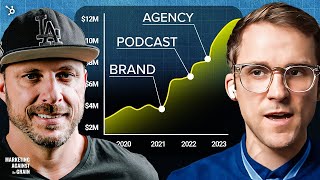
Yeah, it was right around 2014, 2015. I came, I worked for other agencies. I consider myself entrepreneurial. I grew up in an entrepreneurial family and was lucky enough to start in an agency that was very entrepreneurial driven, very empowering for their employees, and did that for 13 years and grew and worked on some of the largest brands in the world. Really ushered in the smartphone era. The marketing of that worked on the first iPhone launch, Motorola, the. The Droid campaign, which kicked Apple's ass for a year. About the only campaign, the only company to ever do that. So I did all these things, had the who's who list of brands and campaigns and left that agency in 2014. But I was ghost town Online. No one knew who the fuck I was. No one knew who I was. Like, no one. And. But it dawned on me because there were people out there talking about it, and I always just kind of looked at it and kind of rolled my eyes at it because I was just kind of focused on kicking ass where I was working with the brands that I was. And I was just kind of oblivious to it, to be honest. But then I came out of that, of the. And I'm like, okay. I knew I wanted to start my Own agency wanted to develop these companies and do things, but I had no leverage built in other than, you know, my resume looked good, but. But I couldn't turn that resume immediately into half a million followers, whether I had earned them or not. And so right around 2014, 2015, I invested into three things. Started the Radcast, started my, my personal brand, I would say officially, you know, like going heavy at it, and it started my agency radical. I, I bring up the story all the time, but that's. It hit me and dawned on me that like, I wanted to do these things. And yeah, I could make some phone calls and the agency got off on a good foot because I had that background. But it was not as amplified as it could have been. The opportunity wasn't as broad. And so I invested heavily in those three things. And if you put all three of those things on a chart of maybe the bottom axis being time and maybe dollars spent or efforts towards these things, they're all on a trajectory like this. That's my brand, my personal brand, the Radcast, and my agency. And I'd almost put the other ventures that I've had now that are kind of leveraging on top of all of that. And all of those things have grown significantly over time. And I would also. You probably put revenue on the top of them as well. So, you know, this was seven, eight years ago. Recognizing that opportunity was there and then going just because literally, I mean, I started the agency with just two people, you know, doing more consulting with medium sized companies and. But I started doing the podcast every day. I was posting and had someone helping with social media and I just got disciplined with it. Like the last seven years, I mean, no one's been just as active as anyone else. I've got over 3,000 posts and, you know, hundreds of thousands of pieces of content out there across the land of social media. And I've grown an audience of almost a million people. And it's created leverage and opportunities for every company that I've started since.
Well, one of the things I want to do a quick follow up there because I thought your story is very powerful, but it's also, there are a lot of people who've been in that story where they've been at a, at a successful company. They've done what I'd call really great and impactful projects. Right. That Droid campaign, that's a great project, but that project kind of stays associated with the company, that agency, that team of people. It's not uniquely linked to you, but what you did is you said, hey, I'm gonna go in a very disciplined way, take the education and the perspective that I learned doing all that work, and I'm gonna share that every day. And that's how I'm actually gonna build my own brand, and that I'm gonna scale revenue through that kind of predictable content creation. And I remember back in the 201314 time period, the second part of this is there were a bunch of people being like, oh, you can't monetize social media. It's a waste of time. And what you're saying is like, look, the benefit of hindsight, the compounding value of that audience has been far greater than I maybe have ever thought. Like, did you think you were going to generate the kind of money with this that you are?
The answer is actually yes.
That's good, because I don't think a lot of people then did.
But that's why I started it, you know, like, because I saw that I was like, okay, I could take this the long way and just be real, I don't know, arrogant, and go, I don't need to do that. I know what I've done. I'm just going to try to cold call and. Or do outbound, you know, marketing for the agency, you know, some inbound. Outbound for the agency and tell the people that mattered that I had this experience or they could look me up or, you know, whatever. And. But that's. That's a very narrow way of thinking about it. I knew the more people that knew my story, even if, you know, whether it was five thousand, ten thousand, a hundred thousand followers, I think there's. There's truth to volume, reach and frequency matter in everything. Let's say that that's a media term, but it's true. True. Like, I can't tell you the number of people that have hired me. That all I say, well, how did you hear about me? Well, you know how my Uncle Frank, his barber, listens to the radcast and goes, that guy sounds pretty smart in marketing. And somehow, some way, it made three connections down and they're calling us to give us business. Like, I have like a hundred of those stories. And so I knew that it mattered, that more people needed to know what I'd done and who I'd done it for. And I think you bring up a really good point for some people when they want to turn this on, when they want to start doing content, like, what am I going to talk about? Yeah, what have I done? I don't, you know, especially if you're younger. And not to make it about age. There's. Everyone has a story, there's always an audience for that. But for me, it was pretty damn easy. I had done a lot of stuff, I just needed to document it, you know, like I needed to, you know, and I had that knowledge. I mean, it was like, okay, I'm ready to turn this on. I've got the who's who of brands I've worked with, the shit that I've done that I've never told anybody.
Well, I think a big part of that I'm reading Shane Parrish's book, Clear Thinking right now. Really good book, highly recommend if you're watching the show today. And one of the things he talks about is that like the foundational element to like thinking clear, doing impactful work is self confidence. And I think a lot of those people fail because they don't actually have the baseline confidence in themselves. And because you had worked four really important brands, you had a lot of just experience that could almost bestow that confidence on you because you're like, oh, I've done the work. And sometimes people undermine or under appreciate the work that they've done. Or I just did it for this small company nobody's ever heard of. It's like, no, you did something good. You got to go out there and share that story.
100% confidence is everything. And experience, you know, we all want to say experience doesn't matter. It does. It just, you don't know what you don't know when you haven't experienced it. And so I confidently now, you know, whether it's to get on a podcast like this or get on a video, I don't, I don't claim to be right about every single thing. I have opinions about things, but Damn, I was 27 at the C suite in Verizon Wireless, them asking me what they should do to combat, you know, AT&T kicking their ass at 27. So you think, you think I could go walk in the room with, you know, insert medium sized B2B company and do, and do anything? I can do anything. Not because I'm always right, but I have perspective, experience. I have the, the, the lashings and the, the awards on both ends, you know, because I've done it, I've experienced it. And so that does bring confidence that you could only get when you have that, I don't know, that life that you've lived in those shoes.
Yeah, I think lived experiences really do matter. Like one of the, there's a lot of People in industries where audience does matter, like personal brands does matter, and I think they like to think that the work speaks for us. Right? Like, I just need to concentrate on the world, but it really doesn't. We actually have to speak to the work, Right? The work does not speak for us. We have to speak to the work. And that for some people, is jarring because they're like, I just want to get my head down, do the work well. I actually have to figure out all these other things. Yeah, that's the world we live in, whether you like it or not. And there's a really great tip from Matthew Dix, who's the author of Storyworthy, a really great book on how to actually tell better stories. And he has a great tip where every single day I can't remember the thing he calls it, you should just, like, write one story that happened to you. And it can be really mundane. It can be about anything at all. To get into the habit of, like, actually being able to tell these stories and really engaging ways. But the more you actually have experience, the more you actually can tell these stories. One of the things I would love to start with or. Or talk to Ryan is how did you know when you were starting to build your personal brand? Like, if you're a listener listening to this and you're like, wow, I actually need to get on the grind 2024. I need to start building my brand. How did you know where to start? Right, because you have the podcast, one of the top podcast and marketing top 25 business podcasts. Very successful TikTok, very successful Instagram, a bunch of other different channels. But you must have sat down and went, okay, like, here's the place. I'm gonna make a concerted bet. So what. What was the first bet you made and how did you, like, go about making that successful?
I think you have to create structure. When I first started out, I just said, okay, I'm gonna do this. And, you know, it sort of did something but didn't do what I intended. And then I got structured with, okay, I'm a firm believer of having bucket slash your subjects. You know, ones like, okay, personal life, business life, experience and perspective. Creating, like, a structure of what you're going to post and talk about and just being got to be deliberate. If you want to get from point A to point D without a plan, good luck. But I also recognize this, and I'll say this, it was very intentional. I am the most extroverted introvert on the. On the planet.
Like, teach me your ways I'm an introverted introvert. Teach me your ways.
You may not believe it, but I really, I am really not a natural extrovert. I can turn it on. I have a pretty good radio voice. Like, I can kind of. I can be a sales guy. I could be that guy. I can turn it on. I do have the switch. A lot of introverts don't even have the switch. But it's not natural necessarily for me. And I knew that. And so thus I knew the all day camera thing. The Gary Vee, you know, you date in the light, like that was just never gonna be me.
You want to just be stopped randomly and then like, do, do a quote, engage in post, motivate people, go about your business.
Because you've seen me beating up the camera guy. What are you doing? You're beating up your own.
Why you follow me, right?
I go to garage sales without cameras. People come on.
But I knew that about myself. Self aware, Self aware. And so what I did, I started the podcast. The podcast is the absolute secret sauce of getting content all the time. So you create the podcast and you get highlight clips, you get the pictures, you get the guests that you have on. You have all these things that kind of create what I would say is social leverage because you can then turn it into content and other these things. And so if you, I mean, 70 of probably my content online is me on a show like this, people on my show, or some form of a podcast that helps me sort of become the extrovert and do what I need to do and talk about what I need to talk about. And like I'm doing, like this month, I'm probably doing, I don't know, 15, 20 shows. And not all of them are marketing like I do. I have four boys, so I'm going on like a dad's, you know, business dad's podcast. Like, so I do all sides of it. But I mean, that's kind of the secret that I would tell people is like, go on shows, start your own show. And even if it's a once every two weeks, whatever it is, it just creates a schedule for you to create content.
Yeah. So there's a few things that I would take away if you watch up to this point. The first is like discipline matters. Discipline. You have discipline and you have systems to do this.
Right.
And that's. Those are really, really important things. The second thing here is you turn it up to 11, you know, you have a real confidence, you have real conviction around what you're saying. You got to Be loud. Kieran and I, if we were going to trademark any statement, it would be distribution is undefeated. Like, if people know about you, you're always gonna find a way to make money, right? But for people to know about you, you have to be loud enough to be heard, right? And unfortunately, like, that's just the way of the world. And when a crowded media marketplace, it becomes more important. And so you're saying that the other thing that I would point out is that, like, you are not overthinking it. You're not being like, oh, I can only be on these couple of shows. I can only talk about these couple of topics. There are most people I run into who aren't successful. They've like over focused and arrow over narrowed their themselves down to the point where like five people in the world are interested about like the thing that they want or they haven't started talking.
About because they've thought so much, they think so much, they overthink it so much in terms of like, how do I win this game that they forget to play the game, right? They don't. They don't even get into the game.
You know what I think I call that and it's one of our core values in my agency. And like, what I look for people, it's. It's being available. And what happens is when you, like, I say yes to. To way like almost 99% of everything now. Don't get me wrong, I have four kids. All that it might be yes in four months, you know, or you know, yes in three weeks, you know, like, it's not always yes today, you know, I'm good about that. But, like, I'll say yes to whatever and I don't overthink it 100%. And you make yourself available in Grant Cardone, who I've had on my show, consider a friend, you know, one of the successful people in real estate and business now. You know, he asked him the benefit on the Radcast, what are your key to success? His number one is just show up, baby. Just show up. Like, you know you can't win if.
You don't play, right? Yeah.
And you're. But you nailed it. People overthink it. I have so, you know, there's some of the smartest cigar I know that make, you know, not that it's about money, but a third of what I make. And every one of them overthinks everything. Like, it's like it's paralysis from analysis.
Kira knows because he's been in my office, my office Beside the desk, I have a painting that all. It's, it's by a Cuban artist. It's overthinking will fucking kill you. It's all it says. Yeah, it's like it's the best reminder ever. Anytime you're just like getting stuck, you look at that, you're like, ah, you're right, I'm overthinking this thing. I got to move on.
It always reminds me of the story where, like when I was first getting out of software engineering and software development and going into marketing, I've talked about the Warrior forum all, all the time. I won't, I won't go into it. But you back in the, like 10, 50 years ago, tons of entrepreneurs on the Warrior forum, like doing between like fine things and sketchy things. And I had a little network of people who were all entrepreneurships, launching dropshipper drop shipping sites, launching affiliate sites. And one of them was buying over businesses on Flippa, a site called Flippa, doing them up and then reselling them. Right. And he went to a conference, he was, he was being really successful. Went to a conference in Texas with all of these people who are multi millionaires and old do this kind of work. And he came back and I said to him, what did you learn? Like what, what are these people great at? And he meant this in no disrespect. He said these people are great at being dumb. And what he meant by that was they don't think about it. They find something that works and they just repeat it. They just grind it out. They, they did not over complicate anything. And he said he just learned to get on the grind and stop trying to be, trying to outsmart himself. Right. It's not as hard as you think. You actually just have to be committed to the game. And I think that's one of the things that is a really great lesson on the personal brand side of things is like, it really isn't enough just to do the work. You have to get on your grind and actually put the effort in to make sure people attach that work to you.
Yeah, 100%. And look, you don't know how many people, and even companies like, they, they'll say this something, you know, companies will say this, that people say this. Social media doesn't work for me. They, they do it for three months and then there's this big gap and you're like, what happened? Well, you know, I mean, after 30, you know, I posted like 60 days in a row and it's like there was no Per. The content sucked. Yes, but. But they quit after three months. And so I'm like, what, are you kidding? Because I'll say this, let me tell you this, this is hard truth. I didn't really generate a penny from the podcast, my personal brand, till probably month 30. Honestly, the rad. You know, I started radical and it was growing and you know, intentionally, you know, at a certain pace. But it was all based on old contacts and business that I had done before and, you know, referrals and those kind of things. I didn't see the fruits of my personal brand or the podcast till like two and a half years into it.
Well, this is part of my problem with the culture culture of today is that we're so immediate gratification, focused that we forget to build anything good. Takes a long ass time. Takes a long ass time. Like Kieran and I were thinking about doing this show, I was like, look, 36 called 36 months.
Short termism is the disease. That's what it is.
Okay?
That's what we're calling it. I'm in on this. It's the worst.
Yeah, yeah. We had people in the first year telling us, like, have you been successful or not? Like, I think it was like month 8, month 10. People started asking us about the podcast. I was like, come back to us in year three. Like, our ambition isn't to be a mediocre podcast, it's to be one of the best podcasts. And people just don't realize success lasts much longer than you think, but takes much longer to acquire and they lose the acquire part. Right? Like you, you have to show up every single day. And it's like one of the things might be really interesting for you to talk this, Ryan, is like, because you're an entrepreneur, you have multiple businesses. I'm sure you've had many failures, many successes. And when you're actually in the content game, you kind of feel similar, but on a more frequent basis. Like, you put out the, you put out your latest podcast episode, it flunks, you feel shitty, you put up your latest Instagram post or any kind of like social media post, it totally flunks. No one even engages. You immediately feel like, kind of shitty. And so you have to like continually get in over these little, like, knockbacks. And I think that's where people check out is like, I just don't want to get slapped in the face as much as for, for this long of period of time. Like, I'm just not willing to take that.
How you respond to failure determines how Far. And how successful you'll be. I mean, period. The few things that you'll hear me say, all that I have no rearview mirror. Zero. None. Don't get me wrong. Like, we're all human, but I just don't look back, baby. Like, it's just like, you turn the page, you know, and, like, you know, I fuck up or do shit that I'm not proud of, or like, you know, it's not that I'm perfect, but you have to, okay, apologize, take your lumps, whatever you got to do, and stay forward. You post some content, done it well, you go to the next one. Do you got to believe that it's going to work? That's back to, like, the confidence thing, but belief. Because if you don't believe it, no one else will.
And a big part of this is understanding that when you fail, like, that's what's going to cause your next big hit. The lesson you learn from that, failure is what you're going to fix. And the next time you go about to do that same thing, you're going to be way more successful at that, I would say. Andrew Huberman just put out a podcast with David Goggins. It's about inner strength in your kind of inner monologue. And one of the cool things in that is that there's a part of your brain Huberman talks about that gets bigger, but only gets bigger when you do things you do not want to do. And that is basically like, your brain grows and gets better when you do things you hate. It's not like, oh, I'm gonna go run. And I like running, but running's hard. No, no. You have to do something you dislike doing. Right. And part of being successful at anything is taking some. Doing a lot of things you dislike and turning them into things that you're. That are strengths that you might like longer term.
Of course. I mean, I was. I mean, I post that this morning, my post, because, you know, I get on my bandwagon of all these people. Follow your passion. Follow your passion. Yeah, you know, like, you know, Gary Vee, I love you, man. I'm gonna, you know, I love you, brother. Follow your passion is the worst fucking advice I've ever heard in my life. You follow what you're good at. You know, what you get passionate about, your talents and what you're good at and in. And the stuff that actually makes money. Yeah. So. But to your point, you know, like, you have to do some uncomfortable things to find it. I don't know. They say success loves the uncomfortable as well.
Yeah, there's a great autobiography. One of my favorite sports autobiographies is Andre Agassi. And it's just an incredible read of someone who is, like, truly successful. It's something they were passionate about. But if you read that book, it was a job to him. Right. He had to show up, grind it out, get better, did not always enjoy it. Anyone who thinks that they are going to choose a career and every day show up and love that career, I don't know what that job will be, but I don't think many people have that right. Like, it's sometimes. Sometimes things are hard. I know we've gone long on the. On the brand piece. I think we should stick here because there's one. One final question I want to ask is we haven't really talked about the content. Like, right, you started with the podcast Raycast. You have a bunch of other channels. But was there anything you learned in growing your personal brand and doing the content that was much a much different skill set from growing other people's brands, like all these large company brands you had to grow. Was there anything different in. When you started to do this for your personal brand and you were like, wow, that's like a new skill I have to learn. Very different from what I've been used to doing for, like, other companies.
Yeah, I mean, I think it's. It's in line with what's happening today. I mean, back to like, you know, like 20, 24 trends and things like that is actually, I think personal branding has been closer to this than I think where we're at now. And that's. If you aren't educating or entertaining, you aren't going to break through. And, you know, like, I think people get caught up in sort of, even with personal brands or regular brands, you want to talk about all the characteristics of yourself that make you different or why you think you're different, when in reality, learning to tell the backstory of the how and the why is actually really powerful and plays a big game, especially on the personal brand side is, you know, a lot of people relate to different people in different ways. And, you know, rather than saying, okay, well, I'm a championship wrestler and I've won these five state. Well, how did you become that? Why did you become that? What were the pains, the gains and all those things? Like, it's. And that's a skill you have to kind of. Because I think when you first start out, I think that's where it gets magnified, where you think it's just, you know, the shot of, you know, me laying across a Lamborghini, you know, don't get me wrong, I'll show that side occasionally because I want people to be aspire to success and for some people that means something. But I usually try to attach it to a lesson and it's more, you know, the how and the why than the what. Right?
Yeah, it has to be actionable, entertaining, like they're two of the core things that really make your content stand out to individuals. Like they. There has to be a payoff. I've always thought that about content. We're making a trade of some sorts. You know, you promise to engage with the content, consume it, maybe subscribe. I promise to give you of something of value of every single time along the way. When you were trying to grow the podcast, were there any key insights when you're like, wow, this is really working? Like it. Because you mentioned that it had been going for some time and now it's a really successful podcast. So there must be a couple of things during that process that were eureka moments to help you scale that, Whether it was the guests, the type of content, some certain angles you were taken. Could you maybe just give us what really stood out and some examples of that?
Number one, be bold, be radical, go big. So even with what I had done in the industry and feeling confident about that, when I started the podcast, I just started very small. Like I, I was inviting like, you know, like friends of friends that were sort of like, no, I mean, I've. I have the credibility, I have the contact list that, you know, I can get big name guests and, you know, and I think unlocking the innate human nature that we have to make things less than they are or to downplay them, you know, even myself, who's a confident guy. And like all these things, you never go as big as you should go. You never think as big as you should think. And if the first six months, you know, I had 50 people listen to this show, 49 were my mom that hit replay.
I mean, so you got a nice mom, man. That's good.
Yeah, but. And then I said, no, I'm gonna stop playing. And look, what happens is with, with discipline and repetition. If you go listen to like the first like 10 or 20 shows, it's okay. I mean, I was sort of knew what I was doing. But it is night. I am night and day. The guests are night and day. The format's night. Like, you learn and you grow, but you also. A lot of it for me was Just going big. Like, I stopped playing small, started inviting big name guests and celebrities and friends of celebrities and famous founders. And so as our guests credibility and stories got better, I got better with asking them. And it was over time and it was over, you know, getting better at it. But I think, you know, unlocking that ability to stop playing small was one of the biggest unlocks.
Yeah, yeah. Like an example would be someone starts a podcast and they, they won't send a hundred emails knowing that 99 to her guests, like, to a hundred great guests knowing that 99 would say no. But the one who says yes are better than the hundred people you're probably going to reach out to who no one really wants to hear from. Like, it's that, it's that kind of mentality really, isn't it?
Bingo, 100%. And look, it's just, I will say this, it's been interesting. Like sometimes you have the big names and you do that. Not because. And I had to learn this, the big names didn't necessarily spike the ratings, but what they did is they unlocked more guests and more people that said yes, that, that probably did. And, and it was the sum of those things and not the individual part.
Right. I think it's one of the lessons from today that building a personal brand, building an audience online, it is the sum of everything. It's. If you're just, if you think you can do it by having one big hit or one hit a month, that's not it. You got to have a lot of little hits that kind of compound on each other. Right.
A thousand percent.
All right. We basically, we had a lot of things we're going to talk about. We basically just turned this into a whole show about personal branding because it was a great topic. And that's fantastic. Given that, though, we got to know before we, before we close out, most people fail at this. We've talked a little bit about why they don't have the discipline. They can't, they can't do it in a, on a long term, repeatable basis. But like, why else. Why do people fail at this? If somebody was listening to our show today, like, yeah, you know what, I'm going to do it today. What would you tell them to avoid not being successful?
Don't listen to anyone else. You're going, oh, I love that. You're going to get judgment. You're fearful of the judgment and you should be because it's real. But you got to be able to tune it out and ignore it. And you've got to Unlock, get counseling, go to coaching. You got to do whatever you got to do to not listen to that. Because pay a friend.
Respond to the comments and don't even look at them. Right.
It's the comments, but then it's the whispering and the, you know, ask your.
Mom to do it. Yeah, get your mom to start replying to the comments.
Here's the truth. I lost a lot of friends in the. And I'll say business friends in the industry on the agency side. And like, before it became ghost town, when I started doing heavy on social media and the podcast, it was almost like. I don't know how to describe it, but it was like they were embarrassed for me or they thought that, like, you know, like, I could just kind of feel it. Like, the whispers a little bit, like, you know, and the judgment.
What do you mean? Like, what does that feel like? Give us an example. People are not good. People are going to be like, what do you mean?
Well, I think the most telling thing is, like, people that used to respond or used to, like, engage with you on some level aren't as responsive as they are. And nothing else has changed except for my online presence increasing. So I could. I mean, you connect the dots on some level, right? When nothing else has changed. And then when you start seeing success from it and you've told everyone that that was what was going to happen, they even get further from you, you know, and so you start to learn to kind of know who your true friends are and aren't.
This is the other thing that fascinates me about building a personal brand, because it's probably the first time you've had to be outspoken and have real points of view, because really, if you just have the average point of view, then your results are going to be average. Like, if you're just averaging what everyone believes and you don't really get traction from that. You get traction from when you actually take real stances or something or have real points of view to share. Was. Do you think any of that was like, that was the first time that you were out there saying your stuff. And some people within that group maybe just didn't know you felt about things in that way, whether it's business marketing, whatever the subjects may be.
Yeah, I mean, I think it's a little bit of that. And I think it's, you know, like, envy and. And judgment because they wish they would have the balls to do that. Just true.
People like to sit on the sideline, say, I could do that better. Yeah, I could. I could do that better than him. And like, then they'll just disengage because they'll be like, oh, he's terrible. And then once you, once you have success, then they're like, wait, I should have done it better than him. And I didn't. And now I, you know, I don't want to talk to him anymore about it.
Yeah, exactly. And I mean, that's not everything. I mean, that's a small portion of it. The bigger thing, the bigger point here is just you've got to get out of caring. Or I'll also say this, I mean, I was being hyper specific. Kind of like industry, like feedback, those kind of things. You know, we also create boogeymen that don't exist. A lot of times we just think, you know, there's something waiting behind the corner to get us or to judge us or to do these things. And we're just making stuff up in our mind and it's really just an excuse. It's like, you know, we're very self limiting as humans. And so I always counsel people that I've never met. Anyone that was unsuccessful with personal branding that didn't get some of these personality issues out of the way ahead of time.
What was, what was your boogeyman that like you kind of had when you started that you had to kick to the side?
I think I was so sold on this being, you know, such an opportunity that I don't know that I had them. It was definitely the fear of maybe judgment more local to me. Not like just business, but like family, those kind of things. And that didn't happen. I mean, you know, they just were like, oh, good for you. But people that's back to like create the boogeyman, you know, Everybody's favorite radio station is W I I fm. What's in it for me? Most people are focused on themselves, right? They're not that focused on what you're doing. Personal brand, who cares?
No one's. You know, all these people you think are common and have opinions on what you're doing, don't even know what you're doing because they all have their own going on.
No, my wife thought it was crazy. I mean, I'll tell you like it is and I'll, I'll tell her. And she knows it. And she eats her cake, you know, she made it and like, yeah, she's like, why are you wasting time with that podcast? And you know, your personal branding. Just thought I was being, you know, self aggrandizing and I knew, you know, and I knew why she thought that. That's how a lot of people thought. Now, she didn't. She didn't get in my way of it, but it was like, you know, there was a little bit of that tension, you know.
Right.
She doesn't think that anymore.
Well, like Kieran said, you know, it takes a while to get results. Once you get those results, they're big and they stick around for a while. And, like, that's why doing personal branding has such an important impact for all of us. And this was an amazing conversation. Ryan, thank you so much for joining us on Marketing against the Grain, and we'll talk to everybody again real soon.
Thanks for having me. This data is wrong Every freaking time. Have you heard of HubSpot? HubSpot is a CRM platform where everything is fully integrated.
Whoa.
I can see the client's whole history. Calls, support tickets, emails. And here's a task from three days.
Ago I totally missed HubSpot Grow better.
More from Patrick



A NEW BREED OF PARTNER: The Partnership Ecosystem Model Journey of Patrick Biddiscombe, Part 1








Customer Success Workspace: Never Lose Sight Of What Matters Most | HubSpot Spotlight