How To Craft The Perfect Sales Pitch Every Time | April Dunford
Transcript of a podcast episode (Marketing Against the Grain) featuring April Dunford discussing how to craft effective sales pitches. Dunford emphasizes starting with positioning (alternatives, differentiated capabilities, differentiated value, best-fit customers, market category), the importance of discovery in early sales calls, and practical advice for aligning marketing and sales. The conversation also touches on AI's emerging role in sales coaching and competitive-intel extraction.
Chapters
On this episode of Marketing against the Grain, we are going to teach you the perfect pitch for your product. How to craft the pitch, the right research to do, how you create the differentiated value for your company, and how you win more pitches than you lose. And we're doing this with April Dunford, who wrote the book on how to craft the perfect sales pitch for your product. Let's get into it. April, welcome to the show. We cannot wait to get into craft crafting the perfect pitch for all of our listeners products. In particular, how we really understand to pitch our product against the competition and try to articulate why should we win against the competition so the buyer really chooses us. So let's start with the part that I think gets missed a lot. What research should we do to be able to craft the perfect sales pitch for our product?
Well, thanks so much for having me on the show though, by the way, like before we get.
No, thanks for being here.
It's so cool to be here.
We appreciate it. Thanks so much for taking the time. We know you're busy as well.
Do you know what I do? You know what really surprised me when I started looking into this stuff is so one of the things, if you work with sales teams a lot, which I have, you know, back when I was VP Marketing, you know, I always worked at companies that had sales teams and sales does a lot of formal training. Unlike marketing, sales does a ton of formal training. So if you work with sales teams, they'll talk about what training they've done. Like, oh, we're Sandler salespeople and we've all done Sandler sales training or you know, whatever the flavor of the month is. Sales training, sales reps have all done it. But if you actually sit through that training and look at the training, there is nothing in that training about how to do a pitch. Mind blowing, right? So there's all this stuff about how do I build rapport with an account, how do I make sure I'm talking to the right people in an account, how do I move a deal along, how do I handle objections, how did I negotiate a deal, how do I like all this stuff that is super important sales stuff. But there is an assumption throughout all of that sales training that a pitch.
Just exists and it's good and it's gonna work.
And, and it's almost like in the sales training, it's almost the attitude is a bit like it kind of doesn't matter what the pitch is. If you're doing all this other stuff, well, then the deal's gonna Happen you're. If you shepherd it along, if you handle the objections, if you do the stuff. And so over on the marketing side, we feel like, well, you know, the reps should know how to pitch, right? Like that's. They should know how to visit. They should have a pitch. And if we build pitches for them, they hate it.
Like, I don't know if they hate it.
They, they hate it. Like, we build the pitch, we throw it over the wall, and they go, what is this noise? And we go over there like a month later, and nobody's using our pitch. And so the problem is that marketing doesn't understand the stuff that sales has to do in a sales pitch because we don't. We don't get all that training. We don't. We don't know about what. We don't know what discovery is. We don't know about objection handling. We don't know all this stuff. So we're building a pitch that has. There is no spot for discovery in that pitch because we don't even know the reps do that. And there is no spot for objection handling or how we're going to do objection handling because we don't actually get. We don't know that stuff. So sales reps look at what we send, and it's. Generally, we're really concerned with story. So we got some story in there, but they're like, I, you know, it's a nice story. It just doesn't work for selling because it doesn't have all this other stuff. And then what sales ends up doing is they monkey around with it, story gets lost, and then we go over and go, eh, they just, they don't listen to my. They don't do. They don't use. Not use my stuff, you know, my beautiful stuff. I've sent it over there. And what they, and what the sales people complain about is there's all this fluff, right? The marketing people built me this pitch, but it's 15 slides of fluff, and we never get to the actual meat of the pitch. So I, I think there's this big disconnect. So we don't, we don't understand what sales needs to get done in a pitch. So we're not giving them what they need. But they could really use some help with positioning because what they're actually, what they actually want to be able to do in a good pitch is answer the question, why pick us over the other guys? And we're not doing a very good job of giving them a pitch that works in the context of a sales meeting to actually do that.
I think one of the only things that truly matters is what you just said. It's like, why us? Right? Why us? From the slew of other software providers within this category. And that always gets missed. Like, marketers do want to do the. In a land far away, there was a hero and they've learned their hero's journey. And like, literally no one buys software because of a hero's Pixar journey, right? Like, it's a cool story. I've talked about it before. But to know, to truly know why us. And one of my favorite examples of this came from, I think I've used it on for in the podcast, was the way David Ogilvy used to do ads, right. He would dive deep into the customer details. There's this famous ad he created around Rolls Royce and there was this line about, I think when you're at 60 miles an hour, only thing you hear is the clock that was. That was buried deep within technical specifications for that car. And it doubled the sales of Rolls Royce from the year. But he didn't even write that copyright. He just knew that that was the why us. Like, he. He managed to figure out that was the why us. How does a marketer even start to grasp that problem? And where do they go for, like, what. What are the right research inputs to start to figure out the answer to that question?
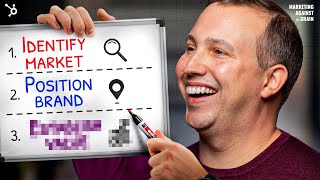
Yeah, so in my opinion, this is where a lot of people go wrong on these pitches is they. They just try to start with the pitch without thinking about what are the inputs to the pitch. So, yes, in order for us to have a really good pitch, we need to have a very, very strong grasp on what is our differentiated value? Meaning what is the value we can deliver to customers that no one else can? Which is why pick us. And the corollary to that is who cares a lot about that? Because we're not trying to sell to everybody, we're trying to sell to. So we got this, here's what we can do for your business that no one else can. And here, not everybody cares a lot about that. So what is our definition of a best fit customer? We really, really need that as an input into building a sales pitch. Now, how do we get to differentiated value? The first thing we have to understand is if we didn't exist, what would a customer do? So what are the alternative ways of solving the problem or getting the job done that a customer could choose? And that could be stuff that doesn't look anything like us. Pen and paper Hire an intern to do it or do nothing, because the problem just isn't that bad. So I. First thing I need is a stake in the ground is alternatives, right? Competitive alternatives. If you didn't exist, what would a customer do? Let's list those down. And then second thing is, what have we got that they don't have? Maybe it's really quiet in there or whatever your thing is, but you've got a list of capabilities. We're not a value yet. Capabilities that your product has that the other guys don't. And some of those things might look small, and that's okay. We just write them all down. We have this, they don't, we have this, they don't. You might have capabilities that aren't differentiating against everybody, but they're differentiating against one category of competitor, maybe not another. And then we got to map that stuff to differentiated value. So we go down the list and we say, okay, you know, we have this fancy new AI thing. So what? Why does a customer care? What is the value that that fancy AI thing delivers for a customer's business? And we're looking for the two, three big value themes that pop out of this when I go down this list. And then once I have that differentiated value, I can say, look, we are the only company on the planet that can deliver you a combination of this plus this. And here's how we do it. Features are underneath, like, here's how we do it. And then we ask ourselves, okay, that's great. We're the only people that can deliver this plus this. But you know what? Not everybody cares about this plus this. So who does? What are the characteristics of a target account that make them really, really care a lot about the value that only you can deliver? That, my friends, is positioning. What we just went through there is the component pieces of positioning. The last bit is market category, which is, look, I got to contextualize this stuff somehow. What is the right context to position our product in such that this value that we're the only ones that can do it kind of makes sense to these best fit customers that I'm trying to talk to. And that's my market category. Those five things. Alternatives, differentiated capabilities, differentiated value, best fit customers, market categories. Those are the five things that make up my positioning. Once I have that, then I have all of the inputs to a good sales pitch. So I really have to do positioning first and then sit down and write the sales pitch that reflects that.
I want to do a follow up on that. Because if you're a Marketer or you're a salesperson. You're listening to this right now. You might be saying like, great, am I doing what April just said? Am I doing it for my entire company or am I doing that on a, for my regional sales team or my individual team of four reps? Like, is it a one size fits all or is it. What's the level of abstraction is what I'm trying to do?
Oh, I thought you were going to ask me am I doing that? Am I trying to position the whole company or am I trying to position just one product in the company or.
Oh, that was also a great question.
I love it.
A better question I have questions about.
That's where I thought you were gonna go with that one, like, because I get that question a lot. So if I'm a big company, I got multiple products, like, you know, what am I actually selling in a first call, right? And it part of it depends on your go to market motion. So let's take for example when I was at IBM, very big company, thousands of products. If we went in to pitch you anything, anything like some dinky little thing in the database division, which was the thing I was running when I was there, dinky little thing in the database division. We never started with that because that's not why you bought Dick a little thing in a database. You bought it because it was IBM. So we had to give you, we had to start with. The IBM pitch was as you know, hey, we're IBM at the time. We're the only people that could give you hardware, software and services together. And here's the magic value that happens when those three things play nice. And then we would click it down and say, we're here to talk about software. We had three softwares, hardware, software and services. Why the heck would you buy software from IBM? Well, you know, we had a big focus on middleware. And here's the magic value that happens when all your middleware plays nice together. And oh, we're talking about this little dinky thing in the database division. Why the heck would you buy a database from IBM? Legitimate question. Did you know we invented the relational database? Do you actually know we have more patents on relational database stuff than anybody else? We have 59 guys over in research, blah, blah, blah. Talk about innovation. That's our big value prop. And then we would position the little product down there because the idea was you didn't buy it just for little product, you bought it by how nice it played with everything else in IBM. And we never sell you just One thing, we're here to sell you 5,000 things all together. So we're pitching you all the things. Even if you said, hey, today we just want to buy this one little thing. Now that's one go to market motion. We're trying to sell everything to everybody. Another go to market motion is more like traditional salesforce. Maybe not today, but traditional salesforce. If you didn't have any salesforce stuff, they didn't go in there and pitch you the whole thing. They just went in there and pitch you the CRM because the CRM was, was the easiest thing to sell you. And once you had the CRM, then we worry about pitching you everything else. And the reason you buy everything else, it's not they don't have the best marketing automation tool on the market at all, but they have the best marketing automation tool for salesforce. Maybe they could make that argument. So they would do this land thing where they land with the lead product and then they try to position everything else. So it really depends on your go to market motion whether we're leading with a lead product or we're leading with the story about the whole company or a particular division or something. So there's that. If we're thinking about. If I back it up and go back to the question that you asked me originally, like, are we doing this for just one sales team or a regional thing or whatever? I mean, a lot of it depends on the way your sales team is organized. But when we think about pitches like let's say we're selling something that's kind of big and complicated. So it's a half million dollar deal. It's kind of complicated. There's multiple products. It's, you know, it's complicated. The first sales pitch is really important. Like our first substantive sales pitch with a prospect is really important because if we don't nail that, we don't get to have meeting number 2, 3, 4, 5, 6, 7. That has to happen to actually get us that half million dollar deal. So usually what we're doing in the first sales meeting is we're telling them the big story about why us? Like, why are we a good partner for you? What is the. What is the breadth of what we do? What is our point of view on this market? Why do. Why do you want to keep talk us? And we're trying to not get eliminated from the deal. That's what we're trying to do in the first sales meeting. And so in the great sales organizations I've worked with, they have a pretty standard first call pitch that does a really good job of positioning the company and the stuff inside the company. And then everything that happens after that first pitch is pretty custom. You know, it depends on what the customer wants, it depends on the particular project they're looking at or whatever. But they got a killer first call deck that makes sure that they get to meeting number two.
One. One of the things I'm curious about you must have seen, I just an endless amount of different pitches and help companies with different pitches.
So many.
And where the, the, the success of that pitch probably depends on a lot of things. But I can imagine how strong your differentiated values are. Like when you go through the why us? That there is a real wedge, that there is real value, that there's something that's truly differentiated. And I think a lot of marketers listen to this are probably trying to do that same exercise right now for their company and really squinting to see value.
And they're like, man, we got our stuff is just like everybody else's. Yeah, we don't have anything that's different.
In SaaS right now.
Right.
That's like why AI could be so deflationary and we have to compete in price. But like whose job is it to solve that? Like, have you, have you, is there any examples of even conversations you've had to have when you've sat down with a company to go through this process and you're like, your differentiated value just is not strong enough. Do you ever get stuck in that part with a company?
No. And let me tell you why not?
You only work with really great companies.
Well, yes, yes and no. Here's the thing. If the product is in market today, so let's say you're, you're in market today. We're not talking about a thing that's just theoretical. We haven't launched it yet. But maybe, you know, maybe the thing you haven't launched yet is not differentiated enough to win any deals. So that's different. But you're in market. Most of the companies that call me, they're in market, they got at, at the low end, they're a few million revenue. So you call me, you're doing 10 million revenue. And the growth on that might be not what you want. You want triple digit growth and you've only got double digit growth. But every day you're closing deals. Every day, every day you're closing deals. You think customers are stupid. You think customers are picking you for no reason. They're picking you for a reason. You might not like the reason you Might not know the reason, but they're picking you for a reason. And so my assumption going into these things is you're in market, you're doing millions of revenue, growth is happening, might not be growing as fast as you want, but there's some we can work with. Most of the time when I get into these companies, they'll say, we have nothing differentiating. And I'll say, okay, let's just map it out. Let's start. Okay, so first of all, who do we compete with? And what you'll get is a bunch of misunderstanding. Like, that'll be the first one is they'll give me a list of competitors and you'll look at sales, and sales will say, I've never seen any of these people in a deal ever. Like, I don't know what you're talking about, buddy. And we're like, but we googled it. And they look competitive to us, but we never see them in a deal. So usually the list of competitors is much smaller than what sales actually sees in the deal. That's the first thing. The second thing is that, you know, marketers will get distracted by the marketing of other companies because we're looking at that. And so we'll say, man, they're doing this amazing job marketing, but are they selling? Actually, no, because they suck at sales or whatever. Or half the stuff they're talking about is actually not true or I don't even know what. But we're not talking enough to sales to understand the reality. So we'll say, okay, who are we actually competing with? We'll make the list, right? And half the time, what we end up with there is the company is actually 70% of the time competing against Excel, pen and paper interns. And the whole company is all distracted by this noise of a bunch of really noisy competitors that are out there running ads, creating content, doing all this stuff about the amazing stuff they're doing. And we don't even see them in deals, so it doesn't matter. Like, we literally don't even have to position against them because they never end up on a short list with our prospects. Second thing is this. Often we'll have things that we think are really small differentiators. Like, it's not a big deal, but the value that that differentiator drives for a customer is actually huge. And what we don't understand is the value. And we're so focused on, oh, but this thing is so little. Oh, they could copy us. Oh, anyone could do it. Oh, we only did it. It only took us this long to build it or whatever, but no one else has it and customers are picking you all day because of that thing and you're literally burying it in, in your, your big feature list down at feature number 29. And customers are going to have to go splunking for it and go on an exploration and go, oh my God, you have this thing, we love that thing. And you're never talking about it, putting it in there. I'll give you an example of this. When I was at IBM and this is IBM, you know, IBM working on this database thing and you know, it's super mature product. Like people have had databases since the dawn of time and we got a database and it's exactly like Oracle's database. Like if you sat down and did the feature function checklist, there's not, there's nothing different between these two databases. They're exactly the same. Except they aren't, right? Except they aren't. You get way, way down in the weeds of it. It turns out at this time IBM had a very different point of view about what the role of a database was in your tech stack. And so IBM was very into open standards. So if you looked at our API was way better than everybody else's API. We supported a lot of open standard stuff way better than anybody else. If you looked at Oracle, they didn't. Oracle had a completely different point of view on the market. They were like, database is just one thing in the stack and you should buy the whole stack together. At IBM we were like, no, no, no, database is just part of the thing. Everything should be open, everything should play nice with everything else. So if I just stuck to features and didn't care about value, we all look the same, 99 of the features, all the same. But when we built the pitch for that thing, the pitch was, look, you know what you care about? You care about innovation. If we're thinking about data, all innovation is based on data. So you can't do any good. Innovation AI is a perfect example. It's all data. So you know what you really want. You don't want a database, you want a data platform for innovation. Now the key thing you want there is you need that thing to be open. Because if it's not, what are you going to do? Well, you want to be able to switch out all the piece parts. You don't know what's coming down the road in two years. So whatever you got, that's coming next year, the year after, the year after. You want to play nice with this platform. For innovation. And so that was our pitch, was that this is a platform. If you went over to Oracle, Oracle would say, dude, you know, we're all about low cost of ownership, one throat to choke. Making it really fast to deploy the thing. You don't want to work with 15 vendors, you want to work with one vendor. The whole thing's together and it's all, you don't want to do that IBM thing. And so we had completely different pitches for products that were almost identical. And so for our target customers, we were selling to the biggest of the big, like, you know, IBM does like 100 billion revenue with like 50 named accounts. So we're selling to the biggest of the big, Oracle, selling to a level below that and the level below that cared about their stuff, you know, lower total cost of ownership, one throat to choke, all that stuff, making sure that we don't have any problems. Our folks really cared about innovation. So our pitched really good for our people. Their pitch worked good for their people. It was super differentiated actually.
I can't get over the databases since been around since the dawn of time. I just database like dinosaurs out there cranking on their database.
Yeah, that's right.
Having a good time.
Stone wheels and databases.
You know, who you compete with. That's such a good lesson. There's one of my favorite, it's slightly related but like the kind of like choosing who you compete with even when you don't. Like one of my favorite tweets last year. Do a ton of investing and so I see a lot of pitch decks and whenever you get the pitch deck, there's always the two by two where you pick the, like the terrible, the great, the, the cheap, the deer. And there's always like the startups always in the far right quadrant. You see that, you see the Paki McCormack tweet where he did like the takeoff of the same chart that every single investor deck does. And it's basically, what it's basically saying is like you cherry pick the competitors that you just happen to be much better at that don't do what you do. But that's not actually who you're competing with, right? You're, you're rarely competing with those folks. The people that you're competing with, you have to be much more mindful of if we don't exist, what are they choosing? And I think there's a great lesson in there for marketers. Every company has some sort of value. Like and what you, the way you said it was, well, the customer is choosing you for Some reason. But you have to get very clear on the why.
Yeah, you have to get very clear on the why. And actually, this thing about competitors, this is a, it's maybe a good segue into the difference between an investor deck and a sales pitch deck is huge because. And that idea of competitive alternatives is one of the really big differences there. Because if I pitch it to an investor, an investor cares about the future state like we care about where you're going to be in 10 years. How's this going to be a billion dollar business? And how are you going to make 100 million revenue? Where are you going to be? And it isn't with that crappy little thing you got today, it's with the all singing, all dancing thing you're going to build five years from now, 10 years from now, whatever. So when you talk about competitors in that you can get really theoretical because we're not talking about what we're replacing today, we're talking about things in the future. Whereas I'm a buyer, a B2B software buyer, I'm, you know, if we really think about how software gets bought today, like, I think in marketing we don't think about this enough. So if, particularly in enterprise software, how does this stuff get bought? Right? It gets bought. Like, let's say we're talking about accounting software. The head of finance wakes up and says, you know what sucks? Our accounting software. It sucks. We need new accounting software. Does the head of salt. Does the head of finance go shopping for accounting software? No. They go to the office and they say, you, Joey, get us some new accounting software. And Joey's like, well, why me, man? I don't want to buy. I don't know nothing about accounting software. Like, I use accounting software, but I don't know, like. And so Joey doesn't want to do this. And then Joey's like googling. And Joey is overwhelmed. Like, everybody's got all their thought, leadership content and all their stuff and there's all these comparison sites and there's all these things that everybody's sitting top left and everybody's headline is, we're the number one accounting software. And so like, they don't know. And, and you know, we get into this thing and all they want to know is, why pick you over the other guys? But when they walk into sales pitches, almost every sales pitch is trying to answer the question, why pick us? Right? Why pick us? Oh, it pick us because we do all these things. But Joey's sitting in there and going, well, I don't know does everybody else do all those things? What's differentiating? Like, why pick you over the other ones? Like, is this good for me? I'm a mid sized business. That sounds like big company stuff. Like, are you for big companies or not for big companies? Like, how does this actually work? And so the stats on this are terrifying. So the stats on this are in B2B, 40 to 60% of B2B purchase processes end in no decision. And the reason for no decision is not that we embarked on the thing, we looked at all our options and then we decided, oh, you know what, the status quo thing we're using is just fine. We can just stick with that because that's good. No, when you scratch down on it, the terrifying thing is what happens is Joey gets into the purchase process. Joey clicks on the button that says, give me a demo. Joey sits through sales demos with all these companies and every company sounds exactly the same. And Joey is terrified of getting fired for making the wrong choice.
Yeah.
And Joey's like, I don't know how to make a good choice without looking stupid in front of my boss. I don't know about how to make a right choice here and whatever. And, and this is not Joey's job to buy software. So the easiest, lowest risk thing for Joey to do is to go to his boss and say, you know what, now's not a good time, Now's not a good time. We should do this next year. You know, things are going on right now, we're busy. It's the beginning of the year, sales kickoff. Well, let's not do it now. And so half the time in B2B, that's what we're actually fighting against, is that if we can do a really good job of painting a picture of the whole market and positioning ourselves in there so that Joey can go to his boss and say, I picked this for these three reasons. And I know that none of these other things can do that, then they can feel a lot more confident to sort of stick their neck out and recommend that we make that decision. This is nothing like a VC pitch. Nothing at all like a VC pitch.
Well, to rewind just a minute. I have a, you know, I have a pet rock around the we're the number one in the category thing is there. What's your take on it? I hate it. I think it's like you're trying to market yourself as a safe choice, but it's hard to validate. Everybody says it. So back to your point, your value is not very differentiated. Where do you Come down to the we're the number one in the category position.
I think that it really matters what the customer believes and knows exactly, not what you say. Right. So if the customer doesn't know that, if the customer says, well, well, you're number one, but I never heard of you, buddy, and you're number one. And all my other research shows this other company is number one. Like, I don't think there's actually a lot of weight in that. Like, unless you can come and say we have, you know, 100,000 deployments and our closest competitor has a thousand now. Okay, that's good data. I like that. Most of the time what we have is an incumbent that everybody knows is number one. So like Salesforce. Right. It'd be pretty hard to be in the CRM business and claim you are number one when Salesforce literally exists, but you might be able to come in and say, actually Salesforce doesn't do that much for small businesses and we're number one in small businesses. And you know, we could try to make that case and say we have more, you know, more experience in doing this. Whatever. If the customer doesn't already know it though, usually you're going to have to run on whatever your differentiated value really is. And the fact that you can make a case that you're experienced and you've done this a lot or maybe done this more than your competitors and is more what I would call. Objection. Handling. It's more about making the. Making the customer feel good that you aren't going to mess this up.
Right.
And the deployment's not going to fail. But that's not why they pick you. I mean, they only care about the deployments.
Valued. Right. You got to have a proof point. What can we do at the very end so Joey doesn't back out and not make a no decision decision.
That's right.
But if that's what you're leading, which. With which a lot of companies do, it's. It's a little hollow. Right? It's like, well, cool. You might. But I don't know if you actually solve my problem. Great that you're number one. But like, I mean, this is. You have what I need.
This is the magical thinking that I think that companies that do category creation when they are literally not creating a new category, they're just attempting to look like they're a brand new category. The magical thinking there is. Oh, gee, if I just say this is a new category and we're the only one in it and we're number one Then everyone will pick us.
The category is not as important as being clear on the value that you're providing and that that value is differentiated more than the category being differentiated. Is that, like, that's the thrust of your argument?
That is the reason why a customer picks you. Like, the answer to the question, why pick us over the other guys? Is, we can do this for your business. The other folks can't. Like, that is the core of everything that needs to be. It's the core of our positioning. It's the core of our sales pitch. It's the answer to the question that Joe. It's. It's what Joey's trying to figure out. When Joey's in the middle of his sales process or buying process, that buyer is trying to figure out, okay, I gotta go to my boss and explain to my boss why I picked this thing. And I can't go to my boss and say, but they're the number one floo flummer. And the boss is like, what's a floo flummer? I don't even know what that is.
What. What's the. So if we have Joey coming in and we want to make sure that he buys us and does not just go back to his boss and say, can you let me off this so I can do something more interesting? What. What is the. What's the structure of that pitch, April? And something I would be really interested in is how much do you adapt the structure for the company? Right. So Joey is a certain company with a certain set of problems.
Yeah.
So how do you think about, should there be, like, one deck that can be changed in certain ways? And if so, like, what's in the deck?
Yeah. So when I think about sales pitches, you know, what I'm really talking about is a first call pitch. So if we're selling something that requires more than one sales call, everything that happens after the first call is usually quite customized. But if we are talking about a first call, in a first call, typically what we've got is we have done some sort of qualification on that prospect, but usually it's quite light. So usually we've qualified them in some way. Like, you know, do they have enough budget? Are they. Are they in our space? Do they have a problem that we can solve? Otherwise, we're not even bothering to get them on the phone. But let's say we've got some lightweight qualification. What we have not done yet is discovery. And so full discovery in a. Usually happens in a first substantive sales call. And that's where I'm really Digging into what are you using right now? Why doesn't that work for you right now? What are your requirements? What's pushing you to move to something else? What are the other things you're considering? What are the constraints on those considerations? What are you hoping to get done? All of that stuff that a good salesperson does in discovery that happens in a first substantive sales call. So the first substantive sales call is actually really tricky because on the one hand we're trying to get our story out, our point of view out. On the other hand, it's a conversation back and forth because I'm also trying to get this discovery done with you, figure out what you're all about, figure out what you want, what you know, what you don't know. If you read about this stuff. And again, I've done a lot of reading on this in the last few years in the course of writing this book. But if you look at the data on this, most companies, like, if I go back to that situation where I was talking about, Joey's coming in and he's trying to figure out how to buy accounting software. Joey actually doesn't know a lot about what's possible in the space. And so part of what he's trying to figure out in his research online is what should I pay attention to, what should I not pay attention to? What should my purchase criteria actually be? So no good salesperson goes into a first call and says, what do you want? Because the client at all generally isn't entirely sure, sure what they want. And part of what they're looking for from a good sales rep is give me some perspectives on this. Tell me what I should be worried about, tell me what I should be looking at, what should my purchase criteria be? So in a good sales pitch, we are doing a bunch of things at the very beginning of that sales pitch. So one is we are teaching the customer about what's important and what isn't from our point of view. So our point of view on the market might be. So if I go back to my IBM example, in my IBM example, I might say, you know what, we're database people. We're here to talk about databases today. Why are databases important? We believe they're important because the foundation for innovation. I'm going to start with that. Now you're you, maybe you're with me or you're not, right? But then I'm going to move into, let's paint a picture of the market. Like, you got, you got database today. What are you using today? Oh, you're using that. Okay, well, why is that not working out for you? Oh, you're doing that. Oh, here's how we look at the market and we're painting a picture of the market and saying, you know, there's databases like Oracle and they sit over here and there's databases like those other folks and they sit over here and there's databases here and they sit over here. And while I'm painting that picture of the market, I'm having a discovery conversation with you. So I'm like, are you looking at Oracle? Oh, what are you using today? Are you using that? How come that's not working out for you? And so we're doing a thing where I'm teaching you my perspective on the whole market and you're teaching me about your current situation. So we're getting a discovery conversation in while I'm painting a picture of the market for you so that you can feel comfortable that you understand all the things you need to understand to make a decision. And then at the end of that setup phase in a good pitch, I'm saying, look, so like knowing what we know about what you want to do with data, and if you're with me in that, you really think that the reason you guys are looking for new data solution is because you really want to drive innovation. Can we agree that the key things that a database should do is one, it should be super, super open, two, it should be super dedicated to open standards, and three, should we work with anything that you've got right now or in the future? Can we agree that that would those would be good purchase criteria? Now if the customer says yeah, then I got them because I'm the only one that does that. If the customer says no, I've disqualified them because if they don't care about that stuff, I really got nothing to sell them. That's my differentiated value. I mean, it is what it is. You don't care about it, then I guess you're disqualified. Now, Oracle, you spell it. O, R, A, C, L, E.
Well, one of the reasons to go read your book sales pitch is that you illustrate that point you just made. But through a toilet buying example, which is especially fun and entertaining and I will not spoil it for people, but it's thought it was the perfect product to use to walk through that example.
I almost feel the most important part of the pitch isn't the pitch, it's the discovery. Like any great rep I, I've truly spent time with, they are just masters of discovery. And I actually kip doesn't even. I don't even think Kip knows this about me. We've known each other for a long time, are really great friends, but I actually did do sales in a different life. You won't find me.
Whoa. I can't believe that about you.
Whole closet salesperson that's hidden away. But I was like, eight months I spent in sales when I was in HubSpot. Spend a lot of time with sales calls. Same with Zapier and HubSpot. I challenged one of the reps that I could close 10 deals within the month. When we were first scaling to show him just to, like, get the little competitiveness going between marketing and sales, I didn't close any. And the reason. Because discovery is an art. Right? Like, I have spent enough time with enough sales folks that discovery is an art. Can you maybe just talk about it? How great discovery gets done? Like, how you actually get. Get it done to integrate it into your pitch?
Yeah. So I. I think. I think the discovery is super important, and I think it's interesting. It's. It's more about how you do discovery than discovery itself. I. I think in some ways, like, I think I misunderstood discovery when I first learned, you know, when I first had conversations with sales reps about discovery. So. And I think because the sales reps I was talking to were maybe not so good at it, but when you. When you get deeper into the data on what works, it doesn't work. And what we actually want to do in discovery, you start seeing some patterns there. So I think that what people often think discovery is is, you know, walking in and asking the customer, what do you want? You know, like, what are you looking for? So, you know, what are your problems? Tell me your problems and tell me what you're looking for. And then I'm going to try to tailor the whole pitch and everything else to pretend that I'm the perfect solution for that list of things that you just said. Whereas if you actually go through good sales training, like, again, if you. If you did Sandler sales training, that's not the way they teach discovery at all. The way they teach discovery there is. What we're actually trying to do is two things. One, we're trying to figure out the customer situation, but we're also trying to educate the customer about our point of view on what's important and what isn't important. So really good discovery sounds more like a rep coming in and saying, you know, so what do you. What are you doing right now? And the customers say, well, we've got this thing, and it isn't working out for us, so well. And is it? You know, and. And we don't like this. And we'll say, oh, that's interesting. Well, have you tried anything else to solve the problem? Oh, we tried this thing. Oh, and so when you tried that thing, how did that go? Oh, we had this problem with this. Other things. And then the rep says, you know what? We've seen that a lot. The really good reps say this classic.
Line that a lot.
We've seen that a lot in the customers that we've worked with. We've seen that when they try this, this happens. Have you guys seen that? The other thing we've seen is when they do this, this other thing happens that is maybe three steps down the line. Have you noticed that? Oh, yeah, Actually, I never thought about that before, but you're right. We have that too. You know what we see is this. And then some people will actually try this other thing. Have you tried that? No. Oh, you haven't? Well, let me tell you how it goes. It goes like this. I'm gonna save you a month's worth of work right now. It goes like this when you do this. So you're having this thing where you're learning a lot about the customer situation, what they know, what they don't know, what their constraints are. But you're also educating them on your point of view, on what's important, what isn't important. And you're really establishing this trust and credibility with the account that you know what you're doing. And it's not just you saying it. It's your experience from having worked with a whole bunch of accounts that are just like you. And here's what my experience tells me. That's what a buyer really wants in a sales conversation. They want the. The reassurance that they've done their homework, that they know what's important, what isn't important. What they want from the sales rep is they want the sales rep to be a guide. They want the sales rep to guide them along this purchase process, to say, ooh, watch out for this. That's going to be better. Oh, you should be thinking about this. And do it in a way that has the customer's best interest at heart. Like, do it in a way where some of those things are actually going to disqualify prospect and. And have the prospect say, well, you know what? We don't actually care about that. And have the. Have the rep go, you know, if you don't care about that, There's a better solution for you. You should go buy these other guys. I got nothing to sell you.
Yeah, yeah, I love that in that you actually, you're not trying to be something for everyone. Like you shouldn't have a watered down pitch. You should be something for someone. And great reps can really pattern match a language so they can understand if they hear this word or this problem. Oh, like that's the trigger. That's the trigger problem. Now I can go into the thing that I know will really catch their attention. I think one of the places we really wanted to kind of finish up on was AI because we talk a lot about AI on this show. AI is definitely in this space. Like even just trying to aggregate.
It's in every space. Yeah, we're not getting away from the AI man.
Personalized outreach, that's honestly a big space. Where do you like in terms of your frameworks and your structure for pitches and what you actually recommend people to do? Where do you think it could add true value? Like we talked off Mike, I kind of tried to pre program it with, I tried to make the best april done for GPT I could. Programed it with all of your YouTube podcasts and then got it to construct a pitch in your, in your recommended structure.
Yeah.
And as you said, like it was pretty average. What I did do a really good job of it. It took me two hours to give it all this information. But I, I asked it like to tease, I asked it to prompt me for every single thing it would need to construct a good pitch. And actually it gave me 10 things that I had to give it to it for it to get a pitch. And like those 10 things I think most marketers are probably not doing. But where, where do you see, I'm sure you've, you've played around with that. Where do you see added value for marketers and salespeople with AI to make a great pitch?
Yeah, you know, I, I think again, like, I really feel like building a good pitch starts with good positioning. And in order to develop good positioning, I think that's actually a cross functional team effort. I think you want to get marketing sales product together in a room and you know, and we're going to work through a process to get that. So I don't think you'd be doing that with AI necessarily. But I do think there's, there are some things like, you know, we talked about it earlier, this idea of who's actually our competitors. If you're big enough and you have enough data in your CRM. And you're tracking that stuff. Well, you know, you could use AI to get some insight out of where we win and where we lose and what's going on in deals, but it's really dependent on your CRM data and what you're doing with that CRM data. So I think there's promise in that. I don't think we can do it today. And I think most people would say, oh, our data is not, is not robust enough for us to be able to do that today. But at some point I think we'd be able to extract some of that stuff and see it. What I think is really interesting, like if you've read the, if you've read the book, Matt Dixon's book, the Jolt Effect. Have you read that book? No. This is a great book. So, you know, what they did in this book is when we first went into Covid in 2020, what they did was they took two and a half million sales recordings and they ran it through AI and then they looked for patterns in pitches like what worked and what didn't work, and then they tried to extract the, the insights out of that. And that's a bunch of super interesting research if you want to see what that looks like at scale. Like, again, like these things don't work with sparse data. But you got a lot of data. Two and a half million sales pitches, that's a pretty good amount of data. And so what they found there, a lot of that stuff was really counterintuitive. Like, so, for example, there's this old adage that a salesperson should always talk less than the customer in a sales call.
Yeah.
And what they found was the opposite was true. For example, so there's a lot of things that we take as accepted wisdom. Like, for example, the other one that I thought was really interesting was this idea of fomo, like where you go in and you say, hey, everyone else is doing it and if you're not doing it, you're a loser. All your competitors are doing it. If the account is delaying a deal because they're indecisive, that actually decreases your chance of winning the deal. So there's some really interesting data in there. I don't know, you guys, that's cool.
One of the companies I invested in was trying to create a AI real time coach for sales reps. So it actually would sit in the right hand panel as the sales rep was on the call and it's recorded in real time and it's doing a lot of these. Yeah, yeah, there's A lot of that's, that's one area I've seen a lot of startups in. But exactly that. Like hey, you're talking less or more, you're not, not, you know, you're not using language that we know, pattern matches.
I think this is where this stuff is interesting and potentially dangerous because like Gong has had that forever, right? That thing that tells you where are you talking too much or too little and the assumption behind it that you should be talking 30 less than the customer is wrong. Wow.
And it's blanket, right? You're like, whoa, you have to have more nuance. You have to have. Where AI I think can help us is like, oh, we understand that this particular customer is different and they need you to talk at a more dominant rate or a less dominant rate, whatever that may be. Right. And so I think we're still early days in how we're going to do this. I also think AI, if you have a lot of competitive intelligence, competitive docs, I think it can be good helper at summarizing those for people, right? Like if you've got a ton of PDFs from customers and everything, great, let AI go and summarize that so that you can then go take it to that cross functional group in a way that actually makes sense and is digestible.
Yeah, yeah, this stuff works really well today.
I just wanted to quickly end on so this is the result of the three hours in a Sunday.
You got real fun Sundays, my friend.
This is your pitch for Zapier. Obviously not your pitcher Zapier. But you know, I don't know if this follows your structure. It just give me this. I didn't ask it for insights into the market pluses and minuses of alternative solutions and perfect world. Now it gets some stuff like pretty right where it says our perspective is that automation should be accessible and straightforward and used as everyday business. So it's like Zapier's thing is automation should be for non technical users. So it doesn't say non technical users but that's some a differentiation. And this bit here is really good in that people think this is a perception we're trying to change. Like that we connect apps where it's really about this is a bit mark. This is very much like market and lingo but it's much more about how you customize apps and software within your business. And I'll just cut one more thing in the pluses and minuses. Like this is a little bit of the why us and why not competitors. It does like get some stuff right here. Not a steep learning curve. Simplicity, versatility, and then obviously the breadth. We have more apps than anyone else.
But what's funny is that what they end up getting again, because it's sparse data, I'm not sure it's the best use of this thing. And so, you know, the comparison again, it's like if, when I think about positioning. Right. Why, you know, why pick that over reading the book? Well, if the book took me seven hours to read, then yeah, it would be better to sit, spend two hours with the chat bot than seven hours with the book. Book, I agree. But if you could read the book at, you know, it's a three hour book doing it at one time speed, which nobody, which nobody does it, then it's like, well, if I could, if I could get through it in an hour and a half and read the book, would that be better? I don't know. Right.
Like somebody who got the book in like a couple hours, you should, you should do.
Just to be really clear, this was not a comp. You should. No, no, this was, this was trying to see if it could actually.
Use.
What you teach in the book to be able to structure a pitch. But yeah, you should.
But if it had everything, like again, if the thing. Because the book, you know, because the books aren't in there. Necessary. They will be eventually. Because everybody rips the book off eventually and throws it in places where it's not supposed to go. So if it's not there, it doesn't seem like it's there now because it answers the question so badly. But eventually it'll be in there and everything else I do will be in there. And then will it be able to do it better, including all my templates and everything else? And then I think this AI stuff will just get better and better. Like at some point I think you will be able to go in there and it would be faster to just structure the questions really well and say, I want to do this, how should I do it? And it would say, you should do it like this. And what would be really good is to say, is to reference the source material and say, here's the template, here's the chapter, here's the blog post. Read those things and forget about the rest of it because you're just trying to do this one little thing that would be useful.
Yeah. I think in the future authors will be able to do some sort of licensing deal where they can actually sell that book to certain LLM models and that allows them to create fine tuned Examples like that, Very optimistic about this.
I think everything gets, I think everything gets ripped off and we don't buy books anymore. The other thing people like me will stop writing.
Yeah, I think that is the, the, the con that could happen is it breaks the relationship between publishers and like what, what's the incentive for publishers to create? I will say at the moment I've created a bunch of like custom GPTs that are fine tuned on PDFs and it's not good. Like they, it doesn't really fine tune it in any special way. Like I've, I update, I did a whole big job to get everything David Ogilvy through YouTube so it's not available in the Ensnex. I had to transcribe it all, create a PDF, upload it and have it fine tuned on that data and it just, and if I compare the custom GPT fine tuned on that unique proprietary data and then just using ChatGPT for the same question, they're pretty much the same. So it's not, it's still not actually using it in a way that kind of customize the answers very well. But it might get better over time.
Yeah, I would assume all of this stuff gets better over time. I would. And you know, and I think, I think we're at the stage right now that we're still trying to figure out what the best use cases are. Like right now it just feels like it's fantastic, it could do anything. But, but then when you get down to the actual nitty gritty of the thing you actually want to do, it's still kind of narrow where it's super useful. And I think training is going to happen on both sides. Like I think CHAT GPT is going to get better and better. We're also going to get better at recognizing what's a good job for CHAT GPT. Right. And then if we have this conversation a year from now, we're all going to be much happier about it. You know, one, because its capabilities are better. But two, we understand what's an appropriate job for that because right now we're trying to throw everything in there and see if it works or not. And you know what I hate is like people will come and you know, I get this on LinkedIn all the time. They'll say, oh, April, I summarized this blog post that you wrote and chat, it was chatgpt and it's this thing and my blog post is four paragraphs and their summary is three and it's wrong, man. Like it doesn't even misses the main point. And I'm like, oh, come on, chatgpt, you're disappointing me. So that's happening right now. And we're like, oh, obviously that's not a great use of it, but again, we get together a year from now, I think we're going to be smarter about what we're asking it to do and then it's going to be smarter at doing what we want it to do.
Yeah, clearly it's moving fast. But most of the positioning work that you're going to do now as a marketer is going to be done like, as you said, April, clear frameworks discussed in small groups that are cross functional, cross marketing.
I don't, there's a, like, I don't think there's like, like we would love to be able to have the machine understand our product in our market better than we do, but that's never going to happen. Like, we actually, like, there's, I don't think there's a substitute for bringing together the knowledge in someone's head that you've got from sales, marketing and product. There's magic that happens when cross functional teams get together and say, I see this with customers. Oh, that's funny. I see this with customers. And the things we see are in completely different contexts. Magic happens right there, in my opinion.
I think that is the perfect note to end on. We ran over. So thank you for being flexible with us and having a great conversation.
Oh, well, thank you so much for having me on this data is wrong every freaking time.
Have you heard of HubSpot?
HubSpot is a CRM platform where everything is fully integrated.
Whoa. I can see the client's whole history. Calls, support tickets, emails. And here's a task from three days ago. I totally missed HubSpot grow better.
More from Patrick



A NEW BREED OF PARTNER: The Partnership Ecosystem Model Journey of Patrick Biddiscombe, Part 1








Customer Success Workspace: Never Lose Sight Of What Matters Most | HubSpot Spotlight