How To Create a Marketing Campaign (FREE Template)
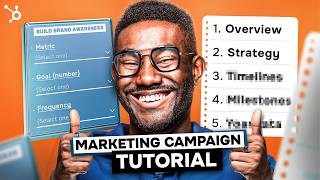
Jamal walks through building a marketing campaign using a free template, covering six planning components from target audience to budget. The video breaks down 11 campaign types, shows how to define buyer personas and competitive analysis, and flags common mistakes like chasing vanity metrics. Case studies include Apple's Shot on iPhone and Cheerios' Good Goes Round.
Chapters
I want to start a professional marketing campaign right now, but have no money, no experience and not that many ideas and I want it to be so simple that anyone at any experience level can do it. So to help, I'll be using this marketing campaign template which turns complicated concepts into digestible action items. By the end of this video, you and I will both know which campaign type is best for our businesses and have a proven framework to use it as a guide when creating your own campaign strategy. And if anyone asks you where you got it from, tell them that old Jamal hooked you up. Really just in it for the eventual clout. But creating something from nothing is no easy task. The good news There are six key components that go into the planning, execution and results of a stellar marketing campaign. A clearly defined outcome. Be specific and designate a timeline. So sell 25 products per day or gain 50 new Instagram followers a week or are examples of specific, time driven and measurable goals and KPIs for my campaign A target audience. I'll start there, then segment and build buyer Personas knowing this will impact everything I do from my goal to my messaging, asset creation and how I'll reach them. Whether it's social media ads, email campaigns or direct mail. A clear message. Here's where I empathize with customer problems and build trust. One way to do that is to use customer stories as social proof and if I've done my research, then this step is much easier. Creative assets such as email copy, high quality graphics plus the channels I intend to use since each has its own specifications, best practices and trends to follow. A call to action this will define my messaging and positioning and ultimately how I'll produce and promote content. I'll need to speak to customer values and make it easier for them to visualize and feel the benefits and a budget. This often goes hand in hand with campaign goals. The more aggressive and involved the campaign, the higher the my budget will need to be. These six things make the task of starting from scratch much more manageable and actionable. Now, what type of campaign do I want to run? Hmm. Well, the right type is the one that supports my business goals and meets my audience where they are. Let's do a quick run through of the 11 different types of marketing campaigns. Product marketing which brings a product to market through specific positioning and targeted messaging to promote and create demand for it. Brand development that puts a company story and message in front of a targeted audience, leaving them with positive, lasting impressions, which is essential for brands just starting out in their industry. Email Marketing A series of emails that lead to a specific call to action like continue reading, book a call, finish a purchase, hang out with me and is used to nurture leads and current customers, encourage engagement and increase sales. Content Marketing, which establishes expertise, promotes brand awareness and retains a loyal audience by creating and sharing relevant blog content, content, videos, podcasts and other media. User Generated Content or UGC where users actively contribute, engage and participate in the campaign. This is known to be the most trustable, authentic content among social media users as honestly it's created based on real experiences of real customers and not by the brands themselves. PR Awareness Campaigns these do the consistent work of educating and informing the public about a particular issue, cause, brand or or message Direct Mail, which involves sending letters, postcards, flyers and catalogs to prospects and customers and is used in both B2C and B2B selling affiliate marketing, where brands get trusted referrals from relevant creators and access to new audiences and in turn those creators earn commissions for marketing the brand's products from an affiliate link Social media campaigns that are strategically focused to influence followers to feel or act in a certain way to about a brand, product or service using at least one social media platform Paid Media, when brands pay for sponsored search results, display ads, social media posts, video ads, pop ups and other promoted multimedia to reach audiences that might not have come across them otherwise and Acquisition Marketing which promotes products to new audiences to gain new customers in the interest or consideration phase and nurtures them into paying customers who through channels like content marketing, paid ads, SEO, social media and email. Okay, now I've got a starting point for the template and some ideas. What's great about this template is that it's free, completely customizable, and already lays out the roadmap I'll need to execute any effective campaign from the ground up. Starting with the campaign overview, one of the most important steps here is to identify my buyer Persona. I need to know their wants and needs, challenges and motivations in order to create powerful marketing messages and finely targeted content for my campaign. For me, that's a tech savvy, socially conscious millennial who's brand loyal to businesses that align with his values because he's most active on Instagram of all the social channels. A hashtag campaign that integrates UGC and email will get me the best of both worlds in terms of my efforts. I can double dip content to turn followers into email subscribers in a way that feels natural and authentic. This is the foundation inform my promotions, my objectives, my goals, my KPIs and my campaign strategy. Now if my buyer Persona is the beating heart of my campaign. My value proposition is the soul and a good one uses the voice of current ideal customers to hook future customers. For example, I interviewed some of our most loyal customers and listened and engaged with them on Instagram and paid attention to common words and phrases they use. What did they value most? Convenience, an exceptional user experience, well designed packaging and the element of surprise. I'm a sneaky guy after all with a crystal clear value proposition. I now have my competitive analysis where I've identified key competitors in the subscription box market, messaging and positioning, which emphasizes special perks, the limited time opportunity and how we're the popular choice for this market given our seamless user experience. My marketing channels like email, Instagram and blog posts to more effectively reach my tech savvy buyer Persona and the required tools to get the job done. That would be HubSpot, email marketing, meta business suite, Google Analytics and WordPress. Next is timeline and Milestones, the framework to keep me honest for all the things I need to do. I'll add my benchmark dates, then break these down further into manageable phases and tasks. Each phase should have a specific outcome and deliverable that contributes to my overall goal. Now it's quite common for bootstrapping entrepreneurs and new marketing teams to have small budgets and minimal resources like myself. To gauge how much your business should allocate will depend on your business goals, total revenue and industry and include all expenses. This means paid media, employee salaries, freelancers and the tools and software. And though I'll be relying on free tools and myself for all my campaign creative and assets, I'll still need to define clear guidelines for the words and imagery I choose to unify my tone, style and messaging. Remember when I said a good value proposition uses the voice of current ideal customers? My brand voice should align with this and speak directly to my buyer Persona. For example, Jamal's Cookies is known for its playful tone of voice. Our bright colors, bold typography and quirky copy create a unique, memorable experience for our audience. Now I need to determine how I'll promote my content to maximize reach. Let's go back to my goal for just a second. I want to increase cookie box subscriptions from last year by 30% and I'll do this through a targeted Instagram campaign to gather user generated content from 100 users and send traffic to an email opt in on my website to generate 50 new leads. So in addition to the UGC collaboration, the channels I'll leverage are email, blog posts and videos. This step is all about calibrating my efforts toward my end goal and is done through conversion assets like calls to action, landing pages, and lead forms. How effective this is will depend on what type of campaign I'm running, and this section serves as a baseline for the metrics and analytics to watch, which all boils down to two main ideas, goals and strategy. So if I want to increase sales by 30% this quarter, then focusing on Instagram impressions and post likes doesn't track a change in revenue. I need to choose tools and metrics directly connected to that desired action I want users to take, which for me is click through rate how many Instagram users and email readers click on my call to actions indicating their engagement level Conversion rate the percentage of visitors who complete the email opt in form on my website and bounce rate how many people leave my website after viewing my blog content, which can mean issues with website usability or targeting. Now, if paid media is part of your strategy, then you'll want to monitor metrics such as customer acquisition, acquisition costs, the average cost required to acquire a new customer and return on investment, the financial gain from your marketing efforts. So in addition to tracking my goal, these analytics provide insights into my audience behavior, preferences and engagement. By understanding which segments respond best to certain messages or channels, I can optimize future campaigns, making it much easier to nurture customers and improve my bottom line. And if you're working with a team, then this last section helps identify any gaps in responsibilities as the more efficient your team, the leaner the timeline and budget. But not all marketing campaigns succeed the way they could, often due to simple mistakes, and I've made a few myself, so I'll share some of the most common ones so you don't have to make the same mistakes yourself. First, your content isn't optimized for SEO. While a campaign goal may be targeted to promotional channels like social media, there are many ways people can discover your content. Organic search is a big one, but if it's not optimized for SEO, then you'll be missing out on some sweet traffic. The Fix Consider search intent. Are people searching for information, products or services? Then choose keywords that align with your campaign objective and intent of your target audience. Optimize everything from the meta descriptions on your visuals to the titles on your blog. Also, make sure your sharing buttons are working and your CTAs are strong, which means you can't ignore the the competition. Use competitor research tools to see the keywords they're targeting and content they're creating. When you dig into a competitor's approach, you gain insights on their strategies, stay up to date on industry trends and identify areas where you can outperform them. And you totally can. I believe in you. And when you understand how they operate, the real magic happens when you spot your unique value and how to amplify that difference in your own campaign. And that takes time. Sometimes Marketing campaigns don't drive immediate action. Patience is key when testing new strategies, so don't get distracted by vanity metrics like number of followers, likes or comments. Understand that these numbers can be misleading and should be replaced by actionable metrics such as click through rate or visitor to lead conversions, which is data that helps you make informed decisions so your campaign reaches its goals. So what makes a successful campaign? Let's take a look at Shot on iPhone, one of Apple's most notable campaigns that focus on one specific feature of the new iPhone, the camera. Apple doesn't push much social media, but a closer look reveals its strategy relies on user generated content. They created an Instagram account and content completely devoted to the campaign. It was a challenge that invited users to post their best iPhone photos with a branded hashtag. From these photos, Apple selected images to display across media outlets and on billboards around the world. By leveraging customer behavior and user generated content, Apple created a collaborative community and generated significant buzz with more than 5015 million posts to date. It also strengthened Apple's position as a leader in the smartphone industry for its premium design, innovation and user experience. Another great example is the Cheerios Good Goes Round nonprofit campaign created to raise money to provide 1 million free meals. Some good stuff from its positioning that Cheerios are packed with positive energy from the mighty Oats. The campaign celebrates the cycle of good every bite sets in motion. It leveraged the power of branding and social marketing to encourage customers to participate in good deeds and share their stories through a branded hashtag across social media. Trio's created a distinct landing page, video marketing content and pay per click ads to promote the Good Goes Round URL on Google, giving the campaign more visibility. And it worked. It's generated positive media coverage and General Mills has found a new way to show that they're a company that cares. But don't worry if you can't afford a top shelf campaign with celebrity ads and influence. With time, creativity and some savvy data driven insights in hand, a smart marketing campaign can be done and done well even with no budget. Now that I've got my strategy laid out, I'll use HubSpot's template to test my ideas and see what sticks. Because the learning curve is the earning curve, my friend. And once I find that sweet spot, I'll allocate more budget to my strategy. If you're looking for a proven framework to outline your marketing strategy in one simple, coherent plan, then download our free template. We call it the Ultimate Guide to Marketing Campaigns for a reason. This is seriously the one stop shop that you need for all of your marketing campaign needs. So check it out in the description below and let me know about your success stories. And while you're down there, go ahead and like share and subscribe so you never miss any more marketing insights. Until then, I'll see you next time I can find this client info. Have you heard of HubSpot? HubSpot is a CRM platform so it shares its data across every application. Every team can stay aligned. No out of sync spreadsheets or dueling databases. HubSpot grow better.
More from Patrick



A NEW BREED OF PARTNER: The Partnership Ecosystem Model Journey of Patrick Biddiscombe, Part 1








Customer Success Workspace: Never Lose Sight Of What Matters Most | HubSpot Spotlight