How to Find Opportunity in Startups | Troy Carter
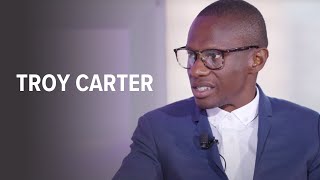
A studio interview (recorded June 17, 2019) in which Troy Carter describes how he finds opportunity in startups and artists. He emphasizes instinct and people-reading, investing through a consumer lens, long-term time commitments (especially for artists), and choosing founders who can break entrenched barriers. He shares mentorship lessons and personal anecdotes (e.g., early financial setbacks, having his first child at age 22) and reflects on his time at Spotify and the culture at Inbound.
Questions this video answers
June 17, 2019.
22.
$6,000.
Chapters
Hi, everyone. Welcome to the Inbound studio. I'm Laura Moran, joined by Troy Carter.
This is more like it.
This is a little more cozy, a little more.
I feel like I'm one of my friends now. It's a big room.
The main stage is pretty big. Pretty big. Thank you so much for being here at Inbound with us.
Of course.
I want to jump right in with the investing side of things, actually, and forgive me if I'm repeating things that have already been repeated on the main stage. But you're invested.
I'll give you the real story here.
You're invested in so many companies that early stage. You invested at an early point of companies that have done so well. Warby Parker, Dropbox, Uber, Spotify, Lyft in general, that's a good success rate. But what do you. What do you look for? And how are you sort of finding the nooks and crannies of what's going to work? When you look at companies at a.
Startup phase, you know, I think you kind of like with anything else is like, you know, you go in not knowing a lot, and then you kind of learn from mistakes and you sort of develop almost an internal compass for what works, what doesn't work. And, you know, you start getting more right than you get wrong. But I think more than anything else, I think I have a really good feel for people and a really good bullshit detector is like my West Philly Spidey senses. And I think being in music and specifically in hip hop is like, you gotta know how to read rooms and you gotta know how to finesse things and understand people. And sitting in the rooms when people are pitching you, you just learn to ask the right questions. And for me, I invest through the lens of a consumer, so I kind of want to ask very basic questions. And, you know, my diligence process is totally different from, you know, a more institutional firm, but I just ask really basic questions. How does a. How does the product work? Who's going to buy it? How do you acquire customers? What does the competitive landscape look like? And why are you uniquely qualified to take this on? And understanding entrepreneurs and what makes them tick, you can find out whether this person would be qualified to get it over the finish line. Cause it's hard.
Yeah. Has that Spidey sense always been there for you or is that something that you've honed over time?
No, it's been there, like. And all jokes aside, like, you know, you really coming up in, like, a tough neighborhood and everything, you really gotta have good instincts and you know, whether it's. You know, and for me, it's been like, real situations, like living through the whole Tupac, Biggie thing in music and East Coast, west coast and music. Going into a lot of these rooms. As a promoter, you gotta know, okay, who has a gun.
Yep.
And which guy is really gonna use the gun. You know, who's real, who's not real. And all of those instincts is like, you. When they're hardwired into you, it is applicable to everything else. You know, because in our world, you know, I talked on stage about getting screwed out of, you know, by not having a contract. Okay, dummy, next time, have a contract.
He will never not have a contract. Yeah.
So it's like, you. Certain things, you just learn it. You learn as you go. But I think instinct for me has gotten me further than anything than anything else.
As you talked about, you know, you talked about being sort of like a reader of people. That's where you draw your lines. When you're thinking about companies and people to invest in. Can you talk a little bit about how that has worked with artists as well and how you're sort of picking and choosing what will make a successful artist? I guess.
Yeah. You know, they have a lot in common. And that's why I think it was a natural transition, you know, because it's. The music industry is very hard. It's like, you know, when you look at the amount of people who actually make it, and then you go to that sort of 0.1% who become superstars, it's really difficult. And for me, investing time is more important than even investing money. You can't get the time back. So. So when we invest in artists, we gotta spend three years, usually, not knowing whether they're gonna make it or not. Because we don't typically sign superstars at my company, we actually start working with artists from the very beginning. So it's a really serious investment of time that you have to make and the sort of opportunity costs that you give up. By investing the time in the artist, you better develop a good sense of who. Who's gonna work. And a lot of times I look at what have you done to kind of get your career to this point. What have you sacrificed? And now you can look at things like if an artist comes and it's no Instagram or no Soundcloud or it's just nothing. I just think, like, maybe this person's just lazy. They're not even trying at this point or whatever, because everything's free. There's no barrier. To entry. So. So I just want to be able to see that you got that thing in you that's going to get you, because it's. This moment of this is for artists. This is the moment of this is the hardest thing I've ever done. I really want to quit. Why am I doing this? The press is bashing me right now. People hate this song or hate this album. All of my friends have changed. My relationship with my family has changed. I can't walk out of my house not fully dressed anymore, and people are sneaking pictures of me. I don't know if this is true love or not. If this person, they go through a tremendous amount of things. And so to keep going, you have to be hardwired a certain way. And when you look at companies, you know, Travis from Uber, you know, is, you know, we. Travis is Travis. Travis isn't running Uber anymore for a reason. But to get it to that point. It took somebody who was going to drive a Mack truck through a cul de sac and ignore regulation and break rules and all of these things to get it past the taxi industry, regulation, lobbyists, all of these things. It takes a certain type of personality to get it there. So, you know, so you're looking at entrepreneurs. What problem are you taking on? And do you have that personality to kind of take on that problem, to get it over that hump?
Do you have that personality?
Oh, my God. It's like, unfortunately, to a fault sometimes. Yeah. You know what? Cause it's in my mind when people tell me, no, it's almost that Scooby Doo, like, you know, and it's like all of a sudden, something kind of, you know, clicks for me. And then also it's, you know, I think it's, you know, a lot of successful entrepreneurs and definitely a lot of artists are. Have so many flaws. Right? So, like, what went wrong in your childhood that, you know, where you feel like you have to prove this or have you taken so much abuse that, you know, like what? Like something is driving you to do this, and what is it that's actually driving it? And, you know, you hear a lot of fake stuff of, hey, I want to change the world. No, you want to prove that to your dad that you can make it, or is that ex girlfriend or ex boyfriend who let you down, called you a loser. So it's like, you know, but for me, it's like, it's that thing that sometimes I want to turn off and just be on a farm in Martha's Vineyard and say, okay is enough. Is Enough, but it's this thing that just kind of keeps me going.
I want to talk a little bit about like disruption or disruptive technologies or companies. A lot of the businesses that you have invested in have disrupted a space that they're in Spotify, which you were at.
Today's my last day.
Congratulations.
Be with you guys, you're here with us. Last day at work, nobody shows up.
But, you know, Spotify looked at the music industry and was like, they're not keeping up with what they need to keep up with. And you joined and you know, I know you've been outspoken about that piece of it. What was attractive to you about that or what is attractive to you about companies and businesses that are finding their way, you know, the side door into something that's not happening the right way or answering a need that is clearly there that no one else is doing something about?
You know, I love businesses where there's almost an unsurmountable barrier to entry and because once you get over the barrier, it makes it hard for other people to compete. And Spotify had, you know, Daniel X specifically had done something that was incredibly difficult to do and, and that was to get music companies to license the music globally and to be able to do it on an ad supported tier. And like he waited two years before he actually launched a company. And most people who tried to build technology companies in music stole the music first and then asked for permission. And the record labels got into litigation with them. But I think they liked Daniel because he took this approach of, I'm gonna prove my model in the Nordics, I'm gonna show you guys that it works. And they basically eradicated piracy in Sweden and some of the other Nordic territories and proved it out. So it was a trust that he built with the record labels and he had to have the patience of job to deal with the amount of personalities that you have to deal with and the amount of rules and things they put in these contracts. So to be able to do it is like it took a certain type of person to be able to pull it off. So my bet was, you know, on him and I actually met Daniel on Scott Harrison, who spoke earlier, did a trip to Ethiopia and Daniel and I were on a trip to Ethiopia and spending a week and a half in villages and back of range Rovers, going through mountains and singing by campfires and like you get to know people. So I knew him on that level without a shower for a week before, you know, we actually had done any sort of real, any business together.
I mean, to that point, you know, the music industry or entertainment really at large, seems like one where, like, you gotta know people to keep going. How has mentorship played a role in your career and perhaps how have you been a mentor to others after having seen success?
Yeah, I got really, really lucky. Like I said, James Lassiter, who's one of my closest friends, and he was still to this day Will Smith's manager from 30 years ago. And he only got hired as the manager because he's the only guy in the neighborhood with a car. And Jazzy Jeff had to get his equipment moved around to house parties. And James, though, he took he, like I call him for problems. And Jimmy Iovine has given me some of the best advice I've ever gotten in my personal life. You know, he's a father of four and, you know, being a young father in this business, I had my first kid when I was 22, and, you know, I've gotten some great advice. And still to this very day, there's certain people I can call on when, you know, I'm trying to figure something out and that's still there. And. And I do that for a lot of other young managers. I do it for artists. That's what I enjoyed about my time at Spotify, because as a manager within my own company, you know, at Max, I think I've probably had 15 clients because we had such a, you know, boutique business and. But at Spotify, I felt like I could talk to so many artists around the world, so many young managers. So I enjoy doing it. And I learn a lot from young people who are entering the business today because they're much smarter at streaming, at breaking artists. So things where I feel like my generation of managers disconnected from is a whole new generation that are just much smarter than us.
What would you say at the core of it all just like drives the work you do. What keeps getting you out of bed every morning, what gets you so excited about the artists that you work with, the businesses that you work with?
I think it's curiosity. Like, I just. I'm sort of like a perpetual learner. Like when. So when I used to cut school and I would go to the libraries.
Like, it's like, that does not make sense.
But it's this sort of thing. Like, when I want to learn about something, I become obsessed with the topic and I want to know every single thing there is to know about that particular topic. So I cold call people still to this very day. I'll email random people, I'll ask for meetings on Wednesday. I'M going to Nairobi, Ghana and Tanzania just to meet with entrepreneurs. The whole purpose of the trip, I won't meet with anybody I know is all people who I don't know, never met before. And the idea is to be more exploratory. And then I'm going to do the same thing in China before the end of the year, but just new ideas, what's happening locally, what people are working on. And that sort of thing just kind.
Of drives me, knowing all of this, knowing where you've been, looking back, what advice would you give to your teenage self?
Probably the importance of relationships. I broke a lot. I was a bull in a china shop in the very beginning, and it was. I learned how to do business by list. As James Assistant, I used to have to roll phone calls for him and listen to the other end of the call. And it was so different from everything I thought I knew about business, because I'm like, why? They're still talking about their kids? Like, get to the point, you know. So I thought it was going to be this sort of transactional thing. And so in the very beginning, it's like I treated it very transactional and it took some patience. And Jimmy Iovine was the guy who basically said, look, if you want you guys that can do this wrong and blow up your entire career, or if you want to do this right, I'll show you how to do this right. So. And then the patience piece, you know, I think, is the gift and the curse. It's like, you know, you're driven because things aren't happening fast enough. But, you know, it's. You know, I think I've learned. And it may sound. It may sound weird because it's a little quick story, you know, I got in this group a record deal, and I was broke at the time, but I had this relationship with a record company, and these kids asked, you know, these guys asked if I could help shop their record deal. So I got them a deal, and the whole deal was, okay, you get this, commit the advance money, you're going to give me this commission. And, you know, I was, you know, living with my girlfriend at the time. We had this young son, and I saw one of the guys downtown and he had shopping bags, says, hey, you look like new money, or whatever. So they had gotten this money and burned me out of the money. And I had called the record company and found out they burnt me out of the money. So I'll never forget, I was in Baltimore because Will Smith was shooting this movie, Enemy of the State. And I'm in his trailer, and I'm on the phone cursing out the guy on the other end of the phone about this $6,000 commission. And Will's in the background telling me to hang up the phone. So I hung up, and he said, let it go. Said, let it go. Like. Like I was. I already wrote checks against it, you know, and it's easy for you to say, let it go. And he was teaching me this lesson, and he told me, you got to let go to grow sometimes. And you can hang on to this energy and you can stick with this energy, or you can trust that everything happens for the greater good. And I never listened to him. And, like, I was still fighting over this commission. Still fighting over this commission. But through the years, I learned in different situations and, you know, on the main stage, you know, I talked about the Eve situation, and in all honesty, you know, I felt really burned and upset. Yeah. And. But I refused. I didn't file a lawsuit. I didn't do anything like that. And all my creditors, I refused to file for bankruptcy. And each creditor, I kept the list written down of everybody I owed money. And I called them and let them know my situation. And every time a check came in, I would pay down a little bit, just a little bit on each one, and I would check off. Anyone that got paid, I would just check off until finally everything got checked off. And I've realized. And I learned being able to put that energy back out there, to be able to put good energy, these goodwill deposits, they. It absolutely works. And to be able to tell my younger self, trust that, Invest in that, and really trust that thing that it works. And even during those difficult times when it really doesn't feel like it's gonna work, really understanding that, you know, is the way the world works.
Yep.
Yep.
I could sit here and talk all day, but we're out of time, so we have to end it. But I have one final question before we're done. You've been on the main stage. Thank you for coming. You've been here. What does inbound mean to you?
You know what? I didn't get a chance to spend a lot of time, but, you know, and what was impressive to me was just the makeup of the audience and then the lineup of the participants. And, you know, and you get requests, like, for a lot of different types of things or whatever. And, you know, we got five kids, so I'm like, I'm a pick and choose what I travel and do, but when I sort of saw, okay, you got. Scott, you got, you know, media execs, you got. It's like the mixture and makeup of participants to me just says a lot sort of about the culture of the organization. And then the other piece that I noticed is that this is the most well run conference that I've gone to, definitely one of the most well produced. But also just the nature of the people, from the time I got in the car to come over all the way up until now, you could tell that the culture that you guys are building within inbound is great culture.
Well, thank you so much. That means a lot, and it's very kind of you to say, but thank you so much for being here. Thank you so much for coming to the studio. And maybe we'll have you back again.
Cool. Thank you for having me. Thank you.
Thank you. Thanks, everybody.
More from Patrick



A NEW BREED OF PARTNER: The Partnership Ecosystem Model Journey of Patrick Biddiscombe, Part 1








Customer Success Workspace: Never Lose Sight Of What Matters Most | HubSpot Spotlight