How To Grow A Newsletter From 0 to +250,000 Subscribers in 4.5 months
Greg Eisenberg breaks down how to build a newsletter to 250,000 subscribers in months: start by being interesting and telling stories well, use short-form video with strong hooks to grab attention, then convert viewers into newsletter subscribers. Bay Area Times hit 250k this way.
Questions this video answers
Bay Area Times (Anthony Pompliano) — described as going from 0 to 250,000 subscribers in like less than five months.
Ship 30 for 30 (Dickie Bush & Nicolas Cole); David Perell's 'Rite of Passage'; Greg also links a free 5-day Community Empire course at communityempire.co.
Chapters
In 2023, if you want to be a successful entrepreneur, you have to be great at marketing. We're going to break down why in a three step plan on how you can build a startup.
We got Greg Eisenberg here who's a master marketer and community builder and he is here to spill the beans on his secrets for how you build a successful marketing led business. Today.
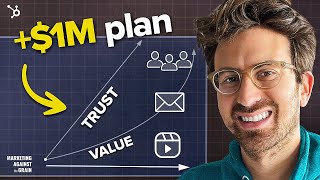
I'm Kieran Flanagan, the CMO over at Zapier. I'm here as always with my co host Kip bodner who's a CMO over HubSpot. Welcome to Marketing against the Grain. All right, cool. Greg, welcome to Marketing against the Green. You are one of the few guests who's come back twice. The thing we would love to talk to you, Greg about is this graphic, right? You did a, you've done some cool tweets around how to build a company in 2023. This was the image. I love this because it's a marketing led business, right? Each of these are very like tactical marketing things a marketer of today needs to excel at. The short form video, newsletter, community, paid community, all the way to product. And I've started to see this a lot actually. I've started to see this especially this year where a founder starts with one of these marketing channels and then builds a product and then goes and raised their pre seed or seed and they have like distribution inbuilt that. So if you are cool, I thought you could give our audience a masterclass on how to do each of these things.
Absolutely. I'm here to spill the beans all the secrets. One thing I didn't spill the beans with though on this graphic is I didn't include what step zero is. Could you guess what step zero is?
No. Some exclusive content?
Well, it's actually step zero a and step zero B. Step zero A is B. Interesting. You have to be an interesting person or an interesting brand.
Hold on before you go any further. How do you do that? Because I think a lot of people struggle with that. It's something that Kieran and I talk about all the time. Because there's some taste and subjectivity in being interesting, being cool, being provocative. Like how do you learn that skill?
Well, first of all, everyone on this planet, everyone who's listening to this is interesting.
I agree.
If you are breathing air right now, you are interesting because things have happened to you. You've gotten your first job, you've created, you know, your first ad campaign, you've lost your mother, you've processed all these things, you've Graduated high school, you are interesting. Some people, let's be real, are more interesting than other people. But at the baseline, everyone's interesting. So step 0a is be interesting or be more interesting than you are.
Well, let it shine through. Have the confidence to let what, what's interesting about you or your company shine through.
Exactly. And then step 0B is become a master storyteller, which is take the interesting things that have happened to you and package it up in a way such that it's interesting to consume. So that whole 0.0 A and point 0 B needs to like the output of that is a written like one pager, a script, a tweet, something, whatever you want to call it. It's words. You need to be able to take these experiences and put it into words before you even do. Short form video, for example.
I would love to actually get an example of a creator or brand who like lives up to that, that they are doing a really good job on having something to say to be interested. And one thing I would love to clarify is that second part, master storyteller, as part of that learning to write. Or do you see that as a different skill to learn? Like there's actually three parts, which is you have to be interested, you have to be able to tell a good story, and then you actually have to be able to bring that to life through words. Or do you think master storytelling inherently means that you can create some form of content?
Yeah. I want to say this very clearly. If you do not know how to write, you will not work win on the Internet.
Yes, yes, yes.
Give up or learn how to write. Because writing is basically the process of taking what's in your brain and putting it on paper. Right. So it's the foundational element of the Internet.
And writing is so important, Greg, because it's the, it's the simplification and synthesis of your stories and of your ideas and of your knowledge.
Right.
I think when people who aren't good writers try to communicate, it's like it's very jumbled, it's very confusing and the lesson is lost in all of that.
Right, Exactly. Yeah. You can tell pretty clearly what's good writing or not. And people, people nowadays are saying, well, I can just use ChatGPT to sort of, you know, copy someone's tone of voice and output, you know, some good writing. And while some of that is true, I believe that when you're on X and you're scrolling your, you know, your feedback, you can clearly tell what has been chatgpt and not, you know, there's like, it's very. It's very easy to tell. So I still believe that knowing how to write really well is foundational. That's why it's step zero.
Yeah. AI just doesn't have personality. And I think your first part is like, be interested means that that personality, I think, comes out in your writing. If you can write like, Ireland is notorious. It's one of the best places where you can actually go. Kip knows this. We spend. We spend many, many a Sunday in a bar called a long haul. And so in Ireland, you can go and have a drink on a Sunday and you sit at the bar and there's a multitude of people you'll meet throughout the day who are super interesting, like, have incredible stories. But the thing they lack is, like, they don't know how to bring that to life through content. What is an example of a brand or a creator? So people can really distill what you mean by interest. And like, who do you think is doing a good job of this in the creator realm? And like, who do you think is doing a good job of it in the brand realm? Because usually brands are pretty uninterested and born.
I'll give you two examples. Have you heard of the jet business? TikTok account?
No.
Picture this. It's like the Das Equis guy, like the most interesting man in the world. He looks like that. It's this guy who sells private jets for millions of dollars. And he talks about the stories of selling private jets. So his pin TikTok is the first jet he ever sold, which was probably like in the 70s or something. And he talks about how it was $3 million, which was like. Which is the equivalent of like $50 million today, was his first jet. He was 23 years old. And he talks about how someone pulled a gun and almost killed him over the jet.
Compelling.
Talk about.
Be interesting and talk about. Talk about. And understanding how to package this story is a, you know, it's a masterclass. You can check it out. It's a masterclass on how to. How to package up these interesting stories in a. In a way that really resonates. And. And his. His videos have millions of. Of views now. He's building this audience of people who are really interested in buying jets. So that's pretty valuable, right? If you were starting marquee jets today, which was acquired by Berkshire Hathaway, you know, in 2023, right. You'd probably start. You'd probably start looking kind of similar to that, you know, you'd probably hire someone like that or partner with someone like that, tell the stories of buying and selling jets, and then build the marketplace, you know, on top of it. So that's one example of. Of that.
I was going to just say, actually just in the creator realm. One example. I don't know if you've both have seen. Have you seen this guy called Lord Miles?
No.
Okay, so this, this guy, he does what he call. He does this thing, what he calls dark tourism. So he goes to the most dangerous places in the world and treats it like a holiday. So he'll like be sending snaps of himself. So he was in. He was in Afghanistan. He was caught and captured and kidnapped and he was sending snaps with him and his kidnappers. And he was like watching the Barbie movie with like the Taliban. And like, he was just. It was this incredible story, right? Just full of, like, imagery and things that you would not hear elsewhere. And the thing I was going to say is, like, he actually got released recently and I think he's trying to go to Israel next or Gaza next for his like, quote, unquote, holiday. That is no holiday. But this is his thing. But one of the things I took away from that is. And the story you told is like, sometimes to be interesting, you have to take risks, right? In life. Like, you actually have to have experienced life to have interesting stories to tell.
And you know what the best part about that is? No one could copy your content, right? In a world where all your content will be copied, they cannot copy your stories. I can't say I almost got killed selling a 3 million jet in 1974. Just can't say it. I mean, I wasn't even born. You would look at me like I was crazy. The other example around this, and it would actually be feedback to the Jet Business guy too. I think, like, if I was running the jet business, the problem with the Jet business account is it's not a category of one. So the name is off. There's a business I'm actually involved in, I'm an investor in. And the Twitter account is Boring Marketer. And the business is called boringmarketing. Com. And, you know, obviously boring businesses, this concept has taken off everyone. And your mother's talking about boring businesses, but who's talking about boring marketing? No one. And so, you know, this team comes up with this idea called boring marketing, which is like, boring ways to drive revenue to your business. And they've basically built a suite of AI software that helps automate and build SEO optimized pages. They're crushing it and their audience, which is on Twitter. So you got boringmarketing.com, which is like the product. And then you have boring marketer, which is like the creator connected to the product. And then you have this person, like, when you read the tweets, he just tells stories about. Here, here's how, like, I took this website from X to Y. You know, here's how, you know, I use programmatic SEO to do this and I think we're going to see a lot more of that. I think you're going to see a lot more of these category of one audiences that the product and the creator intertwine. So those are two examples.
I think they're really good examples. So if you're like listening to this and you're like, wow, I am interested. Hopefully some people who listen to this podcast do think that about themselves. They're like, I can write words like, pretty well. Like, I've, I've learned to like, grind it out, be a, be a good enough writer. The. Okay, I'm going to get started. Like, Greg has some really great ideas for me and how I can start a marketing LED business. The first thing that you actually say that person should start with is short form video. That is pretty interesting to me because like, Kip and I have always been really bullish on short form video, but boy, is it hard to get traction on short form video. And I, I break traction into two parts. First of all, get engagement. I think TikTok, actually it's easier to get engagement because of the way the algorithm works on some amount of your content. But the second part is like, it's hard to grow an audience and monetize that audience though. I know actually you have some great tweets around TikTok and especially the new Econ stores, but could you maybe give us why did you start with short form video? And how do you think you'd be great? How can you get great at short form video?
So you're right that it's really hard to get to take off with video. But the truth is, the hard truth is it's because a lot of people suck at video. And, and honestly, like myself included in a lot of ways. Like, I prefer writing than, than video. And this is something that I'm trying to get better at. Like I'm, I'm, I'm posting a YouTube video every week because I'm like, you need, you need to be good at video nowadays. That being said, did you see Sean Puri's application to the all in podcast.
Of course we did. Come on, that was a masterclass. I mean Sean, Sean just killed it. Just killed it with that.
So for those of you who didn't see that, you know, Sean basically applied to be the CEO of the all in podcast and made like a two minute video that kind of like making fun, poking fun I should say, of the different hosts of the, of the podcast. And he did it in a way that was super entertaining. He posted it and it got millions of views. Now we're kind of numb to this idea of millions of views, but I was talking to someone this morning who told me that he was on CNBC and CNBC has 300,000 views. It's so laughable, right? Like Sean was able to create a video, he said he edited himself using imovie, bought a wig like off Amazon. Apparently his like wife was making fun of him because of it. And from the comfort of his own home. We don't even know if he was wearing pants.
Knowing Sean, probably now.
Yeah, exactly. No comment on the pants bit. But you know, he was able to attract an audience. I was an order of magnitude bigger than cnbc, the business, the biggest business channel potentially in the world. I guarantee you he did step zero, which was he wrote a script.
Yes, he did, for sure.
He must have, he must have written a script and he wrote a script and together it was the Mona Lisa. It was perfect. Once he probably nailed the script cuz he knows how to write for the Internet. That's when he took his MacBook or whatever and started just recording. So I think that before you hit the record button, like write your script. And I use ChatGPT honestly sometimes to optimize and work with my script. So I'll write my script, I'll write an idea that I think is very compelling. I'll turn it into a tweet. Sometimes I'll post the tweet, then maybe I'll turn it into a new, you know, a newsletter post or something like that. And then if I really see that it hits traction, I'll turn it into a longer form video, shorter form video, that sort of thing. So I test, I sort of test the waters a bit, But I use ChatGPT to help me be a writing partner in the process.
So just to try to like distill why. If we take Sean as someone who is really great at short form video, I know he's trying to do better at that. He posted sometime on Twitter that he was really trying to put the reps in to get better at Short film video. I think he was using TikTok at the time. When I watch that video, there's like, I'm trying to, like, break down for the audience. Okay. Like, part of it is you need to write the script, you need to be interested and have a good idea. But how do you excel at short form video if you want to bring that to life? When I watch that video from Sean, there's two core things that I think he excels at that makes him really good at short form video. But I want to kick it over to you both to see, like, what would you say if you had to, like, use him as an example? How would you, like, describe why he was really good in that short form video form? And then I can kind of tell you what I, my, my takeaways were.
The first thing is he hijacked the news cycle.
Yes.
And he acted quickly. So the besties, as they're called on the all in podcast, posted about this, and within I think 24 hours, Sean had posted, hey, if this, if this tweet gets a thousand likes, I'll apply to be the C E O of the all in podcast. Now, Sean already knew he was doing this when he tweeted that. Right. But all of a sudden he's priming his audience that this is going to happen, which is really smart. So number one, you. How do you hijack a news cycle? Number two is how do you prime your audience to the content that you're going to create? Number three is, I think, be short. Like they called short form video for a reason. That piece was around two minutes, and I think that it was perfect.
He knew the subject matter in the audience deeply well. He had all the inside jokes. So if you were a fan of those people on the all in pod, he had jokes, some overt and some kind of subversive that were really going to get you right. That you were like, oh, all right, that's clever. I did. I wouldn't have thought of that. But that's hilarious. And so he, if he hadn't been a consumer of the POD and just a student of that information, he wouldn't been able to do that. Right. He had all of the context, and then he was able to package that context in a way that was really fun, really interesting and tight, you know, and then I think the other thing kind of related to that is, like, Sean knows who he is. He knows what his voice is, his tone, he knows how he makes jokes, he knows how his stories show up in the world because he's done that kind of step zero that you talk about where he's like, he's figured out how to being interesting means specifically for him and how he is interesting out in the world.
The thing I'd add as another point is like he tagged the besties in his tweet, so it wasn't about him. Like the content wasn't about him. Content was about them and they saw it. And I think where it started to really take off was when David Sachs retweeted or quote retweeted it and said like this is pretty good or something. And then Jake started, you know, replying to it and all of a sudden Chamath starts replying to it. And we often forget that it's important to create content that's really designed to stimulate other communities and audiences. And I think that he, he knew that Sean, and he basically inherently built that into his content.
The. The last thing. And I think it's something Kieran, you and I have learned and I think Greg, in seeing your videos, you've learned it too. The other thing he got great is the hook right off the bat. So like at that start of that video, he's like, you know, I'm applying for the CEO of the all in podcast. I'm looking forward to working with amazing billionaires like David Sacks, Chamath, Dave Friedberg. And then he just has the like deadpan pause. And you know, also Jason Calacanis basically making fun of the. Jason's not as successful as the rest of them and doing all of that. And like he got you right from the beginning. Oh, I know what this video is going to be. It is going to be him doing a roast of these people and this show that I know about and like that quick hook and quick delivery of value matters so much for so much a short form video.
That's a good general rule of thumb for short form video and content in general, which is saying the quiet parts out loud.
That was going to be my thing is that he has the perfect ability to say the thing that you think in a way that's like entertaining but informative. I think that is like creators in general are able to like extract, extract the thing that you think about and say it in the way that you've haven't managed to articulate yourself. Right. And I think that is what makes certain creators best in class because they're able to do that.
Okay, I got a question though. There are some people who are probably in B2B that are a little short form video, skeptical and I bet they were looking at your graphic, Greg, and they're like, do I really need to do this short form video thing? Can I just go straight to the newsletter? All my people in B2B, like I see them doing newsletters, I don't. Do I really need this short form video thing? What would you tell them?
I don't know how much more I can drill the point home. And like you don't even need to believe me, honestly. Like open up your Instagram, open up your X, open up LinkedIn, open up TikTok. These, all of these platforms are prioritizing video, so. Exactly. I mean you have to believe in social. You have to believe, can I get customers via social? If you don't believe that, then yeah, don't forget about short form video. But if you believe in social then you, you can just see by looking at these platforms that the number one thing that they're prioritizing is video. Then why wouldn't you create video?
Well, I'd go a step further there. And the thing is the three of us know a little something about email and email newsletters. We've done a lot in our life, we've run a bunch of different ones. You know what the hardest thing is today is to get subscribers to an email newsletter. It's incredibly hard. You'd have to pay a bunch of money for low quality subscribers. Maybe you can make some organic search plays work, but that's all getting disrupted with AI. Short form video and social has become the best scalable source of quality newsletter subscribers. So if you skip that step, your newsletter is going to grow very, very slowly and subsequently your audience is going to grow very, very slowly.
So this gets onto your next part, which is I think the part that most people start with when they're trying to build this kind of marketing LED company is newsletter. But I think Kip actually articulated it pretty well. Short from video plugs into the mediums and the platforms that you can actually get a ton of traction from. Engagement from a short film. Video is what they want you to create. They're trying to like make people. That's what they want to prioritize like X, say it in their own algorithm. So I've done the shortfront video. I'm like getting some success there. How do I differentiate in building a newsletter today? Because I will tell you, like over the past 12 to 18 months the majority of my network has decided to go and try to start a newsletter business. Like, like, like everyone just wants to be a creat. Like, like the the amazing thing is you have people like Shamath who's like a billionaire and now they're like, hey, I'm going to start to sell these guides through X, right? Like, everyone actually really in their heart of hearts wants to be a creator and that's what they want to do. But usually there's like, there's so much competition. What are the steps I should go through to figure out how I can build something differentiated for my business?
Well, so the good news is, you know, assuming you've now built a short form video audience, you've now built a lot of trust because video is the best storytelling mechanism there is. You have audio and video, so people just feel more, they just trust you more. So you've now built this trust. You've gotten them, gotten a few thousand subscribers on your newsletter. How do you actually create a newsletter experience that is not only going to retain them, but is going to get them to tell their friends? And I think there's gonna be just a bunch of new formats that are gonna come out for newsletters over the, over the next 18 months. So I was just talking to Anthony Pompliano yesterday. He has a, a newsletter that went from 0 to 250,000 subscribers in like less than five months. It's called Bay Area Times.
I'm a subscriber. It's good. He's doing a good job. Yeah.
And I think what's interesting about it is it's a visual newsletter versus words. So you could really skim it easily and you can just, there's basically like five different images. You can just like skim it and get a sense of what's going on. And I think that's again, we talked in the beginning around like category of one. It feels like he, he's building a category one for visual newsletters in the same way that, you know, in 2015, let's say 2016, the hustle and Morning Brew, we're creating this new category for, you know, bullet point type, easy to digest newsletters. But that's already played out. So I think thinking about how you could innovate on the format, be it, how do you make it more visual, how do you make it easier to digest, how do you introduce videos in there, how do you introduce GIFs, how do you make, you know, dividers, you know, for the content to be really interesting.
I think the thing that you've brought up time and again and is really important in newsletters is to find your area of differentiation. Like this is a, I'm actually just subscribed myself. Like the area of differentiation here is like it's all visual, right? It's, it separates itself from all of the other newsletters that do look like born and brewed. Like do look like the Hustle. Because that was the format that worked. Like if you look at Lenny's newsletter, like why did that, why was that so successful? Like it's basically educational content around product led growth, how to build products. But it was always a, his different angle was he made it like a community first newsletter because he sourced all of these real case studies and real data points from the community. So it was a self kind of fulfilling loop. The bigger the, the community got for that newsletter, the better his data got, the better the content got, the more that would grow again because the, the more people would want to actually acquire that knowledge. And I think that was his point of differentiation is he initially used his network to extract details that you wouldn't get anywhere else. And then he kind of used the community itself. And that is like, that is a hard thing to do. I don't think people, what people naturally gravitate towards is what has been successful. And I'll replicate that. Do you think it's a thing you can learn is like how do I find that point of differentiation? How do I find my angle that will make me different from everything else that's going on within newsletters? And it could be any other medium as well.
Yeah. So one framework I use to help think about coming up with startup ideas that are outside the box is how do you think about the anti startup? So what is the anti Morning Brew look like?
Oh, that's cool. The opposite of it. I like that. Yeah.
And you start sketching it out, writing it out and that'll help you basically connect dots in your head such that. Oh, you know. Oh, I get it now. It's just the Hustle is just basically bullet points about this topic. What if I, what if I made it way more niche and only focused on this particular, particular subset of that? Well that, you know, the Hustle would never do that because then that would alienate 99% of their subscribers. Or what if I made it only images? Oh, that wouldn't work. Because for example Morning Brew or the Hustle, you know, they sell ads and those ads are text, you know, so you start coming, you start connecting the dots. Very, very helpful framework.
What's interesting is I think if you're using that kind of anti, whatever that business that you're trying to kind of disrupt is framework, you have to ask Yourself, why? So like, if you want to use the Bay Area Times example, right, it's like, well, how could they, how could you, any of us have gotten to that idea? Well, you would have said, all right, well, you've got Hustle of the Morning Brew. Why aren't they or can't they do a visual LED newsletter? Well, okay. It disrupts maybe part of their business model. Maybe, you know, it normally turns out it's hard. Wow. Creating a lot of custom images takes a lot more time than writing bullet points. And then you're like, okay, so I either have to figure out a new process or I have to believe that there's a new technology that nobody else understands yet to make this easier. And in the case of barrier times, it was both, Right. I think they did some manual effort to make a visual newsletter, but it's also coming along in a period where AI image generation allows image production to be much faster, much more streamlined. And so you can kind of look at this example and say, oh, might not have been possible to do the barrier at times as well as they're executing now a year ago. The why. And the why now is very important when you're distilling that kind of antithesis approach of what is kind of popular in a given market.
Have you seen the Smart Nonsense newsletter? They're big YouTubers. So this is. They're a great example of using shortform to generate a bunch of buzz in an interesting way. And then they take that attention. They get people to subscribe to their newsletter, but their newsletter is these comic strips. So they're known for their short form video to have really cool comics and animation within it and they get millions of views on their shorts. So one day they're like, why don't we use those same animators and comic book people to create a newsletter? And it's so beautiful in terms of from a visual perspective to consume. It's really interesting. It's unlike anything out there. And they've been, they've gone from 0 to 30,000 subs in like four months or something. And I imagine. And that's all from short form. And I bet you these people are obsessed. Like, I bet you if you look at their open rate, bet you look at their.
But it's crazy, probably insane.
So that's another advantage of being unique, right? Your, your metrics are just going to be higher than, than the standard. Why? Because people are craving this type of experience and they can't get it anywhere else.
Their branding is really cool, actually. I'm Looking at it here, Brandon, the graphics are original. I do think newsletters, like a large percentage of news newsletters, are going to come under a lot of pressure because of AI. Like, I'll give you an example. I decided to have Bard create me a daily positive news newsletter. Like, I basically set it up to say, hey, I'm. I basically don't want to read the news anymore. I just want positive stories every day. Like, get the best positive stories and like, send them to me in a kind of style of. I give it some different newsletters, like the Hustle Morning Brewery. Like, that kind of style. It's really good. It's actually really good. And so I really do think AI is going to put pressure on a lot of these mediums that we become used to because it gives you one of one. Right. I can customize the newsletter to be whatever I want it to be for me. Right. I'm not. I don't have to do like a one of, one of many kind of newsletter experience now. There's still going to be newsletters who maybe can stand out because they have the comic book or they do something like, unique. But wow, if you're just kind of doing the normal newsletter play, I think AI is probably going to be a better option for a lot of people. And not too long of a time.
I think what happens is AI makes it way more easy to create a morning Brew Hustle type of email for X. I think, yeah, I think that's a trend that's going to happen. But I actually think that the smart nonsenses of the world and the more unique type of experiences are going to do way better over the next few years. You know, for example, like, I was just in Kyoto and I went to this restaurant called Monk, and it's like his restaurant was on like, chef's table and stuff like that. It's just like this chef and he makes these pizzas in Kyoto and there's like 10 seats in there, and you're like having a conversation with the chef. Like, I don't care how good of a robot can make pizza. Like, no one's making pizza, guy. You know, someone, you know 20 years ago or 30 years ago would have been like, yeah, oh, restaurant powered by robots. There's going to be no chefs. No, I think, yeah, robot chefs are going to be a thing, and they are a thing. But I also believe that the bespoke experiences are going to be more and more craved. So if you're listening to this and you want to build a newsletter that stands out and grows really quickly. You should be thinking about how can I make it more like Monk and less like a Costco pizza.
It's not about commodities, right? Like if you're in a commodity business, like the user pizza analogy is like if all that person cares about is the cheapest pizza pizza to eat, then the robot produced pizza is going to win, right? If that person cares about amazing pizza with a great story that they're going to tell for years and years, then the 10 seat place in Kyoto is going to win, right? And so you have to say what am I? And that commodity game is a bad game to play. And it's getting harder in an AI world because it's easier to copy and, and paste everything in an AI world. And so your arguments like hey, we have, you have to figure out how you have the utmost of differentiation and sit at a premium tier over what any kind of technology, automated AI driven approach could do.
One thing I've realized Greg is Kim and I have, Kip and I talk a lot about this personality led growth. Like we're going to enter the era of personal personality led growth. And actually what I've realized is it's just your graphic. So we should have just, we should have just like we, we talked to the, we did the whole thing on the main stage of Inbound this year. We did the podcast live. We talked a lot about personality growth which is basically you're. You start with content audience and then go into product versus the other way around. But you have to do that through having something to say, be an interest and like having a person not very very where we started, right? Be an interest and be a master storyteller and actually have things to say. One of the places I would love to kind of just maybe end on is that is happening in B2C right? Like we, we see this in B2C. We, some of, we see VC firms, some of the best companies all started through this personal personality led growth. Like you're basically your stepping stones that you've outlined in your image. Our thinking is, or our belief is Kip and I is that we are going to start seeing that in B2B because software is going to get easier to create. Now not all software, if you're creating some complex backend enterprise, maybe hard but AI is going to help a lot of creators be able to create some version of software that's in their head. Do you believe that's true? Like the graphic that you laid out, you believe it's as applicable in B2B? As B2C.
Yeah. I mean at the end of the day, as much as us marketers like to call them B2B and B2C, like it's people at the end of the day and people connect with other people and stories and crave it. So you know, using boring marketer as the example, like they were able to scale their business from zero to like that's a multi seven figure a year business, you know, based on stories category of one being interesting. Packaging it up with a hundred percent of their lead flow coming from social.
Look, we, we saw this happen yesterday. Yesterday we're recording on a Friday. Elon came out and said, Look, Starlink and SpaceX are both cash flow positive. Those are two B2B businesses that spend no money on marketing, that have a CEO who's personality led and drives the hype and the demand for those two B2B companies. And he's going to take them both public and he's probably going to take them both public in the next 18 months. And he was ahead of the game on that. But this is just going to be the norm over the next five to ten years. Right?
Let me, let me tell you a story. I was talking to Pomp about this too because we like to think that we're inventing something new here. But all that P.T.
Barnum baby.
Well, we were talking about, we're talking about who's like an OG influencer that monetizes the most. That was like the prom. And we were talking about Warren Buffett.
Yeah, sorry.
Oh yeah.
If Warren Buffett was, you know, if it was 2023, 2024 and Warren Buffett was like 25 years old, instead of writing his yearly, you know, annual letter, he would be writing his weekly substack or whatever or you know, weekly convertkit. He'd be tweeting on X, he'd be creating short form video. What's the difference between, you know, he, he's, he's built a community based business and I know we'll talk about that in part three, but he's an influencer creating content, creating IRL events, building communities, having like a, essentially a pilgrimage to Omaha. What, what's happening right now? And that's B2B and he's monetizing via you know, a fund basically. And he's made billions from that. So to answer your question, this works for B2C. Could it work for B2B? Absolutely. And there's, and there's actually probably more opportunity in B2B than B2C.
Why, why do you think that just because it's more.
A lot of people think it's more fun to create B2C products and a lot of people think that there's. That this, that won't work in B2B so they don't try. So the competition is lower. The competition is higher in B2C with this sort of stuff and the Competition's lower in B2B.
A hundred percent.
All right, we're going to bring Greg back for part three. We're going to go all about community and all about product. So if you're watching on YouTube, hit us a comment on what you want to make sure we cover in part three. Because today was all about audience building, is all about creating. Kieran, anything you want to leave the audience with before we close out today's show?
No, I think that like we've talked about personality led growth in this show. Greg's just given you the entire playbook of how this is going to play out. We'll cover the third part in community. But I think that this, I, I see it even in like I talked at the very start. I've seen it in some of the founders who were raised in their precedent seed that they are in B2B and they started with this way. They cultivated an audience, they grew that really large. They got a ton of ideas from that audience to build a product and now they're building a software product and they actually have a head start because they already have an audience that, that, that they've attracted. So I think this is the, this is the game. But I love the fact that we started in that something that wasn't in the graphics. I think that was really important place to start which was the personality part. Be interesting, write, have something to say like be a storyteller.
All right, Greg, before, before we close the show back to that step one of writing. What's your number one course book or action step for somebody who says, hey, I watched the show, I want to get better at writing tomorrow. What, what should I do?
Dickie Bush and Nicholas Cole, those guys are really good at. Their course is good. Their course is good. I've been, I've spoken there and, and just we've hired a bunch of people from ship. 30 for 30. That's what it's called. I think that's been really, that's really good. David Perel, Rite of Passage, which is more higher end version of it is interesting and he's amazing. Both those are like worth, look a hundred percent worth looking at. And, and then I'LL plug my own thing. Like I have. I have a. If you go to Community Empire co free, free 5 day course on turning strangers into. Into buying and talk, you know, talking about audience building. And you can just copy me, basically.
Very cool. Community Empire. Very cool. We'll put the link in the show notes.
Awesome, Greg, thank you so much for being here. And we'll see everybody real soon on marketing at the bank.
This data is wrong.
Every freaking time.
Have you heard of HubSpot?
HubSpot is a CRM platform where everything is fully integrated.
Whoa. I can see the client's whole history. Calls, support tickets, emails. And here's a task from three days ago. I totally missed HubSpot Grow better.
More from Patrick



A NEW BREED OF PARTNER: The Partnership Ecosystem Model Journey of Patrick Biddiscombe, Part 1








Customer Success Workspace: Never Lose Sight Of What Matters Most | HubSpot Spotlight