How to Launch a Product on Social in 2025
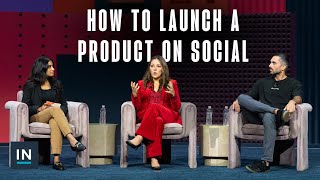
Ramon Berrios from Castmagic and Jacqueline Snyder from Product Boss discuss launching products on social in 2025. They cover warming audiences before launch, choosing between founder-led and brand content, using TikTok Shop and chatbots, and measuring what actually drives sales.
Questions this video answers
About 2,000 (Jacqueline's statement).
~40% reach the market; ~60% of those generate revenue (figures cited in discussion).
Generated over seven figures in under seven months via singular influencer focus on Instagram.
Over 1,700 active customers in the Slack community (Ramon).
Over 100,000 views per month from six videos (100% organic).
Chapters
Hello everyone. Welcome to how to Launch a Product on Social in 2025. How often do you guys spend finding yourselves in that endless scroll on social media, but then all of a sudden you see something that stands out, whether it gives you a chuckle, whether it's something deeply relevant or something really bold that captures your attention and converts you to purchase. I'm joined today with a phenomenal panel here and we're going to talk about different strategies of how you can really uplevel your product presence on social media. So first of all, I'd like to introduce Ramon Berrios. He is co founder of CastMagic IO and host of our D2C pod. Thank you Ramon for joining us today. And I'm joined by Jacqueline Snyder, who is an entrepreneur, founder and host of the Product Boss. Thank you Jacqueline for being here.
Thank you for having me.
And I'm Ariel Boswell. I am a senior data analyst at HubSpot & Co host of another Byte podcast. So jumping into social and how we think about launching a new product. Jacqueline, I want to start with you first because you have a ton of experience of working with different founders and ideating on business strategies. What are the top three things that you feel that founders need a good understanding of in order to effectively launch a product on social media?
Great. Well, hello everyone. I'm Jacqueline Snyder of the Product Boss and I am an expert for physical product based business owners. And so I've been in the business for about 20 years helping small businesses and medium sized businesses grow. But I'm also a service based business. So with a podcast, a media company and an education company, I think I've got a good grasp on both, right? Whether you're doing E comm or you're selling physical products and, or if you're launching and certainly like creating courses or programs or anything online because I'm a startup expert, a lot of times we don't start with an audience. And so the three things that I would recommend is one, warming up an audience. And really for that purpose, if you're going to use social, you're going to want to start to create content, right? That that drives the exact audience you're looking for towards you. Now what I want to just remind everyone is that social is truly social. And especially now the way that everything's changed in the algorithm is people really want to be entertained. I'm always like the gladiator, right? Like, are you not entertained? So you have to understand who your ideal customer is so that you can create entertaining content to bring them In I would also say that there's a really good amount of time of pre seating. So because I've launched 2,000 startup fashion brands, including one of my own, one of the things that I really wanted to teach people is when you're, when you figure out who your ideal customer is and you start to create this warm list, you may or may not have your product ready. So I truly believe in whether you're creating content that is driven towards something. So for example, I have a student that was doing equestrian brand for tweens and she did not have her product created. In fact, we were trying to do this during 2020 when everything was shut down. So instead she started creating content that was really aligned with the tween consumer on Instagram, for example. So you can definitely prove or think about content to start putting out there prior to ever having the launch. And then I would say the third thing is a way of capturing their information. Sure, we can get follows, sure we can get likes and engagement. We use a chatbot and I can share that with all of you at the end, but there's a doc that I have for all of you, but we use a chatbot that really starts to interact with the people who follow us, engage with our content and then we capture their emails in the dm. So I would always say like starting to build your email list is like the number one. No matter whether it's a physical product, a service, SaaS product, anything like that, you really need that email list.
Love that. Having a strong brand and kind of ideation of who your audience is, knowing your audience, and then finding ways to continually engage with them throughout your pipeline. Ramon, is there anything that you would add to that?
What I would add is so hey everyone, my name is Ramon and I host DTC Pod where I've interviewed over three 300e com founders. But primarily from my own experience, I've launched AI companies and previous business trend IO which was creator based. And in my launches what I focus on is number one, reporting are we capturing the right information at the right time every single day. So not so much attribution. I don't really care where the conversions are coming from, but I do want to have the pulse on what's happening. If I see a spike, spike in traffic, what exactly drove that? And things can break, right? Like what are the support tickets we're getting? Did something break on the onboarding funnel? So reporting number two is what you mentioned, which is ideal customer profile. Do I know my icp? And once I have that, then what is the singular channel we're going to focus on for this launch? Because nowadays each platform is its own beast. And so if you're launching, typically you don't have as many resources. And so I like to focus 100% on one channel. And when we just did that for castmagic, we generated over seven figures in under seven months. And it was through singular focus on influencers on Instagram.
I love that focus on the data. So that kind of leads me to my next question. Roughly 40% of developed products actually reach the market and 60% of those generate revenue. So when we think about a successful product launch on social, how do we go about measuring that success? What are the different data points that you're looking at to point for indicators that you are generating, whether it's brand awareness or conversion for your products?
I would say, well, you know, when you're bootstrapped, sales trumps all. So sales is. Without sales, there's no business to keep the lights on. But there are definitely secondary effects that you should aim for. Number one is trust. Like you're trying to create trust when you're creating content on social, and that is the benefit of launching on social over launching on ads, that you can create that relationship with a community and start building that trust, which will lead to conversions. So traffic, CPMs and impressions mean nothing if there's no trust, because that won't lead to conversions. So typically I love to optimize for building trust, creating content, as a founder, being everywhere I can be to get the trust from the audience to then have the funnel be able to convert.
So what are some of the tools? Let's say that you are a marketing manager, you have a new product that you need to launch on social. What are some of the tools that you're leveraging to really amplify that product? I know there's things like TikTok shop, there's different levers you can pull from, like cloud content targeting or remarketing strategies. What are some of the main kind of arsenal within your head?
Yeah, I mean, if you are DTC or Ecom, TikTok shop is definitely, you know, like an absolute gold mine right now. So that is the number one tool I would implement if it was DTC when it comes to SaaS, I wouldn't call it so much a tool, but instead just influencers. Like, it really is what is working the best for us. And instead of any fancy tools, we activate influencers based on CPMs, which I just pull out the calculator on my phone run A formula for the average of use and what I'm paying for the CPMs of those influencers. I'm good enough with Google Analytics and seeing the signups and how the funnel is converting.
Love that for folks. So really looking at the metrics for cost efficiency and understanding if your marketing job are converting and bringing in high quality users. Jacqueline, is there anything you'd like to add on that?
Well, I always, I like to work backwards. So I've been in business long enough that I have like data that I can work backwards completely from. So knowing what my lead acquisition would be and then knowing the conversion to that, like the percentage of conversion. So we recently just had a launch where we were looking at 18,000 leads to come into a challenge, let's say. And then knowing from that 18,000 we convert about 2, 2% of them. So once you start to have that data, you can really work backwards from your goal, which of course for us is revenue as well. So I think it's always driven by revenue and then knowing whether it's your average order value or the cost, you know, the cost to acquire the customer. And we could really just work backwards from that. And I'm pretty dead on with knowing exactly how a launch is going to go based on our lead acquisition. And so I think the more you can really start to tailor the data that you're grabbing for what you're doing, it becomes a formula. So in the very, very beginning it is just guess, right? We're always in test and try, especially on like first launches. But I think as you start to repeat it, the data doesn't lie and really the numbers don't lie. And so I just, I can really work the formula backwards and that works for either E Comm or, or service love.
That's balancing the art and the science that come with a product.
I want to add one thing to that as well, which is, you know, not so fancy on tools but on obsessive over the metrics in the onboarding funnel. So Blaine, my co founder, was somewhere around here, knows that we're constantly testing and iterating on that onboarding funnel. There's typically 10 steps in the buyer journey before they get to the purchase. And so we'll test free trial with credit card, free trial without a credit card, paid up front and then track the retention of those users because you might be getting more people to convert further up front in the journey now, but they might just be churning at a higher rate after 30 days. So I agree with you that you have to be Obsessive over the data, not so much the tools that you're using.
I have one more thing too. I'm like, I'm not the data person, but obviously numbers are my thing. Numbers are the thing that makes. We were talking about this, that makes me feel better, right? I'm like, if I know the numbers, then I know where we're going to be. Another thing that we really started to focus on was conversion events. So how many conversion events does our customer have to be at in order to convert into a customer? So for us we're like 2.3 to 2.5 conversion events. So what we know is once we acquire the customer, how many times do we either have to have a live interaction with them, an event, some sort of offering to them to get them to convert. So now we know the length of time and that we could shorten that timeline if we offer more conversion points.
And it's so important to not shy away from the data and really taking the time to understand the customer consumer journey and the path that they get to the point of purchase. So I kind of want to pick your brain a little bit, Ramon, on this. I feel like everyone has seen the meme where it's what being engaged has taught me about B2B sales. You see all the corny LinkedIn kind of posts between, you know, founder led versus brand led and I feel like you do such a great job of striking this balance of relatability between being self promotional versus leaning in on your brand. So would love to kind of pick your brain a bit on how do you find that balance between brand led content versus founder led.
Yeah, I always optimize for trying to do as much founder led content as possible because when you're launching, that's the advantage that you have over the incumbents. You know, not every company can have the face of the founder be there because the company has grown and the founder has better things to do than making content. But when we're starting out, we've got nothing to lose. And so I try to put my face out there as much as possible, especially with AI, where we're headed into a world where the technology becomes a commodity more and more. So attaching a brand to the, to the social content that you create will increase conversion. So there's actually a funny story about that. When we were starting out, castmagic, Blaine, myself and Justin, who are the founders, we were on support together the whole time and we would, when we would get a ticket for support, we would send a zoom link right on the chat and the person would join and it would be us three together. We did over Blaine specifically did over 10,000 customer support tickets herself. So you have to make sure that this founder content isn't just, you know, it's not that the founder makes a video and they run it on ads and that's founder like content. No, it has to be consistent throughout the journey. Again, like there's many points where the conversation conversion can happen and so we're, we're doing the workshops weekly with our customers, we're doing the calls with them. We have a slack community right now with over 1700 active customers in that community and it's ourselves running it, answering every question and making all of the content. So I try to not outsource brand content unless you know, content can be challenging for some founders if you're not new, naturally good at it. But I just think it's worth the muscle and the practice and the consistency to get good at it because I would much rather have a thousand views but earn a thousand fans and create conversions than a million views viral on TikTok from someone they don't know and can relate to and leads to no conversions.
Jacqueline, do you have a similar kind of approach too when it comes to that balance?
I do and I don't. So a lot of my physical product based business owners are like I'm an introvert. I can't, I can't show my face. Like never show my face. Right. And I think there's a difference between introvert and where you source your energy from versus that wanting to put yourself out there. I do think it's just main character. So whether your product has a main character. So for example, there's certain beauty brands that have come out where they will use it's user generated but it feels like found it's not founder led but it feels user generated. So you can attach to someone that you know like and trust. So if you can't be founder led, which my business it definitely is as a host of a podcast and a big community on Instagram and everything else that we do. But if it's something that doesn't work for you, you do need to attach some sort of main character to it or story because stories sell. So how do they follow along on that story and how do they relate to it? So I think it's that no like trust and whatever you feel like is most comfortable for your company. But I do know that some of my best brands on social, the founders still run their social media. So that's One of the other things is that they just really have a good hone in on what their customers want. So while they may have other team members in there, they're very much a part of knowing in the moment what people need to hear and know.
What are some of the pros and cons that kind of come with tapping into an existing audience that you already have built as a founder versus introducing a new product or speaking on behalf of the face of a brand that you have to keep in mind.
I think if you launch a new product, you also are kind of driving a new audience or you're attracting a segment of your market to that. Again, if it's like user generated, if we're working with influencers, you want to, you know, whether it's micro influencers that you're working with, I think those have much bigger impact than the massive influencers. Like, you know, I've had clients that Kim Kardashian or Paris Hilton has worn their product and it's done absolutely nothing for their business. But then when you have somebody that has like a smaller audience and people are really into everything that they say, they're like, yes, I want to buy that, give me your Amazon link, give me your like to note link, that sort of thing. So I think that there's this variation to the way that you can approach it, but for me it would be if you're. I like to teach my students using other people's audiences. So if you don't have the funds to create your own, if your ads are limited, because we really build organic audience. So if your ads are limited, you want to get in front of other people's audiences. So we either do that through sales channels, so using Amazon or using wholesale and selling on the shelves. That's how Kim Kardashian bought my products because she found it in a store when she used to do her own shopping and then the store owner snapped a picture of her wearing it. So I think you can use this idea of getting in front of other people's audiences and then that kind of lowers your. If you're not ready for the ads and knowing what your conversion is going to be, that would be a great way to do it.
I love that and it's great too because if you are limited in paid advertising budget and you want to increase your reach and not just have the interaction ended social, it's so crucial to have that other component whether it's driving to an E commerce site or driving to a spot specific call to action. I want to Just hone into organic social recently, you know, I think anyone who manages a social media account sees that organic reach is on decline. Video, you really have to lean into or tap even into influencer audiences to increase your reach. What are some tips that each of you have when it comes to maximizing your reach and combating some of that fatigue that we're seeing on the organic front?
I think one of the biggest hacks that we've done, well, not necessarily a hack, but using your own customers to create a lot of your content or your own affiliates, your evangelists and your advocates is the easiest way to scale organic reach through creators, influencers and organic video. And the reason I say that is because so much of scaling UGC is operational. You come across so many bottlenecks when trying to scale content and one of those is briefing the creators and making sure that they're getting the message across. So in our case we tried with a bunch of different creators and couldn't scale it because you know how to explain to them our entire business in like a 30 minute call. And I could only do so many calls a day. But when we started activating our own customers, I basically said they know the product, they understand it, they've seen all our emails, they know how we talk, let's trust them and not brief them as much. And so recently we launched our YouTube channel and it is powered by our customers from our Slack community and we're now doing over 100,000 views a month and we only have launched like six videos and it's all 100% organic, no paid ad spend behind it. And I have one person on the team managing the entire thing. But that's because we focus on the customers. So that is one of the things I like to do the most. And then for piggybacking off of others audiences. That's why I love influencer marketing. You know, the organic approach is a long term approach, but influencer is a way of getting the same result in a short term. And so we like doing both simultaneously because why not? They're different strategies and they all feed each other as well.
Yeah, and I teach the ABCs of content and try and keep it simple. So attract, bond and convert. So attract would be top of funnel, mid funnel would be the bond and then convert would be the bottom of the funnel. And so you know, since October we've over doubled our following on Instagram and that's because Ramon and I agreed to this. Sometimes when you're starting go, we, I would suggest that you go all in on a single social platform to start, you start to build it, you start to understand it, you start to be able to stick with it. Because listen, I have a TikTok, I have a YouTube, but it's just like it spreads us thin. So now we're I think of almost 132,000 followers. And I've had this business for over seven years and so it took us a very long time up until last October to hit about 60,000 followers. And then the fact that I've sped it up in this way, I started using the framework of Attract, Bond, create. So one of the things that we do, I mean we do post four times a day. I'm not saying that any of you need to do it, but really thinking through the type of content, we also have run a million dollars in ads, but we turned off all of our ads for social. That's usually our ad spend for the year. So we turned it off for social because I was like, let's see if this thing works. Because I love to teach organic reach. And so the attract content is that kind of like I like to imagine casting a really wide net big fisherman, like they're trying to catch all the salmon and they're just like, you know, there's things in there they're throwing back in. So that's sort of the viral content that we're creating. And Instagram specifically has made it really easy now for remixing content and really kind of trying to think through like how you can use things that have already gone viral to continue to make it go viral. If it's gone viral for someone else with a million views or more, then it's going to go viral for you no matter how big your audience is. So it could be 300 people following you and you'll still maybe hit 2,000, 3,000 views on a reel versus something else. So we like to do the real content or if we're doing posts or captions that people are going to share, that's really that attract and that's the thing where you want people to just reshare it, post it. I send my husband a gazillion reels all the time, right? It's like that's the kind of content you want to put out there because that's going to cast the wide net. And then that mid funnel content, the bond is what keeps them there. It's a sticky content. It's the second where they're going to trust you. So if you've got a physical product, they love to see you make Stuff I had a client go viral on TikTok every time she flooded her sugar cookies, she'd put it on slow mo. Millions of views, millions and tons of revenue from selling Sugar cookies on TikTok because they like to watch her flood a cookie. So it's so simple. Humans are so simple now, right? We just like, it's just micro bits of content. So anything that will really make them, it's them stick around. And they love to watch. You know what you like to watch, like someone putting on lipstick or cutting through a slice of cake or pouring a candle or whatever it is, that kind of behind the scenes stuff. And then the final part is that conversion content and that's actually the least amount of content you should be posting because they don't love it. So if you go look at a huge brand, like I think Nike has a good following but I always like to go back to Aloe Yoga and there's a million of the stores here for some reason here in Boston, they're really loving aloe. They'll post but they don't have high engagement. So when you look at the really, really big brands, it's more like we've all signed up to follow them because we know them and we maybe want to see something, but it's really not the people that we're engaging with that often. And so I think looking at that kind of content and your conversion content, the hit is when you have the ABCs all in one, something that's gone viral that they bond with and then can also convert them into purchase.
So I want to take a step back because you both kind of mentioned and hit on two very distinct things. There's one, there's content that drives conversion, there's content that really focuses on building trust and that brand authenticity or founder relationship with potential customers. How do you guys go about thinking that approach for the first time? Like, you know, it's very overwhelming to kind of consider, you know, making content one version for conversion versus focusing on just broader brand awareness. So how do you guys approach that balance?
Well, in our case I agree with you 100%. Like not every piece of content should be going for the sale. That's one way to not gain trust from the get go. So Blaine and I were trying to figure it out in the beginning just making a bunch of random content, but when we sat down with a strategist, by the way, like you should have a support team like either if you're not really good at editing, get some help on strategy, just someone to bounce Ideas with. But when we got to the bottom of it, it was that in order to make this manageable and make this puzzle fit into place, it was, we need our content pillars. What are the things, things that we're going after? And so in our case, you know, content pillars, one of our content pillars was, you know, have the customer base feel like they're getting a look behind the curtain of our business. And so every piece of content that we make has to fall into one of our pillars. And then we broke it down by top of funnel content, middle of funnel content, and bottom of funnel content. And so, you know, 80% of our content initially is going to be top of funnel. And it might not be super related to the business, but is macro related to our niche so we can try and go viral, build traffic. Now, middle of funnel, let's talk a little bit more about. Let's get closer to the problem that castmagic solves. And then bottom of funnel content, let's create sales heavy content. That's probably 15 to 20% of the content. It might be really heavy on our product. And so when, when we were able to break it down and map it out like that in front of us, it just made it seem like we had a proper strategy and we know why we're making the content. Making content without intent will lead you to burnout, Ramon.
You hit on something there in terms of ensuring that your brand is consistent and shows up throughout the pillars of content that you have. What tips do you guys have for a marketing manager who is given the ask to make this go viral, but make it still feel like our brand? I know viral is such a, such a key term that I know a lot of us are like, oof, very challenging to achieve. But how do you kind of think about that balance?
Whenever you hire a marketing manager, it never really fully, at least in our experience, it always feels a little bit off, especially when it comes to social. I think that other types of forms of content, but there's always just something off because of the way they learn. So for me, I have everyone that's dealing with marketing, they're on the ground with my customers. Just like, sort of like how you guys were doing, the three of you meeting with that many people, they're listening in, they're in on calls, like whether they're sales calls or part of the pitch. Cause they need to really understand what the pain points are of our customers. Because you can flip pain points into humor. I mean, I think we're funny on our Instagram at Least our sense of humor has to do with our audience. And so you get to decide whether I completely agree with everything Ramon said. That's exactly how we've done it. But then also, are you funny? Are you serious? Is that heartwarming? Are you talking to the parents? And when you're asking about that part again, I think such an amazing tool that we have right now in the algorithm is remixing content and then putting something on top of it. So a lot of times, let's say one that went really viral for me was Phoebe from Friends running around like a cuckoo person in a bridal shop and it was a mom that had posted something and it was like after school sports, da da da da. And I was like, this makes so much sense for people who are product based business owners heading into the holiday season. So it was like emails, product development, shipping, and I started just changing the things in it so the piece of content still makes so much sense. It makes it so much easier than necessarily always having to create your own viral content. If you're a creator, do it. If you're not currently in the current way that the algorithm is working. This is one of the easiest ways, I think to create viral content.
I love this. You don't have to necessarily reinvent the wheel. Sometimes you can just kind of pick up and you know, hey, my audience is really, really going to respond to this. Well, let me just put a slight twist and a little bit of brand magic on it, right? So as we head into 2025, I'm curious to know each of your biggest kind of takes into what are some of the biggest trends or like hacks that you would recommend for next year.
YouTube Organic, like longer form content is huge, especially when you have such short attention span platforms like TikTok. On the other hand you have YouTube which have been really high converting platforms. And so right now there's a big barrier to entry with YouTube because just making long form content is so time consuming. But if you put effort into figuring that out for your business and your team, it's going to pay off dividends. Also SEO search through platforms like SEO is huge on YouTube now you look up most how to videos. Sorry, how to something on Google. Google is prioritizing a YouTube video now over that. A lot of people are searching on TikTok. So SEO there is huge. And then lastly, I would say Influencer is, you know, I think we, we haven't even like hit the full stride on Influencer is still crazy early. We turned off, we also turned off 100% of our ad spend through platforms that are just doing influencers because we're acquiring customers at a much more profitable rate. And last takeaway on that is you don't need fancy platforms, databases, expensive platforms to find influencer. The platform is the search, sort of the search database for finding influencers. And I'll give you one huge hack that worked for us. If you go on Instagram or TikTok, you find the ideal person that you want to work with, you click on similar or suggested people and it's going to show you a bunch more people like that. And so that's a way of sourcing a bunch of creators that fit that Persona. And then another thing we did is we created a new Instagram account. We followed only like 10 creators that were similar, profile of who we were going after. And then we go on the Explore feed and then the account automatically just shows us thousands of people that are like that Explore feed. And then we have a team sorting through, doing outreach to all those people. So you don't need fancy tools. Double down on influencer. And then search is huge on video.
Yeah. And I would say the talking head is out. So creating content where it's just your head bopping around, they're not so into it. So anytime it could be like a teaching piece of content where you look like you're up on a board, or it really feels a little bit more engaging. I'll go back to chatbots. I think that that has been instrumental. It's basically like an entire funnel we can build out on the back end, so whether it's replies and different types of replies that seem live. So we post a piece of content, we're like, comment the word inbound, for example, and then it'll say like, great, we're sending something to your inbox. But then there's different responses we can set up so it looks like it's organic. And then taking them into the DM and really getting into a conversation. And so we're also building out quizzes through chatbots that really have been, you know, I think we have like 500 people a week, which is our goal, to engage of like a new organic audience and then moving them to the. To an email list. So that. That's doing really great. I think that's. Yeah, I think that's good.
Yeah, I love it. So don't be afraid to work with influencers and find scrappy ways to identify those, whether it's on a micro level to reach your audience. And then don't be afraid to leverage tools either. So as you head into 2025, few takeaways for driving meaningful social media growth really around sounds like brand vision. How are we leveraging tools in your toolkit to really drive from that point of initial initial conversation down to conversion? And really being open to diversifying your sources of revenue is crucial. So thank you both so much for joining us. If anyone has any follow up questions afterwards, we will be hanging out here on this side. Follow Jacqueline on Instagram and send her a DM for Inbound. She will send a guide on how to grow your product launch.
So just message me the word inbound and I'll send you everything I just talked about. Talked about.
And then for Ramon, you can follow him online and then also check out Castmagic IO as well.
Thank you.
Thank you.
More from Patrick



A NEW BREED OF PARTNER: The Partnership Ecosystem Model Journey of Patrick Biddiscombe, Part 1








Customer Success Workspace: Never Lose Sight Of What Matters Most | HubSpot Spotlight