How to Make $200,000/Year With 10,000 Subscribers | Nathan Barry
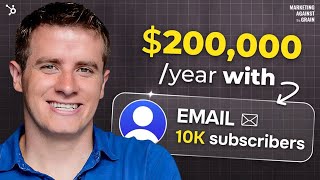
Nathan Barry explains how creators with 5,000 to 100,000 email subscribers can earn $200,000 yearly by selling high-priced products to engaged audiences. Ali Abdaal built a successful course through email, while Nick Huber uses top, middle, and bottom funnel content to convert followers into customers. Brands should partner with creators rather than copy them.
Chapters
On today's show, we're talking all things creators with Nathan Berry, founder of Convertkit and host of the Billion Dollar Creator podcast. We're going to talk middle class creators, how you can have a mid size audience and make a ton of money, especially in B2B niches. This is something nobody's talking about and Nathan is breaking it down. And you're going to want to stick around to the very end where Nathan gives you his three must dos. For anyone who wants to be a creator, I'm your co host, Kip Bodnar, Chief marketing officer at HubSpot. I'm joined by my co host Kieran Flanagan, who's the chief marketing officer at Zapier. And this is Marketing against the Grain. Let's get into today's show. Nathan, welcome to Marketing against the Grain.
Yeah, thanks for having me on.
So one of the reasons we're really excited to have you on is because on our show we talk a lot about creators and the creator first economy. And you know, Kieran and I are bullish on creators, but like, where do you stand? Is that a good bet? You're still going down that route? What's the pros and the cons of the state of like the creator movement today?
So the first thing is don't write it because it's a hot wave. It'll change and your company will die out because of it. Like the 2021 vintage of like hot creator companies. I think most of them are going to die out. But then the other thing is I think the creator economy overall is absolutely massive and going to thrive. And you know, I think it'll be five, like five years from now, I think it'll be two to five times bigger than it is now.
The thing that we've seen, Nathan, is like a lot of these channels that you can grow from today favor creators versus a brand. Right? Like if you look at the social channels, they for the most part want creators because they have all these creator programs. They don't even allow brands to, you know, have their links on those platforms. They want to monetize on the platform that favors creators. So we've kind of seen this evolution of like all these channels start to kind of favor the individual versus the brand. I'm curious if you've seen that. How do you see that or do you see that trend yourself?
I absolutely see it. And it's not because the platform favors a, an individual creator over a brand. It's because the consumers do it. And so the platforms are watching that consumer behavior and then following it, right. Everything that the platforms are doing is to try to increase, you know, watch time views on advertising and that sort of thing. And so you need attention from a, from an audience. And so they're saying, okay, what works if we have, you know, random, I don't know what professional services company as their brand talking about, here are seven ways that you should be ready for taxes this season or whatever the product is, right? They're seeing that content and then they're seeing, you know, the CPA who's saying, hey, here's what I'm actually seeing as I'm you know, four things that I noticed last week cause I was helping clients, like here's what you should watch for in your business. There is a going to be a night and day difference in engagement from consumers on that. And so again it's not that the, the platform is like this is what we want to exist in the world. The platform is just like, look, this is what, where attention is going.
They're trying to match their content with what their consumer wants. And consumers for the most part are attracted towards an individual versus a brand. And these channels actually allow individuals to be much more front and center. I think that would be to me like the bullish case on the Critter. Like if I had to sat down and say what's the bullish? It's like, well the consumer wants to like interact with individuals. Today it's easier than ever for an individual to get like front and center in all these channels with that person versus so maybe it's not like creative versus a brand or person versus a brand but like just it's easier for a person with something to say to get in front of those people and, and that's what consumers gravitate towards. The bearish case I've always had on just like creators in general and like anyone who wants to become a creator is like where there's this like small subset of winners and everyone else is like losers and there's like no, there's like such a huge separation between those two things. So actually there's a whole mid tail or like middle category where you can actually be successful creator where you don't have to be the Mr. Beast or any of these kind of top echelon. Is that always been that way or that's a new thing you've seen?
I think it's always been that way. It's just not the sexy, exciting thing to talk about. Right, right.
Well it's also not anybody's mindset, Nathan. I think when people start out, they think they have to get really big and, and getting really big takes a long, long time. And most people just can't do the grind.
Mo.
Most people who are diving in are not going to see meaningful results in one to two years, especially if they don't have the habits required to show up consistently. If you are already a professional in your industry, you know how to show up, you know how to write, you know, you know how to produce content and you decide, I'm gonna be a creator, then like totally, you can get it in one to two years. But if you're, if you're coming in cold, you know, saying like, I have this unrelated skill that I wanna teach as a creator and you don't already know how to get like the perfect zoom set up and you know, you're not struggling over what podcasting mic to use, then, then you're gonna have much different results. But the popular narrative of this power law, it's just because people don't want to pay attention to or they don't have the data for the, the mid tier because it's not what's getting written about. But I can see it, right? I see it firsthand. I have 50,000 customers paying for ConvertKit and we collect all of the revenue data from every platform that they sell on. And that, you know, that customer that has between, I'll call it five thousand and a hundred thousand email subscribers, they're absolutely printing money relative to their audience size. And the thing is, is because they can, I mean, I know you both are huge fans of email marketing. You wouldn't work, you know, where you have in your careers if you didn't believe in it. But being able to personalize messages to your audience, being able to segment and target, right? Like you can monetize in a huge way. Like, here's an example, there's a creator named Ali Abdaal. He has a fantastic YouTube channel, podcast, all that, but the YouTube channel's the main thing and he's grown a big audience on email. He did a YouTube course that did very, very well. Before I share the numbers, let me do a counter argument. There's another channel called yes Theory. They are maybe five to 10 times as popular as Ollie is. They came out with a course and they, I like it. Totally flopped. They're teaching a course on like, here's how to do YouTube. Totally flopped, giant audience. Ali Abdaal comes out with his course. It's making three to four million dollars a year now. Ali is a power Law creator, right. He's big. But yes, theory is incredibly larger. And so when you dive in on this and you're like, wait a second, why is the small creator printing money and the large creator has this big flop with their audience. And the thing is that Ali did not promote his course on his YouTube channel. He used his YouTube channel as top of funnel. He got them into an email list. He then segmented people based on what they were interested in. He taught a bunch about, here's how to start a YouTube channel, here's what to do. Found this like, you know, you'd call it a niche of people who want to learn on YouTube, but it was probably 5,000 people, you know, it was.
A lot of people.
And then he sold a high priced course to them that was really good and really targeted and he made millions of dollars. And so that's happening at smaller scales where the, a creator's like, hey, I have a hundred thousand on Instagram and I can't sell a thing. But then they're going down and targeting and finding the right thing for the right people to a subset, you know, 10,000 people on an email list where they can segment and tag and personalize and everything else and they're just printing money. And so all of these creators who are like, there's no middle class, like, you're right, there's no middle class on those platforms, but if you bring those people to email, there's a thriving middle class.
Okay, so one of the things if you're watching and you are like, hey, I want to have at least some type of personal revenue coming from a creator is Nathan, I think what you're telling everybody is like, you need to decide what your top of the funnel is. And that's probably some combination of YouTube or Instagram or TikTok. And then you have some kind of mid funnel where you're going to actually monetize and, and historically you're saying from all the data you see across 50,000 creators, that's email and podcasts, is that what you're seeing?
Yeah. So you gotta think of it like a hub and spoke model. A lot of creators try to be on every platform and that doesn't work. Cause you're gonna spread yourself thin or they'll go, okay, I'm only going to focus on email because that is where I get the best engagement. But there's a huge problem. Like email does not have a discovery algorithm. It doesn't exist. Right.
Like I promise you, I've looked for a long time.
I think I have figured that out, but we'll, we'll come back to that in a second.
O.
Okay, please.
So email is where you get the best engagement, but there's no algorithm that's going to like, if you have the best email. It's like, wow, okay, that's now trending on the email homepage. Like, that's not a thing. Whereas a really great Twitter thread, you know, could legitimately be viewed by, you know, 5 million people, right? LinkedIn, all these other platforms, Instagram, TikTok, et cetera, YouTube, their whole thing is discovery algorithms. And so I, I think the most successful creators choose one social platform that they feel the best at and are most confident in. They have a second that they're testing, that they're playing with and then they are driving all of that to email. So a common thing is you'll see YouTube as a primary, Instagram as a secondary, email as the hub, or if you're focused on written content, Twitter as the primary and LinkedIn as a secondary and the email hub. And I've seen some massive, massive businesses.
You've seen people do that and capture email addresses of those two platforms. Because I've seen like anytime you promote on those platforms these days, that stuff just doesn't do as well like the those. Every platform seems to want to build like an in app experience where they, you know, you see TikTok, right? Like TikTok shops are incredible and they're incredible because the experiences within the same platform and even Google Search, one of the last places which its whole entire goal is to get you somewhere else is moving towards. No, like you can't leave, stay here, we'll give you all the answers. And I think AI chat is going to make that much worse. But I'm definitely surprised to hear that like creators have been able to go From X and LinkedIn and build a great subscriber list of that. Because I haven't seen, never really seen it work where you promote anything on these channels and at scale you can get people to sign up for something. So I think that's interesting and I'd love to kind of just hear about how that's been working.
Yeah, I see it work firsthand all the time. I was just on a call yesterday with six or seven creators who were talking about how they've built their audiences on X and LinkedIn. And if you put a link in your initial post, it's often going to not get the distribution that it would otherwise.
Right.
So you'll see people do something like, if I Post something and it gets at least 200 likes and it has this momentum, then I will reply with a lead magnet. You know, basically the traditional playbook that's worked for so long, it still works today. So the only difference is that you're generally not going straight to sharing a link. You're providing a bunch of value on the platform and following up with a link to get more. It's like the guest posting strategy where you're not just saying, hey, go, you know, jump over here to get my free guide to whatever topic. You have to provide a ton of value in the guest post, right? And then, you know, say, hey, if you want to go deeper on product launches, the thing is jump off here. But the exact same strategies that have worked before always work. There's just some very small tweaks on them. The other thing is knowing that these algorithms are not going to show all your content to everyone. And so effective content creators are going to post pretty often. And then like there's a creator named Nick Huber who, man, here's someone, he's.
Such a troll on Twitter, it's hilarious.
His whole content strategy is to just elicit engagement through any means possible, right?
Well, so he has a very deliberate content strategy. He's a little less trolling than he used to be. He's also completely different in real life, which I find wildly entertaining, but he is one of those people. He's not a powerlide distribution creator, right, from an audience size, but he is absolutely printing money. And so if you look at what he's doing, he has these top of final posts on Twitter and LinkedIn primarily where he is just trying to get views and attention, right? And so he'll post something about, you know, an HOA or right in his space and people like, it just gets people fired up.
He does a bunch of crazy real.
Estate, say something inflammatory, right? And it'll go from there. Now down from there, he'll have like meaningful business content as his like mid level funnel where he's talking about, hey, this is what's working in my business. Here's some actual numbers, you know, here's a strategy you should implement. And then at the very bottom of the funnel, he's got some very detailed niche content, right? And this is all posted to Twitter. But when you look at it like I learned more about bonus depreciation as a real estate tax strategy from a thread that he wrote where I was like, I did not understand, understand how that works, you know, no CPA's article is going to get me to understand that. But then he explains it and so the way that he thinks about it is top of funnel, distract views, mid funnel, that content is focused on getting, you know, like demonstrating some of the expertise, educating, building that with a smaller group. And then bottom of the funnel is to demonstrate that he is like a world class expert at all of this. And then do you want to be a customer of one of his companies, co invest with him in one of his funds on from there and that's it. Like that audience is worth 5 million a year or more.
There's actually a perfect description that and why I think creators often beat brands because the way you describe top of the funnel, middle funnel and then monetization, that top funnel part, you have to be okay with people not reacting very well. But like what brands often do is because they're so fearful of having people, you know, really say bad things about them. That mid funnel piece is their top funnel piece, right? And that's why, that's actually why creators outperform brands and most of modern day channels is because no one wants the mid funnel stuff in those creator awareness channels.
It's boring.
And people are just like looking for something to really react to, either violently disagree with or violently agree with. And that's just not comfortable, that's not a comfortable place for a brand to live, right? They don't like living in that place.
Kieran, let me, let me try something on both for both of you because we're talking about the creator business and obviously Nathan is like, hey, I think it's hard to build a really high value venture backed creator focused business but man, I think over the next decade the creator economy is going to be huge. Well, I think the reason for that, that none of us nobody talks enough about is especially in the B2B landscape, these B2B creators are disrupting all of these old school niche media and training organizations, right? Like these really obscure private equity rolled up media companies that have 30, 30, 40 different little like niche magazines and newsletters across different things. And idiots like me were always like, oh, brands are going to disrupt those publications, those training, training things because those companies, they're kind of boring, they're stodgy, they have this host of kind of like average writers and you kind of don't know who's behind it. And brands have the authority, they can tell the story. And then what we're actually saying is well, brands can't disrupt because they can't actually do the provocation. The point of, the extreme point of view, the kind of top 25% that is necessary to be relevant in a market that is very dynamic and changing more than ever before. And so creators are going to step in and fill that void. And all that money that was being spent across all these media companies, all of these training companies, which, by the way, they're also small. Nobody's really rolling up. I went, if we, I bet if we went and sized it, it's a massive, like, you know, it's probably a 20 to 30 billion dollars market. Like, that's what's happening.
I think it's absolutely happening that the, not only is the attention going to a different place than it was before, but also it's just, it's way more effective.
Right.
As we talked earlier to market as an individual than as a brand, I disagree with the premise that you have to be inflammatory or that that even necessarily works the best. Right. And so that a, a creator is saying things different than what a brand could say. Because there's all of these creators that like, are only entirely positive and are even more successful, like in the same industry, right. If you look at Sahil Bloom on, on Twitter and LinkedIn, yeah, he only says super positive things and he's got a million followers and his business is doing insanely well.
So then, Nathan, can we do the before and after? What is the void creators are filling that brands are having a hard time filling? And if you're a brand and you want to be more like a creator, do these things. If you're a creator and you want to be successful, do these things. Like, you work with the best creators in the world. Like, you have more insight into this than anybody else. Like what's, what's kind of the, the before, after, or the kind of the difference between those two buckets of people who are out there trying to capture influence.
Well, I think the first thing is use creators and like, elevate people within your brand. Right? This is something that HubSpot has done really, really well, both in, you know, your own content, but then also, like with the HubSpot Podcast Network and, and all of that, where you're really able to have creators show up in a way.
Right.
There are individuals that I can follow with ConvertKit. We both do that, both with, you know, our content. Right. My. What I'm. What I'm creating what, like Charlie Prangley, our creative Director, she's got 250,000 subscribers on YouTube.
Right.
She is really well known in the design space. When she comes out and talks about, like, here's how I use ConvertKit. Here's any of those things, right? It gets a ton of traffic and attention. So both do it with, you know, your internal employees and then also do it with your customers. Right. Get creators who, you know, in our case our customers are creators. So this is easier. Yeah, right. I have a coffee table book here that is all of these stories of creators that we've told, right? This is how creators are using our product. And you see that more and more where brands will deliberately hire creators and say, hey, you're the, the front person for this. Or here's the network of creators that are the front person. There was an education startup that I saw who deliberately hired someone who was already growing on Twitter and Instagram, related to, you know, alternative education and all that. And they're like, okay, you know, we're now paying you.
I don't know what.
But say it's $100,000 a year, 150,000 a year. If you're hiring someone who's like growing in their career, not like at the very, very top. And then you basically, as a brand, it's not that you like through your brand account, try to copy what works as a creator. You just hire creators and go from there. Yeah, Notion is a great company, right? You look at all of this content. If you, if you go on TikTok and Instagram and YouTube and search notion content right there. I think there are like over a hundred million views on TikTok for the hashtag Notion or if it's not that high, it's pretty close. And you might think, oh, that's just, just because of their product.
Right?
That's just how, how it works. No, no, no. It is carefully engineered behind the scenes. There's this guy, Ben, who is, I think one of the best in the world at, at this. I wouldn't be surprised if you two both know him and he has like his creator and influencer program where he's working. He's not working with the biggest creators. He's working with ones who are even super small, creating great content. Yeah, he's building long term relationships with them. He's, you know, paying for a lot of content. And then people see, you know, another creator is like, wow, this creator made Notion content and did really well. I think I will do the same. And so that builds it up, whereas the first creator got paid to produce it. Right. And so those kind of flywheels that you build work really, really well. And it's basically brands working with creators rather than just trying to copy the Best practices.
What about Aqua hiring creators? Basically having those people internal to your team versus but also buying the IP.
Is basically what you're saying instead of hiring them also like buy the.
I don't know about the ip. I actually just think like that's what.
I think what hire would be.
Yeah, I know, but I. You have to the way. So I think there's two versions of that. There's one where the IP is something worthwhile, like actually something meaningful to you, has enough volume or something that it's actually useful to you. I don't know if there's a lot of creators when you are a brand. Like if that is true. Like the thing that they have is a thing that's really going to be meaningful to your business. But they themselves like if they can bring that in and do something some version of that, bigger and better and you get them more resources like it's at. At the end of the day it's a pretty expensive hire. But you end up overpaying because you think it's a unique person to work within your company. You can kickstart something. But the problem with only working through creators, you don't build any of that talent internally. You're continually dependent upon external people to like be, you know, they kind of represent your brand in some ways.
Yeah. I think that you either need to work with a network of creators where you're not reliant on a single person. Right. Because if you build your entire brand or on one person who you know is not a co founder does not have substantial equity, then that, that could be a single point of failure. The Aqua Hire thing is really interesting to me because the question that I like to ask is for any given bit of attention, what's the highest ROI place you could direct? And so creators are the absolute best in the world of getting attention.
Right?
Like a million views, 10 million. You know, like we are so good at it. And on one hand, creators monetize really, really well. Where you're talking about someone who is in, you know, maybe a small niche. They could be teaching writing, which maybe historically is a $60,000 a year job like somewhere in the United States. And now here they are making $600,000 a year because they have this course that's doing really well, maybe have sponsorships in their newsletter, any of those things. So you know, I'm looking at this person who like say has 50,000 people on their email list and is making $600,000 a year and we're like, wow, they have that attention and they're monetizing really, really well. Like, that's amazing. On the other hand, I think creators are the worst at monetization, and the reason is because they're creating something that's so much more valuable. Have you guys ever had it where you're. You're bidding on keywords or something like in. In Google search results, and someone is outbidding you and you can't figure out how they can pay as much?
Yes. And it's normally because they're losing money.
Well, often they're losing money. Yeah. But often there's something going on downstream, like down in their funnel, that they're doing that you're not. Right. There's an upsell somewhere in there. Their churn is way better than yours is. And so this is the same thing with crypto.
More from Patrick



A NEW BREED OF PARTNER: The Partnership Ecosystem Model Journey of Patrick Biddiscombe, Part 1








Customer Success Workspace: Never Lose Sight Of What Matters Most | HubSpot Spotlight