How to Simplify Your Life and Declutter Your Mind With Journaling
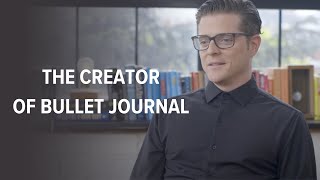
This is a recorded interview (Oct 25, 2018) of Ryder Carroll (inventor of the Bullet Journal) by Laura Moran. Carroll describes how bullet journaling grew from his personal strategies for coping with attention difficulties into a flexible system for capturing thoughts, prioritizing tasks, and reflecting (notably via AM/PM reflections). He emphasizes pen-and-paper benefits (unplugging, taking a snapshot of current state), using a single notebook to avoid decision overhead, breaking goals into tiny action steps, and regularly weeding nonessential tasks. Carroll also discusses the global community, real-world impact (e.g., a parent using a journal to supply a child’s medical info in an emergency), and the brand’s evolution toward making helpful tools and content for varied users.
Questions this video answers
October 25, 2018.
Interviewer Laura Moran and interviewee Ryder Carroll (inventor of the Bullet Journal).
Chapters
Hi, everyone. Welcome to the Inbound studio. I'm Laura Moran here today with Ryder Carol, the inventor of the bullet journal. Thanks for having us.
Thanks for having me.
To get things started, can you just briefly describe what is bullet journaling for everyone?
Sure. Bullet journaling is essentially a way of keeping a journal, but it's not a traditional form of journaling, if you will. It builds on a lot of concepts that you're familiar with, like bulleted lists and calendars and that kind of thing. But it uses these different mechanisms to provide you with a lot more focus and structure in your life by kind of dealing away with how time intensive journaling is and structuring your thoughts in a very specific, systematic way.
And can you explain a bit? You had a sort of an interesting way of discovering and creating this from your own personal experience. Can you just talk a little bit about, you know, your journey through that and coming to what bullet journaling is today for you?
Yeah, really early on, it turned out that I had a pretty severe learning disability, and I couldn't really figure out what was going on. But I had a really hard time focusing, especially on things that didn't interest me, which doesn't make me special in any way. But, yeah, over time, it turned out that I had add, and at the time when I was diagnosed, people didn't really know much about it, and there weren't a lot of different tools or techniques out there to help me with it. So I started developing my own. And over the decades, like, slowly but surely, I figured out little tips and tricks and techniques in order to start structuring the way that I thought in my notebook, because that was the tool at the time. And then over the years, I found that keeping my thoughts structured in this way in the notebook was really helpful and beneficial, especially as I started creating a career in the digital space. So over time, I actually became a product designer. And I noticed that it was a lot easier for me to unplug and start thinking more clearly. And like a lot of my designs would happen on paper first and then translate into the digital space. So at first it was just a matter of solving my own challenges, but as I started focusing on things that actually did interest me, it became significantly more powerful and effective to help me. So not only was I focusing on what I wanted to do, but I also was able to organize what I wanted to do. And, yeah, over the years, I've just been refining the process over and over again. I still think that it's a work in progress.
What was the Thought process or moment when you realized that this is something that could be helpful for other people, not just necessarily your own personal use.
Yeah, it's kind of a funny story. So a friend of mine hired me to work for a company that she was working for. And one day I was walking by her desk once I was working there, and I noticed that her entire desk was littered with different notebooks and post it notes and color swatches and photographs and just notes and just a complete mess. And she was really frazzled and she was actually planning her own wedding. And I'd been looking for a way to kind of, I don't know, repay her kindness for getting me the job. And I don't know, somehow I just volunteered. It's like, I can show you a way to kind of keep these things organized and I don't know where it came from. And then I was horrified when she took me up on the offer and, you know, because I never explained it to somebody else. And for me it was a way for me, I always felt like this system was kind of like a mental crutch for me. Like I had to do this because that's the way that I could think and other people didn't really need it. It never occurred to me that other people might find it useful. So we went to a coffee shop around the corner. This was Times Square. And I sat down and like, did my best, kind of like stumbling through like an explanation, trying to show her how I used it. Because a big part of bullet journaling is how these different methods work together. So it's not just like a list or a calendar. They relate to one another. And I had never had to explain it before. So it's kind of hard to a take a step back and think about the way you think.
Yeah.
And also make somebody else understand that.
Right.
So I did a terrible job. And I don't know, it took me like half an hour. And I looked up and she was just staring at me with her mouth open like, oh, no, she thinks I'm completely crazy. And the first thing she said is, you have to share this with people. And it was the first moment that had ever occurred to me that might be valuable to other people. So a couple of years later, I had kind of started showing it to some friends and they seemed to find it very useful as well. And it was just kind of interesting to me that other people could benefit from the way that I thought. Right. And then eventually I was between two projects and I was like, I want to build something of My own. A lot of times when you build products, it's somebody else's product and you have to do exactly what is they want. And that's fine and that's great. But I'd come off one project that was very challenging and wasn't very creative. And one way that I motivate myself is like, work on a side project or work on something to kind of allow me to learn about something that interests me. So I'm like, why don't I focus on something that could actually add value, like what is specific to me that might be valuable to others? And it occurred to me that I've worked in the digital space for 15 years, something like that. And every place that I've worked, people always had notebooks, regardless of who they are, right? Developers, project managers, and so on. I'm like, well, I'm not the greatest designer in the world. I'm not the greatest developer in the world, but I do use my notebook in a very particular way, so maybe that would be it. And I kind of channeled my friend in that reaction like, okay, so I sat down and tried to codify this thing and actually do a much better job of explaining what it is that I did in my notebook. And that's what eventually became the bullet journal.
I mean, I do think the bit about technology versus pen and paper is pretty interesting, especially, you know, being in 2018 and most of this stuff, you know, if you're looking for how do I be more productive, how do I be more effective, how do I be fill in whatever that is, there's like an app for it, basically, is the answer most times. So what do you think it is about the pen and paper aspect of this that works?
My own opinion, I think that it makes you unplug. Right. The digital space has wonderful tools. They're. They're fantastic. I designed them myself for years and I still do. But at the same time, it also is an enabler. Like, technology allows you to constantly be distracted. As long as you're online, you're bombarded with information, even if you're trying to be productive, like it's never ending. But as soon as you unplug, you are left with like a snapshot of a current state in time. Right? And we don't. A lot of times we don't take the opportunity to take that snapshot and kind of process it. This is the state of things right now. What am I trying to accomplish? How am I going to accomplish it? And most importantly, why am I trying to accomplish it? It's something that I feel like we don't ask ourselves very often. And it's like a really fundamental underlying principle of bullet journaling is like, why am I doing what I'm doing? You know, I think that productivity has become almost desperate in our age, right? It's like, I need to get as much done as possible all the time. And, sure, that can be valuable, but it's. No matter how fast you drive or how many miles you put behind you, if you're going in the wrong direction, it doesn't matter. And I feel that it's much more likely for you to head in the right direction if you really consider what it is that you're doing. And at least in my own career and in my own experience, a lot of times you work incredibly hard at things that have no purpose. And a lot of times, I mean, it's not necessarily a grandiose purpose or the meaning of life or something like that, but it's like, why are we having this meeting? Like, why are we having the fourth meeting about the same project? And you talk about it for a second with a couple people, it's like, we don't need to do that, right? We just don't need to do that. We just get caught up in doing things because I feel it gives us a sense of control. Productivity is very much about checking off these boxes, and the more you do that, the more you're in control. And I feel like a lot of times productivity and organization can become its own form of distractions. So bullet journaling helps people to kind of take a step back and really take a look at what they're thinking and how they're going about things. And the way that it's structured is that you're constantly encouraged to reflect every day on what you're doing, and you're seeing what you have to do. And then you ask yourself two questions, basically. One is, is it vital, you know, things like taxes or so forth, and does it matter? And this isn't like, a very big question. It's a very simple question, like, why does this matter? Like, why am I working on it? And just with that very simple test, I mean, which you can extend as deep as you want to, the amount of things you end up not doing is actually quite surprising when you just say, consistently, start weeding things out from your life. And even if it's just one thing, like, that's one thing you don't have to think about anymore. And everything that we think about is distraction. Like, even if it's Valuable. It's still distraction. It takes your time and energy. You need to focus on something, right? And the idea is you're trying to focus on less, and you're trying to do less to get more done.
Have any surprising things fallen off your list of what you thought you needed to do? Like that you're like, oh, wow, actually, that doesn't fit into these boxes.
I mean, I would say many, many, many things over the years, but I think one of the big ones is opportunities. Right? But opportunities also live on a spectrum. Like, this is a good opportunity, and this is a great opportunity. And do you pursue the two good opportunities or you pursue the great opportunity? And how do you evaluate an opportunity? So for me, like, there's been maybe a job offer here, or, like, why don't you sell this product? Or how about this collaboration? And your first instinct is like, you know, that sounds exciting. That's great. You know, maybe that's a new business opportunity. And for me, it's always, at least with bullet journaling, like, this is the company that I completely control from beginning to end. And what's interesting is, like, an opportunity is not nearly as interesting to me anymore as the value it can provide to my community. So. And I remind myself of that every time, like, through this process, like, yeah, that's. That seems like a really exciting opportunity, but, like, what value does it provide? And that's like, a way I didn't think for a long time. You know, it's like, more products, more this, more that, and it's like, no less, but better.
Yeah, I know curiosity is something that's also really important to you and probably as a byproduct, like, all of this bullet journaling and the theories behind it. So, you know, what. What do you think bullet journaling does to allow for better or more or different curious behavior?
Curious behavior. Good way of putting it. I think that a lot of people are always looking for something that's really meaningful and that can become a sticking point. You know, it's like, what is the meaning of this? And, like, what am I supposed to be doing? And what are all these questions? And people are, like, really looking for answers. And there's not a problem in that, but I find that it's, in my own experience, been much more effective to focus on, like, what is it that you, like, what are you actually curious about? And I think that just starts with, like, becoming aware of what you're thinking about, like, what have you done? How has it affected you? What would you like to learn more about what do you want? What do you want more of in your life that you know of? Like, I think we live in a society where a lot of our goals are kind of appropriated from other people, right? It's like, I should be on a beach, you know, or I should be van life. Or, you know, like, whatever it is, it's like, that's happiness, right? And I feel like a lot of times that can be really misguided or, like, misleading because you don't know. Maybe you get in the van, you're like, you know, I'm really claustrophobic now. I threw away all these things that I had because, like, I didn't know, but I. And maybe it's. Maybe it's exactly what you wanted, but I feel like that process can start a lot closer to home. I think, you know, what you respond to, you know, what you're curious about. And I feel that a lot of times people are so focused on finding what their passion is. You know, it's like all or nothing. And I feel like people forget about the power of something. There's something in between that. And I feel like every passion starts off with a curiosity, like, very. It doesn't have to turn into a passion, but, like, interested in filmmaking, interested in starting your own company. Okay, so how are you going to go about that, and then how are you going to start breaking that down? And the idea is, at least in bullet journaling is that we always break things down to, like, the smallest possible action step that you can take. So here's your main goal. Like, that's great. Keep your goals, aim high, that's fine. But what are you going to do today about it? And it's not like, throw everything out. You're going to figure out, maybe it's as easy as scheduling a time to research what it is that you're curious about. That's your action step today, and then tomorrow you're going to find something else, and then the next day, and then over time, your efforts compound. It's definitely about finding very little ways forward. And I think that begins with curiosity in a big way. It's an easy question to ask on something. What do you want to know more about? What do you feel drawn to? It doesn't have to be a passion. It doesn't have to be this big thing. It's like, what do you want more of? That's it.
Absolutely. The community. Like, there's been a community that's built up around bullet journaling. And I know you mentioned that that's important. To you, I guess the first question is, you know, are there any stories of, like, success stories of you will, if you will, of. Of people using the bullet journal in any sort of way that have really stuck out to you or, like, in industries or for projects or things that you sort of never imagined it being used for that have been inspiring?
It's hard to pinpoint one specific success story because I hear about these things all the time. And I feel like success again can start very small and be subtle. Like, I feel like subtlety is really underestimated. It's like I now think more clearly or I feel more grounded, like that's the beginning of something. That's the beginning of something. And I wouldn't really call this a success story, but one story that stood out tremendously and affected me greatly and really changed the course of my career in many ways is I was sitting in the airport and I got an email from Ebola journalist who told a story about. She had a disabled child and she volunteered at the child's school along with parents from other children who were in the class. And one of the children started having a really terrible seizure, and the mother went into shock watching her son. So the person who wrote the email was somebody in the room. And they called the paramedics, and the paramedics came in and the kid was in a really bad condition. And they didn't know what was necessarily wrong with them, so they turned to the mother. But the mother was, like, in shock and she couldn't talk, but she reached into her bag and pulled out her notebook and tore out the last couple pages of her bullet journal, essentially, and handed it to the paramedic. And it was like all his medicines, all his doctors and everything, and they were able to save the child. You know, it was just beyond what I had ever expected. And it very quickly made me aware of how powerful it can be when you become more mindful of what's ma. Like what. What is meaningful and what matters. You know, it's simply like writing down medication that doesn't occur to people. Like, most people are on some kind of medication, but, like, keeping track of it. And, you know, it's not an app. It's not. It's. It was just there.
Yeah.
And I don't know, it just never occurred to me. The. I think the most incredible thing about the community is that they teach me a lot of, like, what the possibilities are and what the opportunities are, because I'm just one person. I'm never going to be a mother. I'm never going to be a doctor. I'm never going to be a veteran. Like, these are lives that I can't possibly comprehend. So they share their experiences with me and, like, that's. That's what I find most motivating and encouraging and inspiring.
What do those stories or, you know, experiences, I mean, how does that drive you for, like, whatever comes next in the business of the bullet Journal? And what. How does that make you think different about, like, what you want to do and see next or. Or progress things along in terms of what that brand is and what that business means?
Sure. I mean, it's always been interesting because Bullet Journal has never started all out. Right. I didn't start with Bullet Journal under the idea of starting a business at all. Sure. The idea was very simple. Like, I struggled tremendously to get to where I was with that system, with the ability to understand how to make progress, or these tips and tricks. I figured, like, if I can remove that experience from other people's lives, that's all that I want. Right. If I can just make something that is helpful and useful to other people, that's all that matters. And nothing's changed in that regard. So everything that I try to create from the brand has that kind of. At its core, it's like, what tools can I create that will help people? And that's how the business was born. It's like I created a notebook. Do you need my notebook? Absolutely not. I created an app. Do you need the app? Absolutely not. But if you find it useful and if it's helpful, then it's available to you.
For you personally in your journaling. Do you have, like, do you have one journal? Do you have separate journals? Do you have, like, a work journal and a personal journal and a, like, grocery shopping journal? Or does everything live all in one space and you navigate through it that way?
I tried multiple journals and it didn't work for me. For me, it's an interesting thing. It's like bullet journaling for me is a way for me to think as little as I need to. But when I do think, it's very focused and effective, and I try to reduce options and choices and decisions as much as possible. And that's reflected in the fact that I use one notebook. Because for me at least, if I decide, does this go into my work journal or my personal journal, then I had to make a decision, you know, and, like, which one do I bring to the office? Which one do I leave here? And what happens if I have an office idea when I'm at home and vice versa. And for me, like that tiny little decision had to be made over and over and over again. So I removed it. And a lot of the way that bullet journaling is constructed and designed is for you to be able to put in whatever you need to at any time and still make sense of it. That being said, for people who need to keep two types of journals, like, it's easy for them to do that as well. And like a big part of bullet journaling is figuring out what you need the bullet journal to be for you. And it changes over time, which is why I say that it's still a work in progress. Because we evolve and I feel like that's something we, we don't really like, focus on enough. We become different people. I'm not my 12 year old self and my goals and my ambitions and my notebook are entirely different. So what you need now and what you need later are two different things. And the bullet journal is designed to evolve alongside you because you're the one who's programming it. Essentially you're designing it and you're designing it based on the learnings from previous ones. So for me, the learning was one notebook and that's kind of where I shared with people. But some people like, live in, some people work in different industries where they can't do that and that's okay as well. And they figure out how to go about that and they share their learning with the rest of the community. So it's always, I always say do what works for you.
For me, it's, there's no right or wrong way to do this. Or is there?
Yeah, I would say that there is a wrong way of doing it and the wrong way of doing it. It's like not every notebook is a bullet journal. Right. It's a scrapbook. Isn't a bullet journal. Can you scrapbook in your bullet journal? Yes, but the, the big idea of the bullet journal is that it's moving you towards something at all times. It's helping you get somewhere. And a lot of times when you see bullet journals like Instagram or Pinterest or whatnot, they're like beautiful illuminated manuscripts. They're incredible, incredibly detailed and ornate and all these things. And one of two things happens when people see that. One of three things. One is people fall in love with it and they want to hop into it, which is great. And then the other two more common things that happen are people are like, I'm not an artist and I can't do that. I mean, I Can't make my books look like that. And I designed the thing. Right. And then third, and I think the most valid argument is, I don't have time for that. Right. And for me, the thing that I always try to explain to people is, like, those notebooks are where the people have evolved into in their own journey. Right. So for them, at first, I was very skeptical of those because, like, mine is black and white, no illustrations. It's literally just thoughts. But for a lot of people, illustrating their notebook is actually a kind of meditation for them. Like, it actually does motivate them. It's a place where they can think for think freely and can express themselves, and that gives them the motivation they need. And, you know, for me, that wasn't my experience, but they showed me how that worked, and that definitely changed my entire mind on it. It's like, you shouldn't try to create a beautiful notebook that doesn't matter. But if the beauty helps you in some way, then absolutely. So people who get into bullet journaling to make an illustrated, pretty notebook, like, I would say that's not where you want to begin. You want to begin with the basics. You want to learn what works, what doesn't, why it works, and what doesn't. And then you start to evolve, and you start to grow into your notebook. So people who do it just to show off on Instagram, I would say that's. That's probably not something people do a.
Lot of things just to show off on Instagram.
Yeah. I mean, for me, the challenge is, like, do whatever you like. Right. But for me, it's like, it's a missed opportunity. Right. Like, maybe you might actually be getting value out of this in a different way that could help you, you know? So I would just start basic, and if that's where it goes, and that's where it goes, you know, more power to you. But it doesn't need to be that.
Obviously, a lot of this is about, you know, organization and decluttering and, like, your mind, like, decluttering your mind. And I know, you know, when you say, like, ask, like, why you're doing something and does it matter, you know, when the answer is no to both of those things. But, like, you've had that thought. How do you get rid of it?
That's a fair question. I mean, I think when it comes to productivity, it's much easier to get rid of something that you don't have to do.
Right?
Right. So, like, does it matter? Is it vital? If the answer is no, then you just don't do it. That's the simple answer. Bullet Journal is much more about cataloging your thought. And of course, if you have a thought that's pestering you or won't go away, or you're really concerned about something, or you're really scared about something or anything along like a negative thought pattern, right, that's something that's hard to get rid of. And that's. There's a. I'm definitely not the expert at this, but the thing, at least in my own, my own experience and with many others, makes you aware of what you're thinking. And as soon as you start realizing that you're having negative thoughts, that's one way of you to be able to start working on them. Like, how can you, how can you help yourself? Or if you need help with that or something. A lot of times I think people just keep all of it up there. So decluttering your mind is very much exploring about where you are, but also the way, how you're feeling and where you are, not only in terms of your work, but in terms of your well being. Like, maybe you're just like killing it at work, but you're dying inside. You know, it's a balance that you need to find. So I think being aware of your thought patterns is like a very important realization to have. And keeping your thoughts out of your head is also a really good way to kind of let off some steam. If you're really concerned about something, you can sit down and you write it out. And in that process you can actually define what it is that you're worried about, why you're worried about it. You start distancing yourself from it. You know, meditation, a big part of meditation is not about not having thoughts. Some big misconceptions, like you kind of like just bliss out and your mind clears. That's not at all the case. Right. The big part about meditation is not being consumed by your thoughts. It's kind of being more objective. And obviously that's not an overnight sort of thing, but just like slowly and surely being able to kind of distance yourself from whatever it is that is distracting you, both positive and negative, is I think, a really important first step in figuring out what you can actually do about it.
A lot of journaling, not necessarily bullet journaling, but a lot of times when you think about people having a journal or something like that, or at least I think like, oh, it's something that maybe you write in, like first thing when you wake up, or first thing or last thing before you go to Bed. Is that true, I guess, of your own personal use of bullet journaling? Like, do you have. Are those moments and times that are particularly relevant, or do you have moments where you find in the day that you are using your journal more often than other times, or is it really a 247 kind of consistent tool? Well, 247 might be a lot, but.
That'S some serious effort. You know, you might want to do it less. I would say that the cycle that I recommend for most people is basically you bullet journal while you're awake, right? But you book your. You bookend that time with your AMPM reflection. So amp reflection is a big part of the methodology, right? And essentially all you're doing is you're sitting down in the morning. And if you're one of those people who has a lot of thoughts in the morning, it's just an easy way to, like, declutter your mind. You just kind of, like, dump it on paper so you can see what's going on. And in that process, you're also looking through all the things that you haven't done yet, you know, from the day before or, you know, throughout the month, all the things that you still need to do. So you can actually very quickly set a priority for the day. So it's an easy way for you to kind of like, unburden your mind in the morning and find what your priorities are for the day. And it just leaves you feeling much more focused. Also, for people who are into meditation, one thing that I found people mention a lot is, like, when they do this, because it only takes like, five, ten minutes, right? You're just basically putting your thoughts out on paper. Like, when people meditate in the morning, a lot of times they're distracted by all these things they have to do. Like, when you write things down, then you're less distracted. Whether you meditate or not, being less distracted is kind of the goal. So in the morning, you do that. You kind of, like unload your mind, and you use that as a way to focus and to clarify your priorities. And then at the end of the day, there's the PM reflection, which is essentially the same thing where anything that's still left over, the residue of the day, you can quickly capture it in your notebook. And the nice part about that is at the end of the day, you can also look through your notebook and see, like, what have you done? You know, like, what have you actually accomplished? So you are actually going to bed knowing that you've made progress, even if it's just one or two things so you can kind of go to bed knowing that everything can wait for tomorrow, you know what you have to do tomorrow and you know you've, you've made progress. A couple things have been checked off the list, so I feel that that cycle is really helpful. But in between those two, the notebook just lies on your desk or goes into the meetings and it's there for you. And it's like the idea, there's like a lot of mindfulness involved in bullet journaling, but throughout the day the idea is just like constantly just be capturing your thoughts as they happen so you don't have to constantly think about them. Right. They're there for you when you're ready to engage with them.
Yep. Do you have anything for you personally and as part of the bullet journal company that you've created, that's sort of a career bucket list or that you really want to. To see or do see happen or do.
Yeah, I mean as I said earlier, one thing that never occurred to me is how effective this system could be for people whose lives are fundamentally different from my own. And I would like to work with people like that to create products that are much more helpful and services. Like I stumbled across this thing that was really useful. That's the best way I can put it. And then for me, like making it more useful to more people is really my only goal. How that looks like I'm figuring out. I think I'm still trying to figure that out. But we like I've been partnering with different bullet journalists who are kind of like domain experts and like figuring out how we can best provide content that helps. And we had like series of articles like bullet journaling for like new parents and Bullet journaling for, you know, project managers and stuff. But like more content like that and just helping people realize that they have tremendous agency in figuring out their own problems. You know, it's not a one man show sort of thing, but the idea is like I think bullet journaling allows people to figure out how to get around their own challenges. And I want to see how I can help facilitate that more moving forward. Yeah.
On that similar ish note, if you weren't doing all of this, if this wasn't a thing, if this wasn't part of your career trajectory, what would you be doing? What's a dream or you know. Yeah, dream job. Career.
Yeah, I mean I really like really like designing products. Like that's some something that's always interested me. Like I like the idea of coming up with systems and figuring out I like designing tools, I guess is the best way of putting it. So I would try to figure out tools that help people. That would be what I want to do. That's kind of what I was hoping to do. I mean, obviously I've designed websites that sell clothes and shoes and maybe that's helpful, I don't know. But there's like technology can do miraculous things. I think there's a lot of, a lot of pros to it and I would want to continue working on those things or helping companies build technology that empowers people.
Knowing what you know now, especially with you, specifically the work you've done, what advice would you give to your 15 year old self?
Well, it's interesting, you know, like it's an interesting thought experiment because I feel like giving them advice would kind of throw them off the track, you know, like dabbling and a little butterfly effect. Yeah, exactly, that kind of thing. And I don't know, I wish I had been kinder to my 15 year old self, but I don't know if I'd give him specific advice because nobody listens to advice from like, you know, people who are 20 years older than them. So it's, it's. I don't know, I don't really think that would be helpful.
I like that answer.
I think they have to go through it like a large part of bullet journaling, I mean not, not to sound too dramatic, was like born through having really tough time, really bad time. And I feel like you become incredibly creative when you, when you're backed into a corner or people label you as something. You know, it's, it's like either you accept a dead end or you start looking for the edges of the wall. And I feel like because of that was my experience and they're far worse out there. Like it forced me to do this, it forced me to figure these things out.
Are there any books that have been particularly inspiring to you personally or professionally?
Oh my goodness, so many. I think Dale Carnegie's, Dale Carnegie's book was a big one. Essentialism, Goodness. The list could go on and on and on, but from like all different. Tara Brock's work is great as well. Seth Godin's work, Ryan Holiday, like just all over the map. Yeah. I think that people who try to figure out ways for us to think more practically have helped me tremendously. Like I've been largely influenced by the Stoics, but I didn't discover them until I discovered other people who were more focused on, well, let's put it this way. I was introduced to a lot of Greek philosophy at a point where I didn't care and I didn't realize how it was relevant. What I think is really interesting now is that people, at least in this space, are looking backward and kind of taking what a lot of people thought was like very meta and non actionable and actually bringing philosophy back where it should be in like a very practical way of living your life. Which I feel is like what philosophy really was designed to do. Like, how do we live better? How do we live a better life? How do we have a more meaningful existence? That kind of thing, in a very practical way, you know? So I like books like that, that take theory and put it into practice.
Okay, final question.
Sure.
What does inbound mean to you?
It's a good question. I feel like anything that draws your attention is inbound. And I feel like it's really important for us to be very mindful about what we let stay with us. So everything is inbound, but what of those things actually matters? And like, making sure that we stay aware of that.
Love it. I think it's the perfect way to end. Thank you so much for sitting down and chatting with us today. I enjoyed it. I hope you did too.
I did. Thank you very much for having me.
Excellent.
Thank you.
More from Patrick



A NEW BREED OF PARTNER: The Partnership Ecosystem Model Journey of Patrick Biddiscombe, Part 1








Customer Success Workspace: Never Lose Sight Of What Matters Most | HubSpot Spotlight