How To Start A Successful Podcast (Beginner Friendly)
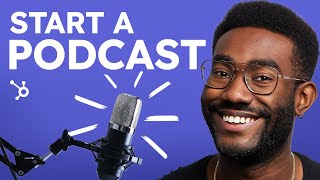
A beginner-friendly YouTube tutorial (hosted by Jamal from HubSpot) that teaches businesses how to start and promote a podcast with minimal time and money. The video organizes advice around the “four P’s” of podcasting—planning, production, performance, and promotion—covering show formats, host and guest selection, recording and editing tools/techniques, hosting tips (the PASS method), and distribution/SEO/promotion strategies.
Chapters
All right, I'm gonna let you in on a little 2022 secret brands, big and small are discovering the power of podcasts that tell stories and connect with customers. So if you're not doing that, you're kind of missing out. What's up? It's Jamal from HubSpot. Welcome to the channel. In this video, I'm going to teach you how to start a podcast for your own business with a minimum investment of time and money. To follow step by step, download HubSpot's free How to start a podcast for your business ebook in the description below. And while you're down there, be sure to hit the subscribe button for this channel and click the notification bell so that you never miss an episode. Podcasts are one of the most popular forms of media today. 41% of Americans listen to podcasts at least once a month, and 28% of Americans are regular listeners, consuming an average of seven podcasts every week. That's more people than subscribe to Netflix. And unlike most digital marketing, podcasts connect to your customers when they're away from their screens and free from distractions, either because they're driving or working out, or maybe doing chores at home. Or if they're like me, doing none of the above and just lazing about. It's also reported that podcasts have higher recall than social media or websites. Want to hear something even more impressive, though? When it comes to getting customers to take action, podcasts wipe the floor with even the best Facebook ad campaigns. So how can you not get into the podcasting game to get started? I want to introduce you to the four Ps of podcasting, planning, production, performance, promotion. As with any new marketing endeavor, you want to start with planning. The first thing you want to ask yourself is what sort of podcast best fits your brand? Do you want a conversational podcast or a narrative style of storytelling? You'll also want to give some thought to the stories you want to tell. You can focus on your own brand, like the Trader Joe's podcast that takes you behind the scenes to study everything from winemaking and recipe testing to supply chain issues and new products hitting the shelves. I'm gonna be honest, I didn't even know that Trader Joe's had a podcast until researching the story. And now I'm like, I need to know everything that they do because their snacks are so darn amazing and maybe I can learn a little bit of that at home. Thanks, tj. Or you can focus on issues that relate to your brand but aren't specific to it. Like Slack's Work in Progress podcast that explores the meaning and identity we find in work. Or HubSpot's my first million podcast where hosts Sam and Sean brainstorm new business ideas and ask founders how they made their first million. It's kind of in the name. Choosing the right host is essential to success of any podcast. Lots of brands choose someone from inside the organization to host their podcast. The charismatic CEO or someone else known across the industry. What matters most is that the host has a strong understanding of your brand and an outgoing and engaging personality. Unfortunately, I don't know anything about that, so don't bother asking me for help. I lied. That's kind of my entire job, in addition to, you know, the whole video thing. So with that in mind, I've got some top tips to help anyone become a good podcast host that I'll share a little bit later on in the video, so you'll want to stay tuned for that. Once you've confirmed your hosts, you'll probably want to book some guests for your podcast. Some experienced podcasters can help maintain the listener's attention by just talking for an hour, but inviting guests helps keep things fresh and interesting by bringing new perspectives to the conversation. Should probably get some guests on this show. That'd be nice, wouldn't it? Look into that. It's also a great way to strengthen your professional network. And most guests will promote their appearance on your podcast. Bringing more listeners Make a list of possible guests, starting with people connected to you and your team. Then go ahead and add some guests that nobody personally knows, but who would be great to speak with. You can also add a few dream guests to the list, but remember that not only are these folks usually the hardest to book, they're also the least likely to promote their appearance on your podcast because they kind of do this thing all the time. You know what I'm saying? For you, you want to feel special, but for them, it's just a regular Degular Tuesday, you know? So once your list is ready, you can use the email outreach templates included in HubSpot's how to Start a Podcast for your Business ebook to quickly compose your requests and send them out. Now, while you wait to hear back from your guests, let's focus on the second podcasting production. Making a professional sounding podcast gets easier every year with new technology, but there are some constants you need to consider. The first is sound quality. No matter how great the conversation might be, if the listener has trouble hearing the speakers, they won't stick around for long. Covid has made recording podcasts remotely the norm, which isn't always great for sound quality. But there are some tips to improve your typical Zoom conversation. The first is, yeah, don't use Zoom or Google Meets or any other web meeting software. The reason is that audio is compressed when it goes to the Internet and can still have hiccups and distortion if the connection is weak. Instead, try using software like Zencastr, which connects all of the podcast participants like a Zoom meeting, but records high quality audio on each individual's computer, then uploads the files once the recording is complete. Not only does this eliminate online audio distortion, it also gives you separate audio tracks for each speaker so that you can later adjust individual volume and equalization to make the sound as even as possible, even if the speakers use different mics in different rooms. Speaking of mics, there are dozens of high quality podcasting mics that plug directly into your computer via usb. One of the most popular is Yeti by Blue Microphones. It costs only about 80 bucks and sounds really great in most circumstances. So consider shipping one to one of your guests and let them keep it as a thank you for appearing on the podcasts if you can afford that. My company personally, I'm going to send them out and I'm going to very aggressively ask for them back because I'll be in the red if I don't do that. You know what I'm saying? If custom software and milling out mics sounds too complicated, you can start by using traditional platforms like Zoom to have the conversation and have all the speakers record separate audio tracks using the Voice Memo app on their smartphones. In fact, it's a pretty good idea to have everyone recording on their smartphone as an emergency backup should there be some sort of tech breakdown mid conversation. Which reminds me, where is my phone? Oh no. The other trick to getting quality sound is finding the right room. Your kitchen or office might look great, but no offense to the live laugh love sign you got in there. It probably has lousy acoustics with lots of hard, flat surfaces for for sound to bounce off of. Try recording in a closet with lots of clothes hanging to absorb sound waves, or under a duvet, or at least in a room with curtains drawn and soft furniture. Anything to keep reverb to a minimum. Once you've got recording captured, you're probably gonna want to do at least a little bit of editing. Even the best podcasters take some time to clean up the conversation. Here's a pro tip. When editing, try removing the ums and uhs or other natural verbal tics out of your podcast. These things are typically not noticed when someone is talking, but can make the conversation feel slow and stilted when listen this sort of editing used to require slowly listening back to all the audio, but this is a pretty big but new machine learning technology found in softwares like Descript lets you upload the audio and get a word for word transcript in minutes. You can use the text display to quickly delete any sort of pauses or stutters or false starts you don't want in the recording. There's also an automated setting that removes all filler words and you can even shorten the gaps between words so all the speakers sound quick witted and engaging. I sure would love to know what that feels like, you know what I'm saying? You could also cut out whole parts of the recording that you want to leave out of the podcast, or reorder parts of the conversation, all just by copy and pasting text. But do this judiciously and be sure to listen back carefully to every edit because while something might make sense in text, it can sound funny depending on the inflection and intonation of the words being spoken. And when you're done, you can export and upload the audio. You can also utilize the transcript to promote the podcast, which I'll talk about in just a minute. But first I want to go back to give you the tip, I promise, about making anyone a great podcast host. This is the third of our four podcast P's performance, meaning how do you actually perform when the mics are on? The technique is called the Pass method and it was developed by Troy Sandage, the host of the I Digress podcast. PASS stands for Present information and Facts which allow your community to come to their own conclusions, ask questions to spark conversations, share what others are saying to amplify the voice of the community and sway with your content to not appear tone deaf. If you want to read even more tips from podcast professionals about how to sound great on the mic, download that ebook I mentioned how to start a podcast for your business. From the description below, you already know what it is. And now the moment we've all been waiting for. The final P in our forward podcasting P's is promotion. Now that you have your podcast in the can, it's time to get it out the world. The first thing you have to do is drumroll. Please post your podcast. Yeah, no duh. This is simple as there are dozens of low cost podcast distributors that will upload your podcast to all major platforms. To do this, you'll need to create eye catching artwork to display with your channel. As with every episode, you'll also need to write a description of your podcast in each episode you upload. In each case, you'll want to follow the rules of SEO to help your podcast be found. It's also a good idea to create a website or landing page for your podcast where you can include more in depth show notes. And remember that transcription you made when you were doing your edits. Posting it on your podcast Website is a great tool for SEO. You can also use the transcript to pull the best quotes to include when promoting your podcast on social media. And because I'm feeling generous, here's one last tip for promoting your podcast. After everything else is done, create a video version of your podcast. Even if it's just the podcast artwork with the audio beneath it. Why? Why would you do such a thing? Well, because despite all the hype around podcast apps and platforms, the biggest place people turn to a podcast is YouTube. Yeah, YouTube is still number one at everything. And of course, whenever you post your podcast, you're going to want to track the performance. And there's a whole section on podcast metrics in our free ebook. You already know where it is. As always, keep watching this channel for more videos about digital marketing in all of its forms. Now, if you'll excuse me. Me and my microphone here. All right, we're gonna. Come on, Mike. Come on. Do you see it? There it is. We're going. All right, we're gonna start a podcast. I don't even know about what, but we're gonna do it. All right? Don't play with me. I'm serious. Please subscribe. We'll see you next time. Goodbye. Free from distractions. Distractions. Dozens of Lokat, Lo Lo, Cat Loki.
More from Patrick



A NEW BREED OF PARTNER: The Partnership Ecosystem Model Journey of Patrick Biddiscombe, Part 1








Customer Success Workspace: Never Lose Sight Of What Matters Most | HubSpot Spotlight