How to Use ChatGPT-o1 to Save 200+ Hours/Mo
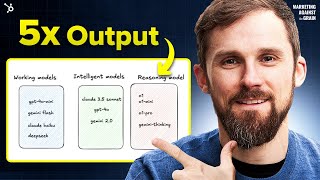
Kieran, Sully Omar, and Kip show how to use ChatGPT-o1 and other LLMs to save 200+ hours monthly. The key: use narrow "micro agents" for specific tasks instead of one agent doing everything. Stack models by job: Gemini Flash for bulk work, GPT-4 or Claude for daily tasks, and O1 Pro for deep analysis that takes time to think through.
Chapters
Today we're going to show you how you're using ChatGPT01 completely wrong. You're treating it like a dumb model and it is so much more than that. We're going to break down why you would use it, how you would use.
It, and we're going to show you.
How it can save you hundreds of hours a month and literally 5 extra output. You will not believe what you are about to see. We're joined by Sully Omar, who's the founder of Autogrid, which is an AI first spreadsheet startup. And he is giving us a masterclass and how to use O1 to get remarkable output for your business. Let's get into today's episode.
One of the things I think that you've done, which is what I think people should think about in terms of agents to wrap their head around, is so when you think about your product, you actually have like these micro agents that complete these tasks autonomously, but they're not like doing all of your customer support or doing all of your sales. They're like, you have an agent per column to fill out a piece of data, which I think is a really good example of where I do see autonomous agents been able to do work in 2025. I think when people think about autonomous agents, they're being told it's going to do all of your sales, do all of your customer support, do all of your marketing. And I don't agree with that. I think you're going to have agents with human in the loop doing that. But I think your product is a good example where you do have these micro agents. And like an agent per column is like a really good example where it has, it owns like one piece of data. And so it's a good example, I think, of like where I do think you actually do really see autonomous agents own the entirety of like that, that task.
And the reason we actually did that was because we previously had tried to build these autonomous agents and the success rate was like. The example I like to give is imagine every time you open slack and like 25% of the time it just didn't work right, like you, you would not use Slack. And for agents it's like there's that threshold of like, okay, if it doesn't work every like, you know, third iteration, it's basically useless. That's why we took that approach of like, why don't we just give an agent a very, very specific micro task that there's like almost a zero chance it messes up and then you can kind of take those and kind of get them to work together. So you have a hundred of those or whatever, a thousand of those, and it becomes a lot easier to do these sort of like long multi step tasks where each one, like you said, it's like a micro agent focusing on one little thing and then you build a product around that that lets you sort of have them work together to like solve a more difficult, broader task.
Sam talked about this. He basically said where he, he said one of the weak points of LLM models is if you ask it to do something 10,000 times, it will likely get a lot of those things wrong. Like the reliability is just not there. And so if an agent is going to replace an employee, it's not a great experience. If you tell that agent to do five tasks that day and then it comes back and says, oh, I did these two and then these other three, I just decided to do something completely random instead. You probably stacked that employee.
That's like the one thing that I think some people when they get excited about autonomous agents, they forget that like okay, maybe three, four iterations work. But like, yeah, like you said, like if like the 7th, 8th and 9 somewhat work and then maybe the 10th does work, like you would not hire that employee. You would put them on a performance plan and you'd be like, hey, you gotta fix this. And I think the autonomous agents, they need smarter models is what I've kind of used from just playing with them. And I think the reasoning models that we saw from, you know, OpenAI was a good step forward. And I think we're going to continually see that trend is like the thinking models get better, they'll think for longer and they'll be able to do these sort of more difficult tasks with a higher success rate. But I still think we're a little like a couple of generations of models away from that. Even now though, like there's the things that you can do with something like O1 Pro compared to even six months ago is just like mind blowing. Like the things that I've been able to do at my company, it just like to me feels like a genuine, used properly, like a genuine senior engineer. Like I use it to code a lot. I use it to look at my KPIs, my metrics, like, and I think the one thing I've noticed is that it's used very differently than how you would normally use, you know, like a regular model like ChatGPT or Claude. And then I start to notice that a lot of people prompt it In a very sort of suboptimal way where they're expecting like, hey, I'm going to ask it a quick question and a quick response, which is not the right way to use it. The right way to use it is sort of like what I like to call building context. So grabbing all of the pieces of information sitting there and thinking like, what am I going to ask this model to do for me? Right? Like as if it's like a person. Right? You're not going to just tell a person hey and it's not going to say hey. Right. You're going to sit there, you're going to probably be on maybe like a zoom call and you're going to have a very long conversation. And I really like to see like these like thinking models. Is that as well?
Yeah, can we go into that? Because I think there was a lot of hype around OpenAI's O1 model and especially in engineering and science and academics. And I think the average person was like, oh, I guess this is cool, but it's for stuff that I don't do and I don't kind of know how to do it. I'm just over here doing like my basic stuff in ChatGPT. Could you maybe like demystify this? Give us some prompting secrets like how should the average person, if you're just like, hey, I work in marketing or I work in sales, like what should I be doing with A one and how should I be interacting with a reasoning based model versus a maybe non reasoning traditional based model?
What I did is I actually created this, what I like to call internally and we referenced this at our company as well is it's like the three tiered system to using all these models. So there's like God knows how many models over 50 now. But I boiled it down to these core core ones which is Claude Gemini and you know, OpenAI ChatGPT. So the system is pretty simple. You have three tiers, you have your working models which are the ones that are really cheap, really fast. So you have things like Gemini Flash, GPT4, oh, mini haiku. These are like sort of dumb. They're not like the smartest models and I wouldn't ask them to do a very difficult task. But if I'm like, hey, I have like a bunch of, you know, pages of context or something I need to get summarized or you know, maybe I'm looking at like a trip transcript or something where I'm like, okay, look, this transcript's like four hours long and I don't want to pay, you know, a large amount of money to kind of send this to O1. I like to refer to these as the first tier. Then you have your second tier, which is like the more intelligent day to day usage model. So if you're using ChatGPT, if you're using Claude, you're using Gemini. The actual products use this sort of middle tier of models. And now this is the one that you're probably going to converse with. You're going to say, hey, how you doing? You know, you're going to ask it all sorts of questions and the majority of people are going to be in this tier. So you're using Claude, using GPT4 or Gemini. Then we have the reasoning models and sort of, you know, these came out, I think, you know, last month, maybe like six to eight weeks ago. And right now there's only two companies that have them. So you have ChatGPT and they have 0101, Mini 01 Pro. And then you have Google with Gemini thinking. So I split it into these three because the way that you use them is slightly differently. So I'm not going to dive too much into how you would use this first and second tier because I think most people already use it. You ask it to help you write an email, summarize things. I wanted to crow in a little bit more into how I craft and generate prompts with these reasoning models because I do think there's a little bit of skill and I say this very lightly, it's not you need to have a PhD or anything. Um, it's just more about knowing the right thing to say and how to phrase it to these models, especially O1 Pro, where it can just do things that like, I just, just every day I'll be like, I can't believe there's this thing that I can pay, you know, a company for so much a month. And it's like literally like having like this super intelligent, super smart coworker. I love this.
This is, this is really cool. So for people following along on RSS, you should definitely go to the YouTube, YouTube to check this out. Can I just make sure I'm following? I've used all these models and the Gemini thinking. Is that Gemini 2.0?
Yes.
Is that the name? Yeah.
Yes. Yeah. Honestly, Google has the most confusing naming.
For all the, the pricing and packaging of all these companies is, is like beyond a puzzle. Like it's really bad.
Yeah, I think OpenAI, they skipped O2 and they just went straight to 03 and like Gemini and then Claude with like their 3.5.6 V2. Like, I, I don't know who on their teams there these models, really confusing. But yeah, Gemini 2.0 thinking, which was, I think that came out really, I think that was the most recent sort of like thinking model.
Yeah, that came out with their, their bundle where they had deep research, which is an incredible product. They had Flash, like, I thought that they had the stream Real Time, which we did a video on that. I think that was one of the best, I think was the first time Google stole OpenAI's thunder because they had the 12 Days of Shipmas.
Yeah, I think that was up until that point everyone had been sort of saying, you know, OpenAI is kind of the company to be with, like real time. And then I think Gemini's Real Time did a really good job. So because Gemini is natively multimodal input and output. So that means, for those of you who don't know, it means it can take in video, it can take in images, but can also natively generate these images and these videos as opposed to other models where it'll generate text and then they'll have someone else, another AI model, take that text and convert it. So Gemini is native, meaning it can output text, it can output video. So that's why it's, you'll see it's really good at like doing these sorts of like use cases.
Look, we all love ChatGPT. You've probably used it before and if you haven't, stick around because you're going to want to listen to this. You know, I've used AI a ton. I use ChatGPT for research, for writing. I use Claude to put guides together for whether I'm taking a trip or I'm working on a project at work.
It's awesome.
Well, I've got something that will make ChatGPT an even better experience for you. We've got this killer chatgpt bundle that will take your prompting to the next level. It has over a hundred prompts and a step by step guide to integrate it across your workflow. It is a total game changer if you want it. I'll drop a link in the description below. Now let's get back to today's show. Cool.
So I would love to learn how you prompt then for the third category of LLMs, like the reasoning models, what is like, as Kip said, what is fundamentally different about using those models?
The main difference for using ChatGPT versus 01 Pro is that these models have to think and sometimes they have to think. I think My record is I got to want to think for like 10 minutes. So you can imagine if you're waiting 10 minutes between prompts, you don't have that chance to sort of have this back and forth. Right. You could do it, but that's really not what the models are built for. And you'll actually start to notice if you have a chat with Zero1Pro, it actually will do worse than if you were to just sort of throw all of the text at it. And within prompt engineering, this is called sort of like one shotting a prompt, which means you just sit there. And I've noticed I do this myself as I'll sit there for five to 10 minutes thinking of the prompt to ask, and I'll actually go and I'll consult Claude or I'll consult ChatGPT. I'll have a conversation with it and then I'll say, okay, given this whole chat, please create a prompt that I can give to. Oh, one.
This is exactly what I do. I'm glad you brought this up.
This is exactly.
This is a great. This is an incredible tip for listeners.
Exactly. And I think one thing I will say, and I. I'm guilty of this is I'm actually not good at writing prompts. And it's come to a point where, where I will just have a conversation with voice mode on ChatGPT or, you know, I'll use Claude and we'll just have a chat and I'll say, okay, I am no longer writing the prompts. And this is actually something that is going to become more common. It's called meta prompting, where you no longer your. Your request or, you know, the things that you type into the app no longer get sent directly to, you know, the model itself. There'll be a layer, an intermediary layer, which will try to decipher what it is that you're asking and then create a sub prompt that will go to it. And I think this sort of thing that I'm doing right now manually, and you guys are as well, is going to be done eventually. Like, the companies will just do it themselves. And it's just because you can imagine in the future, if a model takes an hour and it, you know, takes maybe a day to think, you probably want to get that right piece of text. But yeah, that's sort of what I do in terms of just getting started is I'll go into Claude and I'll say, hey, when I actually have an example that I can walk you guys through, which is like one that I found pretty powerful but it's a super useful workflow for maximizing. And it's a lot simpler too, because you don't need to sit there and think about how do I articulate this prompt. So here's an example of how I've been using O1. I know a lot of people like to use it for coding and engineering, which I do, but I think that's the obvious use case. Like, sure, just give it a bunch of code. So what I've been doing is I've been deferring anything, revolving my business around KPI's metrics. Like just anything I need to do around my business where I'm like, hey, I need another decision maker. I go to 01 and I go to 01 Pro. But the way that I do it is I start with GPT4O. So I have got this scenario here that I have created and I'm going to paste it into ChatGPT here. So I have a bunch of these metrics so we can look it through. So for example, what I would do is I would maybe grab these from Stripe or you know, maybe you have like an analytics dashboard or something like that. And I'll kind of come in here and I have all of these metrics. So here, for example, is my. These are obviously all made up. These are sort of my monthly active users, my daily active users. And you can see there's a ton of metrics that I will pull from some sort of like reporting dashboard. So what I want to do maybe for example, is let's say I have all of these sort of things I need to reduce churn, I need to increase sort of all of these various metrics here. So now here's this giant metrics field, right? So here I have this. Now normally what you would do is maybe you would go into ChatGPT, you say like, hey, how can I optimize this? But the workflow I have is like a little bit different. So here are my metrics. And then I'll say, you know, hey, I'm crafting a prompt to a smarter model than you. I want to optimize, you know, two to three key metrics for this quarter. Now craft a prompt I can send to this model that will give me a detailed report on how to do this. And I'll say, note, don't do this yourself.
Yeah.
Poor 4O is getting, getting slammed here.
Yeah, but you have to, you actually have to do that for all AI assistants. Like if you ask it for something, you say, please don't do this part because it will just try to do the next part itself, right?
Yes, exactly.
Just. Just to explain this to the listener, Sully, what you're doing is basically using chat, you know, for. For. For 4.0 to basically craft a prompt for 01.
Exactly. So I'm taking this. And, you know, a lot of the times this is, for this example, like, I have, like, maybe even slightly cleaner than usual numbers. Like, what I'll do actually, a lot of the times is I'll just literally copy the text on the page of my reporting dashboard and I'll throw it into O1 so it's even more unstructured. It's like, really messy. And I'll come into here and I'll be like, here's all of this, like, just disgustingly raw, ugly data that are like, some metrics that I care about in my business.
And you could even. You could even screenshot that too, Right. For people watching, there's a bunch of different ways you could get that data in here. That's really easy.
Exactly. And the key note here is that you're not throwing this into 01 right off the bat because you might have a dashboard and there's like three screens. So that would be three screenshots. And like, you know, the whole idea is to make this as easy as possible. So I would just dump all of the data that I care about into ChatGPT. So I was like, here, just take all of this. You can upload files, but the key thing here is we want to make sure that we have the right prompt with all the information to send to A1. So. So here, let's read what it says. Okay, so right off the bat says a breakdown of the strategies, potential experiments, initiatives to implement. Like, I'll be honest with you, it would have probably taken me like, to craft this prompt really nicely, and this articulate probably would have taken me like 20 minutes. Yeah, sometimes I don't even know what to ask. And that's the nice part, is if I'm here, I'm just chatting with GPT. I can say, hey, can you improve the prompt like this? Can you improve it like that? And it gives you this ability to go back and forth without waiting. And I'll show you why you need to do that, because once you take this prompt, take this, and let's go ahead and actually throw that directly into O1. So we'll go here, we'll go to 01. So I use 01 Pro. I use 01 Pro mode.
And so 01 Pro is the $200 a month? Yes.
And some people ask me, what's the difference between 01, 01 pro? To be honest, I don't know the very specific technical details, but from my personal experience, I've tried. I've compared 01 and 01 Pro, and I found that the nuance in the ability to sort of decipher what it is that you're asking, especially if you have a large piece of Text or Documents, O1 Pro is just a cut above the rest. It genuinely does feel like a person. At some point. I was just like, is this actually like someone behind the scenes, like, doing this? Like, like. And I would compare them, like side by side and I would do the same prompt, same everything. And, and the nuance, I think, was what got it for me where it would say, like, okay, you could do this, but potentially this could cause this, which means you should do this. Whereas, like, O1 would just be like, just do this. Personally, I mean, I know about you guys. Whenever I'm trying to get like an answer to a difficult question, I want pushback. I want to know, like, what are the caveats? And Pro Mode was the only one, the only model I've ever tried that did that.
So it proactively, it proactively pushed back without you having to say, like, find flaws in this and debate with me and why I'm wrong.
Yes. So it would, it would give the nuance into, like, what are the different things? And now I'll show you how I would do that. So you could prompt it, which is, like, more likely to happen, or you can just let 01 think. But okay, so here's I have this prompt, right? It says if I were to break down to the structure, it's like, I'm working on a SaaS business. I got my metrics and I'm just going to paste this right off the bat just because. To show you guys how easy it is. Okay, so goal is to provide queue. All right, cool. Now it's going to go out and think, and this is actually the boring part where it's going to think for a undisclosed amount of time. So we'll let it go ahead and do that.
Yeah, it's, it's continuing to think. When you think about your usage here in that you're using O1 Pro, I suspect you are similar to us. You are a power user of AI. You're using all of the different models for different things. Is this, is this. Now, have you, like, collapsed all of your usage into this single model or do you still Find like, like I find Claude better for a range of things. Actually it's interesting. Like one we had a Scott who runs the product team for Claude and I was trying to describe to him outside of like, it's a better writer, it's a better communicator. Like why I love Claude. It's a little bit like why I like one of my friends versus another friend. I just like it better. Like I just like hanging out with Claude. Like, what's your usage look like? Is this your only model or how do you think about the different models?
I think I'm on the same boat as you. So Claude is by far a better writer. She sounds a lot more human. I like to converse, like you said. Yeah. So I'm, I'm on the same boat as you. My usage is very interesting where I'll use chatgpt when I want to use web search just because it's just like, okay, well it's fast. And then I'll use it for like voice just because it's a little bit easier. But basically I've split it into like three categories. So the thinking and stuff goes to ChatGPT. All these like really difficult analytical things. Right. So this is a pretty analytical thing. Here's all these metrics and all these like data points. Please analyze it for things like writing, for things like emails, for things like, you know, just I want to chat with an AI about something. I'll go into Claude and I use cloud a lot as well because I like to still code a ton. I'll use it for coding and that's a whole separate workflow. So I would say that it's still very much so like 5050 in how I use Claude and how I use ChatGPT. But I would say ChatGPT01Pro. Analytical things. I want to talk to someone with a conversation and just maybe enjoy my time. I'm going to go to Claude.
No, no, nothing for Google.
So for Google, the way that we use Google, I use it for multimodal things, but I don't really use multimodal that much. And at our company I will use the model for a lot of the tasks. I think when I was mentioning the three tiered system. So we use Gemini more than actually all the other models in terms of pure tokens because it's the cheapest and it's the hardest.
Kip and I have been using Gemini Enterprise seats and they are dope because you're plugged into your email and your G suite.
Google Gemini with my G Suite Wrote my performance review in like 30 seconds.
And it's great. Yeah, it's dope.
It's like, yeah, maybe that's the one part I haven't used it in, which is the G Suite integration, which I guess is really powerful now that I think about it. The reason is that one time I was getting it to write an email for me and it like, accidentally I like wrote an email and I was like trying to edit it and it like sent it and the email was like, I was like, it was not like the best written email. And I was like, I was like, is someone important?
I was like, no, it's, it's, it's flaky. I will say it has some incredible G Suite. Like one of the incredible use cases was, and we're probably going to do a little video on some of these cases is you can, you can basically say I was doing this week, like aggregate all of the Google Docs that I've been tagged in, put all of the comments in different topics, and then craft replies. Because I, I lose track of all the kind of comments that I'm getting tagged in and G Suite and I can see the comments in Doc. And then it has access to your email. So you can say, well, show me all of the emails this week that mention the same topic so I can collapse all my comms and aggregate them together.
Okay.
Yeah, I see. It's some pretty interesting use cases.
That's good. That's actually an interesting one that I hadn't thought about because I've been using it on sort of like the write and help me. But you're using it sort of more on like, I have like a bajillion different things that are coming in and I need, I need that agent in front to like, sort of be my first layer comms.
A comms assistant. That's, I think most knowledge workers need a comms assistant.
I'm, I'm pretty sure I might just go after this, this and just go set it up on my end because I need that.
All right, your prompt is back.
Yes. Let's see. It's back. Let's see. Oh, man. See, so here.
Oh, geez. It's like a McKenzie report over here.
I know. And I, I, I've had it think for like seven minutes once, which was like, actually blew me away, but when that was like a record. And it's funny because it thought for seven minutes and the answer was like four, like four lines. But okay, I'm going to read this. I don't want to read too much of it. Because like this is literally like a report. So here it says it gives me a blow as a structured prior action plan. It's broken down by metrics, initiatives and sort of all the things that I asked for it. Initially I was like, okay, so reducing the churn from 6.5 to 4.5 onboarding initiatives. Develop a more personalized guided onboarding experience that highlights the core product value. Immediately implement walk tour tours. Okay, it's not a bad idea. And then it actually gives me the KPIs. Okay, so provide personalized emails and notifications triggered by user behavior. I'm sure you guys know this is actually a really good way to.
Very good.
You know, you're good. Okay. Seven day retention, onboarding, percentage of complete. Okay, so it says, it even tells me the KPIs that it's going to optimize for. So it's going to optimize for the seven day retention and it's to kind of reduce that first month churn. All right. It even gives me like where I need to go.
This is so good. Remember like when you used to have a search query like this and you used to have to like try to aggregate information from 100 Blue Links and people think search isn't dead. Like basically your prompt is a search query, right? Like, but you can just do more advanced search queries and just gives you back an entire like guide. It's. Your cross functional stuff is pretty great. Like it's called out. I'll let you call it out. But like if you could just call that part out. So our lessons. Because like what it's actually put down for cross functional, like it's actually teams, right? But the, the one I'm looking at is the fact that it's figured out customer success for training materials.
And, and this was like an example that I kind of crafted before this where it was like, okay, here's like some metrics, it gets even more powerful when you give it more context. So you know, in the context of my company or in the context of your, your, your team, like, the more context you throw, the better these models do it. Like I have yet to run into a scenario where it didn't blow me away like very few times. And I would look back and I'd say, oh, where, where did this model mess up? And I actually realized I asked it the wrong thing. Like I gave it the invalid metric or I gave it something that was conflicting and I would be reading it, I'm like, why did it say it Is this model not smart? And I was like, oh, wait a minute. It's because like I said one thing at the top of my prompt and then I said something that like completely contradicted it and this actually noticed that I contradicted myself and it would say like, hey, like, you know, you said this so I. And then you said this. So I'm going to go ahead and take like this guess because I couldn't really figure it out. So very rarely has it made mistakes. But yeah, like this is like a pretty long report because it's like, okay, give me the customer success. I don't want to go through all this because this is like a very, very large report. Okay. But like increasing strategy initiatives, upsells and cross sell campaigns. That's actually really good idea.
That's a really good idea, actually. Upselling cross sell campaigns. One of the things it's called that is to segment customers by usage patterns because heavy users are more likely to need advanced features. That is, that is quite nuanced.
That's not like you got to really.
Know a lot about SaaS to understand.
Yeah, you have to like, that's like average. Read the average like guide and get that there's some nuance to actually that.
What I want to do and I want to show, to show you guys the difference, I'm going to throw this into Claude as we're continuing to read and we can compare it. So I'm going to paste this here directly into Claude and while that's running, we'll just continue to read through. I wanted to show because I think you'll read this, you'll be like, all right, this is cool. Like can't other AI apps do it? And then you'll read the response from another model and you'll say, okay, wait a minute. Like I'm. I just want to read the headings because I think there's. Okay. Increasing the conversion rate from 3 to 5% AB testing continuously. Experiment using Google Optimize Optimizely KPIs. Okay, see here, Reducing the friction. All right. These are actually all like pretty good SaaS. Things to know, right? You know?
Yep.
And they're all right. By the way, someone who's.
These are all the things you would be doing.
These are actually all, all correct.
If you had no clue how to do any of this stuff.
This is.
You could just go and not build.
I haven't seen a thing that it's got wrong yet, if I'm being honest.
Let's see here. Personalized lead nurturing and retargeting drip campaigns. Okay. Yeah, that's, that's, that's also right.
It's got retargeting for abandoned signups.
Kieran is like, oh, my God.
I, I actually this is pretty mind blowing. It's.
You're ready to move to Spain and retire.
I would say if, if I, if I set this up as a use case for a. When I've done. I've hired a lot of growth people. If I set this up as a use case, like a practical example or a practical like working case as part of the interview process. And I asked it, I asked that person to come back with a plan. I suspect this is like way above average of what I would get back, which is kind of like pretty. Pretty. And I know like the additional thinking time is. And I might make myself look stupid because I was like doing a ton of, ton of digging, but I've read so much AI stuff, it might just fall out my brain, but like the additional thinking time allows it to bring back a bunch of answers and then, and have additional time to like filter through for the correct one. Which is why it's getting you above average and better nuance. But it's the nuance actually, like when I look at the headlines, like a landing page conversion rate, interactive proctors and tutorials, accelerated onboarding and quick win checklist. Like, they're all things I think you could get from like best in class blog post. But it's the actual tactics in there, the how that it's got some real nuance and things that you would not normally get from just like the average, which is like, usually it will just return the average.
Yeah. So let's actually say. Okay, I think this is done. Okay, so this is. Okay, so like, let's just compare this. So I'm just gonna compare the length of what I got.
Okay.
I don't know if you guys can see how much I'm scrolling here.
It's a lot of scrolling.
This is a lot of scrolling. We go to Claude. And by the way, Claude is a great model.
Great model.
And it's done. Ah, I love Claude so much.
Wow.
So, so. And this is the same prompt. Like, this is not me, like changing the prompt. And I think it's when you compare the two, you'll start to like, say like, okay, wait a minute. Like, like, okay, training. Let's see. Churn reduction 6 point to 4%. Whatever with your strong enhanced onboarding. Okay, so let's say, which makes sense. Like, I think this is also what ChatGPT said. But let's actually just read the difference. So it gets. It's just the. The granular detail that it gives me, right? Like, okay, set up early disengagement. But then here it just. It just gives me, like, very specific, specific direction and, like, more nuance on what to do and, like, just to showcase. So here, Claude gives me one bullet point. I'm like, okay, set up early warning systems right here. It just like. Like, it's just. Just so much more in depth. And like, here, okay, that gives me this for the three. And I think it stops at this, right? It gives. Stops at 0.2. This, like the second point. Like that. That's. Here's the second point. And then it gives me the third point.
It's night, day.
It's night and day. And like, I think a lot of people say, like, oh, you know, how would you use O1 versus, like, I hope to anyone that's watching this, if you can expense 01 Pro because it is expensive, I would say that if you're doing anything revolving, analytical, like, anything that revolves, like, just heavy thinking and reasoning, and I know that the term gets thrown around. I like to define it as something that, like, you can give to a person. I would defer everything to Zero1 Pro because, like, again, Claude is still really good to chat about things and, like, have that quick back and forth. Because here it thought for, you know, whatever, two minutes, and something versus here is like, right away. But the difference is just night and day. For me personally, and I noticed this in anything that I use, whether it's coding, whether it's sort of, like, even, like, writing different things, I will say the one thing that I've noticed is that it's not the best writer.
Exactly. I was gonna say that it's not good for creative tasks. I find the same thing.
Yeah.
The reason the models aren't. The thinking models aren't actually. They're actually worse, I think.
Yes. So you would.
You would take this plan and put it into something like Claude and have.
It write the memo, do all the.
Writing of the memo and how you're gonna communicate it and everything.
Yeah. So, like, maybe, actually. And maybe this is a good way to show, like, how I would do that. Because there is a little bit of a trick to sort of prompting it the right way. Because I wouldn't take this whole output and paste it into Claude. I would basically, like, segment it, if that makes sense. So I would take this. Like, let me just walk you through what I would do. If I was like, okay, I want to maybe write like an internal memo to send to my team for each of these sections. Right. I could go here to ChatGPT and say, okay, you know, for each. And maybe we can actually do this for each section, starting by the first one. Write an internal memo to each team so I can send it to them. Let's just say it for now. We'll ask ChatGPT to do this, and then I'll just take this, this whole output, which is a lot to paste. Oh, my God. I'll copy it and then I'll take this. So I'll have to do a little bit of sort of prompting here. And this is a good live example of how I prompt sort of transfer between the two models. So it's like I have these metrics and I'll paste those metrics. You know, metrics like this. And I'll paste that metrics. And. And I got a response from super smart model here. Smart thinking analysis. Oh, okay, that's fine.
Yeah.
Sometimes Claude will do that text thing. So I'll go back into here, I'll like, paste these metrics and then I'll be like, okay, cool. And now for each section, help me write internal memos I can send to my team. We'll leave this here. Start, by the way, this is days.
Worth of work in, like 20 minutes.
By the way, while I'm on, like, the podcast and I'm trying to, like, you know, make sure the screen is recorded. Like, I'm not even paying attention to this. Right. So and so.
Oh, my God. Picking dates and everything. Yeah, Claude. We did a quick video as Claude using cloud projects to build yourself an executive assistant. It's actually a great task manager. You see the way it's starting to plot out deliverable dates?
Yes.
It's like, that's another thing you didn't ask for. Like, I'm sure they're not correct, but it's pretty good at that stuff if you start to use it as like a task manager.
Yeah. So, and one thing too. I will actually say here for how I prompted it. What I noticed is if you might say, like, okay, hey, write me an internal memo for all of these sections. What you want to do with any models. You want to, like, break it down into as many sort of specific tasks as possible. So here I said, only do it for the CHURN reduction initiative. It looks good. I can iterate and I'd be like, okay, okay, you know, looks good to me. Move on to the next. And you can Obviously like iterate it here and it's already like while this is running, this thing is still thinking. Right. So just shows that there's like the nuance in like how you can use one and how you can like sort of like have take the output of one and throw it into the other. And like you say like I don't actually know how many hours of work this would quantify as and how many dollar values. Like but I'm going to go out on a limit. Say it's probably more than 200amonth, right? Like this, this.
Oh, way more than 200, way more than 2.
So here it gave me a memos team. Let's actually I'm really curious to read the difference and I just want to see. So to answer your question, I've done that before. I have, I've done this, I don't know where it is, but I've took in the entirety of our company docs and I translated it to a single, I think 50,000 token document. And I took that document and I said here's what you need to know about the company. Every little detail is in this giant document. And I didn't actually take this to 4o I, I took it straight to 01 Pro and I said just have at it. And I, and I said give me like, you know, I had all these things I wanted to know these initiatives. I wanted to know like landing page copy, I wanted to know like just everything and it just thought for like eight minutes and it just gave me this giant output. And again, it is one of those models where I think a lot of people will use 01 or sorry, we'll use like ChatGPT to upload files. I think that's a really common use case.
Yeah.
But what I've noticed in my personal experience is that a lot of the models, they can't reason over large text files. So if you throw for example a million tokens or like you know, let's just say 20 pages into Gemini, it'll be able to answer questions but it will never ever be able to air quote, reason or think. It'll never be able to look at all of the data and really internalize what it means. The only model that I've found that has been able to genuinely like, here is everything you need to know about my company, please do this for me is 0101 Pro specifically. And you'll see a lot of companies say, hey, you know, 2 million contacts, 4 million contacts, it has this thing called needle in the haystack. For those of you don't know, it's like, how good can a model, you know, if you give it like 10,000 pages or whatever, how good can it pinpoint the thing? And you'll see these benchmarks and these reports and they'll say, hey, it's the best, but you actually use it. And you're like, well, yeah, I guess it could control F in two sentences, which is somewhat useful. But if you really genuinely want it to do analysis, Nothing comes close to 01 Pro.
Your pitch would be like, if you have data analysts in your company and $200 is a tiny amount to pay for the additional power you get here. Like any, any serious company.
Yeah, I think every single analyst, the C suite, like, they should be, they, they should have this and they should have a. They should find someone to grab all of the data and put it into a giant text file for them like that. That should be a role in and of itself. I don't know if there's an agent that maybe can do that.
I, I fundamentally believe, like, chief of staff is a great role, but a chief of staff really today should just be someone who actually has these tools and are like, the chief of staff should be completely powered by AI, right? Like. Like that. That's what the chief of staff can do, is like do all the market analysis, make sure all of these things are getting done and all of that should be done by, by AI.
And then there's no reason not to because it's, you know, it's not like it's a difficult thing and you're able to just get so much more leverage. Like the one thing I think that not a lot of people have been maybe speaking too much yet on sort of, maybe the marketing side or sales side is because there's still a little bit of a learning curve. But what I've seen, because, you know, again, we're engineering focused company, is that on the engineering side, using the same models, right. O1 Claude, we've probably been able to, I'm not exaggerating here, 5x our output as a team, like, you know, we're a small team and it probably feels like we have 5x the headcount and we're moving at 2x the speed because, you know, we have smaller team members. Everyone is able to know what they need to work on. And they're just sitting here with Claude or Cursor or whatever AI tool. And I think this year will be the year where I think outside of the engineering side of things, people will start to see the value because they'll be like wait, like this literally took me like a week. Would have cost tens of thousands of dollars.
Yeah.
And I'm just sitting here and I'm like just talking to this like computer interface and it's doing all this work. So I think this will be the year for where outside of engineering a lot of teams will see immense value from the analytical side because we've seen a lot of people using it for copywriting. But I think the analysis side is where these thinking models are able just do things that. Again just looking at the comparison between Claude and O1, I don't know how.
Else to phrase it but no, it's huge difference. Yeah, it's a huge. I think that was one of the best like comparables if anyone wants to see why I would want to pay for this. I think just looking at that side by side is, is, is pretty great. This is, this, this has been a super great episode to like look at the power of 01 Pro. I think our listeners are going to love this.
Kieran are both going to go buy O1 Pro right now.
Yeah, we'll be slacking when you be.
Thank you so much for joining us.
This was.
I love the framing to start to super clear on the difference between the different models. This is going to be great for everyone. If you have any questions, pop those in the comments below, get us, give us a like and subscribe and we'll.
See you next time.
Yeah, I mean you can follow me on X Sally Omar that's the most of the places that I post on and I like to talk about all my prompting engineering and all those kind of stuff. So that's where the place to follow me. This data is wrong every freaking time. Have you heard of HubSpot?
HubSpot is a CRM platform where everything is fully integrated.
Whoa. I can see the client's whole history.
Calls, support, tickets, emails.
And here's a task from three days ago.
I totally missed HubSpot Grow better.
More from Patrick



A NEW BREED OF PARTNER: The Partnership Ecosystem Model Journey of Patrick Biddiscombe, Part 1








Customer Success Workspace: Never Lose Sight Of What Matters Most | HubSpot Spotlight