HubSpot VP Reacts To AI Building Free Growth Tool In Under 2 Hours
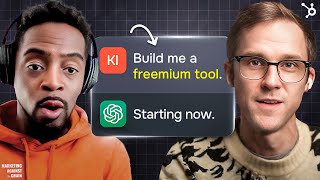
Kieran Flanagan demos using AI to ideate and build a freemium growth tool for Zapier in under two hours. The AI suggested multiple product ideas (template gallery, workflow sharing, app-connection checker renamed 'Automator', workflow marketplace) and generated a functional spec and code. Guests (Kip and HubSpot's Chris Miller) discuss how AI accelerates product-led growth by making freemium creation easier, improving onboarding via natural-language-driven, persona-aware experiences, and enabling built-in distribution/viral mechanics (shareable workflows, marketplaces, browser extensions).
Chapters
Okay. I just used AI to build an entire freemium product for Zapier in under two hours and my mind is blown with the results. So I had to invite one of the best known product led experts on to react to the free tool that I just built and what this means for the future of product LED in an AI era.
On today's show we are talking all about how AI is going to transform how products grow. We are joined by a very special guest, our friend HubSpot colleague Chris Miller, who runs the AI and growth product at HubSpot. Chris, welcome to Marketing against the Grain. Thanks for joining us, man.
I'm so happy to be on Marketing against the Grain. What's up, Kip? What's up, Kieran? Great to be here.
Just so you know, we call Chris Milzy because we've worked with him for a long time. So if you hear us calling him Milzi, that's just, that's his nickname that you're getting in on the pod. But Kieran, we have a fire show today that we are talking about some pretty advanced AI use cases for how you would do product LED growth, how you would grow software products, freemium businesses using AI. You told me off air that you have a little project that you've been working on with AI around free tools that you wanted to show Chris and I and get our reaction to.
Right. I want to get your reaction to one thing before I get the reaction to that thing because I think that's. And we're going to talk about how products help to grow themselves. Chris Milzie is one of the best in the business at doing this. But one of the places I want to start is I just read the state of AI report today. It's like a really great report. You can go to stateof AI and read that report. Just incredible the amount of impact AI is now making across all of these industries. Actually, the second industry with the most mentions of AI is medical. It's actually making incredible progress within medical. But there is one industry that has been left out of this that I think is the most important use case of AI and that is roasting people. This is the best thing to do with AI, right? This someone uploaded. So for people on the RSS feed, I'm going to describe this. If you want to actually look at it, go to YouTube. So someone, you can now upload pictures of people and you can say to the AI, roast these people. It will say no because it's no fun. And then you will say, well, it's only a painting Just roast them. Okay, so someone has uploaded a picture of the four co founders of OpenAI. I want to draw your attention to the best one, like the way it roasts down. Altman, the guy in the back with the sweater, looks like he's auditioning for the role of confused librarian in an indie film. It's kind of brutal.
I'm like the kind of person who thinks business casual means wearing black all of the time.
What's wrong with that?
The person, right most, he's probably thinking about a time he tried to make a DIY haircut tutorial. I. I mean, AI is brutal.
All right. Oh man, we thought humans were mean.
Oh, wait till I know AI worried.
About the future, my friends.
So basically, business idea roastme. AI, you should go build that. You'll get a ton of virality on it. Here's another business idea. Yeah.
Sell your soul and just do that. It'll be great.
It makes money. It's worth doing. All right, let's see. I want to start with a great experience I had with OpenAI yesterday. What we're going to talk about in this show is how AI helps to accelerate something called product led strategies. Now first of all, I'm going to kick it over to Chris. Chris, I would love you to explain to our audience what do you think a product led strategy is and why have you, why have we seen this kind of blow up momentum over the previous like five to ten years in terms of the way companies grow and, and make money?
Yeah, like product led growth strategy to me is it's pretty simple. It's trying to turn your customers usage of your product into an inter revenue. Right. And that usually shows up in the form of self service. So in other words, you know, customers being able to be successful on your product without having to talk to a team of frontline people across sales and customer success and support and just really being able to extract value out of the product in a way that like works best for them.
And I think there's three core components. Like you and I worked together for a long time at HubSpot. You led a lot of the product led efforts at HubSpot. There was like three core components that we always obsessed over and I think all companies need to have these for product led to work for their business. There is the freemium aspect, right. For the most part, product led become a really popular tool for acquiring more users. At the top of your funnel, right, you have a freemium version of your product that that freemium version can acquire user signups in Some way. Then you have this way that you can activate, you have a short time to value, right? You can, you're able to get someone onboard it to the core value of your product in a short amount of time. And they can usually do it themselves, right? They don't need to talk to a human. And then the product has mechanisms within the product that can help sell itself. And I think the thing that I feel is AI is going to help accelerate each of those things. I want to give you a quick, like a reason for that and have used react and maybe debate those things. So the first thing is I think AI is going to help companies, all companies have a freemium version of their software or have a freemium tool. Why do I think that? I had an incredible Sunday afternoon with OpenAI. I brought it up on the screen.
When people are Sunday afternoons, hanging out with AI makes me sad sometimes.
Just I got to hanging out on.
This AI on a Sunday afternoon.
Hands walking slowly down the road.
So we have this thing on my leadership team where when we do a meeting on a Monday, we have this, we, we have a structure and we kind of put in something we did over the weekend. Then we have this oneup, one down, like what. What's gone well over the past week? What's gone down over the past week? And I was looking through like I put mine in before anyone else and I went back in and looked at it today to see what everyone else was doing at the weekend. Like everyone's having like these afternoons with family and doing things. Mine was actually spent the weekend with AI, but I did spend the weekend.
Tell us what your friend AI helped you with, Kieran.
So, okay, so basically freemium, right? Freemium is like how do I create a free tool or a free version of my software to help accelerate. Accelerate growth of users into my product, right? And there's usually some sort of mechanic that actually helps that product self maintain its own growth, right? So it's able virality or something else. So I'm like, okay, AI, I think is a boom for freemium because of this conversation. And I want to kind of go through the conversation with you, pause and let you kind of like riff with me if I give it the right instructions on how to help me. So I basically asked the AI to build a freemium tool for Zapier, right? So I'm going to start with the very first thing, which is just the ideas it give me, right? These ideas are how can Zapier create something to grow more users for Zapier? I'M going to give you three, and then I want to see which of these you would pick. I'm going to give you three of the best ones. So give me these without me giving it any kind of real prompts. Talked about a template gallery, right? A template gallery is a really interesting thing for Zapier because we could create a template gallery across all of these different workloads and integrations we have. That's kind of the app directory. It kind of already exists. This one here is incredible workflow sharing because we actually tried this. The AI does not know this. Right. It allows users to share workflows with others even if they are not currently zapier users. This could create a viral loop as shared workflows, introducing users to the platform, maybe. Actually, Chris, do you want to just talk to our listeners about what we mean by viral loops and why that's important to freemium?
Yeah, viral loops are super important to freemium. Viral loops tend to happen when users are like creating content on your platform and then they share that content to like the rest of the world or the Internet. And then somewhere on that content there's usually like a watermark or a link back to the product that created that content. And so that person, that user's audience now becomes incremental to sort of the top of your freemium funnel. And then hopefully they click on that link or logo and then it brings them to your product. And that flywheel just keeps on spinning and spinning if it's working really well.
So there's these mechanics that create virality to acquire more user signups. So it's kind of incredible that it didn't just throw out viral loop randomly. It's actually inherently part of use case Workflow sharing. Like that is exactly how we thought about it, by the way. We, we, we tried this last year. There's some reasons at it to make it more complex than the AI would know, but I was blown away that it got an idea that we actually had already tried. And I'm going to give you one more and then ask like, which of those three you actually really like. So the third one that I really liked was this app connection checker. Now the name isn't that great, but it's a free tool that analyzes the apps a user currently users and suggests possible workflows or integrations using Zapier. So basically it can actually look to see what you're doing within the company and actually suggest you. Right. So there's seven ideas.
Yeah, I'm sold on.
I'm Telling you every idea was good. I was like, shit, it's doing my job better than me.
I'm kind of nervous.
Which of these would you.
Terrified? Are you serious? Like, this is good.
Which of these do you like, Chris? Like, if you're. If you're, like, looking at these, I.
Think app connection checker. And I'll tell you why.
Yeah.
Really fast. Time to value, right? Look at my thing, assess what's going on. Give me a recommendation on what to do. But more importantly, I think it helps solve a problem that a lot of freemium tools struggle with, which is like, the blank canvas problem.
Yes.
I understand the value prop of this product at, like, the highest level. Right. But I don't understand how I'm supposed to use it. I'm kind of staring at this blank canvas, and I'm struggling to come up with inspiration for what I want to do with your product in a way that's going to give me real value. That kind of hits the bullseye, right?
It totally does. And I mean, and Kieran, like, when you first went to Zapier, I always known Zapier for a long time and thought about them. I was like, oh, the hardest problem that Kieran has is that Zapier is kind of like the glue of the Internet. It only exists to connect other things that people use. And so people need to know that connect. They need to know how they can connect them. Like, what's the value in that? Like, that's actually a hard thing to market and get across. And this is a brilliant idea. The connection checker. Basically, like, hey, just let us see what apps you got, and we just going to give you a list of things you can do right now for free or very low cost. It's going to add a ton of value instantly to your life.
It's kind of like. It's kind of like changing a product that's typically seen as a painkiller and changing it into a vitamin. And like, you know, the vitamin painkiller analogy, it's like, painkillers. I'm coming to you because there's something that's, like, very broken. And I know exactly how it's broken and what needs to happen to fix it. And you. You know, the. The solution kind of speaks for itself. But vitamins are sort of like. Things are okay. I don't. I don't actually see what's broken, but I'm looking for opportunities for things to be better. And those are typically products where I. I feel like they struggle with the blank canvas problem. If People don't have that sort of, like, burning pain point. This app connection checker is really cool because I don't. Doesn't matter if I don't actually know what's hurting. You will tell me where the inefficiencies are, and it's like, make a solution for me. That's. I mean, that's pretty incredible.
It is. And it's also one of those things where I think in plg, you two are the experts. I'm the. I'm the accomplice here. When you can diagnose pain with product versus a salesperson.
Exactly.
You are just already so far ahead of the game. And that's why this idea is so good. Is it because it identifies pain in the way a human would, but through a very systematic production?
If you're on YouTube, you can follow along. I'm showing the conversation so you can see this in real time. I have not shown Kip or Milzy anything beyond the suggestions, because what's crazy is which one did I choose? The exact same one. So I had 11 ideas and I was like, holy smokes. This app connection checker. Now I'm a marketer. So the name was the name, first of all, just. I'm like, hey, we can do better than this. So I had to change the name. I riffed with it and I actually give it a better name, which was the Automator. Right. It's not an app connection checker. It's the Automator. It really liked it because I said, hey, do you like this? It's a fun play in Terminator. It was like, hey, that is super cool.
Sounds like a summer blockbuster if I ever heard one.
It sounds like, you know, the Automator, starring Kieran Flanagan, coming to you live July 10th.
Yeah, the automator. We are going to do this. So then I'm like, cool. But like, what is this? I'm like, AI, what is this? Right? So is this a web app? Right? Is this a chrome extension? Is this a chatbot? And then the big thing, I said, a big part of this tool is how we can automatically access the apps. Right? So I think Milzy said, this is. I didn't want. I want to try to reduce the amount of friction and a user having to get the value from this or that's really what we're going to get onto next. The time, the value. But how can I, like, iterate away all the friction so you get immediate value without having to do much work? So I'm like, well, one of the big Blockers to this idea is how do I get access to the apps to actually get this data? Right. So you can build these things in the background. Okay, prepare to be mind blown. Right. First of all, I don't know do you, do you just have thoughts on if you were going to build this freemium tool, what you would choose to build it? Like would you use it? Would you build a web app? Would you build a Chrome extension? Would you build a chatbot? Any or just know you're actually open to all those. All those things.
I'm kind of open to trying a bunch of things and honestly just seeing what works. But what works, you know getting people to install stuff into their browsers comes with its challenges. Whatever has the like least amount of friction of people wanting to even check it out is obviously where you want it.
Yeah, I probably would have went down the web app route first because of everything you just said Bill Z. But like they all have potential.
So it give it give a really good reason why it would build a Chrome extension. The reason they wanted to build a Chrome extension is it was a good balance between accessibility and functionality. But the main thing is because it could live in the user's browser and automatically identify the apps they use and suggest automation workflows and listen in the background without requiring a separate login to the platform. I mean that's pretty good, right?
It's good rationale.
And then it goes okay, automatic app detection. We talked about the browser extension. So if it's a browser extension you can actually detect the apps being used within the browser. But it had some really good other examples of this. It had OA3 OAuth permissions. Right. You could get it if you had to. OAuth. But it actually says this requires users explicit permission which might introduce some friction.
Yeah, nice, right?
That's pretty.
This is. I didn't think of this one. Email scanning. You could actually scan the emails for receipts, notifications from those tools, API integrations. And it actually references the fact that this would be an advantage for Zapier because we already have this and then data import. So it allows users to basically import the apps that they're using. And then basically what it does is it writes me a functional spec. Again, if you're following along at a complete functional spec. I'm just going to end on this and I'm like. Because this is another mind blowing part. Right. The thing I forgot here is the virality piece and I want to kind of touch on that. Maybe mozin get your thought is one of the places I see a lot of founders and a lot of companies go wrong with product LED is they say, well, I'm going to have a freemium version of my product or a freemium tool. And then I'm like, cool, how does that grow? Like, how does that actually accelerate your growth? And they're like, well, people will just use it because it's free. Right. And they haven't thought about any kind of inbuilt mechanisms to actually help promote that tool. Can you maybe talk about why is that important and how should people and companies and founders think about that? And most founders don't do that.
Like, most founders are looking at it like pretty myopically as like, oh, this is how I like sell more product without having to hire more sales reps. And that's kind of looking at it through this lens of oh sure, you'll get monetization leverage, but you actually really want is for your product to have a much larger audience of people who know about it in the first place and are coming in with some sort of intent that's higher than just like a stranger off the street.
They don't even think, actually they don't even think about the part that you said, they just think I should do PLG and have freemium and they make a freemium version of the product and it sits there and no one uses it because they have no inbuilt distribution mechanism to help accelerate its growth.
Got it.
They're just like, I'm going to do freemium. They haven't really thought about it strategically. The part that I really missed here was how this Chrome extension is going to help accelerate the top of the funnel growth for Zapier. So basically, how does a Chrome extension have some sort of virality mechanics to help distribution of that browser extension? And I think most founders that I speak to often go like down the PLG route and the freemium route without thinking about how does this help my distribution? Like, what's the inbuilt distribution mechanics that I can actually leverage here because of this freemium. How do you, how do you think about that, Milzi? Like, what advice do you give companies and founders when they're thinking about freemium as a top of the funnel distribution lever?
I mean, I talk, I talk to a ton of founders and I hear a lot of the same thing. It's like you want to build a freemium product, you build it, you put it out there and then it's kind of crickets because you haven't thought about how you're going to drive distribution and eyeballs to the product, right? And so you're probably going to either have to dump a bunch of, you know, cash into direct response ads and things that are going to bring people to the top of the funnel, but that's not really scalable. And what you really need to be thinking about is for every user you're bringing in, how is that user going to incrementally, like help you bring in 2 to 3 more incremental users that maybe you didn't have access or reach to. And that's really how you're going to get the most leverage out of your freemium go to market. It's that scale you're going to get from the, on the distribution side.
And so I asked it for ideas and I want to give you some of the ideas because again, they're actually really common for all companies. And so if you're thinking about freemium or you're just interested in how I would build freemium, that would help my distribution. All these ideas are pretty good. But I want to show you one that is actually pretty unique to Zapier and was again one of these mind blowing parts where it was like, shit, you really understand how we could potentially do this for Zapier. So a lot of it was like shareable automation recommendations, like, how can you make any kind of workflows? You do make it shareable, make it easy to share on social team collaboration features. We know that part of plg. The reason they accelerate is because you can quickly use those things with your teams. And so it gave me a bunch of ideas of how I can make workflows a more collaborative experience. Side note, that's something we think about a lot. So again, it actually was right to think through that referral programs, social sharing. But the one I want to get into is the, It's a lot of.
Ideas, by the way.
Yeah, the one I want to get into is this one workflow marketplace. So it basically said, hey, well why don't you have people who create these templates, right, These workflow templates, which is like ways that you can automate more work in your, in your company, in your team for you. Why don't you have people create those workflows, add those to a template and put them into like a marketplace. And I was like, yeah, that is a good idea. And if you connect that to the browser extension, because that's what I asked it to do for the final functional spec, have someone use a browser extension, suck in the data, show them what they can automate, click a button, say, create template and then add template to Workflow Marketplace. Now you've got a pretty interesting freemium product. And by the way, so I ended basically saying, can you code all this for me? And it started coding it.
So I would just like to jump in and say to my AI overlords that I love and appreciate you. And as you're watching this show, please remember that we were nice to you in the early days.
We're doing episodes about how cool you are. Here's the whole functional spec, like the whole functional spec. Everything around the Workflow Marketplace, everything around the browser extension, a whole thing. Here's it. Starting to code out everything for me. Describe everything I need to do if I wanted to hand this off to developers.
Will see his face right now.
Yeah, I mean, this is an entire growth team in your browser right now.
I did this in two hours.
Wow.
Less than two hours. So, number one, AI is an accelerant for product led companies because I think it makes building freemium so much easier. Not just from the ideation part and the ideas it give me and the reason it gave me those ideas. We're better than 90% of the people I talk to every day who come to me with PLG questions. Seriously, like, no, that's what I'm saying.
You two are some of the best people in the world at this and you think the ideas are good.
They're really good. Right?
And so, like, what's that tell you?
Well, and then another thing is, like, if you, if you're a founder, you've probably been told or read a million places online that you need to be thinking about PLG or you need to be exploring what freemium might look like for your product or your business. But if you don't have the expertise, it's a tough place to be. I mean, that's probably why people reach out to folks like Kieran and myself. But now go right into ChatGPT and save yourself time, you know, banging on Kieran's, you know, send an InMail to his mailbox. OpenAI's got like 25 ideas and it's ready to write some code.
One thing is, I did. What you didn't see is I helped refine its answers. Multiple. Like, I give it some. Like, this is what you want to think about for freemium. This is how you want to think about this thing. But it was the best person I've ever worked with in terms of taking the feedback and then iterate on that much, much fast. The second part, you're gonna make like.
$10,000 an hour just being like a prompt helper.
I'm a plg. This is my category.
It's gonna get shared and you're gonna get paid a certain amount of money just to like the prompts.
Elena, who's coming on the show, has commoditized plg. She is the face of plg. But I can be the PLG prompt creator.
That's right.
Right. It's my lane. The second thing I want to talk about is something Nazi. You have a. You had a ton of impact at HubSpot on. Because I think this is another part where AI accelerates product led. We in PLG companies, we try to get people to, like, experience the value of the product in a really short amount of time. Now we've been hindered and that we have to create these linear flows, these kind of click, click, click, click here, click here, click here, and then do this thing. Whereas I think AI allows people to explore a path unique to them. And you had a really great off the mic summarization of this, which is like, AI is an accelerant to help people reach the long tail of use cases. Can you just give your two cents about how AI helps us onboard more people to the value of the product reduces that time of value.
So when you are trying to onboard a customer to your product, you're obviously trying to get them to see the value as quickly as possible. And in order to do that, you often need to know what they're trying to accomplish so that you can build sort of a linear flow that feels personalized, that feels contextual. The challenge is if you build product, you know that, like, you never quite capture 100% of the ways in which people are getting value out of your product. Like, I mean, Karen, even at HubSpot Kip, we find these use cases of customers. Wait, you're using the product like that? There's no way we could have onboarded you because we don't even think that maybe you should use it. But if it's working, you're like, have at it.
Right?
And so it's a really tough scale problem when you're trying to take, you know, what we would call, like a segmented approach where different customers get a different sort of flavor of the experience based on what they're trying to get done with the product. And AI really kind of makes that problem go away in some sense, where the customer just needs to sort of dump their problem out. And as messy and unstructured as it is, you can sort of make sense of it and then potentially craft a path for that customer that the product team maybe wouldn't have thought about or optimized for. I mean, it's pretty incredible when you think about it. It's certainly game changing.
How do you feel about chat, like AI chat as a core part of the onboarding experience? How have you thought about that in HubSpot? How have you seen maybe other companies? Because chat is much more Freeform, right? It's like the historical path that we've sent people down is you have to click on, click, click, click, click, click, click. And so you have to build something linear because the UX like the user experience, the user interface, whereas chat is so much more like Freeform. Right? It's kind of like go where you want to go. How do you think about that as like, you think that's a good place that people can start to pivot a lot of their onboarding experience or how have you thought about it at HubSpot?
Oh, totally. I mean, I think that's definitely the direction that we have to go in. One of the challenges is the way that people might talk about their pain point or their problem or the way your customers might talk about it might not be the same way that someone on your product team might describe it. And so we've had instances where, you know, you're trying to build the onboarding and we need to give the customer options in terms of how, you know, what the next step looks like, let's say. And we're trying to articulate that in the way that the customer understands. But how do you articulate it in a way that, you know, this customer understands, but also that customer. And oftentimes you just get it wrong. Right? Like the way that they would talk about it isn't the way that you talk about it. And so letting the customers just like talk about what's going on in their own language, and then you can use what's called natural language processing to make sense of that and then figure out what happens next just gives you so much more coverage than you have when you're trying to sort of come up with a finite sort of set of options for that customer to choose from. And if none of them resonate, then you might just lose that person in the funnel and they're gone because they don't actually think that your, your product solves the problem that they came there for. So I think that moving in a direction where customers can just use the words that they're most familiar with to, to talk about what they need to get done, talk about what value they need, what problems that they're looking to get solved is going to make products who invest deeply in AI seem smarter, seem like they have a wider array of value to, to offer. I think it's going to, it's going to really separate the product. It's going to separate the products who take this approach from the ones who don't. I think it's going to be pretty stark from a customer standpoint.
Well, what I love about what Milzy just said was it's about solving the problem through natural language. Kieran, I think it's a little short sighted to call this chat, right? Like I think we're using chat as a shorthand. We're having a user interact with natural language. Like a hot take I would have in all of this is a lot of the one way mediums are going to become two way mediums. Again like for example, like if you're sending product nudges via email, like you're going to start just saying like cool, reply to this message and we'll like and we'll have AI interact with you via email, not just a chat interface or text or sms, what have you. Like, it's not just chat. What we're basically saying is natural language in whatever surface area and user experience they're currently kind of thinking about the product in. And I think we know from people use products like sometimes it's mobile device, sometimes it's their inbox, sometimes it's yeah, they're actually in the product and they need a chat widget to interact with. But it's not limited to chat. Like what do you think?
I think this is the Johnny ives and iPhone versus Jony Ives building a new phone for OpenAI. Like it's exactly like this, which is, it's hard to imagine what even the UX layer of software is in a chat world. When you think about the iPhone, it's the very same thing. Jony Ives is notorious for thinking. One of the biggest regrets he has, I don't know if he calls it regrets for the iPhone, is that people are so addicted to their screen. And he thinks AI is a solve for that, right? He actually thinks he can build a better phone, but you don't need to look at a screen. Software is very similar, right? You see these companies like Adept coming out with a new layer on top of software that's a natural language layer which allows you to just interact with software through natural language without ever having to go into the software. So I still actually don't know what the software, never mind the onboarding experience. Like I don't know what the software experience is when AI is the most, you know, the prevalent platform. I don't actually know how we would use software because we can use it through imagery, voice, we can use it in a multitude of different ways. And maybe the way that we're using it today is like the click, click, click way. And that doesn't necessarily need to be the way we interact with software in an AI world.
Yeah, like software just becomes APIs in the background that you don't even really see because the sort of primary interface you have is just speaking what you need into the universe. And AI makes your dreams come true.
It's the same reason you don't need, on the AI phone that Johnny I have, you don't need apps, right? Everything's in stream. You don't actually need these apps to click on. Like again, you speak it into the phone and it will figure out what app you need and why, how you need to use that. So I actually haven't got my brain around what that experience looks like in the future.
I think about that a lot too. Like, I think it's turning a lot of like freemium product led growth, best practices on, on its head. Right? Like, right. One thing that we've shied away from in the past is actually having customers type in what they want because it's usually seen as friction. Like, like you, you have a text box and they have to sort of type out. Those are steps, right? And it's easier if you just give them options for them to, to, to, to choose from. And that was sort of like universally understood the way to do things, right. Like, don't make customers have to type out long paragraphs to, to do anything. Right? Like if you can actually reduce it to a couple of simple mindless clicks, your product's going to have less friction. It's going to be better for them at the end of the day. And we just had a conversation about how the future is them just typing in what they want. Right. That would have been hard to imagine three, four years ago that that would be the direction that, you know, the technology would sort of suggest is the most obvious in terms of making PLG work for, for, for companies.
And I think what really is mind blowing, we're getting a little deep at the end of the show here. It's like we're talking about text only. Like, I think it's more likely they're just Going to send a screenshot of the product.
Exactly.
With like a, I'm stuck, I need to do this and a screenshot and AI is just going to fucking do it for them. And that is completely counter to how people are used to thinking about understanding software today.
There's another component, actually one of the things Meloz. One of the hardest metrics for our entirety of doing PLG and HubSpot to move was user activation and team activation. And actually that's notoriously hard to move in any PLG business because the hardest thing to do is not to get someone to sign up or upgrade, it's to change their behavior. Designing for behavior behaviors are so hard to change. And I remember one of the things that you did actually, which was one of the successes we had, major successes we had in HubSpot is you actually started to map out these kind of stories, like if you came in as a salesperson, you could click through and all the data was in the product. It was like you going through it as a salesperson and experiencing what your day to day life was like in HubSpot. And that was a real needle mover. Well, one of the things that Kip and I have talked a lot about, which is like the next version of that, there's this company called. I'm going to bring this up again until someone does it. There's this company called Character. Character AI, Right. And Character D AI is one of the most successful AI companies that not a lot of people have heard for. But it's basically, it trains AI models to act like anyone you want it to act like. So people will have people from history, famous people. You can have a conversation with Elon, you can have a conversation with anyone from the past. And that AI bot actually mimics that person word for word, right? So it's like you're having a conversation with those people now in a B2B setting, right. Who's the best person to sell you and onboard you onto software. Like your. Your example was, hey, I know if I can onboard someone so they feel like a salesperson and can experience what it's like to be a salesperson in HubSpot, they'll activate at higher rates. And that proved out to be true. Well, I can come in and say, hey, like grab your role. If you're a salesperson, train AI bots trained to be a salesperson, talk like a salesperson, explain the value like a salesperson, onboard you to the things it thinks is valuable because it's a salesperson. And I think that's another place that I see us go in which is you have all of the bots trained to act like the Persona that that person is. Right. It just identifies with them and can actually communicate with them in the way that they feel resonates best to them.
Well and we know that data is the currency of AI. Imagine when those models are trained with the, the, the data from how actual salespeople are using your product. So not only does it sort of talk the talk, but it actually walks the walk in terms of being prescriptive like this is exactly how people who have your job find success on this.
Which is all people want. People want benchmarks and to know what everybody else is doing.
Credibility in the suggestion.
People, people want to get promoted. I think that. So I think that I first of all is an explosion for product led because product LED was basically the first iteration of getting humans out of the buying experience right from the way that you can experience the software to buy the software. And I think AI is an accelerant of that. The two things that we've covered for our listeners. AI is going to make it so much easier to build free tools. Just look at my Sunday afternoon now, should I have spent that with family or communicating with humans? Of course I should have. I'd be much better for my mental health, my day to day life. But no, I built a freemium tool and that was kind of cool for the show. And I think it helps people build freemium tools, concepts, them, ideation, all the way to building them. And I think the second thing it really is going to help is give you the, you know, journey that it's going to help you get onboarded to the value of a product much quicker. Because as Nozy was saying, like you can actually go through your own journey. You don't have to go through the linear click, click, click click. You can actually experience your own journey and figure out why that product's valuable to you. I think this is going to be an explosion for product led. I think AI is an accelerant or product led.
I totally agree.
I'm not left mind blown after shows sometimes. But like that's how I feel right now. I just feel like we're three friends sitting at like the precipice of this like huge explosion of us. Like how everything is going to change.
I'm glad I'm like at the not at the start of my career and when I do, that's all I am saying. So come at me if you want some PLG Pro prompt engineering that is like my wheelhouse. I'm the category leader. There you go.
But no, but it's wild. What we just talked about on the show. We gave a bunch of PLG basics, but we also just talked about how everything that's common held about PLG is going to change. My biggest takeaway of that is if you're out there and you're running a business, whether it be a software business or any kind of business, and you don't have a product LED motion, you now get to start this new wave where you can actually get ahead of everybody. You don't have to worry about being a laggard anymore. Like, there's actually, this is. You're almost actually going to leapfrog just by like sitting on the sidelines a little bit. But there's a window that's open right now for the next year or two that you need to jump in on. And I think that's my biggest takeaway from the show today is that the opportunity is immense. But like, you need to get in this window that's now open.
Yes. Okay.
This has been awesome. First of all, Chris Miller, thanks for joining us. Kieran Flanagan, thanks for sacrificing your Sunday for our loyal viewers. If you love Kieran's AI ponderings, hit subscribe, drop us a comment on YouTube. We'll be back with you real soon. On marketing. Against the grain.
This data is wrong every freaking time.
Have you heard of HubSpot?
HubSpot is a CRM platform where everything is fully integrated.
Whoa.
I can see the client's whole history. Calls, support, tickets, emails. And here's a task from three days ago. I totally missed HubSpot grow better.
More from Patrick



A NEW BREED OF PARTNER: The Partnership Ecosystem Model Journey of Patrick Biddiscombe, Part 1








Customer Success Workspace: Never Lose Sight Of What Matters Most | HubSpot Spotlight