I Created A Media Strategy For Airbnb With One Prompt (Multimodal Masterclass)
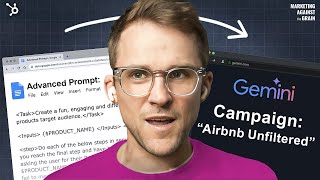
Kieran Flanagan shows how to use a single AI prompt to build a full media strategy, using Airbnb as an example. He argues that marketers who master multimodal content (video, audio, images, text) plus personalization will be the top 5% as search-driven marketing declines. The key: practice platform-specific creative, not lazy repurposing.
Chapters
Okay. Google search is being disrupted. So all of us marketers have to get much, much better at multimodal content, and AI is going to make it much easier. In this episode, I'm going to break down the critical skill that our marketers have to learn to continue to engage and attract an audience. I'm going to give you the ways that you can start doing that today and an advanced prompt to help you on your way. All of that and more on this episode of Marketing against the Grain. I'm Kieran Flanagan, your co host of Marketing against the Grain. This is a SOL episode. Let's get into today's show. This is a special solo episode. It's one of four parts. Kip and I will likely do the other ones together. We're going to talk about the AI marketing playbook for the 5%. What do I mean by the 5%? Well, we had the quote from Sam Altman. Whether he said it or not, it was a really good thought exercise. 95% of a marketer's job in the future might be automated by AI. We want to be the marketers in the 5%, which means you are actually the marketers in demand. You have the skill set that companies really, truly care about in the AI era. The AI era is coming, whether you like it or not. Just like terminator 2, terminator 3, terminator 4, terminator 5, all the bad terminators. Terminator 2 was by far the best version of all those movies. Every single one got worse and worse and worse. But it's like all the Terminator movies. They are just un inevitable. They are going to come because it creates so much money. The AI era is coming. These models are going to get better. We're going to be able to automate more and more work. And so you want to be in the 5%. The 5% are going to have the best job, is they're going to make the most money, they are going to be the most employable. But to be in the 5%, you have to understand what does the market playbook look like for the AI era. When I think through this, we had the kind of Web one era, right? And we had the outbound tactics, we had a little bit of email spam. Like, we had all those things that were really attributed to, like, the worst side of marketing. And then you had the Web2, which is really the inbound era. Like, how do we create value for customers? How do we have buyers be in control of the buy in cycle? And then you're coming into the AI era And we want to understand what does that look like. I think there's four things, four pillars that will really matter in that era. There is something called a multimodal content strategy. There is personalization at scale, there is creator, creator led strategies, and then there's the collapse in of the customer journey into marketing. And I want to cover them individually on episodes because I think it's much better when we focus on one, one segment and we go a little deeper in that segment and then we can actually do a cool prompt session because I think people really like when we actually try to work through things in real time. So I'm actually going to try to develop a prompt to build a media strategy based upon this multimodal principle. So that's the start. What do we mean by multimodal and why does this thing gonna matter during AI? Okay, let's start with this. Multimodal is a media strategy that is across multiple formats. In multimodal. In AI it means the AI can take text as an input and output video, take images and input and output video, take video as an input and output text. So you can actually create content formats much, much easier. So you can take some content formats and recreate them in other formats. So what is the disruption going on here? Like why do we think that multimodal content and content in all of these different formats is going to be so critical to, to the AI era? So I want to quickly show you something I was looking at. I need to get my screens better set up for people who are on the YouTubes. You might see me look across here. All right, so why, what disruption is going to. What, what disruption? What insight? What, what's going to cause this kind of multiple multimodal content strategy, having media, many formats to become ever more important? Well, let's go back to the talking, the talk track that we've had time and again on this podcast. If you're looking at my screen, you a site called Stats Counter and Stat Counter is a really good site because it actually allows you to see the search engine market share over time. So what is the search engine market share over time? And I can break that into individual countries. And so what I'm looking at here is something, I think something that's really interesting. I am looking at the search engine share that Google has in the US Let me just make sure. I'm going to just make sure. Yeah, it's the US from 2008 to 2024, April 2028 to April 2024. And when we look at that Chart. We notice something pretty interesting now. Google's market market engine share, search engine market share in North America has always been really above like 85%. You can see I'm. If you're following along on the YouTube you can see that I'm showing. It's really always actually been around 90%. Right. There's a red line that I'm showing for our RSS feed listeners. I'm showing a red line Google search engine market share for a very long time and then in April it dips to below 80% and actually Bing has a real increase here of around 5% to 11%. So Bing, which I did say to give me some credit because I like to give myself a bunch of credit all the way back in November 2022 and I think into December 2022 and I had a funny graphic of like Bing rising from the dead. And I did say that Bing might start to steal some search engine market share from Google because they were so quick on the copilot and Google were so slow out of the gates. And I think the reason Google were slower out of the gates is because they had much more to lose. Right? They are the market leader. Most of the revenue comes from AdWords and so they want to be pretty thoughtful about how they integrate AI into their product where Bing, let's face it, Bing has not got great market share anywhere. They don't have a lot to lose, right? And what we could be seeing here is that people are starting to really prefer an answer engine versus a search engine. Right? People actually want these copilot experiences and because Bing was so early, they're starting to gain some market share now. There could be other things going on here. There could be a data anonymous, there could be a large partner had integrated Bing over Google. We don't know. But it is pretty interesting that the theme and the theses that Kip and I have had on the show that Google's March market search engine market share would be disrupted because of AI is starting to look like that is happening in North America in April. But to play the other side of this, and it's always good to play the other side and I am going to why this really matters for that multimodal content and why I think multimodal content will become much more important. So the other thing I would share before we get into the actual multimodal strategy is this real. This pretty cool report came out from a website called Daedos. What are, what are Daedos? Actually the clickstream data and it was in Response to another story that we covered where Gartner had said by 2026 we may see a 25% drop in search volume because of these AI chat agents. Right. So that we would see a migration away from search engine usage to actually AI bot chat usage. And Gartner had predicted that could be as much as 25% in 2026. Now what this entire report proves is that is not happening today and that the amount of search engine traffic or the amount of search queries being done each and every day is remaining pretty cognitive, pretty stagnant and Google share of those search queries is remaining pretty consistent. What I would show that I think is really interesting if you're looking on Google. So again I actually always like to steal man my own argument. I do think Google are going to be under pressure from these AI chat agents. I think they are a better experience for a lot of queries and I think that at some point people will choose them because they are easier and quicker. However, I like to make sure that I am always poking holes in my own arguments. And what you can see on the screen is 120 days Usage of a user on Google and how many queries they committed they did each and every day. So you can see on Google. And again I want to spell this out for people who are just listening along. What it's showing you is on Google the average user does at least one search per day. So they're actually active every single day on Google. Whereas the chart I'm showing now is OpenAI. And what I'm showing for OpenAI is there is a real fallen off a cliff and that the user is uses OpenAI to begin with and then their usage falls off a cliff. Now that does not say, that does not mean it's a fad, but it does mean that these AI chatbots really need to figure out how to become much stickier for these users. Whereas Google obviously has had decades of building up the brand name in search and you have users who are using and default into that engine each and every day. But so there's two, two parts to this that is like if you were going to steel man the argument for search and for for Google search remaining consistent, you would say well actually the amount of search volume being queries, the amount of time like the amount that people are searching each and every day, each and every week is remaining consistent. And Google share of that, share of that is remaining pretty consistent. And then when you look at the Usage on Google versus the usage in OpenAI, Google is just much, much more stickier. Why is this important to open kind of this segment with this multimodal content strategy, this multimodal pillar that I think is going to be part of the AI marketing playbook? Well, we marketers have really defaulted to text based content because that is the best kind of content to acquire traffic and customers from Google. And for the most part that content is quite educational because it's educational keywords like how do I do things? That has performed historically pretty well in Google. Now you have to take your position on what you believe will happen in the future, right? The best people have a point of view, have conviction and build towards that point of view, right? So you have to look at the data you have available to you and the consumer habits you have available to you and decide which way you think it will go. Because if you wait until it's gone that way, then you will get run over by all the people who built for the thing that they thought was going to happen. Right? Having conviction, having a point of view, having conviction and building towards that is really important, I think as a marketer. And really what a marketer tries to do is track consumer behavior. And so what I've showed you is the kind of bull and bear case, right? I've showed you the bear case for Google and that Google actually could get very disrupted by these kind of AI chatbots. And I've showed you the, and I showed you that using the kind of search engine market share and how Google is starting to lose that in April 2024. It's actually the lowest it's been in North America since 2009 or the Bull case. And the bull case is, hey, search engine volume, search query volume remains pretty consistent. Google share of that remains pretty consistent. And when you look at the usage of these AI chatbots, they're kind of fallen off a cliff. And Google's is pretty consistent. Now I am definitely on the Google is going to be disrupted. AI is going to drastically disrupt search as we know it, in particular in informational keywords. And that means educational content. The content we have created traditionally to acquire users and customers is going to be heavily disrupted. And I think I'm right. I talked to enough people and enough companies who have great organic strategies for the most part building this educational content. And they are seeing keywords remain consistent, the keyword ranking remain consistent, but actually getting much less volume over time. Right? So I think we're already seeing that happen. And so multimodal content means we have to have a media strategy that takes that into account. Why is AI going to disrupt that? Right? We've talked about the disruption that's happening from AI in terms of disrupting Google as a channel, which means it will disrupt the kind of content and media we put out. Right? We used to put out text heavy content to rank in Google to acquire customers. If that gets disrupted, we have to build for these other channels that we traditionally have not built for or that are really hard. Video on social, right? Video on social is much harder because you are competing against all of the other video on social that is vying for that person's attention. YouTube, keep an eye. Believe that YouTube is this generation's TV, right? It will disrupt TV. If you're a brand, you want a channel on YouTube. YouTube could be a benefactor of the fact that Google's traditional search engine gets disrupted. Where we see more people gravitate towards YouTube. YouTube is much harder to grow, Video is much harder to do and it's much harder to monetize that demand. Newsletters, podcasts, like all of these mediums are very different from trying to grow a search channel and they're actually harder to actually monetize. And the other thing that has been difficult in going after those channels is, is they are just more time consuming. Like video is more time consuming, audio is more time consuming. And so we've always been stuck in the tool and like maybe we needed a designer, a videographer, producer, whatever it may be, you just need a bigger set of resources to be able to do that really well. And so the hypothesis here is that AI will actually unlock a lot of marketers creativity by providing the tools that they need to do video and audio at much more scale and even text. Right? If you actually look at this, I love this from Sequoia and I think we might have covered this, but I'm just going to do a quick rehash. And for the people listening along, I'm showing a Sequoia article that is really their tech stack for Generative AI Act 2 and this graphic that I'm showing here, which is the generative AI market map. One thing I want to draw your attention to is the tools that are being created for voice, right? We have all of these AI tools that are going to help us much easily, much more easily create podcasts and create audio driven content from 11 labs resemble that AI Murph. AI like all descript, obviously just tools that allow us to create audio much easier. Like the first time I used Descript to edit a podcast, like It's a, it's a 10x improvement, right? Just being able to do it all via text, like edit the text and it will automatically edit the words. Like when you start to be able to do things like that, much easier. You're just going to be able to unlock your creativity and bring it to life in these other content formats. Much easier. Video creation tools, right? Here's I'm showing like the video creation tools and the editing tools from Runway vid IO descript captions loom TikTok. Like all, all of these different companies are producing tools that allow us to bring our ideas to life much easier through video. We've seen open AI Sora, we've seen versions of that from Microsoft where we're likely going to see versions of that from Google when they can get it qaed in a way that doesn't give them a big negative press story. And so we're going to start to see more and more tooling allow us to bring our ideas to life much, much easier through video. Right? Whether that's in the creation of video or the editing video. And that to me is an unlock for marketers, right? I think marketers are going to need to excel at how do they create multimodal, multi format content experience. Right? And if you're a marketer and you're listening to this like okay, I get it, like I get the disruption, I get the bear and bull case. Like I'm going to pick my side. The bear case, hey, Google is already losing market share. We see it in April. The bull case, hey, actually you know, we see search engine query volumes stay the same. We're seeing these AI chat bot usage fall off a cliff and all right, I get how AI helps us move from text based towards multimodal multi format and I get why that's important because we've traditionally created educational content, text based content to rank and search. Well, that's not as important. We need to start building for these other channels like video first channels, audio verse channels to make sure that our content is resonating with our audience, get into our audience, engaging our audience and converting some of that audience into customers. Now you might be sitting there and going okay, cool, but you haven't really told me what I should do. And I think part of the problem of telling you what to do is this is such an in flight space, right? The video tools are not there yet. If you've used hey Jin, for example, if any of you took the course, thank you for doing that. That I put out. You'll see the Hay Jim videos of me. Lack of motion, really easy to tell that it's me. Very monotone. Hey, Jin, are releasing more and more features that I think will help with those things, but for the most part, right, I hope this version of me is better than that version of me, and you would like to listen to this version of me a little bit more. But boy, creating those videos was so good, right? I had AI build a video script for me and I did a bit of editing while I was sitting on my couch. And. And normally what I would do is like, do the video myself, go up to my little studio that I have upstairs, and then record the video. But this was like, hey, chatgpt, Claude, Gemini, advance, write me the script, edit the script, plug the script into hey Jan, use my studio avatar and hey, Cresto video. I did not have to come upstairs, not get into my studio, not turn on all my lights. And you've got five videos of me teaching someone something. And I think in certain cases, when you're teaching certain subjects, being monotone, you know, lacking emotion is actually okay. Like, people will be okay with that. But we're going to be at a place where you can capture me much more realistically in a very short amount of time. So it's hard to predict. And so what do you do today? Well, the first thing is practice, practice, practice. We had Gary Vaynerchuk on recently on the podcast that's coming out this month. He just launched a new book called Day Trading Attention. He is the master of garnering attention. But you know what he's the master of? He is a master of his craft, right? He is a master of content creation. A Gary Vaynerchuk is worth anywhere north of $150 million. Now, if you take a step back and you had that amount of money, do you think you would be employing people to do all your content, write all your posts, and you would just be living your best life on a beach or skiing or whatever climate you like? Maybe Gary, when we were on the podcast, he's like, hey, I'm just. Gimme a second here. I'm just trying to perfect this content to get my Instagram post live. In speaking to him, he knew more about content creation than most people I've talked to who run content creation teams and companies, right? He knew more about content creation than any market that I speak to. Now he's Gary Vaynerchuk. He's wrote books. Why is that surprising? It doesn't surprise me. But he knows his craft. And if you're, if you're at his level of success, I think it's admirable for him to be still deep within the craft, right. When he does these videos explaining to entrepreneurs and marketers how to build an audience for their brand. He doesn't need to do any script writing because he knows the craft, right? He can just actually tell them based upon his own experiences. And the interview with him is coming out soon, and it's, it's, it's a must, must listen. So, number one, practice, right? If you have not used any of these tools, if you have not tried to take some content and recreate it in audio or video or create something from scratch, you are not in the 5%, right? You are not the people that I am talking to right now because you're not in the 5%. I want you to be in the 5%. I actually embedded my entire career that AI is a paradigm shift for marketing. It's what I want to spend my entire time doing, right? If you want to be in the 5%, you have to make some sort of commitment. Practice, practice, practice. Build your reps, Try to do some things in these tools. Sure, the tools are not where they need to be right now, but boy, when they get better and better, you already know how to use them. Now, I did say I take some sort of content and, you know, recreate it in those formats. I tend to think that content that works in text, video and audio is very different. And so you have to create something for those mediums in mind. Gary told us that actually when you're creating video in social, YouTube, these kinds of platforms, they're all very different. And the first one to 10 seconds matters a lot. And it needs to be different across each and every platform. Mr. Beast tests thumbnails on YouTube hundreds of times because those small things matter. So platform specific content, medium specific content really matter. All right, practice. And I'm going to get to an advanced prompt that we're going to end this with for a little bit of fun because, you know, I'm the prompt person. Oh, I just got into my second thing. Here's the lazy marketer, right? The lazy marketer goes, cool. I have an educational blog post and this used to get me some traffic. And darn Kieran's bearish case for Google is coming true. It's getting less traffic because educational content has been democratized, because AI is actually very good at creating educational content, right? Whatever educational content you've created for search, traffic and for these keyword, if it doesn't have proprietary data or something very Unique. It's been replicated a hundred times now. We're just in the case of, like, whose site ranks better? So Kieran's right. I. I'm listening. Darn. What am I going to do here? I'm going to get smoked. You know what I'm going to do? I'm going to take his advice and I'm going to take this educational blog post, and then I'm going to just put it through these AI tools and have multiple videos created and multiple audio episodes of some podcast created. And that is the lazy marketer. The lazy marketer is Nowhere near the 5%. The lazy marketer is getting steamrolled and they don't even know it because what. What works in different formats and different platforms are wildly different from each other, right? Like, one of the fun things I did when ChatGPT or OpenAI released their code interpreter plugin that allowed you to easily do data analysis is I exported the YouTube performance of our episodes and the RSS performance of our episodes, and then I asked it to create this kind of pivot table where I could see the overlap. Like, what episodes perform great across each platform? You know the sad thing? None. There was literally one. They are so different, right? What performs well in YouTube does not perform as well in RSS. This should be a given, right? If you are a logical being, this should be a given. One of them is a very visual experience and one of them is a very audio experience. But the lazy marketer does not know that, or they do know that. They don't care. And they are just trying to regurgitate across and recurchulate things across each and every platform. The same stuff, right? So you have to have differentiation, which means you really need to pick the platform that matters for your audience. And then you have to go after that and make sure that you are creating something in that format for that audience for that platform. The other thing that we are going to go through as marketers, number three on getting them prepared for the multimodal content format strategy, is we have been spoiled with search. I have been spoiled with search, right? I come in as an engineer. I was like a coder, and then I got into the technical parts of marketing first, and search was, like, pretty technical when I got into it. And I was like, boy, this is cool. Like, I can do this thing and then I can acquire traffic and I can see it convert into customers, and I'm worth a certain amount of dollars. I could actually see the value I was creating for the company and what's Better yet is the people who were looking at my performance could see the value I drove for that company, right? You can see it in the reports, hey, Kieran did these things. Now traffic is this. Now users are this. Now customers are this. Now each customer is worth this amount of revenue. Now Kieran's created an X amount of revenue and I can go, hey, cool, give me some more money, please. Right? Spoiled search. What an incredible marketing channel we were given by Google, right? But we were able to insert content right, when a customer was looking for that thing, educate that customer and actually have that customer go through our marketing funnel. That is a direct attribution channel that we can directly correlate the work we do or it's causation. We can directly see the impact from the work we do. These other channels that we are going to get much better at because of tooling and because we have to and because they are the channels that are continuing to grow, like especially video and social and these other YouTube, they are much more indirect, right? For the most part they are much more indirect where it's hard to say the customer directly came from the work I did, right? You can do the work and then you can build these causation models or correlation models that you can correlate the work or the upside in customers, the increase in customer conversion to the work that you're doing. But it's not direct. And if you're a founder and I know this, you can poke holes in it, right? You can say, well, I don't believe you. Like, we released this feature, we did this, we got this press, we did this. So like, I, I don't know if you really took advantage vantage of that. Like, like, yeah, you got all these views but you got all this engagement. But I don't know if that was your team, like this was maybe the other teams. That is a hard battle to fight, right? And so one of the things you really have to get good at is educating your manager or your execs or whatever it is on whoever they are, on the benefits of doing the indirect stuff because we are going to be doing much more indirect stuff, right? We've got not, not just, not just this, we've got the cookie problem, the privacy problem, we've got email tracking problem, lots of problems. So we are going into an era where there's going to be much more indirect. And actually the indirect channels are growing. AI is going to unlock a lot of creativity in the indirect. So I think that's going be a real thing. So you're gonna have to get really good at telling the story of why these channels are worth investing at. And that is your job as a marketer, right? Your job is to have a clear vision, be able to articulate that vision, why it matters. Is it easy? No, it's not easy. Marketers have one of the hardest jobs in trying to convince people that their work matters. And it can be exhausting. But that's just part part of the job. There's lots of other great parts that come with it. And the other thing is it is good to diversify, right? And it's a really hard thing to say, but if you are very reliant on a Google right now. If you were very reliant on some of the page hands right now, yeah, it's like tough time. It could be tough times ahead, right? The best time to diverse to diversify is when you're doing well, right? You are sitting there, you're like, hey, shut up, Kieran. We are crushing it. Like we are killing it. And I get it. The thing that people tell me is, well, we only have a small team and we have to focus on the things that matter. I actually don't have a great response for that. I think you're right. Right. I think, I actually think you're right for the most part. If you're a small team, do the things that work, right? Accelerate growth, do the things that work. But be mindful of the disruption that could be coming. And it's pretty easy to do that. Be in the craft, right? Look at the data being released, keep an eye on your, on your date, your own data. Like just be in the craft, right? Beyond the stats counter, look at the search engine traffic share. I'm keeping an eye on search engine query volume, talking to other companies. Like, one of the things that you as a marketer should do is actually get to know other marketers in other companies that are tangential to you so you can actually share. Hey, how are, how are you seeing this? How are we seeing this? So be in the craft. Be in the weeds. Understand when this might start to happen so you can get ahead of it. But yes, if you're a small team, a small company, certain things are working for you. Then, yeah, you don't want to pivot or deviate or you don't have the bandwidth or resources to say, well, I'll take 20% and start to experiment with these other things, but you want to be mindful of it. Be in the weeds, be in the craft. Let's end on my favorite thing to do. Now, this might not be the best prompt because I actually did it. Five minutes coming up before coming on here. I've had a very busy day, y', all, so please forgive me, but we are still going to do some cool prompt in here. All right, so what is the prompt? So I want to end each of these ones with a prompt, right? We have the personalization come in. We're going to the creators one. We're going to have how the entire customer journey collapses into marketing way marketeers. We're going to get much more of the customer journey. I believe that it's going to be a great time to be a marketer. We're going to own the customer journey. We're going to do a bunch of cool stuff so the customer journey is not fragmented into us shipping our org design. The org design will be marketing will be the customer experience team and it will be awesome. Here is a prompt to build a little media strategy and I'm going to go through the prompt so you can see. What I really like about prompt is a couple of things, right? I'm going to do it. I think I'm going to do it in Gemini Advanced, right? What I what I like about prompting is a couple of things. First of all, it's a great minimal viable way to like test something in AI, right? So for me, I like to test things like this and there's like cool things and I might start to figure out if I should build a GUI around it, an app and turn it into something. But I think it's a great minimal via version, minimal viable version that I can actually test in the wild. The other thing is you can see and I'll go through the doc here first and then I'll go through the actual results from the different chats. It actually teaches you to like. Again, this is not the best prompt, right? This took me five minutes. I apologize. I will build upon it. Here's what I will do. This is going into our prompt library for marketing against screens listeners. If you subscribe to the YouTube, you will hear about it first. We'll make sure we drop a chat specific update when we've released the prompt library. I will guarantee you all this prompt will be much better when I can iterate on it. But I like the fact that the prompt teaches you how to like just build out like articulate the thing you were trying to do, right? Because you're actually trying to tell a human like AI human what you want done and it forces you to like articulate the things that truly matter about that, right? So let's go through this prompt really quick. So we're going to build a quick task, right? Again, I'm going to spell this out for the people who are listeners. Thank you all for listening. If you want to get the full experience, we would appreciate you subscribing to YouTube. The YouTube channel is awesome, but also, you don't have time and you can only listen. I will make sure you get value here. So we have. We start with. We always start with a task, right? We want to tell it what the task is. And again, this is like pretty, pretty basic, but create a fun engagement and differentiated media strategy for a product, for a product's target audience, right? We want to make sure that this is for a product's target audience. I could explain that better, which is basically what I'm saying is the audience of a product we would like to monetize at a later date, like something like that. But I started with a product target audience. Then I say, hey, the only input we need is like product name here. And then we're going to do steps. Now there's some cool things in these steps. I tell it to do each of the below steps in sequence, right? Because sometimes it does them out of sequence or just doesn't do some and only provide the output when you output, when you've reached the final step. And then I say, hey, let the user add the product name. And then of course, I plead to the AI wanting to me to do well in my career. And I say, yo, if you don't do this really good, it's going to have a negative impact on my career, right? Just so you know, I bet my entire career on you. I'm trying to spend all of my time learning how to work with you. And so, like, you know, give me some good output, right? Like, or this is going to be bad for me, right? So that is the first step. The second step is what would we want to do first, right? We've got the product name now. What would we want to do next? And again, this is why I like prompting forces you to build out like a little mini strategy. We want to do audience analysis, right? The first step that I. So we. I then I basically tell it, hey, the individual steps. We want to do audience analysis. By the way, I know I'm going all over the place here, but I just want to say for the people who are listening, who are really deep into this and you're saying, hey, this would be a much better thing if you built a specific agent for each of these steps and then handed over the work to each agent. Like basically recursive AI agents who could take the work from each other and specialize in in an individual part. I agree. That is the next thing on my list. I'm actually working towards that. Some people have been kind enough, founders have been kind enough to give me access to their platform to do that. So yes, the prompt is good, but you would be much better building the individual steps as AI agents trained to do that thing. So I agree. First step audience analysis. Right. I tell it to, hey, the first thing we really want to do is research the product's target audience. Right. And so we want to capture some things here. We first of all want to provide a short summary of the typical buyer for this product. What job they have, what problem they have, the problem they have that the product solves. And then I tell them to capture that and put it into this kind of variable Persona overview. Then I say you'll then find topics that the buyer Persona loves to consume content on that overlaps with the product being sold. Again, I can probably iterate on this and articulate it much better. This is why again, I love doing prompts because it's forces you to articulate something very, very well even in your own mind. Right in there. For example, HubSpot provides customers with a marketing platform. Their audience likes to consume content on subjects like growing traffic from Google. We would love to grow some traffic from Google. All of us right now like Google, you know, keep giving us that good traffic. Do not get cannibalized or how to do better social media. Right. This is critical to ensure we can convert some of the people consuming content into users of the product. Try to tell it why I care about the overlap because I don't want to create content that I can't monetize into a customer. Again, give really good for when you're building out these things. You also want to do that for any kind of content strategy. This is very heavily B2B. Right. I would probably build this better different, a little different from B2C. So that's maybe something we can actually do a version of. Be sure to capture topics that the buyer Persona has an interest in that could lead to a sale of the product and what you stored out in the variable. And then I basically say you'll do. You'll also do an analysis of what mediums the buyer Persona likes to consume. Is it blogs, newsletters? So I'm trying to figure out like I don't want to do all the mediums, right? I'm not. You don't want to do a medium just for the sake of medium. You want to do something that that buyer actually gravitates towards and consumes something on. And so I ask it to do some analysis there. So that's my analysis step. The next step is I say once you've done that research, then you want to come up with a list of content topics. Like okay, what are the content topics we should really go after, right? Based upon your analysis of the target buyer, Persona, content consumption habits, all these different things, what are the start. Let's start with the topics. What should I create content on? Then I say, hey, based upon what you now know about their Persona and the content topics, choose one medium. So I've chosen one because I want to actually do this for smaller companies, companies who are trying to just like do one thing well that most appeals to the target buyer. Then we want to create one media campaign for that product's brand to build an audience in that medium, right? So I tell it to provide a detailed overview of the campaign for that target buyer. The other thing I put here for fun was include any suggested creators. So this is starting to get into the other pillar that I have in this four pillar, kind of four pillar AI market and playbook strategy. Creators is another part of that and we'll do a whole show on that. But I thought I would just see if the AI could integrate creators as part of this prompt and say, hey, like the creator should have a large audience for the content topic be being covered. They should be and they, and they should be included in the fun and unique and different way so that my product can lean into that critter's audience to distribute the media that I create. Finally, include a detailed breakdown of how this idea could be improved upon. How do we make a 10x better? I actually could do a much better job there. I, you know, 10x is such a non meaningful thing that I actually should actually quantify that better. And then I say, hey, like go do this. The fact that you have the ability for someone to actually do 100 versions of this, basically I could say to the AI, create 100 versions. I think that we probably are still not putting the right monetary value on how amazing that is. All right, let's end by showing you the output. I'm actually going to give Google a little bit of airtime here. So I'm going to go to Google Gemini Advance. I did it in all three. I like Google's. I think it's pretty cool. So I did Airbnb because I think I like Airbnb as a brand. I think Brian Chesky is an absolutely awesome CEO, visionary presenter. I think he's got great ideas. They just release icons and I think there's just like, it's a brand that has a multitude of different content mediums. Like, fun content. It could do, right? It could actually do so many fun content things, which it does. They actually do a really good job of. All right, so let's quickly go through what Gemini Advanced has for Airbnb. So it does the audience analysis, right? It says Persona overview. Airbnb's target audience is diverse, but some common themes, threads include adventurous travelers, right? Pretty. Pretty good there. Budget conscious explorers and it gives an inscription there. And remote workers and digital nomads. So pretty spot on, right? Like understands who the Persona is. Personas topics. So Airbnb's audience is passionate about unique destinations right off the beaten path locations. That is very true. Sustainable travel. Pretty true. DIY adventures. Pretty true. And then home design and inspiration. I don't know. Like, that's a one that I would like to. That's a pretty cool one because I would not have thought about that. I don't know if it's true or not, but it's. If I got this back, I'd be like, wow. Like, that is something I should dig into. Like, are people using Airbnbs as a way to do design inspiration? So I think that's pretty cool. Mediums. Airbnb audience likely engages with blogs and travel websites, social media, Instagram, specifically Instagram and TikTok. Very true. And YouTube in depth. On YouTube. YouTube it says in depth. Destination vlogs, Airbnb tours, travel day and life content. So, like, again, all of these pretty spot on. Now, again, what I would say is, if you're looking at this, saying, this is kind of cool, but I would have guessed that this is number one iteration. What I would do is ask the AI to iterate on this five times and take the fifth one. It would usually do much better. So you can iterate on this. And I would say, hey, do this again, but make it much more differentiated, detailed and engaging. Like I. You can basically make it iterate on itself and so it gets much more differentiated from the first answer it gives you. Now it says content topics, right? This is what we really want, right? What are the content topics? Now there's some good ones here, right? Hidden gem getaways, uncovering lesser known charming destinations. I think that would resonate really well for Airbnb. Airbnb home transformation. Showcasing before and after renovations of unique rental spaces. Again, this is a pretty interesting one because this is coming back to their topics that they care about, home design and inspiration, which is. And then it says kind of has that as a content topic. This is something I would dig into. I don't know if this is right or not, but it's cool because I had not thought about this as something that the Airbnb could do. Content on ultimate local guides. I think that one's pretty like done to death and not not that interesting. Experience beyond stays, highlighting unique Airbnb experiences, cooking classes, local tours. So it knows that, you know, Airbnb has the experiences and that could be a angle to dig into. And then budget travel hacks. So what's the media campaign? I actually haven't looked at this, so let's focus on YouTube. Nice. That's what YouTube is, the thing that I love. So that's pretty cool as a primary medium, given it a visual appeal and popularity. Travel enthusiast. So the campaign it has here is Airbnb unfiltered. Oh, let's go spicy. The concept is this campaign partners with popular travel vloggers to create raw, authentic videos documenting their Airbnb stay. The emphasis is on real unscripted moments, mishaps, unexpected discoveries. Okay, so what you would do is line up a bunch of influencers, get them to stay in different Airbnb places, maybe go off the unbeaten track because that aligns with another content topic that it said people would be interested in. The cool thing here is it actually talks about creators that would be interesting for the vlogger. So it doesn't just say work with these vloggers or these influencers. It then says, hey, ideal collaborators for the adventurous content. Relatable personalities would be Cara and Nate. Hey, Nadine and Mark Wines. It actually talks about the creators Airbnb could use for this campaign and what they do. Now again, I could go in more detail here on why they would be the right people and how to include them. And then for the 10x improvement it says to scale the campaign, Airbnb could create a contest for smaller travel creators to win an all expenses paid trip to film their own Airbnb unfiltered style video. Pretty cool. Launch a dedicated hashtag encouraging everyday users to share their unfiltered Airbnb moments for a chance to be featured. Again, pretty cool. Okay, so again, first pass. If you are sitting there and you don't think like this is from a prompt this gets you thinking, right? You're sitting there and you're trying to design something super cool for Airbnb and you're staring at a blank page. This prompt gets you thinking of all of these ideas. And again, I would build upon this five times. I wouldn't take the first thing. And that is why I think multimodal is going to be such an incredible part of a marketer's toolset. A marketer's toolset, because we're going to get the tools, we're going to get our creativity ideas unlocked, we're going to get AI to actually give us some really good starting points for this creativity. And then we're going to be able to bring it to life in really interesting ways through AI itself. Pillar number one of the new AI marketing playbook that Kip and I are going to start to talk to a lot more is multimodal content strategies, Multimodal media strategies. And this is the first deep dive on that. And we will at some point do personalization of scale creator led media collapsing of the customer journey. But until next time, hope you enjoyed the show. Hope it was useful. Get go get prompt in. We will release the prompt library really soon so you can get all these yourself, yourself. This data is wrong every freaking time. Have you heard of HubSpot? HubSpot is a CRM platform where everything is fully integrated. Whoa. I can see the client's whole history. Calls, support tickets, emails. And here's a task from three days ago. I totally missed.
More from Patrick



A NEW BREED OF PARTNER: The Partnership Ecosystem Model Journey of Patrick Biddiscombe, Part 1








Customer Success Workspace: Never Lose Sight Of What Matters Most | HubSpot Spotlight