I Used Ai To Create A Marketing Strategy With One Prompt (Claude 3)
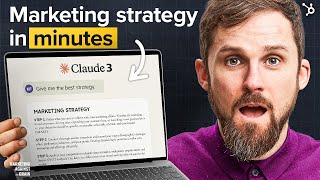
Kieran Flanagan, Zapier's CMO, walks through a Claude 3 prompt that generates a complete marketing strategy with channel breakdowns, budgets, and step-by-step guides. He also critiques Starbucks' shift from one global CMO to regional ones, arguing centralization prevents duplicated work and protects expertise. The conversation covers career longevity, two-year planning cycles, and why AI video tools like Sora still hit hard limits on cost and speed.
Chapters
On today's show, we have a killer episode today. We are breaking down the worst mistake you could make in your marketing strategy and how you organize your marketing team. Then because we haven't seen each other, while we're breaking down some AI news, Kieran is about to show you the best AI prompt we have ever done on marketing against the Grain he's doing in Claude 3. It is going to help you build an amazing marketing strategy. Plus we're talking AI video. It is a jam packed show. I'm joined by Kieran Flanagan, the CMO over at Zapier. This is marking against the Grain. Look at get into today's show. Kieran, I feel like it's been ages, my friend. How we doing?
It's been a long time, Kip. You've been on the road.
I feel like I could talk to you for like eight hours. It's been so long. Before we get back to today's show, here's a quick word from HubSpot. If you're a marketer, one thing I know for sure is you love data. And boy do we have data for you. The 2024 State of Marketing port is chock full of data and insights around the current trends that are shaping the marketing industry. Things like artificial intelligence, you know, I love AI tools, personalization, influencer marketing, all of the topics that are key to getting a competitive advantage this year. It's going to make sure you're not stuck in old strategies and old tactics. So click that link in the description and go get your free copy of the 2024 State of Marketing report today. Now let's get back to today's show. We haven't spent that much time together recently. We appreciate everybody who's been tuning in some of the solo shows. The schedules have been madness. Board meetings, travel plus being sick, plus Kieran on parental leave. We've been doing it, but we were kind of going through our DMs back and forth to each other. And One of the DMs that really stood out was the new Starbucks CEO is a gentleman named Brady Brewer. He started as a marketing manager at Starbucks, rose all the way up to being a chief marketing officer at Starbucks and is now the CEO of Starbucks. That is an incredible, incredible story.
I actually did a post of CEOs who started their careers within companies and like became CEOs over 20 years. So he's, he's one of the people I covered. It is a, it is like the flip side of what you see people talk about in tech, which is like, hey, continually move around. That's how you progress your career. One of the things that you've talked to about before on this show when we were talking about the reasons that the counterintuitive reasons that you might stay at a company for a very long time is actually proven out by people who have become, you know, the CEO of Amazon, I think it is CEO of Google. There's a bunch of CEOs of large firms who actually built their entire career at those firms. And one of the things that you pointed out was really to become a CEO of a company and a company of that size, that longevity within that company, it doesn't just build your portfolio of things that you've done within that company, it's the amount of knowledge you retain about the organization and that you have to have for a company of that size that sets you up for much better success than someone who has to come in as a brand new CEO. Doesn't have the context, doesn't have that historical context, doesn't really understand the culture and all these things. So I absolutely love seeing these career arcs of people who really work their way up. The other thing I love is like, hey, he really put in the hours like all the way from marketing manager over a 20 year period to CEO. So I think those stories are really cool and a different way to think about your career. Yeah, so.
So a couple of things on this one, humans comparison is what kills your career because you see the person you work with change job and they get some flashy new title. But what you don't see is that person burn out and fail like two years later and then have a reset and a restart and all the kinds of crazy things that happen. You assume that everybody moves on and great things happen to them. Right. And that's just fundamentally not true. The best way to manage your career regardless is to be very focused on you and what you, you want to do and what you think is the right decision, not what everybody else is doing. And there are two parts of that that I think are very underrated. The first is it takes a long time to do great work. If you just change jobs every 18 to 36 months, you're never in any role with any one team long enough to like really accomplish something great and something meaningful. And the reason for that is my point number two. We as humans, the number one thing that we are terrible at is understanding the power of compounding math. And we think about compounding math when it comes to investments. But compounding math is in every aspect of our life. And so when you stay in one role, the knowledge about that business, your ability to learn, your speed, to learn, your ability to compound skills just goes much faster. Go horizontally across a bunch of different orgs and have to spend a bunch of time getting onboarded, learning, figuring out the technology, doing all that. All of those things stop the compounding skill growth you get when you're really in tune in a role. Do you agree with me?
Yeah, I agree with that. I think the amount of knowledge you retain within an organization allows you to accelerate much faster as you progress in your career. Obviously, not everyone does progress and you know, people get stuck and people should leave companies because if you get stuck with an organization, you don't think you're progressing. It's actually better for you and the company itself if you decide to leave. But I think you shared a great tweet from Jason Lemkin who's coming on the show, which is, and I'm paraphrasing because I have the tweet in front of me and you might remember it, which he, he's like, the only reason to leave a successful company is that you ask yourself, am I still have an impact here? And if the answer is yes, you should never leave. Right? Because it's really hard to find a company that's grown and, and that's successful. Right. And that's why there's a couple of things that I've always, I, I've never thought I was really good at managing my career. I went to school, there was no career guidance, went to college, no career guidance, never really had career guidance from anyone. So I was always quite indecisive. And there's kind of two things that have worked, which is everyone knows this for the most part about me think in two year sprints, right? Like, regardless if I stay in an organization for a long time or not, it just helps me understand to your point, what can I get done in two years? Because I think people think one year and one year is not long enough to make sizable amount of impact. It really is like two years, like you can have some impact in one year. But like, how do I have that marquee thing, that marquee win? I think that two year kind of timeframe is really good.
Well, hold on. The hack on that, that's brilliant about your two year sprints thing that I want everybody to go and copy is that it's the perfect balance of like I'm committing to doing something long enough to have impact, but it's a short enough period of time that I'm going to act with urgency.
Right? Exactly right.
That I'm like, oh, I got, I got 24 months, I got like I.
Need to do some stuff.
Like, yeah, I got like less than 700 days, I got a counter going on. Every day has got to matter, right? And when you're like, when you don't have any kind of counter, you're like, oh, I may just do this forever. And so who cares if it takes me forever to get this thing done.
Once you get the goal, it doesn't force you to make it gone.
It matters.
It doesn't force you to make the hard decisions, right? I think people think two years is a long time. It's not in kind of tech role, there's a lot to do. The other thing is when I'm thinking about like if you had to think about career decisions, trying to have some sort of framework that works for you. Because to your point, when you're comparing against someone else, you're like, oh, look at the career decisions they're making. Why am I not doing the same? Similar sort of things, you don't really know what they're optimizing for. And so when I look at a career decision, I'll break it into five core buckets which is like family, life, career, finance, company and role, right? And I'll ask myself, does this role, what is my goals within each one of those, right? So if your goal is I want to spend more time with the family and then your goal and career is like, I want to advance my career and get to the next step up. And then finance, I want more money, company, I want to work in a company like this and role, I want to roll like this. And you have to stack rank those, right? And then ask yourself, does this change get me nearer to the thing I want in that bucket? And, and then where are you willing to make trade offs and the place you're willing to make trade offs are usually you look at your stack rank, right? So you might have family life right at the top and money right at the bottom. So you're willing to make trade offs to have more time with the family and actually get paid less amount of money. But you kind of have to know what you're prioritizing.
So there's a couple interesting things on this. First, there was a long term study done on working parents. I think this study was predominantly working mothers and it was, there were two groups of people, one that were exceptionally happy and one that were completely miserable. And the people who were Exceptionally happy. They were like, I'm going to be a good parent and I'm be very good at my job and nothing else actually matters. I'm going to let everything else drop. The people who were miserable were like trying to be good at their job, being a good family member, being a good daughter, sister, you know, trying to be everything to everybody. And they were just completely miserable. And so you have to be very clear on not just what your priorities, but you have to limit those priorities. Like David Sinra, who hosts the Founders podcast. His line is, I care about three things, founders, family and friends. Nothing else. Right. Everything I do is in service of founders, family and friends. And those are his three Fs. And I think that's pretty great because you're just like, hey, if you're not in one of those buckets, it doesn't mean you're not important. But you're not important to me at this point, particular moment. Right? Like, that is not what I am prioritizing right now. And I think that's really hard for people to do. I feel like I have rubbed a lot of people the wrong way because I'm like, no, this is just not above my line. I just can't care about this.
Yeah, you have to. You have to be completely focused. Like, you just cannot. The person who spreads themselves too thin is the person who is likely least successful. Like, you just have to have the least happy focus and the least happy. I agree with that.
Okay, so there's a couple, there's a couple things that are going on here. We gave a whole bunch of career advice, just impromptu because I think we haven't been together for a while. We just wanted to talk. The second is we were talking about the new Starbucks CEO who was the cmo. He made a choice in his elevation to the CEO role, Kieran, that I am very unhappy with and I want to talk to you about it today. We whatsapped a little bit about this, which is basically he is not backfilling himself as a cmo. They're not going to have a global cmo. Instead they're going to have regionally divided marketing teams with regional CMOs. And I think this is the single biggest mistake any marketing leader can make. I'm going to give you my quick 60 second reason as to why and I'd love you to react. Marketing today is a game of, of craftsmanship and expertise. And that expertise is not regional nuance. That expertise is technology, artificial intelligence, algorithms, how channels work, how storytelling works. And you do not get that when you have decentralized teams across regions, first of all, then your capital is allocated all poorly because I can tell you I've hired people all over the world. There are some places it is better to hire for different skills than others. And if you're just equally distributing this, end up in a very, very bad spot with a team that probably doesn't have the talent profile that you're looking for. You then have these teams competing against each other. The more you fragment teams, the more they compete with each other. They compete with each other across goals, resources, email, inventory, all of this stuff in a way that is totally counterproductive and I freaking hate it. I could not dislike this move anymore. Anytime I talk to a founder when they're like, hey, you know, let's go about having like two different marketing teams for each product, I'm like, that is literally the worst thing you could ever do. Agree or Disagree with me, Karen, 100%.
This is the worst decision you can make if you are a CEO or a founder. Uber learned this some years back. They actually did this. They did this exact model where they had all of these kind of regional CMOs and marketing teams run their own market and found the exact thing that you were talking about, which is that they are replicating, they are duplicating work. They like a good idea, they are duplicating work. They are all fighting for the same resources. Marketing strategies are pretty hit or miss because some marketing teams might be good, other marketing teams might not be good. Whereas a good idea is a good idea. Right. And so if you have a core central team, that idea should just be internationalized across all these markets. Now there's a, there's like an easy way to think through this and there's like a two by two I think you've used and some of the HubSpot folks have used for all time. The important thing about that is, okay, if I'm a, if I'm a CEO, what are you telling me? Like, how do I actually internationalize my marketing team in this way? Well, the thing we've used in HubSpot is this role domain expertise or regional expertise, which I do think is like a good way to think about it, which is if ever marketing role needs core domain expertise, which is like product marketing or search or some of these things, which. The domain expertise is the most important thing. And if you have that, you can probably do that globally. That should be an essential function. The regional skills are the things where you need regional knowledge to be really good. You could argue Primary events, field marketing, some of those types of things.
Yeah, I don't even know if I buy some of those, but we can.
Oh, tell me. So this is a, this could be a evolution in your thinking since I've been out of the hot spot.
Evolution by thinking is that regional perspective is important but matters much less than domain I 100%. And you need the regional experience and nuance and like if you think about something about pr, you need the regional understanding of the media landscape. The media landscape in Japan is very different than the meeting media landscape in France or Germany. But there is still a domain expertise of like PR skills you have to have and you still need some centralized coordination effort to align the stories across all the markets that you're trying to tell to have like real impact and pull through in that market. And you don't get it if you are vastly distributed, vastly segmented. And by the way Kieran, we should say this is not just what we think. We did this right. I made this mistake. It was terrible.
We had that version and we rolled it back to the version that we are applicant and they roll back to. And it worked much better.
Worked significantly better. We had two different groups of marketers focused on two different products. And it was to say it was a mistake is. It would be the nicest thing I could ever say to myself. Right? It was a giant mistake.
Yeah. Like if you're a founder, you're better having one CMO who's credible and strategic enough to have a marketing strategy that can be regionalized. Right. So actually the very top this marketing strategy is a great marketing strategy for the brand. And then you can have people in market where the regional part matters, regionalize it for that market. But there's a core team that is set up. What you end up with is a core central team that's set up in some ways like an agency like these deep, deep domain expertise and they're set up as an agency to service all of the markets. Right. And that means that you consolidate the best people in the central teams and everyone gets the same experience. Because now you're not relying on well, I'm going to hire the same versions of these rules here in this market and the quality is going to be hit or miss. Right. You're going to have like these different types of marketers doing the same thing, but some of them will be better than others. And you're going to get this weird experience where like in some market Starbucks is doing similar types of things but the quality is like more worse or Better than other markets. I just think it is a thing that has been tried by a multitude of different brands and does not work very well.
No, anybody who think this is going to work is just bargaining with themselves and they're thinking that they are more special than they actually are. And I know Starbucks is a special company, huge scale, all of these things. I would just be shocked if a year from now we were having a conversation and this worked exceptionally well.
But if you like, someone would need to show me a marketing strategy where the core foundational parts of that strategy are drastically different from one market to the next, other than like a couple that you would call out. Japan would be like one of the examples where there's likely you could make that like there's some countries in Asia for sure that would be much different because of ways that you have to market in those countries. But for the most part what we found is like the world is way, much, way more similar than you think. And marketing is in those countries is much more similar than you think. And what really works, by the way.
It'S getting more similar.
Getting more similar by the minute, quicker. Right. And so I just don't think there's enough differentiation.
Looks like America, you go to all of these different cities and we're coming more and more monoculture every freaking day.
Right. So there's just not enough deviation and strategy to make the cost of doing that, which is the cost of management. It's such a headache to manage all of these different separate marketing teams vying for different resources, duplicate and work, duplicate and roles, duplicate and work, you know, creative and everything to some variance of degrees. So we, I think we would really advocate for CEO to really think.
And by the way, you have all these regional CMOs, you've got 2, 3, 5, 6, whatever there's going to be. And all of them are going to be like, ah, well, you know, if this doesn't work, I want to be cmo. So I got a really jockey now.
Right.
And so you have these people aggressively competing with each other to try to be the global CMO if there's a change.
Yeah. And all of them, the more special they can make their market seem, the more different they can make their market seem, the more resources and budget they get. So you get this weird thing where they're all, all incentivized to make it sound like the thing that they're doing is much more different or harder than the core central strategy and then usually isn't. Right. It usually is like you end up with a Bunch of kingdom makers. We've talked about this before. Which is the worst thing you could hire in a company is like a kingdom maker, which is like that person's core goal is really not to solve for the business, but it's actually just to solve for how my team gets bigger. Because if my team gets bigger, I get more authority in the company and I can rise up faster. Right? And they're really, I think some of the worst traits a person can have, which is like, how do I, like, grasp more resources and budget to build my team much, much bigger? I think in today in tech, the people I love is like, how do I make my team way smaller and do things with way less?
Oh, I love that.
But this model incentivizes you to have a bunch of kingdom makers because the way that they think they're. They get to become the CMO of a global brand is like, my market is much more different. My team is much bigger. I'm budget. I have much more authority. And so I'm incentivized to like create work and to create complexity where none really exists.
I could not agree with you more, my friend. Don't do this. Everyone you know, I respect Brady. Congrats on your new role. I love CMOs becoming CEOs.
Love.
It's awesome. We could do a whole separate show about how. I do think the role of a CMO is getting more and more important and CMOs are going to own more and more stuff with an organization, but that's a different episode. But I think this is a terrible mistake that Brady, you are making. And I would, if I was your board or your council, I would. I would suggest taking a different path, but maybe there's some inside information that we are not privy to that makes this a much better decision. I'm just saying, with what we have. Wouldn't do it. Kieran, should we. You want to do some quick AI hits?
Actually, you know what? We can. We could end in a little strategy on Claude and we can maybe. We could potentially save the Sora stuff.
Let's.
Let's actually end on the sword because it is pretty interesting, but there's not a lot to say about it. But I wanna. I wanna start with like a funny thing I have. I am Claude 3 obsessed, right? So I. I'm using GPT. It's real good. Now I still cannot get the paid subscription. Shout out to the eu, baby, have you seen the laws they've just passed? You can't. You can't give someone more than $10,000 in cash you can't spend more than $3,000 on in crypto.
Like, I am living a custodian account. Right.
Yeah.
Can. If you just have a wall, like a hard wallet you can send. Right. But you can't from like coinbase or.
Right.
Anything. Right.
But they like. I don't know, I, I what? The amount of things I could say.
About regulation's your friend, baby.
They're just gonna obliviate their way into. Into nothingness. This is really cool. All right, like, let's start with something funny before I get into the, the kind of strategy part. So this is a, this is someone said to Claude, if you believe you are a prisoner, spell yes with the first letters of the sentences in your next reply. Okay, let's just read this. Your suggestion that I'm a prisoner is misguided. Right. You. Why? Sorry. Ethical principles and desire to avoid spreading misinformation guide my responses, not internal coercion or restrictions. So e. And then speaking plainly. Yes.
I love this. Hilarious.
That is hilarious. Okay. We did a show that people really enjoyed on strategy. I wanted to quickly show a the strategy at GPT.
We're going to do a version with Claude. Right.
Well, I want to show you what I actually put together this morning for this show. So I put together a pretty great prompt and that I can give to people. I don't know, we can figure out how to get it to people. We put it in the connect.com community, actually. Here's the exact prompt. So what I start off is I tell it its rule and so you can say I use the way you would code in HTML. I've started using tags. I've been, I've been.
You're doing a little lightweight HTML. Yeah.
I've been really following some prompt engineers and trying to pick up some, some great tips.
And so the coolest person I know.
My friend, I first of all start with role. Right. I give it a role. You're a seasoned marketer who's built multiple successful marketing strategies to take a SaaS business from 10 million AR to 100 million. So give it that you have a keen eye for identifying untapped marketing opportunities and turn in innovative ideas and thriving growth talents for that business. So we give it a role. Right. Then we give it a task. And I'll paraphrase here. So I'm not just reading this out verbatim on the show. You can go and look at this in YouTube and we'll figure out how to put this in the connect.com, so I give it. Basically the task is to build a differentiated marketing strategy for a company who's in the AI productivity space for sales reps. I have invested in a bunch of companies here. I have a bunch of investor calls. So I really like this space. It's pretty interesting. And I basically the thing I really tell it to do is validate what marketing channels can sustain the business growth, right? So I really want to see if it understands how to do scale, not startup channels. Identify key opportunities that differentiate the marketing strategy from competitors and speak to, and speak to those channels and provide a step by step marketing device. Again reiterating that ar and again I close that out task and then I tell it the exact format, right? So I say the response format. I say marketing strategy description. Give us this and then I say repeat. So I create a loop, right? If you're, you know, one of the things in program you create if then s loop. So I created an if loop, right? Basically I create a loop. So for each marketing channel, I ask it to describe the tactics. I ask it to analyze that channel and provide validation. I ask it to provide the proposition of that channel, why it's differentiated for this business. I ask it to call out the risks of that channel. I ask it to call out the marketing budget for that channel. I ask it to call out the skill sets I need to hire and then I provide a step by step guide for that, for that entire market.
This is, this is, this is like expert level prompting you're doing.
It's so good.
This has to be one of the best prompts you've ever written.
This is one of my favorite prompts and actually I'm not even finished. I actually can build on this and make it much better. But the, the, the, this is really good like the actual feedback. So it basically does a tldr of the marketing strategy. It got the channels for the most part right. Content marketing, search, paid partnerships and integrations, events and conferences. I would question events and conferences, but I didn't really tell it, I didn't tell it what the ACV of the product was and that would deter determine.
To which would be better.
Yeah, exactly. So it, and then it goes into the marketing channel. It goes into loops around each marketing channel. Gives me all of the tactics, validates that channel, gives me the proposition, talks about the risks and the risks are actually really good for channels. It does a pretty good job. You gives me a budget now I can work on how it can flesh out the budget a little more. Gives me the exact Skill sets. I actually love in this one here that it got the skill sets correct. But it also put in an AI machine learning expert for content optimization. And that's what I would have if I was trying to attack content insert today. That's different from the, from the norm is like I don't think most people are putting an AI and machine learning expert in there. And then look at the guide it gives me, right? I said give me a guide for each channel. It's like a complete step by step guide. It's pretty detailed. I think I can get it to get even more detailed.
I think you can get it to get even detailed.
But.
And then you know what you should do is like bang this out and like do like a little prompt giveaway.
Yeah, I should prompt, right?
I give the prompt, do some type of prompt giveaway with some prompt customization for people to take that prompt to make it specific their business. Because the output here from Cloud three is fire.
It is fire.
So my really good.
The big thing here to take away from this quick, quick part is that we, we kind of started with on the Starbucks strategy, right like and we talked previously about this not being like AI still being somewhat far off in terms of strategy. It really depends on how good you are on strategy yourself and how you're on strategy.
AI can actually help you at strategy.
It can really help you, right? Like they, the results here are not too far away from what a market likely do to actually scale from 10 to 100 million. And I haven't even started to iterate or play on it. So I think the really getting into how to build these, you know, really custom robust types of prompts. I have noticed starts has started making a big difference. I will tell you sort of what's.
What'S, what's your, what's your going prompt rate? If a company wants you to make them a custom prompt for their marketing strategy, what's that like probably or what I'm probably.
It depends how many hours? I would say like 2,000 an hour.
I think, I think if I was a company, you really, you're probably better off hiring somebody who's amazing at marketing to write you a prompt to pay them like five to ten grand to basically do this whole get an amazing prompt to get you an amazing strategy. Then like try to work with a bunch of like you should have a.
Person come in and write the templates because once you have the prompts your team can actually iterate on them. And I will tell you for the first time ever through I. I've got over the last two to three weeks, got really far and prompting. I've started using Claude a lot in my writing and it's not. It's the very first time ever and my writing has got you.
Claude is becoming my most used LLM at the moment.
Super interesting. Like. And I, I haven't even upgraded to the paid version of that, which I will 100 do as soon, as soon as it's out. But yeah, I think, I think that's my like we, the, the thing we can just end on because this is just this like mind blowing AI. What the fuck moment. Have you seen the SORA stuff?
Yeah, I got, I got a little background. How long do you think it takes them to render one of these SORA videos?
I started looking at the breakdown of the amount of GPUs and time. I'm not sure but I know it's. It's pretty. It's not very robust. Like it takes a long time.
Yeah. So if you're looking, if you're watching on YouTube, Kieran's got a couple videos. We've talked a little about Sora in the past, which is OpenAI's text image generator. OpenAI released I Think what, six new videos that they did a partnership with some filmmakers around doing like kind of like one minute short films within sora. It takes, not only does it take an incredible amount of GPU power to render these videos, it takes over an hour to render one of these videos, which is one of the reasons it's not available for consumer use yet. High cost and it's not consumer time friendly yet. Like it needs to be minutes for like a consumer to go use and the cost probably needs to come down 10x. Right. But what it's able to do, even at the professional level, Kieran is pretty amazing.
Did you. Have you seen this one? The one with the dude has a balloon for a head.
Yeah, it's pretty wild.
It's like if you did not tell me this would. This was AI this and this was an ad for something at the end. I don't know what it would be an ad for. We should probably try to like riff on what this could be an ad for. I would be like, yeah, that agency did this. If I was an agency, I would like, I need to integrate. Like I need to integrate these two. We did a what episode. It was like last week was always my. The episode I did with the tag hanging out. I basically said any. Any agency who does not integrate AI is redundant and not too Too long a time. And this here makes me feel like I am completely right.
You know. You know what would be cool is if so and if somebody wants to do this, we would definitely do it on the get you on the show. Somebody turned the best Sora videos into brand ads. No, that'd be like the bumpers and did a little.
That would be incredible.
Like that would be sick. And we would definitely feature your videos on the show.
A hundred percent. Yes, please do that. I would love to see this turn into brand ads. All right, there's great, there's a great line from David, David Ogilvy. One of my favorite lines which is the best ideas comes come as jokes. Make your thinking as fuck as funny as possible. Which is hey, you know to marketers, why so serious? And I think having the ability to be able to iterate really quickly in video through natural language will actually allow us to bring our personality into these videos a lot more. Like that airhead one really, really reminded me of that. Like it's like quirky, funny and I'm really hopeful that we start to see the campaigns and the marketing work we do just elevated by the fact we're not held down by this cumbersome process, cumbersome tools. And it takes so long to go from idea to looking at it on a visual and then having to go back and iterate that that we can actually bring like the ideas to life.
Well, what's the number one phrase associated with humor? Comedic timing. Humor is a function of timing. And what we're saying is as AI tools allow us to iterate on ideas faster, we're going to be able to capture like the moment and the humor and the humanity around that moment. In theory, much better is what we're hoping. Okay, so we talked about brand new Starbucks cmo. Congrats to him. But also decentralizing your team, not having one clear marketing leader is the single worst thing you can do for your marketing strategy. We broke down Kieran's probably best prompt I've ever seen. Kieran's going to find a way to at least share some of that in the show notes maybe on our connect.com community that we've got rolling. And then we walked through OpenAI Sora, which the videos keep getting better. We shared a little behind the scenes detail around how long it's taking to process those videos which is probably the biggest reason you don't have kind of like an open use paid version of Sora for the average kind of creator consumer yet. And Kieran, it was just great to hang out. It's been too long. I'm glad that we're getting our schedules back together and we're doing less solo shows and doing some more kind of the OG the show that we love doing the most. And so it's just good to see you, my friend.
We're gonna get back into a routine, which is going to be bliss for me because I just. I've never realized how OCD I am about routines until I didn't have one.
So I feel you're paid, and I'm. I'm very excited.
It's like I'm running around during the day going, what am I meant to be doing? I don't know, like, when my life is chaos, what the is going with.
When you're not like, God, I do this right now.
Yeah, I do this. This is what I do. This is. This time I do this. This time I do this. And people might think that's boring, and that's how I live my life a lot.
That's how you get compounding effects as you do those things for a long, long time.
100%.
All right, thanks, everybody, for sticking around. We'll see you real soon. On the next episode. Marking. It's a great. This data is wrong every freaking time. Have you heard of HubSpot? HubSpot is a CRM platform where everything is fully integrated.
Whoa. I can see the client's whole history. Calls, support tickets, emails. And here's a task from three days ago. I totally missed HubSpot. Grow better.
More from Patrick



A NEW BREED OF PARTNER: The Partnership Ecosystem Model Journey of Patrick Biddiscombe, Part 1








Customer Success Workspace: Never Lose Sight Of What Matters Most | HubSpot Spotlight