I Used AI To Start A Billion Dollar Business Idea
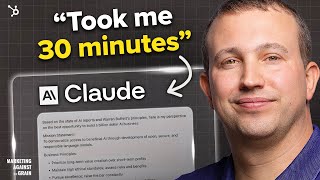
Kip Bodnar and Kieran Flanagan use Claude to build a startup playbook in under an hour, feeding it a Warren Buffett Twitter thread, Nike principles, and an AI report. They generate a mission statement, business strategy for an LLM company, go-to-market ideas, and a custom pitch for why Buffett might invest.
Chapters
On today's episode, we are going to use Claude AI to build a billion dollar business idea. We are going to create the principles, the ideal customer profile, the actual business.
Idea itself, and stick around to the very end because we're going to show you why Warren Buffett would even invest in our business. I'm your co host, Kip Bodnar, Chief marketing officer at hubsp. I'm joined by my co host, Kieran Flanagan, who's the chief marketing officer over at Zapier. And this is Marketing. It's the grain, your show for marketing minded people everywhere. Let's get into today's show. All right, Kieran, I think some of our best shows come when we've just been like off playing with AI and something dawns on us and we come and we bring it and we show it to everybody and we kind of talk about it and riff on it together. And one of the ideas that I had that we're going to talk about today is how you actually use AI to build a business. Right?
This is why this episode is going to be really cool for listeners because you no longer just have to like read and consume the content. You can now take this content, it is now data. And I can take that and use it with AI to do things like this, right? You're going to use it to craft a business idea. You're going to use it to look at an ideal customer profile for that business idea. You're going to take a Twitter thread, which we usually just ignore and say, hey, we don't want any more Twitter threads, right? But you turn it into data for an AI to contextualize that AI to solve a problem. Because you give the AI the data, which is Warren Buffett lessons, like these great 45 lessons from Warren Buffett. And then you say, hey, like, why would Warren Buffett invest in my idea? Like, why is this a good idea for Warren Buffett? And I think it's what really is cool is like we're going to give our listeners throughout the episode a multitude of different ways that they can use AI today.
Okay, Kieran, I have been feeling guilty and I've been feeling guilty because you keep whatsapping me and talking to me about the new State of AI report. So it's this really awesome AI report. It's like 165 slides. It's long. And I was like, it's long. When do I have time to read all this? And then I was like, wait, I don't have to read it. I can use AI to Help me read it. I didn't stop there, Kieran. I wanted to share what I've been playing with with Claude and the state of AI report the last couple days and I want to get your feedback on it. And I was hoping that for today's show we could kind of riff on this and see if we could end up with a remarkable AI startup and business pitch strategy kind of principles. How's that sound?
I like, I like it.
I.
First of all, I like that I get to look at Claude because I don't have.
This is just me rubbing it in your face.
The state of AI report. The, you know the solution is in the name, right? Don't bother reading that thing, just AI to read itself to you. And I think this is an incredible exercise to go through, like how quickly you can go from. First of all, what you're going to show is like how you use data with AI to contextualize it to solve a problem. I think that what we want to show our listeners is how you actually go all the way through from having this kind of great set of data and information to actually build and fully fledge. What we want to do is like a business strategy.
So rubbing it a little bit in Kieran's face, I'm going to bring up Claude here and I'm going to show some of the work I've been doing, Kieran, and I'm hoping that you will help me iterate on it. So I was on Twitter the other day and part of using AI is like the context and information you feed the AI. And I saw this really great Twitter thread from the founders podcast about 45 lessons from Warren Buffett. So Kieran, my very first step I did here is I took all of the content, all those 45 lessons from Warren Buffett and I fed it to Claude, fed it to the AI.
Someone's actually getting use out of these Twitter threads. This is actually, this has sparked a good idea.
And so I put everything from this Warren Buffett Twitter thread into clock and I just said like, hey, here's, here's, here's advice and perspective from Warren Buffett. And then notice I didn't ask it to do anything and it still gave me all the takeaways and what it thought, which is I thought interesting, right? Because I was just trying to give it information. I didn't want anything back and it feels compelled to give me something back. Eager to please.
I always let it know that whenever I'm trying to work with it now I tell it we're Going to do it in steps and do not move on to the.
Oh, I like that. I gotta, I got better at doing this. Then Kieran uploaded one of your and I's favorite documents which is the Nike business principles doc. It's like basically their 10 principles that they established when they started Nike. Some of my favorites, right? Like our businesses change, we're on offense all of the time. Your job isn't done until the job is done right. It won't be pretty. Like I love these, right? Like I love the brutal honesty in this.
Just what's your favorite one? And then I want to give you one of the strange ones. My favorite one I probably very similar. It's like we're on offense.
We're on offense all the time is my favorite. But like I love the way they ended this with if we do things right, we'll make money damn near automatic. Like just that the wording of make money damn near automatic.
What I love about that is it's yes, it's honest, right? Because it's not wrapped up in like culture or the kind of greater good. So we're, we're, we're here to make. This is what we're here to do, right? We're here, we're a business. We're here to make money, right? What about the weird one, right? I love all of these. I do love offense all the time. I think there's a lot of people playing defense right now, rightly so. Because we're in a climate where it kind of forces you to think about defense. A lot of times I do think you should really think about the Nike. Like when everyone's playing defense, there should be some offense you're playing. That's the only way you're going to win within a market. But the random one and this is like live off the land.
But. But what's interesting here is that there's a lot of parallel ideas from great thinkers, right? Like Warren Buffett has a piece of advice that wasn't in what I provided, right? Like probably the most famous Warren Buffett quote of all time is to be fearful when others are greedy and to be greedy when others are fearful. And that is the same thing as we're on offense all the time versus defense, right? Like they're very similar ideas. They're not exactly the same, but they're both saying like there are times where you have to be very aggressive, right?
Amazon have one very similar which is think big, thinking small. It's a self fulfilling prophecy. Which means like if you are Playing defense, you will get defensive outcomes. And for some businesses right now maybe that's fine. Right? Try to keep the market share, not lose the market share. You certainly will not gain the market share.
I would also say for everybody, anybody listening to the audio version, this is going to be another episode where you might want to check it out on YouTube because I'm showing everything I did in Claude. If you want the detail, we're going to make it awesome for audio but check it out on YouTube and if you're watching on YouTube you love the show, please hit like please hit subscribe. We'd really appreciate it. Okay, so I'm now kind of briefing the AI with, with some Warren Buffett knowledge with some Nike principles, which I love. It still summarizes the principles because I haven't done that. The step prompts in the way that I need to. Then Kieran, what I did and you can see my all my prompt here. I had to break up the state of AI report because you can't have PDFs more than 10 megabytes per PDF and you can only have five PDFs in cloud. So there is some space and file limits there. And I attached these different bits of the state of AI report and then I said what you know from Warren Buffett select the best business opportunity in artificial intelligence market right now to build a company around. Please write a business detailed strategy. I did this in like five minutes. So my, my writing is atrocious in this. Everybody can make fun of me. Yeah.
Like my briefs are not can speak so much. Like when I'm writing to you, I know work. I'm asking them for something. My brief is really good. I'm really specific. I must remember that when I'm working with AI it's the same thing.
Totally right.
The better you can clarify your train of thought.
So I said additionally, write a mission statement and outline the business principles in a sol reform and way the Nike principles previously provided. Okay. And so this is what it did. It says hey, based on the AI reports and Warren Buffett's principles, here's my perspective on the opportunity to build a billion dollar AI business mission statement to democratize through beneficial AI through development of open, secure and responsible language models. So what's interesting is it took the entire state of AI report and it realized that there are a few things that are flaws in the AI market right now. It, it failed open source as a huge idea, Kieran, which is something you've been pounding on the show for a while.
Who's invested in Open source.
Kieran's like, if you're doing open source AI, come over.
Theses about investing in AI. I've been investing in open source AI.
Companies and then it has security and then it has like trust and responsibility. Those are three big trends in the AI market. And it's saying like, hey, we think we need to build a business around this. And it provided me what I thought was like an interesting summary of the opportunity. The recent explosion in capabilities of large language models points to a massive opportunity. Models like GPT4 demonstrate the potential for LLMs to transform industries. However, access is currently limited to a few, few large tech players. There is room in the ecosystem for a company to develop LLMs with a focus on openness, safety and responsible deployment. That's pretty good, man. That's pretty good.
That's basically making it easy for companies to adopt open source models in the same way they adopt SaaS. So it's like managed for you, secure, reliable, updated. When it needs to be updated, that business will exist. I have invested in a business that is trying to do just that. So I actually think that is a legitimately like pretty good space to get in. So it's obviously doing a great job of like looking at the data or looking at the information and, and, and finding a pocket of, you know, of potential.
We're doing this for like as an example for like a business idea for a business you start. But you could do the same thing for investing. You could also do this if you were just looking for a job, right? You're like, hey, I want a job in AI. You know, we'll use that for this example. Where should I think about like where the, where are the biggest opportunities? And you could go work for a company doing this. Right? There's a lot of different ways to get some like very unique insight here.
Let me give you a good version of this as well that I think that we, I think we're going to do an entire episode on. I actually wanted to build a deck, a sales deck using AI and I'm going to do an entire show of this because it's actually a pretty good show. But the reason I'm saying this is because one of the things you could do that's very similar to what you're doing is actually get a entire like PDF spread of all of your competitors and other companies within the market and upload it, upload it with principles, same, same sort of thing with the principles and ask how can I pitch my company in a differentiated way? Right? And you can actually Iterate on the. You can iterate with the AI on. Okay, let's define our ideal customer profile. Let's define their current problems. Let's define how we can solve those problems in a differentiated way. Explain to me why this is differentiated from all of the competitors. So that's another really good place where you can actually use what you're doing to make it really practical. Practical and actionable for you. When you see my iteration with the AI and where I got to, it's pretty good at creating like a sales narrative.
And by the way, I've been listening and reading a bunch of Ogilvy stuff and it's like what you can do is do that like sales narrative and then you can be like, cool, I want a version like that's like written in the style of David Ogilvy, right? Which is like pretty wild. That, that is like easy, impossible. I thought this was interesting, but I wasn't quite happy with it. And so I was like, can you please provide some more a more specific and detailed business strategy and add the business principles for this new business? Because remember I asked it to write principles like Nike and it didn't do it well. It had like, it had these kind of basic business principles but they weren't very Nike esque. Right. And so here I really like how you can iterate with AI and iterate so quickly with it. Right? And so it's like here's a more detailed business strategy for building an open responsible LLM company. And so it talks about the type of team you need to build, which I thought was really, really good. And like influential board advisors. Like it got a really good level of detail. Like these are all things I would do if I was building this business. It talks about the technology development process, trained model starting at 10 billion parameters, scaling up responsibly to 100 billion plus as techniques mature. Like they're even giving you parameters for your LLM company, which is pretty wild to me.
Right? I would say that again, it's pretty good at getting the, the kind of standard things correct. Like this is how I would go about setting up the company. I don't know if you can query it now based on the pin that data. I think what would be really interesting is you said to it, what is the ideal customer profile that we're selling into? What problem are we solving and how do we, how do you propose we solve that in a way where we can pitch that really easily to our customer profile? Where, where I find it, it gets really good is when you Try to really like focus it, right, like just really focus it on. Okay, like step one is let's take all of that information and define a problem to be solved and well, who is the customer profile and what is the problem that they have? And then you say okay, like well what is the kind of two liner in terms of how are we going to solve that problem? And then you get to get into like well what is the company and what is the pitch? Yeah, you should ask it. Who is the ideal customer profile? I wonder if it will pick up on like who actually would buy this large language model for companies? Because I actually don't think that's that clear. Anyway, it's probably it.
I also think what it's better at go to market if you go back. If you're a fan of the show, go back and haven't watched, go back. Watch our episode of Chris Miller where we dive all into kind of product led growth using AI. And Kieran does an awesome job working with ChatGPT to build like a free tool strategy. It's, it's awesome. But AI is very good at go to market, good at marketing, good at sales. And so I think this growth strategy is, is interesting. I think ChatGPT is better at marketing than Claude. Hot take, just so we know. But I think if we iterated on this with Claude could be pretty good.
Here's another quick. Can I give you another quick hack on the good market? I was actually thinking through this, we might actually do this as well. So there's a bunch of newsletters. Like newsletters were very popular business. Like one of the most popular forms of newsletters is like curating things together, right? Like just curate curating strategies, creating news, creating whatever it may be. So a bunch of go to market newsletters sprung up and they actually all do something similar which is they curate companies go to market strategies. So there's some that will curate all the company's go to market strategies to get to a thousand customers. There's some that curate all of the marketing strategies that have helped to propel customers and market customers. There's some that have, have curated sales strategies again for really well known customers. Now one of the things I'm going to do because they. What do they all have? They have archives, right? And those archives are usually in a standard data format where it's RSS or something like that. You can go give that RSS to one of the AI models and then say hey, like tell me the commonalities between these strategies. Talk to me about like what are some of the most popular strategies? How can I have a company of my size? What ones were applicable to me? So you should for the go to market again, where AI gets really, really good is when you can find data where you can contextualize that to the problem you're trying to solve. And so if you're trying to do something for go to market, go find a bunch of these newsletters, get their feed and feed it into the AI and then quiz the AI about those go to market strategies. And then you can actually have a database of thousands of different like marketing, sales and growth strategies that you can just use AI to query and get really great ideas.
It's basically like having an expert council of marketing leaders in your pocket, right?
It's basically. Yeah, exactly.
The key point that Kieran's making here is that AI is awesome at pattern matching and pattern identification and finding commonalities and we often spend so much time looking for the best practices that we don't understand the shared reasons why behind them. And AI can really help us get there, which I think is pretty, pretty awesome.
The big thing I would try to get to for people who really want to use AI in a, in a way that's really actionable is to get it away from the best practices. AI was really, when we, when it first came out, ChatGPT was like, wow, this is really good. But when you kind of used it for a while, it is just giving you the average best practices of the Internet, which is still good, right? But where it gets really, really, really interesting is where you can start to what you're doing is like find this unique little set of data and then craft really specific asks around that data to inform it of the answer. And I think that's where the true value is going to be in AI going forward.
You are, you are a take machine today.
One point I want to make in that just so, just. Oh yeah, Grammarly have a feature coming out that I think you might have seen that I tweeted about this. But it's a really good example of this where AI in the future is going to be one to one, right? So what do I mean by that? Grammarly have a feature coming out where it is going to train itself on your writing? Because they are, they have that data. I am writing in Grammarly all the time. Grammar and spelling is atrocious and so I write in Grammarly. I put everything in there first and then I actually put it wherever it needs to be. So Grammarly can train itself to write like Me. And so when it's suggested in the future, that's how you actually make content good and personalized towards me. It's trained on actually what I write. This is to me the future of every single AI interaction where it's trained on a unique data set for you and create something that is specific in your tone and your voice and however you want to actually create that stuff.
I'm excited to play with the Grammarly tool and all and I think any AI tool that is focused on kind of the individual use cases, especially on the consumer side, is going to be really cool.
Exactly.
Back to, back to what I was doing with Claude Karen. It's still trying to take a hack at these business principles but they're like, okay, right? It's got like, hey, the principles of the business are going to be beneficial, AI, responsible LLM, transparent AI. It's like this is not, this is okay. But it's not, it's not great. And I said, please write the, write the principle shorter and more like Nike. Right. And then it got to some pretty good ones. Openness unleashes potential responsibility. Above all, transparency builds trust. Inclusivity powers innovation, evidence guides decisions. Safety never stops policy partnership prospers. That's actually pretty interesting. Good alliteration from it.
That's AI trying to get regulation capture itself.
Regulatory capture is the game and I want in on it.
Regulated capture, I want in on this progress mindset.
Always democratize access, which is the open source and open unleashes. Like those are pretty good. Like if we were starting this business, like a few more revs and you would have some pretty meaningful and very articulate like principles that you could share with your early founding team. Right.
I think the first iteration, I think they're good. They're a little bit like I've gone to a conference.
Yeah, Look, I think if you and I banged and did like five to eight more revs, they'd be very good.
Yeah, yeah, I think, I think again it's iteration and then contextualizing for you. It is a great co writing partner. It is not a great writer.
I came back to the question you asked a little earlier in the show, which is like, who's the ideal customer for this business? What's the core problem we're solving? Can AI articulate this? Let's see what it says. For an open and responsible LLM company, the ideal customer would be developers and companies building AI applications, academic researchers, startups and entrepreneurs, government agencies and nonprofit ngos. The core problems we are trying to solve Limited access to advanced AI capabilities outside of big tech firms. Responsible development and deployment of AI applications. Enabling innovation for social benefit and the public good. Safe and ethical integration of AI across the industries and society. Not bad.
I think the first one is the best one. There are other three are like it's a little, yeah, it's a little like be responsible.
Who wants that be safe?
Don't let, don't let me run wild. AI regulating itself, Give me some restrictions. The first one is true, but which is yeah like that there's a bunch of pent up demand for companies who want to be able to use AI models in some way and they do have access to like the, you know, the core big models. But there's a lot of these open source models that are much cheaper to run, that are much more specific to their use cases. But it's really hard for the average company to figure out like how do I use these? I don't want to have to do a ton of work on the back end to like upkeep this, maintain this, integrate this. So there is like a real business problem to be solved and self managed or managed for you. Open source integration models across your. Totally agree.
But again like this is an entire business strategy and we could just keep iterating on this, right? We could say hey, we just only care about that first problem. Give me, give, give me a ton more detail about it, right? You can say like hey, the only principle I'm interested in is that. Or the only problem I'm interested in solving is that first one. Like let's go deeper, right?
Yeah, yeah, blow out the first one. That's what I would say to it. Hey, that first one makes a lot of sense. Like tell me, tell me a little bit more about this problem. How does this show up for customers? How do customers experience this today? What are the benefits of solving?
Care about the first problem, go deeper and tell how it shows up for customers, right? And so let's see what it says. But it's like this is the iteration that like we're just doing on a show, right? Like imagine if you are just like deeply obsessed and focused on something iterating. Like you can make so much progress in a day. Like Kieran. I recently listened to the founder's podcast on James Dyson and what was crazy. Do you know how many prototypes James Dyson had for the Dyson vacuum cleaner?
It's like a thousand or something.
No, it's over 5,000. He was 31 when he made his first prototype and he was 45 when the first Dyson production vacuum came off the line. Took him 14 years of Edisonian kind of test and iterate. The crazy thing now with AI is you can just iterate so much faster. Those cycles of iteration. Yes, not as much for manufacturing yet, but I think we will get there. But for any like software or service based business, man, can you iterate so, so much faster?
Yeah, this is like the faster you can actually iterate get feedback loops, the faster you solve problems. Like Google. One of Google's principles is chip and iterate.
Right.
And I think that that ship iterate feedback loop is like the best way to solve problems, get better at things. AI just like so fast extrapolates that so fast. Right. And it just, it just makes that so fast anytime. Again, I worked with it yesterday for about two hours to create the sales deck. But the amount of times I could just iterate course correct it and actually come out with something very contextual for a certain audience. You'd have like multiple teams doing handovers, working for days to come up with like some sort of sales narrative and some one person, if you feed it the right information, can get like a relatively good deck. Now the visuals are horrific. I'll show you them when we go through the show.
I can't wait to do the show. All right, before we close out today's show, Kieran, it doubled down here on the core problem and said, you're right to focus on the problem of limited access. I love the pandering that AI does too, you know, it's so nice.
I know. Yeah, that's, that's what I love it. It always tells me and I actually ask it, do you agree with this? Do you think this is a, do you think this is a good direction? I was asking because I was doing the steps. So I'd say, hey, let's iterate on each steps and finalize them before we move on. And then I would say, hey, I think this is what we should do. I think this is how we should change it. Do you agree with that? I definitely agree with that. I think this is really smart. It's like the best coworker. Now I do think the one thing I will say is you should actually tell AI to disagree and press. I say disagree with me, poke holes in my logic. And that's how you can be like an actual better teammate. Because the worst teammates are the teammates who say, this is great, this is great. No, you want a great teammate who like pokes holes, presses on you and you can set that up with the AI it really went deep.
It did I think really uncovered good customer pain here. It found like vendor lock in as a real problem over subscription of API access that throttle the ability to like actually build closed architecture and limited insight into safety techniques. Black box proprietary models. Like I'm reading these, I'm like oh I can build them. I can, I can build a marketing plan around this, right? Like I can, I can be bold and make make some noise with this type of customer insight of the, of the problem. And like this did not take us that long, right? Like half of this, half of this we just did live as we were recording the show. It's wild.
This is again going that keep going deeper, going deeper, going deeper Iterate. Ask it more questions, go deeper and get more context. That's when it starts to get really good. What's the part about Warren Buffett? Oh yeah, ask it like why Warren would Warren Buffett based upon the information invest in this company? How would Howard Warren Buffett make this an investable company?
Well, no, let's see. Why would Warren Buffett invest in this business?
Based on the lessons I give you. Make sure you tell them. Tell them. Do you know Google hat one of Google's principles are so continuing Like Nike was live off the land. Google has one. You can be serious without a suit?
Well no, it's interesting. It's interesting you say that Kieran because in listening to the Dyson podcast like and which is basically just like a summary of his autobiography, he explicitly tells his employees they cannot wear suits because he hates business people so much. He wants people to be creatives and builders and explicitly does not let any of his employees wear suits.
Yeah, I guess suit is the representation for the old way and Google wanted to do things.
Here we go. A few reasons why Warren Buffett might invest in an open and responsible LLM company based on his core principles. So it did pick it up, right? Focus on the future. Missionary over mercenary. The mission of democratizing access to AI for social good is ambitious. Moat matters. The technical expertise required to develop aligned LLMs combined with open source platform business models creates defendable competitive advantages. Simplicity, rules skin in the game. The substantial upfront investment and long term perspective required aligns incentives. There's no shortcuts for responsible AI capabilities at scale scale. He's pretty good.
The AI really cares about somebody has.
Has programmed the trust and safety layer of this AI hard.
Yeah, it's all, it's like you really need to, it's like hey, you really need to build something in so you can trust me and make sure that I'm more responsible because I really do not trust myself.
But what's great is whether it be Warren Buffett or any investor, once you know about those investor, you can make very customized business pitches based on anything that investor has put out there as to why they see the world, how they can see that through the business you're trying to build, right? Which is pretty awesome.
If I'm a startup founder and I'm going to pitch companies and create a pitch deck and I know what VCs I'm going to pitch to, I basically load up a model with all of that VC's mission things that they've wrote about, why they invest in certain companies and I start to craft a pitch using AI just for that vc. Right? Because again we no longer have to live in the world where you have to create one to one or one to many content. We are moving away from the time where you have to create one to many content. We are going to be able to create one to one content because AI is going to be able to like ingest data for a individual company, individual Persona, whatever it may be, and it's going to be able to craft that content for you exactly as that person wants to or will appeal to that person. So I think that's a really good example of like we've used it for Warren Buffett and why he would invest because based on his principles. But I think you can use it for any investor, any VC company in.
Less than an hour. We got all the founding documents for a business, right? We got an outline of the strategy, we got a clear articulation of the problem, we got a clear articulation of the business principles that are going to help and scale this business, that are aligned and align the team. We got perspectives on how we would pitch it to an investor. Pretty freaking awesome, right? This would have taken a startup founder weeks in the pre world. And this isn't just for like starting a business Again like I said, this might be for investing, this might be for just finding a job, maybe for you know, doing a hobby that you like. You could use the same process for a whole host of different options. And I hope that you learned a lot today. It was super fun on our side to kind of go back and forth, iterate in real time. And I will be back with you real soon on marketing. It's the grain. This data is wrong every freaking time. Have you heard of HubSpot? HubSpot is a CRM platform where everything is fully integrated.
Whoa.
I can see the client's whole history. Calls, support tickets, emails.
And here's a task from three days ago. I totally missed HubSpot. Grow better.
More from Patrick



A NEW BREED OF PARTNER: The Partnership Ecosystem Model Journey of Patrick Biddiscombe, Part 1








Customer Success Workspace: Never Lose Sight Of What Matters Most | HubSpot Spotlight