INBOUND 2013 - Big Ideas - Brian Solis "WTF: What's the F#!*&$ Of Business"
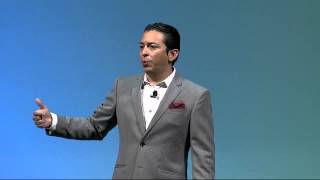
Brian Solis argues digital transformation demands businesses stop chasing novelty and start designing meaningful experiences. He introduces Generation C (connected consumers) and maps moments of truth across the customer journey to find where companies fail to deliver what people actually want.
Chapters
Please welcome Brian Solis. Hey. All right. That awkward moment when you trip on the stairs coming up on stage. Thank goodness that didn't happen. Well, good morning, everybody. Thanks for choosing this session. I think Chuck and I were just talking. There's about 12 simultaneous sessions right now, so no shortage of options. Thanks for taking the time to spend with me. So this has been an amazing conference. My Twitter stream has been on fire. I have been inspired through the words of people who are sharing the words of other people. This notion of being remarkable is actually something that resonates really well with me. I am here to share with you a little bit of the world that I live in, the world of reality. As much as I want to be remarkable, there's a little bit of work that has to go into that, and that work has to start someplace. It has to start with someone. Someone has to be more than a social media expert. Someone has to be more than a marketing expert. Someone has to be more than an inbound expert. Someone has to become a change agent. Because what's happening right now in this world is that it's changing who you and I are and how we go throughout our day, how we make decisions. So not only am I a digital analyst, but I'm an aspiring digital anthropologist. I study technology, and then I study technology's impact on you and me and how it changes us so that you can make decisions and investments in strategies that bring us together. I study a lot about experiences and the experiences that you have and the experiences that you share. And when you take a perspective around experiences, it becomes emotional, it becomes personal. And you start to realize that the way that you attack engagement today may not be the most personal. Even if you're social, it may not be the most experiential. When I look at businesses and I look at how they're investing in new marketing strategies or new technologies, jumping on Twitter and Facebook and trying to make crazy cool viral videos. It's cool, but it's also novelty. What I think we need to work on together is how we're going to make this more lasting, more meaningful, more relevant. This social economy is bigger than social networks. This social economy is bigger than how many followers or likes you have. It is about a revolution in consumer behavior. It's about a revolution in relationships. It's a personal revolution that is coming up from the ground, working its way to the C suite, because it is, at the very least, driven by you and me. And that's the perspective that we need to take into our work. Something happens. I Don't know. I've been doing this maybe way too many years, but when I talk to executives, when I write anything for executives, I tend to forget that the people that I'm really trying to affect is us. I start writing for people because I think they're going to approve it or it'll resonate with them. Instead of trying to tell them what should be done, I start talking like a marketer. I start talking like an analyst. I start talking like a business person and not like a human being. And when you lose that perspective, you actually miss the opportunity. What is happening today, what I want you to take away from this whole experience at Inbound, is that change cannot happen without you. I don't care how innovative your strategies are. I don't care how many people talk about you as a best practice or a case study. Your work is greater than that. See, digital Darwinism is a reality. It's affecting every one of our businesses. And we're not going to solve it from marketing, but we are going to solve it from transformation. It's when society and technology evolve faster than our ability to adapt. Resilience sort of becomes the banner that we fly. Because the sad truth is that businesses are dropping like flies. A lot of the brands that I grew up with are gone. And it's both sad and it's also just real. Businesses didn't think about how society was changing, how decision making was changing, how preferences were changing. So we're not even done. We're just getting started. And if you think about how much is closed, how many brands have gone under, how many bankruptcies have been filed in your lifetime of the brands you used to know and love. It's mind blowing. It was so mind blowing, I had to spend weeks on creating an infographic around it just so that I can show people, like, yes, this is actually happening. But it's bigger than that. When you look at transformation, not just from digital, but how it's affecting you and me, some really phenomenal insights occur. Right? The Kodak moment. We're the last generation to know what that means. Our kids have Instagram moments, our kids have vine moments, and now we have Instagram moments. And now we have fine moments. I'm not a young man, but I am still taking selfies. It's rubbing off on me. It's changing the way that I think about how I connect with you. It's changing how you connect with me. So what happens? And this is why your role is so important. What happens is not that businesses don't get it, it's that executives don't understand it because they live in a world rich with Excel, PowerPoint, charts, reports. They talk to shareholders, they talk to stakeholders. They don't talk to human beings. And when you look at Netflix versus Blockbuster, you can see that inflection point where Blockbuster said, whoops, they had a moment. They had an opportunity early on to buy Netflix for pennies on the dollar. That didn't happen. And then you look at Amazon vs Borders. Becoming a change agent is making the case for your business to stay relevant. If you've ever watched that show Undercover Boss, which I love, even though it has the same ending every episode, we need to give executives that Undercover Boss moment where they realize what it's like to be an employee, what it's like to be a customer, so that they can feel inspired, so that they can be inspired to become remarkable like you. What ends up happening is we get caught up in a rut of management culture. We're making things more efficient. We're trying to optimize, we're trying to demonstrate roi. What we need is leaders, and the best leaders are in this room. Leaders rise to the occasion because the occasion right now is competing for attention. But more importantly, it's about competing for relevance. Are you relevant to a connected generation that has become almost like an accidental narcissist, where they are at the center of their own universe? We talk, we broadcast. We use all of these technologies to do what we've always done without pressing the pause button to say, what can we do differently to be more relevant to the people we're trying to connect with now and over time? Solve for problems because problems exist, Create opportunities because opportunities exist. Both of those become aware when you're open to them. As much talk as there is around big data and data scientists becoming the new thing, it's important. But I also think that the opportunity is equally present for social science, behavior, psychology, anthropology, sociology, ethnography. Someone has to humanize this stuff. Someone has to make sense of it. Someone has to make it personal, because that's what this is about. What you share in all these networks, what you follow, what you find interesting, what you connect with is all deeply personal. We have to change how we see the world. And that starts with stepping outside of your routine. That's what I had to do. When I was writing my last book, I realized, wow, I actually have to change how I write sentences now because the way that we consume information is so fast. I can't string together so many sentences now because people will say, TLDR too long. Didn't read. Excuse me for having some thoughts to share with you. So I want to give you an example about changing perspective. Right. Being a leader, not a manager. Being a leader, not a follower. This quote is shared in almost every meeting I go to where we talk about customer perspective. Steve Jobs never asks customers what they want. Okay, thanks, Steve. Are you Steve? Henry Ford actually did not say these words yet. It's shared all the time and attributed to Henry Ford. What he did say is something that's actually the opposite. You have to see the world through someone else's eyes in order to be innovative and relevant to them in order to lead them. So abandoning what we think is right because someone else said it is where I actually like to start. And when we look at marketing campaigns, even those who do Persona management, we tend to miss the people we're actually trying to reach. We have to become the people we're trying to reach. This is a funny example that a friend of mine, Peter, from Germany, created, and he talks about how there's these two individuals who share similar demographics, and he talks about how this is sort of the inspiration for a lot of marketing campaigns when they're trying to come up with the personalization. What's the messaging, what's the imagery going to be? They go through these demographics and then he says, so they look similar, and then shows you who he's talking about. Like, yeah, I think that marketing campaign is going to really rock. We now need to think outside of who we are and outside of what we're trying to do. Yes. I'm not saying abandon your goals. I'm not saying abandon your roi. But I am asking you to start from a different place, to start with the end in mind and understand that the world as we know it is different. Selfies are actually cool. It's a form of self expression. It's a form of gaining acceptance. It's a form of visually communicating where the emoticons are actually you and your friends. Understanding what it takes to connect with the group is how we gain empathy. I show this picture to colleagues and the first thing they do is see. This is the problem with kids. This is my dinner table. I can't get them to even talk to me. I can't even get them to look at my eyes. This is ridiculous. I have to put a stop to this. And so the attitude they take is something like this. But that's the wrong approach, Right? We have to understand you're not going to change a generation because you don't like it, or you don't agree with it, or you don't do it. It's the same philosophy and the same approach that our executives are taking. They don't get it. They don't use this stuff. It's something their kids do, and they don't even understand why they do that. The world of your brand is in the hands of your customers. It's a personal relationship that people have with you and your business. I'm part of the generation that used to put posters of rock stars up in my bedroom, and they're still there. But kids now actually don't use the artist, for example, as a form or a symbol of who they are. They use the artist as a piece of who they are. So the idea of the artist as an avatar is no longer there, meaning that people are starting to assimilate all the. All of the things that they love because it becomes part of their self expression, self actualization. So understanding how to make a personal connection with somebody requires digital anthropology, psychology, understanding. This is why social science is so important, because this is a generation that sees the world through a screen. And that's all right. I still hear the debate. And I'm sure that debate exists in this room. When you go to a concert, put the phone down. I can't see the artist, please. But you can't, because that's natural for them, right? When the new Pope was reigned in, they showed that picture versus the picture from 10 years ago. And the difference in the square, in the Vatican square was that there were no phones, and then everybody had a phone. And why is that important? Because it's not just millennials who do this. It's anyone who uses a smartphone. It's anyone who uses a tablet. You're creating a new generation of consumerism that's connected, that's always on. And yes, Arianna says we have to detox. But in the meantime, we also have to understand what's powering it. Because what is going through that screen is an experience. It's deeply personal. Someone is capturing that moment not just to consume it, but to share it. And when they do, it brings their network closer together. This is generation C. It is not a group of people bound by age or demographics. It's a group of people, you and me, connected by the way we live our life. It's a lifestyle, not an age group. And generation C is the only group of consumers that's growing your traditional customers, the people who respond to messages, who run through the funnel. They're dying off every day. And your connected customers, as they become more connected, as you become more connected, you become more informed. A natural byproduct of that is that you become more empowered. And as you become more empowered, you become more demanding. You expect things to be personal, you expect things in real time. You expect engagement in your channels, not their channels. And that requires transformation. So my good friend Hugh, who's here sharing beautiful artwork, was kind enough to contribute art to my book, what's the Future of Business? Which also stands for WTF for a reason. And one of the images that I wanted to share with you was this one. When you think about those kids who said best party ever to them, it really was, they had to share it. That window is a window into a new world. And what inspired me to think differently, what inspired me to change how I talk, what inspired me to change what, what a book could look like, was this video on YouTube that you've probably seen. See, I realized that throughout my professional career, throughout my personal life, every time I came to a decision, I brought my life experience to that moment. And it's what informed me to take the next step. I trusted my gut, I trusted my instinct, I trusted my experience. I'm sharing this with you because you probably do the same thing and it could be the wrong approach. Now, because of this, his father let his one year old baby use an iPad. And instinctively, naturally, she's pinching and zooming, swiping at a year old. He thought it'd be funny if he gave her a magazine. Doesn't work. She gets frustrated, throws it aside. But what really struck me were her father's words to her. A magazine is an iPad that doesn't work. She is a digital native. What does that mean? Why is that important? People throw that word around all the time. When you think about generation C, it means that you think digitally first. I'm an analog first guy, right? I used to have cassettes. I used to have dual cassette players. That was cool. Back in the day, I've had to learn every piece of technology that's come out and work its way into my life. So I am bringing to decisions that set of experiences to someone who will never ever know what it's like to change a television with a knob to a person who will look at a television remote control with all of those buttons and say, who thought this was intuitive? Where her first instinct is to walk up to the television. So what we're trying to do about marketing strategies, product strategies, is we're bringing ourselves to try to be relevant to A world that's different. What they value, what they appreciate, how they interact. We have to take their perspective in what it is that we're doing. We have to look at their journey, we have to see where they go, their touch points. We have to see who influences them and why. Instead of thinking about it as the 360 experience or multi channel marketing or now omnichannel marketing, we have to look at it as a journey. And the journey is never linear. And the journey is really not about websites or landing pages. It's incredibly experiential. Google released a report that you could download for free called the Multi Screen World. And what they did was study how people use different devices in different scenarios. And in what stage of their journey do they use them? Are they able to complete a transaction? Does it get them up to a point where they need a different system to get to a transaction? And you might hear about this as responsive design. Okay, they're using a laptop. We know it. Our software applies the right screen size. Now they're jumping to a phone. Now they're jumping to this. That's not what I'm talking about. I'm talking about understanding contextually the journey your customers take, who influences them, where they're influenced. Because in this world it is nothing like the funnel of which your company is structured around today. Right? Marketing doesn't talk to public relations. Public relations doesn't talk to customer service. Customer service doesn't talk to product development. Yet you're all touching the customer through this journey in your own way. By default, with the connected customer, you're probably creating four or five different brand experiences. If you remember, what was it, 10, 11 years ago? The Clue Train manifesto. All markets are conversations. What's a conversation about in technology, in social, in mobile? A conversation is about an experience. All markets are experiences. They are shared, they are felt. And when you look at how the world is in terms of experiential design, engagement, relationships, you start to see how things can string together. You start to see that your mission is actually not to make campaigns better. That's just a given. Your mission is actually to bring every moment of truth, every customer touch point together. Because marketing is bigger than the marketing department. Marketing is now responsible for the experience that your customer has with your business through every moment of truth. That's what I want to talk about for the next 20 minutes before we wrap up. When there's a stimulus, the first moment of truth is called the zero moment of truth. Google came up with this. You can download their ebook if you haven't read it, it's called the Zero Moment of Truth. I think it's Zero Moment of Truth.com in that moment where there's awareness or stimulus. Google says in the zero moment of truth you're going to Google it. You probably are. What comes back into Google search links to websites. But what happens when that search takes place on a tablet or a smartphone, which it's most often done with the connected customer? Websites suck. I don't care how great your responsive design strategy is, they largely suck because all of the copy on the website was written for the person approving the project, not for the person you were trying to reach or inspire. The click path is horrible. Thanks. Yes, that's the problem. And until we realize that we are the people we're trying to reach and the journey that they're going on, that zero moment of truth is already broken. In that zero moment of truth, you have an opportunity for engagement. The psychology of someone who is going through the discovery process is curiosity. They're excited about what's going to come next. What comes next is yours to define in the world of connected consumerism. Thank Goodness Google owns YouTube because more people are going to YouTube than they are to Google to see a video about what they're looking for. How many of you have opted out of reading a product manual or a how to manual and instead watched a video on YouTube? Yes, we all do that. It's better. It's a better experience. And so in that world where people are YouTubing instead of Googling what comes back around your company, this is an excellent opportunity. I went through this whole Vitamix thing. Who knew that blenders were a religion? I had no idea that people take this stuff too seriously. I had to surprise my wife with a blender. And that's, I guess, what you do nowadays. And wow. I couldn't make a decision based on the website, so I had to go through YouTube and watch people's experiences with the Ninja, the Bullet, the Blendtec, Vitamix. And the experience was actually phenomenal because everything that came back in YouTube was all user created people who took the time to share their experience and why that decision was better or what things you should look out for. Not only did I go down the rabbit hole of blender videos, but then I learned how to make soup, I learned how to make flour. I just was gone for hours. I made my decision. But none of those videos, they didn't even show up in the search, were related or created by the brand. They were all User generated. So this is a world that's rife with opportunity. You can't SEO your way with a website in YouTube, right? You can't in a world where conversations and experiences are shared. How do you SEO that? Do you even know what's going into the YouTube box? Do you know that with the connected customer, they are not plugging in keywords like your brand or product name, they're actually asking questions. And when you take keyword anthropology and you look at what words are people putting together and then you look at what comes back, you're surprised that it's very little to either do with you, or it's not complementary, or there's just nothing. And so what you're doing now is you're creating these experiences, you're investing in these experiences, both you and through your customers, so that they show up in the zero moment of truth. Because every year that passes, the more connected we become, the more touch points that we have. It doubles every year because it can. And none of those are owned sites, they're just not. So your opportunity is to actually start to invest in these moments of truth that show up when someone asks a question to create those opportunities for experiences to speak for you. The first moment of truth and the second moment of truth. These are Procter and Gamble's big discoveries. The first moment of truth is when you make a decision to go with a particular product or service or company. By the way, it's true for business to consumer or business to business, they're still not 100% sold, right? This is why you hear about the art and science of shelf placement or packaging design, coupons, real time offers, because you can still have your mind changed. Procter and Gamble has departments dedicated to the first moment of truth. The second moment of truth is when you actually become a customer. These are still moments to define. But think about that. How are you designing a world where someone can still be swayed in a different direction even after they've committed to buying your product? A customer that sees the real world and the digital world together. And I'm not talking just about Google Glass, just talking about, I don't know, good old fashioned anthropology. Sit outside on a beautiful afternoon like today, have a cup of coffee and watch people as they walk by you and see how many of them are actually looking ahead of them. They're looking in their screen and that's the world of engagement that we have to compete for. They're looking at their screen and actually, by the way, this is a thing. There is an app called text and walk, and it turns the camera on your phone so that you can text and walk without getting hit by cars or knocking other people down or hitting poles. There's a lot of CityCam stuff on YouTube. YouTube that shows people doing this. It's good for laughs. But you have to design around this moment because the ultimate moment of truth, the fourth moment of truth, is the most important. It's the experience that somebody has and shares. And the ultimate moment of truth becomes the next person's zero moment of truth. And so where they share it, whether it's YouTube or it's a review or, or it's a blog post or it's an app, whatever it is, it's going to be expressed and shared. What's fascinating is that businesses today actually don't really know what's shared. They're measuring sentiment, they're measuring conversations, they're measuring share of voice. But when you actually look at what the experience is that it's had, felt and shared, you will find a divide between what your brand promise says you should expect and what people actually experience and share. And understanding this divide is important because without understanding what it is, you can't close it. But by understanding what it is you, you can gain empathy. Because marketing isn't just responsible for engaging in the moments of truth and walking people through. You're now responsible for creating the experience around your brand promise. Marketing now also has to touch service, product development, everything to ensure that what you say or what you promise is not only what you deliver, but but it's what people experience and in turn share. Because in a connected society, one where your website can't speak for you, it is the experiences of others that become your brand. This is an airline that I ran through Twitter just one day and fed it into wordle. This is the airlines brand. I won't say who it is, but as you can see, there's some really colorful language there. I took out all the real crazy words and then I don't have this here, but just as a joke, I ran the airline's website through the same word cloud generator and the words like loyalty and service and customer and people all came up and I compared them side by side and say, this is what you say your brand is and this is what other people say your brand is. And at some point there's a pivot where we just don't have to put up with that shit anymore. We can make decisions because we're connected, we're informed and we're empowered. And the sooner you realize that that's the role and perspective you need to bring into your company, the more contagious that idea becomes. You've probably heard of the innovator's dilemma. Reverse it. It's actually the dilemmas innovator. You are the dilemmas innovator. There are problems, there are challenges, there are opportunities for you to innovate based on those that exist right now. And the most inspiring of them for me, and I hope it is for you, is measuring what that experience divide is. I've done this for you. Name the brand and there's always a divide. And that divide, by the way, those experiences that are had and shared are pretty stunning. And also walking through it's called journey mapping. It's not new. Through your customer's journey is also incredibly revealing. Not only is it revealing, not only is it inspiring, but it is where we begin our path to humanizing a business. Because your executives will tell you that until they're reminded they have forgotten what it's like to be an employee or a customer. They've forgotten what it feels like to be relevant because they're just going through their routine just like we are. The best businesses begin with empathy. This is titled How Computers are Born. I thought it was funny. I share it with you because this is the perspective I want you to bring into the work that you're doing. When you get back to the office comes back to generation C digital natives and a digital first society. There is no one size fits all, no one message, no one channel, no one click path. You have to serve your traditional customers and you have to serve an impatient, focused, self absorbed generation of connected customers, which I think inspires a revelation of what I call born digital. How would you change how you talk? How would you change your product design? How would you change your messaging? How would you change the click path to be shorter, faster, frictionless? How would you unite every moment of truth, every function, every department, if you had to start over from scratch? And believe me, it sounds difficult, but this is why you become the hero in the hero's journey. Because it has to start somewhere. Every business that I've worked through that gets it has stepped back. Had you become the champion, the leader of a steering committee to use corporate speak, or a task force where the heads of these functions, marketing, customer service, public relations, advertising, you name it, come together to solve for this, because it's not going to be done from any one department, right? Everybody talks about breaking down the silos, but without really explaining what that means, it's hard to Do. What you're really doing is just getting people who don't talk to one another together to build a better experience for your customer every step of the way. So you remember that Henry Ford quote? I used to say this all the time. To me it was inspiring. Be the change you wish to see in this world. You're a change agent. Except he never said this. It's attributed to him. What he actually said was this. And I think it's more relevant. You need not wait to see what others do. You don't need to sit at a conference and look at case studies from other companies, because I can assure you, what they're not telling you is that they don't have this stuff figured out behind the scenes. The dilemma's innovator solves problems and becomes the case study for other people to follow. You don't need to wait for other people. You don't need to ask for best practices. You just need to figure out your customer, your connected customer, and how to be remarkable for them. Because there is nobody out there who is remarkable to your customer the way that you can be remarkable to them and to yourself. So when you leave here, you just need to fill in the blanks. What is it that you want to do? What is it that you will do? How is it that you're going to do it? How is it that you're going to get other people to align with you? How is it that you're going to become remarkable? Because when you're inspired by creating meaningful experiences that aren't just consumed, they're shared, that becomes your brand, that becomes the foundation for relationships, and that becomes emotional, powerful. So it takes empathy, but it also takes courage. Because what you're going to do, it's not easy. But I promise you, the rewards are great. It takes vision to see what others don't see. It takes resilience. You have to keep pushing, because if you don't push hard enough, people will push back harder. What your business needs and what this world needs are less strategists and experts and more conductors, people who are willing to bring people together and bring about change. This is a human network, after all, where people are on the other end of everything that you're doing. Relationships are, are the currency of this social economy. So when you leave here, remember this. It's blank. Intentionally, in case those are wondering, is that a glitch? Because this is your case study. This is your best practice. It's a blank slate. Which means that the only steps you take next are those based on the customer journey, their behavior, their expectations, the experiences that they're having and sharing. And that's going to inspire everything that you do next. Innovation doesn't begin with technology. It's always going to be about the next thing, right? Who saw vine coming? Now there's vine stars. People are recognized on the street for the vines they create. It's not the last thing that's coming out, by the way. There's always going to be something else. And you can't just jump from thing to thing to thing. That's not what innovation's about. You get in front of it by understanding what's important to people, how they behave and how they interact. And that should inspire everything else. So innovation is less about technology, and innovation is more about how you see people, how you envision relationships with people, and the role you want to play in those experiences. In the end, your innovation is actually an experience architecture. This is your moment to. To change not only how your business runs, but how your business becomes more relevant. And it's not going to happen unless someone stands up out of your department, out of your comfort zone, and start bringing the right people together to create an experience that's magical, remarkable, but most importantly, that's shareable. This is your time. Thank you very much.
More from Patrick



A NEW BREED OF PARTNER: The Partnership Ecosystem Model Journey of Patrick Biddiscombe, Part 1








Customer Success Workspace: Never Lose Sight Of What Matters Most | HubSpot Spotlight