INBOUND 2024 Live, Friday, Sept 20
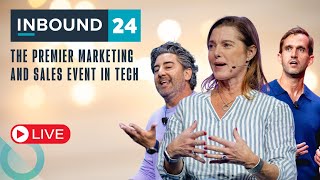
Two panels from INBOUND 2024: sales leaders from HubSpot and Pleo on prospecting, lead scoring, and AI sourcing; and founders of WHOOP (measuring HRV 24/7) and Aunt Flow (in 61,000 bathrooms, $16M+ raised) on product and growth. HubSpot announced new tools including AI meeting prep, dynamic sequences, and deal scoring.
Chapters
Hello, Inbound. How's everybody doing? How are you, everybody? Happy Friday of Inbound. Have you had a nice time? Yeah, yeah, it's been pretty good so far. We've had a lot of fun here the past couple days, but this is going to be the highlight. Let's do it. Let's do it. I'm pretty excited, everybody. My name's John. I work at HubSpot, and I am the Senior Vice President of Customer success. HubSpot loves customers, and we love customer success. But our love of customers pales in comparison to the person that you are going to have the opportunity to hear from today. It is my honor to introduce you to Michelle Peluso. Michelle is a wife, a mom, a passionate leader, a proud godmother, and a friend. I really like including that part. I'm going to add that to my bio in the future. Michelle loves to run. She's an avid reader. She's a longtime member of Nike's Board of Directors. At CVS Health, she serves as the Executive Vice President and Chief Customer and Experience Officer. Michelle, welcome to Inbound. Thank you for being here. Thank you so much. I'm super excited to be here. It's going to be a great conversation. I think so, too. Thanks, everybody. This is CVS Team right there in the front. All right, CVS Team. I like it. They're hyping it up. Hey, everybody. Nice to see you all. Thanks for being here. Okay, so, Michelle, let's just get started. First of all, I'd imagine that CVS Health probably doesn't have a lot of data. Huh? That is not one thing we lack. I see. Okay, so why don't we just start Getting feedback from our customers is kind of like the centerpiece of building a great customer experience. Could you maybe start by sharing a little bit about the breadth and the depth of CVS's health feedback program? Well, this is so critical to us. So we have three businesses. Not everybody knows this. We have Aetna, the insurance Caremark, the PBM, and CVS Health. So we serve over 100 million Americans. And what was so critical to us when we started this journey was making sure we knew what our North Star measurement system was going to be, because we want to be able to trace that senior, that. That mom as she's buying her health insurance. She's filling prescriptions. Maybe she's a caregiver for somebody else in her life. She's buying great things in our store, and she's interacting across the entire spectrum. We use Net Promoter Score as our North Star and we collect an enormous amount of feedback. We get about 18 million net promoter score surveys every single year. Sorry, that was 18 million. Right. But actually that pales in comparison because now what we're doing more and more is we're impinging, we're predicting NPS scores. So we in 2025 will have about 250 million imputed customer scores. And that's important because we are scoring call transcripts, digital engagements, store experiences we know. And we can, with high accuracy, predict what we think you felt about the experience based on all the knowledge we've gleaned over the past few years, having nps, our North Star. Wow. Okay, we have to talk about this predictive analytics thing. I think predictive analytics have been kind of something we've all been striving for in this industry for a long time. And it feels to me like we're finally starting to, like, get there. And we're finally starting to get really good unlocks from predictive analytics. And I've never met another CS professional who has unlocked it, I think as much as you have. So help us all understand what. What have been the breakthroughs. How do you think about predictive analytics? Yeah, I mean, I don't think we're getting there. I think we are there to your point. And there's ways that AI can help when we can talk about that. But here's the thing. It's both predictive. But the other thing I want to talk about is proactive. How do you get in front of a problem when you know someone's not happy? How do you get in front of that? And so I think those predictive and proactive are two big unlocks for us. On the predictive side, we have all sorts of scoring mechanisms. Now we can look with AI's help, at every every single call transcript. We have over 100 million calls across our call centers. We digitally score sessions based on where we know there was friction or whether something was smooth. We can look at operational metrics, like if you waited in line at the pharmacy, if you paid more than $100, if we texted you your prescription was ready and you arrived and it wasn't there, we know what that will do to your net promoter score. So those are all at scale examples of us. We fill 8 million. We have 8 million customers in our pharmacies every week. So we have the ability to really score and predict, not just the people who fill out surveys for us, but based on what we've learned through that body of information, we can predict how other People feel on their journey. And so first of all, I find that really inspiring because sometimes I think when we talk about things like predictive analytics, they just feel like vague data science things. And what you just told me, it was like so tangible. Right? Well, that's why we gotta talk about what do you do with it. And that's the important thing. So when we started our journey, I and the team made a commitment and we had a whole executive session on this. We were not gonna ask the net promoter survey question unless we were willing to do something about it. And in particular, that we would respond to every single Detroit, that's 4 million people who rate a 0 through 6 on an annual basis. We respond to every single one of them. We get back to them with email or phone call saying, we're sorry this happened. Here's what we're doing to improve it. In some cases, we can intervene directly with the customer experience and make it right. But now let's talk about proactive, because this is where I get really excited about this. Well, this treasure chest of information. And so, so think about it. Let's take the example of a first filler. Someone who is filling their prescription for the first time at cvs. Maybe their Rite Aid shut down. Maybe their plan changed. Maybe they have a new condition that they've been diagnosed with. Maybe they have a child for the first time and need something different. We know for certain that if you are a first filler with us, if you pay more than $100 for your prescription, no matter what the reason, if your coverage ends up meaning that you pay more than $100, if you wait more than 20 minutes, or if we send you a text that says it's ready and when you arrive it's not ready, we know you are going to be a detractor. And so we don't need you to tell us that. We don't need to send you a survey. We should get in front of that right away. So we've wired into these operational metrics. We now will outbound email somebody outbound, text them outbound, call them and say, look, we're sorry we didn't get it right. We didn't get it right. And here's a chance, you know, we apologize for that. Here's $10 to shop our store. Here's here's something. And what we find is when we do that in the next survey, we see a 30 point NPS bump. People are so appreciative, you know, that we actually got in front of some. It's like when the airlines do this, yeah, terrible flight delay and they send you in advance, we're really sorry, here's a, you know, $20 voucher for dinner or $10 voucher. We as an industry in healthcare, but across all industries, there's so much more power in this data. And I would challenge every single one of you. You know, what causes dissatisfaction with your brand? You know, those things, those operational things that let someone down. How can you get ahead of that? How can you actually be proactive and be in that customer experience, make it better right away? I find that really inspiring. I mean, first of all, just the idea of why ask for feedback if you're not going to act on it? Right. I think that alone is an incredible takeaway for this whole audience. But the second thing is that idea of making it so tangible. Getting it down to the. If a prescription costs more than $100, everybody in this room, as you said, Michelle, probably knows what those things are and can get the data to actually prove it and can then wire a response from your company and get the sort of bump that you're getting. And here's the thing that I get very excited about too, and this is after kind of four years of intensive data modeling, we also know the financial impact of getting better. Because sometimes you think, well, you know, the CFO is like, oh, I don't want to hand out that coupon. I don't really want to do this. But this is what we know at CVS Health, if you are, for instance, in Medicare, you know, you're a first time Medicare. We know that in the first few months, that's when you have the highest sort of possibility of churning. You're new to the plan, you don't understand it. If we can move from detractors to promoters with those Medicare customers, they have a 3x less likelihood of churning. That is a massive amount of financial impact. That is thousands and thousands of dollars lifetime value for us. So we know in our store, our promoters shop twice as much, spend twice as much, adhere to their medications and churn half as much than our detractors. So the ability to take that information and tie it back to the financial metrics of the company has been an unlock for us. So that we are working with the cfo, with our finance organization to say, how do we make the customer experience better and how do we trace that in the P and L? Yeah, I think it's actually a wonderful time to be working on customer loyalty and customer retention because the CFO does actually really care about it. Because new growth is very hard. I think that's what Yamini talked about on the very first day of Inbound, Michelle, when she talked about how our kind of growth formula is kind of broken in the industries that we work in. And one of the key levers that everybody can pull is to make their customers more successful, make them happier, and you will get growth as a result of doing that. It's amazing to hear some actual stats to back that up from a company at scale like you. That's right. Now, talking about what Yamini talked about, what's the word of the year at inbound? Maybe it's an acronym. AI. AI. It's the word of the year. Michelle, what is CVS Health doing when it comes to AI, both in terms of engaging customers, but also supporting team members? You have a massive team. Yeah, well, look, there's so much excitement about AI for all of us. And I think the things that matter to me, and I've spent my whole career in technology or sort of the intersection of technology and consumer is, number one, you know, we have to put this in place in ways that can be trusted. That's important. Secondly, it can't just be a thousand flowers booming. We've got a lot of pilots happening. How do we actually have the tenacity and grit to kind of continue to refine models and then make them operate at scale? And then last, you know, I think it's really important to make sure we're tying these back to outcomes that we can measure. And so there are so many places you can imagine at a company like CVS Health where we're deploying AI in trusted ways. We have a really strong principle that AI and humanity have to coexist. We think that's really important for our customers, for our colleagues. So let me just give you a few examples. First of all, in our call centers, many of our agents now are using AI to summarize the calls. And what does that mean? It needs two, three actually really important things. So AI is listening on the call and creating a call record summary that then gets hosted. And our CRM system, that does three things for us. Number one, it provides a great record, a well documented record of the call. So if the caller calls back, that is documented. When you look at our own agents notes, you know, when they summarize calls, it's a lot of jargon sometimes and frankly, it can be very hard to interpret. So one, we have a great record of what the customer said. You can imagine how good that is for us to finding root Causes to really understanding what's driving calls, what's causing customer frustration. The second thing that it does is it reduces after call time, because after every single call, remember, we have 100 million calls. After every single call, our agents take upwards of a minute to actually summarize the call. So as you can imagine, you reduce that by 30 seconds, which is what we're seeing. That is a tremendous savings across the company. And third, last but not least in the this is really important too. If the caller wants a record. In many cases, we want to be able to give a caller a record back. Maybe it's a complex step she has to take with her doctor to overcome a prior authorization or something. We can then send it on to the caller for a very clear transcript of what the experience was. So that's one example we had many of our agents using and they're delighted. They can now listen and not be so worried about taking notes. And so the empathy goes up as well. Second place we're using it is something called Knowledge Assist. Healthcare is incredibly, incredibly complicated. And for our agents, it can take upwards of 26 weeks to fully train them to be proficient across Aetna and care. More questions. Yeah, it's very intense. Knowledge Assist is using AI to help the agent. To help the agent come up with the answer. And we're seeing two huge benefits. Number one, we're not putting our customers on hold. You know that awful thing where they're like, can you just hold please, so I can go research this problem? We don't have to do that with as much frequency or at least for as long. And secondly, we're getting answers back to our agent. So reducing average handle time, accurate answers back to our agent that they can assess, they can decide if this is the right answer to pass on to the customer. And so both those benefits of being more present for the customer, reducing average handle time, reducing financial benefits, we can really measure. Another great example of how we're using AI, we have 200,000 colleagues in our field, we have over 9,000 stores, 200,000 colleagues in our field. And so, as you can imagine, with 18 million pieces of customer feedback, how does that district leader who runs a bunch of stores, or the region director, or the division vice president, how do they assess what's happening across their really hard. And that's where AI is incredibly useful. We use a platform called Medallia, but every single day they're getting a summary of exactly what's happening in their stores, in their district. They're getting measured. We actually use AI to stop bad responses. So if, if someone's going to close the loop with a customer and AI senses signs of coaching, like maybe like, can you give me a, you know, the store manager writes to the customer. I'm really sorry, but these scores are effective. My bonus, you know, things that we don't want happening. AI will flag. Hey, this is an issue. If there's someone who's consistently not closing the loop, well, AI will flag to the district leader. Hey, here's two or three people who could use coaching, and here's some examples. We're also using AI to write those first responses. So then the store manager or the pharmacy manager can edit. So there are lots of places across our organization where we're using sort of trusted AI at scale. But I do want to double click on trusted because this field is changing. I've been, I've spent my life in technology. This is unprecedented in terms of the rate and pace. And so making sure that you are setting up the right governance models, you know, the right controls, the right tests, is really fundamentally important. Yeah, Michelle, CVS is a gigantic organization. As you've mentioned, many of us work at much smaller businesses and even we have a hard time just getting leadership bought in to even begin to experiment with things related to AI. When you're talking about things like governance and internal trust and internal support to do this sort of stuff, do you have any advice for us about how to get leadership bought in and structure programs so that it can be safe and effective? Well, the good news is that a lot of the underlying platforms even small businesses work with have some embedded AI capabilities in them. So if you're working with Salesforce, you're working with Adobe, or you're working with the Microsoft cloud or the Amazon Cloud or HubSpot, a lot of this stuff, there's some embedded capability. And so one thing that's an easy start is to think about the vendors you use today and what capabilities are embedded. And the reason that can be important is because they've often put in layers of security and trust that can help you get started. You're not building your own large language model, you're not trying to do your own thing. That's a good place to start. Secondly, you want to make sure your compliance officer, your legal officer, whatever the right, your security, your cyber security officer, your ciso, even in small companies, you want to get those people together. You want to really think through what are the frameworks. And I would say those vendor providers that many of us rely on, they have been very Thoughtful about what do they see companies doing. So it's a great place to ask for benchmarks and for best practices. Yeah. Michelle's point is so relevant to this audience, I think, because this is the actual point of the way that we build Breeze AI within HubSpot. And I just would just emphasize to everybody here that that AI is all built on top of our existing trusted platform. And so it's a really good way to actually be able to get started and feel like it's going to be safe and trustworthy, etc. So we've talked a little bit about tractors. What about promoters? You listen to promoters too? Yeah. Well, look, here's the thing. I tell this to my teams all the time. You got to do the hard work to fix the problems. We can't be marketers who look at the shiny object. You gotta do the hard work. But say you do an amazing job, John, Right? Like say you move, you know, all those people who rated you 0 through 4, you move them up to fives and sixes and sevens and eights and you're feeling so good. What is your net promoter score? 0. Your net promoter score is 0. Because you only become 100 net promoter score company if you have nines and tens. Promoters, people who love you, people who are excited about you. So the job is both and fix the problems. Create delight you can't do. And for us, we have scaled programs to think about creating delight. We've worked. This is culture. We've worked with the Disney Institute. We have six service actions. We train every one of our employees, employees on things we expect. And we can talk about those things, like giving a warm greeting when someone walks in a store. There is a 30 point difference in NPS. If we actually greet somebody, offers us not just like a hi, welcome to cvs, but hi, I'm Alana, welcome to cvs. If there's anything at all you need, you know, can I direct you someplace? That makes a big difference. Removing obstacles, that makes a big difference. So we have six service actions we train all of our people on to create that culture. But then we empower them. So we have what we call moments of surprise and delight. We give out millions and millions of stickers to our pharmacists, to our friends, to our colleagues, et cetera. So they can just give a child a sticker, thank them for pop ups when they get their first shot. We write notes after we know someone's had their first child in Aetna. Handwritten notes to congratulate them on the birth of their new child. So these moments have been systematized across our organization. But I will also say, and then it's little things, like, I was listening to a story yesterday that I just loved. A man submitted a video with his wife. He's really cranky about some of his new medications. His wife said they had to drive to cvs, pick him up. They're an elderly couple, and apparently he was complaining the entire way. He gets there, and right before they're in the drive through, the wife says, well, look, if I get you a Snickers bar, will, you know. And he's like, yes, he loves Snickers bars, apparently. So what happens? The wife says to the pharmacist, now, remember, Candy's at the front of the store. This is a pharmacist working pharmacy. Can we get a Snickers bar for him? Instead of saying like, oh, sorry, that's the front of the store. Can you should park and go in? She's like, absolutely. Hold on. She jogs, gets a Snickers bar, rings it up with, you know, and then he submits his video. He and his wife sitting at home. This video about the smile it put on their face. But it's also big, bold brand actions. And for us, we've done a lot of work on a campaign called Here for her, taking big experiential actions. Women pay way too much money because products are Pink, not blue. $1,300 more on average. CVS is the only national retailer that does not charge the pink tax. We in our stores have eliminated the, you know, believe it or not, but in 22 states, the only thing that's charged a luxury tax in our store are menstrual products. Makes no sense. We absorb that on behalf of consumers. We lower the price of our period products so that girls don't face period poverty. So many things. And if we have a chance, we can roll a quick video to show you some of that work. Should we watch the video? Let's roll the video. Here is CVS Health where they're working to eliminate the paint tax to ensure we don't pay more than men for the. The same thing. Because women's razor. To ensure we don't pay more than men for the same thing, because women's razors are. Gestures are just razors. Thank you. This is, you know, tens of millions of dollars of investment for us, but it pays out in a more loyal consumer. We're seeing the foot traffic, we're seeing the engagement from women. So I think it's a Small, everyday things. And I think it's big, bold brand actions you can take as well. Yeah, I mean, I mean, I love these examples so much. I mean, first of all, small surprise and delight is something that literally every one of us can go back and work on. I've seen the CBS surprise and delight in action. Last Halloween, my daughter dragged me into CVS, oh, probably 25 times because there was a bowl of Snickers bars out available. And it was like, you know, it was very, very effective. And so, and that's something that everybody here, I think, can do. I think the other thing, like, we talk a lot in this ecosystem, this HubSpot ecosystem about delight and the idea of delight. And I think it's amazing to see like a broad scale investment in delight like, like you're doing. I think it's very inspiring and it's really amazing to see an example like that. Thank you. We're coming close to the audience Q and A section. And so I want to be sure. Can we flash the QR code one more time? We thought during our prep call, based on how amazing Michelle answered all my questions, that it would be amazing for you all to have a chance to ask Michelle questions. And so, Michelle, why don't we start out? Great first question from the audience. Other than nps, what other metric, what one other metric does CVS track obsessively? That's a great question. You know, one thing we've been tracking more and more is actually engagement. And I don't mean like how many times they click the Internet, but what we know about healthcare is, and this goes really to healthcare delivery and kind of better medical outcomes. We know that. And I'll talk about seniors in particular. We know that seniors that are more engaged with their healthcare system, that have more trips to their provider, they have more experiences, they actually adhere to medication, medications better. And we reduce hospitalization. So we own a company called Oak Street Health, which is nationwide care primary care for older adults. And making sure it's a great example that we know once we get certain people with chronic conditions to see their doctor regularly, to engage with us, et cetera, to take our notes, make sure they're adhering to medicine, we can reduce our hospitalizations by more than 50%, which is a big savings, savings for the country and a big savings, you know, and obviously a much better care for adults. So that is something we're doing more and more. How good are we at driving that everyday engagement which has these long term consequences of improving people's health? Yep. Okay. I think that's very interesting. We talk about NPS at HubSpot a lot too. And you know, I think one of the interesting questions we always have is, you know, what is NPS a leading indicator of? We found very similar to you. It's a leading indicator of financial success. But also I think, you know, one of the things that we've tried to layer much more into our measurement program at HubSpot is the actual outcomes that customers get. You talked about pushing for more outcomes earlier. Yeah. Any other thoughts about making that transition from like, you obviously want to be measuring the leading indicators, but you want your team and your company to be obsessed about the outcomes. Any other thoughts on like having a customer centric mindset driving for outcomes? Well, I mean, I think it's a great example when you think about like medication adherence for something. We know that many, many Americans who need to stay on regular medication for certain chronic conditions, they sometimes stop taking those medicines or they, they take a medicine, they kind of put it over a longer period of time, either because it's expensive or they don't have time to go refill and get to the pharmacy in time. So that's a good example. We know that detractors especially adhere to their medications less, which we know causes all sorts of downstream impacts. A company like CVS Health is very purpose driven. People come to the company because they passionately believe in making healthcare better. So not only do we want to, for our employee base, tie it back to financial metrics for our employee base, we want to make sure we're tying it back to health outcomes because that is very motivating for. Of course, that's mission. Could I also just ask you through that vein, how do you actually put customers at the center of the organization? I assume that's part of your responsibility is to be sure that leadership is constantly hearing from customers, every team member. How do you do that? How do you operationalize that? Yeah, and look, this is always hard, right? This is not easy. But a few things I would say. First of all, we do a ton of traditional research and I'll just double click on seniors, for example, and there's always some rich insights. We focus so much on the healthcare journey, finding coverage, finding a doctor, finding care, et cetera. And when you talk to seniors, there's these moments that matter to seniors that are older Americans that we don't normally think about. Losing a loved one, moving across the country, becoming a caregiver for the first time. We don't track those in our traditional system. And yet we know from seniors that it affects a lot of things. Let's take losing a loved one. When the average American loses loved one, the average older American loses loved one, a lot of things, there's friction, it's difficult, right? Getting your healthcare situation established, getting your banking situation established without the loved one. But even more, we see there's other things that start to happen. You are at much higher risk of a chronic condition. You are at much higher risk of depression time and time again. You know, we see you're much higher risk of going to the emergency room. You think it's a heart attack, it's a panic attack. And so, you know, that's a great example. Moving is another great example. You move 70% of the time, you're going to change pharmacy, you're going to change doctor, you're going to change health plan. So how do we get in front of these moments and actually provide something delightful? In the move example, we now send boxes. Remember, we have a ton of first party data. We know you're moving as an older adult. We'll send you a box with a kit on how do you change your prescriptions? A personalized concierge and a community event at local Oak Street Health designed for you to meet other seniors in the community. A few small products to welcome you to your house. And then we'll send a picture frame so you can bring some of what you left behind with you. And we'll tell you, you will get your first photos for free if you come to the local cvs. That's a great example. It doesn't cost as much at all, but it's a great example of getting ahead of those moments that matter, that we would not have thought about had we not been intensely surveying seniors and asking them for their feedback in open ended ways about how do they think about health and well being. Not how do we organize for health and well being, but how do seniors think about health and well being? That's, that's amazing. Speaking of staying ahead, there's a question from the audience about how does CVS stay ahead? You're in a very competitive industry. It's changing fast. Yeah. How do you think about your competitive strategy and how to stay ahead? Well, it's changing fast, but it has to change faster. I mean, we know this healthcare in this country still is not what it needs to be. There are some incredible advantages that we have Americans, but it is not sustainable. The amount of friction, the amount of challenge and frankly the cost is not going to be sustainable over time. And so one of the most important things we're working to lead, and we know we have to pick up the pace, is how do we remove barriers to care? How do we simplify experiences for consumers? How do we make, even if we can't solve every financial issue, how do we at least provide more transparency on what things are going to cost? How do we simplify options for you? And you know, this one is a really big one. Again, when you, when you really talk to consumers all across this country, they desperately want to be seen. That is what they feel is lacking from the health care system. They feel it has gotten transactional. They feel that they're rushed when they're in their doctor's office and they want to be seen. And so what, what are the things we can do to kind of really embed that across everything we're doing? Which is why these simple surprise and delay things are so powerful. But look, I would be remiss. I say all this. I'm proud of the work we've done. I'm excited about it. But we have so much more to do to truly be an industry that puts the consumer at the center. So the work has just begun. That's awesome. Well, we're all cheering for you, Michelle. Please join me in thanking Michelle for coming out and talking to us today. Thank you so much. Thank you. Good morning. Hi, everybody. My name is Caitlin Simakoski and I am your moderator for today's Fireside Chat. I am here with James Mayako and I'm excited to introduce him and to speak with you all about cultivating customer loyalty. So I've been at HubSpot for just over six years. I'm currently focused on our service hub and I'm excited to introduce James. James is currently the Chief Operations Officer at Barn to Door. Barn to Door helps farmers create and promote their brand, sell online and in person, and save time managing their businesses. And prior to Barn to Door, James has spent the past 20 years in high school growth tech companies. And a fun fact is that four of those use Salesforce. You are also the global business development in global business development for Dynamics, but you have now been a HubSpot customer for more than five years. So we are very excited to have you here today. Welcome and thank you for your time. Well, thank you. It's a real pleasure to be here and obviously we're very big advocates for HubSpot, very excited to share, share some of our experience. And honestly, I have to say it's just a real pleasure and honor to be participating here. Today. So I have nothing but great things to say about our experience with HubSpot. Awesome. Well, thank you. So I'll dive right into it. You and I have spoken a lot about this and we've all been hearing a lot in the news about food and the supply chain. I want to ask you, why is that such a big deal right now? And how do you at Barn to Door work to capture such an enormous total addressable market with maybe not such a super tech savvy customer base? Yeah, we at Barn to Door, we're focused on family owned farms. And most people may not think about where the food comes from when they're eating three times a day, but about 74% of the food that you consume daily comes from a family owned farm that makes less than $5 million. Right, right. So these are small family owned businesses. They're often overlooked by the tech ecosystem. Most of venture capital dollars go into big ag precision agriculture. But most of precision agriculture is focused on, you know, animal feed. 90% of what big farms produce is animal feed, ethanol, compostables, food additives like corn syrup, that type of stuff. It's less than 10% of what they they produce is actually consumable by humans. So the market you can see the data on here, 74% of that food then that we're eating is coming from these small farms. But most of them, like you said, in fact 95% of them have no software. Right. The average age of a farmer, depending on whose data you look at, is somewhere between 55 and 65 years old. So building thought, leadership, credibility, content, and acquiring those customers obviously takes a lot of work. And this is where HubSpot has been instrumental in helping us not only acquire, but serve and make these farmers happy and helping them comfortable with using Barn to Door. Awesome. Cool. Thank you. Okay. And so now one thing I'm really curious about is you have been a HubSpot customer for over five years. You've been with Barn to Door for about that same amount of time. Can you kind of discuss your journey with us? How, how when you initially onboarded with HubSpot, what your goal was, what it is now, and sort of. Yeah, like that, that journey. Yeah. At Barn to Door, I joined in 20, late 2018, so six years now actually. We had literally just brought HubSpot on board for marketing automation. HubSpot was still of its infancy on the CRM side. Not only just about two years in on its initial CRM product. At that time we had about 2,500 contacts that's it so very small. Right. We were startup six people just trying to get boots on the ground and really start to grow, focus in on one or two markets. But the key thing is we started to evolve, not just started first and foremost with marketing. And once we started to build a really good marketing engine, we're able to acquire leads effectively with HubSpot that quickly led into sales team growth. Right. And so we went from one state to two states. And obviously you can see from this slide here behind me that we've now expanded to become the biggest player in the country with farms across all 50 states. And so we went from the marketing hub and then we grew with the sales hub. It wasn't called that at the time. I think it was just called CRM at the time. And then HubSpot really started thinking about service. Remember when they were starting the service hub, they're starting to think about through ticketing and we were starting to get to the scale and size where we actually not were only caring about acquiring customers, but we needed to start to service our customers really well because we started to have customers year over year and we wanted to make sure we kept them and most importantly kept them happy. Right. Because obviously that's a key thing in software as a service. I'm sure all of you here care about is customer sat, NPS and most importantly, net revenue retention and low lowering unit churn. Yeah, okay, very interesting. So would you say that your focus is like equally split between acquisition and retention or like basically, where does your team focus? Well, when you're a startup, early on it's all focused on acquisition. Now we're to the size where, you know, probably 80% of our revenue is existing customers. Right. In which case retention becomes an increasingly important part of the business. So for me as coo, I think I spent a lot more of my time focused now on the success side of the business and making sure that our customers are having great success and are getting what they paid for. Yeah, yeah, I think that's really key because I speak with a lot of customers and they talk about this like you have this existing install base, this customer base, and people still tend to continue focusing on acquisition. We had a panel earlier this week and our Director of Global Customer Success talked about how much more costly it is to acquire new customers. And of course you still want to do that, but often I feel like it's to the detriment of your existing customer base. You could continue to provide more value to. That's a great point. In fact, when we look at it, we're always benchmarking Ourself against other B2B SaaS companies in terms of net revenue retention. And so like when you look in the market today, you know, generally you see companies aiming for 105%, maybe 110% net revenue retention. And if you get to 120%, that's like astronomical. Believe it or not, we're over 135% net revenue retention. And a big part of that is due to the fact that not only do we have a great product, but we use HubSpot to proactively identify, engage and outreach to customers who might have at risk attributes. In which case we want to make sure that we're going to solve those problems for them. We're not a panacea, we're not going to solve all world peace and we certainly have unit churn. But even factoring in unit churn, again, we're over 130% net revenue retention. That's absolutely amazing. They're clearly happy. Thank you. Yeah. Okay, so moving on, I've got a couple data points I'm going to show you all over the next few slides. So earlier this year at HubSpot, we ran a global survey. So we, we asked service leaders from all around the world a series of questions and we learned that 78% of customers expect a higher level of personalization than ever before. And we're just hearing this, there's just more demand on providing that exemplary customer experience. And so I'm kind of curious if you could explain a little bit of how that all in one you mentioned you have marketing, you have sales, you have. How does that all in one aspect enable you and your team to deliver that level of personalization? Well, I'm going to give a big shout out for HubSpot because I can just tell you from my experience, having had four other companies I'd worked at, where we were on, you know, Marketo, Salesforce, Gainsight, Zendesk, trying to, you know, keep that experience for the customer consistent in making sure that the data is going to be utilized unified across all those different systems. I mean, it's a lot of work. In fact, personally, I would never do it again now that I've been a HubSpot customer for the last six years. The amazing thing about HubSpot is that everything is simple, it's unified, it's easy, it pulls all the data in one spot. In fact, I was reviewing with our leader who heads up our product and our support team, and I was Just complimenting his team on what a great job to start support team was doing it. Looking back through a ticket to look at the experience that a farmer was having from sales, what their expectations were when they came on board to the conversations that they were having with the onboarding and the success team to then resolve a ticket. Right. Ensuring that the farmer's not having to repeat him or herself, that all the information's in one spot. And now, obviously, with the AI tools to summarize that experience, it's going to even make it more effective. So I think, you know, again, the data speaks loudly. Customers want a great experience, and HubSpot's enabling us to deliver on that. Yeah, wonderful. I totally get that. Basically, if anybody's spoken with me this week, you've learned that I had some customer experience challenges with my airlines, and I can totally, totally empathize with the not wanting to repeat yourself. It's their job to have the opportunity information. So. Exactly. No one wants to call in and have to repeat themselves. Say, hey, I've already explained this three different times. Right. The most important thing here is you want all that information to be immediately accessible and right at the fingertips of that Service agent. Yeah, 100%. Cool. Cool. Okay. So again, if you came to the panel that I was on earlier this week, you already saw this data point, and that is because I honestly just can't get over it. So I'm sharing it again. So, again, we did a survey and we found that service teams whose data is integrated with the tools that they use are 225% more likely to say that their customers get a very personalized experience than those who don't. And so one of the things that I'm really curious about here is you brought Service Hub on to give that level of experience. Can you speak, I guess, in a little more detail about that personalization or about that proactive aspect? Yeah, personalization's very important. I think one of the key metrics we look at is CSAT and MPS. So, like, we use all the feedback tools from HubSpot to make sure that we are constantly taking the temperature of the farmer along the journey. And, you know, we bench. Again, going back to industry benchmarks, we oftentimes are again competing against if a farmer has software. Again, only one out of five farmers has software. If they do, it's most likely going to be Shopify. And so when we look at Shopify's NPS score, they're sitting at 35 industry benchmarks for B2B. SaaS is about 41. And if you look at like the pinnacle, most people look at Apple and they're at 61, believe it or not. Over the last three years, we've raised our NPS score to 65. Right. And a big part of that is again, just ensuring that we're delivering on the expectation that the individual farmer is looking for. And so just using the tools to make sure that we're listening to them, affirming their experience. But again, with HubSpot, you can bring all that information to the forefront and then the communications back to the farmer. Really great example. Our product management team uses HubSpot as well for feedback. So we capture if one of our account managers is on the phone with a farmer and they have some feedback, it will be tracked into a feedback survey which then attached to the company record that rolls directly right to our product manager. Our product manager can then assess all that feedback and information that plugs directly right into jira. Very simple. But then when that JIRA ticket is resolved. Resolved, it will then actually close the ticket and then send an email back to the farmer saying, hey, your feedback on this topic has been addressed, personalized to that farmer. That's a huge deal because the farmer not only feels heard, but they're also knowing that the, that they're getting resolution to the, to the feedback that they gave us a thousand percent. That's something that we're actually like, we've made progress on internally at HubSpot as well. Like we would address it, but then it's like, but you have have to take that next step to then let them know. And to your point, it's not just now they have this new functionality they can take advantage of. They feel heard, they feel like a true business partner. And I mean that people have many options when choosing who to partner with. So. Yeah. Okay, last data point for you service leaders with HubSpot CRM, 75% say that it increased their, their retention. And so you spoke about this a little bit, but I mean, you do have thousands of farmer customers already. I'm curious, like, if you think about today's macroeconomic environment, why do you feel like today it's maybe even more important than it has been historically? Well, I think today when you look at the investment that you have to make in acquiring a customer, I think of all the effort we go into and building out great content and building out great assets to bring a farmer on board. You spend a lot of money to bring somebody on board. You want to retain them. So for us, you know, again, we're trying to look at the temperature of like, how are they engaging not just in a lead score to acquire the customer, but most importantly from a life cycle perspective, how are they enjoying and using and adopting that platform? Right. So the adoption of the platform is really the true indicator as to whether or not they're going to renew. And so this is, I think, an area where we've been investing with HubSpot and I know we've been in conversation with you and many of the other folks inside of HubSpot of like, hey, how can we use all this data and bring some of our own data into HubSpot to get a more accurate picture of how that farmer is adopting our platform? And if they're not, then let's turn that into a proactive task or activity. Whether it's a marketing touch that goes out to them or if it's a certain size farm, we may say, hey, this actually deserves a proactive call from somebody that might be more senior in the business. Yes. 100% like to determine is the functionality, like everyone had the best intentions when building it, when designing it, is it actually delivering value or do they just not know about it? So I can empathize with that as well. Well, and especially if somebody stops using a particular feature on your product. Right. You may have put a lot of time and effort into building out something, marketing it, and trying to work with your sales and your success team to upsell a new product to a customer. But if they're not using it, what value, you know, they're going to churn or they're going to drop that product. So you want to get ahead of that as quickly as you can. And the only way you can do that is to run to the data, don't run away from it. I think our CEO, she does a very good job talking about the fact that if you. She always wants the bad news, she wants to know. It's like, don't tell me everything that's working. Tell me the things that aren't working. Because if you don't run to failure, you can't improve. Right? Yes. And knowing in time. I've had a lot of customer conversations this week and a lot of you have come to me and said after the fact, when they churn, then we try to identify the trends and it's all guesswork and it's too late. So I think that actually segues very nicely into our next topic here, which is the customer success workspace. And you and your team have been early adopters, so I Just I want to check in with you, see how you're using it and how you're finding it. This has been an absolute game changer for Barn to Door, and I can candidly tell you, is one of the things I enjoy the most about working with HubSpot is that we're not just a number as a business. We have a fantastic, fantastic account manager who's sitting here in the front row, who we. Who is very responsive and works with us, brings innovation to us. But more importantly, we also get access to product managers like yourself who actually candidly want the feedback. They're actually humble enough to ask for feedback. They take that feedback and of course, they're not gonna. You're not gonna address every single thing we give you on our laundry list, but the fact that we feel heard, right, and that. That we see product innovations come to fruition based on feedback that we and other customers are giving you, again, it's just a real shout out to the team. And I think it really culminates with this Lifecycle score capabilities. If you haven't adopted this or if you're thinking about adopting this, I can't say enough good things. You know, you want to be able to have a sense, just very quickly where to look, how to measure, how to look at things that can, again, identify a customer who's having success versus one who may be at risk. And because all the data is unified, you're not going to have to spend a ton of money on trying to figure out how to make Salesforce and Gainsight, talk to each other or hire a new SFA administrator. Right. Who's very expensive to make it work. It just is simple. And again, all that data is unified in HubSpot, so this is easy to get started. Yeah. Good. Well, I'm very glad to hear that. And I know that. So within the customer, if you're not familiar with it, first of all, after this, check out the demo station. It's behind me. You'll see a booth for Service Hub. We've got a whole team waiting for you. We have the product manager, Colette, who built it, so go tell her that I sent you. But within the customer success workspace, there's the customer health score as well. That is. We're getting so much interest and so much excitement about that. But I'm curious. You've been an early tester, an early adopter, and I'd love to just hear some of your thoughts about that as well. Well, I think the key thing here is you have to look at you can't just turn it on and just roll it out to everybody. Right. You need to turn it on in the background. You can look at it. We often like to do kind of distribution curve analysis to look at, like, hey, where are our customers following on us? Are our customers healthy? Are they, you know, okay, but they could need some improvement or are they at risk? Right. Because you first off want to get a sense of like, hey, what is the health of our underlying customer base? Then number two, you then have to go through and identify what are the workflows, what are the activities, what are the tasks that we want to take? Does this just require a marketing touch that's personalized, where it looks like it's coming from the account manager to the account? Or is this an account that, based on some trends, actually deserves a call? And we need to put that at the top of the dashboard for that rep. So it's just, again, you just can't just turn it on. You need to be thinking, again, downstream about how you can roll this out across your success team. And, you know, for us, we've been obviously very thoughtful about it, and it's proven to be very successful. Our unit retention, for us in the small business space, we've brought our unit retention down in the last six months, over 33% in the last six months since rolling this out. Okay, awesome. That's great to hear. And a lot of people have been asking me over the demo station, like, how do I get started? And to your point, you can't just sort of like, go. One thing that I've been suggesting is start with maybe three to five events, start small. Another thing is one of my favorite aspects of it is the good csm. And in the sentiment could be negative. And I might know that this person, she might be fantastic at her job, and she's just not the right fit culturally with that, with that particular farmer, vice versa. And so we just want to get ahead of that and actually just try to gauge, you know, the manager will reach out, try to figure out, like, hey, what could we be doing better? And again, the responsiveness that we see from the farmers, just seeing that we're proactive, that we actually care, boy, it just. It pays dividends for the business. Yeah, wonderful. Very cool. So, yes, make sure you check that out if you have not already. And so, so at HubSpot, we love this question. If you could wave a magic wand, what would you know? You've spoken about all the things that you love, but there are probably some things that you Wish we had. What would you add to Service Hub if you had your choice? Well, I think I'm very excited about Breeze and trying to really uncover what the AI agents can tell us that we can't discern ourselves. Right. You know, and even if it's just 1% or 2% better than what we're doing today, it's worth it. Right. Just given our size and our scale. So I'm very eager to look at like designing some of the agents with your guys new agent creator and then ideally having that agent help surface other things that perhaps we're not seeing in the lifecycle score today. Right. Maybe there's some other activities or things that they're doing that that might be indicators that they might might be thinking about making a switch or transitioning somewhere else. All the metrics could be green, but are there other things that they're doing that we hadn't thought about before? So I'm very excited to see what I can tell us on the service side. Very cool. Yeah, I will say stay tuned. I think this is just in a massive area of investment of focus for HubSpot. So I think we'll see much more innovation there in the coming months and years. Well, thank you guys for all your effort to put into making this such a great experience. I know the farmers we serve, you know, appreciate it even though they don't know it's HubSpot behind the scene. But you know, I think, you know, for the first time, many times in these family farms who are pretty isolated and remote, feel oftentimes pretty out of touch and feel forgotten. And so it's really great to be able to work with HubSpot and be able to deliver such a great service powered by your business. So thank you guys for your investment. Awesome. Well, we're thrilled to to have a connection with them through you. So also in addition to going and checking up the customer success workspace, go buy something locally from a farmer and support them. Okay, so we have just a few minutes left, but we wanted to open it up to questions. If anybody has a question. We have a microphone there. We've got a microphone there if you want to shout it out. I can repeat it for anybody at home, but just wanted to give you an opportunity to pick James Brain here. Yep. Hi, my name is Anthony. I work for a technology vocational school in Tulsa, Oklahoma. I wanted to ask mentioned multiple times with the statistics the importance of personalization. Kind of curious for your company, what exactly does that personalization look like with your farmers? Is it more Like I guess targeted in your communication, Is it more targeted information about their specific businesses? Is it just using, you know, it's their name, their location, like how in depth does that personalization go? And I guess what tips would you give as to figuring out ways to best personalize your communication with your. Yeah, great question. So for those of you didn't hear he was asking, it's a little bit more details on how we do personalization across the farmers we serve. As you can imagine, all food does not grow at the same pace. Right. So you know, a cow will take 18 to 24 months to finish, whereas produce might grow in a few weeks. Right. So personalization becomes very different in terms of how we talk to the farmer about their products, about their harvest times, etc. So that's number one. It's really trying to be able to segment our customers based on their business, not based on how we look at them, but based on how they run and operate their business. Because they're all running on very different cycles in terms of how they're generating revenue, managing their own business. That's number one. Number two obviously is just personalization in terms of name, farm name, engagement. Obviously we just try to integrate that into every single communication so that we're addressing that farmer by their first name so they feel that they're being heard. The other thing too is we use a third party called 7th Sense, which is a AI based integration into HubSpot that will look at every individual record based on whenever they've clicked on everything from ads to email opens to visiting your website. And it'll build a unique profile for every single individual that will then send information to them at the most optimal time that they will be likely to open it at a given time. So it's personalized send time optimization. So we're never just sending email emails at a blast. Every email, every text message is going to be personalized in terms of delivery to that farmer. So it has a highest rate of deliverability and open rates as well. And I believe they're here as well. So if you haven't looked at those guys, they have a great relationship, they're tightly integrated with HubSpot. Couldn't say enough good things about them. So great question, Seventh Cents. So yeah, yeah. And now I think it's Sixth Sense right there. Okay, my question for the customer success space and the sentiment analysis, you said start small with three to five things. Where did you start? So we can kind of get some sense of how did you actualize that process? Yeah, great. Question. So at first, you know, we looked at, you know, I was like looking back through like any churn and going back through the data over the past year, we were trying to figure out like, hey, what are the trends that we're seeing? What were the greatest indicators? So for us it was like whether or not the farmer had put through a certain amount of revenue, if they were using certain aspects of the product. Right. So there were some pretty glaring items that were kind of, I would say, obvious. So we initially started looking at a few data points there initially. And then over time we went, that went back and revisited it effectively, I would say about every six months to ask ourselves, how do we keep refining this to make it more and more accurate? And then HubSpot, of course, most importantly heard the feedback. We were chatting with them about what we were doing. Like, hey, we're actually building this out. Which was great because we're like, great. We don't have to build it. You guys can just do it and we can plug into what you guys are doing. And that was just really critical. Right? It was just trying to find the time frame, frame when a customer is going to be making a renewal decision. Right. Because depending on your mix of customers, and I'm sure many of you have a mix, some people may pay monthly, some people may, may pay annually. But one of my board members gave me a great piece of advice which he said is that everyone makes a renewal decision within the first 90 days. If somebody doesn't see value, time to value, once they've signed up with your progress and are seeing measurable progress, you can pretty much kiss that Customer Goodbye by 180 days. Right. Cause they are not going to come back and you've put a lot of time and effort to get them there. So make sure the onboarding process is really good and sticky. Yeah, 100%. We definitely find that at HubSpot as well businesses. But it is truly built to be customizable. So not to overwhelm you with all the possible possibilities, but to really, you know, as you said, revisit it. As you said, revisit it. I would say in the beginning, revisit it every like six weeks talk. I would say in the beginning, revisit it every, like six weeks talk with your CSMs. Like if they're saying no, this customer's so healthy, like they love us, we talk all the time. But then your health score says at risk. This isn't, this is a perfect spot. Like start with those and start figuring out how to adjust And. And vice versa. And then I think you said you and your team, once you have something established, you can let it sit for longer, but continue to revisit it for sure. Yeah. You always want to be revisiting your data and visiting your data. And I was smiling when Katelyn was mentioning the Decay because we were so excited when this feature came out from HubSpot. And I know not just for Lifecycle, but for marketing as well. So that Decay feature is super valuable. So if you're not using that highly recommendation, it. Yeah, 100%. Awesome. Any other questions? And if not, we'll let you all go and head to the demo station. I'm just kidding. Or enjoy the rest of your time here at Invent. Thank you. Awesome. Thank you. Here we go. We are here. Hey, everybody. Oh, hey, inbound people. There's no turning around now. I got a microphone. I got this thing. I'm on the stage. There's nothing you can do about it anymore. Hey, all. I am so excited to be up here. This is gonna be wild. I am gonna talk incredibly fast. For those of you who don't know me, you are very lucky. My name is Jay Schwedelson. I am random. I have an agency, a demand generation agency. I'm based in South Florida. We're about 110 people down there. And I've been in marketing literally my whole life. I grew up in a small house in Long island. Our house cost four $46,000. My mom was a school teacher. My dad worked at a magazine company. They both lost their jobs, and they took all the money they had in the world, and they bought a computer in 1980, and they went to our garage, and their idea was to start a direct mail business for catalogers. And so literally my entire life, that's all I knew, was marketing at the dinner table. And they would go to these trade shows, and I would beg them to go. I don't know why. I think I just, like getting, like, free pens and stuff. I don't know. So there I am at a trade show. 1989 COMDEX. I don't know who the hell I'm calling, right? And I don't know why I own that horrible tie. I'm like, every time I see this photo, I'm so embarrassed. I'm like, you're a loser. Get a life. Anyway, that's who I am. And so I do all this stuff. Who cares what I do? I want to share with you, really, some struggles that I've had and some very specific Things that I think you can incorporate into your life, into your business, into everything. So here's the story. Okay? There was a pandemic. I don't know if you know about that, but there was a pandemic. It was awesome. We all wear, like, plastic bags on our head. It was incredible. And the world shut down. And it was so much fun because I thought my company was shutting down. I had, like, a nervous breakdown. I thought I was going out of business. And I was real. It was close, okay? I had a big payroll, and I didn't want to fire anybody. I didn't want to furlough anybody. And I was like, oh, my God. Every one of my clients was cutting their budget. They're like, we don't know what's going to happen. They cut their budget. Cut their budget. I'm like, oh, no, what am I going to do? So I said, okay, I need to meet a lot more people. Because I said to myself, the more people I meet, maybe the more business I can get. So I said, okay. I'm like, oh, there we go. Okay, there we go again. Now we're good. Okay, what's happening? Go back. Let's go back to where it says 1200 connections. How do we do that? Back, back, back. There we go. Thank you. See, you gotta roll with it. Who cares? Anyway, I had 1200 connections on LinkedIn. That's it. Not a lot, really. For what I wanted to do, I hated posting on social media. Ugh. I didn't like it. So uncomfortable. I didn't have a newsletter. I didn't have a podcast. I had none of this. My business. Didn't have it. I had literally no plan, right? So what did I do? I said, in order to not go out of business or not go broke, I needed to get comfortable being uncomfortable. I needed to become a human being, right? I need to insert humanity into my company. So I said, okay, I hate posting on social media. I'm gonna start posting on social media. I don't know how to write a newsletter. My company's gonna have a newsletter and I'm gonna write it. Screw it, okay? And I started doing that. And then something happened. After the first few newsletters I sent out, at the bottom of my newsletter, I inserted this random thing after all the different marketing tactics I put in this thing that said, since you didn't ask. And I wrote about random, stupid stuff that I cared about. And I literally said, this is what I included, that I like Yacht Rock on Amazon Prime. And by the way, I do. It's awesome. Nothing bad happens on Yacht Rock. It's like the greatest thing ever out of this whole session. The only thing that's going to come out of is you're going to go check out Yacht Rock on Amazon. And I wrote the Bachelorette is such, such a bad season. It was a horrible season. I've seen every single season. That's the session that you're at. So many scenes every season of everything in Batch Nation. So I sent that out. What happened? I couldn't believe it. I got a zillion replies. All you they cared about was the nonsense that I wrote. They were so excited that there was, like a human being behind all of this. And that's what changed. It changed everything for my business. Changed everything for me. And this is what you need to be incorporating into your business right now. I'm gonna share with you exactly why. Because AI is coming from. For all of us. I'm gonna come back to going out of business in a second. Okay? But let's get into what's going on. So there's this thing called AI I don't know if you've heard about it, right? It's just, it's. It's catching on a little bit. But here's the problem. We are all using AI for so much stuff. The pendulum has swung so far, okay? We are going to AI for all sorts of content things and subject lines and social posts. All this stuff that we are now living in this world. And it's getting worse by the day. It's a tidal wave of generic garbage. Garbage. It's terrible, right? So here's the thing. This is the. This is the kicker. Lo fi content. Lo fi content engagement is up 42% in the last 12 months. What does that mean? What is lo fi content? By the way, my slides are historically ugly. I take no pride in my slides. We are not a design agency. We suck at design proof. In point right here. There you are. Anyway, who cares? So what is lo fi content? It is content that is intentionally created with a raw, authentic and less polished aesthetic. Basically, content looks like made by a human. Take a phone, you point it at yourself. That is lo fi content. Okay? In the last 12 months on LinkedIn, lo fi content is getting 72% more likes and comments. And on Instagram, it's getting 64% more likes and comments. Why? Because we're sick of the generic stuff. And the humanity of it all is what stands out, right? This is what stands out. These are all big brands, important people. Look at Alex Lieberman on the top left there. Okay, that's the dude who founded Morning Brew. All right? He got a piece of underwear. He cut some holes in it. That is how he announced the new event that he was doing. Okay, why do you think he knows what he's doing? Yeah, I think he does. He founded Morning Brew because he knows. And all these people know that. You know what? The only way to stand out is to be a human. Now, you may say, oh, I can't do that. That's off brand, right? Cisco's posting pictures of cats. Okay? There's no such thing as off brand. That's not the world we're in anymore. The only way to fight the AI tidal wave is to stand out by being yourself. And good news, you're a human. That's a win. Now, let's talk about Mark Zuckerberg, right? Two years ago, it's safe to say that Mark Zuckerberg was the biggest nerd on the planet. Okay? He was. He's like, that guy's a giant nerd. And everyone even thought, was he, like, made by AI? Is he even real? Is he a robot? Because all the content that Meta was putting out was stuff like this, right? Very generic. And even meta at the time, two years ago, like, oh, they're for old people. That's not the new thing. And then what did Mark Zuckerberg do it. He has access to something. What does Zuckerberg have access to? All the data, the planet. So what does he know? He knows that the secret to success and engagement, to making your brand see of the moment, is to be a human. And he started sharing. I could have put up here 10 pictures of Mark Zuckerberg not wearing a shirt. The dude loves posting pictures of himself with no shirt on, okay? And he knows this is what works. I don't understand something, though. When I was putting this deck together, I'm like, that's the CEO of Nvidia with him. How did he have the same jacket? Was he like, dude, I love your jacket. Will you get me one? Like, what happened there? Or do you just, like, steal it? I don't know. Super weird. I mean, it's a nice jacket. It's not good enough to be like, I need to get that. Like, seriously. It's embarrassing, actually. Anyway, fast forward. I'll probably buy that jacket. No life. So what can we take from all this? You need to get uncomfortable. But no, I don't like being uncomfortable. I don't want to do that. It's off brand. My company can't do that. We're a B2B plumbing supply company. We can't post pictures of our executives doing whatever. Cool. Go out of business. Fine. No big deal. Listen, there is seriously nothing wrong with being average. There's nothing wrong with it. You could be unremarkable and. And you can be generic. Excellent way to go through life. Really fun. Okay, that's not going to do it anymore. Listen, everybody here is interesting. Every single one of you. And it's so easy. Like, what did you have for dinner last night? I'll tell you what I had for dinner last night. I had salmon in my room. Why? Because the last month I said, oh, my God, I'm going to look like a fat slob on this stage. I gotta not eat anything bad for the next month. And it's been a horrible month. I've eaten so much salmon, so much stuff I do not like. I've learned about different versions of noodles that I didn't even know were like, you know, fake noodles that, like, don't even really taste like noodles. They look like, like zucchini noodles. They suck. They're terrible. But because they have the same shape, you're like, I'm eating a noodle. Doesn't work. Anyway, it's interesting. It is interesting, right? You're like, oh, that was interesting. Maybe a little bit. That is how you insert humanity into what you're doing. Why do we love Dharmesh? Yes. Is he a brilliant dude? Absolutely. Is he pushing HubSpot and everything into the future? A hundred percent. But you know, Dharmesh, you may not know this. He's sometimes uncomfortable actually speaking publicly. It's not his favorite thing to do. He posts about that. He's very open about that. He crushes it on stage. But his dad jokes are incredibly. I love. I mean, literally the only dad jokes on earth that. That aren't terrible. I love this guy. Right? We all do. What if he just stood up here and said, now I'm going to show you the code for breeze, like, get me out of here? No. That is why we all feel connected to this brand, to HubSpot, to Inbound, because they insert humanity into what they do. I don't care how boring your industry is. I don't care if you're in the government sector promoting, you know, nuclear on demand videos. Who cares? You can insert humanity into everything that you do. So this is the other big thing. AI Is coming for your email. This is crazy. And this is a game changer. And this is going to happen in the next 30 or 60 days, okay? Did you know right now, in the last six months, over 50% of all email newsletters have at least 30% of the content written by AI. We are so lazy. We stink, right? We're going to AI to help us write all this stuff. Bad fail. What does that mean? Why do we care? Here's the problem, okay? Apple, there's a company called Apple. They make phones. Apple is releasing in the next 30 days the latest version of iOS. That's the little operating system that we use on the phones, okay? And as part of that release, iOS 18, they're updating the Mail app. The Mail app is that blue icon on our phones that you click on to read your email. Doesn't matter. If you use a corporate email address, a Gmail, a comcast, doesn't matter 47%. And they're gonna be looking at all the emails as they come in. And 47% of people are using this mail app. So this is a big deal, because guess what? You don't want to go into the Promotions tab because how often you gonna really check that you're not? So there's something specifically that you can do to either go in the primary or Updates tab. Because if you don't go in those two tabs, the likelihood of somebody seeing your email is going to go in the toilet. Bad. So here's the big news. If you fast forward a year to two years from now, email newsletters will be the most and dominant form of promotional email. Because it will be the only form of promotional email that does not go into the promotions tab, not just in Apple, but also in Gmail email newsletters. But it's a very specific kind of email newsletter. This is changing. This is not the way it used to be anymore. So email newsletters from brands. So if I send out my email newsletter, it came from Guru Media Hub, my company, it will go into the promotions tab because it will be viewed as promotional. Okay? If the email newsletter comes from me or your senior vice president of whatever, or your director of whatever, or your CEO of whatever, or your founder of whatever, if it comes from the human, even though it's technically still coming from your corporate account, if it comes from a person and it's written in a person form, we've tested this with all the beta releases on iOS, it will go into either the primary or the updates tab, the ones that we're all gonna be checking every single day. And this is not like Gmail's tab. So Gmail's tabs, the reason it's not Like Gmail is in Gmail. It's like a side thing. People barely turn on tabs in Gmail, but in Apple, in the update, it's gonna be set by default. And as of today, this might change. The only way to turn off tabs in iOS 18 is to turn off all the AI functionality. Okay, on the phone now. Who the hell wants to do that? Why'd you get the phone? You want the AI stuff, right? So everybody's gonna be using these tabs. So we need to be thinking about. We need to be thinking about having newsletters that come from a human being within your organization. Like, really? This is what I'm doing with this? 30 minutes I'm wasting my time hearing about this? You all send out emails. You're not going to be able to promote that webinar. You're not going to just be able to send out whatever you need. An email coming from an executive at your company or you or yourself. It is critical. Humanity in email is going to be what works. It is that simple. That is where we're at now. Personal newsletters, it's not just about the AI. We want to feel connected to people. We are sick of this garbage, this generic garbage. And we see it in the data in the last six months. Personal newsletters, One's coming from a person. That doesn't mean it's like, just about pop culture. It's corporate email, corporate newsletters, coming from a human being, right? The tone of it coming from a human being. Personal newsletters have a 48% higher average open rate, the percentage of people open up the emails than brand newsletters. This one change in your marketing can change everything that you do. It's easy. What's the big deal? All right, let's get back to me going out of business because that's fun. Okay? So I was like, okay, now I have to get really comfortable being uncomfortable. I go, how do I do that? When people, like, really back that, oh, I'm watching the Bachelorette too. I'm like, okay, let's go deep. What's my story? What am I into? I go, I really like reality tv. I do, I do. Love is Blind, uk, US Love Island, Golden. Bachelorette started this week. If you tell me what happened, I'll be very upset with you. I have it recorded. You're like, what is he talking about? Real Housewives, Salt Lake City starting this week. Big week. Anyway, I cannot touch my toes. I promised myself I would do this. I've been working on this for six months. This is no joke. I'm going to get so many emails saying you have to go to the doctor, which is probably true. Here we go. I cannot touch my toes. This is going to be my full effort. Okay. Oh, my God. Not bad. That was not bad for me. So I don't know. Thank you. Amazing. The first thing you clap for. That's amazing. I eat dinner at 6 o'. Clock. I live in Boca Raton. That's actually late for Boca Raton. Yeah. Pretty wild guy. I run very slow. Some people say I'm walking. It's embarrassing. And I do like reality tv. I haven't mentioned, but So I share all of that. Look at that. I'm so excited. I'm putting this deck together. I go, I'm putting that on the big stage. I don't give. I don't care. That's gonna be on the screen of the big stage and it's gonna be the greatest moment of my life. Oh, my God. Amazing. Anyway, so what happens when you do all this? What happens? You start sending all this stuff out and you start being a human. I get so much hate mail. It is wild what people send me. Now everybody gets nasty grams, but we all make a mistake. You send out an email, maybe you send in extra time. This time, instead of three emails, you send four to promote your webinar. And then what do you get in? You get a nasty gram. Oh, I love nasty grams. Somebody writes in, this is wrong. This email might be illegal. You're a spammer. You're a terrible company. And then what happens is it circulates around your whole company somehow gets like, your CEO and this one, that one. And it zooms right back down to your inbox saying, we need to have a display discussion. And you hold up, we got a nasty gram. Stop. We're sending out too much stuff. This is very, very bad. Get out of here. Seriously, don't let that one keyboard commando that one giant loser. All right, change what you're doing. Don't let the loudest voice in the room dictate what you are doing. They have a problem in their lives. Whatever it is, I hope they work it out. These are emails I've gotten. Your newsletter is embarrassing. That's actually true. Okay. You are a disservice to the marketing industry. Totally fair. And your newsletter is the digital equivalent of garbage. I got them. Like, that's fantastic. Like, I almost want to put that as social proof when people go to sign up. That'd be awesome, right? So this is my vibe. Haters are losers fact. Now Every time I get one of these, which is very often, by the way, I'll get one from this. A hundred percent. I'll get one from this. Amazing. And I send back the same reply every single time. This is what I write. This is the best. I write this exact thing. Smell you later. That is what I write back. And every time I hit send, it's the greatest part of my day. Smell you later. It's fantastic. And you'll write back. Wait, what? Yeah, it's your problem now. Anyway. So we need to get really uncomfortable. That is the jam. We got to get uncomfortable. You're not going to win if you don't get uncomfortable. So here was my idea to save my business. Go back, I'm going out of business. I got to meet a lot of people. What am I going to do? I go, I got a brilliant idea. What if I did a virtual conference? Oh, this is such a great idea. Right? Even though they're terrible. I said, but no, I'm going to make them better. That's how I'm going to meet a million people. I'm going to reimagine them. So this used to be me. I used to be like, I'm going to plan. It's going to be the perfect moment. I'd wait. I think, how am I going to do it? What am I going to do? Blah, blah, blah. And. And I never do the thing. I would never do the thing that I was thinking about doing. I would always talk about doing the thing. I said, screw this, let's do this. So the next day, I asked people for advice. I said, here's my plan. My virtual event is going to be virtual. Because it's virtual event. It's going to be free. It's going to be fun. There's going to be no on demand because I want everyone to show up. And I'm going to make money from sponsors. I'm going to meet a million people. This is my idea, okay? So I asked everybody I knew, that is a horrible idea. That will never work. That's a waste of time. The old me would be like, oh, I shouldn't do it. The new me said, who cares? I'm going out of business. Let's do something. And I live by this. I want to get this tattooed. Not like Mike Tyson on my face, but pretty close. Okay? Regret is worse than failure. I would rather try a thousand things and have them all fail. Maybe one would work. That would be nice. Okay? Than not having done them at all. Regret is worse than failure. Always so. And nobody knows what they are talking about. Literally nobody. When you get advice from people, they're making it up. They're clueless. Nobody knows anything. Bill Gates doesn't know. Steve Jobs didn't know. Steve Ballmer doesn't know. Nobody has a clue. You need to go out there and figure it out and try. You just need to try. What is the worst that's going to happen? What is actually the worst thing that's gonna happen? You know, I love this thing. I always think about throwing your hat over the fence. There's this little, like, story of this Irish boy who was trying to climb over this fence. He could never climb over the fence. And he had a hat. He loved his favorite hat. Oh, my God, I love my hat. And he would walk along every day and want to go over the fence. And he couldn't do it, no matter how hard he tried. So one day he said, you know what? Screw it. And he took his hat and he threw it over the fence. Because what happened then was he had no option. He had to figure it out. And that's what you have to do. Just go out there and just try. Just do the thing. Even if you're not ready. You don't have the best plan. You don't have it all lined up. You have to try, don't you? Keep waiting. For what? So the day after I got the advice to never do it, what'd I do? I bought a domain guruconference.com. i put up a prereg form, and then I posted this on LinkedIn. I said, Growth happens by doing things you're unqualified to do. I go, yep, that about sums it up. Is this going to be awesome? I hope so. But it could be a dumpster fire. Okay. But failing and trying is so much better than never trying at all. And I promise it's gonna be fun. It's gonna be. You're getting inspired. You're gonna learn. I didn't know what I was talking about. Zero. I had no plan. My team was like, what are you doing? I go, I don't know. So I had nothing. No experience. Perfect. No sponsors, no speakers, no clue. But we'll figure it out. We are going to figure it out. That's the game. So how'd it go? What happened? How did it go? My big virtual conference. It was Insane. We had 20,000 email marketers there. The conference about email marketing, it was free. It's still free. Okay. We did a chicken wing eating contest live. I almost threw up. It's not Even an exaggeration, because I didn't know. I said, get me the absolute hottest sauces from the hot ones thing. I go research it, get the hottest ones, and then live. I said, give me the thing. And I didn't know. You put like a dot. I went like that. I mean. And I ate it. Oh, my God. That night, I lost a lot of weight. It was wild. We had Martha Stewart. We had the cast of Love is Blind, basically because I wanted to talk to them. And it was amazing. It was amazing. And then you know what? I go, let's do more stuff. Let's do more. So then I'm like, let's keep going. We're crushing it. And then I launched Guru Awards because we did Guru Conference. I go, we're gonna have awards for everything. The greatest newsletter, the greatest website we launched, awards. I put. I dedicated all this money to it. And I didn't have the money. Cause I was still trying to figure out how not to go out of business. Total and complete failure. Like, could not have gone worse. Nobody cared. Except for the three people that won and their moms. Nobody cared about any of the awards. You never even heard of it because it's such a sucked. So bad. Okay, so what do you think happens when you fail? Does the world end? No. Do you just go into a ball and make, I'm a failure. I'm a loser? Possibly for a minute. But no. That's not what happens. Here's what actually happens when you fail. This is what happens. You meet new people, you learn things, you grow. Right? So much crazy stuff happens. So I dedicated all this money to this guru rewards program to this company. And I'm like, I can't do that anymore. It's not working. So I said, you know what? People like podcasts, right? And the company was like, yeah, they do. Big deal. Can you make a podcast? Yeah. I had never listened to a podcast. This is not that long. I never listened to one. I go, cool, let's try a podcast. What the hell? Okay. Why not? So I posted this on LinkedIn. Should I start? A podcast would be marketing pop culture and life. And if I get over 50%, I'm doing it because the world needs another podcast, right? And we got a lot. A lot of people wanted me to discuss bad tv, too, which is amazing. Said, screw it, let's do it. So we did. How'd that work out? Okay. And people tell me, you can't have a podcast that includes marketing and pop culture and all this stuff. Well, actually, as of Today, we're number one out of 54,000 podcasts in the United States. We just went to number one last week. Thank you. I have no idea what I'm doing. I started out, we were interviewing people. I go, this is so boring. I'm not Barbara Walters. I can't just interview people. I'm terrible at this. I was bored. I didn't want to listen to the interviews. I'd be yelling. I'm like, oh, what are they saying? Who cares? I can't tell you how many we recorded. And I never even released because I'm like, hang on. It's horrendous. If you're like, when's it getting published? I'm like, oh, yeah, soon. Nope. Anyway, so we changed it all around. We do it differently, made it really short. Who cares? Just try. Do different stuff. As my kids would tell me, listen, I am cringe. I love when my daughter told me to go touch grass. I'm like, what does that mean? She goes, go outside, touch grass. You're a loser. Fantastic. I told them what I was doing today. They go, who cares, dad? Who do you think you are? Stop glazing on yourself, Whatever the hell that means. That's the best one. Glazing. I don't even know if it's appropriate to say, but I don't know. I don't exactly know what it means. I just know it's not, like, a compliment from them. My daughter's 17. My son's 18. They love when I talk about them. Oh, my God, it's fantastic. Oh, this is the best. This is true story. In my daughter's, like, class at school, they're studying podcasting. So somebody said, doesn't your dad have a podcast? So they brought up my podcast, and this is this week in the classroom, and they play it out loud. And I was talking about, like, the Bachelorette on the podcast, and my daughter's texting me. She goes, you're embarrassing me. I'm like, on a call. I'm like, what am I doing? She goes, we're listening to your podcast. I'm not doing anything. I was telling her. I was like, oh, she was so angry at me. I didn't do anything. Anyway, if you're not scared, if you're not nervous, if you're not uncomfortable, you aren't trying. You aren't trying. When someone says something's uncomfortable, that is what you should do. That is your North Star. That is where we're at. So this is what's stuck in my head every single day. Of my life. These things are stuck in my head. Okay, the first one is eat the frog. This is the most annoying thing in the world. Eat the frog. Eat the frog means whatever is the thing that you don't want to do. Whatever is the thing that is on your mind. Oh, I don't want to do that. I'm going to save for the end of the day. I'm going to do it tomorrow. That assignment, the thing you have to write, the thing you have to get done, you do that as the first thing you do in your day. The first thing you do is the thing you want to do the least every single day of your life. You eat the frog, you feel good about it, and you get it over with. You eat the frog. That is how I live. It is so annoying. So annoying. And I know somebody. They did not. My quotes. I'm not, like, you know, really good at quotes. I should have quoted them. I don't know who said anything, but they're great, whoever they are. I like this. I don't have to. I get to every time like, oh, we have to go to this meeting. It's gonna be terrible. No, I don't have to. I get to. Because a lot of people on this planet that don't get the opportunities to do the stuff that you're doing, that you have the dream job, you have the dream opportunity, you have the dream experience, Somebody wants that. So it's not I have to, it's I get to, and it changes your mind instantly. And this is the greatest advice I ever got my grandfather. I was struggling in my career early on. My grandfather said, listen. He goes, I know this is going to hurt, but stupider people than you have been able to do it. I said, wait a minute, let me think about that. I go, this is amazing. I go, you're so right. I go, there's somebody out there that's possibly stupider than I am. Maybe not. And they were able to do it. And this resonated with me. It shouldn't have resonated with me, but it did. And, like, it helped me so much because I'm like, I know I'm not the smartest, but somebody out there stupid me. And they did it. Which means I can do. It's like social proof. It's amazing. So, yes, these are my ridiculous secrets to life. Oh, I'm wrapping up. So listen, I really just want to share this idea of humanity. Humanity inserted into your marketing, into your business, into your website, into your social media, into your newsletters. AI Is Coming for us, it's a tidal wave. And if you think you're going to win by just doing the basics, you're going to lose. Now here's my marketing. You ready? This is me being a marketer. I want to. My conference is a virtual free conference. Sarah Jessica Parker's gonna be there, Joey Chestnut, no joke, the hot dog guy is doing a live spam eating competition against me and five other marketers. That's pretty stupid. And we're doing it. Okay, if you want us to register you for the conference, if you want to get my newsletter, if you want to get the best and worst days to send out email, calendar, and if you want me to spam you for the rest of your life, because I will. Just send me an email right there. See, I have to be a marketer at the end of this thing and it's uncomfortable being on the main stage and doing that. But you know what? Hey, you gotta get uncomfortable. Listen, I appreciate you all, hope this was useful. You guys are awesome. Thanks for being here. All right, welcome. All right, welcome everybody. 2024 how the best Do It Different My name is Jonathan Berg and I am the SVP of Revenue at New Breed, the top tech enabled solutions provider in the HubSpot ecosystem and the lead researcher for the State of HubSpot research report. We surveyed 1600 sales, marketing, customer success and revenue operations leaders around the trends, challenges and insights of what they're within the HubSpot ecosystem and we slice the data on how the best are doing it differently. And I could not be more honored to be joined by this top notch panel here. Some of the brightest and best minds in the HubSpot ecosystem. We have Sam Jacobs. He is the CEO of Pavilion, the top revenue leadership community in the industry. If you don't know Pavilion, I highly recommend you get on it and join the community today. Today we have Pete Caputa. He is the CEO of Databox, a growth analytics platform and he founded the HubSpot Solutions Partner Program. So we have a lot to thank. For Pete, we've got Jill Rowley. She is an LP at Stage two Capital and she was an early employee at Salesforce, an advisor for Marketo, Eloqua and HubSpot that experience. Thank you, Jill. Welcome. And we have and we have Bo Brooks who is the CRO of teamwork.com, which is a global professional services automation tool. And he was also the winner of the Modern Salesperson Award for HubSpot last year. So thank you and welcome everybody. Yeah. All right, people are filing in you know, this crowd, it makes me realize how passionate you are about HubSpot, about the ecosystem, and about doing things differently. And, you know, we're forced to. Right. I thought, like, there was a lot of change going on, and now I find myself in this absolute crazy world of complete disruption around technology capabilities, buyer behavior, go to market strategy, all underpinned by AI. And because of that research, it really forced me and forced many HubSpot executives and other executives in the ecosystem to ask a very big question, which is, I feel obligated to ask that question right now. And is inbound dead? All right, Just saw some, like, saw some faces and some laughs up here. Only 10% of survey respondents said that inbound was their primary go to market strategy when we asked them to rank their primary and secondary go to market strategy. So I've learned a ton from the Pavilion community, Sam. And one of those things around go to market alignment. I'd love to get your reaction to this stat. Well, I guess for me, the short answer is no, inbound is not dead. The other short answer is outbound is also not dead. I don't know that there's any one single go to market motion that's quote, unquote, dead. What I do know is that it's harder than ever to get somebody's attention and that it's. And this is a problem, I think, fundamentally, with attribution as a concept when it comes to marketing, which is that if you think logically about how humans make decisions, we don't make it just because of one thing. We make it because of a preponderance of things. So we make it because of brand and the trust that we have with the brand, which is largely driven often and was Popularized by Hubs, HubSpot through content marketing. But we also make decisions because somebody persuasively tells us how a specific problem will be solved by a specific solution. So when I think about what's the right way to go to market, I think about, really, omnichannel is the way that I was thinking about it. I would think about combining outbound in and inbound with a brand promise that people can trust. And I think the last thing I'll say is relevant to what we're going to be talking about in AI, I think now more than ever. First of all, Pavilion is almost entirely driven by inbound. So it's hard for me to say that inbound's dead when we're having one of the best months we've ever had in terms of growth and all we do is effectively organic, social primarily, often driven by me. And so what I think, you know, my. I don't know that it's a hot take, but what I will put out there to the audience is that I think we are entering an era where modern, authentic storytelling will become more important than ever before because AI is going to flood the channel even more with generic banal copy oftentimes. And so if you are able to tell an interesting, compelling story on a platform like LinkedIn or YouTube or anywhere, I think you're going to be differentiated and that's what people are going to crave, is authenticity. But fundamentally, is inbound dead? No, not at all. And that's in line with our research as well. We found the top combination was inbound and sales led growth. That was followed by customer led growth, ABM product led growth, and ecosystem led growth. And Jill, you know, you've been an evangelist for the near bound movement and, and what's your take on sort of those follow up go to market motions? Yeah, like Sam, I don't think it's one single motion. I think it's a combination of different motions. And I would say that the motions need to be reverse engineered through the lens of who you serve, whose problem you solve. And the near bound is we've moved from the what economy. There's plenty of information and even insights available out there for buyers and for customers. And we're living in the who economy. And Sam, you say most of Pavilion is inbound. I would argue that it's both inbound and near bound and member led to the point of it's a combination. If we think about, I don't actually go to Google anymore, I go to ChatGPT and the reason I do that is because I get context on the problem. The question I'm trying to answer and today as buyers, raise your hand if you're leaning on your peers and other people like analysts with research and data to actually help you become aware and then make decisions and then continue to work with the vendors. I hate the word, but I really think that we're influenced more by people and their stories. So your customer stories are the ones that you want to pull to the front of everything you are doing. You're part of partner stories, pull them to the front and it's the stories that they tell about you that is your brand. I love that. So if anything, inbound is more alive than ever and the focus on customers is more important than ever before. But the tactics that deliver against inbound methodologies have to evolve, right. They have to change in this AI era. And HubSpot is evolving as we're all working to find go to market fit. In fact, 96% of respondents agree that HubSpot is effectively supporting their go to market strategy regardless of the combination of those. And that really brings us to why we all came to this session, why we got a packed crowd here. It's because we want to learn how to do things differently. We want to learn how to, how to evolve. And that's what we did. So we analyzed the best. We sliced and diced and looked at the data to understand the companies that are seeing the most growth, have the lowest customer acquisition costs and are hitting their revenue targets. What are they doing differently? And we found some really interesting findings this year. The best organizations are focused on durable growth. So when asked what are the most important metrics, the top, top revenue leaders said net revenue retention and profitability complemented by but not overshadowed by new business revenue growth. I've taken nearly every C level university course at Pavilion and if I had to say, like the number one takeaway, it's balancing this. And it's hard, it's balancing this. So Sam, can you, can you give us some thoughts on this finding here? Well, I hope, I hope it's not, you know, mind boggling that people are focused on net revenue retention. I gave a talk yesterday, foundations of profitable efficient growth. What are the tenets? Basically, we've moved from a world of growth at any cost where 0% interest rates meant that a dollar in 10 years was worth the same as a dollar today, which meant that literally you could invest in any way to achieve that dollar in 10 years and it would redound to the benefit of, of your, of your enterprise value. And obviously we're not in that world today. Now today, marginally, capital is a little bit more available after the Fed cut interest rates yesterday. But fundamentally, you know, if we're going to build long term sustainable businesses, we need to. And if we're going to build recurring revenue businesses, as the name implies, we need that revenue to recur. The way to deliver recurring revenue is recurring impact. And that's why, you know, my friend Jocko Vanderkoy from West by Design has popularized this concept of the bow tie because there have been too many people that have focused exclusively on the left side of the funnel, so to speak, which is how do we acquire new business, how do we close new business? And when we talk about sales and marketing alignment, we're really just talking about those two departments working hand in glove to achieve that endpoint of a sale. But for the customer, for all of us as customers and as buyers, that's not to be the end of the journey. That's the beginning of the journey. Journey. And the fundamental premise of any kind of recurring revenue business, the fundamental premise that underpins SaaS is we can spend more on sales and marketing because we know that the customers are going to stick around for a long time. And all of that is predicated on the customer sticking around for a long time. So if the customers don't stick around, then the entire SaaS business model breaks down. And that's why we have to be relentlessly focused on making sure that we're delivering ongoing recurring impact and that will drive recurring revenue. I would say that one of the things I try to tell people through CRO School at Pavilion and through the other courses we teach is your customer fundamentally decides whether you're in a subscription or not. Your contract does not determine whether or not you're in a subscription because you call it ARR, because you put an auto renewal clause into your services agreement. That does not necessarily mean that they agree, agree that they're in an ongoing relationship. The way to make them agree that you're in an ongoing relationship is to find ways to deliver ongoing recurring value to the relationship so that they want to become a recurring revenue customer. So I don't think that this is radically different. What I will say, you know, in closing is yes, the Fed lowered, you know, interest rates 50 basis points yesterday, but we're still a long way away from the 0% interest rate rates that we saw from 2008 to 2022. And so I would just caution everybody, we're not going back to 2020. There's not going to be a world, maybe one or two companies, if they put AI at the end of it, you know, they can raise $100 million on a million in revenue. But for the most, for the most part, and for most of us on this stage, we have to be focused on building enduring businesses. It's not white knuckling it until everybody gets stupid again and we can sell our business for 100 times what it's worth. It's really about how do you build long term sustainable businesses. And that really, it's not rocket science. It comes from focusing on the customer. If you focus on the customer, they will stick around. And that enables all of the other things that you're trying to do around growth. So that's what I would say. So, Sam, not in this presentation but the second highest investment was customer led growth. So focus on the customer. So you just gave the Cliff Notes for probably about two and a half hours of content that Sam and I delivered yesterday around creating durable growth. The next stat that we've got is I believe, one of the most important stats in the entire project and that is that the number one reason that organizations are investing in HubSpot, the number one reason, is to manage data. And what better person to comment on this stat than Pete Caputa, CEO of Databox. So what's your reaction to this, Pete? Yeah, HubSpot's data has just grown over the years. Right. So When I joined HubSpot in 2007, it was basically some SEO data and some analytics data later on was lead capture. And so but now the amount of data that HubSpot can captures about how you're running your business is just massive. So no surprise that HubSpot's number one, number one reason why customers choose HubSpot is to manage their data. And we've actually gathered a lot of data, as you might imagine, about how HubSpot customers use the product. And when we look at the features they're using most often it's the things that really allow them to manage data like CRM tracking or contact management, things like that. So no surprise at all in terms of. And I had a talk earlier with Google and been thinking a lot around first party data strategies. But Jill, you also have a take on the world of data right now as well. Yeah, I believe data is the foundation of finding your ideal customer profile, finding your ideal partner profile. And that can change over time. Your business evolves, the market evolves. My point about data and I could go on and on, but there's so much data that we actually don't even have access to that actually has a greater impact on buyers finding you and selecting you and working with you and advocating on your behalf. And it's the data that sits outside our walls, that is in communities. And so at Pavilion at the event there could be marketing leaders, a marketing roundtable, and someone mentions, oh, we switched from Pardot to HubSpot because it wasn't meeting our needs anymore and it wasn't actually integrated and interoperable with other pieces of our tech stack. That person who hears that story, story, it's not captured in your lead form. And so that data is sitting outside of your walls. The other thing is that I talk about is, well, influence is the new inbound and that's to that point of people learning about you in communities, learning about you on podcasts, learning about you through maybe videos that you can't actually track and measure. But the other thing I talk a lot about is the ecosystem and your buyers and your customers ecosystem. And who are the people that they're already working with? What solutions partners, what tech partners are they already working with? And really that's an untapped data source and we call it second party data. And it's the ability to compare your CRM data with your partner's CRM data and see where you have just joint customers and overlap and putting together a better together story so that buyers are actually buying a more complete solution rather than a single piece of software or a single piece of hardware or a single piece of their health and nutrition. So there's a whole lot data that we need to unify, but there's a lot of data that we have to remember external to our tracking system systems. All right, all right. So Jill, after a session on just that topic, you and I were chatting outside in the hallway and we were fan clubbing a bit about Scott Brinker and the Martech report. Scott, he leads the entire app ecosystem for HubSpot and one of the things that he found in the Martech report is that organizations only like and use only a service small number of features in very broad pieces of software like HubSpot. And we found a similar thing here. So. But the best are different, right? The best get the most out of HubSpot and they really dive deep into the capabilities to unlock the power of the solution. And the best also use partners to help get the most out of HubSpot too. So, Jill, I'd love to hear your take on these two stats from your perspective. Yeah, I'd say don't go it alone. I've worked with a lot of the solutions partners in the HubSpot ecosystem and they have different sweet spots and they have a broader view of how lots of companies are leveraging the platform and they also have a broader view of the customer journey, the onboarding, the training and adoption and doing it based on your specific use cases. I think that we rush to the software and the features and functionality to try to solve our business problems and execute campaigns when we need to step back oftentimes and look at things, how they're interconnected and what the best onboarding with the best training and development, how that can actually help us get more out of our investments in software. So in my 24 years of B2B SAS, I look at the data all different ways and the Data is matching up to that of the State of HubSpot report and it really is leverage partners in the ecosystem to be more successful more quickly. No matter how easy it is. Change is hard. All right, thank you. And Pete, no surprise, I think you're going to bring some stats and some data to this. We've studied this as well. So we've gathered a bunch of data from thousands of HubSpot customers about what features they use and don't use. And we can also then compare that to their performance and whether or not they're working with solutions Partner or one or more, as well as whether they've integrated other tools into HubSpot. And what we've found is that probably not surprising to you who talk to lots of HubSpot customers, very few HubSpot customers use many features and even in our day to day, even the most popular features are used by less than 50% of customers. Things like email. I have the data here. Email workflows, forms, CTAs, email integration for the sales team, deal tracking, call logging, which are by far the most popular features across marketing and sales Hub, but still used by less than 50% that in of our survey samples. So there's a lot of opportunity here, I think to use more of the software. I'm not saying you should use the software or the features just for the sake of using the features, but there is a correlation. Don't know if it's causation, but there's at least a Correlation of customers HubSpot Customer success to a deeper use of the platform and use of more integrations as well as use of partners, solutions partners. Thank you. And Bo, as a practitioner, how are you driving usage of the HubSpot platform among your team? Unfortunately, I don't have better news to tell you than it's hard work. I feel like Mike Rose should have this on Dirty Jobs for sales managers, it comes down first with a good partnership with RevOps. Right. We have to have reporting structured in a way that can guide us to what the team is doing well and what they're not doing well. The second piece is sales managers need to be getting into that information with the team to understand why it's working or not working. Right. Because there's a different levels of using software, not using software. They might not be using it because it doesn't sit in their workflow, so it's inefficient or it carries them away from the natural flow of your sales motion, or they're just being lazy sales reps and we need to manage them to the right behavior. So good partnership with RevOps focused on the right reporting that guides the roll up to sleeves work of enforcing the right, the right usage, the right behavior. Amazing. Thank you. All right, we're going to do a little bit of a poll, right? This is the state of HubSpot, so we're going to do a little poll of the crowd. Raise your hand if you're going to be Investing more in AI in 2025. Okay. Raise your hand if you are investing in sales process productivity in 2025. Okay. Raise your hand if you feel like you've effectively infused infused AI into your processes. All right. That's kind of what the research shows too. That's good. All right. But the best are quite closer, right? The best are closer. The top performing organizations, the number one way that they, that they're investing in HubSpot to drive profitable and efficient growth is through productivity with automation and AI. All right, so Beau is the modern sales leader award winner and someone who's investing heavily in this area. Any, any thoughts on this dynamic here that we see? Yeah. I mentioned with the adoption of tools, the workflow and getting it slotted right into how a rep works is incredibly important. We at Teamwork have had a couple of false starts with getting AI into our process because it wasn't integrated. Right. This concept that HubSpot is pushing of being easy, fast and unified, we missed it. Right. We looked at some email personalization tools that we wanted the team to leverage at scale to increase our communication and personalization. It was outside of the HubSpot workflow where they were doing great personalization, but then they were having to hop back into HubSpot to do LinkedIn engagement, to do email, to do phones, and it was disjointed and disconnected. So after three or four months of hard work of getting this ready, we had to abandon in short order because it ended up being more work to leverage AI. So getting it into the workflow is paramount when you're evaluating these tools. The other thing I'd call out, HubSpot has done a great job with their predictive deal score. I don't know if anybody is using this object now on the deals, but from sales leadership, it's a great mechanism to pressure test how a rep feels about a deal. We're no longer in the age where forecasting meetings are done by. How do you feel about the conversations? What are they telling you? You can now balance that with what the AI inside of HubSpot is telling you based on the customer's behavior. And that's great. And not only does it give you a score where a rep maybe says yeah, this is going to close at the end, at the end of the quarter, but the score is 45. It gives you suggested actions to rectify that deal. So finding ways inside of your management process and sales methodology to get more multi threading done on a deal because the deal is telling you this is only got one or two contacts on it. You need to bring more people into the conversation or it's been five days since you've engaged with this customer. You need to get back into it. It's creating a workflow change for your, for your reps that I wouldn't take for granted. Right. Historically they spend a lot of their day, let's say 50% of their day doing manual busy work. And we're now taking that away and automating it with AI with machine learning. But we're expecting them to replace that with very high level thinking on how to move and mature a deal. And that creates a lot of exhaustion at the end of the day. I believe that reps are far more exhausted than they've ever been because we're forcing them to think harder more often. And then the last thing I would call out is we talk about is inbound dead. Absolutely not. But the stat now that we hear all the time is customers come in, maybe they know 60% or they're 60% of the way through the deal before you even get a chance to talk to them. Because they can do so much more research about your company and about the industry. Well, in the words of Harvey Specter, if any suits fans out there, when somebody points a gun at you, you take the gun away or you pull out a bigger gun and you call their bluff. That's what AI should do for us in the sales process. We should be able to look at what's the content that they're using. If you have a free trial, what are they doing in that trial and flip that around so the rep is empowered to have a more meaningful conversation that's elegant to design in, but if you can do it right, your reps are so much more empowered than they've ever been with AI to have these conversations. That was a lot. That was great. Thank you. Love it. Sam, you see and work with a lot of revenue leaders. What are you seeing around AI in the ecosystem today? And then any, any predictions for 25? Sure. I. Well, I think what Yamini said on Tuesday or Wednesday two days ago and it's mirrored at the other conference across the country is the rise of agents. And if you listen to my podcast Topline or you read our newsletter, check it out. We had a big feature on AI agents. And so what are AI agents? I think it's the connectivity of different workflows that make automation easier and easier to implement. So I think it's a lot of what Bo said, I think team efficient. I don't, I'm not super bullish on AI messaging particularly. I am bullish on AI for customer support and chatbots. We just implemented a chatbot ourselves within the Pavilion Slack community. That makes 99% of the tickets that we used to handle internally through a human being obsolete. It connects the support hub that we've already built with interactive natural language interaction through an LLM. And all of a sudden our customer and our members can get answers to questions that they couldn't get before. So I also think, you know, there's the rise of like meeting tools, meeting transcription. I use Otter. I'm sure there's a bunch of others, but what I'm seeing there is all, it's, there's, there's long been this promise, right? This, this mythological promise that the rep to Bow's point can spend all their time on the phone and all the other stuff can just happen magically in the background. And for the longest time, I think we can all, all agree that's been a load of horse hockey, right? It's been a load of bs, but it's finally coming to fruition from what I'm seeing. So you see, with these transcription engines, they're matched to the sales methodology that's in the CRM. They take the conversation, they segment it. So if you're using Medic or you're using Bant, it doesn't even matter. They say this is the element where the person expressed need. This is the next steps. And they're getting really, really good. And again, I use Otter, but you can use whatever you want. But I'm seeing the advancement in productivity to be pretty, pretty powerful. So I'm not a huge fan of AI messaging, but I am a fan of AI in the background increasing efficiency throughout the go to market motion. And I really do. You know, Sam Altman jokes that one day there'll be a billion dollar business that only has one employee and a million AI agents. I don't know that we're going to get there, but I will say, you know, if you're out there and everybody raised their hand, you do need to be allocating And I hate to sort of sound just like a Gartner analyst or something like that, but I do think that you need to be allocating a certain amount of budget to AI experimentation, because the people, the companies that figure out, and I'll give you an example that's not talking my book, Alina Vandenberg from Chili Piper. Right. So every week at Chili Piper, they host an Automate Everything meeting. And they go through and they review different processes within the company and they figure out what is a human doing that can we. That we can replace with automation. And I think, by the way, that that's not a bearish indicator on growth, because if a company can be more efficient and generate more profit, they're probably going to reinvest it to try and grow even more quickly. So I don't think this is an existential threat to all of our jobs, but I do think that the companies, you know, there's that old saying, and I'm mangling and paraphrasing it, but it's not that I will beat you, it's the company that knows how to use AI that will beat you. And so I just think it's incumbent upon all of us. Look, have that Automate Everything meeting. Look for opportunities to improve efficiency so that you can take your humans and apply them to the sources and the areas where humans are best applied, which tends to be creative and authentic storytelling, as I mentioned before. Great. Thank you. All right, alignment. So I was hopeful that we would all get better here, but we. But unfortunately we didn't. So last year, revenue leaders said that better alignment among the organization would drive better revenue outcomes. But alignment was abysmal. So this year, 60% of revenue leaders said that they're not fully aligned, but the top performers are 100% aligned around the metric that matter, Right? Good morning, App Spot. Good morning, Inbound. How's everyone feeling? Good. All right, this topic is one that is close to my heart. My name is Sarah Chan Spellings. I'm the co founder and managing partner beyond the Billion, and also a proud podcaster with the HubSpot podcast network, Billion Dollar Moves. And today we will be talking about the power of partners partnership. Something that is super important as you all think about growth and scaling global businesses. And without further ado, I have the most perfect guest for this. A rock star in her own right who has created her last three roles in a global organization, the chief partner officer of American Express, Glenda McNeil. Hello, everyone. Hey, Glenda. How are we feeling today? I'm feeling Great. We were pumping our fists up earlier because this is a topic that you and I care about so deeply because we are driving global businesses. I want to start with getting to know you a little bit. Right. You know, with what we do at billion dollar moves, it's all about the leader behind the multi billion deals. So let's start with a quick, rapid fire. Are you ready for this? I'm ready. All right, let's see. What's something you're obsessed with today? I'm obsessed with sleep hygiene. I tend to burn the candle on both ends and I am now really focused on trying to get to seven hours of sleep. So I have to do the mental math of where, what time I need to be in a certain place and subtract it all and get my workout in and then see how many hours I can squeeze in. Got it. Top three people on your speed dial. My son, my daughter, and my chief of staff. Something someone said that has stayed with you till today. Own your own. And that's really a message of independence and empowerment. Love that. And I've loved. I've lived it. Absolutely. And of course we will find out who said that to you. But I hear that it is part of your childhood and we know that, you know, in many ways, as leaders, our childhood shapes us more than we know and more than we realize. So the question to you is, as a child of I guess, eight in the family, how did that influence you? So I am the last of eight kids. I grew up on a farm and the notion of having the independence was very important to my mother. And so she was the person who gave me that advice. Yeah, love that. And fast forward. Today, of course, you are the chief partner officer, the first in its history for American Express. And in fact, you created this job that you now sit in. I did. And you've done that for the past three roles. Tell us a little bit about the skill sets that you've had that has continued to bring you higher in your career today. Well, you know, I take it back to how I grew up and being the last of eight kids, I had a great opportunity to be an observer. While there are eight of us, there are seven girls and one boy. And so there were lots of opportunities to learn and the things that I learned that I think carry through to my career today. And being in a role responsible for large strategic partnerships, Number one is communications. And what I mean by communications is really intentional communications. So. So I have a phrase, watch to see and listen to hear. That's moving from passive Behaviors to active behaviors. So when you think about being in a conference room or sitting here next to you, I can know that I'm sitting next to you. I see you. But being able to really be consciously aware of what you have on, the shoes you're wearing, the red lipstick, the gold earrings, that's really fun focusing in and being an observer. And there's power in that because you can actually see how people are behaving, what their body language is saying, what their facial expressions are. And those are cues into some of the reactions to what you're saying. Listening to hear is about active listening, and it's really about listening to understand, as opposed to just hearing. We all hear. But when you're really listening, you pick up the nuances. And in negotiations, that served me very well, because sometimes information is really in what is not being said, and there's power in it, in being able to understand that and then really looking in at how people are responding from a behavior standpoint, as opposed to just words. And so communication was a big part of what I learned. That has changed, served me well. The other one is grit. You know, I didn't grow up with a lot of means. And so being able to live with disappointment and be resilient, I transfer that back into not every deal is going to work, not every situation is going to be favorable. And being able to pick yourself up, look beyond the disappointments, and really focus in on challenges has served me well in my roles and helping to define roles. And the last one is values. I grew up in a family where values was very important. And so the ability to be centered in integrity, know right from wrong, have conviction in your beliefs, allows for stability, particularly in situations where there's a lot of uncertainty. And so when you're doing deals or you're meeting people for the first time, or you're building on relationships, being able to be really stable in what you believe in, I think helps in a lot of the uncertainty and the challenges. Yeah. And talking about doing deals, you are the ultimate dealmaker, brokering relationships with firms like Delta F1 Hilton. Talk to us a little bit about the power of influence. You talked a lot about communication, but how do you use your influence to be able to achieve your strategic partnership goals? Well, influence is really about understanding what ultimately you hope to achieve. And so the ability to really focus in on an alignment of goals and understanding what's important to the other person. I think one of the most valuable traits in a leader is the ability to empathize. And empathy is about Understanding. And if I'm sitting across the table from someone, it's equally important for me to understand what's important to the person I'm negotiating with or having a conversation with, as it is for me to understand what's important to me. And as the conversations evolve, being able to ask the right questions that allow the conversation to pivot, that allows the conversation, the individual, the conversation to change, because things that you say. And so the power of influence is really underlying the understanding that you tried to gain in a conversation and being able to really focus in on what is most important to the other person and finding the right places to make the appropriate concessions. Influencing is really about having someone trust you and willing to listen to your point of view. View. And so how you talk about it, how you position things and how you understand from others, I think is extremely important. Yeah. And speaking about understanding about others, I was just tuning in to your CEO Steve Scary about your new strategy and sort of, you know, how you've grown the business over the last couple of years with a deep focus on Gen Z and Millennials as consumer targets. Right. And I think a lot of us here, I've spoken to some of you over the last couple of days. At Inbound, you're the thinking about the next generation and how you can stay ahead of the game to innovate and for IMAX. Not many people know this, but it's something like 60% of your new customer acquisitions are Gen Z and Millennials. How do you lean into a whole new demographic and how do you stay relevant? Well, if you think about American Express, many years ago it had the reputation of being for affluent people, for business folks, for people who love to travel. And we spent a lot of time thinking about our brand and the relevance of our brand across multiple segments. I think people are surprised with the number of Gen Z and Millennials who, as their first card, are willing to get the platinum card for $695. The reason for that is really because we have a membership model that really focuses across segments. And so there's a baseline premise of always delivering relevant value to our card members. With Gen Zers, the focus has been very similar into the ethos of how we manage relationships with our card members is what's important to them. We're an experiential brand. We're not just a credit card. We are a brand that's really focused on, on experiences and access. And when you think about this segment of the population, they've made some very specific choices on how they want to live their lives. And so they want experiences, they want access. So when you think of Formula One, that is a huge brand. It's got over a billion fans. 77% of that fan base is under 35. And if I bring it back to the question on relevance. For the inaugural Las Vegas Grand Prix in November of Last year, over 50% of the attendees were AMEX card members. So the transactions were purchased on American Express Card. Part of that is American Express being very focused on what's important to the end consumer. We try very hard to anticipate what the needs are and what the wants and desires are. And so access being an important one, we really focus in on the experiential piece of that and the lifestyle of our card members. So relevance is important. The other important part of the lifestyle of Gen Z and Millennials is dining. There's rules in people's families. One in mind sometimes is that you can't eat until we take a picture of the food. Right. I mean, I have that in my family. My brother's a celebrity chef, so that's a real thing. Right. And so dining has become a very important vertical for us. And so what have we done? We've acquired Resi, and we've also just recently acquired Tak. And so these are reservation systems that allow our card members to get access. So reaching segments of conversation consumers is really making sure that we understand who they are, what they want, how they live their lives, and how you then, as the provider who's competing for their business, really focusing in on what's important to them. And I think American Express, through the membership model that we have, but also the partnership model, allows us to go able to do that, because an organization like mine works very closely with the businesses to identify those opportunities, to identify the right partners, and then to work across our internal business units to really make sure that we're delivering the kinds of value that meet their priorities, that deliver to the end consumer. And I think that's very important. Yeah, and I was going to ask that. I think there was a lot of tracks in the last couple of days about understanding the consumer and the consumer voice. So it sounds like you have a great pulse on what Millennials and Gen Z's one, How have you been able to achieve that? Are you using AI? You know, what's the strategy that you think really works to really get the real message here? You know, American Express has existed since 1850, and we have been really being responsive to card member needs for a very long time. And so does AI help Support that. AI is relatively new and it's a very powerful tool if you know how to use it. So we're testing and learning as we go, but we actually have a lot of information on our card members. Right. We are able to actually know where they shop, how much they spend. And because we have an integrated model, we are able to really understand how they live their lives. That data. Right. Data is a powerful tool. Being able to actually have the data, know how to use the data, analyze the data, and then use it is where the power is. And so being under, being able to segment that data and use that in a, in a way that really is responsive not only to Millennial and Gen Zers, but the boomers and the Gen X population. Right. So our segmentation cuts across the population of, of the segments across the industry and across consumers. And so what we try and do is really focus in on what the needs of that consumer base is. And that is really by mining data and really figuring out, keeping our ear to the ground, but also understanding the pulse of the industry. Yeah. And part of the challenge of keeping the pulse in the industry is that when you cut across geos, it gets increased, increasingly challenging. And building a global business, brokering strategic partnerships across is not always a bed of roses. What were some of the, I guess, lessons that you took away from partnerships that didn't go right or didn't go as planned? Well, you know, partnerships is a tricky thing because what partnerships are opportunities to really be strategic and add value and have an impact. And there are challenges when you try and bring brands together. Oftentimes, however, that complexity is compounded by human behavior and personalities. Right. And so the bigger part is really making sure that you understand the needs of the individuals that you're working with. And sometimes you have to understand that your values are not aligned or that the timing is not right. I mean, I have a situation where I actually, I have a portfolio of accounts and we actually bring in these accounts that we believe can really come to the table with the mindset of creating value together and go to going to market together. And we had an account we brought into the business and it would have fit everything that we were looking for. It was in the travel industry and it was one where we felt our current members it would resonate. It was a relatively, it was relatively new business model in the marketplace. And we had it in my account for about my portfolio for about three years, and we really mined it. But what we really found is that they weren't ready for partnerships. Right. They Were still trying to figure out their own way of doing this business, their own way of being able to achieve the things that they wanted to with their customer base. And so sometimes the timing's not right. Now we're about to re engage in conversations with them because perhaps now it is the right time. So not necessarily being aligned with values, timing, and then sometimes the balance of trade. Right. Sometimes the economics don't work. Sometimes it's not financially feasible. Sometimes you realize that the value that you envisioned really cannot be built around some of the key constraints that you have. And you have to know as much as you want to get a deal done, you need to know when to walk away and when it's not going to happen. Doesn't mean you walk away forever. It means that you walk away because it's not really in the best interest of either partners to. To move forward. Yeah. And I guess, you know, I want to make sure that this is as tangible as possible for the folks in the room here. We've got a lot of SMEs, a lot of smaller brands that are going to be as big as Canva. Right. We heard from Cameron Adams just yesterday about how they built the business out. You are, of course, working for a behemoth brand that has resources that's able to command the attention of other brands to build those partnerships. What about those that don't have your credibility? What is your advice to smaller brands that are really genuinely trying to build and play with the big guns out there? Well, I believe that partnerships is really about growth and innovation. It really is what fuels our business in many ways. So I think the. It's less about the size of your business. It's really honing in on what is important and how a partnership can actually help. We actually grow our business in three ways. We build, we partner, or we buy. And so depending upon the scale of the business, whether it's a behemoth like American Express or it's a small business, it really is about what are your priorities and how. What are your objectives in the marketplace? And are there ways that you can do it on your own, or are there ways that you can actually find synergies with other companies that can allow you to grow. We also have an opportunity to work with small businesses. So we actually have a small venture group within American Express, and we're always looking for ways to build our business. Resi and tech talk that I mentioned earlier are perfect examples of that. We initially invested in them, at least in Rezi, and made that acquisition over time. And it's the same thing. You know, we just acquired Talk. Then it's an opportunity to integrate that into the business. So I would not. I think fundamentally the principles are the same. Is what are the needs of the business? Who can help you create that value, building those trusting relationships and building the credibility. Because I go back to once you understand what it is that you're really interested in doing and where that value is, is having a plan of really what does winning look like for you, and then filling in the space in between that and how you're able to accomplish that and create that value. So knowing that it's about growing your business, knowing there's an opportunity to innovate, it really is focusing in on where you can create that value and what kinds of partners align with the things that are important to you, that can help you with your consumer base or growing your business and beginning to build those out. Yeah. And I guess, you know, we have a special person in the room here with us on stage to be actually giving us a little bit of a pulse of how people are thinking about partnerships. What are your thoughts here on future trends? Right. How are you seeing big companies? I mean, one trend that you talked about was acquisition and integration of smaller companies. What are the trends are you excited by? You know, I think the idea of continuing to understand how consumers. Consumers are living their lives. Right. The experiences that people are looking for, that's really what we focus on because trends come and go and we definitely want to stay on trend, but it doesn't really define how we do our business. Riley. It's really about anticipation around the things that we know about our consumers. We also have another group, a segment of consumers that we talk to, which is really the prospects, those that don't accept the American Express card. So understanding their lives and what is what's stopping them from taking an American Express card, but better said, really is creating that access and experiences that they want to be a part of. Right. So things like Formula one, which we had not done and really wasn't as far on the map as we have it today until drive to survive came. Right. And then it became all the rage. But retail is changing. And what does that mean? Right. Direct to consumer versus being in store and how we can be more digitally advanced. So the digital first versus brick and mortar. But we also have to strike that balance because we also saw that if you go too far, like we saw during the pandemic. Right. It can cost you because consum consumers are telling us they want to be able to go online and have that experience, but they also want to be able to visit the stores and have that, you know, that 3D experience like we talked about when we just met in person. So I think paying attention to what's going on in the industry and watching the trends are important, but listening to your customers and knowing who your target audience is and what's important to them is really what drives how we partner, how we think about our business, and how we prioritize. Yeah. And you've done this, you know, you've cut deals many different ways. What has surprised you, actually, throughout your career in terms of partnerships, in terms of tactics? Is it. Is it an art? Is it a science? Is a combination of both? Well, you know, I believe that it is a. It's. It's a. I guess it's a little bit of an art and a science. And I say, for me, it's. I lean heavily into the art. And the reason I say that, there are some fundamental things about relationships and partnerships, and those are things that really define who you are and how you approach your business. And building trust. Right. Partnerships is really about trust. And I really think about it as building trust. One relationship, one touch point at a time. It takes a long time to build it. It takes seconds to actually lose it. So I think fundamentally, being able to really know that my core values govern me, that's why I think it's kind of an art. I love building relationships. I love meeting new people. I'm a curious learner. I'm a problem solver at heart. And so throw me a hard problem where you say two brands, you can. Can never get them together. You can't get this deal complete. I look for the solutions. I talked about leadership qualities like empathy. Right. Understanding and listening in an active way so that you can kind of know what's important to the other person. That's an art. I think my background and how I grew up, you know, the last of eight kids, helped me with that. But then there's also the ability to hone in your performance around things like strategic thinking. How do you do the critical thinking to really understand the right next strategic move? That might be a little bit of art and a little bit of science, because you've got to be able to understand the fundamentals of the business. You have to understand the financial and economic impact of the decisions that you make. And you have to understand holistically. Right. The overall impact of what will drive this and how important it is for the business for you to do this. And so striking that balance, I think, is extremely important. Yeah, and we've covered a lot of ground, but I guess, you know, to take us home here, we've got an audience of growth leaders, right, that are, frankly, really challenged. Everybody is talking about AI that might be cutting out their jobs. Automation is top of mind. And yet competition is getting increasingly stiff as well, because the barrier to entry for a lot of companies to do inbound, the namesake of this conference, is getting tougher to, to sort of manage. And as you're thinking ahead in the next few years of building your own partnerships, what would your call to action be to these leaders? How can they continue to advance their own skills, skill sets, to be able to champion the growth that they know they can get for their companies? You know, I think going back to the point about partnerships being an art or a science or both, the call to action or what I say centers me in being able to do the job that I do, being able to define jobs within a large behemoth company. And part of that was just really saying I'm not going to take the traditional path. Right. I'm not going to be the greatest product person. I'm not going to be the person who's going to be the greatest marketer. But how do I really hone in on my passions and what I'm most interested in and what I'm told and I believe that I'm good at, and being able to then build those organizations within a company like American Express has been been truly a privilege. Being able to work with the largest companies in the world and negotiate the deals and along with my colleagues have been definitely an opportunity that has proven out what I would say is at the core part of what has made me successful. And that is being centered in who I am. It's going back to my values. Being able to create a level of stability when I'm challenged, when I'm questioned, to be able to be in centered in my beliefs. And so one of the ways that I do that is that I visually recall who I was as a little girl, I actually have a photo of myself at 4 years old that reminds me of what life was defined as for me. And so when I am sitting next to a CEO or my CEO or a group of people where I might have a different point of view or things aren't going as well, or any moment where it seems as though there might be a crisis or a moment where there's an opportunity to celebrate, I go back to at the heart and at the core of who I am. I'm a person who has values. I respect others. I believe in listening and understanding. And I think I have become more of an empathetic leader because I'm allowing myself to recall that regardless of the success, regardless of all the things that I may have done or that may be on my resume. Right. I am still that person. And I think that keeps me grounded and allows me to continue to push through and deliver the results that's expected of me, but also to live in a way that I am comfortable. And I have a real sense of conviction around the things that I believe in. And I think it served me well in some of the most challenging moments of my life, both personally and professionally. So, yeah. And so I want to end it in true Billion Dollar moves fashion. I know you've talked about centered leadership, maybe phrase it in our one takeaway line for the audience here. What is $1 billion move that a marketer, a salesperson, anyone, a CEO that's tuning in today can make today? I think it's understanding who your customers are and understanding what the needs of that customer is and then being very clear about your company and what service you can define and deliver in a differentiated way. American Express Express is a. Is a company that provides credit cards and we compete in a very specific landscape and financial industry. But the reality is when you think of American Express, you think of more access, you think of experiences and you think of lifestyle. So how can you differentiate your business? How can you really reach customers in a way that's very different? So that card so that consumers want to do business with you and partners find value in partnering with you in order to make an impact in the marketplace. Love that. And with that, Glenda McNeil, a round of applause for her Billion Dollar moves. Let's get a high five. Great. Thank you guys very much. Hello. Hello everybody. Happy Friday. Happy inbound 2024. I hope you all have had as much fun as I have this week. It's so fun to see you all in person and to get to chat with you all about HubSpot, how you all are using it and what more you want from us. So thanks for being here. I hope you all have had a great inbound so far. And I am here to chat with you all today about how to sell like a pro using Commerce Hub. This has been a major initiative of HubSpot's over the past couple of years and I'm going to chat with you all about what we've been up to and how to use these tools A little bit. So to jump right in folks, let's do a little bit of a look back. Last year at Inbound we launched Commerce Hub. And I will say the number one question that I got last year was Jack, these tools sound really cool. They look awesome. But I'm not based in the United States. I can't necessarily use them. When can I? I'm very happy to say that over the past year we have expanded Commerce Hub globally. You can now transact in more than 20 currencies. We've launched a lot of new features as well. Folks, I am frankly being a little bit concerned conservative on this 20 number. We've probably launched about 30 to 40 new functionalities and I'm going to chat with you all about some of those today. So we've had a big year. I think we are just getting started as a team as well and you can expect a lot more from us over the next couple of quarters and years ahead. So folks, most importantly, what we're seeing is that those who do use Commerce Hub are really seeing value out of the platform. Users are closing 29% more deals and saving 25% more time. If that isn't adding force to your flywheel and removing friction to it, then I really don't know what is. And ultimately this is all about helping businesses grow better. And we are seeing that as folks lean into these tools, that's exactly what they are doing. So folks, just a little bit about myself. My name is Jack Commersmith. I have been at HubSpot for eight years now almost. I've held roles in our marketing, sales, customer success and now product organizations. I've been on this team for three years. I joined when we had just a couple of customers. Happy to say we have a lot more now. I also do have a major travel bug. I love to travel. I am a foodie too. So folks, I do live in Boston if you all want some restaurant recommendations. I think this is a pretty awesome food city. So come chat later if you all want some recommendations. I do indeed have many of them. So folks, what we'll get into today is Commerce Hub and the deal cycle and how to think about that and how HubSpot is thinking about that. We're also going to of course chat about how Commerce Hub can help your business grow and also some of the new features and how to get started with these tools. Frankly folks, you can walk away from this session being completely set up on Commerce Hub in theory if you wanted to. It's really easy to get started. Doesn't take much time at all either. So let's start off with the sales process. This is something that I've heard a lot about this week and I bet this will resonate. I hope this will resonate with a handful of you all. The status quo for sales nowadays is folks will generally manage their deals within HubSpot. So managing that sales pipeline, from that opportunity creation to closed one, this is a very important part of the customer journey. I'd argue it's one of the most important parts of the customer journey. But once you do get to that closed one stage, what we often see is that organizations will need to jump out to another tool for that contracting or for that quoting process. They then will use a different platform for their billing and actually distributing that invoice and then another tool as well for that payment processing. And then finally that data will always move over to a given accounting platform so that you can close out your books. Those are a lot of platforms, folks. Now what this also leads to are different teams living in different silos and looking at different data as well. So what HubSpot is all about is unifying all of your data in one place. And that is what Commerce Hub is all about as well. We really do believe that those who manage their commerce within the CRM will indeed grow better. So that's everything from generating those leads, turning them into opportunities, managing that commerce process, and then of course, making your customers as happy as as possible to power that flywheel. So when it comes to quoting, when it comes to billing, when it comes to payment processing, all of that is within HubSpot. The accounting is not. I never want to say never, but I don't believe HubSpot's gonna be going into the back office or the accounting systems at any point in the near future. So that's an integration path. Something I'll chat with you all a little bit more about later in this session. And ultimately folks, what this boils down to is managing your commerce process and your commerce data, where you manage your customers and your customer data, which is within the CRM. So as we look forward, we really do think that commerce and commerce data deserves to be within the CRM. And that is the mission that we are on, on the Commerce Hub team. Ultimately, Commerce Hub is indeed that billing and that payments platform built directly within HubSpot. And our mission is to help you all streamline your opportunity to revenue process, to ideally get paid faster, increase your revenue, and also save some time, I hope as well. So I want to give you all a brief overview of this and folks, while we can go a lot deeper in these individual areas, getting started with CommerceHub really does just take a couple of different a couple of minutes. So you have a few options when it comes to the payment processor that will power the platform. If you're based in the United States, I recommend considering HubSpot payments. If you're outside of the United States, you can plug in your Stripe account and start using CommerceHub again in just a couple of minutes. You'll also see that if you want to transact in multiple currencies, you can indeed do so by plugging in your Stripe account and having that power everything under the hood. From there, it's time to actually get paid. We have a number of different channels that you all can use to actually bill your customers. If you wanted to use our invoices functionality, you absolutely can. This is a area where the team has spent a lot of time and a lot of focus over the past handful of quarters. We offer payment links as well. We see a lot of folks not just thinking about their website as a lead generation engine, but also a revenue generation engine as well. So thinking about your go to market in creative ways and maybe even opening up new revenue streams on your website. And then finally we do indeed have our quoting functionality. If you all wanted to get paid directly on those quotes and of course have those quotes signed, you can do so as well. Now where the magic really kicks in with the Commerce Hub platform though folks, is how we represent the commercial commerce data within HubSpot. And if you all have ever used HubSpot, I am very confident in saying you all will understand exactly what we're doing here the second that you view it. Because we are really just building commerce objects. That is it folks. So we have the payment object. This represents a transaction, gross amount, net amount, fees. This will also stamp with the payment processor that you're using as well. We have this subscription object. This will represent a recurring payment start date, end date, number of expected and completed payments, things that you would expect around a given recurring payment. And then of course we have the invoice object. So this is both a payable artifact that you can create and send. It's also a CRM object as well. Now folks, when it comes to consistency and a unified view of your customer, this will help you go a very long way to be able to just see everything that you would need to see in one place. However, it's the power of HubSpot that really does make this a lot more powerful. For your business. So we internally use this term, the HubSpot framework. I kind of think about it like the pipes underneath the CRM. Ultimately, if you all wanted to create some commerce workflows, you can do so in the exact same way that you would create any other workflow. So for example, maybe you want to send a given contact some emails if they submit a form. In that case you would create a contact based workflow because that's the center of gravity for the automation set with CommerceHub. If you wanted to, for example, create a subscription based workflow to manage your renewals, it could not be easier. If you wanted to manage accounts receivable automation and simply create an invoice based workflow to notify someone internally, maybe nudge your customer if that invoice is overdue, we could not make it easier to do so. And of course payment based workflows, maybe if a transaction fails, you want to know about it. And again folks, this will look and feel like absolutely everything else within the HubSpot platform. And the same thing goes for reporting as well. You can use the out of the box dashboards that we have, but this data will be exposed within the custom report builder again just like every other object. So when it comes to getting started folks, if you're comfortable using really any part of the HubSpot platform, I'm extremely confident in saying the commerce hub learning curve will not be very steep. Also, list segmentation as well. If you wanted to see a list of your active subscribers, you can simply do so by saying subscription status equals active. Another thing that is really awesome about the HubSpot platform as you adopt more of it, is this whole concept of one plus one equaling three. So this will power your marketing engine in a lot more of a robust way because you have all of your data in one place, your sales team has your insights that they need, as does your customer success team. So all of this data unified in one place can really help businesses inform their next move, but also again, save some time and maybe not do those manual tasks that nobody really likes doing. I don't know about you folks, I've never met someone that likes to manually follow up on overdue invoices, let our automation handle it for you, and hopefully close your computer a little bit earlier. So folks, at the high level here, that's how we're thinking about building these tools. And I know I quoted some stats a little bit earlier, but I want to zoom in on a couple of case studies that we have. We have our friends over at zenpilot, they've saved a lot of money using these tools and I've also saved a lot of time as well. Again, adding force to that flywheel and removing friction. It's not just our friends over at ZenPilot though, it's also the folks over at Appswithoutcode. They have consolidated their tech stack in a really big way, consolidated their data, and they've also saved a lot of time on their team as well. And we're seeing this with other businesses like Nutritional Coaching Institute. They are making more money. They're also consolidating their tech stack. As I'm sure you all have heard, the Franken system of gluing a number of different tools together is something that we are trying to solve for. And what we're seeing is that as businesses do unify all of those efforts in one place, they are indeed seeing a lot of value out of these platforms. So seeing businesses like this grow better puts a huge smile on my face. I'm excited to see a lot more of them come in over time as well. So folks, one of my favorite parts about being on the HubSpot product team is that we really, really value customer feedback. It's also one of the reasons why I love Inbound so much because I can actually do my job on the day to day in person and actually chat with you all. We received a ton of feedback. I hope that you all continue to send feedback our way because we're going to continue to listen and we're going to continue to drive our roadmap based upon what the market and what you all are telling us that you want. And we've delivered a number of the top requested features over the past couple of quarters that I'm extremely excited about. And folks, I'm going to walk you all through some of these new features and a number of them are really brand new, so just a couple of months old. If you all haven't played around with them yet, I would highly recommend doing so. I'm really excited about this. I hope you all are as well. So folks, I could have had a very long slide on this one or about 15 other slides after this, but at the highest level, the team has been focused on a number of different areas. Accounting Integrations As I mentioned a little bit earlier, HubSpot is not an accounting platform. However, we're the first to recognize that all of your commerce data and your commerce motions will ultimately need to end up in that accounting platform platform. So we've been focusing on building out a more Robust accounting integration for QuickBooks Online. More to come from the team. I'll give you all just a little bit more insight in a few minutes on that front. Here we have folks like Chad over there who are very much driving us forward on the accounting integration side. Chad, sorry for calling you out. We've also been on focusing on expanding and going deeper on our billing platform as well. We want to enable organizations to help to meet their buyers where they want to be met and bill the way that they want to bill. I'll go into some of those new features on that front. And folks, we're going to continue to expand that billing platform and lean in there. And then finally, I never really thought I'd say these words, but I'm really excited about taxes as well. Buy item taxes. This is now fully available to absolutely everybody. We're not done on that front though. But folks, I am excited about taxes. I hope you all are too. It's a reality. It's something that we need. I'm excited you're excited. So folks, let's get into this a little bit more. I want to give you all a bit more specifics. So billing improvements and subscriptions I mentioned subscriptions are a CRM object and this is an area where we've invested a lot of time and resources. So things like subscription management, maybe you want to upgrade or downgrade or prorate a subscription, change the billing date. As you'll see with this little gif right here as well, folks, this is going to look a heck of a lot like an object index page. It is. It looks and feels like absolutely everything else within HubSpot. So we've been expanding that subscriptions functionality. Also Pro tip folks, Subscription based workflows, renewal management can be so much easier than it is for so many organizations. So don't overlook that as well. It'll hopefully allow for you all to save a lot of time. It's not just recurring payments though, that automatically charge. One thing that folks have been asking me for quite some time is Jack. I like this subscription functionality, but I want to be able to create a subscription without processing the payment first. So I want these invoices to be automatically created and automatically distributed to my customers. That is exactly what we released about one month ago. So this is a brand new functionality, folks. You'll see it in your HubSpot account right now. So if you wanted to automatically charge, you absolutely can. If you wanted to create those invoices and distribute those automatically, you certainly can do so as well when it comes to Subscription management. Of course, if you do want to upgrade or downgrade, the next invoice would reflect that. So folks, all of that still works and is yet consistent. People get paid in a lot of different ways though I imagine some of you all in this room here may take a deposit. So Maybe you take 50% down before starting a project and then 25% midway through and then 25% at the very end. A year or so ago we released the ability to configure the payment schedule on a quote so that you can present that to your buyer. Now though, with milestone billing. Once that first payment on the payment schedule so the deposit is paid, you'll see invoices automatically created for those subsequent milestones that you can then distribute and get paid. Now folks, again you'll see this looks and feels like everything else within HubSpot. It is. It's a CRM object. So on that right sidebar folks, you'll see those two invoices. And so this is a feature that a lot of folks are very excited about. If you all haven't checked it out, I'd highly recommend doing so. Taxes. I mentioned it a little bit earlier. I know that in places like the EU the VAT is going to be on just about everything. You can now create your tax library within HubSpot and then add those to to the line items on your invoices, your quotes or your payment links. Taxes in the United States are a little bit more complex. That's something that the team is thinking a lot about nowadays. But if this is something that is front of mind for you all, I can promise that it's front of mind for our team as well. So we're going to continue to invest in this area to make tax calculation extremely easy for you all. And then this is one that I'm extremely excited about as well. Folks. This was our number one feature request for the past year or two. We delivered this just a couple of weeks ago. Is a bidirectional invoice sync. So it's huge. And so folks, while it is so simple, it is incredibly powerful if you have open invoice 1, 2, 3 within HubSpot. Open invoice 1, 2, 3 within QuickBooks. If it's paid within HubSpot, it'll be marked as paid within QuickBooks. That is it. Now also the the beauty of this is we built our accounting integrations on top of our data sync infrastructure. It is an extremely simple way to integrate. You simply need to say here's the mapping in HubSpot map this over to QuickBooks and then choose the direction. It really is that simple. No code required whatsoever. And because we've built this on top of our data sync engine, we're going to be able to build more accounting integrations even faster. So I know Xero, for example, is a big place outside of the United States. That's something that the team is thinking a lot about. So stay tuned for more from us on that front. But folks, this is a big deal when it comes to empowering your front office, those folks who are engaging with your customers every day to actually send out those invoices, to actually manage that billing, but still move that data into your accounting system so that your finance team has everything they need in order to close out their books. The last thing that I'm really excited about when it comes to this integration, as I mentioned earlier, I've never come across anyone that likes to follow up on overdue invoices. Well, let HubSpot do it for you. Create that invoice based workflow and let your back office team, your finance team focus on the things they'd rather focus on, not chasing down overdue invoices or going through spreadsheets. So this will also help your back office team save some time and be more efficient as well. So this is a big deal folks. I'm very excited about this and it is very easy to use. If you haven't gotten up and running, go ahead and do so now folks. That's all I have for you all from a core content perspective. But we are going to continue to lean into Commerce Hub in a big way. So folks, scan that QR code and learn more. I'd also encourage you all to try the tools out as well. We make it very easy to get started. So if you have just a couple of minutes, give it a try. Run a test transaction, Check out the tools now. Also, we love feedback too. So folks, if you all do have anything on your mind, if you have questions, if you're curious about our roadmap, if you think we should be focusing on something else, I'd really love to hear from you. If you all haven't already, our demo stations right behind us are absolutely awesome. So come hang out a little bit later. We have a lot of folks from the Commerce Hub team. We'd love to show you all what we have been up to and actually show you the tools in action as well. So if you haven't gotten started, give it a try. Folks. The barrier is very, very low. To get started, we make it really, really easy. So check it out if you haven't already. And again, we'd love to hear your feedback now, folks. I would also love to connect with you all on LinkedIn. We are creating product update videos left and right. I'm sure this is something that you all have heard a lot this week, but we have released hundreds of new features probably just this summer alone. We're going to continue to release a lot of new features folks, so stay tuned for more and follow me on LinkedIn if you want to learn more about it because we're going to continue to push out those product updates there. Also, I'd love any questions that you all have. We have a couple of mics set up on either side right here and so if you all do have any questions, I'd love to hear from you. Okay, thank you for the presentation. I have a particular problem regarding implementation of the Commerce Hub in mice ecosystem because it's outside of the usa, particularly for Croatia. Two major things that I need to see are you going to develop because the prejudice are either a Stripe account should be connected either should be connected with QuickBooks and to HubSpot so those two implementations are not at the moment possible inside of the Croatia. I don't know why but probably HubSpot because you're still developing for US market but considering Stripe I don't know who I'm going to ask because those list of the countries which put it in the explanation doesn't move, doesn't getting shorter. Thank you. So I want to make sure I heard the question. So Croatia and Stripe does not operate there and so essentially like can we bring other engines into HubSpot to power commerce Hub? Was that your question? Yes. Well the thing is that I cannot for instance Slovenia, which is next to country European Union. Yep. Can go without any problems. I cannot connect Stripe to Cosmos. Yep, yep, yep. So folks, ultimately the way that we think about Commerce Hub philosophically is we don't care where you are in the world or what you want to use. We want you to be able to bring that commerce process into HubSpot. And so right now in order to actually process those payments with us, you do need to connect either HubSpot payments or Stripe. I think that's going to change long term as we continue to open up our system and invest here. But ultimately that's also one of the reasons why we're investing in billing as well to kind of decouple that billing and that payments piece. And so more to come when it comes to opening up our system more to allow for more of that flexibility and more choice ultimately for our merchants. So stay tuned for more because we're not done yet. But right now it is just Stripe and HubSpot payments. But you can still use those billing tools. So more from us later this year, early next year I'd say. Hi, I'm not a user of Commerce Hub as yet, but we're very seriously considering it. Do you mind going a little closer to the mic? Sorry, is this better? Yes. Okay. Do you have tiered based subscription as well? Like could I insert like between this to this number? This is the value I want to bill. Can I automate that process or is it a very manual process as of now? So right now when it comes to starting the subscription and actually getting that up and going, right now it is manual in that you would be creating it within our system and then actually sending out that bill. I will say though, with our payment links functionality, if you simply have a line item with a recurring payment, it will create that subscription automatically for for you. And so I'd say if it is a website sale, you can still create those subscriptions, but when it comes to like the rep assisted piece, there would be that manual creation and then distribution of that. And do you think there's a possibility if I were to update a property on the deal, like say the company's revenue tier or something the invoice itself can adjust for their billing? Yes, yes indeed. That's how it will work today. So you can actually convert deals or convert quotes right into invoices. Now there is an element of if you change the deal, do you always want the invoice to change? Usually not. And so there is indeed that connection. But I'd say usually once that invoice is created that is going to be that billable moment in time that will again also move over to that accounting platform to. Right. The update would only happen on subscription renewal and not just anytime. Deals and subscriptions are very much connected, as are invoices and subscriptions as well. Good to know. Okay, thanks. Chat with us at the Demo station to learn more if you want to see it in action. Jack, how you doing? Question. I know recently you've pushed data into a real readable API for the work coming out. Is there anything in the roadmap for a writable API? The reason I ask, the QuickBooks integration doesn't really work for us in a B2B setup. So we want to be able to come back in and mark an invoice as paid when we See that happen in QuickBooks. Is that on the roadmap? I had a slight sense that that question was, was coming. Stay tuned for more from us in the next handful of quarters. One of the power, the beauty of CRM objects folks Is they have APIs. And as we continue to unify everything within HubSpot underneath the hood, you're gonna see more consistency, I'd say across the entire platform. Commerce is very much gonna be riding those coattails as well. So stay tuned for more. Love to ungate you early too. Love it. Thanks. Hey, how's it going? My name is Italo. I wanted to introduce myself. I have a redbubble agency called Petal and we do a ton of like custom integrations for people that are high risk or like out of country or whatever and they can't necessarily use Stripe or HubSpot payments. Yep. So we've done this six times now I think. So we eventually decided to productize and partner with the Gateway and I guess kind of similar question to the first guys I know right now, I'm pretty sure right now we cannot write to the payments API. Correct. But you said you're going to be, you're thinking about opening that up next year hopefully. Correct. So, so right now we're doing is, we're doing it on custom objects, so for enterprise. But the hope is you better do it for pro accounts eventually on the payments tool. So that's like the big problem we run into. But he, he kind of touched on that. The second thing I wanted to bring up was metered billing. Are you guys figuring out how to do credit systems metered billing? Because that's one of the things that we want to kind of try to bring to market with our payment tool that we want to bring in a HubSpot and our market is people who don't use Stripe, don't want to use Stripe or can't get approved to Stripe for HubSpot payments because they're like we have cannabis companies for example, things like that. We also have crypto for other companies who can't get bank approval at all. So we're trying to bring them in the HubSpot because they're already users. It's just hard for them to get their revenue data there. And so that's what we're working with. So we want to solve for meter billing. Want to hear what you guys have on that, if you thought about that yet. And then also opening up payments APIs we can can sell to pro customers as well, not just enterprise. Stay tuned for More from us in the next couple of quarters, I'd say. So we have those three CRM objects. We're going to continue to open up the hood a little bit more on that front. So I think you're going to like what we have in the works. This is going to be a huge project for us as well. And again, we don't really care what you use. Totally recognize that there are some regulations. We just want you to manage your commerce process and your commerce data where you manage your customers, which is within the CRM. So right now we're like investing in that area to open up a little bit more and different billing use cases. I chatted about some of them today. When it comes to automatically charging recurring invoices, milestone billing, we hear about things like meter, billing, usage base and things like that too. So this is very much front of mind for our teams. So stay tuned for more from us. Yeah, awesome. Yeah, I think with Breeze that consumption is going to be a a big thing. Consumption based billing. So super excited. Just wanted to bring that to your attention and I'll reach out to you on LinkedIn. Yeah, let's connect. Let's connect. I'd love to chat. Well folks, thank you all so much for your time today. This has been absolutely awesome. Enjoy the rest of your inbound and thanks for joining the session today folks. Have a going. SA SA Sam SA it it SA hello Inbound man, the Friday crowd. The Die Hards. I love it. My people, I'm Dane. I do strategic marketing at OpenAI. I'm really excited to be here at Inbound today. That video we just watched was actually completely generated with Sora. So we used a text prompt, we added an audio file at the end. We use a text prompt to create that video. So pretty amazing what we can already start doing with content today. We've heard a lot of really big visions around AI this week. HubSpot did an amazing keynote on Wednesday where they talked all about this new agentic future. I'm going to do a very different talk for you today. See, what I'm obsessed with with AI is AI Primitives, the tools you need to be successful to build from AI today. Well, I'm just as excited about the vision. I really want to kind of have this session walk away with things that you can use every day to really kind of uplevel your skills with working with AI. So hopefully you'll learn a few things. Hopefully you'll get some education out of this. My focus today will really be on AI Primitives and I actually want to start with a personal conversation that I had recently with a young gentleman, Dylan. So this is not actually Dylan, but I generated this dolly. It's a, you know, close approximation of. And Dylan is a 17 year old who lives in Northern California. He's very ambitious. He's into cross country. He loves, you know, to think about extracurricular activities. He's really into technology. And him and I have conversations quite a bit about tech and AI in the future. And I was talking to Dylan and you know, I was asking him and you know, thinking about universities, you know, what does he want to do? What does he want to do when he, he starts going and thinks about a career and you know, shout out to like the 5% of 17 year olds that know that answer. But for most of us, it's a really difficult question. And Dylan kind of gives me this blank stare and I'm like, oh God, it's a tough question. And he kind of looks at me and he's like, he's like, Dane. I'm like, yeah, it doesn't matter. I'm like, what do you mean it doesn't matter? He's like, he's like, I can do anything I want. I was like, what do you mean? He's like, well, I use AI every day. He's like, when I'm planning my cross country runs, I use it to kind of think about my, my fitness and my nutrition and how long I want to run. You know, when I'm studying my AP classes, I'm using AI to help me with the course curriculum. When I'm, you know, planning things I want to do on the weekend, I'm researching with AI and kind of finding fun things to do with my friends. He's like, he's like, whether I want to be a doctor or want to be an entrepreneur, a lawyer, work for a nonprofit, he's like, I have this super tool. He's like, I can essentially do whatever I want and I know where to get help and I know how to solve problems. So like, my career doesn't matter. He's like, I'll figure it out. He's like, I have AI that can help me. And I was like, wow, it's like this really profound answer. But what I loved about it was like their sense of optimism and like sense of excitement for the future. And he had this idea that no matter what was thrown at him, he can accomplish anything because he is knowing these AI primitives. He's learned the tools and he's learned the foundations to solve any problem with AI. And that has made him incredibly empowered. And we're seeing this actually in the workforce today as well. Paul Graham tweeted this where he had spoken to a bunch of CEOs and what he's seeing is that, you know, basically 22 year old programmers are just as capable coming into the workforce as 28 year old programmers. This is kind of mind blowing, right? You know, someone with six years of experience, a 22 year old, is just as capable of them. Essentially what they do differently is they know how to use AI and they're applying AI to solve different problems in software engineering. And this is really important because, you know, we have a lot of marketers in this room. Our jobs are not getting easier as marketers. I created this list. This list could probably be much longer. These are things that I think about. But things in marketing are getting much harder. Right? Like you are expected to, you know, deliver the same results with lower cost of acquisition. You have to have consistency across all your channels. There's a lot more channels out there. You're shipping things faster, you're doing that probably with less creative and design resources. You have to operate in increasing regulations. You know, you have to go above the knot, the noise, the cringy go viral. And you have to think about attribution, roi. Like raise your hand if like five of these things are part of your job. Yeah, every hand just went up. So everyone is dealing with these things now. So it's no real surprise that when we actually looked at ChatGPT data and looked at enterprise data, the number one case for ChatGPT was marketers. We see more organizations deploying AI to marketers than any other role. So it's really exciting that marketers who need a lot of help are turning to AI. There's just one problem, it's how they're using AI. And I think you probably know where I'm going with this. There's basically one use case they're using AI for content marketing. That is the super use case for AI. This is a survey I saw recently and this really spoke to me where they've actually went out and they looked at, you know, how people use it daily, how they use it monthly, what have they tried and stopped and what do they don't use it at all. And you can look at all the use cases are all essentially content writing, email writing, social copy, and a lot of things that may have started where they thought about design, you know, analytics, abm. They're not using that anymore for AI or They never given it a shot. And you know, this is totally not actually everyone's fault. You know, if you looked at some of the image creation and some of what's possible, you know, six 12 months ago, you know, there was a lot of room for AI to improve. But it's like really exciting. This technology is improving so rapidly and there's so new capabilities coming out all the time that's making this technology better. So what I really want to focus on today is what I'm calling the AI Primitives for marketing, kind of this new sets of skills. What do you need to know to be able to do your job well in marketing? How do you approach AI? And you know, I've broken it down to a list of five and that's research, data analysis, content generation, automation and coding and thinking. And, and really by mastering the foundations, understanding kind of from first principles, how to apply these techniques to AI means you're going to have that level of optimism and confidence that any problem you see in marketing, you will have a solution where AI can at least help you get started on it. So I want to start with research now. I think research is actually increasingly becoming important as a marketer. You know, OpenAI is obviously a research company, we really value research. But I look at the role of marketing today. You were asked to really understand your audiences. You need to know about your Personas, you need to know about what markets you need to be into. You need to know all so much more detail and have this information and be able to access it quickly. Our traditional LLMs have not been great for research. They are trained on data up to a certain point and that's what you're accessing in the LLM. I know if you do any research, you need real time data, you need real time results. The problem that I'm sure many of you face is that, you know, going online is not really great for research either. You may be clicking on a links, digging into information, trying to find what's actually credible and that's not really helpful. So we're really trying to reimagine what does it mean for everyone to do research in ChatGPT and how every marketer can be a researcher. So we recently launched this prototype of Search GPT. So this is our new experience that we really want people to start activating and thinking about research. Here in this demo you can see someone searching for global tax compliance, looking up real time tax trends. They can search and look at flight information, checking and seeing what's happening in Southwest flights. Even if they're planning an event. They can look and see what sort of exhibits are happening at the local event. So there's lots you can potentially do from here from research, and this will unlock a bunch of new capabilities. Now, I think it's really fun to show videos, but at OpenAI, we actually like to, like, show how our technology works in real time. So I'm going to do a real time demo of our new Search GPT. So if we can switch to the screen here. All right. All right, cool. So I pulled up the Search GPT prototype. So let's say in this scenario, I am selling dental software and I want to expand to Europe. Is there anyone from Europe in the audience here? Awesome. We have a lot of Europeans. I love how international this event is. So I'm going to ask SearchGPT a really simple question. What do I need to know about selling dental software in Germany? It's real fun typing in front of 7,000 people. All right, so I asked you this question and you can immediately see through the search results. I'm getting a lot of helpful information. I'm understanding the marketing overview, understanding regulatory compliance, thinking a little bit about different trends, competitive landscape. So already I have a great baseline for information and research here. And what's really powerful about the research and the search experience is you can see the links. It's showing me the different sources of where this information is coming from. So if I actually want to click in and better understand one of the links, I have this ability to do this right here in research. So now I'm sure if you were actually doing research, you're probably trying to find a lot more information. You can engage and ask questions here. So let's kind of play this out. Let's pretend I've done this all. And now I want to understand how do I actually start thinking about marketing in Germany. And I know events are going to be fantastic for me. Everyone loves seeing our software. We want to go to events. Let me ask it, you know, a really simple question. Are, what are the best events for dental software in Germany? All right, so now I'm gonna actually research now. You know, I've been at Salesforce, I've been at Stripe, worked a lot of different companies. You know, traditionally, how I would have solved this question is I would have contacted a local agency, I would have had them do a bunch of research for me. They probably would have taken a few weeks to get back to me. It probably would have cost a lot of money. I would have gotten an event list and this Would have taken a lot of time. And this isn't how we want to do marketing today. We want to empower you to solve these problems with AI. And here you can see it's already pulled up a bunch of different events. Put this in a table. I prefer to look at my list in table views, so I'm going to ask it to quickly put this in a table for me. All right, great. So it's already laid out what events I should be thinking about going into. The German market. This one seems pretty good. The International Dental Show. So let me just click on this one. I'll paste it here. Say, how do I apply? All right, so now I'll ask a question. So I want to take action on this. It'll give me great details. What do I need to apply? Let's see if this works. I'll click on here. Great. You already can see the link comes up. Apply as exhibitor. So what I just did there in less than two minutes was understand the local German market. How am I thinking about building out my dental software company there, understand which events would be prominent, understand the process for how I apply to them, and basically build all this research in just a matter of a couple minutes. So as you kind of think about how you're gonna apply this today, it gives you a really great, powerful tool. All right, so we'll go back to our second primitive data analysis. Now raise your hand if you're someone where you see data and you get really excited and you see data and you're like, yes, this is gonna make my day. All right, we obviously have a lot of, like, rev ops and growth and marketers here too, that really embrace data. So if we can go back to the data analysis slide. Great. There we go. And I really want every marketer to have that reaction. I think I saw probably 25% of the hands come up in the room. Now, I personally, I came from product marketing, and I don't want to shame product marketers, but product marketers aren't known to be very data savvy. We're great at a lot of other things, not data. And when I became CMO of a company, I had to really understand the data, how our business worked, what was our customer journey looking like, and really kind of understand the core nuances. So I want every marketer to be really empowered when they see data and be able to kind of understand and get the nuances of it. So I want to show another demo of how you might think about addressing data. So if we go back to My screen here. All right, so in this example, I'm going to upload a lead list from my computer. So this is pretty typical, you know, and often I've been in meetings, you know, you know, five minutes before I walk into a meeting, I might get a data set that has a lot of information. So let me. Let me try this again. Fun of doing live demos. Cool. All right, that worked. All right, so you might get some information like this, where you have a whole bunch of tables, a whole bunch of different channels. And often, as I found as a leader, it could be overwhelming. Like, I'm expected to look at all this data, understand the nuances going on, ask good questions, and ask insightful that help my team. And this can be really difficult. And where I find ChatGPT to be really excelling is vision. So I can really kind of drop this data and say, what do I need to know about which channels are performing best? Great. ChatGPT is also fantastic with typos, which. Which I love. So here it's gonna take a look at the data, understand the context, and hopefully give me a response in a second where it's gonna share out kind of what the key insights it needs to think about for the data. All right, here it goes. So right now it's looking at leads generated by channel. It's understanding some of the relationships in the context. It's giving me cost per lead. So immediately I can go into this meeting and have a great understanding of what my channels are performing, where I'm seeing different issues, how essentially things are working and, like, have this context as well. So as a leader in an organization, this just gives you a whole new relationship with data. It allows you to make data feel very actionable, very insights. So we'll scroll down, take a second to generate, and sue is going to tell me kind of what are those top channels that I really want to focus up? So gives me ttoa, because it looks like SEO is really doing really well. PPC and email are my top channels. All right, so. So I'll feel armed. I know what to talk about in the conversation, but you want to go further with data. You want to think about how you might actually forecast and kind of build a strategy around this. So let's say I have. I have 1 million to spend in 2025. How should I allocate my spend? All right, so now you can start prompting questions right where we've asked the data. Way to look at it, kind of the key takeaways now we want it to help me kind of think about my strategy. And so here you can see it's starting to break out. Give me some good insights in terms of where I might be spending my context here and help me kind of understand where. Where I should be going. My data. So as a leader, I've just done two great things. I've been able to kind of look, understand data really quickly and start kind of thinking about how I might build a strategy around data. So I want to do one more prompt here. And this is what I find actually to be a superpower of chatgpt is tell me what I'm missing. Identify blind spots for things I haven't thought about and areas I haven't dug into. Because often when we look at data, we are very biased by the information that we want to see. And I think this is what makes it really special, is that we can help kind of generate the right content. So I'm going to ask one more question, is what are the top three things I haven't looked at I should think about? All right, pause here. All right, so let me prompt this next question and see if this rolls. It's running a little bit slow here. Cool. So it's gonna pull this out. So again, I think this is a really great way that you should, no matter what you're doing, is asking this kind of question and identify areas where you haven't really necessarily thought. And here you can see it's thinking about attribution, multi touch analysis, and it's giving me context in terms of why it matters for my business, understanding what I'm doing too. And as you give the models more information, as you give it more context on your business, this will only be more powerful in helping you understand kind of core concepts and making sure that you feel really comfortable approaching data. So that's just kind of one quick example. All right, going back to the slides, the third example I want to talk about is content generation. Now, I bet you are all like, hey, didn't this guy just say that everyone's doing content generation? Why is he talking about content generation? Well, a lot has changed in content generation. You saw that video that we generated earlier with Sora, and it's good to have a little context here. When you look at what our models look like in 2023, all these models operated really independently of each other. We had language, image, voice, text to speech. But if you said something in speech, what the model was doing was actually converting that speech to text, understanding the context, converting it back to speech, and giving you the answer that's a very high latency process. It's not that helpful. In May this year, we launched our GPT4.0, which is our multimodal capabilities. This allows for you to input any sort of content combination of text, image, speech, and have the model immediately synthesize it, understand it, and output in that same format. So this is really powerful. If anyone's seen our advanced voice capabilities, you can almost have real time conversations now with AI that can understand nuance, understand tone of voice, and kind of get that extra level of detail that really helps when you're thinking about creating content. We're seeing a lot of exciting applications of this today, so I want to do one more demo showing how all these multimodals will work. So in this example, I've basically created a text prompt and, you know, I don't know if anyone enjoyed the Olympics. I had a blast watching the Olympics this year, but I kept watching this beach volleyball and it had like this beautiful Eiffel Tower next to beach volleyball. And, you know, I was just like kind of wondering what must have been like in 1889 when they were creating the Eiffel Tower. So I wanted to do a video that would actually be reenacted of what it looked like in Paris in 1889 at the Exposition Universal when they were creating the Eiffel Tower. So let's see what it created. All right, so it's using Sora to create the video. All right. We may be having a few WI fi challenges. We were hooking this up and in real time as we are going through this. All right, let me try one more time here. All right. Unfortunately, I don't think the WI fi is rendering here to create a video. But in this example, what I wanted to show was a video would be created and this would allow you to kind of really think about how you apply multimodals. So you could actually add text to the video, you could add a script to this as well, you could add your voiceover and really kind of create a whole new experience where you can actually customize and build content from scratch. So I think it's a really exciting vision for how we're actually going to rethink the framing and changing of technology with video. I would love to show this video, but it's not gonna render. But it's a really exciting different way for content generation and lots of amazing companies that are gonna be working this today. So I wanna go back to the next example, which is automation and coding. Now, this is something that may not be obvious in terms of how you might apply this to your job in marketing. But one really important thing to think about is the cost of models depreciating, and what does this open up for new use cases. So one thing you might not realize about AI is it's the fastest depreciating technology ever invented. The fastest depreciating technology ever invented. Our models used to cost $36 per 1 million tokens to run a little over a year ago. Now with our new Frontier models, GPT4OH Mini, our smaller model, that's only 25 cents per million tokens, we're seeing a host of new opportunities be created and a whole ways of adding AI into your products that weren't possible when the price wasn't feasible before. So I want to share a different example for how OpenAI is actually doing this at our company. So one of the challenges, and this is kind of a good challenge to have, is we get a lot of information coming in from lead forms. We actually have a text field, which I know most companies do don't do, because it can hurt your conversion, make it really difficult for you to understand it, and someone has to actually read all those responses. But what we decided was we wanted to use natural language to understand every single text field of every form that's being filled out on our website. So we actually can take a look at all these form fields, understand the context, understand the nuance of the conversation, and if it's a lead, we can actually score that lead and route that right to the right SDR or ad. If it's something where it's a customer service inquiry, we can route that to the right customer service rep. If it's something where they want to know more of a biz dev or a product question, we can route that as well. So we can actually use AI to understand natural language, understand what's happening in our forms, and change the whole scoring and routing experience within our company. Another example is coding. So I'm really excited about this as AI is really kind of a pair with the work that you're doing. As we look at opportunities to share your screen, you can actually see scenarios where you're coding and AI can actually be asked to look at the code, identify areas, identify ways to improve the code, and this creates a lot of opportunities. And I'm really excited about this kind of, this next frontier of just sharing your screen in general. You can see this happening in design. If you want some input on design, you can see this happening in writing where AI can pair with you and Help kind of inform how you're thinking about what you're doing and really give you real time feedback. All right, the last primitive I want to talk about is thinking. And this is perhaps the one I'm most excited about. I'll give you a little bit of a story in terms of how I commute to work. So I drive to work. I have about a 45 minute commute to work. And what I'll do is I'll pull up my iPhone and I'll hook it up to my speakers on my car and I'll take a look and see what meetings I have today. Am I speaking at an event like Inbound? And I'll start having me ask me questions, you know, what are key points I should be talking about, identifying gaps in my knowledge, like sharing back different thoughts, helping quiz me. Do I really understand the fundamentals of what I'm talking about? Does this make sense? And AI is great at kind of having this conversation. We all know when we're brainstorming the power of that is interacting with someone. It's be able to talk to someone and kind of share and kind of beat up ideas and explore and thinking it's going to be a use case. I really hope all marketers start embracing. And as we increase our context windows, we recently launched a feature called Memory. You'll be able to add more information into ChatGPT that you can work with you as a thinking partner. So imagine taking books that you read and putting that in chatgpt conversations that you've had, you know, key reports, messages, all that context of a city of ChatGPT. You can interact with it and use it as a thinking partner. So as we release our advanced voice mode, as you start interacting with AI, I really encourage you to not just, you know, use the tools, but help it kind of think better through how you want to go about execute on your strategies. All right, we are not the only ones thinking now AI. We just launched a new model, the first AI that can reason. So this is really exciting. This was our OpenAI01. What's really important is this is actually not part of our GPT lines models. This is kind of a whole new model together. Essentially. If you think about, you know, GPT 4.0, what it's really good at is really kind of predicting the next word, can look at a lot of information and help you kind of build out what you want to do, whether it's content, image and so forth. But what it essentially does is it takes a snapshot of kind of what it sees and gives you that response. What we decided to do with O was to kind of like tell the model to chill for a second, to pause and think about a problem and come up with different hypotheses. So when you Launch a query in 01, essentially it's coming up with different ideas, different ways to solve them. It's critiquing itself and coming up with the best solution for how you might solve that problem. So we're asking it to think 20 to 30 seconds on a problem instead of giving you an instant answer. We rolled this out a week ago. We're really excited to see how companies are building with this. We're already learning a bunch of different use cases through this as well. I think kind of the key concept here though is thinking about tasks that you want to do with AI in much longer time horizons. So, you know, while GPT3 was great at 5 second tasks, GPT4O was great at 5 minute tasks. The new OpenAI one can start thinking about 5 hour tasks. We're starting to see really interesting applications of this in manufacturing and financial services and healthcare, where you have these long horizon tasks that you can ask AI to really think about. So those are kind of the five primitives I want everyone to think about. And I want to go back to that Dylan example. You know what excites me about Dylan is he really thinks that he can be optimistic and solve any problem in the future. And I hope, like coming out of the talk, you've seen a few examples from this as well. But as marketers I think we should have that same approach. Our jobs are not getting easier. We're being asked to you more and AI can really help understand these primitives. And kind of applying AI in different scenarios can make your jobs easier. And so as you think about research, data analysis, think about creating new content, thinking about automation and coding, and even thinking about thinking, AI can be a really great partner in how you develop these as well. And kind of my last like, you know, call to action here is kind of just ask yourself to solve it. You know, we've looked at data and still something like 40% of the workforce is using AI on a weekly basis where people under 20, that's closer to 75 to 80%. So I think it's really imperative as you think about your next journey, where you wanna go in the career, adapting these tools, being able to use these primitives in AI is gonna make you have that confidence that any problem that you face, you'll be able to have this tool that'll help you solve it. So thank you for the time today. I really appreciate you guys and hope you all had a great week at Inbound. SA sa Sam. SA sa. All right, thanks everyone so much for coming. I know it's like Friday midday here. We're like just a couple hours away from our flight, so really appreciate everyone still taking the time to come out and see some sessions. So bit about myself, My name's Alex. I've been at HubSpot just a couple of years now and I've got to work on Sales Hub this whole time, which has been really exciting. But what I'm most excited for, I think, about this session is that I'm joined by two people that are really on, I think, the front lines of all things prospecting, both as a revenue operations leader and then also as someone whose teams are actually building a lot of the products. So thank you both for joining. I'll kind of let you introduce yourself. Scott, you want to go ahead and go first? Yeah. Hey everyone. My name is Scott Judson. I lead product development for HubSpot sales, engagement and prospecting tools. And I've been at HubSpot now for for 10 years next month and I've spent my entire time working on the Sales Hub since I've been here. I actually started in product support back when the Sales hub was just a simple chrome extension that just did email tracking. I then moved into onboarding and implementation for a couple years. So I had a chance to work with a lot of our customers and partners on CRM and Sales Hub onboarding. And then after that I moved into into product development where I've been for the last seven or so years and working on Sales Hub the entire time. So excited to be up here talking about prospecting and yeah, with that Jep, maybe you could tell everyone a little bit about yourself and Clio as well. Yeah, my name is Jeb. I come from CLIO where I am heading of a team that we call Business Architecture and Technology. So it's a team that sits under revenue operation. I joined PLEO but four years ago back then where commercial operation as we called it back then was three people. Now we had 40 people in revenue operation. We sit in a team responsible for the go to market tech stack. So every tool that sales CX and marketing is using primarily hotspots. Of course, if we should jump on to pleo, PLEO is in a leading expense management solution out of Europe. So we do corporate cards virtually and physical expense management, reimbursement, invoices and we are focusing on Europe mainly. We have eight offices across Europe and plus thousand customers, active customers. So a lot of sales people at different offices, which is interesting in terms of this setup. Awesome. And so just so everyone's here, everyone here is caught up on Pleo. Can you tell us a little bit about how Pleo got started with HubSpot? Yeah, HubSpot has actually always been at Pleo. When Pleo started, they started out with the marketing hub and our COO back then just decided we're also going to use that for our CRM. When I joined four years ago, I came from from a background of consulting, have not done any revenue operation and my first task was actually to implement Salesforce and I did three months of prepping and then the C suite said no, they were not like willing to do the jump into Salesforce. So we spent the last four years in terms of pushing HubSpot to the max to see what we can get out and been a really interesting journey. Yeah, I love that. And you were like hired to do one thing and then, you know, as we all know, things never change when you're actually hired. So it's pretty cool that you actually worked your way back to HubSpot. So one of the things that I'm most excited to talk about today though is over the past couple of days at Inbound, I think we've heard from Yamini, we've heard in the different keynotes and sessions the themes of just like how challenging it is for go to market teams in these environments. And I think today I'm really excited to talk and like really drill down on prospecting. So Jep, as someone who leads like a really modern rev ops organization and you're working in these different constraints in this environment, what are some of the biggest challenges that you've seen when it comes to prospecting today? I think definitely some of the challenges, as Gemini also saying is the whole thing about automation and AI playing in. There is coming so much content out there, so. So you just get buried in the mass. One of the things that we're also struggling with is the enablement part, like enabling SDRs and AES to use the tools to its full potential. And then as we are running out of Europe, we are also heavily hit on gdpr, data security and different rules in different countries in terms of what are we allowed to call or send emails without a control consent. So the whole consent tracking across systems has also been very complex. Yeah, yeah. And you mentioned, you know, scaling and enabling your team. I think you know, one of the things that we see a ton at HubSpot biggest challenge for growing teams is just getting an aligned go to market team. You know, we always hear challenges between marketing and sales, marketing generating MQLs, passing it off to sales, sales not working those leads, marketing, marketing getting frustrated, sales also getting frustrated. And nobody really has a good sense of what's working well. And I think it sounds like PLEO is doing a great job of actually bridging that gap between marketing sales, which we'll talk about in a bit. Yeah. Now Zepp, I wanted to kind of give everyone kind of a bit of an overview of some of the success because in just the past couple of years, Pleo's seen tremendous growth. You've seen I think 50% increase in revenue, a huge increase in your customer base and also a large increase year over year in active users. So I think people here today would be really curious to learn more about like what are some of the growth strategies you as a leader PLEO have kind of employed to continue to grow your business as you've expanded into mid market in some of these more challenging market conditions. Yep. PLEO came from a tradition, traditional inbound focus. So when we started out, the main lead generation pipeline was inbound a lot on Facebook actually. And then we also built up a partner community over the times, accounting partners. And over the time we've kind of seen that these pipelines has become too expensive to actually run. So we've been having an increased focus on increasing the outbound motion and that that has over the past years been a big focus on increasing outbound to kind of substitute the different pipelines. Yeah. This is actually amazing for everyone in the crowd. This is a very cool map to see and how PLEO is doing it. And I'm curious, maybe for everyone in the audience, could you tell us a little bit about how does your pipeline kind of break down? What's the distribution of all these different sources between sourcing, marketing generated? Yeah. So I would say Today 1/3, 30% is coming from self sourced outbound. The other one is inbound and marketing. Some of them go product led, so they go directly through the entire signup flow. Some of them is marketing, qualifying a lead and handing it over to an AE or an SDR based on potential. And then we have partners also where they go product led or to an AE on SDR to kind of warm up the leads. And this is what we're trying to define as the scoring model. So based on a lot of criteria we define to what kind of motions they're going towards. And you mentioned that the kind of marketing channels are getting a little bit saturated. They're a little bit more expensive for generating leads. And so self sourcing is kind of a new motion for y'. All. Can you talk a little bit about what your strategies are like there? What kind of tools you're using for sourcing your own pipeline? Yeah, so basically we're working with a territory model where AE and SDRs are set together in a territory and then the AE primarily works on getting inbounds and high quality customers. They also do a bit of outbound, but elsewhere it's the SDRS that is running on what we call tier 2 customers is during outbound. And the main motion that we're running today is a LinkedIn sales navigator. So identifying ICPs there and, and reaching out or just searching in in HubSpot for existing contacts, we're working a lot in terms of different motions. Also using AI to identify new potential ICPs, adding them to the system and also sourcing them into HubSpot. But the primary use case now is self sourced by the reps. Got it. I've heard of LinkedIn Sales Navigator before. That's a common one. Cool. And then you also have on the far right here a sort of post sale pipeline generation process. Maybe you could talk a little bit about that too. Yeah, I think it's a really interesting motion that a lot of people seem to forget. I think we could kind of split it up to three motions. Like one is being the in product upsell and this is simply the possibilities to just upsell your product without a human touch. But we have added two different motions as well. One that we define as CSQLs where customer success rep is able to qualify a potential that goes back to the sale teams for them to then reach out and potentially do an upsell. And the last one, and I think one I cannot take the credit for it, but that I think is really interesting is what we call upsell triggers or execution engines where we have a lot of different product triggers. And based on the customer's profile, what is the potential of the customer, what are the users pattern in the product? We send triggers to HubSpot that would create a task or deal for the rep to saying here there's a possibility to upsell for X, Y and Z and then they start reaching out to the customer to sell or push this product. So it's a data LED model for kind of identifying potential upsell. Interesting. Okay, so as the person responsible for HubSpot systems in your organization. Like, what are some of the tools that you're actually using inside of HubSpot? HubSpot to help you manage pipeline generation and all of this. So we did a big move. Yeah, what is that? Six months, a year ago in terms of moving out of an external outbound tool into HubSpot prospecting. So that has been a big move and had a lot of doing a lot of enablement in terms of getting reps to use the prospecting workspace. We are not fully there, 100% honest. There's still a lot of enabling happening. But then some of the tools we're using is heavily the lead object of qualifying contacts and generating a lead for the SDRs or the AES to reach out to. What I really like about that process and tool is it's made it possible for us to give a structured process of both how to generate a lead from marketing, saying now we hit a certain threshold for an employee score, but also the possibilities to say if an SDR needs to qualify lead, they need to move the lead to qualify, they need to provide certain informations and they have to create a deal. So before the process was a bit saturated, right. They were not all doing it the same way. We had different difficulties in terms of tracking the quality of the lead. What I think is also relevant in the prospecting space in terms of how we're doing today, is the possibility to create feedback. So if they disqualify the lead, we require them to submit feedback in terms of why this lead was not valuable. And I think as you said, sales and marketing is always this constant battle. Sales were saying you're delivering shitty leads, but when marketing asks why, sales never really have a good answer. So now we're trying to force sales to do it. Are we there? I think there's still struggles in terms of converting this feedback to measurable actions, in terms of saying, okay, these are here where we actually need to update. But I think the SDR and a handoff have helped a lot. And then of course, sequences, testing CTAs, all the traditional features of HubSpot that you would see, like the old school messages that is definitely used. So you talked a little bit about the lead scoring process. Could you talk maybe a little bit more about what goes into that? And also maybe what some of the biggest challenges are with the marketing, the sales handoff. I think that the biggest challenge is still, as I see it, there's an terms of what is a good lead. We can have reps disqualifying them and saying this is not a good lead. But they we get a lot of questions in terms of saying, why have marketing scored this lead this way? And we have like we can show you the model but it's going to change in a week. So it doesn't really make sense for us to show you that. One website visit gives five points, but it's more in terms of, of saying. And on the other hand, marketing is also saying, yeah, we really don't know how to adjust it because the data is not that quantifiable. So one of the things that I'm looking very much into is this, the new like AI lead score. So hopefully it will solve all the problem. Right. You're going to just give a perfect lead score. I think what I'm still seeing as a gap is one thing is a score, but the other thing is providing the context to that score. So a rip doesn't want to know saying this scored 60 in the lead score. They want to know why. So is it because they visit the website pricing page 10 times? Because that is the information they're going to use in the pickup line when they start calling them. Right. So this is where we probably still have a gap to work on. Yeah. I do have one other question actually on this. You might mentioned sequences at the end. Can you talk a little bit more about how your team is using sequences? How like are your reps freely able to create sequences? Yeah, to be honest, I think we have a lot of room for improvements because we have reps creating sequence themselves. If you ask me, I come from a background of statistics. I would not say that one individual person should be able to beat the market. So I think where we're working towards is limiting the access in terms of who can create sequences because then we're able to split test it and see which one performed better where now it's I want to say the wild West. Every rep creates their own sequence. And unfortunately there's also back to the lack of enablement that they don't really understand the value of a dynamic parameters. So we've seen seen sequences where they copy, paste or clone a sequence and the only thing they change is the name. Right. And it's kind of like then we cannot track progress, track performance. So there's a it both feedback to limited access, but also enablement makes sense. Yeah. So we've talked I think a lot about features like sequences and lead scoring and things like that. But just given everything I think that we've talked about over the past few days from the Sales Hub kind of things. I mean, from the demo station where we're talking to different customers, there's a lot of new releases and a lot of new features that have really came out for Sales Hub. So I would love both of your perspectives on what are some of those. Maybe just couple key features that you think are going to be able to make the biggest impact when it comes to prospecting. Scott, do you want to start as someone who's helping those. Yeah, I'll talk about a few. We actually released our leads product last year at Inbound, but we've made a ton of improvements to it, including this year we just put into public beta our leads overview, our summary page, which is basically a place for rev ops, marketers, sales ops to come together and kind of see all the leads that are in the pipeline. So you're getting this unparalleled visibility into your lead pipeline, regardless of where the lead came from, whether it's marketing, sales, service, product, any kind of channel that it could come from. And on top of that you get this amazing reporting around your pipeline generation efforts. You can see which lead sources are most common, you can see which lead sources are actually leading to revenue. So now marketing and sales can have a real data driven conversation about what's working and what's not. So I'm really excited about leads. Another one that I'll talk about is dynamic sequences. And one of the challenges that we see a lot with our customers and with reps in general is that they spend a ton of time trying to get the ears of prospects who will never buy from them. And so they end up wasting their time with a bunch of tasks that are, you know, they're reaching out to prospects to aren't actually interested who haven't shown any real intent. And so what dynamic sequences do is they help you filter out the noise, basically. And you're only going to get tasks created for your reps when they've actually engaged with your content. So when they show real intent that they're in a real buying cycle, then your reps start to get tasks for them. The way I kind of like to think about it is when you, you go to Google and you search for like a new pair of sunglasses and then you go to Facebook or Instagram and start scrolling your feed, you start to get ads for those sunglasses. That's kind of how it's going to work for your prospects. Like as they engage with you, they're going to get more from your reps. And so it'll Be a little bit more intentional and it'll be better for your prospects too. They're going to get the actual, like the content that they want to see. So those are two that I'm really excited about. And I'm curious, Jeff, what are, what are you liking so far? I think now I come from the tech side, right. So everything with AI is really interesting because we say, okay, there's a big room for improvement. So I think some of the top three would maybe be the deal insights that is running in a beta. Now in terms of giving the rep a quick overview of risk objections, like latest communication, that is one we hear a lot in terms of saying, can we use this AI tool to summarize the information? Then the other one is prepping for meetings. I know some reps spend a lot of time prepping for meetings. I know some reps don't spend enough time prepping for meetings, but at least the ability to give them a tool to prep for meetings would increase the quality of the meeting and also reduce the time spent. So that one is also interesting. And the last one is the whole thing a concept about guided selling. As I said, one of the struggles is enablement. We have a quite young sales team with a lot of sales reps and it is struggling to terms of saying, where is your time most spent in the most optimal way? So the concept of guided selling and saying, okay, now the best thing you can do is reach out on these potential leads or these leads have re engaged, follow up on these meetings. So I think that is the one that I think has a huge potential in terms of increasing the efficiency of the sell team. Yeah, yeah. And it's been so fun, I think just over the past couple days talking to everyone at the demo booth, kind of getting their hot take. We do actually have to wrap up here soon. It's like the fastest half an hour of all time. But I want to talk about just a couple of things here when it comes to measurement. So, Jeff, how do you typically go about reporting on not only like pipeline generation, but the effectiveness, the impact that your reps are having, and what are some of the things that you look for as you go to coach a lot of your teams? I think there's two things of it that we've kind of managed to do. I think one is creating the main source. I cannot take credit for it, but basically a framework to do the attribution in terms of where are the lead coming from? Attribution is a hard game, right? There's always a million opinions of how to do attribution. But we at least agreed on a framework and saying this is how we attribute it to sales or to marketing or to partnerships. And the other one is, is because we have moved out of an external outbounding tool into the prospecting tool. It's been a lot easier to kind of see the full end to end conversion from a lead to a deal to money in the bank. And this gives us some bit more insights in terms of telling the SDRs saying okay, you're closing and booking a lot of meetings, but they're not generating any value in the end where before, okay, we're just saying okay, you book a lot of meetings, fine, that's what you miss it on. But now we kind of able to get a lot more insight of whether these deals or meetings actually add value. Yeah, that's critical. Right. So I'd love to know, kind of looking, looking forward to next year. Pleo's obviously had a ton of success. You're thinking about, you know, how to replicate that success going forward. What are you thinking about as kind of next year is coming around the corner, how are you going to replicate the success and even exceed it in terms of getting new leads, getting new customers? What are some of the tools you're thinking about using? I think definitely some of the things that we are already testing actively now is the whole concept of AI agents. So AI doing a small part or a few steps of a task. So we're testing outbounding prospecting agents both inside HubSpot and external tools as well. It is sourcing of ICP leads into HubSpot using AI. And then it's also the co pilot functionalities like doing a specific task. So summarizing a meeting or summarizing an email, rewriting things. Personally I don't believe on the full funnel AI rep thing yet, but I must also admit like the more slow about everything doubles in 18 months. Now we saw this, the scene the other day that there was six months for AI. I might be wrong, like let's talk in a year and see if, if it's changed. But I think what we're focusing on is the smaller parts. You mentioned a little bit earlier you have like your AES working on like your tier one accounts. You have SDRs kind of going after tier two. Is there a segment like do you expect to kind of deploy AI agents against, do you think they'll go against all segments or just as, you know, a smaller segment in particular? I think it would primarily be in what we would call tier two. So helping the SDRs taking maybe the SDRS to take like some would say I can also do calling. We're based out of a of lot of different countries was where English is not the native language. So calling will not be the first one up. So if we can get agents to do the first 12 emails and then have the SDRS to call, then I think we've done a really good job. So I think it would be Primarily to assist SDRs doing the first thing, both prospecting, so finding qualified leads but also writing the first tailored person personalized message to the reps to the to the prospects. Yep, makes sense. All right, so we've talked a lot about a different a lot of different prospecting motions, different AI strategies. Now to wrap things up here before we head off, I would love to maybe get, you know, from each of you what are some of the top takeaways from today's session? What are some of the things that I think people can take home, take to their business and start to try and implement or experiment with? I think one of the ones is definitely diversify the pipelines generation. So not only running an inbound motion, but consider what else can we do to not be as vulnerable for potentially Facebook increasing prices or so on and so forth. And then I think one of the others is also definitely standardizing the process of handover between marketing to sales, but also sales to cx. Having a structured process in terms of requiring what are the information that you want and how you do it helps a lot in terms of being able to measure performance of different demand sources or different channels, the attribution and thereby being able to say okay, where should we invest going forward? So I think that would be the main focus areas. I would say you should take away no notes. I like them. The only thing I would add really is like I think it's really smart to diversify your pipeline generation strategies. We know that not every company is getting just a ton of inbound leads all the time. You have to be looking for other ways to generate pipeline. So whether it's whether it's doing outbound, whether it's using a partner channel or a product channel or something like that, it's good to have multiple sources, especially if some of them start to dry up. Like marketing maybe isn't as effective. Some marketing channels might not be as effective as they once were. The other one that I would add is just experimentation and bringing an experimental mindset to your pipeline generation efforts. A lot of the these channels are changing there's new channels popping up all the time, and you need to figure out kind of like what's working, what's not. And so really adopting sort of an experimental mindset in your organization so that you can actually see what does work and what doesn't is critical. And obviously, you can then use HubSpot to help track this and actually see what's leading to revenue. So, yeah, experimental mindset would be kind of the big ad here that I would put on. Yeah. Love the idea of experimentation. And I think checking back maybe jeb with you next year to see if you're right about the full funnel A and we'll see how that works out. Well, that actually wraps us up for time here. Again, thank you everyone, so much for joining us Friday afternoon. I know a tiring session, so we appreciate it. And Jeff, thanks for coming all the way from Denmark to be here in Boston. Sa it. Welcome to inbound. Thanks, man. What an event you got here. Yeah, it's awesome. How'd you sleep last night? Six hours of sleep, but green recovery, so I would say positive. Okay. I had one of the best night's sleep of my life. 98. Wow. I don't know what I did. I'm very happy about that. Before we start, can we explain the outfit? I need a little detail, context on the outfit. What do you think? Look at this guy. Back in 2008, my co founder, Dharmesh and I sponsored another conference that maybe people have heard of. It's called Dreamforce by salesforce.com and we spent a million dollars on the conference, a big booth. And the million dollars included the booth and all the travel and the tracksuits. Dharmesh and I got some tracksuits. And I remember at the end of the conference, we got like three leads and Dharmesh said, you know, if we took that million dollars and built our own conference, it might just work out. All right, here we are. Yes. Okay. A long time. Happy whoop, customer. How did this thing come to be? Well, I was always into sports and exercise. Growing up, I was a college athlete. I was playing squash at Harvard, and I just felt like I didn't know what I was doing to my body while I was training. And that sort of simple question of how can you train optimally? What does it mean to recover properly? How do you peak on a given day? These were questions that I was asking for myself as a student, and I felt like I had no idea what the answers were. And I also felt like there wasn't technology out there. To answer them. And so I did a ton of physiology research while I was a student, and I founded the company in 2012. And we've since built what we consider to be the most accurate wearable in the market for deeply understanding your health and your performance. It's gone from being used by many of the best athletes in the world to now a global consumer base. Yeah. And I love it. It tracks all kinds of metrics. First thing I check in the morning are my stats. There's so many metrics out there and so many health gurus talking about so much stuff. What are the metrics that we as Homo sapiens are over indexing on that we shouldn't worry too much about in the metrics that we're under index on that are the really most important thing correlated with the best things in our life? Yeah, I think, I mean, first and foremost, measuring your sleep is pretty foundational. You know, we like to say you can only manage what you measure. And if you're not measuring your sleep, you really have no idea what's happening for like a third to a quarter of your life, which is kind of a crazy concept. If you're going to spend like a third of your life, you're going to have no idea what happens for that third of your life. And. And it turns out that you can really measure it. And once you measure it, you can start making minor adjustments to your behavior, your routine, and all of a sudden get a lot more bang for your buck. And so sleep, I would say, is probably the most foundational area to start measuring. Recovery is a big theme for whoop that we think is critical. So understanding every day, 0 to 100%, red, yellow, green, how ready are you to go? And if you're peaking, like, let's get a lot out of that day, let's take it on, let's work out, let's do more. And if you're run down, let's give yourself a little bit of a break. Let's find some, some breath work throughout the day. Let's slow things down when appropriate, so finding that appropriate balance based on the state of your body. I also think increasingly, health alerts are quite a powerful tool that is accessible. You know, we're able to notify people when their respiratory rates are really elevated, for example. So during the COVID pandemic, many WHOOP members were discovering they had Covid just from looking at their data. And it was just because we would flag one thing being elevated that otherwise they couldn't feel. So these are some of the things that I think are really powerful about where we are today from a technology standpoint. Yeah. One of the things about this software, I think it's a bug. Just with my software, if I go drinking the night before, my numbers just aren't very good. Do you think you can fix that bug for me? I will say it is one of the strongest areas of behavior change. Super irritating. That we hear about. It's a bummer for sure. But it does turn out alcohol. Alcohol is not great for you. And what's powerful now is because we built an integration with OpenAI. You can actually see specifically how bad it is for you. So you can ask Whoop, dude, what is the effect of every drink of alcohol I have on my body? And those of you who are on whoop, I'd encourage you to try doing this right now. But you can actually see, I think for me, it's like every drink I have is 6% recovery drop the next day. So, you know, you have a few drinks, you're like, automatically, you've gone down a whole color, so to speak. Okay. So last night we had like, big party. David Spade did the thing. There's lots of alcohol. My family went out and I was like, well, I'm interviewing the WHOOP guy tomorrow. I really better take it easy. Casey checks my stats. There you go. Yeah, exactly. Okay. So many stats, though. The one that is kind of frustrating and center in your app that all the gurus are talking about that I really don't understand is this heart rate variability thing. What is it and why is it front and center and so important? So heart rate variability, I think, is fascinating. It's really probably the single statistic that inspired me to found Whoop. I was reading about heart rate variability and I was seeing medical research on it dating back to the 80s, where you had world class cyclists working world class power lifters. And they were using this weird statistic called heart rate variability to figure out what they should do to their bodies. So they would wake up in the morning, they would measure their heart rate variability with electrocardiograms, which is a pretty expensive piece of technology, by the way. And then based on their reading, that would tell them how hard they should work. I also was reading about how it was being used for lie detection tests by the CIA, how cardiologists were using it to predict heart failure for former heart failure patients. So I said, wow, this is a very powerful statistic. If only we could measure it continuously. Now, what is heart rate variability? So it often goes by HRV Heart rate variability is quite literally the measurement of time between successive beats of the heart. So if your heart's beating at 60 beats per minute, it's actually not beating every second. So it's a little counterintuitive, but it might be beating at say 0.8 seconds and then 1.2 seconds and then 0.7 seconds and then 1.3 seconds and so forth. And it turns out that that variability of time between successive beats of the heart is a good thing. It's a sign that your body is adapting to its environment. Heart rate variability is this lens into your autonomic nervous system. Your autonomic nervous system is essentially governed by governing your body. And it consists of sympathetic and parasympathetic activity. Now, sympathetic is activation. So that's heart rate up, blood pressure up, respiration up, when you inhale, that's sympathetic. Okay. Parasympathetic is all the opposite. It's heart rate down, blood pressure down, respiration down. This is what helps you fall asleep. So, so when you exhale, that's parasympathetic. And you want for every sympathetic to have a parasympathetic response. That's a sign that your body is balanced. And so when your body's balanced, your heart rate variability is higher. And when your body is, let's say, more stressed or hungover or getting sick or under pressure, you will be simply sympathetic dominant. And so it'll make your heart rate variability go down because you're not gonna be able to govern your body as well. And so we measure the statistic heart rate variability at WHOOP 24 7. We use it to understand stress, we use it to understand recovery. And it's just an incredibly powerful statistic. I love that. Last year I interviewed same stage Andrew Huberman and he gave us all kinds of information, interesting tips on sleep, on all kinds of get daylight in your eyes early in the morning, all kinds of really interesting stuff. What are, if you're a 30 year old male like me and you want to live to be 100, what should we, what are the counterintuitive things we should all be doing? What are the obvious things and the unobvious things we should be doing? Well, I do think first and foremost figuring out how well you sleep and getting better at sleeping. So within sleep, understanding how much time you spend in restorative sleep is so foundational to your life. You know, often when I talk to people about sleep, they're like, well, I know whether or not I got a good night's sleep and I don't have that much time for sleep. But the reality is, if you just think about the amount of time you spend in bed, let's say you go to bed at 10, you wake up at 5, okay? You spent seven hours in bed, you got seven hours of sleep. Well, actually, you didn't get seven hours of sleep, right? Over the course of that seven hours, you spent time awake, you spent time in light sleep, you spent time in slow wave sleep, and you spent time in REM sleep. And it turns out light and awake have very little impact on your body. Essentially, you get no credit for those. But slow wave sleep and REM sleep, that's where all the magic happens. Slow wave sleep is when you produce about 95% of your body's human growth hormone. So people who say they want to get stronger, they're going to the gym. You actually break down muscles in the gym, but you repair those muscles during slow wave sleep. If you're recovering from an injury, if you've got back pain, slow wave sleep, that's your solution. REM sleep is when, how do you get better in more slow wave sleep? So this goes back to measuring it, right? Because of the person who spent seven hours in bed, you might be someone who gets 30 minutes of REM and slow wave sleep total. You might be someone who gets five hours. And I can promise you, the person who's getting 30 minutes has a whole host of problems in their life. And the person who's getting five hours is doing great. And your chances are every one of us in this room is somewhere between those two extremes. And so what you need to figure out are what are all the things I can do just to get more restorative sleep for the time that I'm already spending in bed? And some of this will be your environment. So darker room, colder room. How well do you sleep with a partner or with a pet in your bed versus no one Going to bed and waking up at consistent times. So if you always spent seven hours in bed, but you went to bed at 10 and always woke up at 5, that in itself is going to boost your restorative sleep because your body's on a more traditional circadian rhythm. You know, reducing alcohol, increasing hydration, trying not to eat within three hours of when you went to bed. Depends on the individual. But when you last had a cup of coffee. Coffee. Or when you last had caffeine, for most people, if you have caffeine after noon, it'll start to affect your sleep. And so, but again, these, some of the Things I just mentioned are highly personal, which is where it goes back to, like, let's figure out what that recipe is for you so that you're increasing the amount of restorative sleep that you get. Okay. What other. So sleep. Got it. Other things that are of us mere mortals should be doing more of and less of if we want to live to a long, healthy, energetic life. Well, one thing that I do feel, which is maybe a little counterintuitive, is you want to figure out how you can take on more stress. So pop culture right now is big on saying, less stress, less stress, less stress. If you're feeling stress, take on less stress. And I actually don't think that's all that productive, nor is it a way to really aspire to what you want to accomplish in life. The key is figuring out how you get your body to a place where it can take on more stress. And this goes back to figuring out lifestyle decisions, behaviors, so that you kind of steadily have higher recoveries. And then when you have higher recoveries, it's taking it on. It's taking on more stress, it's taking on more strain. It's working out. It's trying to crush your body, but then to recover from it. Right. And so, you know, strength training, great. Cardiovascular exercise, great. But being able to manage stress, I think is probably one of the most important things that we'll see over the next 10, 20, 30 years for humans. Okay. The people who figure that out are going to live much longer than the people who don't. What have you learned about managing stress and being able to take on more of it? Well, one big component for me personally has been learning how to breathe more effectively. So there's different techniques you can do to breathe more effectively. It's something that we all control. Right. Like, you can literally change how you breathe like this. And let's do it. So, okay, so if you want to. If you want to feel more relaxed, I do. You want to have more parasympathetic activity than sympathetic? Remember how we talked before about those two levels? So sympathetic is inhale. Right. So let's do something where we inhale for four seconds, and then we exhale for eight seconds. Okay, ready? Everybody ready? All right, we're going to start now. Two more times. I feel more relaxed. Feel more relaxed. Right. And that was just three breaths. Now, what can you do over the course of a minute? Over the course of 20 minutes? And by the way, there's an opposite version of that. If you need to get yourself going, maybe you have to do a late night, you know, a late night drive or you're feeling tired before a presentation. That's important. You can actually inhale for longer and then exhale short and that'll get you amped up. So should we do it? Let's do it. Let's do it. All right. Okay. What are we doing? So let's do. We're going to inhale for four seconds and then we're going to exhale for two. Okay. Okay. And we're going to do it five times. Great. All right, ready? Feeling amped? Feel a little more activated. All right, round of applause, everyone. Great. Nice job, everybody. Well breathed. Well done. All right, so. And that can also make you warmer, by the way. So people who are. Who get comfortable in the cold. So I like doing cold plunges. That's another way to test whether you're getting effective at these types of breathing techniques. Okay. Okay. Other tips. So the gurus, Huberman. I used to do a lot of cardio. They're like, much more weight training, do more weight training. How much weight training is too much? How much should be focused on why are people, why should be people doing a lot more weight, maybe even a little less cardio? And do you buy that? I do buy that. I mean, I think that from a longevity standpoint, grip strength and muscle are two of the biggest predictors of how long you're going to live. And I think a lot of that comes back to your body's ability in latter years to be able to carry its own weight, essentially. And it doesn't have to be a huge change in your life. Like, if you're someone who has no weightlifting today, just starting to do body weight exercises, squats and push ups and pull ups. I mean, you'll get a lot from that. I mean, I've personally found weightlifting really positive in my own life because it's something that you can get better at. And there's a lot of things that as you get older are hard to get better at. And so if you can commit to having some kind of a regular weightlifting routine, you will get better at it over time. And there's something to be said for as you get older, finding things that you keep getting better at. That is a nice thing. Okay. Food. The gurus all seem to be saying we should be eating like an immense amount of protein. 3, 4 eggs for breakfast, you know, just wolfing the protein. That seems kind of new. You buy it. Any tips on diet? I think diet is highly personal. Okay. I think that what works for One person might be very different for some. Someone else. I think there's a reason there's 10,000 diets, right. It's because we haven't quite cracked the code, so to speak. You know, I think generally speaking, more protein's better. I think generally speaking, a lot of stuff in a supermarket that's like, you know, not in the outer ring, but sort of in the aisles, like, most of that stuff is crap. But I think you need to figure out what's right for you. And good ways to figure that out are, one, measure your body. You know, see how what you're eating is affecting your physiology. Be more mindful about how it's making you feel. You know, do you feel energetic after you eat, or do you feel super sluggish? Yeah. And then tracking your weight, tracking percent body fat. I mean, these are just very simple indicators for. Is what you're putting in your body actually having a positive effect or not? Yeah. What'd you have for breakfast? I had four scrambled eggs. Bacon, avocado. Yeah, I had a feeling you'd say something like that. How do you feel after four eggs? Great. Great. I mean, yeah, I would say my carbs have decreased a little bit as I've gotten older, but I want to switch gears. Like, there's a lot of marketers in the audience, and there's some hand wringing. The marketing seems to be getting harder and harder. You're making it look easy. You seem to be mastering social. I love that you've signed up Cristiano Ronaldo and Michael Phelps and Patrick Mahomes. Like, tell us about how you see the world of marketing and what's working for you. You know, from the. From the company's earliest days, we always wanted to build an authentic brand, and authenticity means that you're telling stories that are true, true. And so we've always looked for professional athletes or partners that authentically love our product and love what we do. And in the case of, let's say, Cristiano Ronaldo, who's now a WHOOP partner and an investor, he was someone who was wearing WHOOP for two years before I ever met him, before there was any affiliation with the company. Nice. And by the way, if we hadn't had any relationship with him, he'd still be wearing the product. And so, you know, I got to spend some time with him at his home in Saudi Arabia, and we talked about his data and this and that, and he had a really deep understanding of his body, and it was a story that I felt like hadn't been told, you know, I'd seen the amazing highlights of this guy scoring goals. I'd seen him ripped with his shirt off, you know, international playboy. But I'd never heard him talk like a swimming sports scientist. And so hearing him talk about his data and all the things that he measured, and I was saying to myself, okay, well, here's a story that we could tell together. And it's not us feeding him notes. It's him just saying how he feels and what he's doing with Woohp and these sorts of things. And so for me, that's always been. That's always been marketing first and foremost is telling authentic stories. I mean, it's not never been easier to distribute content. It's never been harder for content to resonate. You just have such a short amount of time to get a message across. So I think being really consistent, continuing to come at something from the same point of view, I mean, whoop has been controversial a little bit in the space in the sense that we look at it through a performance lens. We're not pretending to be for everybody. You know, we want people who are aspirational, who are motivated in some way in their life. We're not the product that's going to just give you a little nudge and try to get you off the couch. We're the product that wants to take someone who's motivated and make you great or help you get, you know, achieve whatever you're hoping to achieve. And that's just authentically who we are. So at times we've had different people come to us and say, oh, you know, you should have us softer message. You should try to be more accessible. You know, it's like, well, that's just not who we are. And so I think also marketing is being clear about what you stand for and what you don't stand for. So you spend a bunch of time by watching social. Must be pretty cool. Spending time like Ronaldo's home is pretty cool. As you spend time with like Michael Phelps and Mahomes. Do they have in common? Like, you've interviewed them on your podcast. Like, is there a common thread amongst these folks that you think makes them special? They have an insane. They have an insane drive to be better. You know, they're. They're really not satisfied with the last thing they won where they are today. It's a growth mindset on a level that's like a sickness. Yeah. You know, but that's how you achieve this insane outlier level of performance. It's not just that they're very talented. It's just. It's. They have a relentless commitment to growth, and with that growth being paramount, they're willing to sacrifice almost everything else. Like, you wouldn't believe the amount of time it takes takes to be that good and to be that competitive. You know, there's a spotlight on when they compete, but you don't see the six hours before that and the 12 hours after that. That was all about that moment. And it's pretty exhausting. But it goes back to that. The theme we were talking about earlier, like, being able to embrace stress and take it on versus to shy away from it. These are individuals who have constantly gotten to a comfort zone under enormous stress and then said, okay, now I need more stress, because they want to keep going outside of their comfort zone to then find that comfort again. Yeah. I've been wondering something. When watching your videos, it's kind of. It's a personal question, but if Michael Phelps and Cristiano Ronaldo and Patrick Mahomes Phelps at a potato sack race, who do you think would win? I feel like Ronaldo's probably the fastest of the three, so I'm gonna. Yeah, I think it was longer, though. Phelps would have a shot. He's got really good endurance. I mean, that's just an interesting. And I have a suggestion for you of another not quite as good an athlete, but Whoopi Goldberg. I think he'd be really good. Well, we do share something in common. Okay. I want to congratulate you because you and your wife have a baby coming along the way. Well done. Very exciting. Thank you. Yes. What do you think is the earliest that you can put a whoop on an individual? Well, I've certainly had social media, like, I've had people send me photos of. Of them putting a whoop on their little baby. I mean, I think the official stance for whoop is that you need to be above 13 years old. Oh, that's an official stance for privacy circumstances. Have you had any requests? I have a dog, Romeo, and concerned about his longevity. Anyone requested whoop for dogs? We've heard whoop for Dogs. We've also heard whoop for horses amongst the folks that race horses. I can see that. I can see that we're focused on humans right now. Yeah. Okay. Looking forward, what you track. Amazing. I love it. If you had a magic wand 10 years from now, what kind of things do you think would be awesome to track with a device like this? Like, what do you want to track? Well, I think the. If you think about like a pyramid of sort of difficulty of anything in the health and performance space. The ground floor is kind of tracking stuff. The higher you go up the pyramid, though, it's all about outcomes and alerts. So outcomes being you put a whoop on and we can guarantee you in six months that you're healthier, it's going to change your behavior and it's going to make you sleep more and you're going to lose weight and, you know, sort of fill in the blank. Boom, boom, boom. And we're seeing signs of this, but to the point where, you know, a wearable actually can definitively make you live longer based on what you're seeing in your data. To me, that's a profound moment. Right. And then the second and coaching being a big part of that, right. It's able to coach you towards that. And then the second is. Is alerting. So instead of going to the doctor on some random day of the year, you're being told you're going to have a heart attack in 30 minutes. Go to the ER. Yeah. You know, am I sick? Am I not sick? Oh, no, you have Covid. You have blank. You've got this illness, you've got this disease, you've got this fill in the blank. And just having it be so much more predictive and preventative, to me, that's the potential of health monitoring. And by the way, I don't think this is 10 years away. I think this is three years away. Yeah, Yeah. I think it's been fantastic. I appreciate what you've created. I feel like you've taxed some months onto my life and maybe years at some point. And I can't wait to see what comes next. Well done. Congratulations. Thank you, Brian. Thank you very much. Thanks, brother. Yeah, appreciate it. Sa it. How cool is that? That Aunt Flo is the opening session for Ryan Reynolds. Amazing to talk about not only HubSpot, but periods on this topic. Welcome, everyone. I'm Cass Vetter, senior marketing manager of customer proof at HubSpot. I'm thrilled to be joined by three powerhouse women. Claire Coder, CEO and Chief Estrogen Officer of OnFlow. We have Sarah Howard, VP of Marketing, and Sarah Rose, head of revenue operations. It is incredible, incredible to have them here and they're on a mission to really change the world for people with periods around the world. So that is an incredible mission and I'm going to pass it on to Claire to talk about really where this mission came from. Where did this idea come and start from? Wow. So, holy smokes, Wind the clock back to 2016. I'm at an event similar to this. I go to the bathroom and I realize I started my period. Does this happen to anybody else here? Yep, yep. I see you. I see you. 86% of women have started their period unexpectedly in public. And just like me, I found a quarter operated tampon and pad dispenser. And I didn't have a quarter because no one carries coins. And in this moment I thought, wow, if toilet paper is offered for free, why aren't period products? If toilet paper is offered for free, why aren't period products? I was 18 years old, living in Columbus, Ohio and I decided to. Yeah, let's go. Six, one, four. And I decided to leave university to start building this company because I thought that the current solution, a quarter operated dispenser, was not okay. No, absolutely not. And so what did you do? Well, after I left university, I started doing, doing everything I could to try to convince people that period products should be just as accessible as tampons and pads. And we are so delighted that you all don't have to worry about getting your period at inbound because Aunt Flo, organic cotton tampons and pads are stocked across the bathrooms here. And at age 18, back in 2016, there was no legislation regarding accessible period care. And so I started working hard to evangelize and get people excited. And fast forward forward nine years. Today, Antflo is known for our proprietary free vend tampon and pad dispenser and organic cotton period products. And now we are in over 61,000 bathrooms across the United States, Canada and the United Kingdom. It's super impressive and like, one thing to note is that you are not a non for profit even though you're delivering products for free. So tell us about your business model and how that works. Yes. People hear free and they're like, I get it for free, you get it for free. Everything is free. But how the business model works is it's exactly like a paper towel or toilet and tissue company. We have our period products that we sell to businesses, schools, universities, convention centers. And then they offer the product at no cost to their employees, students and guests. And this is important because in 27 states they now require or fund schools to offer free period products. And we have been able to show that by offering period products in the bathroom, it increases attendance amongst girls, which is so insanely powerful. And so we are a for profit company, venture backed. We've raised over $16 million from Harlem Capital, Precursor Ventures, JLL Spark Ventures, and that doesn't mean we don't have a mission, right? Our mission is to change the world one cycle at a time. And I'm also proud to say that since 2021, we have donated over 6 million organic cotton period products to organizations supporting menstruators in need. These numbers are incredible, like, really, really impressive. And it's hard to believe that 18, you start this business, well, startup, by yourself, right? And slowly, slowly you start to grow your business and expand and start to bring on people. You start off with maybe a pen, paper pad. How did you end up with HubSpot? How did you know that something like this was going to be helpful for your business? So I had the idea in 2016. In 2018, I went through an accelerator program called Techstars in New York City, which is where I learned something. Some of those business fundamentals, unit economics. How do you make this idea into a real business? And when I went through this Techstars program, they helped me integrate HubSpot. And so from 2018 to today, we have actually been a user of HubSpot. And I was sharing. I loved early days, going door to door and learning everything about my customers. I knew their first name, last name, marital status, all of their information. And that was really important to me. And I still want to know that even though we have over 2,500 customers across all 50 states and three countries, and HubSpot actually allows me to do that. We pulled up an account today when one of one of your team members said, hey, what's going on with University of Tampa? And I said, oh, I can look at HubSpot and know exactly what's happening. And that really empowers me to feel connected with our clients. That's beautiful. And speaking, speaking of growing your business, Sarah Howard, she is the VP of marketing. She really came in in 2021 to really build out the marketing function with HubSpot. So I'd love to know about your B2B strategy and what you really built with HubSpot. Yeah, absolutely. So before we jump in, I just want to say I've been using HubSpot for about eight years, and this is my first inbound. Yay. I'm super happy to be here. And I think what really drew me to amp flow is the mission. And as marketers, we know that working for a brand that has a strong mission really makes our job a lot easier. And it makes it fun, actually. We take such a fun and creative approach to marketing. We call our team the marketing Magic team. And so I would say like before we even had a robust strategy. We had a great team and we had great tools. And I came in and HubSpot was already implemented so I could really hit the ground running coming in. And then a lot of our strategy that I helped develop was focused on B2B working with Claire. That takes up the majority of our marketing budget. And about 40% of our budget today actually goes to trade shows and events. And so we gotta get an ROI on that spend. And so where that really starts is making a strong first impression. And we do that by our pre event campaigns. We create these beautifully branded marketing emails in HubSpot and you click through, you go to a nice landing page, you can kind of see up on the screen. We have some fun playful GIFs that we incorporate depending on the type of industry we're talking to. So if it's airports, we'll put like some fun travel gifts in there. And what we've seen is, you know, when we go to the show, I'll let you all in on our best kept secret. How we stand out is by taking that branded digital experience. And then when we're in person, we are dressed in our coral jumpsuits, everybody recognizes us and we really stand out. Our competitors have been around for, for over 100 years, which actually blows my mind. Claire came in and innovated in the space, which is great. And so, you know, it's so important really when you're going in to make that impression. And then proof of that actually is when I started the first event that we went to was a stadium managers conference. And we're meeting with all these different stadium managers from all over the U.S. it was funny because we only had one stadium account at the time that was a client. So shout out to the Columbus crew. We love lower.com Stadium and they're still a fantastic customer to this day. But now actually through the campaigns and through those in person conversations turning into conversions and customers, we now work with over 50 stadiums, arenas, entertainment venues, live nation venues, and for those local to Boston might be familiar with Gillette Stadium. So really excited to see that growth there on the D2C side. This is a newer space for us. So we actually were getting a ton of feedback from people that found our dispensers in the wild at their workplace, at their school. And they wanted to have our high quality organic cotton period products for at home. And we started selling on Amazon. Actually one of the my favorite comments that we got was a student asking when our products would be available for normal people. Sale which was so adorable. And now here they are. So we're innovating in this space with kind of how we're going to market and I'd say from our content, we're really testing what content works on organic and we schedule our posts in HubSpot Social, we schedule blogs and are able to see what content resonates on an organic basis and then we double down on what's working and create like a paid strategy behind it. So that's been really awesome that we can track both our D2C and our B2B marketing campaigns in one spot. I love that it's so phenomenal everything that you're doing within Marketing Hub. I think the other thing too is you talked about email marketing a little bit and you're obviously also reacting to, you know, regulation changes and trends and stuff like that. So how does Marketing Hub allow you to sort of be proactive in addressing some of those maybe new trends or concerns that are coming up on a day to day basis? Yeah, we love to track data and diving into the data. And I'd say some of the top things that I'm looking at on a regular basis includes like how many leads we're generating and if they're quality leads, which I'm super pumped about all the new features coming out that allows us to automate that. And so that's a big piece of it. The second piece is attribution and really showing because clarity Claire is always asking me what marketing channels are driving the most growth from a dollar perspective. And we leverage a lot of the HubSpot tools for attribution reporting. And I'd say one of the other areas of spend that we have that is one of our biggest is Google search campaigns. And so we're regularly checking that in the campaign section of HubSpot. And what I love about HubSpot is that we're not only getting those amazing metrics from our Google Ads, but we're marrying that data with the CRM so we can see what customers are converting on those ads and what other content are they going to and that really helps us make smarter decisions. And then I'd say on the D2C side, something that we've learned from leveraging forms, which I love the HubSpot form. So much data that we can tap into is our newsletter. Actually by implementing a pop up on our website, we saw a 15x percent or 15x growth in subscribers and the majority of those subscribers were coming from paid search and organic search. And what I love about that is Sometimes you're not ready to buy when you land on the website, but we're still keeping you in our funnel and we're able to give you content to keep you interested in what we're doing. Really, really fantastic. And I think you mentioned a lot of features that are super awesome for the stuff that you're doing. And also, I'm sure many of the audience can take advantage of one of the other things, too, is you are also, again, talking about things happening in the news. There was a study that came out recently, which is a good example about having to. To pivot or react fast. Tell us about that study that came out and how you handled it. Yeah. So many people probably heard the news about a study that came out recently by an academic research group that found a lot of large unnamed tampon brands actually had heavy metals identified in their tampons. So, obviously, this is a very unsettling news story that came out in the industry, and we took it very seriously. And the first thing we did is drop everything to meet with our suppliers and really understand the impact of this study. And in that moment, we were able to understand that our products have such rigorous health and safety certifications, but we didn't necessarily always communicate that to our customers. So this was a moment to remind them that they're in good hands with AmpFlow. Our products don't contain these harmful steps and STs, and we have all these certifications. And so we were able to send out an email, a social post. Claire had a social post on her LinkedIn. And what social media surprised us is because we were proactively reaching out. We saw a bump in sales and reorders, which was not expected at all. We just wanted to reach out and communicate to our customers. But clearly, in those moments when there's uncertainty and panic in the industry, if you're there for your customer, they're going to appreciate that. And so I would encourage anyone not reaching out to their customers when the news gets a little crazy. Like, take that opportunity to build a closer relationship and I think you'll really see, like, stronger relationships with your customers as a result of that. So important. And speaking of customers and speaking of sales, I'm going to turn it over to Sarah Rose Garden, head of Revenue Ops. So, clearly, lots of leads happening. You're coming all these leads from the marketing initiatives that Sarah Howard is running with her team. How is your team and this sales team managing all of those leads? How are they using all of the cool tools within Sales Hub to close deals faster? Yeah. So Marketing magic gives us so many leads, it's actually a little insane. And one of the tools we've implemented to make sure we're reaching out to those leads very quickly and making sure we're targeting them with the right information is the prospecting workspace. It's so great for us to see all of our leads that one rep is working at the same time. Do they have too many? Do they need more? What sequences are they enrolled in? Do they have a lot of calls coming up the next day? That data is just invaluable and it's so nice to see, you know, next steps too, that they need to take. So this is something we've been going on in all of our one on ones going over and it's really been fantastic for us. Wow. Amazing, amazing. And talking about prospecting workspace, there's also the sequences. Right? So keeping those leads in the know. Tell us about the sequences and how you're using them. And obviously you also have been at inbound, this is your first inbound as well, and you've learned some stuff. So tell us about like all the new tools that you're learning about and what you're planning to implement. Yeah, well, I got to see the demo of the new prospecting workspace and I'm so excited for the leads tab. That's going to tell us how quickly our reps are replying to lead. I'm definitely going to be checking that probably hourly at first and making sure our time is good. But one of the other tools we love and have been playing around a lot with this year is a B testing and sequences. I think we've all seen that sales is getting harder since 2020 and you need to make sure you're hitting your audience with the right information at the right time. So I think we're always told that don't put images in your emails, it's going to affect your open rate. We actually found the opposite. And so we have our new product, a disposal bag, and we put an image of it in our sequences and we found that it increased our open rate and our meeting rate. So this year we've actually seen a 5% increase in our meeting rate from sequences. So that's hundreds of more meetings our team is getting essentially for free just because. Because we tried something new. I know that Claire has something to say about this product, so I'm going to give her a minute to explain why this is so awesome. I am so excited about this product and it wouldn't be without this team that Anybody gets to know about it, right? I make things and thank goodness for them because now people actually know about the things. So when I founded Aunt Flow, my focus was how do we reimagine the bathroom through a lens of a female? Right. Like we have our awesome dispensing, but then a horrible disposal solution for those that don't menstruate. If you need a refresher on what the state of the union is, you're sitting in a stall and once you're done using a period product, you turn to the left and there's this metal bin. You have to touch the lid of the metal bin, put your product into the bag, the brown paper bag that for some reason doesn't fit. I don't understand why it doesn't fit. And then you have to like close it really rapidly. Your hands have been touching all of these surfaces with bloodborne pathogens. And then you have to touch the door and then eventually you get this thing to wash your hands. And I thought that that was crazy. And our team was like, this is just not right. And our customers started to say, hey, we need a better solution. And so we've created these disposal roll bag dispensers. So this goes one per stall. You pull the bag just like a doggy poop bag, you put your hand in. This is all made out of plant based materials. At Ant Flow, we're really focused on eliminating single use plastic. Put your hand in, you remove the period product, you invert it, tie it up and throw it in the bin. So as a user, right? I know, I know. And so as a menstruator, I never have to touch the period product. And as a janitor, it contains this smell and they are no longer exposed to bloodborne pathogens. And I think all my widgets that I create are really, really cool. But once again, nobody would know about it if it wasn't for Sarah and Rose. So thank you, team for making sure that the emails are opened. And you all can now get access to these on our website too, because Sarah made the photos really pretty and updated our website. Really an incredible team. I mean, you can obviously see awesome team Rose talking about back to products like deal scoring, AI forecasting. Tell us a little bit about how you're using those tools for your teams. Yeah, these are two new tools we implemented this summer and it's been so much fun. So the big one is the deal scoring. You know, talking about guided selling. This is something that's really helped our team. They get alerts when the score goes down and they can see what actions they can take take to get the score up. And then if a score gets to a certain number, it also alerts our sales manager, so she can jump in and help if needed and make sure we're closing those deals. We always want to be improving that conversion rate, and this is something that's allowing us to do that. The other tool that we implemented was AI forecasting, and I'm so obsessed with this tool. It allows us to be so proactive. So. So sales reps don't often know in three months if they're going to hit their sales goal or not. And when that month happens, it's too late to build the pipeline to make sure they do. And so that's fixing this for us. Our sales reps can now see, hey, in November, it doesn't look like I have enough in my pipeline right now to hit my goal, so I'm going to make sure I make some more phone calls and do some more outbound prospecting right now. So I do have the pipeline to hit that goal. So it's really allowed us just to be so proactive. That's huge, really. And, you know, jumping into. I know you're also using Service Hub. And before I even get into Service Hub, I'm just curious to ask all of you, and I'll ask you one at a time, starting with you, Claire. Like, what is your favorite customer, your favorite win? If you think about all the years that you've been doing this, I'd love to know from each one of you. Yes. Wow. I don't want to choose favorites out of the 2,500, but I will today. For those that are traveling home and you're stuck at Chicago o' Hare Airport, you have one less thing to worry about because Antflo period products are stocked across Chicago o', Hare, which is really, really special. But one of my personal favorites is actually Apple Antflo is proudly stocked across every Apple retail retail store across North America. And so my fun life hack for you all, if you are wandering around really needing a bathroom, you can go to your local Apple retail store and get access to a bathroom. And amp Flow period products. Wonderful. Yes. So hard to choose. I'm gonna pick a company that I just met with this week while I was in town, T.J. maxx. I'm not sure if we have any Max in egg. I'm definitely one. And amazingly, they have Aunt Flow and some of their warehouses available for the people working at the warehouse, which we love. And also they're taking it a step further and we're doing this whole philanthropy initiative together. And with their senior leadership team, we're gonna have a period party. We're gonna pack 2,500 period kits to donate to the local community here in Boston. Super excited. Thank you. And Rose, I have so many favorites, but I think our education clients just really renovate with me. When you're a 13 year old girl, getting your period sometimes feels like the end of the world. So we're actually in Boston public schools, which is incredible. And I was just at my high school reunion and offload was in the building bathroom, which was so exciting. Would have saved me a ton of embarrassing middle school and high school memories if we were there sooner. That's so beautiful to sort of have like your past and your present kind of merge together. So speaking of customers, obviously Service Hub, you've been getting a lot of like, I mean, first of all, your customer experience is incredible. How are you using Service Hub to sort of, you know, support them and, you know, extend their experience? Yeah. So at the start of the year we did a really big MPS survey push and dug into that data. We are really happy with our score, but we can always do better. We're not going to stop until it's 100. So what we saw from that is people wanted more ways to reach out to us. So we implemented the OPFLO chatbot and live chat within HubSpot which has been so amazing. We have some pre recorded answers. So when you reach out, if it's something the bot can help you will with. Can help you with it will. And then you also will be routed to a representative if you have a question about ordering or shipping. And that's been really fantastic. We've seen that reflected in our NPS score. And so something we also worked on was really implementing processes on talking to our customers and starting to use the reporting features and track more because we truthfully weren't using all of the features we could. So I'm really happy to say that we got our average time to get back to a customer to be within one business day. And I actually was just playing looking at this and it's down to just a couple of hours now. So just this year using HubSpot tools, we decreased our time by 62% to talk to. Impressive. And I'm going to start back with you, Rose, looking into the future. I mean, you're first inbound, you're learning a lot. What are you taking with you into the future? Going back to work On Monday. What is it that you're going to be starting with? Yeah, I'm so excited about the AI Breeze. We were all playing with it in the speaker room just a little bit ago. You need to do a personalized reach out to your leads now and the fact that it can do that research for you is just so huge. I've been enrolling in so many of the betas every night and I'm also really excited about the dynamic sequences. So we can kind of move them to different steps depending on email opens. Beautiful. What about you, Sarah? Yes, I'm going to continue on the AI train and say that we already have a ton of great content and something that I'm taking away from this conference is how to repurpose it using AI for different channels. So that's something I'm super excited about. Wonderful. And Claire, I'm going to also ask you this. Looking back, you know, what is this thing that, you know, over the last, you know, almost, almost a decade, I guess, right, that you are looking at highlight, you know, what's the sort of surprise moment? Looking back. And then also what are you looking forward to in the future with On Flow? Yes. Wow. Looking back, I truly was able to know every single customer and today I am so grateful. Because of HubSpot, I still can have that information at my fingertips. And so that hasn't changed over nine years, which is really, really special. And looking for the future. Look, we're in 61,000 bathrooms across three countries in all 50 states, which is absolutely insane. But there are 10 million female commercial bathrooms in the United States. So we have a long way to go. And my vision for the future is to ensure no one ever has to worry about getting their period in public because Aunt Flo is in the bathroom. And you all can help with that. So there's like a few things that we can literally immediately do. If you are fired up, obviously you're going to start using HubSpot and you can go to your employer or you can go to your alma mater, you can go to your high school reunion and ask why aren't there period products in the bathrooms? And if there are, say thank you. And finally, low cost, no cost. Stop hiding your tampons up your sleeve when you go to the bathroom. That's what we can all do today. Yes, I love that. Okay, we have a few, few minutes to open it up to questions before we close. If you would like to ask a question, you can go up to the mic and if anyone doesn't have questions, I just want to say thank you. Let's. Oh, yes, please. Yes, go to that mic. Hi. Thank you. So it's really exciting to hear all the work that you're doing. I just wanted to ask, do you have any plans to expand into, like, reusable products like cups and things like that? Love this question. Sustainability is certainly one of the considerations that we have as a company. In fact, last year we removed banding on all of our pads, which reduced. Which eliminated our usage of 96 trees. And as a company, our tampons are cardboard applicator, which I know some people have a paddle, but give ours a try, please, because there is a smooth tip to ensure that there's more comfortable insertion as it pertains to reusable products. Specifically. We're really designed for that emergency situation. We love when you're using your period underwear or your Flex disc, but we're there for that moment when you don't have it. And so for us, we're really focused on those products, on our consumable products for those emergency moments and continuing to support those other more sustainable solutions. Great, thank you. Yeah. Any other questions? Yes, Come on down. Come on down to the mic. This is where there should be music. So I filled in the gap. Thank you. Thank you. Hi. First of all, lovely talk. Thank you so much for being here. We need more of these talks. My question to you is. Okay, I love this space. I'm just curious, as a product person, how did you validate that this was ready for B2B markets? Yes, I guess I'll take that. So back in 2016, I was 18 years old and. And was broke as a joke. And so what I did was I bought tampons off the shelf and I went to small businesses and offered them the opportunity to join the menstrual movement for $250 and would put a 3D printed box in their bathrooms. That's where it started. There was no branded Aunt Flo. There was no fancy dispenser. It was Claire and a few friends that would work for Chipotle knocking on doors to figure out if people would buy yet another thing to offer for free to their employees, students, and guests. And you know what I learned? I learned that people did want it. In that first year, we did a quarter million in sales with off the shelf tampons in 3D printed boxes. So we can all start with a very simple mvp. I love that. Thank you so much for sharing. Well, thank you so much. This was an incredible session. You guys are amazing for those of you who want to learn more, we have a QR code to their website. They'll also be on the side of the stage if you want to ask some questions in person. Thank you all so much for joining. Enjoy the last of Inbound and see you all next year. Thank you so much.
More from Patrick



A NEW BREED OF PARTNER: The Partnership Ecosystem Model Journey of Patrick Biddiscombe, Part 1








Customer Success Workspace: Never Lose Sight Of What Matters Most | HubSpot Spotlight