INBOUND Bold Talks: Dan Pallotta "Scared to Death and Doing it Anyway"
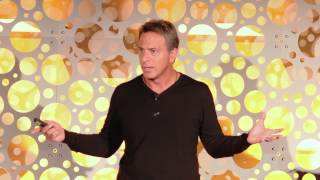
Dan Pallotta on why fear doesn't mean you shouldn't do something big. He organized the California AIDS Ride and a three-day breast cancer walk, and shares three ways to handle terror: expect it, stay present, and use it as fuel. Failure is how you get to great things.
Chapters
How are you? You having a good conference so far? Yeah. Good. All right. Well, I want to talk about fear and the myth of fearlessness and that debilitating sense of terror that can come over us when we commit ourselves to something big and brave and bold and new. You know, we're taught fear is a sign of weakness. There's a quote by Vince Lombardi that kind of sums up the macho, testosterone driven cultural attitude. Winners never quit and quitters never win. The implication is, if you want to quit, you're a loser. And that's not been my experience. Everyone I know who has done something really brave and really great has been consumed really with terror and with self doubt and with the desire to quit. You don't see it on the outside, but it's there on the inside. Georgia o' Keeffe said something that I think is a lot more honest. She said, I've been absolutely terrified every moment of my life, and I've never let it keep me from doing a single thing I wanted to do. When I was in college, I organized 38 of my classmates to bicycle across America with me to fight world hunger. And this was the route that we planned to take. And we got on a plane in Boston and we took a six hour flight to Seattle. We unboxed our bikes, we assembled them, and we started pedaling. And about three days into this, in Washington State, I was exhausted and decided that I had had just about enough of this whole thing and I wanted to quit. And I got ahead of myself and I started to have this mental panic attack where I was saying to myself, all right, and it was raining, to make matters worse. So I started to say, look, I'm exhausted and we're not even at the lunch stop yet. I got 20 miles more to go to get to lunch. And once I get to lunch, that's not the end of the day. I still got 30 miles to go to finish the day. And when I finish the day, that's not the end of the week. I got four more days to go to finish the end of the week, and that's not the end of the month. I got three more weeks to go to finish the end of the month, and that's not the end of this stupid ride. I got a month and a half to go after that month, and I just want to go home. But I didn't. And we rode our bikes 4,256 miles across the continental United States. And it was, you know, one of the most beautiful experiences I've ever had. In my life. And we got into New York and we were greeted like heroes. Brian Gumbel interviewed us on the Today show. We got to ride around Shea Stadium before the Mets game, and they put us up on the Jumbotron and they played Chariots of Fire. And everyone was crying. You know, it was really amazing. And then years later, I began to lose a lot of friends to aids. And I never forgot the power of that journey. And I thought, you know, the gay community really needs something big like that for people to participate in. And so I created this event called California AIDS Ride. And it was a seven day bike ride from San Francisco all the way down the coast of California to Los Angeles. And you had to go the whole seven days. You had to go the whole 600 miles. You had to sleep in a tent overnight every night for six nights. And you had to raise a minimum of $2,000 in order to do it. And that had never been done before. And I went to the gay and lesbian center in Los Angeles and I said, look, I think this thing could net $600,000 for you guys. And they put their faith in me, and they put up a $50,000 investment to launch it. And we signed a contract. And the very next morning, I woke up in a state of terror. What the hell have I done? How on earth am I going to get 500 people to ride their bikes from San Francisco to Los Angeles and to raise $2,000 each? I'm going to be laughed at. This is going to fail dismally. I'm going to be ridiculed. I'm going to waste their $50,000. I should just give the money back and quit. But I didn't. And we went ahead with the ride, and it ended up netting not $600,000, but a little over a million dollars? And on that basis, we were invited to do an AIDS ride from Boston to New York. And so, same thing, we signed a contract with charities here. In that case, they put up a couple hundred thousand dollars to invest in it. And the exact same thing occurred the night before. I was supposed to fly to Boston to start work on that event. Just gripped with fear. And my mind started saying, all right, you got this nice little event in California. You got this cozy little thing. It's working out really well. You're going to screw that up and screw this up. You know, this is a California thing. People in Boston and New York aren't going to want to ride their bikes the way they do in California. And you're going to have to recruit People in the wintertime, how are you going to get people to think about riding their bikes in the summer and the wintertime? And it's the New York market, you know, West Hollywood. Sure, you could organize in West Hollywood. How are you going to penetrate the New York market? And it sounds a little light hearted in retrospect, but in the moment it's very black and very dark and very shadowy and very terrifying. And the thought was there, look, I haven't spent any of this money yet. Just give the money back to them and tear up the contracts and say, I'm sorry, I made a mistake. And that feels really real in that moment. But we didn't. And the Boston, New York AIDS ride went ahead and it became the most successful first time AIDS fundraiser in history. It raised $7.4 million in its first year. And on that basis we began expanding the AIDS rides all over the United States. And in the midst of that, looked at the issue of breast cancer, which had similar dynamics where people's mothers and daughters are dying. And there was nothing big you could do but stick a pink ribbon on your sweater. So we said, let's do something big for breast cancer. And we came up with this idea of a three day walk, 60 miles long from Santa Barbara all the way to Malibu, same deal. You had to sleep in a tent, you had to raise $1,200. And this time we got a Fortune 500 company to invest. They put up $350,000 for us to do it. And you know what I'm going to say next? The same thing started to happen. This is ridiculous. It was about the bikes. That's why the AIDS rides were successful. It was the bikes. People aren't going to want to walk these long distances. What are you nuts? You get this nice business in the AIDS rise, you're going to destroy that whole thing. And now you've got a big reputation and it's a Fortune 500 company. They're going to sue you for misrepresenting what you could actually achieve. And sure, organizing the gay community was easy. It's compartmentalized in the Fenway and the Castro and West Hollywood and the Village Women, they're dispersed. How are you going to organize women? But we went ahead and the first breast cancer three day netted four times as much as the first AIDS rite. It netted $4 million in its first iteration. And over the course of nine years, as Chris said, we had 182,000 people ride or walk in one of these events that I was convinced were Going to fail. They raised a total of $581 million. It was more money raised more quickly for these causes than any events in history. Thank you. Thank you. So how do you deal with this fear when it comes up? Well, I can only tell you what I've learned and these are the few things that I've learned. First of all, you have to know that it's normal. You have to expect that it's coming. The moment you commit yourself to something great, you can count on it, a great sense of terror is going to overcome you. It's natural. Nothing's wrong, nothing's broken. It's actually a sign that you're doing something great. The more terror that you feel, the more you know you're up to something really big. If you don't expect it, if it's a surprise, if it seems unnatural to you, if it feels like this shouldn't be happening, something's broken, something's wrong, then it's going to undermine you. What happens when you think something's wrong? You abort, right? That's the logical thing to do. That's why they have those big red abort buttons in rockets. Something feels like it's going wrong, press the abort button. So that's the first thing. Know that it's completely normal to feel terrified. Nothing's wrong. The second thing is don't get ahead of yourself the way that I did on that bike ride. You know, Eckhart Tolle, who wrote the Power of Now, talks about how we as human beings, we really worry. We worry about a lot of things and we create these movies in our heads where I'm losing my job and I don't have enough money for my kids tuition and maybe I should divorce him or her. And we try to cope with these situations in our mind, but we can't because they don't actually exist. And you can't cope with something that doesn't exist. About 15 years ago I got my private pilot's license. And on the day that I was going to solo, I decided that this would be a really good time to stop, you know, another panic attack right after lunch. And I started thinking like, yeah, I've had a lot of fun and I've gotten to fly with the instructor and I've learned a lot. But. And then this movie starts to occur in my mind and I see the plane going down and I see flames and I'm in it and then I see fire engines on the Runway and then I see a funeral and my parents are there. And then I see a cemetery. You know, I'm getting way ahead of myself. And so I said to myself, well, you could quit, yes, but you don't have to quit right now. At 2 o', clock, you could quit at 3 o', clock, you could quit. At 5 o', clock, you could quit when you get to the airport. I said, all right, that's a good plan. So I went to the airport and I got in the plane and my instructor and I did a bunch of what they called touch and goes. And on the fifth or sixth touch and go, he said, all right, pull over, you're doing great. I'm going to get out of the plane and you're going to go do it yourself. And in that moment I felt such a sense of relief and freedom that he was finally getting out of the plane. He wasn't going to be looking over my shoulder at everything that I did. And when I was living in that movie, I. I could not possibly have anticipated that. There's an acronym in Alcoholics Anonymous for Fear F E A R. False Evidence Appearing Real. That's what these concoctions are in our mind. So I got in the plane and I went and I did a bunch of touch and go's and I had so much fun. So don't get ahead of yourself. And the third thing is use the fear. Let the energy, let the adrenaline motivate you. I have a friend who's a famous record executive and I said, do you still worry now that you're so successful? He says, I worry all the time. I get paid to worry. Use that fear to fuel your creativity. When I got so afraid about the Boston New York AIDS ride, I thought, yeah, that New York issue is real. What are we going to do about that? We should take out a full page ad in the New York Times. But we don't have the money to do that. Let's get our sponsor to do it. We did. We took out a full page ad in the New York Times. Times. It raised about $3 million and it became the future of the way we would advertise these events. So that fear was really valuable. So those are the things I've learned. Know that it's normal. Don't get ahead of yourself and use the fear. Yeah, but what if I do all that and what if I fail? What if I fail? I don't know anybody great who hasn't failed and failed a lot. I've failed a lot. I think the most profound question is not what if I fail? The most profound question is. What if I never fail? What if I never take a risk? What if I'm so cautious that I never learn anything big? What if I'm so afraid to fail that I never really live? Thank you.
More from Patrick



A NEW BREED OF PARTNER: The Partnership Ecosystem Model Journey of Patrick Biddiscombe, Part 1








Customer Success Workspace: Never Lose Sight Of What Matters Most | HubSpot Spotlight