INBOUND Bold Talks: Tamsen Webster "Easy is the New Hard"
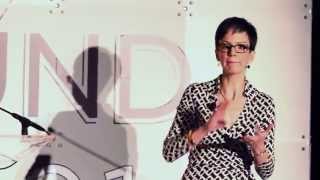
Tamsen Webster explains why tasks feel hard: they fight how your brain actually works. The brain cycles through processing, connecting, and retrieving information. Use frameworks to compress complex ideas into reusable structures, and what felt impossible becomes simple.
Chapters
So the first time I realized I was lazy, I was standing in front of a dishwasher. Well, I was sick. So at the time, the realization was much more along the lines of, I really don't want to put away these dishes. You see, I was a fairly scrawny kid, and my mother had worked really hard to find the biggest, heaviest plates that she could. And so, at least in my recollection, they're about this big and yay thick, which in relation to me at the time, who was about this big and yay thick, this was a hard job. But that day, and I remember it vividly, staring at the racks of dishes in the dishwasher, was the first time I remember thinking to myself, there must be an easier way to do this. There must be. And so I started working on that. I had a few false starts, thankfully, no broken dishes, and I came up with a system stack first. Now, that system may not seem like much, but again, I was six. So what did that do? Well, it was the first time I realized that there was absolutely a way for me to spend less time doing a thing I didn't want to do and more time doing a thing I did. Now, why is that important to you? Why am I telling you this? Because we all want things to be easier. And the funny thing that happens, though, for most of us, is that even though we want things to be easier, we're really good at making them hard. Now, what do I mean by that? Well, take weight loss, for example. What happens if you've ever tried to lose weight? I'm going to guess at some point in that process, you said to yourself, I'm just not going to eat blank. Anyone ever do that? Seems really easy, doesn't it? Well, that's easy. I'm just going to not eat something I really love. Was that easy? That was not easy. That was really hard. Now, that's the thing, though. While it's not hard to make things hard, it's also not hard to make things easy. All it takes is figuring out a new way to think about the way you think. And I'm going to tell you how to do that. Now, first, though, I need to talk about what is it that I mean by hard? Okay, what do I mean by hard? I mean things that are complicated, things that are untried, unknown, things that are not sustainable. Like when you tried not to eat the things that you love. Can we agree those things are hard? Those things are hard. So if they are so hard, why do we do it? Simply this. Because we're told we should. Now, I don't even know what's going on there. Honestly, I have no issue. But think about it. We wear busyness like a badge of honor, and yet totally unfulfilled. If you followed any of those extremes of diet or exercise, I'm also going to guess that the results came and went as fast as the fads did. So what are we left with? It's not no pain, no gain. That's just pain. In other words, hard isn't good. Hard is just hard. That's not good. Now, why is it so hard though? Why isn't it good? Well, the reason why it's not good comes back to how the brain works. It's not good because hard works against how we think. So how do we think? Well, thinking, as it turns out, is a three step process. Step one, we process information, take it in, what we see, what we hear, the environment around us. The second thing that we do is we connect it. We connect the information that we take in with in two ways. First, we either connect it to itself by repeating it over and over. Think when you had to memorize the multiplication tables as a kid, right? Memorize over and over. And the second thing we do is we connect it to things that we already know. Example of that. Do you remember how you learned your ABCs? Do you remember the song that you sang? Do you know what the tune of the song was? Twinkle, Twinkle Little Star. Did you already know that song? Yes, you did. Did you learn the ABCs? Yes, you did. So we process, we connect. And if we've made that connection, then we can retrieve that information when we need to. We can pull it out of our head. And when we do retrieve it, we come back and we're able to process it again and put it with things. So great. You say, fine, I think I understand, but this is going to be much better if I show you. And so for this, I need two volunteers. All you have to do is read letters off the screen and answer a question about them. And I'm sorry, people in the front row, you're the ones I can see thanks to the lights, so it's good to be you. All right, what's your name? Trish. Trish and Angela. Angela, thanks very much. All right, Trish, you're up first. What I need you to do is read these letters off the screen out loud and in order, starting with the X, loud enough so people can hear. F, C, N, I plus my voice. Oh, I'm sorry. You're doing great. N, P H, D, F, B, I, C, I, A, N, C, A. Fantastic. Here's your question. What letters did you just read? Any order. She's like, oh, crap, that's hard. Okay, go, go. Go ahead. Any letter. A, C, X. Excellent. A, cx. You got three of them. Fantastic. Round of applause. All right, now for you, same question. Read these letters out loud and in order so that everyone, PhD, FBI, CIA, NCAA s, huh? Okay, same question. What letters did you just read? PhD, CIA, X. All. All right. Do you see what happened there? That was a lot easier. Why was it easier? Because it worked with how you think. Now, did anyone notice those are the same letters in the same order, in fact. But you see what happened there? Yours was hard because I asked you to process information. You had nothing to connect it to. I asked you to retrieve it and you couldn't. That was hard. But you, ah, you look at those letters, you say, I can connect those with things I already know. I can retrieve it on demand. That was easy. Things that are easy work with how we think, process, connect, retrieve. That works. Okay, so if things that are easy or things that our brain can process, connect and retrieve, what does something have to be in order for us to process, connect and retrieve it? This, they need to be simple so that we can process it. They need to be memorable so that we can connect it with the things that we know. And finally, they need to be repeatable so we can retrieve it over and over again. So you see where this is going? Of course that things are simple, memorable and repeatable are then therefore easy. There's some kind of math formula there, I'm sure, but this is what it was. So simple, memorable and repeatable is easy. What then is simple, memorable and repeatable? What is a way to think that's simple, memorable and repeatable? Actually, a whole category of ways to think. And they're called frameworks. Now, I'm a huge fan of frameworks. Obviously I'm giving this whole talk about them, but what is a framework? A basic conceptional structure. Not helpful. I know conceptional means thinking. So what's a framework? A structure for thinking. It is, in other words, a way to think about the way to think. And as promised, they are simple, memorable and repeatable. And you know what they do? They totally make things easy. Now why do they make things easy? They make things easy because they work with the way we think. They take big complicated concepts and make them simple, memorable and repeatable, which means in many ways, they're like space bags for your brain. And if you take all those big, nasty, complicated thoughts and you squish them down. Then you can store more of them away in your head. That's a cool thing to do. That makes things easy. So can you take any complicated concept and do this? Absolutely. We see them all the time. Complicated concept. What is a brand? For instance, how do you market that brand? How do you talk about that brand? Okay. Frameworks work in business. Do frameworks work anywhere else? Absolutely. You can use frameworks to tell you where to spend your time, what to do with your life. You can use frameworks to tell you when to do it. I have frameworks for what I eat, how I run. Well, not exactly like that. It turns out that Katy Perry's Roar is the perfect running cadence song. So roar it is, right? All right. I have frameworks for how I shop, for what I wear, and yes, I'm very brand loyal. These are two of my favorites. Why? Because brands are frameworks, too. Prove it. If I say Volvo, you say space bag. That little tiny word holds a whole lot of other concepts right in on top of it. I even have a framework for making sure I put away what I wear when I wear it. Does it work for interpersonal relationships? Absolutely. Sorry, honey. These are all of our deals. These, however, can be summarized as this. And there's even a framework for when it doesn't always make perfect sense. What do I want you to take away from this? Everything has a framework, and it is easy to figure out how to get there. All you have to do is borrow or build. Anyone can do it. Where do you find those frameworks? First? Borrow. Pretty much like the scientific method. Another framework, by the way, if you're feeling like something's taking up too much space in your brain or something is just too hard, simply find a framework that's already out there. Test it, see if it works for you. The other thing you can do is build your own, which is essentially just pattern recognition. Look at what's out there, see it, name it, and again, test it to see if it works. Either way, whether you borrow or build, they do work. And that's the point. What works is what works for you. If it's simple and repeatable and memorable for you, it will work. Now, why is that so critical? Because the most important framework to give you at all today is this one that we create. The world we think we see. If you think life is easy, it will be. But if you think it's hard, it's absolutely going to be hard. But hard is your cue. Hard is your cue to go out to find something that will work. Find a way to think about it that will make it easy. Choose it, use it, test it, see if it changes. In other words, fret, find frame, see? Easy. Thank you.
More from Patrick



A NEW BREED OF PARTNER: The Partnership Ecosystem Model Journey of Patrick Biddiscombe, Part 1








Customer Success Workspace: Never Lose Sight Of What Matters Most | HubSpot Spotlight