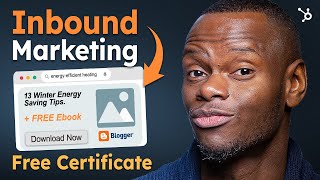
A HubSpot-approved YouTube presentation (by Patrick Biddiscombe) introducing inbound marketing and the HubSpot flywheel. It explains inbound as attracting customers through valuable, personalized content across three stages (attract, engage/help, delight), demonstrates building buyer personas ("Small Business Brenda"), offers SEO/content tips (keyword research with SEMrush), and shows automation/segmentation steps in HubSpot (creating lists and targeted emails). The video includes a JetBlue case example of email personalization and promotes HubSpot's free Inbound Marketing certification.
Chapters
Are you tired of chasing customers and wish you could attract them instead? In this video, I'm going to introduce you to your new favorite scent, Inbound Marketing. It'll take you from undesirable to undeniable. Every customer is on a journey to solve a problem. Inbound marketing is the fairy godmother on their shoulder, guiding them to the answers and solutions, making their journey smoother and more successful. It's a strategy that focuses on attracting customers by offering valuable content that and tailored experiences. It seamlessly integrates into a buyer's decision making process and forms meaningful connections with customers. Imagine it's a cold winter night and you're up late searching for energy efficient heating. You find a blog post with great tips, download their free ebook on green living and later purchase an energy saving smart thermostat they recommended via email. This smooth journey from finding useful information to making a purchase is a clear example of inbound marketing. It's a great investment for your business because it focuses on customer needs, builds long term relationships, and uses personalization strategies to boost conversions leading to sustainable growth. It's made up of three stages. At HubSpot we lovingly refer to this as our flywheel. The Attract stage involves attracting visitors with useful content. Think of a high value blog that provides solutions to common problems. The focus is on establishing relationships with customers. You might create a tailored automated email series for leads who've downloaded a specific book. This joy filled stage is about helping, supporting and empowering customers to reach their goals and create a buzz around your brand. This could be a user generated content campaign on social media asking satisfied customers to share photos or stories of how they use your product. No matter what stage you're at, here are some tips and tools that you can use to make your inbound strategy shine. Create and Utilize Buyer Personas this is one of the most essential best practices in inbound marketing. Understanding who your ideal customers are, their needs, their pain points and how they make decisions can greatly improve your marketing effectiveness. Our Persona tool can help you build detailed buyer Personas. For example, today we're talking about Small Business Brenda. You'll want to name your Persona. Today we're going with Small Business Brenda. Then you want to put in their demographics. Let's go with 35 bachelors. What's the size of their organization? We'll put in Self Employed Owner Online Boutique Owner. In this section you'll define how is their job measured? Let's say it's based on sales, revenue and customer satisfaction. Who do they report to? Self Employed no direct reporting structure. Now let's get into the characteristics of their job. What are their goals or objectives? Let's say grow business and increase online presence. For their biggest challenges, we can say limited budget and time for marketing. Now we get into how they work. What tools do they use or need to do their job. Let's go with E commerce platform, social media management tools and their preferred communication style with other businesses are email and social media. When it comes to their consumption habits, let's say Instagram and Pinterest. Knowing that Brenda is an online boutique boutique owner with a passion for growing her business and increasing her online presence allows you to create targeted campaigns specifically designed to address her needs. Which brings me to my next tip Create Valuable Content Quality content that addresses your customers needs and questions is at the heart of inbound marketing. So for Brenda, we could create a series of blog posts that provide practical tips and insights on growing an online business. Regularly posting blogs, ebooks, videos and other forms of valuable content can attract and engage your target audience. But simply creating content isn't enough. You also need to be sure that it's easily discoverable by optimizing it for search engines. Welcome to the wonderful world of SEO. Tools like SEMrush, for example, help you identify the keywords your audience is searching for so you can incorporate them into your content. Just go to their site. Go to the Keyword analytics section in the left hand menu. Under Keyword analytics, select the Keyword Magic tool. Enter a broad topic related to Brenda's content, such as sustainable fashion. SEMrush will generate a list of related keywords based on my topic. Explore the list and review metrics like search volume, keyword difficulty, and trend data. What's really cool about this tool is that you can take it a step further and find the exact questions people are searching for. This way, Brenda sees that she could make a blog post answering what is sustainable fashion? Which would connect with an audience. If you want to dive deeper into creating valuable content, check out our free Inbound Marketing certification course. It covers content creation extensively from the perspective of someone who is constantly seeking and creating new content. It's very important to remember that a gold mine of valuable content can be discovered simply by addressing the questions people are searching for. If you start pumping out all of that optimized, valuable content, then the next problem you're going to have is figuring out what to do with all of your success. Yeah, as your customer base grows, it becomes increasingly difficult to maintain personal interactions. Which brings us to the next tip. Automation and Personalization Automation allows you to streamline routine tasks such as sending emails or posting on social media. Personalization involves tailoring your messaging and offers based on individual customer preferences and behavior. It can significantly improve engagement and conversion rates. So let's imagine Brenda wanted to automate her email marketing while also keeping a personal touch by only sending relevant content. Just log into your HubSpot account and head over to the Contact section. Click on Lists in the left hand menu. Click on the Create List button. Give your list a name that represents the segment you want to create, such as first time customers. Define the criteria for your segment by selecting the appropriate filters. For demographics, you can choose filters like age, location or job title. For purchase history, select filters based on past orders or transaction values. For behavior, select filters related to specific actions on your website or engagement with your marketing campaigns. Set the filter conditions to master a desired segment. For example, if you want to create a segment for first time customers, you can set the filter condition to number of orders is equal to one or purchase date is within the last 30 days. Review the segment preview to ensure that it includes the right contacts based on your selected criteria. Click on the Create List button to save your segment. After creating her segments, Brenda can send targeted emails, provide relevant promotions, and customize content specifically for each segment. With this one tool, she can save time and still be sure every email she sends is going to the right customer. Now let's take a look at a business that used some of these same tips to see some pretty big gains. JetBlue creates engaging emails with attention to every detail, from personalized headers based on the recipient's past, flying and search history to contrasting CTAs. Their emails have a friendly tone and often incorporate airline related humor, making them seem like they're coming from a friend rather than a corporation. This relatability strengthens customer connections to make these personalized interactions scalable. JetBlue goes beyond simple demographic segmentation, incorporating past customer behavior. This thoughtful approach to personalization and segmentation results in promotional emails that are engaging without being intrusive. All in all, inbound marketing is a major key to business growth. It prioritizes value relationships and personalization. From creating relevant content to user driven campaigns, it's about meaningful connections. If you found this information useful and want to take your inbound marketing skills to the next level, sign up for our free Inbound Marketing certification course. You'll touch on everything to creating a buyer's journey to developing a content distribution strategy. Be sure to like and subscribe until next time. Bye bye. I can't find this client info.
Have you heard of HubSpot? HubSpot is a CRM platform so it shares its data across every application. Every team can stay aligned. No out of sync spreadsheets or dueling databases.