Influencer Marketing Strategy: Do THIS To Grow Your Business in 2024
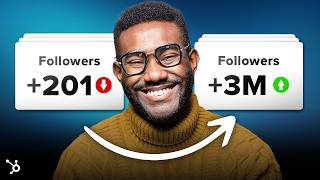
Patrick Biddiscombe walks through influencer marketing strategy using Jamal's Cookies as an example, covering how to find the right creators, negotiate deals, and measure results. Dunkin's partnership with Charli D'Amelio drove a 57% increase in app downloads. The video includes templates and an ebook to download.
Questions this video answers
"Every $1 spent on influencer marketing can generate up to $20 of profit" (20x return).
March 14, 2024.
57% increase in Dunkin app downloads.
Charli D'Amelio.
Patrick Biddiscombe.
Chapters
So here's a crazy fact I Learned recently. Every $1 spent on influencer marketing can generate up to $20 of profit. That's a 20x return on investment. Absolutely, Matt. So that's why I'm here to walk you through crafting an influencer marketing strategy as I create one for my own business, Jamal's Cookies. Plus, I'll take a look at the biggest mistakes to avoid when entering the world of influencers and how even one of the most beloved and ubiquitous brands in the US was able to benefit from from an influencer campaign. You're not going to want to miss that, so be sure to stay tuned to the very end. Now I'm looking for an influencer in the food space to show off how delicious and affordable Jamal's Cookies are. So I'm going to start there. One of my favorites to cover the food space is Barbara Costello, AKA Brunch with Babs, the Internet's grubbing grandmother. I see that she posts ads like this one for Athletic Brewing Company's non alcoholic beer in a way that's organic to the to the way she typically posts for her audience. So in the influencer research template, I'll fill in the pertinent information like platform, follower count, contact information and category. You can use an engagement rate calculator like this one from Flanx for a bird's eye look at a particular influencer's impact. Babs has a good but average engagement rate on Instagram for what we call a mega influencer or an account with 1 million plus followers. You could find that Macro, Micro and Nano influencers may actually have a higher engagement rate due to their smaller but highly engaged audience. I suppose that probably makes Babs a Nana influencer because she's someone's grandma. Mega influencers reach is usually equal to the rates they charge. So if you're a smaller business, you may get more return on investment with a micro or nano influencer. So just to be thorough, I'm going to investigate a micro influencer I really like, Alex Carey, AKA My Kitchen Drawer on Instagram. Her engagement rate is a bit lower, but that might mean more affordable. It's worth doing thorough research at every level of influencer so you can determine what will work best for your brand. Some things to keep in mind during this stage does the product you're selling match what the influencer's audience is interested in? Is the influencer's reach in the same place as your target audience? If you're trying to reach teens, for instance, a LinkedIn influencer probably isn't the way to go. Does the influencer's demographic match the buyer Persona you're trying to appeal to? And finally, is the influencer well liked? On the whole? Remember, they'll be associated with your brand, so if you're a wholesome cookie person like myself, you probably don't want someone controversial or edgy. So you settled on an influencer you'd like to work with. Now what? Once you've identified your candidates, it's time to start outreach. In the Freehub Swap eBook, there are some great templates for starting the conversation via email or dm. When you're starting outreach, try to take advantage of any mutual contacts you might have for an introduction, but always be professional and honest with what you're looking for. A few things to keep in mind when you begin to reach out to influencers State your goal clearly. Let them know at the outset what outcome you're hoping for. Show them visual examples of other campaigns that you like to give them a showcase of what you're looking for. Keep the numbers simple. Don't bog them down too heavily in the data. Give them the brass tacks that are relevant to your campaign. Be clear on the responsibilities of who you partner with. Are they creating the content or just sharing it? Finally, don't micromanage. You want to brief them on your goals and intentions, but allow them the space to pitch ideas that work for their own brand. The more authentic the content is to the influencer, the more engaged their audience will be. When the time finally comes to drop an agreement, be sure to cover all your bases. This includes things like the extent of the partnership, method of compensation, the type and amount of content included, promotional requirements, approval process, content copyright, and sunset clauses. In other words, how long the sponsored content should stay live on their page. There's a lot to go through here and I'm not a legal professional, so make sure to get the contracts looked over by an attorney. But once contracts are in motion, the agreements tracker in the template makes it easy to track and manage the status of contracts and deliverables, so be sure to check that out too. I just have to copy over the influencer info and use these dropdowns to change the status of the field. So here I've sent the contract to Babs and I'm waiting for her to get back to me while the other contract is signed and delivered. So contracts are signed, content is live. Now what? Well, once the campaign is complete, I'll move to the campaign measurement tab in the template and start tracking just how well it performed. I'm going to input the total impressions, engagements and clicks and visits to the Jamal's Cookies website. As a result of that specific piece of content, and not too shabby in the long run, keeping track will not only help you determine your total return on investment, but over time also help you form a clear picture of the type of influencers and content that are getting you the most value Influencer marketing can feel like a whole new world to a lot of us, especially if you've been entrenched in more traditional marketing methods. So what are some of the best practices when you partner with an influencer? I touched on it a little earlier, but I want to underline its importance. The best tip I can offer is to partner with influencers that support your brand's message, your company's culture, and your personal, moral and ethical standards. Do thorough research on the influencer's brand, previous partnerships and reputation before signing any contracts. And to that last, last point, you should always have contracts. Handshake deals have no place here, even if they have really nice nails that are perfectly manicured. Always make sure everything is in writing with responsibilities and expectations spelled out clearly. Point out the value you can provide to the influencer to show them why the partnership would be mutually beneficial. Sure, you're paying them or giving them free stuff, but perhaps cross posting with your brand's own social accounts will lead to to new followers for their accounts as well. To that end, you should also be interacting with their content organically through social media, and not just the stuff you're tagged in. Authenticity goes a long way for both your partnership and the relationship with the audience. Now, if you're new to this world, it's super easy to fall into some common mistakes. So what should you absolutely avoid at all costs? First, do not force your product on an influencer. That just doesn't make sense. We all remember the Kendall Jenner Pepsi ad. It might be tempting to go after a big name if you've got the budget, but if your audience doesn't intersect with your own, the outcome will only damage both brands. People don't like it when things they're not interested in are forced onto their feeds. Common mistake number two Prioritizing the number of followers over engagement. Remember, just because an influencer has 10 million followers doesn't mean 10 million people are 100% engaged. If you're deciding between two options, one with a million followers and poor engagement, and one with 15,000 followers and excellent engagement, generally you're better off going with the Latter Mistake number three not defining Goals it's critical to be absolutely clear I'm talking clearer than a VVS diamond with your key performance indicators so you can track the success and value of of your campaign. Know which metrics are going to truly benefit your business. Defining your goals will help you choose the right influencers to partner with, hold them accountable for the benchmarks you set, and will help you be able to define the success of the campaign in total. Number four not providing a well thought out brief. You want to be able to clearly show your goals, timeline, budget, target audience and key info about the product you're featuring. If you're a vegan brand, for instance, it should be mentioned in the brief that the influencer shouldn't be using any meat or animal byproducts in their content that's promoting it. The flip side to this is common mistake number five not letting the influencer be creative. It's important to write a comprehensive brief, but you're hiring these folks for a reason. They know how to talk with their audience the best, so let them. As long as expectations are clearly defined, influencers will create more effective content for their audience when you give them the freedom to do so. At the start of this video, I mentioned taking a look at an influencer campaign for one of the US's most beloved brands. So what was I talking about? Well, as you probably are aware, America runs on dunkin' and in 2020, TikTok was running on Charli D' Amelio's dance videos as she was the first creator to reach 100 million followers on the platform. Charlie was often seen sipping iced coffee in her videos, and soon enough it became clear that it was Dunkin'. Can you see where this is headed? In an epic partnership, Duncan created the Charlie a drink inspired by the influencer's usual order. The star promoted it on her TikTok along with an offer for 100 bonus Dunkin rewards points if they ordered the drink through the Dunkin app. Any guesses on what happened? Yeah, downloads of the Dunkin app increased by 57% thanks to the Charlie. Undoubtedly, Dunkin's goal was to increase app installs through this partnership and it 100% worked. So with all that said, influencer marketing is serious business in the form of of fun content. And the great news is your business doesn't have to be left behind in this ever evolving age of influencer marketing. So be sure to download HubSpot's free Influencer marketing kit that includes the templates that I use in this video and a complete ebook with all the ins and outs you need to know for a successful influencer campaign. What is your business done to partner with influencers? Let us know in the comments below and be sure to like and subscribe to HubSpot's YouTube channel for more great videos, tips, tricks and how to's from yours truly. Now, if you'll excuse me, I think I gotta go get the Charlie from Duncan. I don't know if that promotion's still running, but if it isn't, I'm gonna bring it back. Until then, I'll see you next time. I can't find this client info.
Have you heard of HubSpot? HubSpot is a CRM platform so it shares its data across every application. Every team can stay aligned. No out of sync spreadsheets or dueling databases.
HubSpot grow better.
More from Patrick



A NEW BREED OF PARTNER: The Partnership Ecosystem Model Journey of Patrick Biddiscombe, Part 1








Customer Success Workspace: Never Lose Sight Of What Matters Most | HubSpot Spotlight