Jason Blum on How Streaming Services Affected the Film Industry
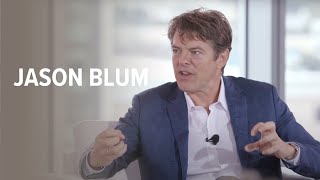
Jason Blum explains how Blumhouse keeps costs down by giving above-the-line talent ownership instead of big upfront pay. Streaming raised what movies need to make back, pushing budgets up to around $5 million. The company produces roughly 10 films a year with about 80 employees.
Questions this video answers
About 80 people.
About 10 movies a year.
About 100 hours of programming in the last 18 months.
About $5 million.
Started at $1 million (Insidious), then moved to $3 million, and now about $5 million.
Chapters
Hello, welcome. Welcome to the Inbound Studio. Jason, thank you for joining us.
Thank you for having me.
How did it go on the main stage?
I think it was a big success.
Excellent. So glad to have you here at Inbound. I just want to jump right in on, first and foremost, why, for those who don't know, Blumhouse produces primarily horror films in the horror genre, and you've done some really, really incredible work there. And I want to start with why horror and what has drawn you to that genre?
Why scary movies? So I'm 50 years old. I started. I graduated college in the early 90s, and I spent the first 15 years of my career with one foot in studio filmmaking and one foot in independent filmmaking. And when I was 35, I was lucky enough to have produced and released Paranormal Activity. And Paranormal Activity was kind of a mix of those two. It wasn't kind of. It was an absolute mix. It was the ultimate independent film released by a very, very traditional Hollywood studio studio. And what I learned through that experience is that's what I loved, which is what I love doing is making movies independently but having them released by studios because independent distribution is and was broken and studio production is and was very frustrating. So Paranormal Activity got, for me was the best of both worlds. And I thought, boy, if I could live in this space, I would be very happy. And we followed with Insidious and Sinister and the Purge and all the scary movies that we've done. And about two or three years ago, we started our television studio. And so I would say now 50% of my time is with movies, and 50% of my time is spent on TV. And the brand. The lens of the brand on the television company is kind of a lot broader. We just did Loudest Voice in the Room with, which is a bio. Bio miniseries about Roger Ailes on Showtime. And. And that was for our TV company. And how I like to define the brand, the evolving brand is we're not just monsters under the bed anymore, but things you. Things that keep you up at night. And certainly Roger Ailes has kept me up many nights.
Fair. On a personal note, anybody that follows my Instagram, which is not a huge amount of people, but I have a personal mission to remove scary movie commercials after dark, because I just.
They don't work for you.
No, I don't think it's fair that I should be sitting in my room watching Real Housewives and then I get accosted by one of my movies, by an ad for the nun, and, like, it's not okay. That has to happen in the daylight.
It's very loaded, what you just said. First of all, the Nun is not our movie. I'm sorry. So don't bring that up. That's a real sore spot.
I'm sorry. Second of all, I don't like it, so.
Okay, good. That's fine. But the commercials for scary movies on your Instagram account, I'm the wrong audience because I'm pushing those. I want them to do them 24 hours a day, for God's sake.
That's really hard for me.
I'm sorry.
I think you need to target people that want to receive that.
I like to target everyone.
Well, no, in all seriousness, how do you think about targeting in certain audiences? Because there are people who don't like scary movies, but then there are films like Us or Get out that bring in a broader audience than a traditional, you know, what you might think of as a typical scary movie. So how do you bring new people in?
Well, I think there's too much. I think one. One of the really interesting things actually about a wide release, and I'm defining wide release by say, 2000 screens or more, $40 million in advertising. Most of our movies are released like that. And there's. There's still. It's still very, very difficult to target market. If it was. If target marketing, I shouldn't. It's not difficult to target marketing. It's difficult to convert someone who's seen one of those things like you, for them to see it to go to the movies. For whatever reason, the audience and consumers, all of us, are still more prone to actually go to a movie theater if we see or know that their ads on television. I don't really understand why that is, but it's still actually true. So for a wide release, we have to do pretty broad marketing, and that's why you see your ads on Instagram. And I'm very sorry. For a smaller release and for our television shows, we'll partner with networks and there we do a lot more target marketing. And we're developing. We have this show on Hulu now called into the Dark, and we're developing a direct relationship with our consumer. So that. I guess that's a long way of saying in the future you're still going to see ads for our big movies, but you won't see ads for our TV shows.
Okay, fine.
Sounds like it's not going to help you.
In particular with films. You've approached the economic strategy of it different than is done in traditional or like some of the larger houses can you talk a little bit about that because I know that you make a lot of films at a lower cost per film, sort of with the knowledge that not all of them are going to be box office like blowouts, but some will and that return makes up for it. Can you just talk through that?
Sure, sure. So what, what, what happened after Paranormal Activity was I was really encouraged by agents and managers and advisors, like now that you've had this big hit movie, you should go make a huge movie. You should go make, you know, World War Z or whatever. And I resisted that on this notion that maybe you could kind of apply the European auteur filmmaking process to commercial movies, to scary movies. And so really what we, what we started doing is saying we're going to make these movies for a very little bit of money. The way, the primary way we make the movies as low budget as we do is we don't take anything in the movies. And the directors and the writers and the all the above the line people work for scale and scale only and have an ownership in the movie in return for betting on themselves and not getting paid up front. They have final cut like in Europe. So they have a much more like an independent movie. So they have much more creative control than they would ordinarily have in the making of a commercial movie. And I find that aligns our interest with the directors much, much more. It makes the process much more fun, which is we're only going to, we only all get paid if the thing works. And if the thing works, we don't get paid. And, and I think the most important thing about it is that it allows us to take risks. We can make movies like get out or you know, all the movie or Whiplash or the Gift or all the movies that we've done that are kind of slightly left of center wouldn't have gotten made at a higher budget. And because we're, we're taking small bets, we can take. Take risks on things that don't necessarily make sense on paper. Yep.
In terms of taking risks, do platforms like Hulu allow you to take. Considering the way that that content is consumed and the way that people interact with Hulu or Netflix or some of those channels where it's more targeted and there's more to choose from. Are you able to just generally take more risks in what you produce and put there in the first place?
Well, I'll answer your different, your questions a slightly different way. Which is, which is how has streaming affected the way we take risks? And it's affected it. We back into our budget number, which is totally counterintuitive and the opposite way that Hollywood does it are ceiling for original movies, not sequels, not IP that's known. Halloween is known IP. But our ceiling for original movies is about 5 million bucks. And the reason that it's $5 million is if we, for whatever reason, our hopes and dreams and the director's hopes and dreams don't happen. And the movie is not a wide release. That's about what we can recoup domestically and internationally, mostly primarily through streaming. And that number's come up from in 10 years we started at a million. So insidious was a million dollars and then we were at a $3 million level and now we're at a $5 million level. So I'm answering your question in a different way. But streaming has provided bigger insurance for the movies that they're not, by the way, they're not worse, they just might not be suitable to be supported by $40 million of advertising. They're just more niche as opposed to a broader audience movie.
How do you pick and like, how do you pick what projects you're going to work on? And then how do you pick and how do you evaluate? I guess I should say exactly what you just said. Hey, this is worth this level of marketing. And this is not well for a.
For a production company. We're a pretty big company. We're 80 people and we make a lot. We make a lot of. We've made 100 hours of programming in the last two years, 18 months actually. And we do about 10 movies a year. So obviously there's a lot of people involved in those decisions. And I really the way to answer your question, I try and look at and treat the executives of the company in the same way that we treated and still treat the directors of our movies, which is that I give them a lot of freedom to pursue what they are passionate about. Now what they're passionate about has to fit into our brand. Right? That's important. And it helps if it's not just them, but if them and their team are passionate about something, generally we do it. And, and you know, I have the right to veto it. But I rarely, rarely do.
Knowing like, you know, what, you know now all the success that has come in the last, you know, however many years, especially since Paranormal Activity, if you could look back and tell your younger self like that 20 year old self filmmaker, some advice on, on what to do or how to do it or how to approach all this work that you're doing, what would that Be.
Personally, I would have tell. I would have told myself not to worry so much, but maybe my worrying helped me succeed. What would I tell myself? I think I would have said, you know, I think that's what I would have said. I think I would have said I was too stressed when I was younger. I'm still stressed, but a lot less. And I think I could have. I think I could have been just as affected with a little less anxiety. Maybe see a therapist.
Is there. Oh, I'll go there.
Go. I mean, I have. What if I hid. Go there?
Well, no, I was gonna say, is there any therapy in scary movies?
There's. There's huge. By the way, I do see a therapist. A b. There's a. There. My work. I feel incredibly lucky that my work is really tied to my personality. I really feel like, as someone who runs a company that puts TV and movies out, you may not like everything that we do, but there's a lot of thought behind it. We have to decide what we're going to do. We have to decide. We have to balance this notion of doing things to make money so the company can keep going and doing things to change people's point of view or show people something they didn't necessarily think about or bring up filmmakers that wouldn't ordinarily have a chance to. To be. To be seen or heard from or their work to be produced. So I'm balancing that all the time. And I also look back at the things that we've done and wonder, like, what in my personality made me do that at the time or not. So as a, as. As the. As the founder of the company, it's a. It's an incredibly lucky thing that my. My personality is very tied into the company, and sometimes I have to fight to untie it, and sometimes I have to fight. Fight to tie it. But it's something I think about all the time.
We've got an audience full of business professionals, marketing, sales, customer service. You've been here, you've been on the main stage. If you could leave this inbound audience with one thought to take away with them from your knowledge and your experience, what would that be?
The one thought, and I said this on the main stage, but I'll say it again, is that. Is that we were talking about cynicism. And one of the things that I think is extraordinarily important on our side in terms of reviewing material, any kind of material, a podcast, a book, a pilot script, a movie, a remake, anything, is that you look at the material and look for the best things in it, that it's very easy to make fun of stuff and look for the worst. And if you do that, if we have do. If we do that, we're gonna miss the next us, right? So that we have to. It's very, very important to stay positive. As depleting as it sometimes can be on our end now I'm also a seller, so that's even more depleting. It's really, really hard to. And this is going to sound conceited, but I'm going to say it anyway. It's somehow even more frustrating as a seller for me now. I'm like, I've been doing this for 20 years. I've been doing a lot, right? Like, I love this. You're really not going to make it. And I get no's every day. There's this one particular TV project I've been trying to get made for a year. I cannot for the life of me get this thing financed. I'm going to put our own money in it now. I'm so amped up about it and I think, to answer your question, I think it's very important, not only as on the buying side, but on a selling side is no matter how many nos you get to stay optimistic and keep a sense of humor. And if your idea, I still do believe if your idea, no matter what it is, is good enough, it will rise to the top. It just may take longer than you, than you hope.
I love it. Thank you so much. Thank you for taking the time to join us here at the studio. Thank you for being here at Inbound. It's been my pleasure and I think I can speak for all of us.
Thank you. Thanks, guys. Thank you.
More from Patrick



A NEW BREED OF PARTNER: The Partnership Ecosystem Model Journey of Patrick Biddiscombe, Part 1








Customer Success Workspace: Never Lose Sight Of What Matters Most | HubSpot Spotlight