Jon Ronson and Brene Brown: A Conversation at INBOUND 2015, Full Version
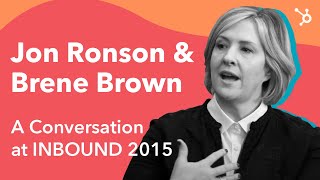
Jon Ronson and Brené Brown discuss how social media amplifies public shaming, from the Ashley Madison hack to Justine Sacco's case. They explore whether shame actually changes behavior, and argue for empathy and community moderation instead of cruelty.
Chapters
Maybe I. Maybe this is a bad idea to start this on a downer, but I just read this morning that a fourth person from the Ashley Madison hack has committed suicide. This was a Baptist minister, I think, in Mississippi, killed himself. So there's now four suicides as a result of Ashley Madison. And it just reminded me of a thought I had when I was writing my shaming book, which is that one real paradox about public shaming is that we blithely do to other people routinely the thing that we are most afraid would be done to us. How did you come to shame?
Through the opposite, through wanting to understand connection. And so I started interviewing people. I'm a qualitative researcher about connection. And when you interview, when you talk to people about connection, they talk about the opposite of connection, which is disconnection and shame, feeling like they're not worthy of connection.
Do you remember, like the first time you noticed that?
Well, the first time I ever heard, really heard the word and thought it meant something was I was working in residential treatment in the Texas Hill country, and, and we had a really difficult time. There had been a child who had tried to run away and another who had committed self harm. And so they gathered up all of the staff and said, we know you're anxious. We know that everyone's kind of on high alert, but we're seeing different behaviors from the staff than we're used to seeing. And we want to remind you that you cannot shame or belittle people into changing their behaviors. And so I think he kept talking. But after he said that, I was just totally not present. I was like, what do you mean? You can't shame people into changing their. That's how the world works. And so I met with him and he was a clinician. He just said, lasting, meaningful shame. Change is never a product of shame. And I think so. When I started my PhD, that was such a counterintuitive, crazy idea to me that you can't change people.
Since I brought up my book about public shaming. And one incredibly annoying byproduct of the book coming out is that people who enjoyed shaming other people who felt it was the right thing to do felt it was with social justice and so on. And sure, social justice is important. Let's put that to one side for a second. But the people who kind of felt that punishing people for a poorly worded joke, for instance, was the right thing to do, instead of listening to what I had to say, some people then decided to try and shame me and shame the book People have lost the ability to distinguish between, I think, serious and unserious transgressions. But I say to people all the time, look, if you're serious about making the world a better place, piling shame onto shame like some kind of dodgy builder covering cracks, is not. It just. It does not work. What works is breaking the cycle with compassion and empathy. And people seem to only want to hear that, theoretically. You know, they don't really want to hear it. They like the sound of it.
They do.
But they also want to go on and carry on doing exactly what they were doing before. So have you found that?
Yeah, I mean, I'm really fascinated by the intersection of our work. Actually, I've been thinking about this a lot, especially because I reread your book for the interview. Man, people are in so much pain, and we're so much. We're better at inflicting pain on people than we are and feeling our own pain. There's a cruelty to shaming that people don't understand, that it strips the humanity away not only of the people that you're shaming, but of the people who are doing the shaming. Like interviewing thousands of people about their experiences of shame. What I can tell you is when I sit across from people and they say, yes, here's how I was shamed growing up, or here's how I've experienced shame in my job, that pain is nothing compared to the pain that people feel when they realize what shame is and how it works and what they've done to their own children or their partners or their employees or their students. When shame and humiliation become kind of blood sport, what it brings up for me is how many people are in just so much pain that they actually derive pleasure from seeing someone else hurt. It's a pandemic.
Yeah. As somebody said to me the other day, in fact, social media prides itself on hating tabloids and reality tv. Yet social media acts time and again like tabloids and reality tv.
Oh, my God. Yeah.
Labeling people, reducing people to the worst thing that they ever did. And you're right, all of these awful things that everybody can agree is terrible. We then routinely go back and do on social media. And you're right, pain and the ubiquitous pain is really evident. Social media very quickly became a very, very unhappy place. And if you leave it for a little while, or if, like me, you're sort of forced off it for a little while because of the fury of the pushback. When you go back, you think to yourself, why is everybody so unhappy? And why can't anybody say that none of this is going to fix any problem?
You know, it's interesting too, because I have a community that's really largely social media. My tribe is very social media based and they're just big hearted, great, generous people. And there is zero tolerance for cruelty. And I don't know if it's because like my mantra is cruelty is cheap, easy and chicken shit. Like, I just think it's just not brave to be cruel. And to be anonymously cruel is especially chicken shit to me. So I think my community, the thing I love about it is they won't tolerate meanness, but they don't go angry villager either.
Okay, so this is the criticism that I get a lot and I think it's a misplaced criticism and I'll explain why, but I'd like to ask you what you think about this so people will say, okay, this is all well and good, but look at us privileged white people. Social media gives a voice to the voiceless. It's the only voice that marginalized people have. And so when you criticize people using their voice on social media, you're basically saying you can't give a voice. You know, you're basically saying, no marginalized person, you're not allowed to have a voice. Maybe before I tell you why I don't think that's a valid criticism, can I ask your view on that?
Well, to be honest with you, because the people I see being the cruelest and the most shaming are not people doing radical activism on Twitter. It is privileged folks. And so I think Twitter and Facebook and social media in general as an activist tool is absolutely gives voice to the voiceless. But more importantly, which I think is a bigger part of the conversation about activism is it gives ears to the earless. I mean, I think it's not about, I mean, I think the voiceless have voices. I think it's about privilege and not hearing people's real stories and people's real pain. So I'm all about using social media for activism. I just think it's not effective because what happens with shame, we have a very limbic response to shame. We don't have a thoughtful response to shame. Shame is fight flight. And so if you really want to change someone, if there's a corporation who's doing wrong, bad things, guilt is a much better thing. Hold their values up against their behavior and show the cognitive dissonance there, not shame. Because if you say you're a horrible person, no one can hear that.
And in fact it's worse than you're a horrible person. It's like, I see phrases like who is this garbage? I see that phrase over and over again. I was talking to Jad from Radiolab and he said he's got like a kid about 6 years old or something. And he said when he goes on social media sometimes he thinks it's like the kind of developmental stage of language where people are trying to use, like they're testing the waters by using like the worst language. Just like a six year old kid will do. They're using like the worst language they can possibly think of. And it's almost like, and I say in my book, it's like toddlers crawling towards a gun.
I remember that line. Yeah, it's haunting.
Yeah. And I think the other, I mean, I agree with you, with what you said about social media. I think over and over again you're seeing not actual social justice, but you're seeing a kind of cathartic alternative to social justice. You know, somebody trying to tell a silly joke that comes out bad. You know, ruining that person is not social justice. It's just perpetrating another terrible act in the world. But it feels great, but it feels.
Great to people temporarily, but I don't think it feels good after time. I mean, I think, I think people are desperate. I think people, you know, I was thinking about what are some of the things, the stories you write, what do they share in common? Like what? And I think it is that we are all so sick and tired of being afraid all the time and being found out that when someone does something wrong and we can just pull all of that energy of we're hiding, we're afraid, we don't feel like we're enough. All the scarcity and just unleash it on someone, that it feels great, but it creates the very environment that we're afraid to live in.
Yeah, exactly. We're doing to other people the thing we are most afraid would be done to us. Creating a kind of surveillance society where kind of war is. There's like a war declared on human nature.
I don't want to be around people who don't make mistakes, who don't misspeak, who don't, you know, I mean like.
The pressure, the pressure. And for the young.
Yeah, yeah, yeah.
I mean, you know, I said to somebody the other day, it's like I just simply don't understand why the young have decided to create such a stressful world for themselves. Maybe they're just not thinking it through.
Don't you think we would have done it, though?
Yeah, I guess. You know, often. Not always. Some people are just dicks, but. And I don't like to sort of say that because it's. Because it sounds. And I've never really said that out loud before, but actually, some people just enjoy being mean. But I think for a lot of.
People, some people are just dicks. That's true. Yeah.
Yeah. I think for a lot of people, it comes from a good place, you know, so from a compassionate place. You know, there's a. There's a terrible irony that it's often it's the desire to be compassionate that's leading people to commit these profoundly uncompassionate acts, like destroying somebody for nothing.
I don't believe that.
Do you not think other people have actually said that they think I'm being kind of too.
I don't believe that.
Yeah, even. Yeah, I guess people know. We know the difference between a serious transgression and an unserious transgression.
I don't think people have control over their emotional beings when they respond that way. I think emotion is driving cognition and behavior, and people are being super irresponsible. And I don't buy for a minute that you think attacking someone and wishing that they were assaulted or killed or hurt because they've done something irresponsible or stupid or even dangerous, there is no way that would ever fit into my definition of compassion. That's rage.
Right. You see, honestly, the reason why I. That sometimes in public is because I'm so. I'm so, like. I don't want to shame the shamers.
No, I don't want to shame the shamers either.
Yeah. So maybe I'm saying that because I'm trying to come from, like, a generous place. A generous place. Yeah.
No, I mean, I think there's this thing I live by that I believe people are doing the best they can. Even the people who made the mistakes, the people who shame the shit out of people who make the mistakes. I believe everyone's doing the best they can. So my question becomes, what boundaries need to be in place for me to be in my integrity and be generous with my assumptions toward people? And so I just can't participate in it or see it. So if someone writes something really ugly on my Facebook page, which happens within it used to, within seconds, my community would just annihilate that person. I mean, like, I.
So what did you think about that?
Oh, I said, come on, take a deep breath, people. That's not who we are. I'M deleting this comment because it's my Facebook page. If you want to have this stuff on your Facebook page, go for it. But there is no. There is no excuse for hurtful behavior, period.
Yeah.
And I don't care what people do. Here's the thing, if you really want to do something meaningful, it can't involve hate and rage. So if it's hateful or if it's full of rage, it's not helpful. And in the world today, you're either making the world a better place or you're making the world a worse place, in my opinion. I don't think there's a lot of neutral behavior. So you're either making the world a better place or you're contributing to the pain in the world. And when you sit back and do nothing, that silence is also a contribution. I'll quote Neil Peart here from Rush. What is it the quote from? When you choose not to decide, you still have made a choice. I think, like a good Rush lyric to bring home the point. But, I mean, really. And so I think for evil to.
Succeed, it takes good for people to do nothing.
To do nothing.
By the way, when I was writing my book, lots of people, as you can imagine, said, oh, you've got to read Brene Brown. And I deliberately didn't, because I didn't. I wanted to kind of come to my own conclusions. I wanted to kind of have my own adventure. I knew you'd been on a similar thought path before me, and so I didn't want, you know, I didn't.
Yeah, that makes sense.
Yeah. But then afterwards, I did read your work, and a couple of individual lines that I came up with were almost identical to lines that you came up with. And the one in particular, I was so pleased when I saw that you'd written this too, because it seemed so simple. But it took me a couple of years to get there. Was the cure for shame is empathy. And I really noticed that people don't realize when 10,000 people are telling a single person that they're disgusting and they need to get out, or they're not good enough to be in society. Like what happened with Justine Sacco. It's profoundly traumatizing. It's way more traumatizing than the shamers like to think it is. And it mangles up your mental health. And then if one person comes along, like I did with Justine Sacco, and say, I think you were really poorly treated, I think you're a victim here. You're not the perpetrator it's really healing, you know?
Oh, yeah. I mean, yeah. I mean, it took me years to get to that place too. But I mean, I always say if you put shame in a petri dish, it needs three things to grow exponentially. Secrecy, silence and judgment. If you put the same amount of shame in a petri dish and you douse it with empathy, you've created a hostile environment for shame. Shame absolutely can't survive empathy and it can't survive being spoken. So if you share your shame with someone, it's very hard. So if I call you and say, God, John, here's what happened at work today, and you respond empathically and I know I'm not alone, it's very hard for shame to hang on. You know, I'm a fifth generation Texan, so I can't imagine upbringing more different than probably in an intellectual left from the uk, right? But where I come from, what we would say is no matter how smart you are, wealthy you are, or prestigious you are, that's never an excuse for bad manners. And the people who rage the loudest and blame the most usually lack the courage it takes to truly hold people accountable. Because accountability is a vulnerable process. Accountability is writing Sacco a letter saying, here's what this meant for me as she was the tweet person, the HIV positive, you know, here's what it is for me as an HIV positive person, or here's what this meant for. I'm raising African American children today and this is what this tweet meant for me. It's hard and it takes time and effort and it's not emotional, it's thoughtful. And so to me, there is some level of arrogance in this very rarefied space of debate that most of us who are just waking up and packing lunches and driving carpool do not have time for. It is self indulgent and unnecessary and I think it hurts the world.
More from Patrick



A NEW BREED OF PARTNER: The Partnership Ecosystem Model Journey of Patrick Biddiscombe, Part 1








Customer Success Workspace: Never Lose Sight Of What Matters Most | HubSpot Spotlight