Katie Couric on How to Adapt to New Environments
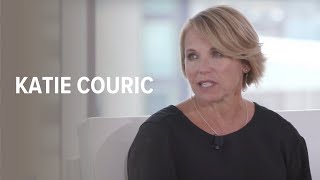
Katie Couric talks about moving from network TV to founding her own media company, building an audience on Instagram and her newsletter, and what she learned from interviewing thousands of people over decades in journalism.
Chapters
Hi, everybody. Welcome to the inbound studio. Katie Couric. Thank you so much for being here.
You're welcome.
I'm gonna rip this band aid off really early. If I spontaneously burst into tears at any point, it is because anytime someone has asked me what I wanted to be when I grew up, my answer has always been Katie Couric.
Aw, that's so nice. That's so nice.
So I am very excited to be doing this with you, and I am so thankful that you're here with us.
Oh, well, thanks. And I'll be judging your skills. I'm kidding.
Please judge.
Please. No, I'm kidding.
Any tips? No. Great.
That's so exciting.
Well, I just want to start with, how did you get into journalism? What led you here? What led you to that career path? And then, you know, we'll go from there.
I mean, I. Honestly, a lot of it was serendipity. I. I always loved to write, and I was a big procrastinator. I always waited till the last minute. So I said that I like to work under deadline. And my dad was a print journalist for the Atlanta Constitution and for United Press. He was from Georgia and was a beautiful writer and a really smart, erudite man. And I think that I was interested in writing, but I was also super outgoing, as I think you are, and I just really enjoyed people. I kind of never met a stranger. I'd approach people and start talking to them. And I think my dad saw that I was a good writer and encouraged me to work at radio stations in Washington, D.C. during the summers while I was at UVA, the University of Virginia. And I also wrote for my college newspaper. And when I graduated, I majored in English and history, American studies. And when I graduated, I thought, well, I'll try to get a job in television, because opportunities were opening up for women. It was more lucrative, honestly, than print or radio journalism. And so I started working as a gopher at ABC News in Washington. I got a job there kind of in a cagey way. I asked my mom to drive me down in our cream colored Buick station wagon. And I said, stay right here, Mom. I'll be right back. So she's waiting in the car, and I walk in and there's this big security guard at ABC News in Washington. I said, hey, can I have a tour of the newsroom? And he's like, what are you talking about? We don't just, like, give people tours of the newsroom. And I said, okay, can I use your phone? And then I called the executive producer of World News Tonight. And it was a man named Davey Newman. And I said, hey, Davey, it's Katie Couric. I'm not sure if you know me, but your niece Julie Newman and I are really good friends. And your brother Steve and Eddie, the twins, went to high school with my sister Kiki. So I'm downstairs. Do you think you could show me around? And he was like, who? What? So he said, come on up. He was kind of an alcoholic, but anyway, he said, come up. And he showed me around the newsroom. And then he introduced me to the deputy bureau chief who was in charge of hiring, you know, the low, low level employees. And I remember I had sent my resume in and of course heard crickets. And nowadays you send it and, God, it ends up in some black hole somewhere. You don't know where. And I remember Kevin Delaney, the assistant, the deputy bureau chief, finding my resume and putting it on the top of the pile because he was, I think, impressed by the way I had kind of finagled my way up there. So I did that for about a year. Then I went to work for CNN before they even started. And everyone was calling it Chicken Noodle News. And I did that for a while. And then I worked in local news and kind of just worked my way up. But that's how I ended up working in TV news and journalism in general.
I heard two things in there. One being like, a good memory to remember all those things. To bullshit your way in.
Yeah.
And thinking on your feet.
Right.
How important do you, like, how important are those two skills to what you've done in your career?
Well, I think. I mean, super important, but I think certain things help you do that.
Yep.
So preparation is really key. Towards the end of the Today show, you know, I was waking up at like 6:15, kind of rolling in. My hair was wet. I just looked like a drowned rat. And they'd be like, and I wasn't that prepared. And I kind of would wing it a little bit more, which kind of told me that I wasn't as excited about the job as I once was. But I think preparation is really, really important because that allows you to think on your feet. Right. I mean, I think you can be inherently good at it, but if you're ready for anything. And when I used to come, when I used to prepare for interviews, I would think, well, what are they going to say to this question? Then? How am I going to follow it up? So it was really pretty intense preparation. And a lot of thought usually went into especially, you know, the challenging interviews when I was interviewing a head of state or, you know, a really big deal like that.
What does that preparation look like for you? Is it like the process of it? I guess.
Well, I think, you know, I used to read articles, you know, at the Today show or even at the evening news or any job I've been in, even at Yahoo. In my talk show, you have great producers who kind of synthesize all that you need to know and usually do a one sheet or a two sheet. But then I always like to read articles that help you get a little more insight or perspective into the person you're doing. Or you might find a little tidbit like, oh, I didn't know they played lacrosse in junior high. I mean, little things like that that maybe someone doesn't pick up. And maybe you think, oh, well, I played lacrosse in junior high, and that would give us some common ground. So I try to find kind of interesting things about people and then I, you know, just work on questions. And you try to do questions that I think are informative for the audience, but also let the interview person, the interviewee, tell the stories. Right. So it's kind of a balance in terms of painting a full picture for whoever is viewing or consuming what you're creating, if that makes sense.
Absolutely. I mean, that makes a ton of sense to me. You know, I think a lot of people obviously know you from the Today show and the different times that you've spent on different news programs, but you've started your own media company. Can you share with us a little bit about why you wanted to do that and sort of launch into your own thing rather than participating in somebody else's media entity?
Well, you know, I done. I have done so many of those jobs through the years. You know, I've had sort of two of the biggest jobs in TV news. I've been lucky enough to do that, both as an anchor at the Today show and then anchoring an evening news broadcasts. I did a syndicated talk show for two years, which is really hard and not really quite the best fit for me because I'm sort of a journalist with a personality. But I'm not like, da, da, da, da. You know, when you do a talk show, it's really all about you. And I don't know, it made me a little uncomfortable, but it was fun. And I did some, I think, really important and good shows. But I think now since I've done those jobs and the media landscape is being so disrupted and you don't have to have a Gatekeeper and editor necessarily to tell you what you can or can't do. I don't have some man saying, well, you're too old or we've got the next shiny object or I didn't like the way you wore your hair, whatever, yada yada yada. So I thought it would be really fun to create an entity and a company that, where I could shine my lens on things that I think are important. My husband and I are running it. He said the only way he'd spend time with me is if we work together, which is kind of true because I'm kind of a workaholic. And it's just been fun because I'm doing all kinds of storytelling and content. I'm doing documentaries, docu series, you know, digital series. I'm doing a newsletter every morning and I'm doing sort of live events like this, which are really fun for me. And so it's just, it gives me a lot of flexibility and a lot of freedom. And you know, as I said, you used to have like the major networks or even local stations and that was your only way to reach an audience. And now you, you know, 70% of people get their news and information. So social media, you know, television news audiences are aging and declining. And so I have always been interested in the intersection of technology and information. And so this is a great opportunity for me to play in a. In a new, you know, a new platform and to iterate the content I'm doing to match the platform and to target people who are interested.
Yep.
In said content and not try to do it sort of in a mass way. Because mass media is now an oxymoron. It's really niche media. It's what people are interested in. News and information has become increasingly personalized and you know, there's good things about that and bad things about that, but for me, it just allows me to deliver content to people who are interested in the content I'm creating.
How are you? Are there guardrails or parameters for how you're thinking about the types of stories that you want to tell or showcase in?
I mean, it's really, you know, it's a combination. We're working with purpose driven companies who have, you know, socially conscious goals and values and what they want to put out in the world. So we do a lot of work with Procter and Gamble, for example, and they've really been on the forefront of putting out content that addresses a lot of social issues. They did this great film called the Talk about how African American parents have to talk to their kids about driving while black or just being black and some of the things that they'll face in the world. It's really moving. They followed it up with a short film called the look, about sort of implicit bias and how what it's like to be different in the world and how people react to your. And I think it's something that a lot of people don't think about, but it's really. It's really powerful. They've done a lot of work with gender equality, you know, secret with the US Women's soccer team, with Olympics. And, you know, I really like the ethos of that company. I really. Mark Pritchard, who is the cmo, is just a remarkable person who's very much led the way in putting this kind of content out into the the world. So, you know, I'm interested in social justice. You know, I'm probably too old to be considered a social justice warrior like my daughters, but, you know, I care about big issues, and I care about starting conversations about big issues and making people think about them. So, you know, I do all kinds of things. I'm looking into doing a documentary about loneliness and social isolation because we're so connected. Connected, but, you know, loneliness. The surgeon general under President Obama said it was a national epidemic. And why is that? You know, why are we. Why do we feel so alone? And I think it's probably. We have fewer communal experiences. Right. And we are, you know, a fragmented media environment makes us feel fragmented and not have a lot of mutual experiences and interests. Right. And. And I'm working, helping to EP a documentary on plastics and what's happening, how they're affecting the environment, but even more importantly, innovative solutions that many companies are coming up with. I'm not really that involved, but I'm eping a documentary about Clarkston, Georgia, which is the most diverse place in the country, and how they've been able to come together and look live in a truly multicultural society. So I'm trying to also shed the light on young women especially, who want to explore stories and elevate them and bring attention to them, because I'm interested in, you know, helping people who I think have a really important role in society, which is, you know, helping to educate people, you know, speaking truth to power and holding people accountable and helping people understand the world. And I think what's sad now, it's hard because now people don't know who to believe. And I think I'm trying to take advantage of the credibility I've established throughout my career as an honest broker and use that as a way to impart information. But I want to help other people do that as well.
Well, do you think that, that the media landscape the way that it is right now, someone like you who has individual credibility and can start something on their own is actually more credible than a CNN or an ABC or an NBC? These larger conglomerates that are, I don't know, have been difficult to trust at times.
I mean, that's a hard question because I think really good, good work is being done at all those places. I think they're, in the case of cnn, they had to kind of make a decision that they were going to, that, that being a middle of the road network wasn't going to get them enough eyeballs, I hate to say it. And they're sort of middle of the road during the day. At night, they're very, very, you know, anti, anti Trump. And so, you know, I think a lot of my friends and colleagues work at all those networks. I think the President sadly, has been very effective about undermining and delegitimizing legitimate journalism just because he doesn't like it. And it's really upsetting and dangerous and sad because it undermines our democracy. It makes, it causes confusion in the marketplace. And I think the American people deserve better. But it's really, I think he's doing the damage. And, you know, journalists are people. If you assault them and insult them every single day, I think, you know, sometimes their own prejudices will seep in because, you know, one would argue, is there really any such thing as objectivity? And so I think it's a hard situation right now. But I think the Washington Post, the Boston Globe, the New York Times, although some people don't like what the Times is doing, I think there are a lot of great, great places doing great work. I think what's confusing is so much of it. You know, I see things on my phone, I'm like, what is this news outlet? I've never heard of them. What is like, you know, I mean, honestly, and the people I've seen who have died, who really aren't dead and the stories I've seen, it does, it does kind of instill a lot of mistrust into what you're reading and it inevitably bleeds over into everything. How do you differentiate? And I think that's what legitimate journalists are really trying to figure out. I mean, I was talking to Sasha Pfeiffer, who interviewed me, who won a Pulitzer Prize, you know, for the Spotlight See series, and is Just amazing. And you know, does anything really penetrate? Because it's so much stuff. After a while you're like. And there's also very little calibration. Like, everything is kind of rises to the same level of outrage.
Yes.
Like, oh, my God. Oh, my God. On both sides. Right. And you can't really. It makes it really hard to be a nuanced news consumer. Consumer too, if that makes sense. So I don't know. I don't know how to solve it, but I do think it's a real.
Problem, a little bit of a pivot. But one more channel in that mix is Instagram, and you have an excellent Instagram.
Why, thank you, Laura. Thank you very much.
Can you tell us all your secrets and, like, what has gone into all the wonderful stories and updates and everything that you've got on there every day?
Well, you know, for me, it's like my little mini network. Honestly. I remember when Twitter came out and I was like, who cares? Like that I ate a tuna fish sandwich for lunch. Like, does anybody really care? And now, I mean, it's become so important and so powerful. You know, these social media platforms have a lot of problems. There are a lot of negative aspects to them as well, which, you know, I think everybody's pretty well aware of the effect is having on, you know, young girls and self esteem and, you know, all sorts of things can be used as real gathering place for hate groups, et cetera. But for me, it's kind of like my mini network. So I use it as such. I use it to talk about important stories, to profile victims of mass shootings, to, you know, show the dahlias in my garden. It's sort of, kind of, you know, with John and I go the US Open. Well post a picture about that. And so it's just, it's really fun to do. I, A friend of mine or colleague of mine at Yahoo encouraged me to get on it and I was like, okay. And it's just, it's grown so much. And I think in many ways it's replaced, you know, traditional media. And along with my morning newsletter, I want to start doing. Sometimes I started and then I kind of stopped because sometimes just too tired and lazy. But in the morning, kind of giving people the top five stories they need to know about on stories, because they grab their phone, they look at their emails, and sometimes they scroll. And if they know that I'm doing that, they can see from a friendly, credible person, kind of a quick update on what's going on with the news. So I just Think it's a really fun and interesting tool to use. And now you can do longer interviews on there with igtv. So I think it's been a really, really smart platform and one that it's just fun, I think, too.
Do you think, like, obviously there's the visual element of it. What do you think about that? I guess helps that connection and helps that virality and excitement and engagement with the platform. I don't know.
I really. I mean, I think because what you said, Laura, it's visual. It's kind of like. I think it gets people's attention. Attention. It's easy to use. And I also think it creates a nice sense of community. You know, when I did the Today show, I remember there was this little lady named Nancy Fields who worked for Willard Scott. And I love Nancy Fields. She's since passed away, but she had this black hair and she painted her eyebrows on, and her job was opening up all the viewer mail. I mean, that's how people reached us. And I remember she would show me letters like, we hated that dress you had on. Your hair looked like a ski slope for an adventurous sparrow. And it's like, what? And so people used to give feedback and thank. You know, I sometimes pine for those days where people couldn't, like, tell you what they think right away. Like, you care anyway about half of them. But with the people who follow you on Instagram, it's sort of a community. And I even try to actually make it a place for respectful conversations where people can kind of interact and give their two sense, because I think that's increasingly, you know, civil discourse as Matt, as well as mass media has also become an oxymoron. And obviously I like that word, oxymoron, but, you know, so I think that that's a really nice aspect of it. People reach out to me all the time, like, I have cancer. Where should I go? And sometimes it's really hard. But I also like just that they can direction the person. Yeah.
I believe you're working on a memoir, is that correct?
Yes, that's correct.
Asking for a friend. Good to know.
Can you.
What's that process been like? And is there. Are there certain aspects of your life or your career in particular, that you are really hoping to share in that writing process?
You know, it's probably the only memoir I'll ever write. I never have written one. And I thought, I'm 63. I better write it while I can still remember things. That's a sad, scary thought. You know, I've just had so many life experiences, both professionally and I've met so many interesting people. I've seen so many interesting things. I've covered so many important stories. I've been in this kind of 40 year window from 1980 to 2020. And you think about all the changes that have happened the at, especially for women in the workplace and so many other ways. When you think about technology, you know, we didn't have, I don't think I had a phone, you know, when I started out in the business, maybe, I don't even know, I guess flip phones had just come out, believe it or not, because I graduated from college in 1979 and I think, wow, look at that period of time of revolutionary changes. So I think it'll be kind of both a macro look at what's happened in the world without probably being too, you know, too serious and also a micro world about my experiences with loss and my husband dying of cancer and my sister dying of cancer and you know, just so many life experiences, being a widow, dating, you know, I mean, that could fill a book. And John thinks I should call it People I Hate But I by America's Sweetheart. There'll be a few of those in there too. But you know, I think it's just an opportunity. I mean, who knows if anybody will even buy it or read it. But it's also kind of a love letter from my kids and well, I got one buyer here, that's for sure.
I'll buy 10, I'll get the thing.
Rolling, be like Ann Coulter. Just buy a shitload of your own books and then get on the New York Times bestseller list. But anyway, you know, it's very cathartic. It's actually kind of.
Kind of.
Tumultuous or something to write a book about your life because it makes you relive a lot of difficult things too. So I feel like I'm having all these crazy dreams about a lot of different things. And you know, it's kind of like being your own therapist. So it's been interesting and fun, but it is a lot of work. When you write your memoir, sister, just remember, you know, it takes a lot.
I'll take notes now.
It takes. Yeah, well, actually that's a good point because Jean Shallet, when I got my job on the Today show, Jean Shallot, you know, I don't know, you guys are all like 12, but Jean Shallot had this, you know, Afro crazy hair. I love Gene Shallet. He said, keep a journal, keep a diary. I don't think people called it journaling yet. But he said, keep a diary and write down your experiences. And I said, that is such a good idea. And then I didn't do it. But anyway, that you should kind of, if anybody, I think in general, it's really helpful to do that. But it's been, it's been fun.
You've been on stage with Jennifer Garner this morning, you said.
So cute.
Isn't she wonderful? John Foraker was wonderful. The whole thing was fantastic.
I just think she seems like such a. I mean, such a nice person and really grounded and, you know, it's hard to live in the public eye. I mean, especially for someone like her. I've experienced it a little bit myself. It's very, you know, it makes you out of sorts and hard and it does kind of screw with your sense of identity and sense of self. I know now while why child actors have such a hard time, you know, because I think about people like Britney Spears, who was, you know, I think I was thinking about her the other day, don't ask me why. I think I must have heard a song of hers on the radio. And I was thinking, must be weird, you know, must be really hard for someone to have so much attention, adulation and you know, being in the white hot spotlight and then to have it kind of drift away and you know, fame is hard and I think she's just handled it. So, Brittany, I'm talking about Jen Garner now. Brittany, I think is hopefully doing well too. But Jen Garner, I think just really kind of has such a healthy perspective and I think a lot of it comes from your parents and how loved you feel. So you don't, you know, have to find love in the public. So she was lucky.
I think I couldn't agree more in the way that she's raising her own children in that way has been very obvious.
I think so too.
If you could leave this inbound audience with anything after your time here today, what would that be?
Oh, gosh, I don't wake up. Call 474-747, write Katie and then sign up.
That's first.
Gosh, I don't know. You know, I think, I mean everything sounds so cliche and trite, like find your passion. But I do think people can create their own opportunities. I think this is a really exciting time to do what you want to do and to get with like minded people. It's a challenging time in so many ways because there are almost infinite choices. Right. And I always tell people to be realistic about their skills. That doesn't mean that you can't learn to do things. But I think if you take kind of a cold, hard look at what you're good at and what brings you joy like Marie Kondo, then you'll usually use those skills in what you do for a living. If you love art, do something with that. Or if you love people, if you hate people, don't work in a people driven job. I think you can find something that fits what you love to do, like I did. I feel like I just hit the jackpot in that what I've done for a living is who I am, you know, And I think if you can translate your passions and your abilities and think about how they fit into certain professions and to not give up. You know, I had so many people tell me I would never make it in television. And you know, the president of the cnn, when I tried to report from the White House, and by the way, I was dreadful, said I never want to see her on television again. And I was so, you know, a little despondent, but I was like, you know, I'm just as good as some of these other people and I didn't give up. So persistence, I think is really, really important. And also, you know, you just can't get around it. There are no shortcuts. You got to work hard, you know, and hopefully if you love what you're doing, it won't feel like so much work. But, you know, you just have to put in the time and say yes to everything. And people really appreciate those people in a work environment who are, who step forward and say, let me help, let me do it. Can I work on Saturday? You know, you have to be a go getter, especially, you know, it's competitive and learn to code. I told my daughter who went to Stanford, hey, Kerry, you better learn to code. You're at Stanford, for crying out loud. She said, I don't want to learn to code, Mom. You learn to code. I was like, okay. But anyway, I do think coding is really valuable and it makes my head hurt thinking about it. But you're much younger, so good luck.
Thank you so much for coming.
You're welcome.
And taking time in the studio, joining us at Inbound, it's been definitely my pleasure and I know it's been great.
For everybody else, so thank you so much. Good luck to you.
Thank you.
More from Patrick



A NEW BREED OF PARTNER: The Partnership Ecosystem Model Journey of Patrick Biddiscombe, Part 1








Customer Success Workspace: Never Lose Sight Of What Matters Most | HubSpot Spotlight